

Content
- 1 Role of a Slitting and Cutting Machine in Nonwoven Production
- 2 Integrated Platform Design for Better Material Handling
- 3 Precision Cutting for Multiple Nonwoven Materials
- 4 Photoencoder Length Control and Automatic Cutting
- 5 Winding Performance and Finished Roll Quality
- 6 Operating Range and Configuration Flexibility
- 7 Advantages Compared with Basic Cutting Equipment
- 8 Manufacturing Strengths of the Equipment Supplier
- 9 Engineering and Production Process
- 10 Safety and Operator Protection
- 11 Maintenance and Service Considerations
- 12 Applications Across Nonwoven Markets
- 13 Installation and Commissioning Planning
- 14 How the Machine Supports Production Efficiency
- 15 Quality Control from Web to Finished Roll
- 16 Why Choose a Specialized Nonwoven Machinery Manufacturer
- 17 Selection Guidance for Buyers
- 18 Environmental and Long-Term Operating Benefits
- 19 Q&A
- 19.1 What is the main function of the HYFQ Slitting Machine?
- 19.2 Can the machine perform both horizontal and vertical cutting?
- 19.3 What is the purpose of the integrated working platform?
- 19.4 Does the machine support automatic length cutting?
- 19.5 What working width is available?
- 19.6 What is the maximum winding diameter?
- 19.7 What operating speed can the machine achieve?
- 19.8 Which nonwoven materials can be processed?
- 19.9 Can the machine be connected to an existing production line?
- 19.10 Is the equipment customizable?
- 19.11 What certifications are listed for the machine?
- 19.12 How should operators maintain the machine?
- 19.13 What warranty is listed?
- 19.14 How does the machine compare with manual cutting tables?
- 19.15 What should be confirmed before placing an order?
- 20 Conclusion
- 21 References
- 22 Product: HYFQ Slitting machine
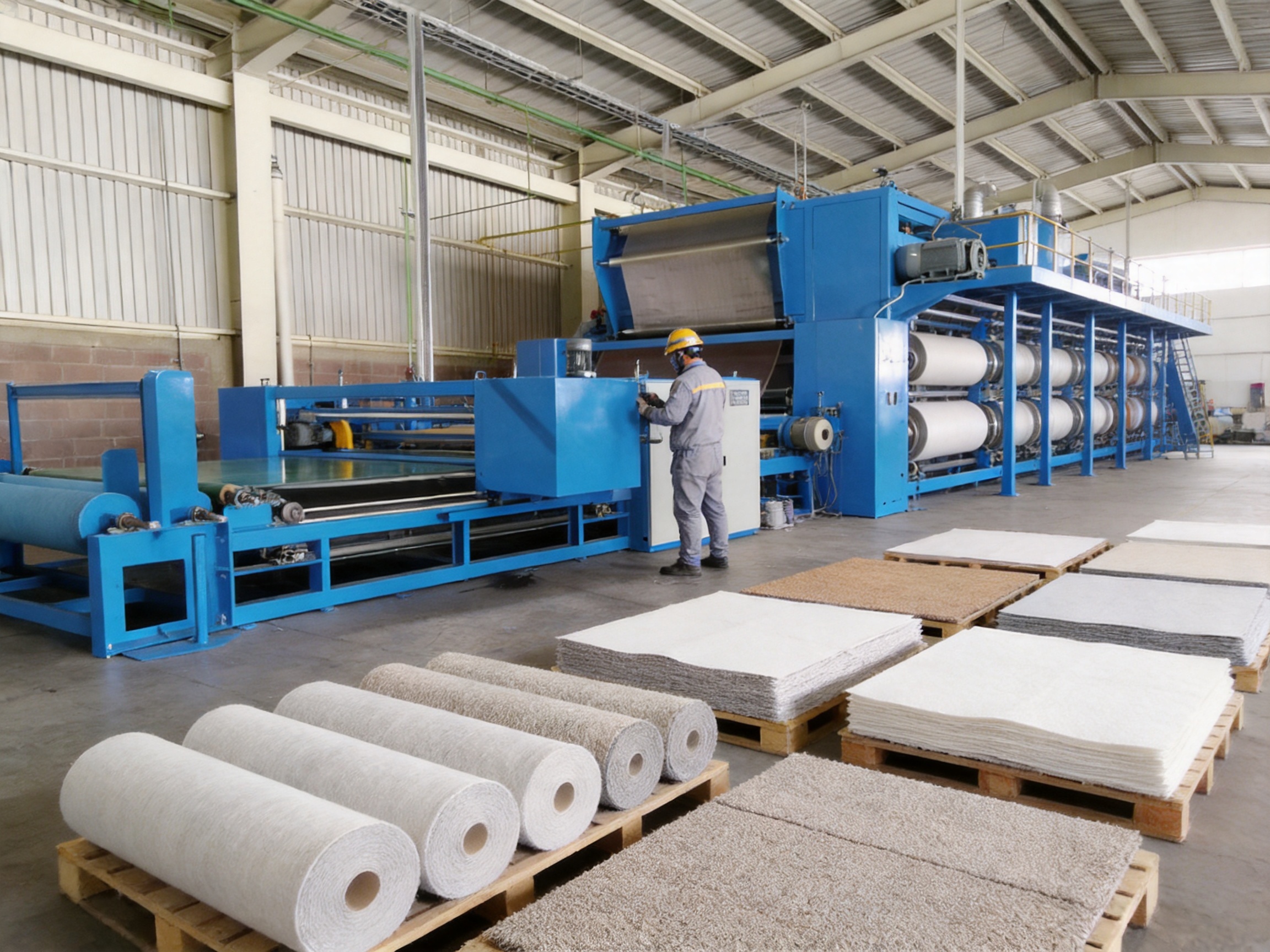
In nonwoven fabric manufacturing, the final converting stage has a direct influence on product quality, production efficiency, packaging performance, and customer satisfaction. Even when a nonwoven line produces a uniform web, the finished material must still be accurately measured, cut, slit, and wound before it can be shipped or transferred to the next application. Inaccurate dimensions, uneven edges, unstable winding, excessive manual handling, and slow changeovers can reduce the commercial value of the finished fabric. The HYFQ Slitting Machine is designed to address these practical production requirements by combining winding, cross-cutting, longitudinal cutting, automatic length control, and an integrated working platform in one machine configuration.
Developed for nonwoven fabric processing, the HYFQ machine is normally installed near the end of a production line. It receives a continuously produced web or delivered sheet, guides the material through the working area, and converts it into rolls or cut sections according to programmed parameters. The equipment can perform horizontal or vertical cutting, allowing operators to produce different widths and lengths from a wide nonwoven web. Its platform-assisted structure is especially useful when production involves frequent positioning, inspection, measurement, auxiliary handling, or customized cutting tasks.
The machine is supplied by Changshu Hongyi Nonwoven Machinery Co., Ltd., a Chinese nonwoven machinery manufacturer and supplier with more than 20 years of experience in this field. The company provides individual machines as well as complete nonwoven production lines for applications including geotextiles, carpets, cleaning cloths, airlaid felt, automotive interior materials, wool felt, jute felt, and other fiber-based products. This background gives the manufacturer practical knowledge of how a cutting and winding unit must operate as part of a wider nonwoven production system rather than as an isolated piece of equipment.
Role of a Slitting and Cutting Machine in Nonwoven Production
Nonwoven fabrics are produced in many forms, widths, weights, and material combinations. Depending on the line design, the web may be made from polyester fiber, shoddy fiber, recycled fiber, natural fiber, or blended materials. After carding, airlaying, needling, thermal bonding, or another web-forming process, the material commonly emerges as a wide continuous fabric. The final customer may not require the full production width, however. The material may need to be divided into narrow rolls, cut into sheets, or prepared in a precise length for further processing.
A slitting and cutting machine provides the converting functions required between web production and final delivery. It can separate a wide web into narrower sections with longitudinal knives, divide the web across its width with a cross-cutting blade, and wind the converted product into manageable rolls. When the machine is configured for sheet production, the automatic length control system can trigger a cut after the programmed length has been reached. When it is configured for roll production, the winding unit can form a finished roll with a specified diameter or other customer-defined characteristics.
This final-stage function is important because cutting errors cannot usually be corrected later. If a roll is too narrow, too long, poorly aligned, or damaged at the edge, it may need to be reprocessed or rejected. A properly designed converting machine therefore contributes to material utilization, production consistency, and the appearance of the final product. The HYFQ design focuses on these requirements by integrating control, cutting, winding, and operator support into a coordinated system.
Integrated Platform Design for Better Material Handling
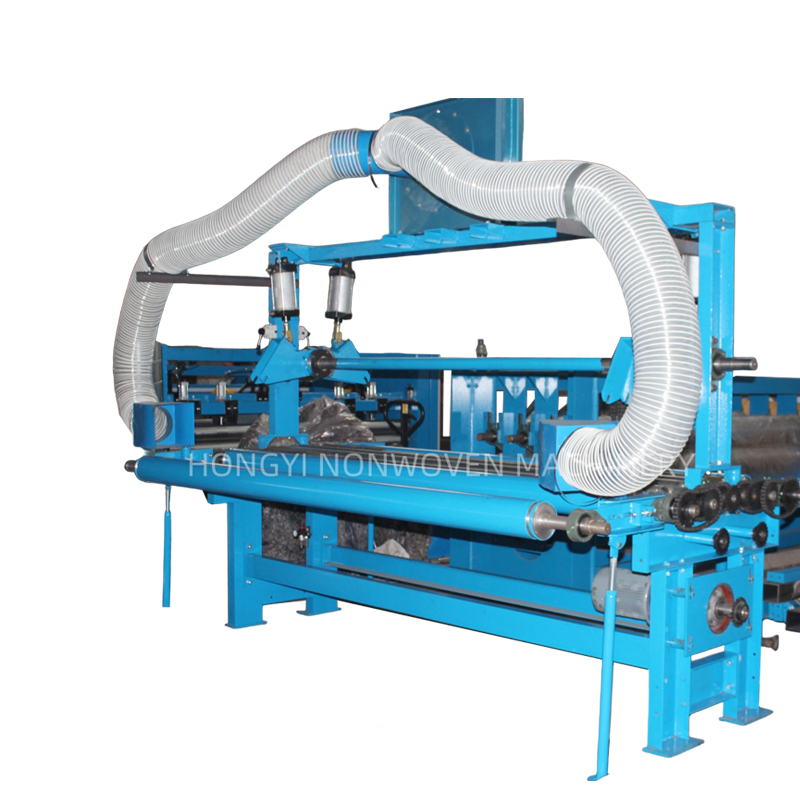
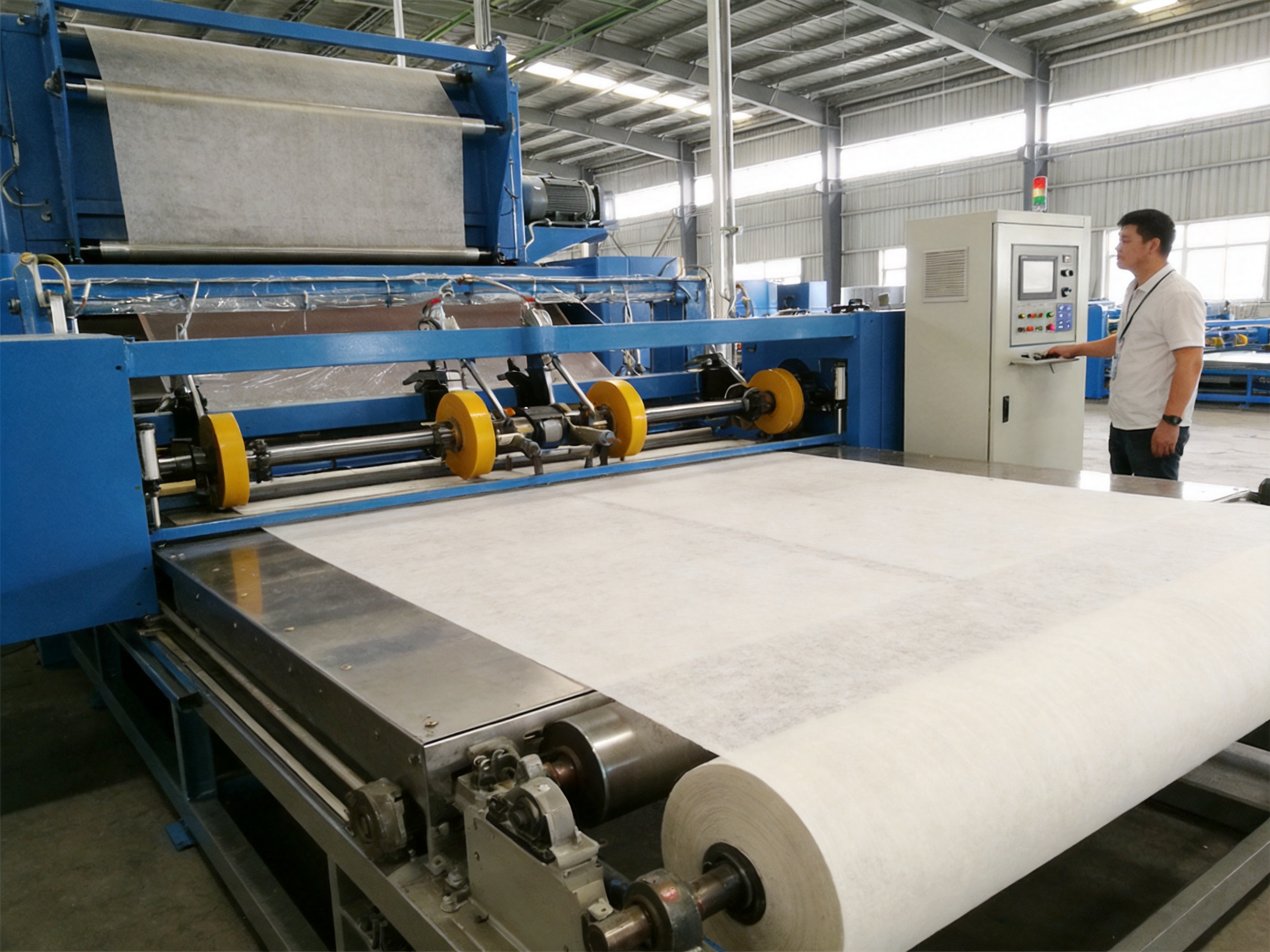
One of the most important characteristics of the HYFQ Slitting Machine is its integrated working platform. Rather than placing the cutting mechanism separately from a basic support table or requiring operators to move the material between different stations, the machine combines the cutting system with a stable work area. This arrangement gives operators a defined location for placing, aligning, measuring, and preparing the fabric before cutting.
Large nonwoven sheets can be difficult to handle manually. They may be flexible, lightweight, bulky, or prone to folding. Without a sufficiently stable support surface, the operator may spend considerable time stretching the material, removing wrinkles, locating the correct cutting line, and maintaining alignment. A rigid and well-organized platform reduces these difficulties. It creates a more predictable working environment and helps the operator position material before engaging the cutting system.
The platform is also useful for production tasks that require frequent human intervention. Examples include checking the fabric edge, confirming the cutting width, removing a damaged section, preparing a new roll, measuring a sample, or performing a customized cut that is not part of a fully continuous automatic sequence. In these cases, the machine is not limited to a simple pass-through process. It supports practical human-machine collaboration.
Compared with a conventional cutting machine that provides only a narrow material path, the HYFQ platform can improve accessibility and reduce repeated lifting or repositioning. Fewer handling steps can help protect the web from contamination, folding, stretching, and accidental damage. The operator can also work closer to the actual cutting area while maintaining a more standardized operating position, provided that the machine is used with appropriate guarding and safety procedures.
The platform structure is constructed from robust mechanical materials, primarily steel and iron components. This provides the stiffness needed to support large materials and maintain stability during operation. A rigid platform is particularly valuable when the machine handles wide fabrics or when the operator performs measurement and alignment tasks across a substantial working area.
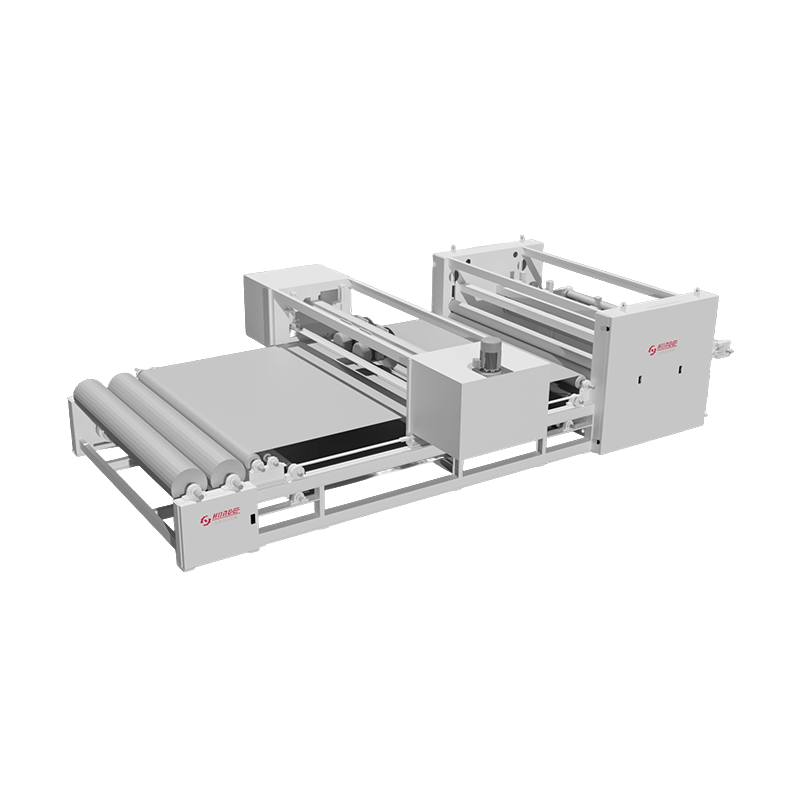
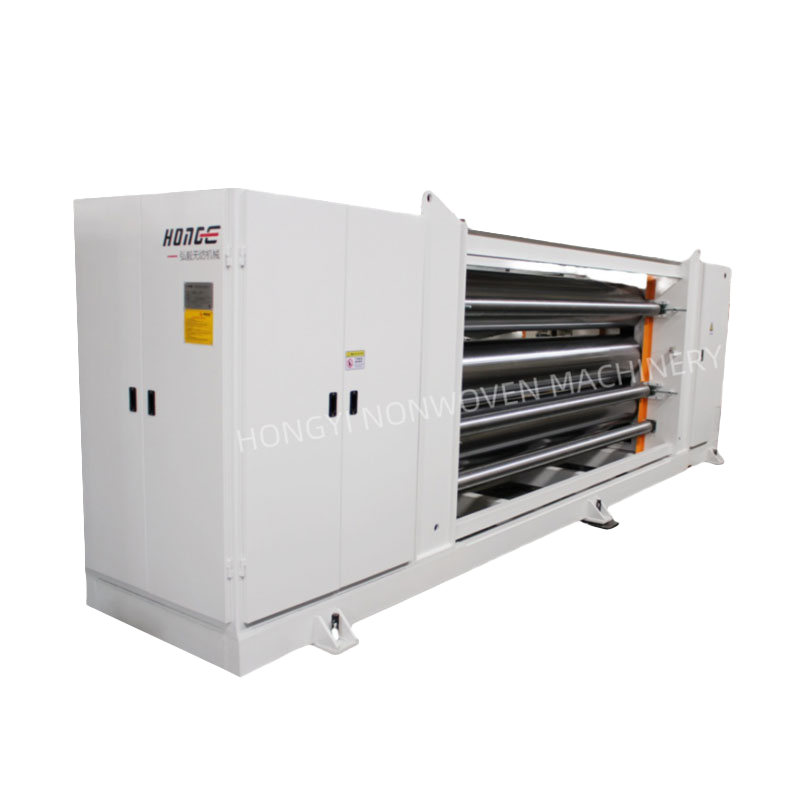
HYFQ Slitting machine
Precision Cutting for Multiple Nonwoven Materials
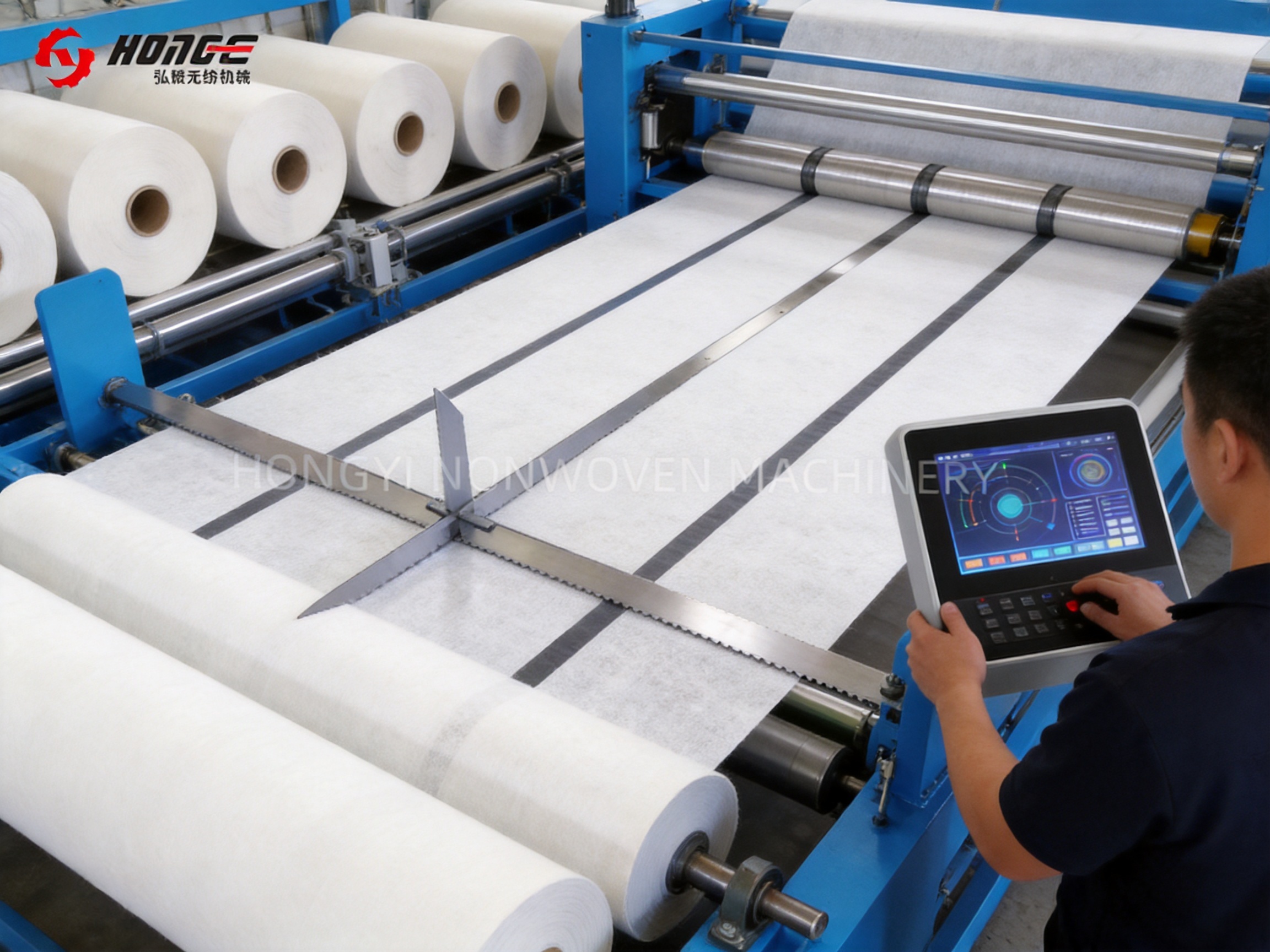
The HYFQ machine is equipped with both a cross-cutting blade and a longitudinal-cutting blade. These two cutting directions allow the machine to process material according to different product requirements. Longitudinal cutting divides the fabric along the direction of web travel, creating narrower rolls or strips. Cross-cutting separates the fabric across its width, producing individual sheets or predetermined lengths.
The combination of these cutting functions makes the equipment suitable for manufacturers that supply multiple product formats. A single wide nonwoven web may be converted into several narrow rolls for filtration, furniture, construction, hygiene, automotive, or industrial applications. Alternatively, it may be cut into flat pieces for padding, packaging, insulation, cleaning products, or further assembly.
Cut quality depends on many factors, including the blade condition, fabric weight, fiber composition, web tension, material alignment, speed, and machine adjustment. The HYFQ configuration addresses these variables through a coordinated cutting mechanism and control unit. While the exact cutting result depends on the material and process settings, the machine is designed to provide accurate dimensions and clean edges when correctly adjusted.
Longitudinal cutting is especially useful when a customer requires several finished widths from one production run. The operator can arrange the cutting positions according to the required layout, helping use the original web width efficiently. Better width planning can reduce trim waste and improve the yield of saleable material. For companies producing different orders in smaller batches, the ability to adjust the slitting arrangement is also important because it allows one machine to support a wider range of products.
Cross-cutting provides a similar benefit in the length direction. Instead of manually measuring each piece and cutting it with a separate tool, the machine can use the programmed length information to perform repeatable cuts. This can be valuable for products that require consistent dimensions, particularly where pieces will be stacked, packaged, laminated, sewn, molded, or installed in a later process.
Photoencoder Length Control and Automatic Cutting
The supplied machine information identifies photoencoder control length and automatic length cutting as important functions. A photoencoder-based measurement system monitors the movement or delivered length of the fabric and sends measurement information to the control unit. When the programmed length is reached, the machine can activate the cutting sequence.
Automatic length control provides several advantages over manual measurement. First, it reduces dependence on an operator continuously checking a ruler or marking line. Second, it improves repeatability between pieces. Third, it simplifies the processing of long production runs in which the same length must be produced many times. Fourth, it helps the operator concentrate on material alignment, web condition, roll formation, and safe machine operation rather than performing repetitive measurement calculations.
Length control is particularly helpful when the material is flexible and difficult to measure accurately by hand. Nonwoven fabrics can compress, stretch, or shift during manual handling. A controlled measuring system, combined with suitable tension and feed adjustment, can support more consistent finished dimensions. The actual tolerance achieved will depend on the material characteristics, machine setup, calibration, and operating speed, so production trials and proper parameter selection remain important.
The system can also support efficient order changes. A new length can be entered or selected according to the production requirement, allowing the operator to move from one product specification to another without redesigning the entire production process. When the machine is customized, control functions may be adapted to the customer’s operating preferences, line configuration, and material characteristics.
Winding Performance and Finished Roll Quality
After slitting or before the final cutting stage, nonwoven material may need to be wound into rolls. Winding is not simply a storage function. Roll density, edge alignment, tension, diameter, and surface condition affect transport, packaging, downstream processing, and customer acceptance. A roll that is loose, telescoped, wrinkled, or unevenly formed may be difficult to use even if the fabric itself meets the required specification.
The HYFQ machine is identified as a winder and cutter, with a winding diameter of up to 1,200 millimeters in the listed configuration. This capacity allows the machine to produce substantial finished rolls while supporting practical handling and storage requirements. The actual suitable diameter may vary according to fabric thickness, roll core, material weight, customer requirements, and machine configuration.
Winding stability is supported by the machine’s mechanical structure, drive system, and coordinated material movement. A stable frame helps reduce vibration, while controlled feeding and appropriate tension help maintain roll alignment. The operator can adjust the machine according to the characteristics of the fabric. Lightweight materials may require different settings from dense needle-punched felt, recycled fiber products, or heavy geotextiles.
When the material is slit into multiple widths, each section must be guided and wound in a way that avoids excessive edge movement. Correct blade positioning, web alignment, and tension control are important for achieving uniform rolls. The HYFQ design provides a platform and working arrangement that help the operator inspect these conditions and make adjustments during production.
Winding and cutting in one coordinated machine can also reduce intermediate handling. Instead of cutting a large web on one machine and transporting separate sections to another winding station, the manufacturer may complete more of the converting process in one integrated area. This can reduce labor requirements, floor-space demands, and opportunities for fabric contamination or damage.
Operating Range and Configuration Flexibility
The listed product information includes a standard working width of 2,800 millimeters and also describes a configurable working width of up to 10 meters. These figures indicate that the machine can be supplied in different configurations depending on the customer’s line width and production requirements. The final working width should be confirmed during technical consultation because the correct frame, platform, drive system, cutting arrangement, and support structure depend on the requested size.
The listed operating speed includes a range of 0.5 to 10 meters per minute in one specification and 0 to 15 meters per minute in another. This difference reflects the fact that the equipment can be customized or specified according to the production configuration. In practice, the suitable speed is determined by material type, basis weight, thickness, cutting quality, winding behavior, roll diameter, and the required level of operator involvement.
A slower speed may be appropriate for thick, bulky, elastic, fragile, or difficult-to-align nonwoven fabrics. It can provide additional time for inspection and adjustment. A higher speed may be suitable for stable materials and continuous production after the cutting and winding parameters have been optimized. The ability to operate across a practical speed range allows the machine to serve different production situations instead of being limited to one fixed operating condition.
The listed driving motor power is approximately 3.75 to 6.75 kilowatts, depending on the configuration. This range supports a variety of working widths and winding requirements. The motor and transmission arrangement must be selected according to the maximum roll diameter, material weight, starting load, running speed, and duty cycle. A suitable drive system contributes to stable operation and helps prevent unnecessary energy consumption caused by oversized or poorly matched components.
Customization is identified as an available option. Customers may request changes to configuration, color, platform dimensions, operating width, control arrangement, or other machine details according to their production needs. This is useful for manufacturers that already have a defined factory layout or need to connect the cutter to an existing nonwoven production line.
| Item | Listed Specification or Option | Production Relevance |
|---|---|---|
| Model | HYFQ | Identifies the slitting, winding, and cutting machine configuration |
| Product designation | Winder and Cutter | Combines roll winding with cross-cutting and longitudinal cutting |
| Standard working width | 2,800 millimeters | Suitable for a common wide-web processing configuration |
| Configurable working width | Up to 10 meters | Allows adaptation to different production-line widths |
| Working speed | Approximately 0.5–10 or 0–15 meters per minute, depending on configuration | Supports different materials, products, and operating conditions |
| Driving motor | Approximately 3.75–6.75 kilowatts | Selected according to working width and winding load |
| Winding diameter | Up to 1,200 millimeters | Supports production of substantial finished rolls |
| Cutting tools | Cross-cutting blade and longitudinal-cutting blade | Enables both sheet cutting and width slitting |
| Length control | Photoencoder control | Supports automatic and repeatable length cutting |
| Automation | Automatic grade available | Reduces repetitive manual operations |
| Certification | CE and ISO9001-related quality certification information | Supports international supply and quality-management requirements |
Advantages Compared with Basic Cutting Equipment
A basic cutting table may perform a simple cut, but it may not provide the integrated functionality required for continuous nonwoven production. The HYFQ machine offers several advantages over a separate manual table, a single-direction cutter, or an uncoordinated combination of independent machines.
Reduced Material Handling
By combining the working platform with the cutting system, the machine reduces the number of times operators must lift, turn, or transfer large fabric sections. Every unnecessary movement creates a possibility of creasing, stretching, edge damage, contamination, or incorrect positioning. An integrated arrangement keeps the material in a controlled working area for more of the process.
Improved Dimensional Consistency
Automatic length measurement and coordinated cutting help produce more consistent sections than purely manual measurement. Longitudinal cutting also provides a repeatable method for producing multiple widths. Consistency is particularly valuable when finished products are sold by precise dimensions or used in automated downstream processes.
Higher Utilization of Production Space
A single integrated machine may require less floor space than several separate units for measuring, cutting, slitting, and winding. This can be important for factories that need to increase capacity without expanding the building. The actual space requirement depends on the selected width, platform size, roll-handling method, and safety clearance.
More Flexible Product Conversion
The combination of cross-cutting and longitudinal cutting allows the machine to serve several product formats. A manufacturer can process wide rolls, narrow rolls, individual sheets, or customized lengths using the same primary equipment. This flexibility is valuable in markets where customer orders vary in width, length, material, and volume.
Better Support for Operator Inspection
The working platform provides a convenient area for visual inspection and auxiliary operations. Operators can identify edge defects, check alignment, verify cut dimensions, and monitor the condition of the web without moving the material to a separate station. This can support faster response to process deviations.
Stable Construction for Industrial Use
The robust steel and iron construction is designed for long-term operation under load. A stable machine frame and platform help reduce movement during cutting and winding. Industrial durability is especially important in nonwoven factories where the equipment may operate for extended production periods and handle heavy rolls or wide materials.
Simplified Maintenance Access
The machine is designed with a rational layout of key components to support daily inspection, cleaning, and maintenance. Access to blades, guides, drive components, sensors, and control elements is important because routine attention can help preserve cutting quality and reduce unexpected downtime. Maintenance requirements still depend on the operating environment and production intensity, but accessible components make regular service more practical.
Manufacturing Strengths of the Equipment Supplier
The performance of a converting machine depends not only on its published specifications but also on the manufacturer’s engineering ability, manufacturing discipline, testing practices, and after-sales support. Changshu Hongyi Nonwoven Machinery Co., Ltd. has more than two decades of experience in nonwoven machinery. Its product range covers both complete lines and individual units, allowing the company to understand the relationship between fiber preparation, web formation, bonding, finishing, winding, and cutting.
This broad product knowledge is relevant to the HYFQ machine because a cutter must be matched to the material produced upstream. A needle-punched geotextile may require different feeding, tension, and cutting arrangements from a carpet felt, airlaid waste felt, automotive interior fabric, or cleaning cloth. Experience with these different production technologies helps the supplier evaluate the complete process rather than selecting a generic cutting mechanism without considering the fabric’s behavior.
The company supplies machines for shoddy fiber, polyester fiber, and other nonwoven applications. Its equipment portfolio includes carding machines, airlay machines, needle-punching machines, ironing machines, thermal bonding and heat-setting ovens, winding and cutting equipment, and complete nonwoven production lines. This integrated product capability can simplify technical communication for customers that are planning a new factory, expanding an existing line, or adding a converting stage.
Manufacturing a wide nonwoven machine requires accurate fabrication of the frame, platform, shafts, supports, guides, blade holders, drive assemblies, and control cabinets. Dimensional accuracy is important because misalignment in one component can affect the material path and final product quality. Strong welding, suitable machining, correct assembly, and careful inspection all contribute to the reliability of the finished equipment.
The company’s stated focus includes high efficiency, reliability, quality, advanced technology, precision engineering, automatic control, energy-saving capabilities, and customization. These priorities are reflected in the HYFQ concept. The machine is not limited to mechanical cutting; it combines mechanical construction with measurement, control, and configurable operating parameters. This combination allows the equipment to serve modern production environments that require both flexibility and repeatability.
Engineering and Production Process
A professional machinery supplier generally begins with a technical review of the customer’s material and production objectives. For a slitting and winding project, important inputs include the type of fiber, fabric structure, basis weight, thickness, moisture condition, roll width, required finished widths, target lengths, maximum roll diameter, production speed, and available factory space. The customer may also specify whether the machine must connect to an upstream line or operate as a standalone unit.
After the technical requirements are confirmed, the machine layout can be developed. The platform length and width, material feed path, cutting position, winding arrangement, drive capacity, control cabinet, operator access, and safety areas must be considered together. A wide machine cannot be designed only by extending the frame because the support structure, shaft stiffness, blade adjustment, and material alignment system must also be capable of handling the increased span.
Mechanical fabrication is another important stage. The main frame and platform must have adequate rigidity to resist deflection and vibration. Welding quality, surface treatment, dimensional inspection, and assembly accuracy affect the long-term behavior of the machine. Rotating parts must be aligned correctly, and cutting components must be installed so that the material passes through the intended path without unnecessary friction or deviation.
The drive and control system are integrated after the primary mechanical structure has been assembled. The motor, transmission, sensors, photoencoder, control unit, and operator interface must work together. The control system should allow the operator to set or adjust relevant parameters such as speed, length, cutting sequence, and operating mode. The exact interface depends on the selected configuration and customer requirements.
Testing is essential before shipment. A factory acceptance process may include checking machine movement, sensor response, length measurement, blade operation, winding behavior, emergency functions, control logic, and the stability of the platform. When possible, testing with representative material provides more useful information than an empty-machine test because nonwoven fabrics vary considerably in weight, flexibility, friction, and compressibility.
The manufacturer’s stated production capacity is approximately 100 sets per year. This indicates an established ability to fabricate and supply nonwoven machinery while supporting customized configurations. The machines can be shipped using nude packing or polyethylene film, depending on the equipment size, transport method, and customer requirements. International supply experience is supported by deliveries to more than 20 countries, including countries in Latin America, Europe, Africa, Southeast Asia, and other Asian markets.
Safety and Operator Protection
Cutting and winding equipment contains moving shafts, blades, rollers, drive components, and rotating rolls. Safe operation therefore requires appropriate guarding, emergency-stop systems, operating instructions, training, and regular inspection. The integrated platform can help define the operating area, but it must be used as part of a complete safety design rather than as a substitute for guarding.
Operators should receive training before starting production. Training should cover material loading, blade adjustment, winding preparation, parameter entry, automatic cutting, emergency procedures, cleaning, and routine inspection. Personnel should understand the danger zones around the cutting and winding assemblies and should never reach into moving equipment.
Blade replacement and adjustment should be performed only when the machine has been stopped, isolated, and secured according to the factory’s lockout procedures. Sharp cutting tools require appropriate protective equipment and careful handling. The operator should also verify that the material path is clear before restarting the machine after a roll change, jam, or adjustment.
Safe operation contributes to productivity as well as worker protection. A well-defined platform and organized machine layout can reduce unnecessary movement and make the normal operating sequence easier to follow. Clear access to control components, visible indicators, emergency stops, and maintenance points can help operators respond more effectively to abnormal conditions.
Maintenance and Service Considerations
Routine maintenance should be adapted to the production schedule and material environment. Nonwoven processes can generate loose fibers, dust, and small particles that may accumulate around guides, sensors, drive components, and cutting assemblies. Regular cleaning helps preserve sensor performance, material tracking, and cutting accuracy.
Blades should be inspected for wear, chips, contamination, or loss of sharpness. A worn blade may create a rough edge, pull fibers, increase the required cutting force, or produce inconsistent results. The correct blade maintenance interval depends on the fabric type, basis weight, abrasive content, operating speed, and total production volume.
Mechanical inspections should include bearings, shafts, couplings, belts, chains, fasteners, guides, and winding supports. Operators should listen for unusual noise, monitor vibration, and check whether the material remains centered. Electrical and control components should also be inspected by qualified personnel, especially where sensors and measurement systems are involved.
The photoencoder should be kept clean and correctly aligned. If the encoder is contaminated, loose, or incorrectly calibrated, the measured length may differ from the actual delivered length. Calibration checks should be performed as part of commissioning and repeated whenever the machine is relocated, repaired, or used for a significantly different material.
The supplier provides a one-year warranty according to the listed product information. Customers should confirm the exact warranty scope, exclusions, commissioning arrangements, spare-parts policy, and remote or on-site service options before purchase. Clear technical documentation and communication with the manufacturer can help reduce downtime and ensure that maintenance personnel understand the machine’s specific configuration.
Applications Across Nonwoven Markets
The HYFQ machine can be used in many nonwoven applications because its primary function is converting a wide web into useful finished formats. In geotextile production, the machine may be used to prepare rolls of specified widths for construction, drainage, filtration, reinforcement, or separation projects. The required cutting arrangement will depend on the product width, thickness, roll weight, and packaging method.
For nonwoven carpets and felt materials, the platform can assist with handling broad and flexible products. These materials may be cut into rolls or sections for flooring, upholstery, acoustic treatment, furniture, or interior applications. A stable platform helps with visual inspection and positioning before a customized cut.
Airlaid waste felt and cleaning cloth products can require repeated cutting into predetermined lengths. Automatic length control can reduce repetitive manual measurement and support more uniform stacks or rolls. In automotive interior materials, accurate dimensions are important because the fabric may later be molded, laminated, trimmed, or assembled into a vehicle component.
Wool felt, jute felt, polyester felt, shoddy fiber products, and recycled nonwovens may all behave differently during cutting and winding. Some are dense and stable, while others are bulky, compressible, or irregular at the edge. The configurable speed, cutting arrangement, platform design, and operator access allow the equipment to be adapted to a broad range of materials, subject to confirmation through technical testing.
The machine may also be useful for manufacturers that purchase master rolls and convert them into customer-specific widths. In this role, it functions as a secondary converting machine rather than as part of a complete fiber-to-fabric production line. Its ability to handle different order sizes can help converters respond to customers that do not require standard full-width rolls.
Installation and Commissioning Planning
Successful installation begins before the machine arrives at the factory. The customer should prepare a level foundation or suitable floor area, confirm the available electrical supply, provide sufficient access for delivery and positioning, and reserve space for operator movement and roll handling. The required area must include not only the machine footprint but also clearance for maintenance, material loading, finished-roll removal, and safe access.
For a machine with a large working width, transport and installation planning are especially important. The customer should verify door dimensions, lifting capacity, route access, ceiling height, and the location of electrical connections. If the machine is integrated with an upstream line, the height and position of the material transfer point should be checked carefully.
Commissioning normally includes mechanical leveling, electrical connection, sensor checking, control-system verification, blade installation, material-path adjustment, and trial operation. The operator should begin at a low speed and use a representative material where possible. Test cuts can be measured against the programmed length and width, and winding quality can be inspected before full production begins.
During commissioning, the customer and supplier can establish standard operating parameters for different fabrics. These may include speed, tension, blade position, cutting sequence, roll diameter, and length settings. Recording these values creates a useful reference for future production and reduces setup time when the same product is manufactured again.
How the Machine Supports Production Efficiency
Production efficiency is not determined only by maximum line speed. It also depends on setup time, material utilization, product consistency, labor requirements, downtime, and the ability to change between orders. The HYFQ machine supports efficiency through several coordinated features.
Automatic length cutting reduces repetitive measuring and marking. The integrated platform simplifies positioning and may reduce the time required to transfer large material sections. Longitudinal slitting allows the operator to produce multiple widths in one operation. Winding in the same machine reduces the need for separate intermediate handling. Together, these features can shorten the route from finished web to shippable product.
Efficiency also improves when cutting errors are reduced. Incorrect dimensions can lead to rework, rejected rolls, or customer complaints. A controlled measurement system and stable cutting arrangement help standardize the converting process. The machine does not eliminate the need for inspection, but it gives the operator better tools for achieving repeatable results.
Material utilization is another consideration. By planning the slit layout according to the order widths, the manufacturer can reduce unnecessary trim. The best layout depends on the master-web width and the required product widths. A flexible machine makes it easier to adjust the arrangement for different orders and may support more efficient use of the original roll or web.
Energy efficiency is influenced by motor selection, operating speed, machine loading, maintenance, and production planning. The listed motor range is relatively moderate for the stated applications, but actual consumption depends on the selected configuration and duty cycle. Keeping bearings, guides, blades, and drive elements in good condition can help prevent unnecessary mechanical resistance.
Quality Control from Web to Finished Roll
Quality control should begin with the incoming web and continue through cutting, winding, and final packaging. Before processing, the operator should check the material width, edge condition, visible defects, moisture, roll stability, and identification information. This helps prevent unsuitable material from entering the cutting sequence.
During operation, the operator can observe whether the web tracks correctly, whether the edges remain aligned, and whether the cut line is clean. Any tendency toward wrinkling, skewing, stretching, or telescoping should be addressed promptly. The platform provides a practical location for checking the material before and after the cutting operation.
Finished pieces and rolls should be measured according to the customer’s specification. Typical checks may include width, length, roll diameter, edge appearance, winding tightness, packaging condition, and product labeling. For critical applications, the customer may also verify basis weight, thickness, tensile characteristics, or other properties using separate quality-control equipment.
It is important to distinguish cutting accuracy from overall product quality. The HYFQ machine can support accurate conversion, but the final result also depends on the uniformity of the nonwoven web, upstream process control, blade condition, operator settings, and handling practices. A complete quality system should therefore connect the cutter’s inspection records with the production records of the upstream nonwoven line.
Why Choose a Specialized Nonwoven Machinery Manufacturer
Nonwoven fabrics differ from many conventional woven or plastic materials. They may be highly compressible, loosely bonded, hairy, elastic, bulky, abrasive, or sensitive to tension. A machine designed without considering these characteristics may not provide satisfactory results across different products.
A specialized nonwoven machinery manufacturer understands how fabric structure influences processing. Experience with carding, airlaying, needle punching, thermal bonding, winding, and cutting provides a broader basis for equipment selection. The supplier can discuss not only the cutter itself but also how the material is produced, how it behaves after bonding, and how it should be prepared for winding or packaging.
Changshu Hongyi Nonwoven Machinery Co., Ltd. combines machinery manufacturing and trading activities with a broad range of nonwoven equipment. Its products have been supplied to more than 20 countries, including Mexico, Argentina, Brazil, Turkey, Algeria, Egypt, Bangladesh, Vietnam, Thailand, and other markets. International experience can be useful when customers require export documentation, customized machine layouts, different electrical standards, or support for overseas installation.
The company’s ability to provide complete production lines is also an advantage for customers planning a new project. A complete line may include fiber opening and blending, feeding and carding, web forming, needle punching, thermal bonding, heat setting, winding, and cutting. If the customer requires only an individual HYFQ unit, the same production-line knowledge can still help ensure that the machine is compatible with the existing process.
Selection Guidance for Buyers
Before ordering the machine, buyers should provide accurate information about the material and final products. The most important details include the maximum web width, minimum and maximum finished widths, desired cutting lengths, fabric weight, thickness, fiber composition, expected production speed, roll-core size, maximum roll diameter, and preferred automation level.
Customers should also explain whether they need continuous roll winding, individual sheet cutting, or both. If the machine will process several products, the range of material characteristics should be described. A fabric made from polyester fiber may require different operating parameters from a shoddy-fiber or natural-fiber product. Samples may be useful for confirming blade selection and winding behavior.
Factory layout information is equally important. The supplier should know the available space, upstream and downstream equipment positions, floor conditions, electrical supply, lifting facilities, and finished-roll handling method. These details help determine the platform size, machine orientation, control-cabinet location, and access requirements.
Buyers should confirm which specifications are standard and which are customized. The supplied information includes different working-width and speed ranges, so the final quotation should identify the exact configuration. It should also clarify motor power, winding diameter, blade arrangement, automation functions, safety devices, control language, spare parts, warranty, delivery schedule, installation support, and operator training.
Environmental and Long-Term Operating Benefits
Durable machinery can provide environmental benefits by extending service life and reducing the frequency of replacement. A robust steel and iron frame, maintainable mechanical components, and accessible service points support long-term use when the equipment is operated within its intended range.
Improved material utilization can also reduce waste. Accurate slitting and length control help manufacturers plan orders more efficiently and avoid excessive offcuts. Trim waste may still occur, particularly when product widths do not fit the master web efficiently, but adjustable cutting positions allow the operator to optimize production layouts.
Energy use can be managed through correct motor sizing, appropriate speed selection, routine lubrication, clean sensors, sharp blades, and preventive maintenance. Operating the machine at a speed suitable for the fabric can avoid repeated stops and restarts. Stable production is generally more efficient than attempting to run too quickly and creating defects or rework.
When the machine reaches the end of its service life, many of its structural metal components may be suitable for recycling through appropriate industrial channels. Responsible maintenance and replacement of individual wear parts can further reduce the environmental impact associated with disposing of complete machinery.
Q&A
What is the main function of the HYFQ Slitting Machine?
The HYFQ machine is used near the end of a nonwoven production process to slit, cross-cut, wind, and prepare nonwoven fabric for delivery or further processing. It can convert a wide web into narrower rolls or cut the material into predetermined lengths and sheets.
Can the machine perform both horizontal and vertical cutting?
Yes. The listed configuration includes a cross-cutting blade for cutting across the web and a longitudinal-cutting blade for slitting along the web direction. This combination supports both length conversion and width conversion.
What is the purpose of the integrated working platform?
The platform provides a stable area for placing, positioning, measuring, inspecting, and preparing nonwoven material. It reduces unnecessary material handling and improves operator access during cutting and auxiliary operations.
Does the machine support automatic length cutting?
Yes. The product information identifies photoencoder control length and automatic length cutting. The system measures material movement and can activate the cutting sequence when the programmed length is reached.
What working width is available?
The listed information includes a 2,800-millimeter working width and a configurable working width of up to 10 meters. The exact width should be confirmed with the supplier because the machine frame, platform, drive system, and cutting arrangement are customized according to the project.
What is the maximum winding diameter?
The listed winding diameter is up to 1,200 millimeters. The suitable final diameter depends on fabric thickness, roll-core dimensions, material weight, winding requirements, and the selected machine configuration.
What operating speed can the machine achieve?
The supplied specifications list approximately 0.5 to 10 meters per minute and, in another configuration, 0 to 15 meters per minute. The actual working speed depends on the machine design and the fabric being processed. Thick, bulky, flexible, or difficult-to-align materials may require a lower speed.
Which nonwoven materials can be processed?
The machine can be configured for various nonwoven fabrics, including products made from polyester fiber, shoddy fiber, recycled fiber, wool, jute, and other fiber combinations. Material trials or technical consultation are recommended when the fabric is unusually thick, elastic, abrasive, loose, or highly compressible.
Can the machine be connected to an existing production line?
Yes. The HYFQ unit can be supplied as part of a complete nonwoven production line or as an individual machine. Integration requirements such as web height, transfer direction, control communication, working width, and line speed should be discussed before ordering.
Is the equipment customizable?
Yes. The listed information states that configuration and color can be customized according to customer needs. Other options, such as working width, platform design, automation level, blade arrangement, and control requirements, should be confirmed during technical specification.
What certifications are listed for the machine?
The product information lists CE and ISO9001-related certification details. Buyers should request the applicable certificates and confirm that the supplied machine configuration meets the standards required in the destination country.
How should operators maintain the machine?
Routine maintenance should include cleaning fibers and dust, inspecting blades, checking guides and fasteners, monitoring bearings and drive components, verifying sensor alignment, and confirming photoencoder calibration. Electrical maintenance should be performed by qualified personnel, and all blade or internal adjustments should be carried out after safe shutdown and isolation.
What warranty is listed?
The listed product information states a one-year warranty and after-sales service. The buyer should confirm the detailed warranty scope, included parts, commissioning service, response procedures, and spare-parts arrangements in the purchase agreement.
How does the machine compare with manual cutting tables?
Compared with a manual table, the HYFQ machine offers integrated longitudinal and cross-cutting, automatic length measurement, winding capability, and a coordinated platform structure. It can reduce repetitive measuring and handling while improving production consistency. Manual inspection and operator supervision are still required.
What should be confirmed before placing an order?
Buyers should confirm fabric type, width, thickness, basis weight, required finished dimensions, cutting method, target speed, winding diameter, roll-core size, platform dimensions, electrical requirements, safety functions, installation conditions, customization options, warranty, delivery, training, and after-sales support.
Conclusion
The HYFQ Slitting Machine is a flexible converting solution for nonwoven fabric manufacturers that need accurate slitting, cross-cutting, automatic length control, and stable winding in one coordinated system. Its integrated work platform improves material positioning and operator access, while the combination of longitudinal and cross-cutting functions allows the machine to support rolls, sheets, narrow strips, and customized production orders.
The equipment’s configurable working width, operating speed, motor capacity, winding diameter, and automation options make it suitable for different production environments. Its robust structure, maintainable component layout, and photoencoder-based length control support reliable industrial operation when the machine is correctly selected and adjusted for the material.
The manufacturer strengthens the product with more than 20 years of experience in nonwoven machinery, a broad range of individual machines and complete production lines, international delivery experience, and the ability to customize equipment according to customer needs. For producers of geotextiles, felts, carpets, cleaning cloths, automotive materials, airlaid products, and other nonwovens, the HYFQ machine can help improve the final stage of production by reducing handling, supporting dimensional consistency, and creating a more efficient path from finished web to market-ready product.
References
Changshu Hongyi Nonwoven Machinery Co., Ltd. Product information for the HYFQ Slitting Machine, including operating functions, cutting configuration, winding capacity, and control features.
Changshu Hongyi Nonwoven Machinery Co., Ltd. Company profile and nonwoven machinery product portfolio, including complete production lines and individual nonwoven processing machines.
International Organization for Standardization. Quality management systems and general principles for controlled manufacturing processes.
European machinery safety principles relating to guarding, emergency stopping, operator training, maintenance, and safe operation of industrial cutting equipment.
Industrial nonwoven converting practices covering web handling, slitting, cross-cutting, roll winding, dimensional inspection, and preventive maintenance.