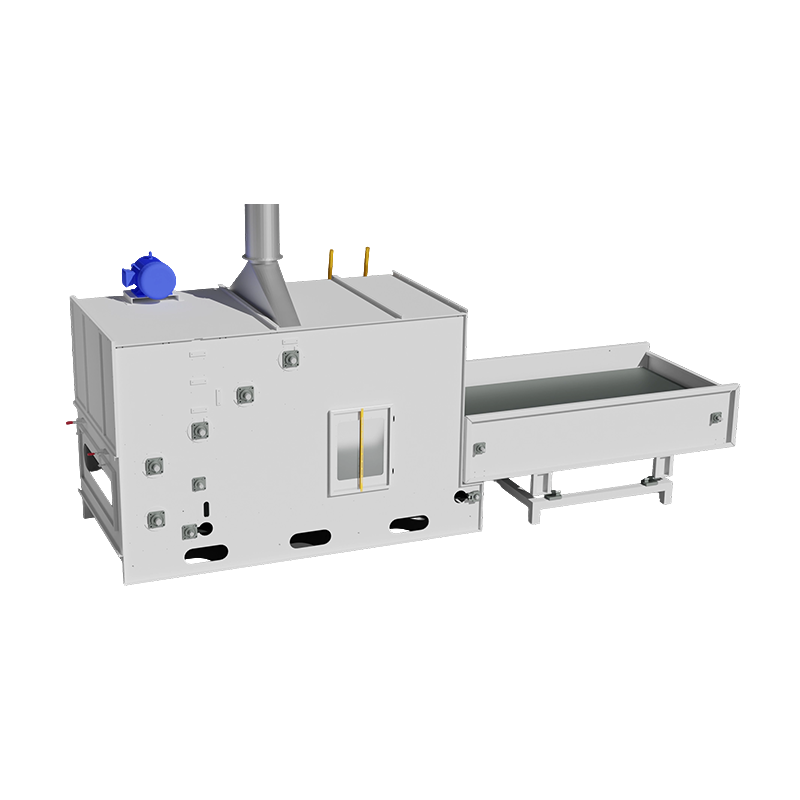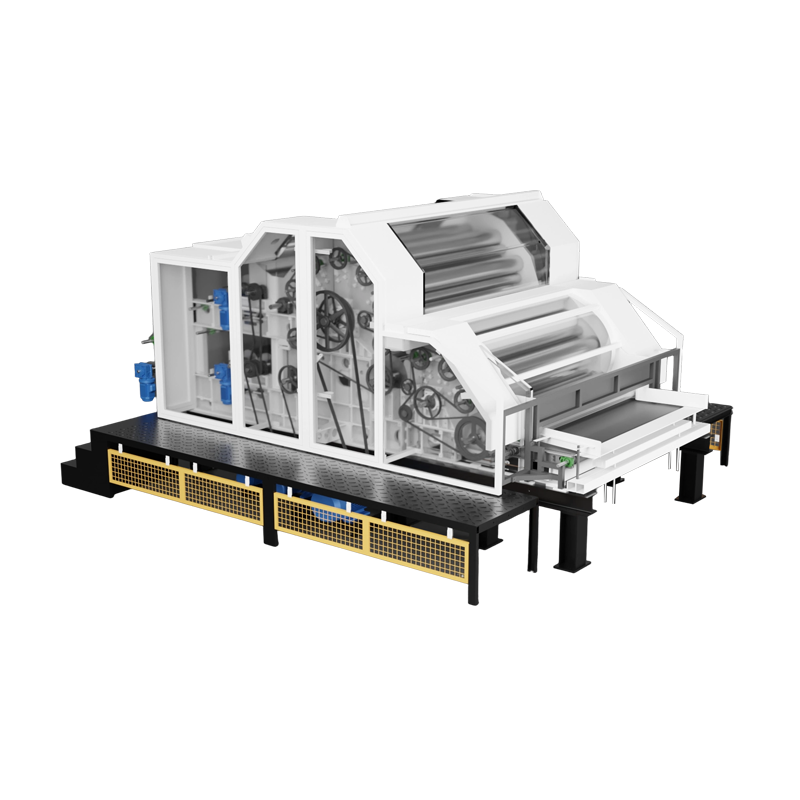


Content
- 1 What Is a Nonwoven Fabric Ironing Machine?
- 2 Main Functions of the HYTG Nonwoven Fabric Ironing Machine
- 3 Working Principle and Process Flow
- 4 Engineering Design and Construction
- 5 Key Technical Specifications
- 6 Advantages Compared with Basic or Conventional Finishing Equipment
- 7 Applications in Nonwoven Fabric Manufacturing
- 8 Manufacturing Strengths and Production Capability
- 9 Advanced Manufacturing and Quality-Control Process
- 10 Installation and Commissioning Considerations
- 11 Operation and Maintenance
- 12 How to Select the Correct Configuration
- 13 Energy Efficiency and Production Economics
- 14 Why Manufacturer Support Matters
- 15 Safety and Responsible Operation
- 16 Purchasing Checklist
- 17 Quality Results That Buyers Should Measure
- 18 Conclusion
- 19 Questions and Answers
- 19.1 What is the main purpose of the HYTG ironing machine?
- 19.2 What types of nonwoven fabric can be processed?
- 19.3 Is the machine available with different roller configurations?
- 19.4 Can the distance between the rollers be adjusted?
- 19.5 What heating methods are available?
- 19.6 What is the maximum operating temperature?
- 19.7 What widths are available?
- 19.8 How is the machine controlled?
- 19.9 Can the machine be integrated into an existing production line?
- 19.10 What safety features are included?
- 19.11 Does the manufacturer provide customization?
- 19.12 What warranty is provided?
- 19.13 How long is the lead time?
- 19.14 Can the machine process thick nonwoven fabric?
- 19.15 What information should be supplied when requesting a quotation?
- 20 References
- 21 Product: HYTG Nonwoven Fabric Ironing Machine
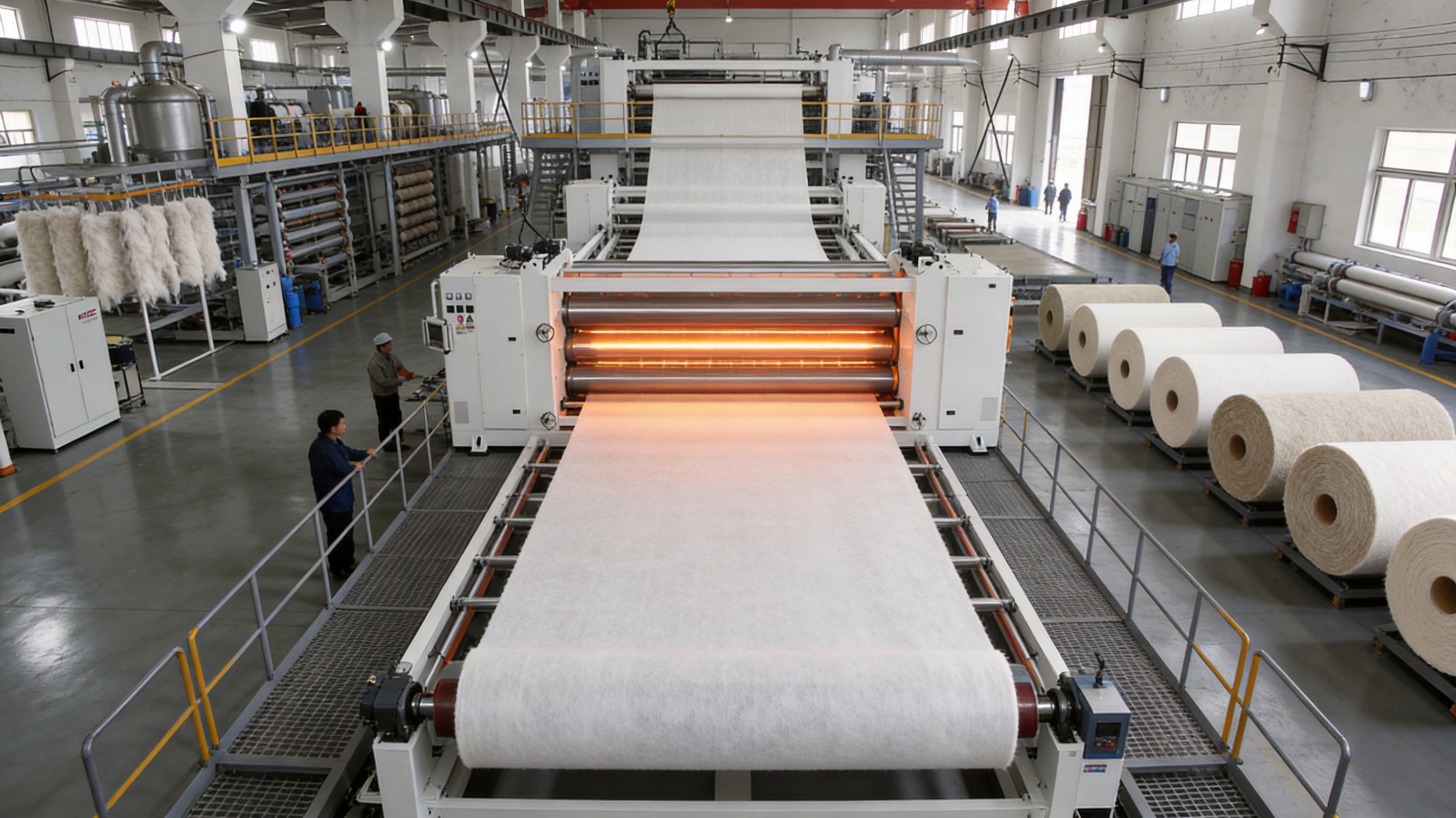
In nonwoven fabric manufacturing, finishing quality has a direct effect on appearance, hand feel, thickness uniformity, dimensional stability, and the commercial value of the finished material. Even when the opening, blending, carding, web forming, and needle punching stages are properly controlled, the fabric may still show an uneven surface, visible needle marks, rough texture, variable loft, or insufficient luster. A hot ironing and calendering process is often required to improve these characteristics and produce a more consistent industrial textile.
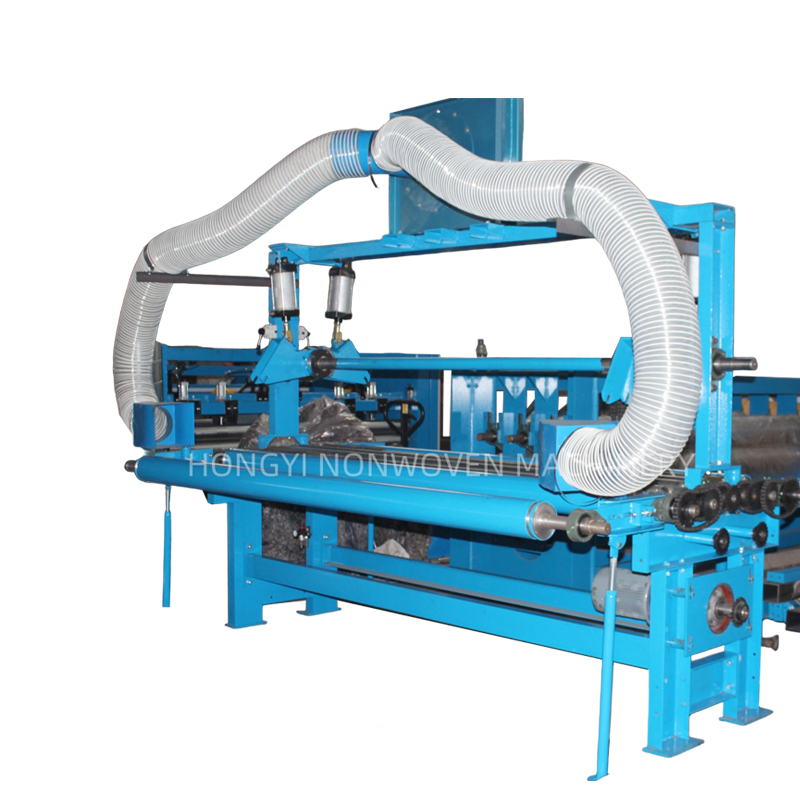
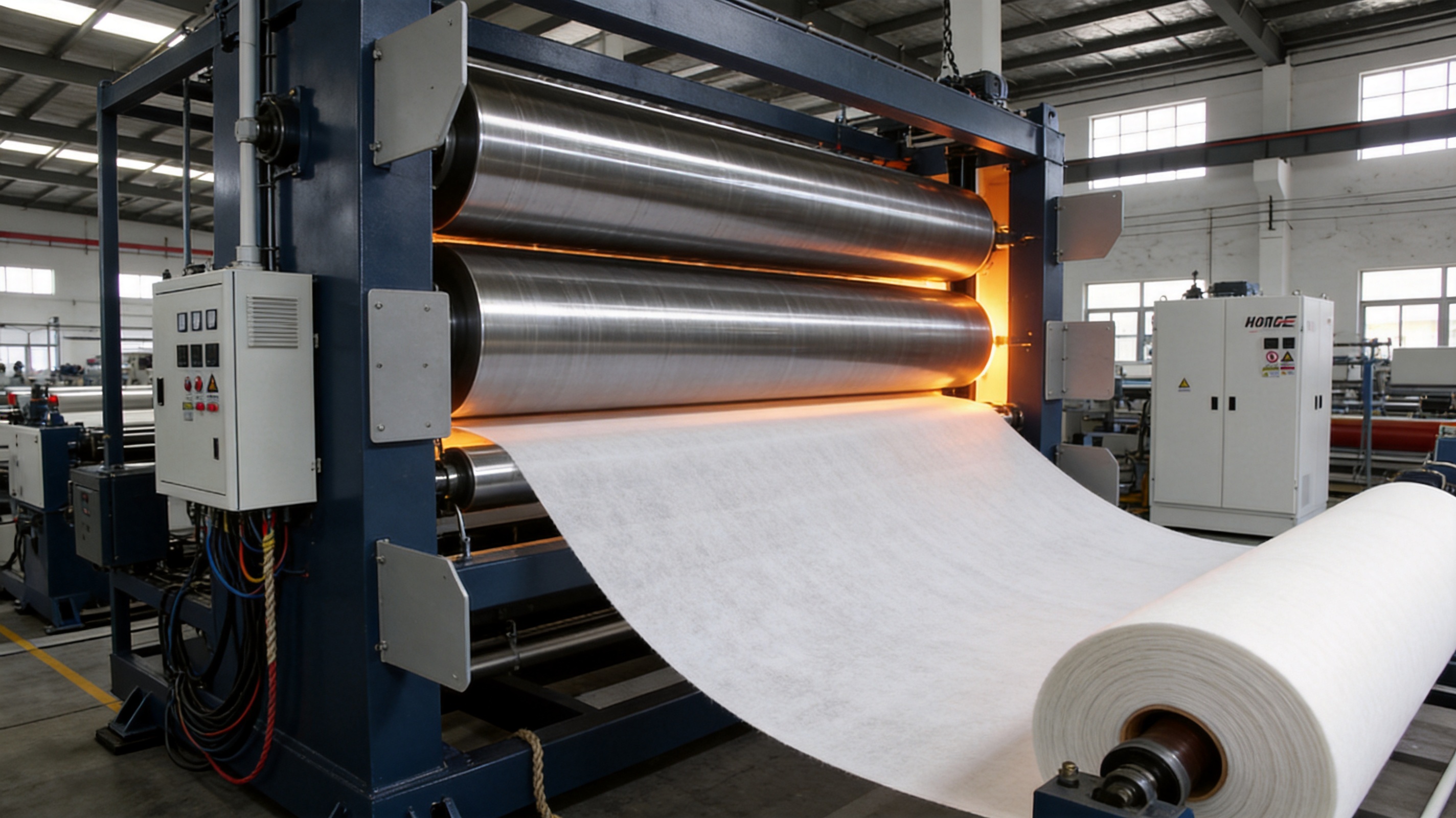
The HYTG Nonwoven Fabric Ironing Machine is designed for the hot pressing and surface finishing of needle punched and other nonwoven fabrics. It uses heated rollers to apply controlled heat and pressure to the passing web. The result is a flatter and neater surface, improved hand feeling, better appearance, and more uniform fabric formation. Depending on the production requirement, the machine can be configured with two or three rollers, working widths from 2,000 mm to 7,600 mm, and automatic PLC and touch-screen control.
This equipment is suitable for polyester fiber, polypropylene staple fiber, and other nonwoven raw materials. It can be integrated into nonwoven fabric production lines or operated as an independent finishing unit. Its applications include geotextiles, carpets, filtration materials, automotive interior fabrics, cleaning cloths, furniture padding, insulation materials, industrial felts, and other needle punched products.
What Is a Nonwoven Fabric Ironing Machine?
A nonwoven fabric ironing machine is a thermal finishing machine that uses heated rollers to compress, smooth, and form a nonwoven web. Unlike ordinary textile ironing equipment designed mainly for garment finishing, an industrial nonwoven ironing machine is built for continuous production. It must process wide fabric rolls at stable speed while maintaining consistent temperature, pressure, roller alignment, and fabric tension.
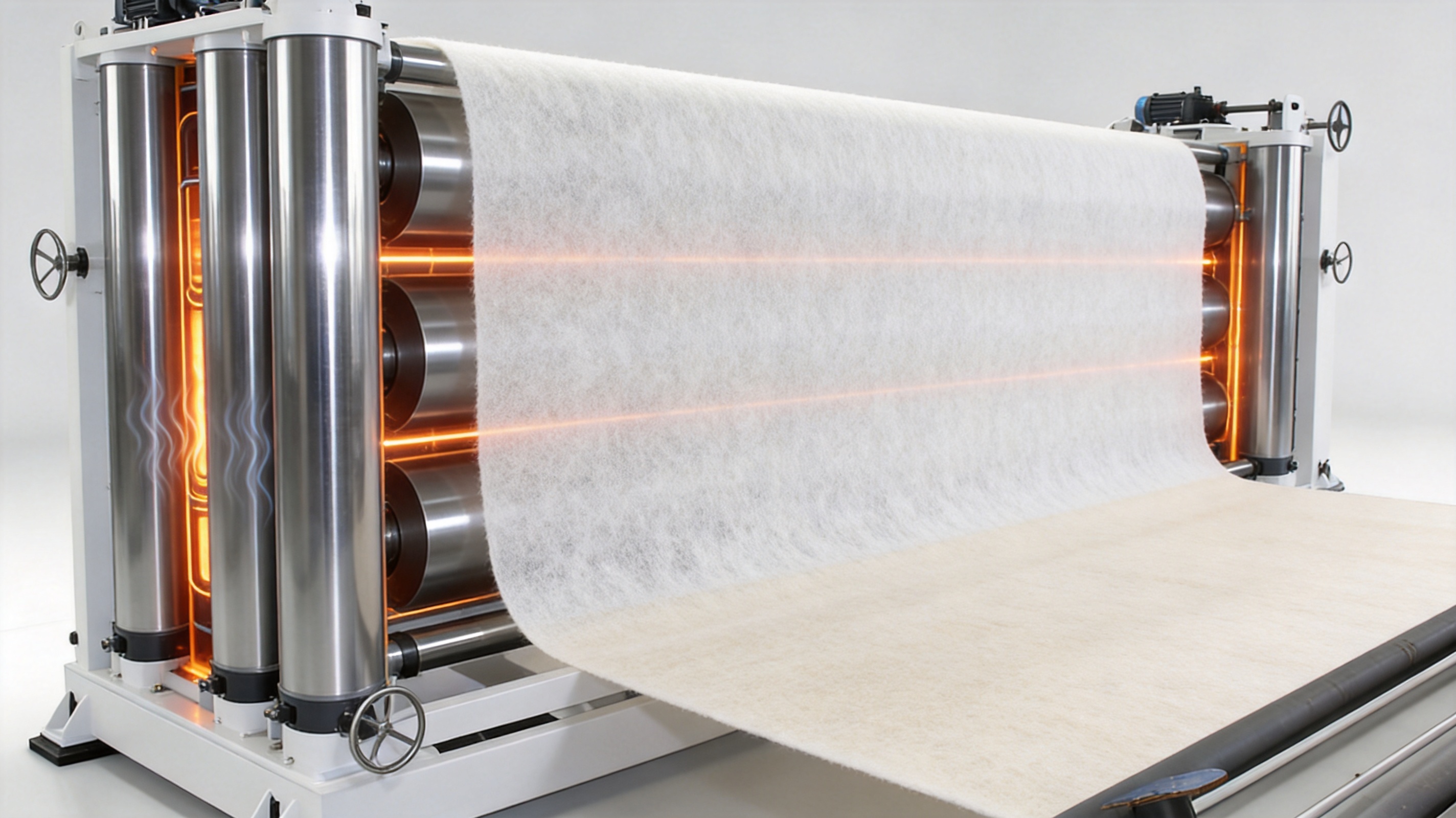
The HYTG machine uses two vertical hot rollers as its principal working components. A three-roller configuration is also available when a particular product requires additional contact time, higher production capacity, or more controlled finishing. The rollers are manufactured from heat-resistant alloy steel and finished with a chrome-plated or coated working surface, depending on the selected specification.
During operation, the rollers are heated through an electric heating system and heat-conducting oil circulation. The heating medium transfers thermal energy evenly across the roller body. When the nonwoven web enters the nip between the rollers, heat and pressure soften, compress, and reshape the surface fibers. The fabric then exits with a more regular surface and a more controlled thickness profile.
The distance between the rollers can be adjusted to suit different fabric weights, thicknesses, fiber blends, and finishing effects. This adjustment is essential because a light cleaning cloth, a dense geotextile, and a thick automotive felt cannot be processed under identical pressure conditions.
Main Functions of the HYTG Nonwoven Fabric Ironing Machine
Surface Smoothing
The primary function of the machine is to smooth the surface of a needle punched or thermally formed nonwoven fabric. Needling can create surface irregularities, fiber protrusions, and localized variations in density. Hot roller treatment presses these irregularities into a flatter and more orderly surface.
A smoother surface may improve the visual quality of the product and can also support subsequent processing, including coating, lamination, printing, cutting, sewing, bonding, and packaging. For materials supplied to customers who require a clean industrial appearance, the ironing stage can be a decisive part of the production process.
Thickness and Profile Control
Controlled roller pressure can reduce excessive loft and improve the consistency of the fabric profile. The actual amount of compression depends on fiber type, web structure, basis weight, moisture, temperature, production speed, and roller gap. Operators can adjust these factors to achieve the desired balance between softness, density, thickness, and mechanical performance.
Because the roller gap is adjustable, the machine can be configured for different nonwoven products rather than being restricted to one fixed fabric specification. The stated adjustment range can reach up to 50 mm, although the practical operating range depends on the machine model and the material being processed.
Improved Hand Feeling
Needle punched fabrics may initially feel harsh, bulky, or irregular. Thermal pressing can modify the surface texture and create a more uniform hand feeling. This is valuable in applications where the fabric is handled directly, used as a carpet layer, incorporated into an automotive interior, or converted into a consumer-facing product.
The final hand feeling is influenced by many parameters. The machine does not produce one universal texture; instead, the operator can develop a suitable process recipe by changing temperature, roller pressure, line speed, and the number of roller contacts.
Enhanced Luster and Appearance
When fibers are arranged and compressed more uniformly, the fabric may show improved surface luster and a cleaner visual effect. The machine is especially useful when the customer requires a smooth appearance rather than the open, lofty appearance of untreated needle punched fabric.
Surface appearance should be evaluated together with functional requirements. Excessive heat or pressure may reduce loft or alter the intended softness of the material. For this reason, stable controls and precise adjustment are more valuable than simply operating at the highest possible temperature or pressure.
After-Treatment Capability
The ironing machine can be used as a finishing unit after needling, thermal bonding, or other web-forming operations. It may also be used for selected after-treatment processes when the fabric requires improved smoothness before winding, cutting, coating, or further conversion.
Its continuous design allows it to be installed within a complete nonwoven production line. It can also be supplied as an individual machine for manufacturers that already possess opening, carding, web forming, or needle punching equipment.
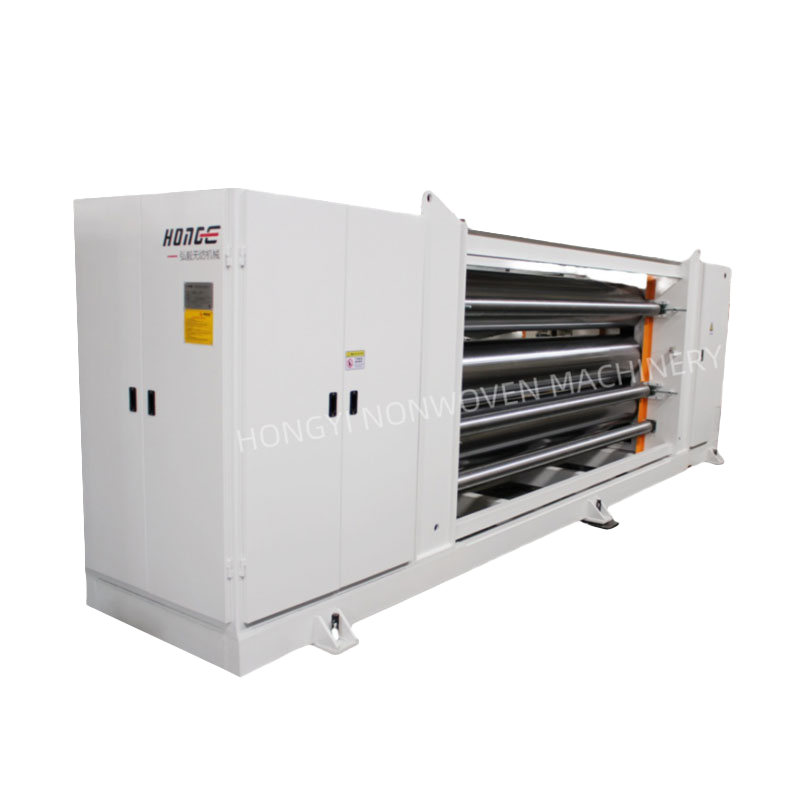
HYTG Nonwoven Fabric Ironing Machine
Working Principle and Process Flow
Fabric Feeding
The incoming nonwoven fabric is guided toward the ironing section by a feeding and alignment arrangement. Stable feeding is important because wrinkles, diagonal movement, or uneven tension can produce nonuniform finishing. The fabric should enter the roller nip in a flat and controlled condition.
Depending on the production line layout, the ironing machine may receive fabric directly from a needle punching machine, a thermal bonding unit, an intermediate accumulator, or a previously wound roll. The exact feeding configuration can be customized according to the plant arrangement and the characteristics of the material.
Roller Heating
Electric heating tubes heat the heat-conducting oil or the applicable thermal circulation system. The oil transfers heat to the interior of the rollers and distributes it across the working width. This indirect heating arrangement supports a stable working surface temperature and reduces the risk of localized hot spots when properly designed and maintained.
The machine specification includes separate temperature control for the rollers. Independent control allows operators to establish different temperature settings where required. In a three-roller configuration, separate temperature management can be particularly useful for developing a gradual thermal treatment or compensating for different heat transfer conditions.
Hot Pressing and Forming
As the fabric passes between the heated rollers, the combination of temperature and compression changes the surface structure. Thermoplastic fibers such as polypropylene can soften when heated within their appropriate processing range, while polyester fibers respond according to their thermal properties and the selected process conditions.
The rollers press the web while the heat helps stabilize the contact surface. The machine is not intended to replace all forms of thermal bonding or resin treatment. Instead, it provides a controlled finishing process that can complement needle punching and other nonwoven technologies.
Roller Gap Adjustment
The gap between the rollers determines the mechanical compression applied to the fabric. The HYTG design supports electrically adjustable roller spacing, with a stated range of up to 50 mm. Some detailed specifications also refer to manual adjustment for particular configurations. The final adjustment method should therefore be confirmed for the selected model before ordering.
Gap adjustment allows the machine to accommodate thick and thin products. A larger opening may be used for a high-loft fabric that only needs light surface contact, while a narrower setting may be selected for a denser, flatter, and more compact finish.
Temperature Stabilization and Fabric Exit
Automatic constant-temperature control helps maintain stable operation during continuous production. After passing through the hot rollers, the fabric exits to a cooling, inspection, winding, or cutting section. The cooling and winding conditions should be selected so that the finished fabric does not re-expand excessively or develop new wrinkles.
In a complete line, sensors and control signals can coordinate the ironing machine with upstream and downstream equipment. This supports smoother production and reduces the need for frequent manual intervention.
Engineering Design and Construction
Welded Machine Frame
The frame is manufactured from high-quality welded armor plate. A rigid frame is important because the roller assembly must withstand continuous thermal expansion, mechanical loading, vibration, and the pressure generated at the nip. Insufficient rigidity can contribute to roller deflection, uneven pressure distribution, noise, and premature wear.
The frame design also supports the positioning of the drive system, heating components, guide plates, safety devices, and access points for maintenance. The use of a robust welded structure is intended to provide a stable foundation for wide-width production.
Heat-Resistant Rollers
The heated rollers are manufactured from heat-resistant alloy steel. A detailed configuration identifies quenched and tempered 45-grade steel, with the roller surface finished using a protective coating. Another stated specification describes a chrome-plated surface with a plating thickness of approximately 0.1 mm and a high smoothness level.
Because specifications can vary between configurations, buyers should confirm the final roller material and surface treatment in the technical contract. Chrome plating, PTFE coating, and other surface treatments offer different combinations of hardness, release performance, friction behavior, corrosion resistance, and maintenance requirements.
The reference model includes a roller diameter of approximately 420 mm and a working width of about 2,850 mm. Other working widths are available from approximately 2,000 mm to 7,600 mm. Roller diameter, width, wall thickness, heating capacity, and drive power must be matched to the required production speed and fabric characteristics.
Electric Drive and Inverter Control
An inverter motor is used for roller drive and speed control. Inverter technology allows the operator to adjust the line speed and coordinate the ironing section with other machines. This is useful when changing from one product to another or when optimizing the relationship between temperature, pressure, and residence time.
Speed control also helps reduce startup shock and allows the machine to accelerate gradually. When a complete production line is supplied, inverter control can support synchronization with carding, needle punching, winding, and cutting equipment.
Protective Guide Plate
A protective guide plate is included to help protect operators from the hot roller area and to guide the fabric correctly toward the working zone. The guide structure must remain clean and correctly adjusted because accumulated fiber or incorrect alignment can affect fabric movement.
Emergency Brake Safety Rope
The machine includes a brake safety rope device. This provides an emergency stopping method along the accessible working area. In an industrial environment, emergency systems should be inspected regularly and tested according to the plant’s safety procedures.
Safety functions are most effective when combined with operator training, clearly marked hot surfaces, lockout and isolation procedures, routine inspection, and suitable personal protective equipment.
Key Technical Specifications
| Item | Specification or Available Configuration |
|---|---|
| Product type | Nonwoven fabric ironing and hot pressing machine |
| Model | HYTG |
| Machine structure | Two-roller vertical type or three-roller configuration |
| Working width | Approximately 2,000 mm to 7,600 mm |
| Reference working width | Approximately 2,850 mm for a detailed model configuration |
| Reference roller diameter | Approximately 420 mm |
| Heating method | Electric heating and hot oil circulation |
| Temperature | Up to approximately 220°C in the referenced configuration |
| Roller gap | Electrically adjustable on the stated configuration; adjustment range up to 50 mm |
| Control system | PLC and touch screen |
| Drive | Inverter motor |
| Raw materials | Polyester fiber, polypropylene staple fiber, and other suitable fibers |
| Automation | Automatic operation with customized control configuration |
| Certification information | CE and ISO9001-related certification stated for the product range |
| Warranty | One year stated after-sales warranty |
| Lead time | Approximately two to three months, subject to configuration |
The table provides representative information from the supplied product data. Actual electrical power, voltage, heating capacity, production speed, roller configuration, and control functions should be confirmed according to the final model and the customer’s process requirements. One source specification lists “24W” as power, which is not consistent with the expected scale of a wide industrial hot roller machine; this figure should be verified before technical approval.
Advantages Compared with Basic or Conventional Finishing Equipment
Wide-Width Production
Many basic ironing units are designed for narrow webs or small-scale fabric processing. The HYTG range is available for working widths from approximately 2,000 mm to 7,600 mm, allowing it to serve both medium-width and large-width nonwoven production lines.
Wide-width capability can reduce the number of parallel passes required for large rolls. It may also help manufacturers produce finished goods in the widths demanded by construction, automotive, furniture, filtration, and flooring customers.
Two-Roller and Three-Roller Flexibility
A two-roller vertical structure offers a comparatively direct and compact process route. A three-roller option can provide additional contact and more process flexibility. This makes the equipment more adaptable than a fixed single-configuration machine.
The appropriate choice depends on the fabric type, production speed, required finish, available floor space, and capital budget. Manufacturers can select the configuration that best matches their product portfolio rather than paying for unnecessary capacity or accepting limitations imposed by a standard machine.
Separate Temperature Control
Separate temperature control for the rollers is a significant advantage over simple systems in which all heated surfaces operate at one common setting. Different roller temperatures can be used to fine-tune the finishing effect, compensate for heat loss, and improve process stability across a wide fabric.
Automatic constant-temperature control also reduces temperature fluctuations caused by changing production conditions. Stable thermal control is particularly important for thermoplastic fibers because overheating can cause excessive glazing, sticking, shrinkage, or loss of desired bulk.
Adjustable Compression
Fixed-gap machines are often restricted to a narrow product range. Adjustable roller spacing allows the HYTG machine to process fabrics with different thicknesses and densities. Operators can develop separate recipes for low-basis-weight fabrics, medium-density needle punched products, thick felts, and high-loft padding materials.
Adjustable compression also helps manufacturers respond to changing customer specifications. Instead of investing in separate finishing equipment for each product family, one machine may support multiple finishing grades when properly configured.
Improved Surface Quality
The smooth working surface of the roller is designed to contact the nonwoven evenly. The stated surface finish and protective treatment support a clean, uniform finish and can help reduce the risk of unwanted marks when the machine is correctly maintained.
Surface quality should not be judged only by roller polish. Roller roundness, alignment, thermal uniformity, pressure distribution, web guidance, and speed stability all contribute to the finished result. The machine’s integrated design addresses these factors as part of one continuous process.
PLC and Touch-Screen Operation
A PLC and touch-screen interface provide a more practical operating method than purely manual controls. Operators can monitor temperature, speed, roller position, alarms, and operating status from a centralized interface. Parameter settings can be documented and repeated for similar production orders.
Modern control systems also support easier troubleshooting. When a fault occurs, the display may identify the relevant sensor, drive, heating circuit, or safety condition. This can shorten downtime and help maintenance personnel locate the source of a problem.
Integration with Complete Lines
The machine can be used as part of a broader nonwoven production solution. The manufacturer supplies equipment for opening and blending, feeding and carding, web forming, needle punching, airlaying, winding, cutting, thermal bonding, and auxiliary operations. This wider capability can simplify equipment matching and technical communication for customers planning a complete line.
When one engineering team coordinates several machines, it is easier to define material flow, control interfaces, production speed, fabric width, and safety systems. This does not eliminate the need for detailed project engineering, but it can reduce compatibility risks compared with combining unrelated machines from several suppliers.
Applications in Nonwoven Fabric Manufacturing
Needle Punched Geotextiles
Geotextiles require a stable structure and consistent thickness for use in drainage, filtration, separation, road construction, erosion control, and civil engineering. A hot ironing process can improve the surface regularity of selected geotextile products and prepare them for winding or further treatment.
The finishing conditions must be selected carefully. Some geotextiles require high loft and permeability, so excessive compression could reduce performance. The adjustable roller gap and speed control allow the manufacturer to seek a suitable balance between smoothness and functional thickness.
Nonwoven Carpets and Floor Coverings
Carpet base materials and felt floor coverings may benefit from improved surface flatness and a more uniform appearance. Hot pressing can help stabilize the surface before coating, backing, lamination, or cutting.
For carpet-related products, hand feeling and visual quality are important. A controlled ironing process may reduce loose surface fibers and create a more consistent texture across the working width.
Automotive Interior Materials
Automotive interior materials often require precise thickness, clean appearance, stable dimensions, and compatibility with lamination or molding processes. Nonwoven felts used in trunk liners, door panels, headliners, wheel arch components, acoustic materials, and interior padding may be finished with hot rollers before conversion.
Automotive projects normally involve strict customer specifications. The machine can be customized with the required width, control logic, safety features, and line integration to support these production environments.
Cleaning Cloths and Industrial Wipes
Needle punched cleaning cloths may be manufactured from polyester, polypropylene, recycled fibers, or blended materials. Surface smoothness can influence wiping behavior, appearance, and user perception. Thermal finishing may also help prepare the material for slitting, perforation, printing, or packaging.
Furniture and Mattress Materials
Furniture padding, mattress components, upholstery felts, and other cushioning materials are often produced in a range of weights and thicknesses. A flexible roller gap and controlled temperature system are useful when the same production line must handle multiple product grades.
In these applications, the required finish may be relatively soft and low-pressure rather than highly compacted. The operator can select process settings that preserve sufficient resilience while improving surface regularity.
Filtration and Industrial Felts
Industrial felts and filtration media may require a controlled surface structure to support downstream coating or assembly. The ironing process can improve the consistency of one side or both sides of the material, depending on the machine configuration and process route.
Filtration performance must always be validated through product testing. A smoother surface does not automatically mean better filtration. Air permeability, pore structure, basis weight, tensile strength, and chemical compatibility should be evaluated after finishing.
Manufacturing Strengths and Production Capability
More Than Two Decades of Industry Experience
Changshu Hongyi Nonwoven Machinery Co., Ltd. has more than 20 years of experience in the nonwoven machinery field. This background covers individual machines and complete production lines, including needle punched geotextile lines, nonwoven carpet lines, airlaid waste felt lines, automotive interior material lines, cleaning cloth lines, wool felt lines, and jute felt lines.
Experience across multiple product categories is valuable because a finishing machine must be selected according to the fabric process rather than treated as an isolated piece of equipment. Fiber type, web formation, needle density, basis weight, moisture, and downstream requirements all influence the final ironing conditions.
Complete Equipment Portfolio
The company’s equipment portfolio includes opening and blending machines, feeding and carding equipment, airlay machines, needle punching machines, ironing machines, thermal bonding oven machines, winding machines, cutting machines, and auxiliary equipment.
This portfolio supports both complete line projects and individual machine purchases. Customers that already have upstream equipment can purchase a customized ironing unit, while customers starting a new factory can discuss a complete production route with one supplier.
Customized Engineering
The product information identifies customization as a standard capability. Width, roller arrangement, heating method, voltage, color, control system, and other configuration elements can be adapted according to customer needs.
Customization should begin with a detailed process questionnaire. Important information includes the fiber composition, input fabric structure, target basis weight, raw material moisture, finished width, maximum thickness, production speed, required surface effect, expected annual output, plant voltage, available floor space, and downstream equipment.
For more demanding projects, sample testing is recommended. A representative fabric sample can be processed at different temperatures, speeds, and roller gaps. The results can then be evaluated for thickness, surface appearance, hand feel, shrinkage, dimensional stability, tensile properties, and other customer requirements.
Quality-Oriented Fabrication
The machine frame, roller body, heating system, drive system, control cabinet, safety components, and guide devices must be manufactured and assembled as a coordinated system. The use of welded steel construction and heat-resistant roller materials reflects the need for long-term industrial operation.
Manufacturing quality also depends on machining accuracy, roller balancing, bearing installation, electrical wiring, temperature sensor placement, control software, and final inspection. These details influence whether a machine can maintain stable quality during long production runs.
International Market Experience
The company’s products have been supplied to more than 20 countries, including markets in Latin America, Asia, North Africa, the Middle East, and other regions. International experience requires attention to electrical standards, documentation, packaging, installation conditions, spare parts, language support, and after-sales communication.
Factory-direct supply can also help customers communicate technical requirements more efficiently. Instead of relying entirely on a general trading channel, buyers can discuss fabric specifications and machine configuration with a manufacturer experienced in nonwoven production equipment.
Advanced Manufacturing and Quality-Control Process
Technical Requirement Review
Manufacturing should start with a technical review rather than immediate fabrication. The supplier evaluates the customer’s product, line speed, width, material type, heating requirements, control preferences, and site conditions. This review helps avoid selecting a roller width or heating system that is unsuitable for the intended output.
Structural Design
Engineering personnel design the frame, roller supports, drive arrangement, heating system, guide components, and safety devices. Finite element analysis or equivalent structural checking may be used where appropriate to evaluate frame stiffness, roller loading, and deflection for wide-width machines.
Roller Machining
Roller manufacturing requires careful attention to concentricity, straightness, wall structure, surface hardness, and finish. The roller must rotate smoothly and transfer pressure consistently across the fabric width. After machining and surface treatment, the roller should be inspected for dimensional accuracy and surface integrity.
For wide machines, thermal expansion must also be considered. A roller that is uniform at room temperature may behave differently when heated to the operating temperature. Correct design and calibration are therefore important for maintaining a consistent nip across the working width.
Heating-System Assembly
Heating tubes, thermal circulation components, temperature sensors, insulation, valves, and control circuits are assembled according to the selected heating method. The system should be checked for electrical safety, oil circulation, temperature response, leakage, and control stability.
The use of heat-conducting oil supports indirect and relatively even transfer of thermal energy. The oil type, fill level, circulation condition, and replacement interval should follow the manufacturer’s operating instructions.
Electrical and PLC Integration
The control cabinet integrates the PLC, touch screen, inverter, temperature controllers, sensors, emergency circuits, and motor protection devices. Wiring should be clearly identified and tested before shipment. The control program should reflect the selected roller configuration and the customer’s required operating sequence.
Control functions may include startup and shutdown logic, temperature monitoring, roller speed control, gap adjustment, alarm indication, emergency stopping, and communication with upstream or downstream machines.
Factory Testing
Before shipment, the machine should undergo mechanical, electrical, thermal, and safety checks. Factory testing may include empty running, roller rotation, heating response, temperature stability, inverter operation, emergency stop testing, sensor calibration, and inspection of the roller gap adjustment.
Where possible, customer samples can be used for trial processing. A sample test helps confirm whether the selected roller diameter, temperature range, pressure, and speed are appropriate for the intended fabric.
Installation and Commissioning Considerations
Site Preparation
The installation site should provide a level and sufficiently strong foundation. The floor must support the machine frame, roller assembly, control cabinet, fabric rolls, and dynamic loads during operation. Adequate space should be reserved for fabric feeding, product delivery, maintenance access, and safe operator movement.
Electrical power, grounding, ventilation, lighting, compressed air if required, and thermal-fluid service arrangements should be prepared before the machine arrives. The customer should also verify that the plant voltage and frequency match the final equipment specification.
Mechanical Alignment
Correct alignment is essential for wide-width ironing. The frame must be leveled, roller supports checked, guide devices aligned, and drive components installed according to the commissioning procedure. Misalignment can lead to uneven pressure, fabric tracking problems, roller wear, or excessive vibration.
Heating-System Commissioning
The heating system should be filled and checked according to the supplier’s instructions. The machine should be warmed gradually so that the roller body and thermal fluid reach operating conditions evenly. Operators should not immediately apply maximum pressure or speed during the first heating cycle.
Temperature readings should be checked at multiple points where measurement equipment is available. Significant differences across the roller width may indicate sensor, circulation, insulation, or control problems that should be corrected before production begins.
Trial Production
Initial trials should use conservative speed and pressure settings. Operators can gradually increase the line speed while observing fabric tracking, surface appearance, temperature stability, thickness, and winding behavior.
Each product should have a documented process recipe. The recipe may include fabric type, input thickness, target output thickness, roller temperature, line speed, roller gap, tension, and winding conditions. Recording these parameters makes it easier to repeat successful production results.
Operation and Maintenance
Daily Inspection
Before starting the machine, operators should inspect the safety rope, protective guide plate, emergency stop functions, electrical cabinet, roller surface, bearings, drive system, and fabric path. Any fiber accumulation should be removed using an approved cleaning method after the equipment has been isolated and cooled where necessary.
Operators should also check for unusual noise, oil leakage, abnormal vibration, loose fasteners, and temperature alarms. Early detection can prevent a minor issue from becoming a major production interruption.
Roller-Surface Care
The roller surface directly contacts the nonwoven material and must be kept clean and undamaged. Adhesive contamination, melted fiber, dust, and foreign particles can leave marks on the fabric. Cleaning materials should be compatible with the roller coating or plating.
Sharp tools should not be used carelessly on a coated surface. If the roller becomes scratched, pitted, or uneven, the defect may transfer to every meter of fabric produced. Regular inspection is therefore important for maintaining a consistent finish.
Thermal-Fluid Management
Heat-conducting oil should be inspected and replaced according to the manufacturer’s maintenance schedule. The condition of the oil affects heat transfer, temperature stability, and the service life of the heating system. Contamination, oxidation, insufficient level, or poor circulation can reduce heating performance.
Any leakage around pipes, seals, pumps, or connections should be addressed promptly. Hot oil presents a burn and fire hazard, so maintenance must be performed by trained personnel using appropriate isolation procedures.
Electrical and Control-System Maintenance
Temperature sensors, inverter connections, PLC inputs, motor terminals, cooling fans, and cabinet wiring should be inspected periodically. Dust and fiber should not be allowed to accumulate inside the electrical cabinet. The touch screen and control panel should be kept clean and protected from impact and moisture.
Backup copies of control parameters and software settings are recommended. If a control component must be replaced, documented settings can reduce the time required to restore production.
Preventive Maintenance
Preventive maintenance should include bearing lubrication where applicable, fastener checks, drive inspection, roller-gap calibration, temperature sensor verification, safety-device testing, and review of heating performance. Maintenance intervals should be based on operating hours, fabric contamination, production speed, and the working environment.
A maintenance log can record the date, machine hours, inspection result, replaced parts, oil condition, alarm history, and corrective action. This information is useful for predicting component replacement and planning production downtime.
How to Select the Correct Configuration
Determine the Fabric Width
The selected working width should correspond to the finished fabric width and the required edge trim allowance. A machine that is too narrow may require multiple passes or create production limitations. A machine that is substantially wider than necessary may increase investment, energy consumption, and floor-space requirements.
Evaluate Fabric Thickness and Basis Weight
Input thickness and basis weight influence the required roller gap, pressure, heating capacity, and speed. Thick and high-loft products may need a larger opening and longer thermal contact. Thin materials may require more delicate handling to prevent excessive glazing, sticking, or deformation.
Choose Two or Three Rollers
A two-roller machine may be sufficient for basic surface smoothing and compacting. A three-roller machine may be more suitable when the process requires additional contact, higher output, more staged temperature control, or a particular surface effect.
The decision should be based on trial results and production planning rather than on roller number alone. The supplier can recommend a configuration after reviewing the customer’s fabric samples and output targets.
Confirm Heating Requirements
Different fibers respond differently to thermal treatment. Polyester, polypropylene, recycled blends, natural fibers, and mixed compositions may require different temperatures and processing speeds. The customer should provide accurate fiber information so that the heating and control system can be correctly selected.
Plan Line Integration
If the machine will be installed in a complete line, its working width and speed must match the carding, web forming, needle punching, thermal bonding, winding, and cutting equipment. Communication between PLC systems may be required to coordinate line speed, emergency stops, material accumulation, and fault signals.
Energy Efficiency and Production Economics
Energy consumption is an important operating cost for thermal finishing equipment. The actual consumption depends on roller diameter, working width, target temperature, insulation, production speed, fabric moisture, ambient conditions, and the amount of heat lost during operation.
Indirect heating through heat-conducting oil can support efficient heat distribution when the system is correctly insulated and maintained. Automatic temperature control prevents unnecessary overheating, while inverter speed control allows the operator to match production speed to the product requirement.
Production economics should be assessed using the complete process rather than heating power alone. A stable ironing machine may reduce waste, lower rework, improve saleable yield, and reduce manual finishing. Better surface quality can also allow the manufacturer to serve higher-value applications.
Manufacturers should evaluate the following factors when calculating the return on investment:
• Finished fabric output per hour.
• Heating energy consumption per unit of fabric.
• Labor requirements and operator workload.
• Expected reduction in off-quality material.
• Maintenance and spare-parts costs.
• Product range supported by the selected configuration.
• Integration cost with existing equipment.
• Expected service life and resale or upgrade potential.
Why Manufacturer Support Matters
A nonwoven fabric ironing machine is a process machine, not simply a standalone mechanical device. Its performance depends on how it interacts with the fabric, the upstream web structure, and the downstream winding or cutting operation. Manufacturer support is therefore important during design, installation, commissioning, and production optimization.
A capable supplier can help determine the roller configuration, working width, heating method, drive arrangement, control system, and safety functions. It can also provide operating instructions, spare-parts recommendations, troubleshooting guidance, and technical training.
The supplied company information states that one-year warranty service is provided. Customers should request clear warranty terms covering the machine frame, rollers, heating components, motors, sensors, PLC, inverter, and other key components. Response time, remote support, spare-parts availability, and on-site service terms should also be confirmed before purchase.
Video outgoing inspection is listed as available. A recorded inspection can provide evidence that the machine has completed factory testing before shipment. Customers may also request inspection records, electrical drawings, foundation drawings, spare-parts lists, operating manuals, and recommended maintenance schedules.
Safety and Responsible Operation
Hot rollers and thermal oil operate at elevated temperatures and can cause severe burns. Only trained personnel should operate or maintain the machine. Hot surfaces should be clearly identified, protective devices must remain installed, and access to moving components should be controlled.
The emergency brake safety rope should be tested at scheduled intervals. Operators should know the location of the main electrical isolator and understand how to stop the machine during fabric wrapping, abnormal noise, excessive vibration, overheating, or other emergencies.
Loose clothing, jewelry, and unsecured hair should be kept away from moving rollers and drive components. Cleaning, adjustment, and maintenance should be performed only after the machine has stopped, cooled to a safe condition where necessary, and been isolated from energy sources.
Thermal oil handling requires additional care. Leaks should never be ignored, and the correct oil grade must be used. The production area should have suitable ventilation and fire-prevention measures in accordance with local regulations.
Purchasing Checklist
Before ordering an industrial nonwoven fabric ironing machine, buyers should prepare a detailed technical checklist. The following questions help ensure that the selected equipment matches the production goal:
• What fiber types and blends will be processed?
• What are the minimum and maximum input thicknesses?
• What are the target basis weights and finished thicknesses?
• What working width and usable edge allowance are required?
• What production speed and annual capacity are expected?
• Is a two-roller or three-roller configuration more suitable?
• Is electric heating, hot oil circulation, or a combined system required?
• What temperature range and control accuracy are needed?
• Is roller-gap adjustment manual or electrically controlled for the selected model?
• What PLC, touch-screen, communication, and data-recording functions are required?
• What plant voltage, frequency, and electrical standards apply?
• How will the machine connect to upstream and downstream equipment?
• What installation, training, warranty, and spare-parts services are included?
• Can sample testing be completed before final approval?
• What documentation will be supplied with the machine?
Clarifying these details helps prevent misunderstandings caused by general catalog specifications. It also allows the manufacturer to prepare a more accurate technical proposal and commercial quotation.
Quality Results That Buyers Should Measure
When evaluating the performance of an ironing machine, visual appearance alone is not sufficient. Buyers should define measurable quality indicators for each fabric type. These may include output thickness, thickness variation across the width, basis weight, width stability, surface roughness, luster, tensile strength, elongation, air permeability, shrinkage, and hand feel.
For geotextiles, permeability and mechanical performance may be more important than maximum smoothness. For carpets, appearance and surface uniformity may receive greater emphasis. For automotive materials, thickness tolerance, dimensional stability, odor, bonding behavior, and lamination compatibility may be critical.
Trial testing should compare untreated and treated fabric. The test should also include several machine settings so that the customer can identify the most suitable operating window. A narrow operating window may indicate that the fabric or machine configuration needs further adjustment.
Conclusion
The HYTG Nonwoven Fabric Ironing Machine provides a continuous thermal finishing solution for manufacturers that need smoother, flatter, and more uniform nonwoven fabrics. Its main process advantages include heated roller pressing, adjustable roller spacing, separate temperature control, inverter-driven operation, PLC and touch-screen management, wide working-width options, and two-roller or three-roller flexibility.
The machine is suitable for a broad range of products made from polyester fiber, polypropylene staple fiber, and other compatible materials. It can improve surface appearance, hand feeling, luster, thickness consistency, and readiness for downstream conversion. Its application range includes geotextiles, carpets, automotive interior materials, cleaning cloths, furniture felts, mattress materials, filtration products, and industrial nonwovens.
The manufacturing strength behind the product includes more than 20 years of nonwoven machinery experience, a broad equipment portfolio, customized engineering, international project experience, and the ability to supply individual units or complete production lines. The welded machine frame, heat-resistant rollers, thermal circulation system, inverter drive, safety rope, and automatic control platform are designed for reliable industrial production.
For the best result, the machine should be selected through a detailed review of the fabric, line speed, working width, thermal properties, target finish, and plant conditions. Sample testing, precise commissioning, operator training, and preventive maintenance are equally important. With the correct configuration and process settings, an industrial nonwoven ironing machine can become a valuable finishing step that improves product quality and strengthens manufacturing competitiveness.
Questions and Answers
What is the main purpose of the HYTG ironing machine?
The main purpose is to hot press and finish nonwoven fabrics. It smooths the surface, improves flatness and neatness, enhances hand feeling and luster, and can help produce a more uniform fabric profile.
What types of nonwoven fabric can be processed?
The machine is intended for suitable needle punched and other nonwoven materials made from polyester fiber, polypropylene staple fiber, and other compatible fibers. The exact suitability should be confirmed through sample testing, especially for blends containing heat-sensitive materials.
Is the machine available with different roller configurations?
Yes. The product range includes a two-roller vertical configuration and a three-roller configuration. The appropriate option depends on the fabric, production speed, required finish, and available factory space.
Can the distance between the rollers be adjusted?
Yes. The supplied information states that the roller distance can be adjusted, with an adjustment range of up to 50 mm. The adjustment method may differ by model, so buyers should confirm whether the selected configuration uses electrical or manual adjustment.
What heating methods are available?
The listed heating methods include hot oil circulation and electric heating. The machine uses electric heating tubes to heat the thermal medium, which then transfers heat to the roller working surface. The final heating arrangement should be confirmed according to the selected model.
What is the maximum operating temperature?
A detailed product configuration lists a temperature of approximately 220°C. The actual operating temperature depends on the roller design, heating system, fiber type, fabric structure, and process requirements. The machine should always be operated within the approved technical range.
What widths are available?
The stated working-width range is approximately 2,000 mm to 7,600 mm. A detailed reference configuration identifies a width of about 2,850 mm. The final usable width should be selected according to the finished product and line capacity.
How is the machine controlled?
The machine uses PLC and touch-screen control. An inverter motor controls the drive speed, while temperature controls manage the heating system. Depending on the configuration, the control system can also monitor roller position, alarms, safety circuits, and line communication.
Can the machine be integrated into an existing production line?
Yes. It can be used as an individual finishing machine or integrated into a complete nonwoven production line. Integration planning should consider web width, line speed, fabric tension, electrical signals, emergency stops, and the layout of upstream and downstream equipment.
What safety features are included?
The product information identifies a protective guide plate and brake safety rope device. These features should be used together with operator training, emergency-stop procedures, energy isolation, guarding, and regular safety inspections.
Does the manufacturer provide customization?
Yes. The product information states that configuration can be customized according to customer needs. Possible customization areas include working width, roller arrangement, voltage, color, heating method, control system, and line integration requirements.
What warranty is provided?
A one-year warranty is stated in the supplied information. Buyers should request the detailed warranty terms, including coverage, exclusions, response procedures, spare parts, remote support, and any conditions related to installation and operation.
How long is the lead time?
The listed lead time is approximately two to three months. Actual delivery time depends on the machine width, roller configuration, control requirements, customization, production schedule, inspection, and shipping arrangements.
Can the machine process thick nonwoven fabric?
It can be configured for different fabric thicknesses, provided the material falls within the approved technical range. Adjustable roller spacing is useful for thick or high-loft products. The exact thickness range and pressure conditions should be confirmed through technical review and testing.
What information should be supplied when requesting a quotation?
The buyer should provide fiber composition, input and finished widths, basis weight, thickness range, production speed, target surface effect, heating requirements, plant voltage, available floor space, upstream and downstream equipment, and any certification or documentation requirements.
References
1. Product technical information for the HYTG Nonwoven Fabric Ironing Machine, including machine structure, heating system, roller adjustment, control method, working width, and safety features.
2. Manufacturer-provided equipment information for nonwoven opening, blending, carding, web forming, needle punching, thermal bonding, winding, cutting, and complete production lines.
3. General principles of nonwoven fabric thermal finishing, hot pressing, calendering, and dimensional stabilization.
4. General industrial guidance for thermal-fluid systems, heated rollers, machine guarding, emergency stopping, and preventive maintenance.
5. General textile engineering practices for evaluating nonwoven thickness, basis weight, surface quality, air permeability, tensile properties, and thermal shrinkage.