

Content
- 1 What Is an Edge-Trim Opener?
- 2 Why Edge-Trim Recycling Matters in Nonwoven Production
- 3 Core Function of the HYBK Edge-Trim Opener
- 4 Important Technical Specifications
- 5 Photoelectric Sensing and Electronic Weighing
- 6 Automatic Operation and Coordinated Control
- 7 Flexible Quantitative Feeding
- 8 Opening Cylinder Design and Mechanical Performance
- 9 Advantages Compared with Basic or Less Integrated Solutions
- 10 Manufacturing Strengths Behind the Equipment
- 11 Engineering and Manufacturing Process Considerations
- 12 Integration into a Nonwoven Production Line
- 13 Applications for Recovered Edge Trim
- 14 Operating Benefits for Different Factory Sizes
- 15 Energy, Maintenance, and Lifecycle Considerations
- 16 Safety Requirements
- 17 Installation and Commissioning Guidance
- 18 How to Select the Correct Configuration
- 19 Quality Control When Reusing Opened Fiber
- 20 Why Work with an Experienced Nonwoven Machinery Supplier?
- 21 Commercial and Supply Information
- 22 Recommended Operating Procedure
- 23 Return on Investment and Cost Reduction
- 24 Environmental Contribution
- 25 Q&A
- 25.1 What materials can the HYBK Edge-Trim Opener process?
- 25.2 What is the production capacity of the machine?
- 25.3 Can the machine process edge trims in roll form?
- 25.4 Can different fibers be mixed using this equipment?
- 25.5 How does the electronic weighing system help production?
- 25.6 What is the function of the photoelectric sensor?
- 25.7 Is the feeding speed adjustable?
- 25.8 What are the main motor specifications?
- 25.9 How large is the machine?
- 25.10 Is the machine automatic?
- 25.11 Can the configuration be customized?
- 25.12 What products can use the recovered fiber?
- 25.13 Does the machine replace a complete carding or opening line?
- 25.14 What maintenance does the machine require?
- 25.15 What warranty is listed for the product?
- 25.16 How can a buyer determine whether the machine is suitable?
- 26 Conclusion
- 27 References
- 28 Product: HYBK Edge-Trim Opener
Nonwoven manufacturing depends on the efficient use of fiber, stable feeding, consistent opening, and reliable process control. During the production of nonwoven rolls, sheets, mats, and other products, lateral edge trims are often created as a normal result of slitting, width adjustment, trimming, and quality control. These edge trims may be supplied in compacted roll form, loose strip form, or irregular pieces. If they are discarded, a manufacturer loses usable raw material and increases waste-handling costs. If they are returned to the production system without suitable preparation, however, compacted strips and pieces can cause uneven feeding, fiber lumps, contamination, and instability in downstream equipment.
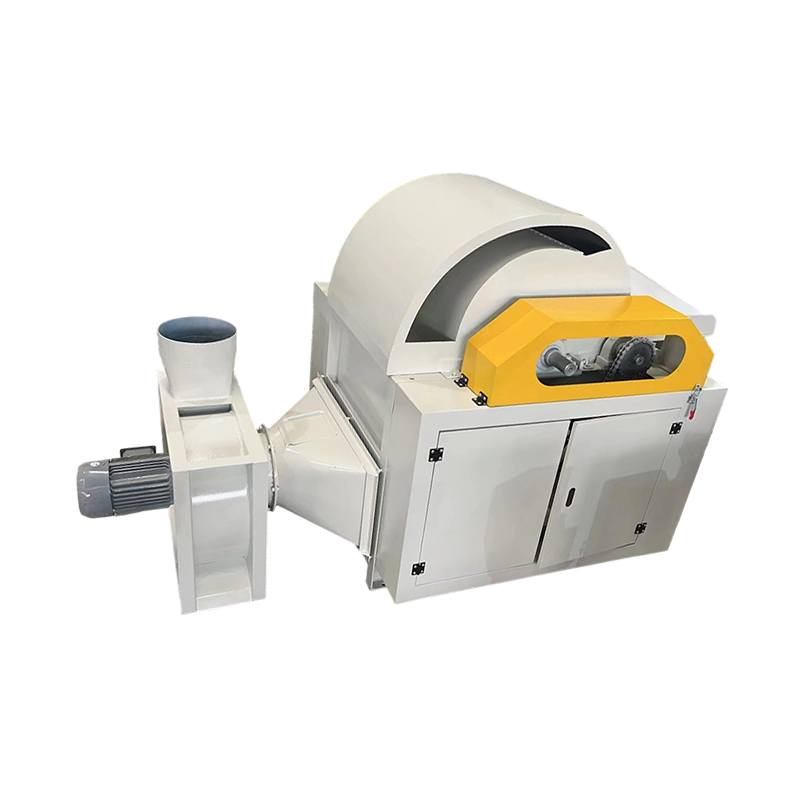
The HYBK Edge-Trim Opener is designed to address this specific challenge. It processes nonwoven lateral edge trims and converts them into loosened, reusable fiber that can be reintroduced into a suitable nonwoven production system. By preliminarily opening compacted packages and separating various fiber materials, the machine helps manufacturers improve raw-material utilization, lower waste, and create a more controlled recycling workflow.
Designed for use in assistant equipment for nonwoven fabric production, the HYBK Edge-Trim Opener can operate as an individual recycling unit or as part of a coordinated material-preparation system. Its photoelectric sensor, electronic weighing system, automatic operation, adjustable feeding, and robust opening cylinder provide a practical solution for plants seeking greater productivity and improved resource efficiency.
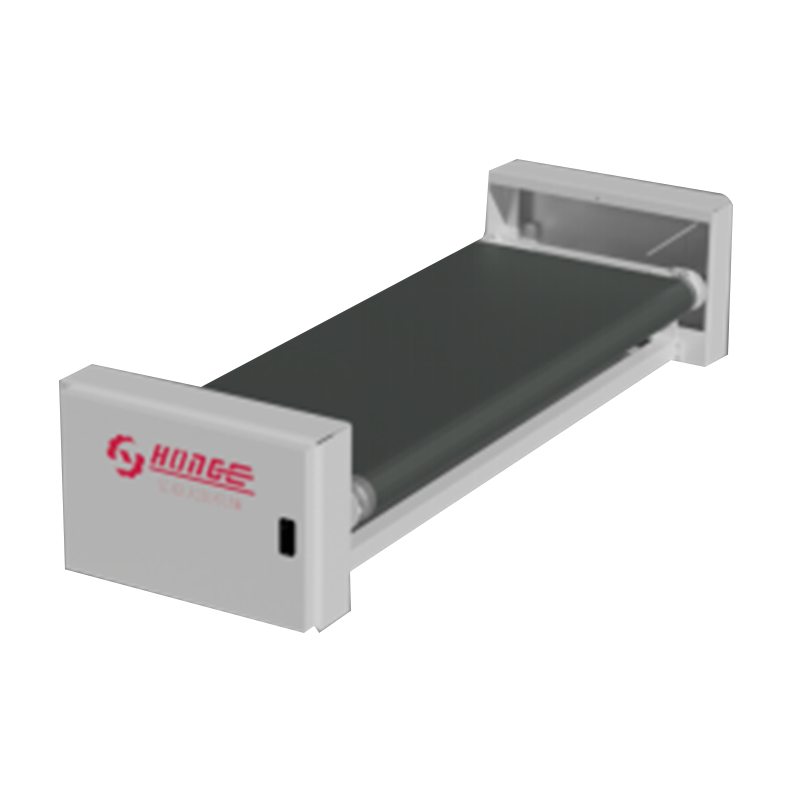
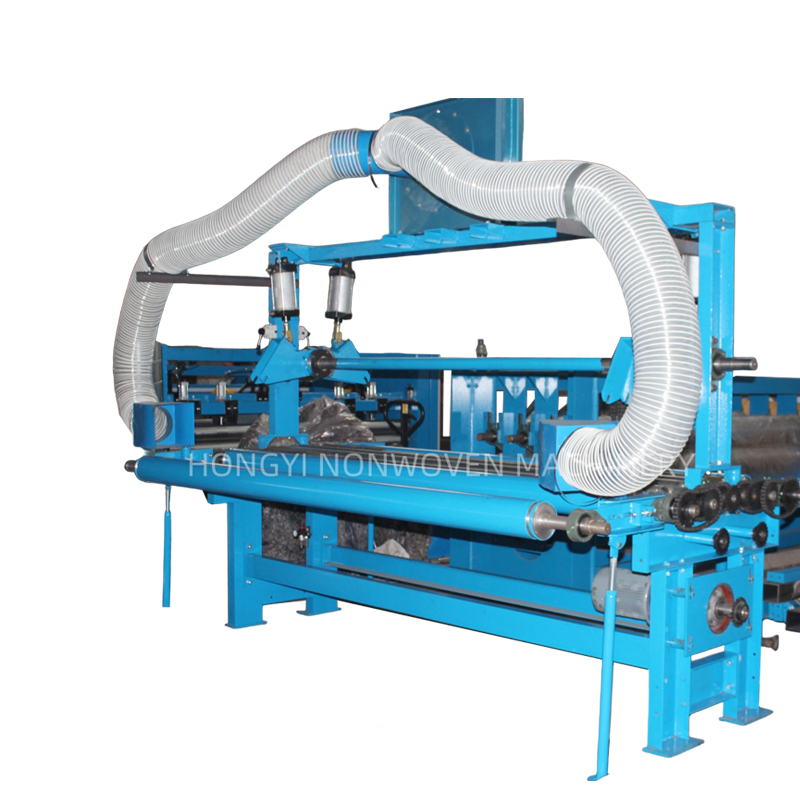
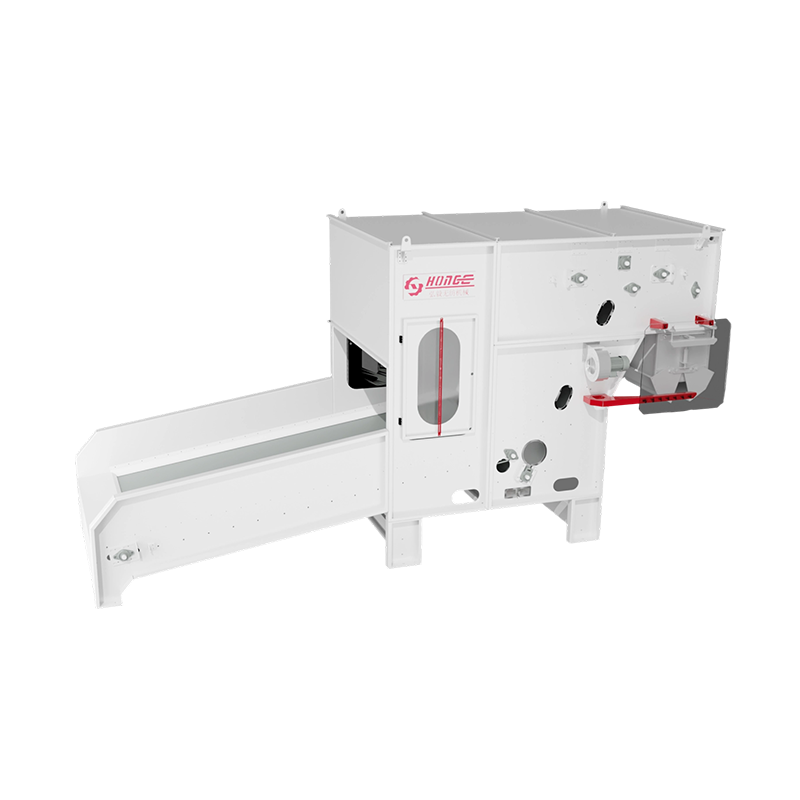
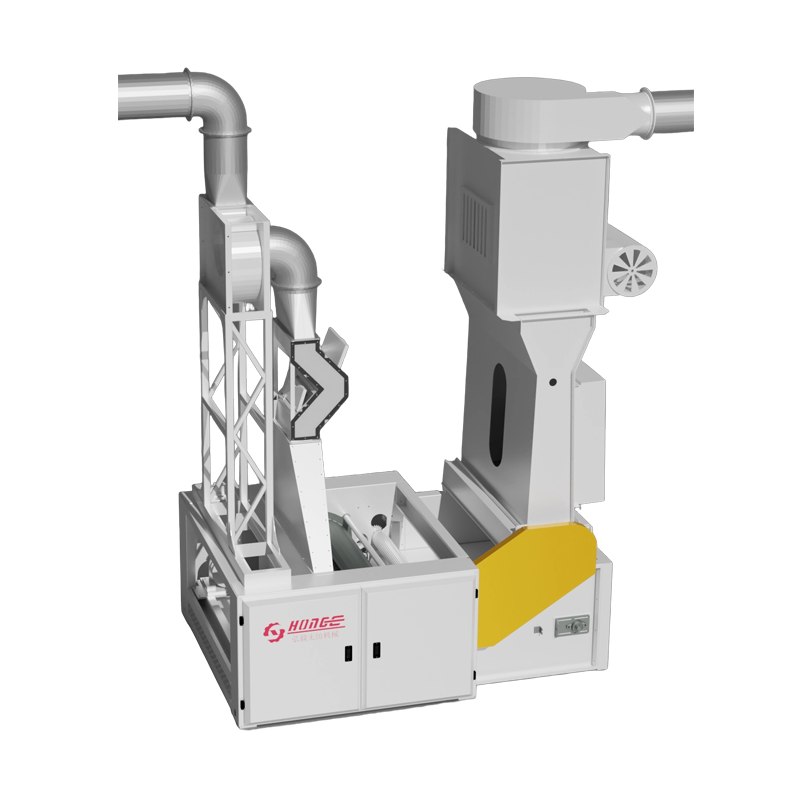
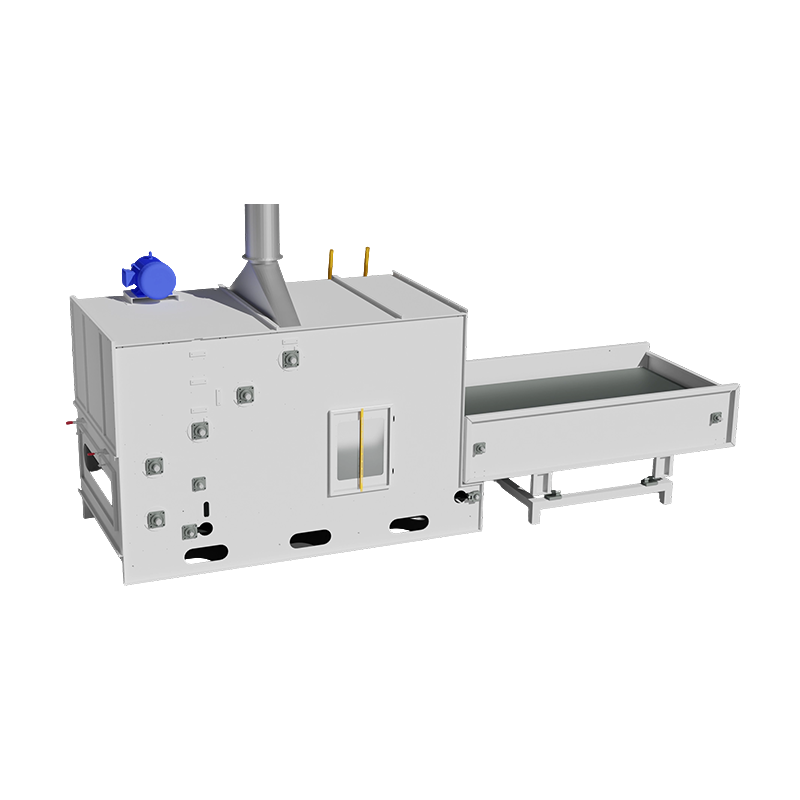
HYBK Edge-Trim Opener
What Is an Edge-Trim Opener?
An edge-trim opener is a machine used to process waste strips and pieces generated at the edges of nonwoven fabric. During production, the fabric width may need to be trimmed to achieve a precise finished size. The resulting side trims can contain valuable polyester, shoddy fiber, or other recoverable textile materials. Instead of sending these materials directly to disposal, the edge-trim opener loosens and opens them so that they can be reused as part of a controlled fiber blend.
Edge trims are not always easy to recycle mechanically. A long strip may become wound into a dense package. A narrow strip can fold over itself, while cut pieces may form compact bundles during collection and storage. This compactness prevents the material from flowing consistently through standard feeding equipment. The purpose of the HYBK machine is to break down this compacted condition and create a more suitable form for subsequent blending, carding, airlaying, or other production stages.
The machine performs preliminary opening rather than replacing every possible fiber-opening or refining stage in a complete production line. This makes it especially useful as a recycling and preparation unit before the recovered fiber is mixed with virgin or other reclaimed fibers. The final process configuration can be adapted according to the material, product specification, desired recycling ratio, and downstream equipment.
Why Edge-Trim Recycling Matters in Nonwoven Production
Nonwoven plants continuously handle large quantities of fiber. Even a modest percentage of trim waste can represent a significant annual material cost when production runs for multiple shifts. Recovering this material can improve the overall yield of the line and reduce dependence on newly purchased fibers.
Recycling edge trims also supports a more efficient production philosophy. Manufacturers are increasingly expected to reduce waste, use raw materials responsibly, and demonstrate better control over their environmental impact. Mechanical recovery of suitable nonwoven trims can contribute to these objectives without requiring a completely separate recycling factory.
There are several practical benefits:
1. Reduced raw-material loss: Usable fibers contained in lateral trims can be returned to production instead of being discarded.
2. Lower waste-handling costs: Less trim waste needs to be stored, transported, or sent to external processing.
3. Improved production economics: Recovered material may partially replace virgin or purchased fiber, depending on the product requirements.
4. Better housekeeping: A dedicated recycling unit creates a clearer and more organized route for edge trims.
5. Flexible material management: Different types of trims can be processed and blended according to a defined recipe.
6. Support for circular manufacturing: Reusing production waste helps a manufacturer move toward more resource-efficient operations.
Recycling must always be managed carefully. The recovered fiber should be evaluated for cleanliness, fiber length, color, moisture, and compatibility with the intended product. The edge-trim opener supports this process by preparing the material in a more consistent form, while the manufacturer determines the appropriate reuse percentage and final application.
Core Function of the HYBK Edge-Trim Opener
Preliminary Loosening of Compacted Material
The primary function of the HYBK is to loosen fibers from compacted packages. This is important because edge trims frequently arrive in forms that are too dense or irregular for direct feeding. The machine works on these materials before they enter the main production process, improving their flow and helping reduce the risk of bridges, blockages, and uneven dosing.
The opening action is intended to separate and loosen the material without treating the trim as ordinary bulk fiber from the beginning. This preliminary stage makes the recovered material more manageable and helps downstream machines receive a more suitable feed.
Processing of Different Fiber Types
The equipment is available for opening various fibers, with the listed raw-material applications including shoddy fiber and polyester fiber. This flexibility is useful for nonwoven factories that process more than one product type or use different fiber recipes. The exact performance depends on the material’s density, fiber length, moisture, bonding condition, and contamination level, so production trials and process evaluation remain important when introducing a new material.
Controlled Blending of Recovered Materials
Several units can be combined to establish a controlled mixture proportion for different raw-material fibers. This arrangement allows a plant to handle recovered edge trims alongside other fiber sources. A manufacturer may, for example, use separate feeding units for different fibers and adjust the contribution of each material according to the product specification.
Using multiple units rather than manually combining all materials can create a more repeatable process. It can also make recipe changes easier, particularly when the plant produces several grades of nonwoven material.
Important Technical Specifications
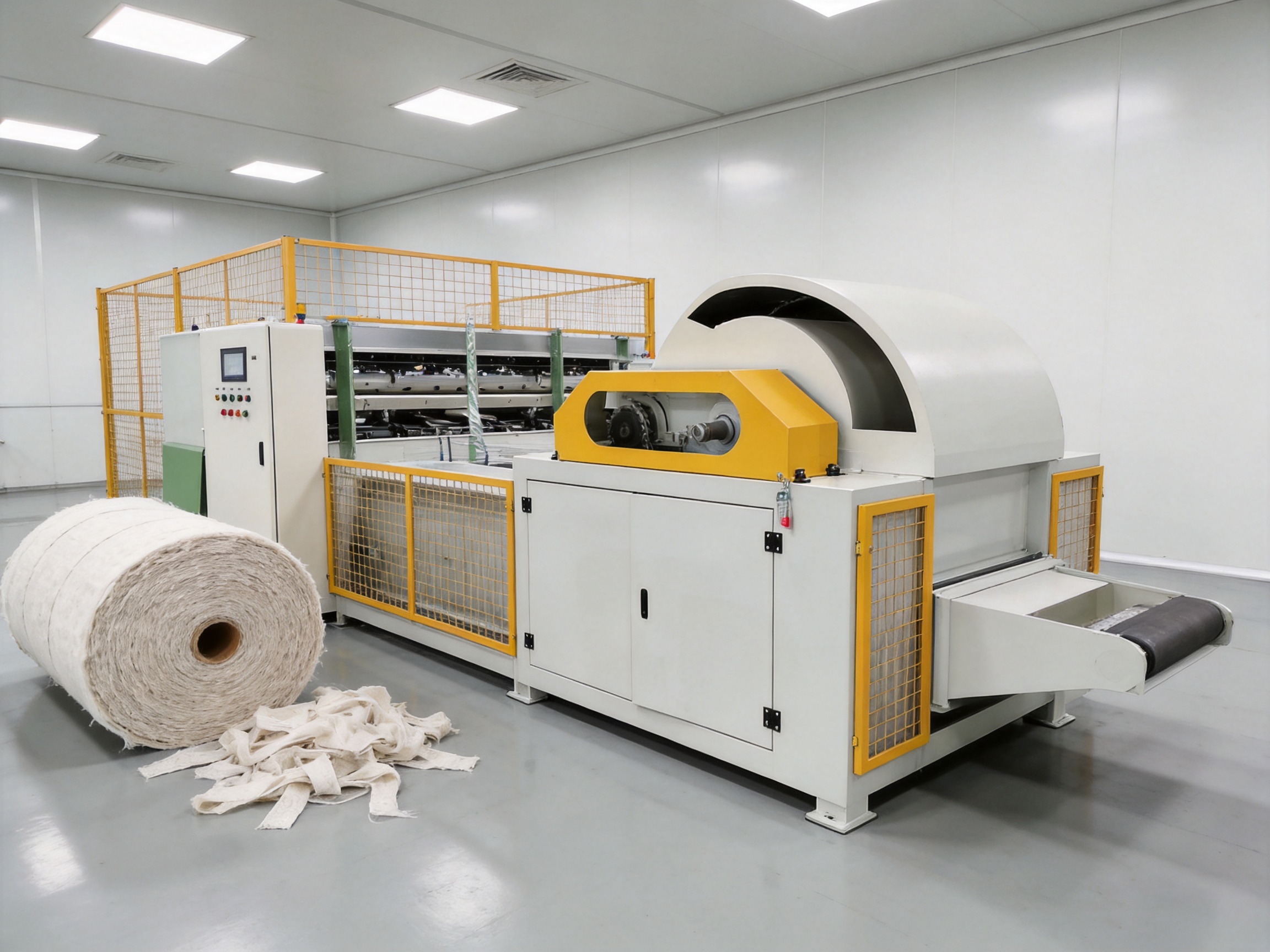
The HYBK Edge-Trim Opener is configured as an automatic machine with a working width of 800 millimeters. Its opening cylinder has a diameter of 300 millimeters and is driven by an 11-kilowatt motor. The feeding motor is rated at 1.5 kilowatts and is connected to an inverter, allowing the feeding speed to be adjusted according to material conditions and process requirements.
The stated production capacity is 50 kilograms per hour. Actual capacity can vary according to the type and density of edge trim, the condition of the input material, the feeding method, and the required degree of opening. The machine dimensions are approximately 1,700 by 700 by 1,000 millimeters, with a net weight of about 500 kilograms.
| Item | Specification | Production Relevance |
|---|---|---|
| Model | HYBK | Identifies the edge-trim opening machine |
| Working width | 800 mm | Defines the effective material-processing width |
| Cylinder diameter | 300 mm | Supports the opening action |
| Cylinder motor | 11 kW | Provides drive power for the opening cylinder |
| Feeding motor | 1.5 kW, inverter connected | Enables adjustable and controlled feeding |
| Production capacity | 50 kg/hour | Suitable for controlled trim-recycling applications |
| Dimensions | 1,700 × 700 × 1,000 mm | Supports compact installation planning |
| Net weight | Approximately 500 kg | Indicates a stable industrial machine structure |
| Automatic grade | Automatic | Reduces dependence on continuous manual operation |
| Certification | CE and ISO9001:2000 listed | Supports quality and market-compliance requirements |
The compact dimensions are useful for factories that need to install recycling equipment near the trimming point or beside an existing fiber-preparation area. Installation still requires adequate space for loading, inspection, cleaning, electrical connection, material discharge, and safe maintenance access.
Photoelectric Sensing and Electronic Weighing
One of the main advantages of the HYBK Edge-Trim Opener is its combination of photoelectric sensing and electronic weighing. These functions help the machine identify material conditions and control the amount of fiber being fed into the process.
Photoelectric sensors can support automatic detection of material presence, level, or movement within the feeding section. This reduces the need for an operator to monitor every material change manually. When the supply condition changes, the control system can coordinate the feeding operation more consistently than a purely manual arrangement.
The electronic weighing system is especially valuable when recovered trim is blended with other raw materials. Precise quantitative weighing helps the operator establish a repeatable proportion rather than relying only on visual estimation. This can improve the consistency of the input recipe and reduce large variations caused by different trim-package densities.
Weighing accuracy in real production depends on calibration, machine leveling, sensor condition, material flow, and proper maintenance. For this reason, operators should periodically check the weighing system against known quantities and follow the recommended calibration procedure. The machine’s control system can provide the foundation for accurate feeding, but good operating discipline is still essential.
Automatic Operation and Coordinated Control
The HYBK is designed for automated operation and coordinated control. This means the feeding and opening functions can work together as part of a defined operating sequence. Automation is valuable in a recycling application because edge trims are often irregular. A manual process may require frequent intervention when the input material changes from a long strip to a compact roll or loose pieces.
Coordinated control can help manage several stages of operation, including material detection, feeding speed, opening-cylinder operation, and material discharge. When multiple units are used for blending, coordinated control can also help synchronize the individual material streams.
Compared with a basic standalone opener that depends heavily on manual adjustment, an automatically controlled unit can offer several advantages:
1. More stable material flow during normal operation.
2. Reduced operator workload.
3. Easier adjustment of feeding quantities.
4. Improved repeatability between production batches.
5. Better integration with upstream trimming and downstream fiber-processing equipment.
6. Greater visibility of the production process through controlled settings and operating parameters.
Automation does not eliminate the need for supervision. Operators should still inspect the incoming trim, remove foreign objects, observe the discharge quality, and respond to alarms or abnormal sounds. The best result is achieved when automation and trained operation work together.
Flexible Quantitative Feeding
Recovered edge trims do not always have the same density or fiber composition. A roll of compacted polyester trim may behave differently from loose pieces of shoddy fiber. If feeding is fixed at one speed, the actual mass entering the process may fluctuate significantly. The HYBK addresses this issue through adjustable quantitative feeding and an inverter-connected feeding motor.
The inverter allows the feeding speed to be adjusted within a flexible range. The operator can select a setting that matches the material condition and desired throughput. Slower feeding may be suitable for dense or highly compacted trims that require more controlled opening. Faster feeding may be considered for lighter and more easily opened material, provided that the opening quality and downstream capacity remain stable.
Quantitative feeding is important for both product quality and equipment protection. Excessive feeding can overload the opening cylinder, increase current consumption, and produce poorly opened fiber. Insufficient feeding can reduce productivity and create an unstable mixture ratio. The ability to modify the feed rate gives the operator a practical way to balance capacity and opening performance.
Opening Cylinder Design and Mechanical Performance
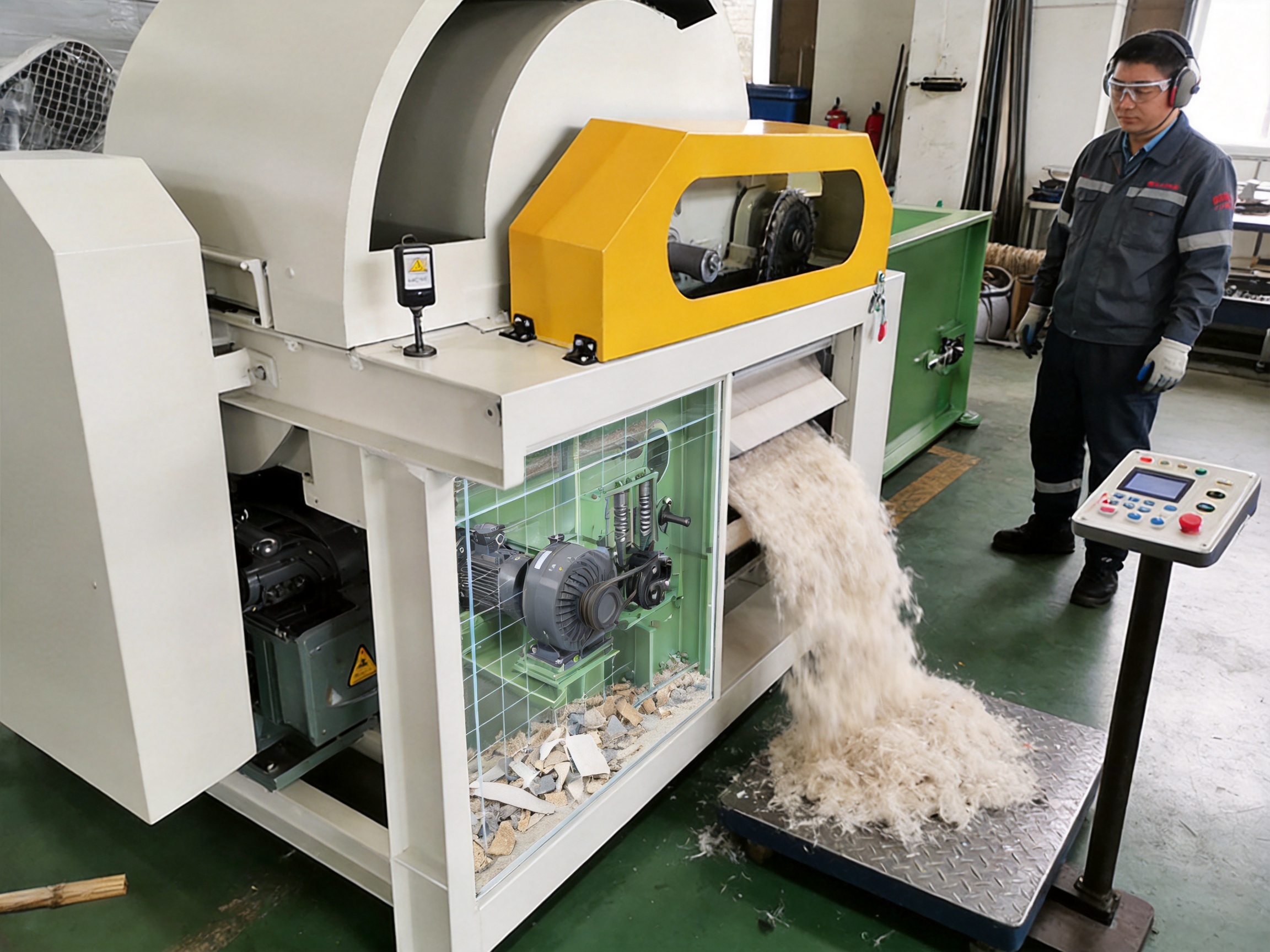
The 300-millimeter opening cylinder is driven by an 11-kilowatt motor. This drive arrangement provides the mechanical power needed to process compacted trim and loosen the fiber before reuse. The cylinder is the central working component of the machine, and its performance affects opening quality, throughput, energy use, and wear.
A properly selected cylinder drive must provide sufficient torque for starting and continuous operation. Edge trims may enter the machine with changing densities, and a stable drive helps the machine handle these fluctuations. The cylinder motor rating also provides a suitable foundation for industrial operation at the stated production capacity.
Opening equipment must balance fiber separation with material preservation. Excessively aggressive treatment may shorten fibers, increase dust, or affect the performance of the recovered material. Insufficient opening may leave dense bundles that are difficult to blend or card. The working parameters should therefore be selected according to the material and the required downstream result.
The mechanical structure is primarily made from steel and iron, according to the supplied specifications. This construction is appropriate for a machine operating in an industrial textile environment where rigidity, durability, and resistance to routine mechanical loads are important. A stable frame can reduce vibration and support reliable alignment of the feeding and opening components.
Advantages Compared with Basic or Less Integrated Solutions
More Than Simple Size Reduction
Some low-cost recycling approaches focus mainly on cutting or tearing waste into smaller pieces. Size reduction alone does not necessarily produce a consistent fiber feed. The HYBK is designed specifically for preliminary fiber loosening, which makes it more relevant to nonwoven production systems that need a reusable fiber form rather than merely smaller waste pieces.
Controlled Feeding Instead of Manual Estimation
Manual feeding can be inexpensive at the beginning, but it often produces inconsistent material quantities and requires continuous labor. The HYBK combines an electronic weighing system with adjustable feeding, allowing a more measurable and repeatable input. This is particularly beneficial when the recovered trim must be mixed with other fibers in a defined proportion.
Automatic Sensing and Operation
A basic opener may require an operator to start, stop, and regulate the machine repeatedly. The photoelectric sensor and automated control functions of the HYBK help reduce this burden. Automatic operation can improve workplace organization and support more consistent processing over longer production periods.
Expandable Configuration
The ability to use several units for different raw-material fibers creates a scalable solution. A factory can configure the equipment around its current material flow and expand the arrangement as product requirements develop. This is more adaptable than a fixed manual system that cannot easily maintain several separate material proportions.
Compact Industrial Footprint
With dimensions of approximately 1,700 by 700 by 1,000 millimeters, the machine is designed to provide useful recycling capacity without requiring the floor area of a complete fiber-processing line. A compact footprint can simplify installation in a trim-collection area, a raw-material room, or an auxiliary production zone.
Customization Potential
The listed configuration and color can be customized according to customer requirements. Customization may be useful when the machine must connect with an existing conveyor, hopper, fan, baling system, carding machine, or blending line. The final configuration should be reviewed in detail to confirm compatibility, capacity, electrical standards, safety requirements, and material-flow direction.
Manufacturing Strengths Behind the Equipment
The equipment is supplied by Changshu Hongyi Nonwoven Machinery Co., Ltd., a Chinese manufacturer and trader with more than 20 years of experience in the nonwoven machinery field. This background is important because an edge-trim opener should not be evaluated as an isolated mechanical product only. Its value depends on how well it fits into the wider nonwoven process.
A manufacturer with experience across opening, carding, airlaying, needle punching, thermal bonding, winding, cutting, and complete nonwoven production lines can better understand the relationship between recovered fiber and downstream equipment. The company’s product scope includes needle-punched geotextile lines, nonwoven carpet lines, airlaid waste felt lines, automotive interior-material lines, needle-punching cleaning-cloth lines, wool felt and jute felt lines, needle-punching machines, carding machines, airlaid machines, ironing machines, and thermal-bonding wadding oven machines.
This broad manufacturing scope supports several practical strengths:
1. Process-oriented engineering: The machine can be considered as part of a complete material route rather than as an independent unit.
2. Application knowledge: Different nonwoven products require different fiber preparation and blending conditions.
3. Custom solution capability: The supplier can discuss unit machines as well as complete production-line arrangements.
4. Integration experience: Equipment may be adapted to work with feeding, carding, airlaying, needle punching, thermal bonding, winding, or cutting systems.
5. International supply experience: Products have been supplied to more than 20 countries, including markets in Latin America, Asia, Africa, and other regions.
6. Long-term support potential: A supplier with a wider machinery portfolio can assist customers as their production requirements expand.
The supplied company information emphasizes high efficiency, reliability, quality, advanced technology, precision engineering, automatic control, energy-saving capabilities, and customization. These qualities are directly relevant to an edge-trim opener because recycling equipment must be dependable enough to operate alongside the main production process without creating new interruptions.
Engineering and Manufacturing Process Considerations
Although individual fabrication details may vary according to the final configuration, the manufacture of a reliable edge-trim opener generally involves several controlled stages. The machine frame must be fabricated with suitable dimensional accuracy so that the feeding and opening components remain properly aligned. Steel and iron components require appropriate cutting, welding, machining, and surface treatment to create a stable structure.
The opening cylinder and its drive system must be assembled with attention to concentricity, bearing support, guarding, and balance. Misalignment can lead to vibration, noise, uneven wear, or reduced operating life. The feeding assembly must also be aligned with the working width so that material enters the opening zone evenly.
Electrical and control integration is another important manufacturing stage. The photoelectric sensor, electronic weighing system, inverter-connected feeding motor, cylinder motor, control cabinet, and operating interface must work together. Proper wiring, labeling, testing, and protection help ensure that the system is easier to commission and maintain.
Factory testing should include mechanical rotation, motor operation, sensor response, feeding adjustment, weighing-system performance, emergency-stop functions, and inspection of guards. Where possible, material trials should be completed using the customer’s actual edge trims. This helps verify whether the selected configuration provides the desired opening quality and throughput.
Quality management is also important. The company lists ISO9001:2000 certification and CE certification among the product information. These designations indicate attention to quality-management and conformity requirements, although the buyer should always request current certificates, technical files, and applicable compliance documents for the specific order and destination market.
Integration into a Nonwoven Production Line
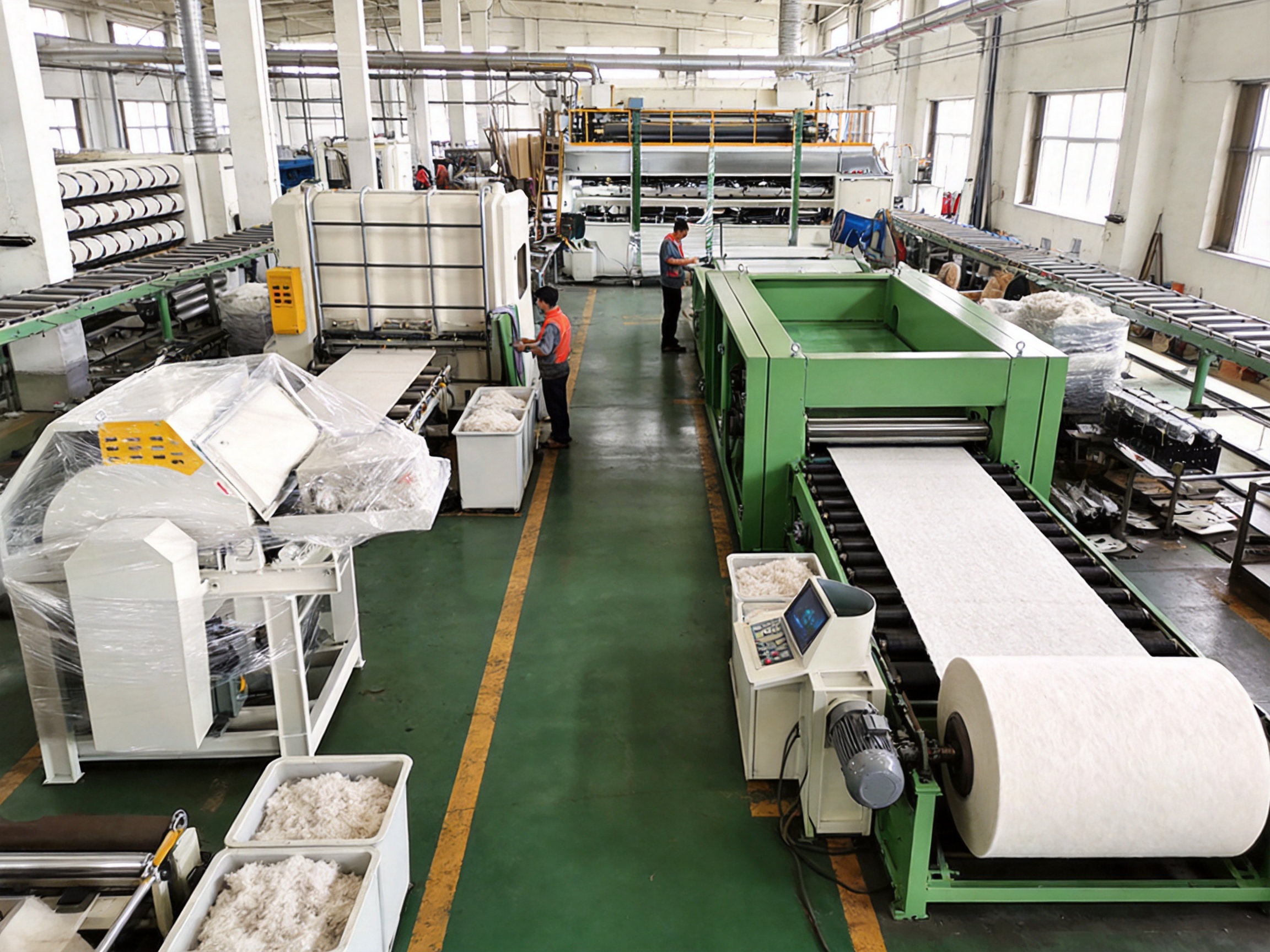
The HYBK Edge-Trim Opener can be installed at several points within a recycling workflow. In one arrangement, edge trims are collected near the cutting or trimming station, moved to the opener, and then discharged into a blending or fiber-feeding section. In another arrangement, the machine can be installed in a dedicated recycling area where trims from several production lines are accumulated, sorted, and processed.
A typical workflow may include the following stages:
1. Trim collection: Lateral edge trims are collected from the production line.
2. Inspection and sorting: Operators remove foreign objects and separate materials according to type, color, or quality.
3. Temporary storage: The trim is stored in a manner that prevents excessive moisture, contamination, and uncontrolled compaction.
4. Feeding: The material is introduced into the HYBK feeding section.
5. Sensing and weighing: The control system monitors material presence and quantity.
6. Preliminary opening: The cylinder loosens compacted strips, rolls, and pieces into a more usable fiber form.
7. Blending: The recovered fiber can be mixed with other materials according to the product recipe.
8. Downstream processing: The blend proceeds to carding, airlaying, needle punching, thermal bonding, or another suitable stage.
9. Quality verification: The finished nonwoven product is tested to confirm that the recycled content does not negatively affect performance.
Integration design must consider the material’s physical behavior. Lightweight fiber may require pneumatic transfer, while heavier or denser material may be moved by conveyor or controlled mechanical feeding. Dust control, access doors, discharge height, electrical voltage, and synchronization with downstream equipment should be confirmed before installation.
Applications for Recovered Edge Trim
Recovered fiber can potentially be used in a range of nonwoven applications, depending on the fiber type and quality. Polyester edge trims may be suitable for selected needle-punched products, filling materials, insulation, automotive interior materials, felt, carpet underlay, or other applications where the recovered fiber meets the required specification.
Shoddy fiber may be used in products that can tolerate recycled textile content and variable fiber characteristics. The suitability of any recovered material depends on factors such as color, fiber length, strength, contamination, and the required appearance of the final product.
In a needle-punched line, the opened fiber may be blended before carding and web formation. In an airlaid process, it may be introduced into a controlled fiber stream. In thermal-bonded products, the recovered fiber may be combined with bonding fibers or other compatible materials. The exact ratio must be established through production testing.
Manufacturers should avoid assuming that all edge trims can be recycled into every product. If the trim contains coatings, adhesives, excessive moisture, metal, or incompatible fibers, additional sorting or treatment may be needed. A reliable recycling program begins with material classification and clear quality limits.
Operating Benefits for Different Factory Sizes
Benefits for Small and Medium-Sized Plants
For a smaller factory, the main advantage may be the ability to recover valuable trim without investing in a large, complex recycling line. The HYBK’s compact dimensions and stated capacity of 50 kilograms per hour can provide a dedicated solution for controlled waste recovery. Automatic feeding and weighing can also reduce the need for additional manual labor.
Benefits for Larger Production Facilities
For a larger plant, the machine can serve as one module within a broader recycling and blending system. Multiple units may be arranged for different materials or recipes. A large facility may also use several openers or connect the equipment to centralized collection and conveying systems, subject to capacity and engineering review.
Benefits for Contract and Custom Production
Manufacturers producing different customer specifications need flexibility in material formulation. Adjustable quantitative feeding and customized configuration can help support frequent product changes. The ability to separate and control different fiber streams may also improve traceability between production orders.
Energy, Maintenance, and Lifecycle Considerations
The listed cylinder motor is 11 kilowatts and the feeding motor is 1.5 kilowatts. Actual energy consumption depends on operating load, material density, running time, inverter settings, and auxiliary equipment. A controlled feeding rate can help avoid unnecessary overload and may support more efficient use of the opening motor.
Maintenance is essential because recycled trims may contain dust, loose threads, labels, packaging fragments, or occasional hard particles. Operators should inspect the feeding section, cylinder, bearings, guards, electrical cabinet, sensor surfaces, and discharge route at suitable intervals. Cleaning frequency should be based on the actual material and operating environment.
Key maintenance practices include:
1. Removing accumulated fiber and dust from accessible areas.
2. Checking the opening cylinder for wear, damage, or material buildup.
3. Inspecting belts, couplings, bearings, and fasteners.
4. Keeping photoelectric sensors clean and correctly aligned.
5. Verifying the weighing system and recalibrating it when necessary.
6. Checking inverter settings and motor electrical connections.
7. Confirming that safety guards and emergency-stop devices function correctly.
8. Lubricating components according to the supplier’s maintenance instructions.
9. Recording unusual vibration, noise, heat, or motor-current changes.
The company lists a one-year warranty and after-sales service. Buyers should confirm the exact warranty scope, included spare parts, remote support, installation assistance, response time, and service conditions before placing an order. A clear spare-parts plan is recommended for bearings, sensors, electrical components, and other wear-related items.
Safety Requirements
An opener contains moving mechanical components and must be operated only with suitable guarding and safety procedures. The cylinder area should not be accessible during operation. Operators must never reach into the feeding or discharge section while the machine is running or while stored energy remains in the system.
Before maintenance, the machine should be stopped, isolated from its electrical supply, locked out where applicable, and verified as safe. Residual movement must be allowed to cease before opening inspection doors. Appropriate personal protective equipment may include safety footwear, protective clothing, eye protection, hearing protection, and dust protection according to the factory risk assessment.
Fiber dust can create housekeeping and occupational-health concerns. The installation should provide suitable ventilation and, where necessary, dust extraction. The plant should also assess fire risk, especially when processing dry textile fibers. Electrical installation, grounding, emergency stops, overload protection, and local safety compliance should be reviewed by qualified personnel.
Training should cover normal operation, material inspection, feeding limits, emergency shutdown, cleaning, sensor checks, and maintenance isolation. A well-designed machine provides the foundation for safety, but safe results depend on correct installation and disciplined operation.
Installation and Commissioning Guidance
Before shipment, the customer should provide information about the material, expected capacity, electrical supply, available floor area, and downstream connection. The supplier can then confirm whether the standard HYBK configuration is appropriate or whether customized feeding, discharge, controls, or color is required.
The installation foundation should be level and strong enough to support the approximately 500-kilogram machine and the dynamic forces created during operation. Space should be reserved around the machine for inspection and maintenance. The operator should have a clear view of the feeding area and access to the control panel.
Commissioning commonly includes mechanical inspection, electrical connection, sensor testing, weighing calibration, no-load operation, and gradual introduction of material. The first production trial should begin at a conservative feeding rate. Operators can then adjust the inverter and other parameters while observing opening quality, motor load, material flow, and discharge condition.
A commissioning checklist should record:
1. Correct machine position and leveling.
2. Electrical voltage and frequency compatibility.
3. Motor rotation direction.
4. Sensor response and alignment.
5. Weighing-system calibration.
6. Emergency-stop performance.
7. Guard installation.
8. Feeding adjustment range.
9. Opening quality at different material conditions.
10. Compatibility with the next processing stage.
How to Select the Correct Configuration
The standard specifications provide a useful starting point, but every edge-trim recycling project should be evaluated according to its actual process. The first question is the type of trim. Is it a continuous strip, a compacted roll, loose pieces, or a mixture? The second question is the fiber composition. Polyester, shoddy fiber, blends, and fibers with bonding residues may require different settings.
The required capacity should also be calculated. A machine rated at 50 kilograms per hour may be appropriate for one production line but insufficient for several high-output lines if all waste is processed simultaneously. The customer should compare the expected trim-generation rate with the opener’s practical operating capacity and consider whether a buffer or multiple machines are needed.
The intended recycling ratio is another major factor. A factory that wants to reuse a small percentage of trim may need a simple controlled feeding arrangement. A plant aiming for a high recycled-content product may require more sorting, blending, weighing, and quality-control equipment.
Other selection questions include:
1. What is the average and maximum density of the input trim?
2. Does the material contain foreign objects or bonding residues?
3. What fiber length and opening quality are required after processing?
4. How will the opened material be transferred?
5. What is the available electrical supply?
6. Is dust extraction required?
7. Should the opener connect directly to a carding, airlay, or blending unit?
8. Is a single material stream sufficient, or are multiple units required?
9. What local safety and conformity documents are required?
10. What spare parts and service support will be needed?
Answering these questions before purchase helps prevent under-sizing, incompatible layouts, and unnecessary modifications after delivery.
Quality Control When Reusing Opened Fiber
The opener improves the physical condition of edge trim, but the recovered fiber still needs to meet the requirements of the final product. A quality-control program should evaluate both the input trim and the opened output.
Input inspection may include fiber type, color, moisture, contamination, density, and the presence of hard objects. Output inspection may include visual opening, lump content, fiber length distribution, dust level, and blend uniformity. The final nonwoven product should be tested for basis weight, thickness, tensile strength, tear strength, abrasion resistance, thermal behavior, appearance, and other application-specific properties.
Manufacturers should record the percentage of recycled edge trim used in each recipe. This makes it easier to trace quality changes and determine the optimum reuse level. If the final product has strict appearance or strength requirements, a lower or more carefully controlled recycled proportion may be appropriate.
Consistent weighing is particularly important when recycled fiber is mixed with virgin fiber or bonding fiber. A small variation in the recipe can affect web uniformity, bonding, density, and finished-product performance. The HYBK electronic weighing system supports this control, while regular calibration and process records maintain its reliability.
Why Work with an Experienced Nonwoven Machinery Supplier?
Choosing an edge-trim opener is not only a question of motor power and machine dimensions. The equipment must fit the customer’s material route, production targets, maintenance resources, and future expansion plans. An experienced nonwoven machinery supplier can evaluate the opener in relation to the complete process.
Changshu Hongyi Nonwoven Machinery Co., Ltd. has experience supplying both individual machines and complete nonwoven production lines. Its product range covers raw-material opening and feeding, carding, web forming, needle punching, thermal bonding, heat setting, airlaying, winding, cutting, and auxiliary equipment. This broad scope can make communication easier when a customer needs a recycling unit that works with existing or planned machinery.
The company’s reported export experience includes more than 20 countries, such as Mexico, Argentina, Brazil, Turkey, Algeria, Egypt, Bangladesh, Vietnam, and Thailand. International experience can help a supplier understand different operating environments, electrical standards, shipping requirements, documentation needs, and customer expectations.
The company operates from Changshu City, Suzhou City, Jiangsu Province, China, and offers customized machine configurations. Customization may include dimensions, color, feeding and discharge arrangements, control coordination, and other project-specific features. The feasibility of each request should be confirmed through technical discussion and material testing.
Commercial and Supply Information
The HYBK Edge-Trim Opener is identified under HS Code 8449009000 in the supplied product information. The transport package may be nude packing or PE-film packing, depending on the order and shipping requirements. The product is listed as new, with an annual production capacity of 100 sets per year for the supplier’s manufacturing operation.
For an international purchase, the buyer should request a complete quotation covering the machine configuration, electrical standard, control cabinet, sensor and weighing system, spare parts, packaging, shipping terms, installation support, documentation, and warranty. It is also useful to request drawings showing the overall dimensions, connection points, material-flow direction, and required service clearances.
Before final approval, the buyer may send representative edge trims for a material test. A practical test can help confirm capacity, opening quality, feeding behavior, and the suitability of the recovered fiber for the planned downstream process. Test results should be discussed together with the product specification rather than evaluated only by machine speed.
Recommended Operating Procedure
A systematic operating procedure helps achieve stable results. First, inspect and sort the trim. Remove metal, plastic, paper, stones, and other foreign objects. Separate incompatible materials whenever possible. Excessively wet or contaminated trim should not be introduced without an approved treatment plan.
Second, check the machine before starting. Confirm that guards are in place, the feeding section is clear, the sensor surfaces are clean, the discharge route is open, and the weighing system is ready. Check that the emergency-stop function and relevant alarms are available.
Third, start the machine according to the recommended sequence. Allow the system to reach normal operating condition before introducing material. Begin with a moderate feeding setting and observe the cylinder load and material discharge.
Fourth, adjust the inverter-connected feeding motor according to the density and condition of the trim. The objective is a stable feed, not simply the highest possible speed. Monitor whether the output contains excessive lumps, dust, or unprocessed compacted pieces.
Fifth, record important production information. Useful records include material type, feeding setting, operating time, processed quantity, recycled ratio, maintenance events, and any abnormal conditions. These records help the plant establish repeatable recipes and identify process improvements.
Finally, stop and clean the equipment according to the prescribed procedure. Do not leave compacted material inside the working area for an extended period, especially if it could harden, absorb moisture, or interfere with the next production batch.
Return on Investment and Cost Reduction
The economic value of an edge-trim opener comes from several sources rather than from one single saving. The first is the value of raw material recovered. The second is the reduction in waste disposal and handling. The third is the potential reduction in manual sorting and feeding labor. The fourth is improved production stability when the recovered material is prepared and dosed in a controlled manner.
A basic return-on-investment evaluation can compare the annual quantity of recoverable trim with the cost of replacement fiber. The calculation should also include electricity, labor, maintenance, depreciation, installation, and any additional sorting or dust-control equipment. The result will vary by fiber price, production schedule, trim percentage, and recycling ratio.
For example, a factory generating a steady quantity of polyester edge trim may find that even partial reuse creates meaningful savings over several years. A plant producing lower-value materials may still benefit through reduced disposal, improved housekeeping, and greater compliance with waste-reduction objectives. The correct business case should be based on the customer’s own production data.
Because the HYBK has a stated production capacity of 50 kilograms per hour, the buyer can estimate potential processing volume based on daily operating hours and realistic utilization. Continuous operation at the nominal rate should not be assumed without considering material variability, cleaning time, loading, maintenance, and downstream demand.
Environmental Contribution
Mechanical reuse of suitable edge trims can reduce the amount of textile material sent to disposal. It can also reduce the need to transport waste away from the factory and help lower the consumption of new fiber for selected products. These benefits support more efficient resource management within the nonwoven industry.
The environmental result depends on responsible operation. Recovered fiber should not compromise product safety, durability, or compliance. Dust must be controlled, energy use should be monitored, and contaminated material must be handled correctly. A recycling machine is most valuable when it forms part of a complete waste-reduction program that includes source separation, process optimization, quality control, and responsible disposal of unsuitable waste.
Q&A
What materials can the HYBK Edge-Trim Opener process?
The listed raw-material applications include shoddy fiber and polyester fiber. The machine is designed for nonwoven lateral edge trims in roll and piece forms, as well as various fibers that require preliminary loosening. Material trials are recommended for unfamiliar blends, coated trims, or highly compacted materials.
What is the production capacity of the machine?
The stated production capacity is 50 kilograms per hour. Actual output depends on material density, fiber composition, input form, feeding settings, required opening quality, and the condition of the downstream process.
Can the machine process edge trims in roll form?
Yes. The product description states that it is suitable for recycling lateral edge trims in both roll and pieces form. The machine preliminarily loosens fibers from compacted packages before the recovered material is returned to a suitable production system.
Can different fibers be mixed using this equipment?
Several units can be combined to set the mixture proportion of different raw-material fibers. This arrangement can support more controlled blending than manual mixing, provided that each material is suitable for the intended product.
How does the electronic weighing system help production?
The weighing system helps measure the quantity of material being fed. This supports quantitative dosing and improves the repeatability of mixtures containing recovered edge trim and other fibers. Regular calibration is necessary to maintain accurate results.
What is the function of the photoelectric sensor?
The photoelectric sensor supports automatic detection and coordinated operation in the feeding system. It can help monitor material presence or movement and reduce the need for constant manual intervention.
Is the feeding speed adjustable?
Yes. The feeding motor is rated at 1.5 kilowatts and is connected to an inverter. This allows the feeding speed to be adjusted within a flexible range according to the material and process requirements.
What are the main motor specifications?
The opening cylinder is driven by an 11-kilowatt motor. The feeding motor is rated at 1.5 kilowatts and uses inverter control. These specifications support controlled feeding and mechanical opening at the listed capacity.
How large is the machine?
The stated dimensions are approximately 1,700 by 700 by 1,000 millimeters. The net weight is approximately 500 kilograms. Installation space should also include room for loading, discharge, inspection, cleaning, and maintenance.
Is the machine automatic?
The HYBK is listed as automatic and includes automated operation and coordinated control. Operators are still required to inspect materials, supervise operation, perform cleaning, and maintain safe working practices.
Can the configuration be customized?
Yes. The supplied information states that the configuration and color can be customized according to customer needs. Custom requirements should be reviewed for technical feasibility, capacity, electrical compatibility, safety, and integration with the existing line.
What products can use the recovered fiber?
Potential applications include selected needle-punched, airlaid, felt, carpet, insulation, automotive interior, and other nonwoven products. Suitability depends on fiber type, cleanliness, length, color, recycled proportion, and final product requirements.
Does the machine replace a complete carding or opening line?
The HYBK is primarily a preliminary edge-trim opener. It prepares compacted trims for reuse, but the recovered fiber may still require blending, carding, airlaying, or other downstream treatment depending on the final product.
What maintenance does the machine require?
Maintenance includes cleaning fiber and dust, checking the opening cylinder, inspecting bearings and fasteners, verifying sensor alignment, calibrating the weighing system, checking motor and inverter connections, and confirming that guards and emergency devices work properly.
What warranty is listed for the product?
The supplied information lists a one-year warranty and after-sales service. Buyers should confirm the detailed warranty terms, exclusions, service arrangements, spare-parts policy, and installation support in the formal quotation and contract.
How can a buyer determine whether the machine is suitable?
The buyer should provide representative trim samples, material composition, expected hourly quantity, desired recycling ratio, downstream equipment details, electrical standards, and installation conditions. A material test and technical review can then be used to confirm the appropriate configuration.
Conclusion
The HYBK Edge-Trim Opener provides a focused solution for one of the recurring challenges in nonwoven manufacturing: converting lateral edge trims into a more usable fiber resource. Its purpose is not simply to reduce waste size, but to preliminarily loosen compacted rolls and pieces so that suitable recovered fiber can be fed back into a controlled production process.
Its combination of an 800-millimeter working width, 300-millimeter opening cylinder, 11-kilowatt cylinder motor, inverter-connected feeding motor, photoelectric sensor, electronic weighing system, automatic operation, and flexible quantitative feeding gives it practical advantages over basic manual or less integrated recycling arrangements. The ability to combine several units also supports controlled blending of different raw materials.
The machine is supported by a supplier with more than two decades of experience in nonwoven machinery and a broad portfolio covering complete production lines and individual units. This process knowledge can help customers integrate edge-trim recycling with carding, web forming, needle punching, thermal bonding, airlaying, winding, cutting, and other nonwoven operations.
For manufacturers seeking lower raw-material loss, improved trim handling, more stable feeding, and a more systematic recycling process, the HYBK Edge-Trim Opener can be evaluated as a compact and customizable equipment solution. The best results will come from matching the machine to the actual fiber, confirming performance through testing, maintaining accurate weighing, and applying appropriate quality and safety controls.
References
1. Product technical information for the HYBK Edge-Trim Opener, including machine specifications, functions, features, and application data.
2. Company information supplied by Changshu Hongyi Nonwoven Machinery Co., Ltd., including product range, manufacturing experience, export markets, and customization capabilities.
3. General principles of textile-fiber opening, blending, feeding, and nonwoven web formation.
4. General industrial guidance for textile-waste sorting, mechanical recycling, dust control, and material traceability.
5. General machinery safety principles covering guarding, emergency stopping, electrical isolation, inspection, and maintenance.