

Content
- 1 The Role of a Fiber Web Accumulator in Nonwoven Manufacturing
- 2 How the HYZL Fiber Web Accumulator Works
- 3 Key Technical Specifications
- 4 Advantages Compared with Basic Buffering Arrangements
- 5 Benefits for Different Nonwoven Applications
- 6 Engineering and Manufacturing Strengths
- 7 Manufacturing Process and Quality Control
- 8 Installation and Line Integration
- 9 Operating Recommendations
- 10 Maintenance and Service Considerations
- 11 Safety Features and Workplace Practices
- 12 Product Quality and Finished Roll Consistency
- 13 Energy and Production Efficiency
- 14 Why Supplier Experience Matters
- 15 Selection Factors for Buyers
- 16 Customization and Project Support
- 17 Expected Return on Investment
- 18 Practical Performance Expectations
- 19 Frequently Asked Questions
- 19.1 What is a fiber web accumulator?
- 19.2 What is the storage capacity of the HYZL model?
- 19.3 What is the working width?
- 19.4 Does the accumulator need an independent power system?
- 19.5 How does the automatic tension system work?
- 19.6 What materials can be processed?
- 19.7 Can the accumulator be used with needle-punched products?
- 19.8 Can it be used for thermal-bonded nonwovens?
- 19.9 Why are stainless steel guiding rollers used?
- 19.10 How many floating rollers are included?
- 19.11 Can the color and configuration be customized?
- 19.12 What certifications are listed?
- 19.13 What is the after-sales service period?
- 19.14 What information should a buyer provide for a quotation?
- 19.15 How should the machine be maintained?
- 19.16 Is the machine suitable for a new production line or an existing line?
- 20 Conclusion
- 21 References
- 22 Product: HYZL Fiber Web Accumulator
Modern nonwoven production depends on continuous material movement, accurate tension control, and close coordination between individual processing stages. When the output speed of one machine differs from the input speed of the next machine, the fiber web can become stretched, compressed, wrinkled, or broken. Even a short interruption may affect product uniformity, reduce production efficiency, and create unnecessary waste. A fiber web accumulator provides an effective solution by temporarily storing a controlled length of web and releasing it when required.
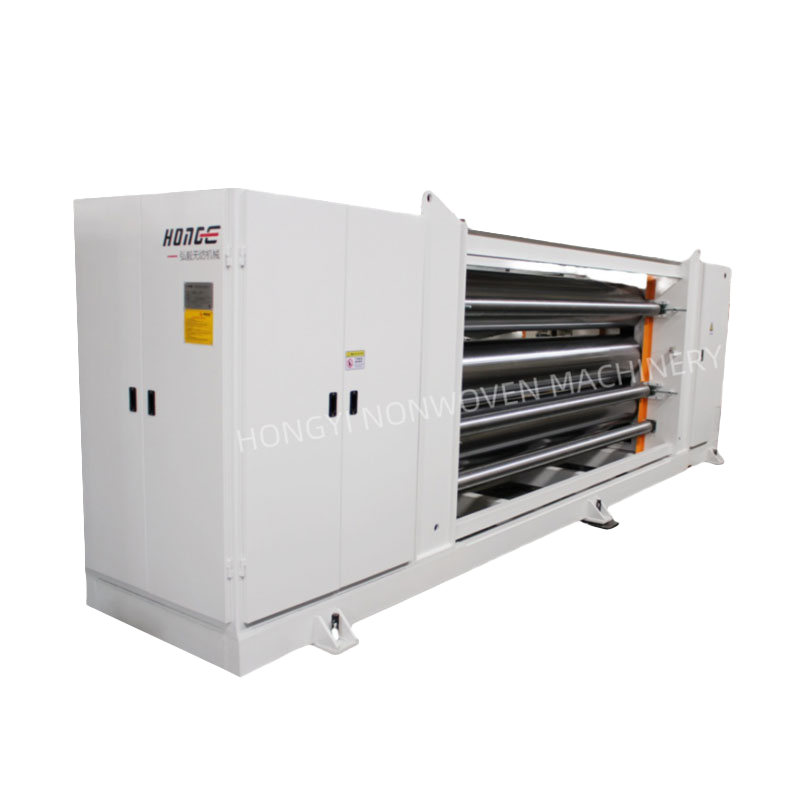
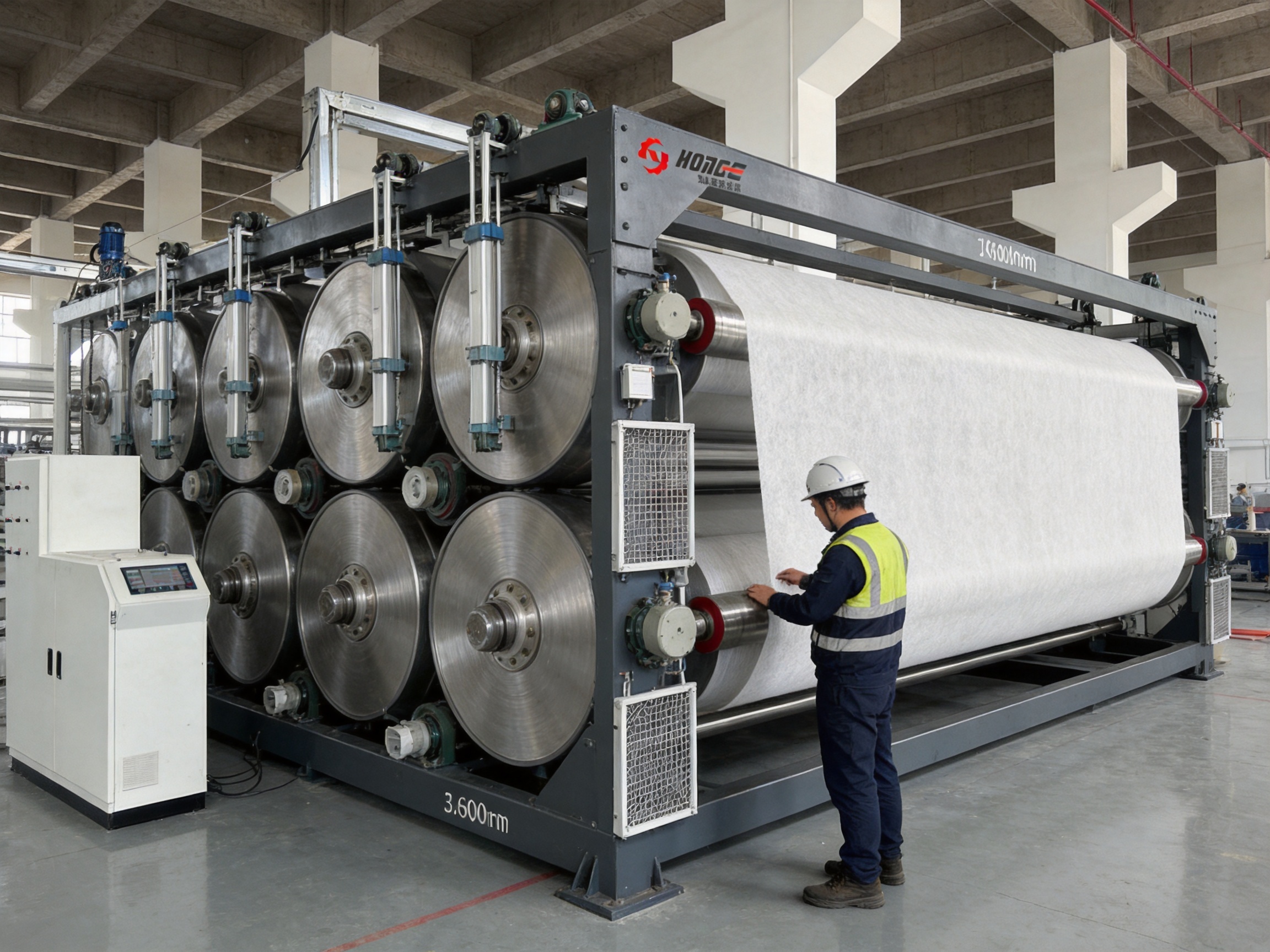
The HYZL Fiber Web Accumulator is designed for nonwoven fabric production lines that require reliable buffering between processes. Through dynamic expansion and contraction, the machine absorbs speed differences and maintains a more stable web flow. It can also work with an automatic tension system that adjusts the winder speed according to fabric tension, helping the production line maintain continuous and coordinated operation.
With a working width of 3,600 mm, storage capacity of up to 20 m, stainless steel guiding rollers, eight floating rollers, and an installed power rating of 18.7 kW, the accumulator is suitable for a wide range of nonwoven applications. It can be integrated into lines producing needle-punched materials, thermal-bonded products, geotextiles, automotive interior materials, filtration media, carpet substrates, cleaning cloths, and other fiber-based products.
The Role of a Fiber Web Accumulator in Nonwoven Manufacturing
A nonwoven production line normally contains several machines arranged in sequence. Depending on the product, the process may include fiber opening, blending, feeding, carding, web forming, cross-lapping, needle punching, thermal bonding, heat setting, winding, and cutting. Each machine has a specific operating speed and material-handling behavior. Maintaining exactly the same speed at every stage is difficult, particularly when the line is starting, stopping, changing products, or adjusting process conditions.
A fiber web accumulator acts as a temporary storage section between connected machines. Instead of forcing every process to operate at exactly the same instant and speed, the accumulator creates a controlled buffer. When the upstream process produces material faster than the downstream process can accept it, the accumulator stores additional web. When the downstream process requires more material than the upstream process is currently supplying, the stored web is released.
This buffering action helps protect the web from excessive tension and reduces the risk of web breakage. It also supports smoother operation during speed changes, roll replacement, winding adjustments, and short interruptions. The result is a more stable production process with fewer defects and less discarded material.
In many applications, the accumulator is positioned before a winder or between a web-forming machine and a downstream treatment unit. Its precise position depends on the line configuration, product requirements, and the desired control strategy. Because nonwoven lines are often customized, the accumulator should be considered as part of the complete process design rather than as an isolated machine.
How the HYZL Fiber Web Accumulator Works
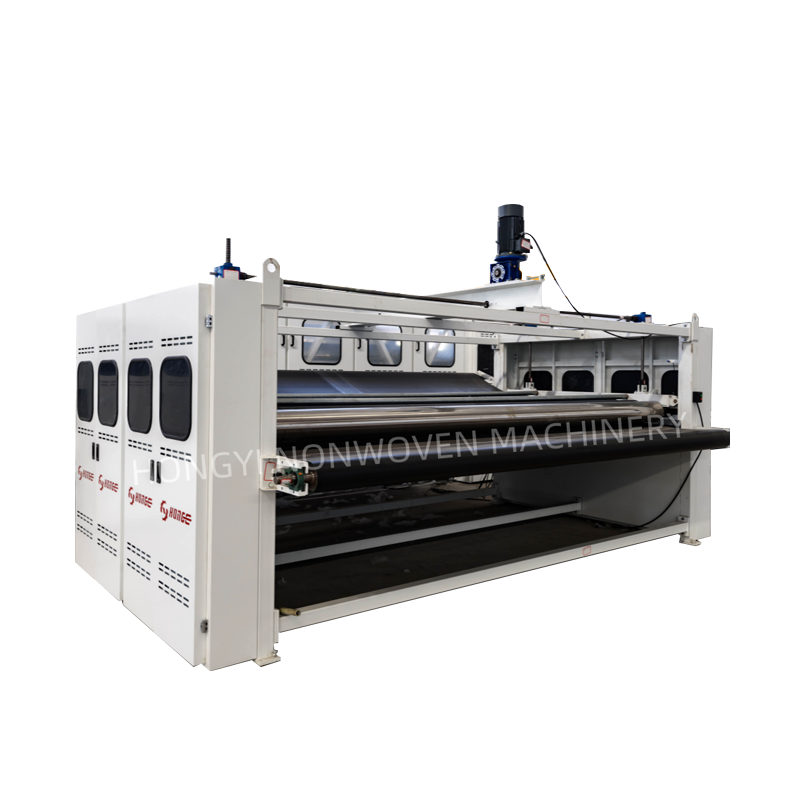
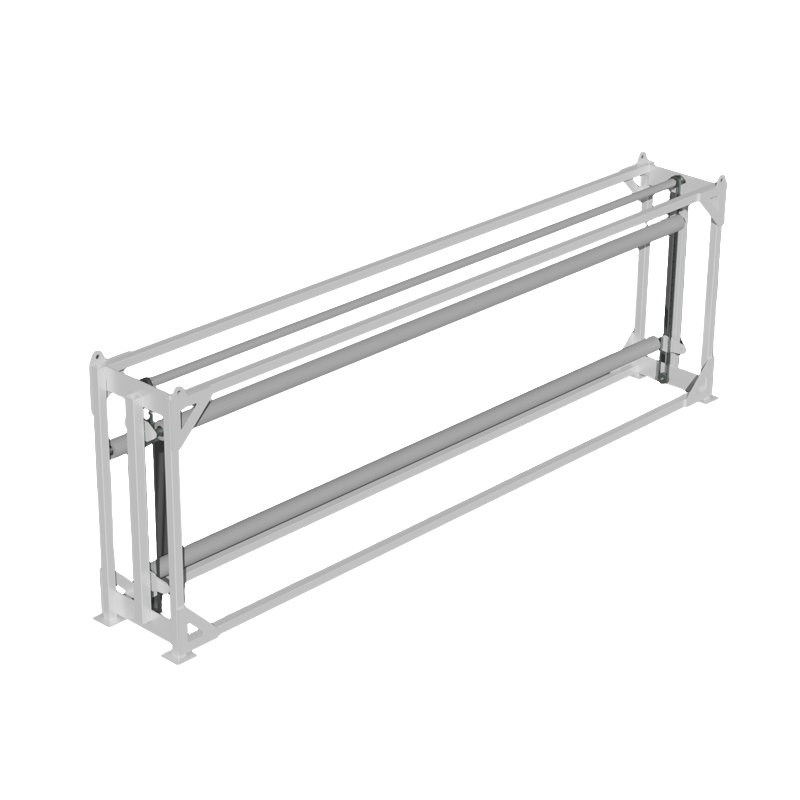
The HYZL Fiber Web Accumulator uses upper and lower trolley movements to create a variable storage space for the fiber web. The trolleys move upward and downward simultaneously, allowing the system to expand or contract according to the amount of web that must be temporarily stored. As the storage section changes, the machine compensates for variations in the speed relationship between the preceding and following equipment.
The web passes through a series of guiding and floating rollers. These rollers support the material, maintain the web path, and distribute tension across the working width. The eight floating rollers provide additional movement and buffering capacity. Their movement allows the web to be stored and released progressively rather than being subjected to an abrupt pull or release.
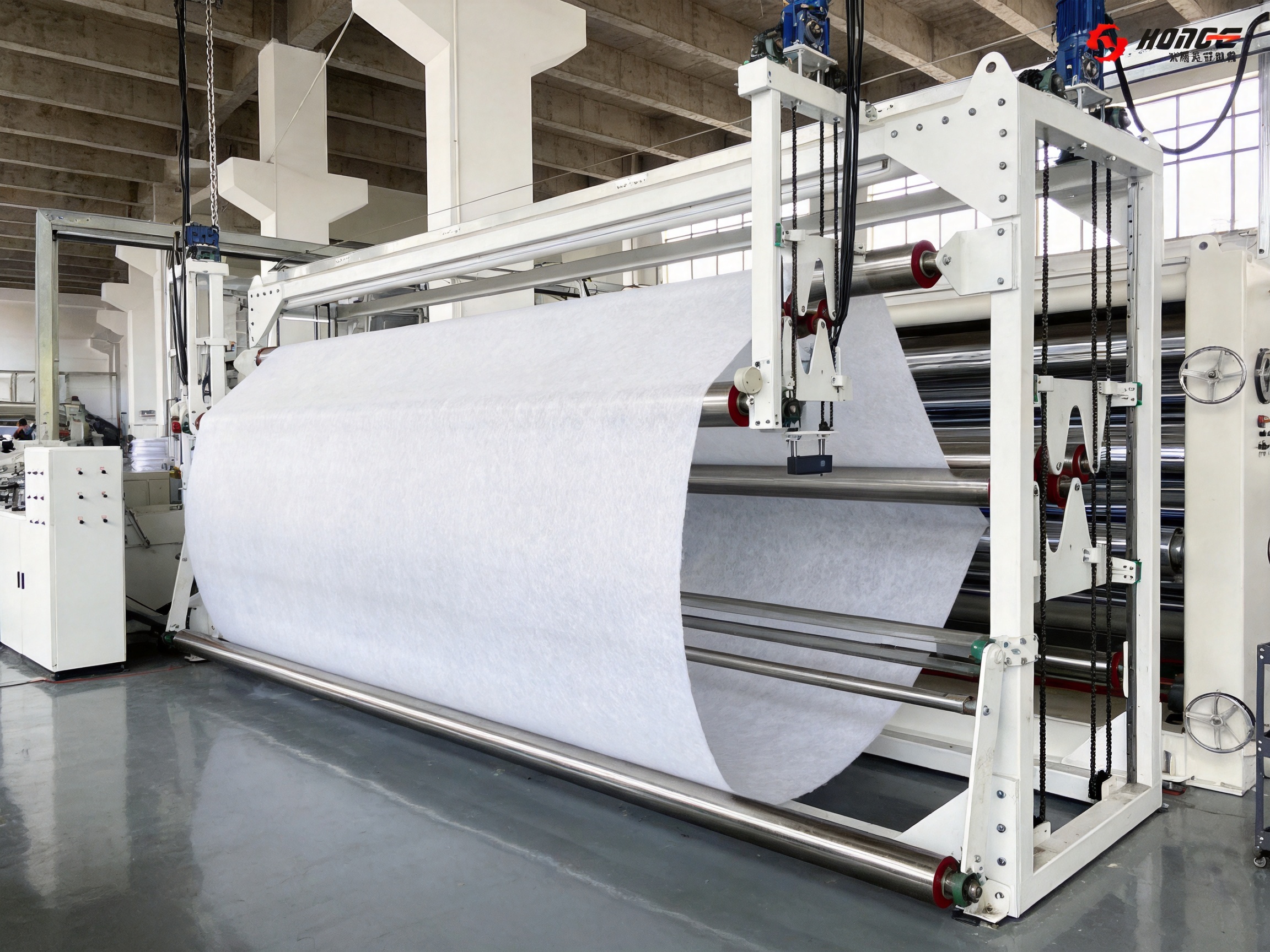
The automatic tension system monitors the tension condition of the fabric and adjusts the winder speed accordingly. This function is especially important for lightweight, high-loft, loosely bonded, or delicate webs, which can be easily distorted by excessive pulling force. By coordinating winder speed with web tension, the system helps maintain a consistent winding condition and reduces the possibility of slack material, wrinkles, stretching, or tearing.
The accumulator operates in synchronization with the winding speed and does not require an independent power system for its primary working speed. This configuration helps simplify coordination with the production line and reduces the need for a separate drive arrangement. The installed power listed for the equipment is 18.7 kW, while the operating movement is synchronized with the relevant line or winding system.
Key Technical Specifications
The machine is configured for a working width of 3,600 mm. This width is suitable for many medium- and wide-width nonwoven production lines. The fabric guiding rollers have a diameter of 150 mm and a working length of 3,600 mm, matching the specified working width and helping provide stable support across the web.
| Specification | Value |
| Model | HYZL |
| Equipment type | Fiber web accumulator |
| Working width | 3,600 mm |
| Fabric guiding roller diameter | 150 mm |
| Fabric guiding roller length | 3,600 mm |
| Storage capacity | Up to 20 m |
| Number of floating rollers | Eight |
| Installed power | 18.7 kW |
| Guiding roller material | Stainless steel |
| Control feature | Automatic tension adjustment |
| Working mode | Synchronized with winding speed |
| Certification information | ISO9001 and CE |
The storage capacity can reach up to 20 m, giving the production line a meaningful buffer during speed differences and short operational interruptions. The actual usable storage length may depend on the web thickness, material structure, line arrangement, and control settings. During technical planning, the manufacturer can evaluate the customer’s material and line conditions to determine the most suitable configuration.
The machine is designed as a new, automatic, and customizable unit. Its mechanical materials are mainly steel and iron, providing a solid structure for continuous industrial operation. The guiding rollers are made of stainless steel, which is suitable for applications requiring a smooth, durable, and corrosion-resistant contact surface.
Advantages Compared with Basic Buffering Arrangements
Some production lines rely on simple roller loops, manual speed adjustments, or fixed web storage sections. These methods may provide limited buffering, but they often lack the coordinated movement and automatic tension response required for modern continuous production. The HYZL Fiber Web Accumulator offers several advantages over less integrated arrangements.
Controlled Temporary Storage
A fixed loop or basic roller section has a limited ability to respond to changing process conditions. The HYZL design uses moving upper and lower trolleys to vary the storage space dynamically. This allows the machine to store or release material according to current production requirements instead of maintaining one fixed web length.
Dynamic storage is valuable when a winder changes speed, when an upstream machine experiences a short fluctuation, or when operators need to make a controlled adjustment. The stored web gives the line additional time to respond without immediately transmitting the speed difference to the material.
Automatic Tension Control
Manual speed coordination can be difficult because web tension changes with material type, thickness, moisture, winding diameter, and machine acceleration. The automatic tension system helps reduce dependence on manual intervention by adjusting the winder speed according to fabric tension.
This function can improve the consistency of the wound roll and help prevent common problems such as telescoping, loose edges, excessive compacting, web stretching, and sudden rupture. Although the final performance depends on the complete line and control settings, automatic tension regulation is an important advantage for stable production.
Reduced Risk of Web Breakage
Fiber webs can be vulnerable before they are fully bonded or consolidated. A loosely formed carded web, airlaid web, or pre-needled structure may not tolerate sudden acceleration or uneven pulling. The accumulator reduces the direct transfer of speed variations between machines, helping protect the web during unstable operating conditions.
Reducing web breaks has several benefits. It lowers material waste, reduces downtime, limits the need for manual rethreading, and improves operator safety by reducing emergency interventions around moving equipment. It also supports a more consistent finished product because fewer sections of damaged or irregular web enter the final roll.
Wide Working Width
The 3,600 mm working width allows the equipment to handle broad nonwoven webs without requiring the customer to divide the material into narrower lanes. A wide web path can be beneficial for geotextile, carpet backing, construction materials, automotive textiles, filtration products, and other industrial nonwovens.
Wide-width handling requires careful roller design and structural stability. The specified 150 mm stainless steel guiding rollers provide continuous support across the working width. Correct roller alignment, surface finish, and bearing installation are also important parts of the manufacturing and commissioning process.
Integration with Existing Lines
The accumulator is designed as assistant equipment for nonwoven fabric production. It can be incorporated into a new production line or considered for upgrading an existing line. Its synchronized working mode makes it suitable for connection with winding systems and other upstream or downstream machines.
Integration requirements vary according to the customer’s line speed, web width, product GSM, material composition, control system, and available plant space. The manufacturer can customize configuration, color, and related details according to customer needs. This flexibility is useful for customers who operate different machine brands or require a specific layout.
Benefits for Different Nonwoven Applications
Needle-Punched Geotextiles
Needle-punched geotextiles are commonly produced from polyester or polypropylene staple fibers. The web may pass through carding, cross-lapping, pre-needling, main needle punching, edge trimming, and winding. During these stages, the material can experience significant differences in tension and speed.
An accumulator can provide a buffer before winding or between selected consolidation stages. This is useful when the needle-punching machine and winding unit require different operating conditions. Stable web handling helps protect the dimensional uniformity of the geotextile and supports consistent roll formation.
Nonwoven Carpet Materials
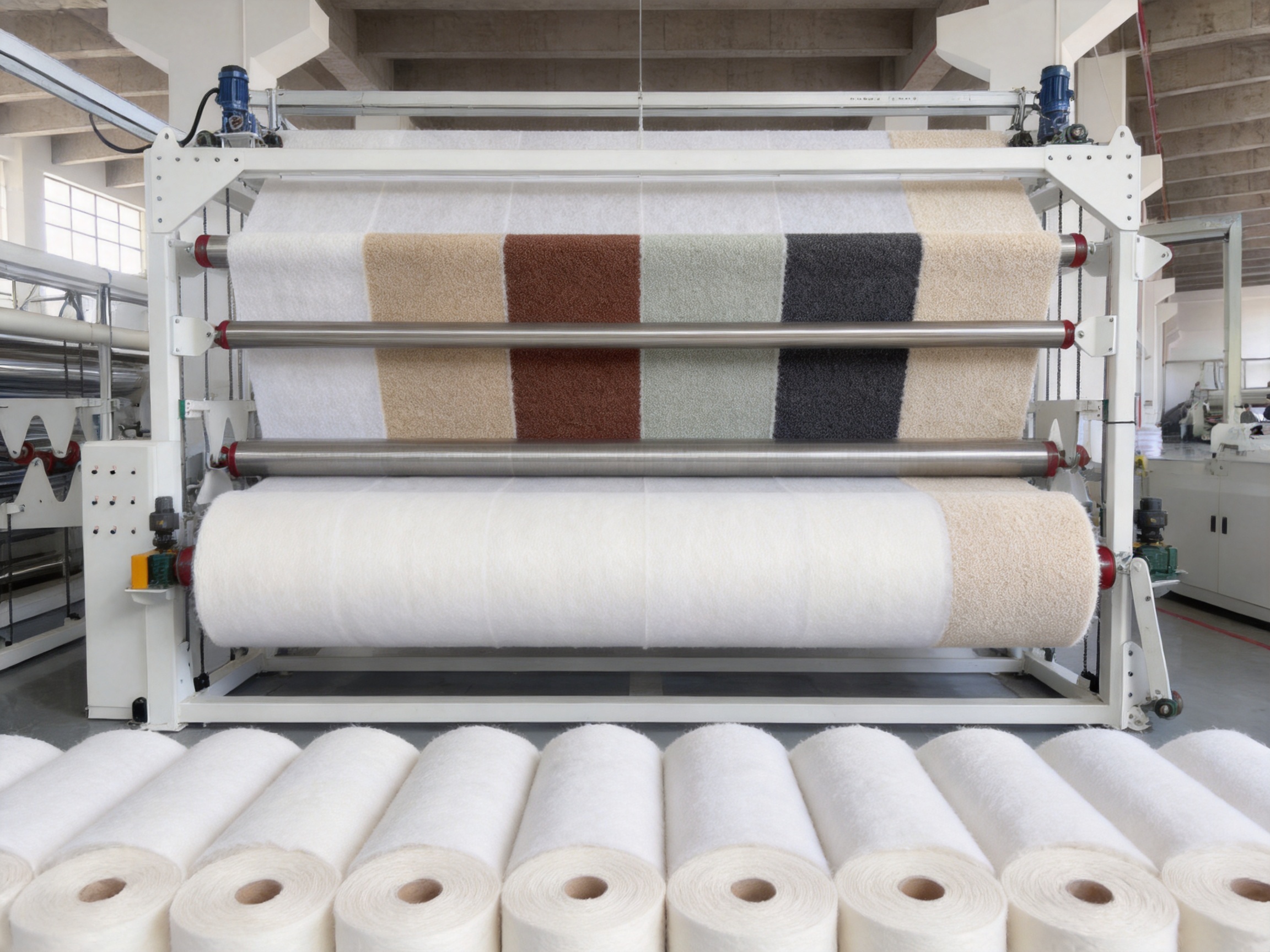
Carpet underlay, felt backing, and other nonwoven carpet materials may have high thickness and a relatively open fiber structure. Such materials can be difficult to wind evenly if the tension is not carefully managed. Temporary storage and automatic tension adjustment can reduce the possibility of compression and distortion as the material enters the winder.
The accumulator can also help during speed transitions when production parameters are changed for a new carpet specification. By buffering the web, the line can adjust operating conditions more gradually.
Automotive Interior Materials
Automotive interior products often require stable thickness, surface appearance, weight, and mechanical performance. Materials may include polyester fibers, recycled fibers, blended fibers, or other engineered combinations. A web break or uneven tension event can create a visible or functional defect that affects later molding, lamination, or trimming operations.
By helping maintain a controlled web path, the accumulator contributes to a more stable material-handling environment. It is particularly useful in lines where thermal bonding, heat setting, needle punching, or winding must be carefully synchronized.
Thermal-Bonded Wadding
Thermal-bonded wadding is often sensitive to tension before and after heating. Excessive tension can reduce loft, change width, or affect the final structure. If the web moves too slowly into a heating zone or winding section, it may accumulate unevenly and cause folds.
The accumulator provides controlled temporary storage and supports speed matching between the heat-setting or thermal-bonding section and the winder. This can help maintain a smoother transfer of material while preserving the desired bulk and uniformity.
Airlaid Materials
Airlaid webs can contain low-density fibers and may have limited initial strength. A sudden pulling force can disturb the fiber distribution or break the web before bonding. A controlled accumulator allows the line to manage differences in output and input speed with less direct tension transfer.
For airlaid waste felt, absorbent products, insulation materials, and other low-density nonwovens, the accumulator should be selected and adjusted according to the web’s basis weight, thickness, and bonding condition.
Cleaning Cloths and Industrial Felts
Cleaning cloths, industrial felts, polishing substrates, and similar products may be produced in a range of GSM values and widths. The specified product range for the associated production equipment includes approximately 100 to 1,500 GSM, although the actual suitable range for an individual accumulator depends on the line design and material characteristics.
For heavier materials, the machine structure and roller support are important. For lighter materials, smooth tension response and accurate web guidance are more critical. A configurable accumulator can be adapted to the production conditions required by each product family.
HYZL Fiber Web Accumulator
Engineering and Manufacturing Strengths
Changshu Hongyi Nonwoven Machinery Co., Ltd. has more than 20 years of experience in the nonwoven machinery field. The company operates as a manufacturer and trader, supplying complete production lines as well as individual machines. This combination of equipment experience and project knowledge supports the development of assistant equipment such as fiber web accumulators.
The company’s product range includes opening and blending equipment, feeding and carding machines, web-forming and needle-punching equipment, thermal-bonded and heat-setting equipment, airlay systems, winding and cutting machines, and auxiliary equipment for nonwoven production. It also supplies complete lines for needle-punched geotextiles, nonwoven carpets, airlaid waste felt, automotive interior materials, cleaning cloths, wool felt, jute felt, and related products.
This broad product range is an advantage when designing an accumulator because the machine can be evaluated in relation to the full process. A supplier that understands carding, web forming, needle punching, thermal bonding, winding, and cutting can better assess where a buffer is needed and how it should interact with adjacent equipment.
Structural Manufacturing
An accumulator must maintain alignment while supporting repeated trolley movement and continuous web travel. The main frame therefore requires sufficient rigidity and accurately positioned mounting surfaces. Steel and iron mechanical materials are commonly used for the primary structure because they offer strength and durability for industrial operation.
Manufacturing quality depends on more than material selection. Frame welding, stress control, machining, surface preparation, assembly, and alignment all affect final performance. A carefully assembled frame helps ensure that the floating rollers remain parallel and that the web does not drift toward one side during operation.
Roller installation is another important manufacturing step. Guiding rollers must rotate smoothly, maintain correct concentricity, and present a consistent surface to the web. Stainless steel rollers provide a durable contact surface and are suitable for environments where corrosion resistance and cleanability are important.
Control and Automation
The automatic tension system is a central feature of the HYZL Fiber Web Accumulator. Automation helps the equipment respond to changes in web tension and coordinate the winding process. A stable control system should provide predictable acceleration, deceleration, and storage movement.
Control parameters may be adjusted according to web material, basis weight, thickness, operating speed, and winding requirements. During commissioning, the machine should be tested with the customer’s actual production material whenever possible. This allows the operator and technical team to establish suitable tension limits and speed relationships.
Automation also supports safer and more repeatable operation. When the machine manages speed matching automatically, operators do not need to make constant manual corrections. They can instead focus on product inspection, process monitoring, material supply, and planned maintenance.
Customization Capability
Nonwoven production lines differ considerably in width, layout, output, product structure, and control architecture. For this reason, a standard machine may require adjustments before installation. The equipment configuration and color can be customized according to customer needs, while mechanical details can be evaluated for the intended operating conditions.
Customization may involve roller arrangement, connection dimensions, control interfaces, guarding, electrical specifications, line direction, installation height, and communication with existing equipment. Customers should provide complete technical information during the quotation stage so that the accumulator can be designed for practical integration.
Manufacturing Process and Quality Control
The manufacturing process for a fiber web accumulator begins with technical confirmation. The supplier reviews the required working width, target storage length, web material, GSM range, operating speed, line layout, winder specifications, available power supply, and desired automation functions. This information is used to prepare the equipment design and identify any necessary customization.
Design Review
During design review, engineers assess the relationship between the accumulator and the surrounding machines. The position of the inlet and outlet web paths must be confirmed, along with the trolley travel range and maintenance access. The design should allow operators to inspect rollers, remove accumulated lint, and access electrical and mechanical components.
The control philosophy is also established during this stage. The accumulator may need to receive speed or tension signals from the winder, transmit status signals to the line control system, or operate with defined safety interlocks. Clear communication between the accumulator and connected machines helps avoid unexpected acceleration or material release.
Frame and Component Fabrication
After design approval, the main frame and mechanical components are fabricated. Steel sections are cut, formed, welded, and prepared for assembly. Critical mounting locations are checked to ensure that the floating rollers and trolley mechanisms can be installed accurately.
Guiding rollers are manufactured and finished according to the required diameter and width. The stainless steel surface should be smooth enough to minimize friction and avoid damaging the web. Bearings, shafts, trolley wheels, drive components, and other moving parts are selected according to the anticipated load and operating cycle.
Assembly and Alignment
Assembly includes installation of the frame, trolley system, roller shafts, floating rollers, guides, drive elements, sensors, electrical cabinets, and safety devices. Alignment is checked during assembly because even a small deviation can influence web tracking across a wide machine.
The rollers should be parallel to one another and correctly positioned relative to the machine centerline. Trolley movement should be smooth and free from abnormal vibration. Sensors should detect the relevant position or tension conditions accurately, while control components should be securely connected and protected from the production environment.
Factory Testing
Before shipment, the equipment can undergo mechanical and electrical testing. Typical checks include trolley movement, roller rotation, sensor response, automatic tension functions, emergency stop operation, control panel operation, and synchronization signals. Testing helps identify installation or wiring issues before the machine reaches the customer’s factory.
Where practical, the machine should be tested under representative operating conditions. The final test procedure may be adjusted according to the customer’s technical agreement and line configuration. Documentation should record the main settings, inspection results, and recommended installation requirements.
Installation and Line Integration
Installation begins with preparing a level and sufficiently strong foundation. The customer should confirm that the installation area can support the machine’s weight and provide adequate room for web threading, inspection, cleaning, and maintenance. The packaging information indicates a package size of approximately 380 cm by 120 cm by 150 cm and a gross weight of approximately 7,500 kg, so transportation and lifting arrangements must be planned carefully.
The equipment may be delivered with nude packing or PE film according to the shipping arrangement. Before unloading, the customer should verify the lifting points, access routes, door dimensions, floor load capacity, and available lifting equipment. Proper handling helps prevent damage to the frame, rollers, sensors, and control cabinet.
After positioning, the machine is leveled and anchored. The web path is then connected to the upstream and downstream equipment. Roller height, alignment, centerline, and lateral position should be checked before threading the material. Electrical connections must be completed according to the supplied wiring documentation and local safety requirements.
Control integration is performed after mechanical installation. The tension signal, speed signal, emergency circuit, and relevant line interlocks are checked. Initial testing is normally carried out at low speed. Operators can then observe web tracking, trolley movement, tension response, and winding quality before gradually increasing the speed.
Operating Recommendations
Before starting production, operators should confirm that all rollers are clean, the web path is correctly threaded, guards are installed, and the emergency stop system is functional. The storage section should be positioned according to the start-up procedure, and the winder should be set to an appropriate initial speed.
During start-up, speed should be increased gradually. This gives the automatic tension system time to stabilize and allows operators to observe whether the web is centered and moving smoothly. If the material begins to wrinkle, drift, stretch, or loosen, the line should be stopped or slowed according to the operating procedure so that the cause can be investigated.
Different materials require different tension settings. A dense needle-punched geotextile may tolerate a higher tension than a light airlaid web. A high-loft thermal-bonded wadding may require careful control to prevent compression. Operators should avoid using one standard setting for every product unless it has been validated through production trials.
The storage capacity should also be used within the intended range. Overfilling the accumulator can create excessive mechanical movement or reduce the available response space. Insufficient storage may prevent the equipment from effectively absorbing a speed difference. Production personnel should monitor the trolley position and establish operating limits for each product specification.
Maintenance and Service Considerations
Regular maintenance helps preserve web quality and equipment reliability. Dust, fiber fragments, and lint can accumulate around rollers, guides, sensors, and moving mechanisms. These contaminants should be removed according to the maintenance schedule, using cleaning methods that do not damage electrical components or roller surfaces.
Guiding rollers should be inspected for surface damage, unusual wear, contamination, or abnormal rotation. Bearings and moving trolley components should be checked for noise, looseness, and excessive vibration. If a roller does not rotate smoothly, it may increase web tension or produce uneven tracking.
Electrical cabinets and control components should be kept clean and dry. Connections should be inspected during planned maintenance, especially in environments with substantial vibration or airborne fibers. Sensors must remain correctly positioned and free from deposits that could affect detection accuracy.
The automatic tension system should be checked whenever the machine shows unstable winding, sudden speed changes, or inconsistent storage movement. Troubleshooting should begin with simple causes such as incorrect threading, dirty sensors, loose connections, unsuitable tension parameters, or mechanical obstruction. More complex adjustments should be performed by qualified technical personnel.
Changshu Hongyi Nonwoven Machinery Co., Ltd. provides one year of after-sales service according to the listed product information. Customers should maintain equipment records, including installation details, control settings, maintenance dates, replacement parts, and any production issues. Accurate records make it easier to diagnose problems and improve long-term performance.
Safety Features and Workplace Practices
An accumulator contains moving trolleys, rollers, web material, and drive components. Operators must keep hands, clothing, tools, and loose objects away from moving areas. Guards should remain installed during normal operation, and access doors or panels should be opened only after the machine has stopped and the energy sources have been isolated.
Emergency stop devices should be tested at planned intervals. The emergency circuit should be integrated with the surrounding production line so that an emergency at one machine does not create a new hazard at another machine. Lockout and tagout procedures should be used before maintenance, cleaning, adjustment, or removal of jammed material.
Web threading should be performed according to the approved procedure. Operators should use suitable tools and avoid attempting to pull material through moving rollers by hand. If a web break occurs, the machine should be stopped before the broken section is removed and the material is rethreaded.
Noise, dust, lighting, ventilation, and floor conditions should also be considered. Good housekeeping around the accumulator reduces trip hazards and helps prevent fiber deposits from entering moving components. Proper training is essential for safe and efficient operation.
Product Quality and Finished Roll Consistency
The accumulator does not replace the functions of carding, needling, bonding, heat setting, or winding. Instead, it supports those processes by creating a more stable transition between them. A stable transition is important because variations in web tension can influence thickness, width, density, surface appearance, and roll hardness.
When the web is pulled too strongly, it may become narrower or thinner. When tension is too low, the web may sag, wrinkle, or enter the winder unevenly. These conditions can produce rolls with loose edges, hard bands, telescoping, or nonuniform winding. Automatic tension coordination helps reduce these risks, although final roll quality also depends on the winder design, material properties, and process settings.
Temporary storage also protects product continuity. If the upstream process briefly changes speed, the downstream process can continue using stored material rather than immediately stopping. Similarly, if the downstream speed changes, the upstream process has time to respond while the accumulator absorbs the difference.
This buffering action may be particularly valuable in lines producing large rolls. The longer the production run and the greater the material value, the more costly an interruption can become. By reducing avoidable web breaks and speed mismatches, the accumulator can contribute to lower waste and improved equipment utilization.
Energy and Production Efficiency
Production efficiency is influenced by output rate, downtime, waste, labor requirements, and product consistency. A well-integrated accumulator can support each of these areas. Fewer web breaks reduce the time spent stopping and restarting the line. Automatic speed adjustment reduces manual intervention. Better web handling can reduce rejected sections and improve the usable length of finished rolls.
The listed installed power is 18.7 kW. Actual energy use depends on operating conditions, movement frequency, line speed, load, and control strategy. Because the accumulator works in synchronization with the winding speed and does not operate as a completely independent production unit, its energy demand should be evaluated as part of the complete line rather than viewed separately.
Energy-saving performance also depends on correct mechanical alignment and maintenance. Friction, misalignment, damaged bearings, and excessive tension can increase energy consumption and reduce production stability. Regular inspection therefore supports both reliability and efficient operation.
Why Supplier Experience Matters
Choosing a fiber web accumulator involves more than comparing width and storage length. The supplier must understand how the equipment will interact with the complete nonwoven process. Experience with opening, blending, feeding, carding, web forming, needle punching, thermal bonding, heat setting, winding, and cutting enables a more informed technical evaluation.
Changshu Hongyi Nonwoven Machinery Co., Ltd. has supplied nonwoven machinery to more than 20 countries, including markets in Latin America, Europe, Africa, Southeast Asia, and other regions. This international project experience exposes the manufacturer to different electrical standards, factory layouts, product requirements, operating practices, and climate conditions.
The company focuses on efficiency, reliability, quality, advanced technology, precision engineering, automatic control, energy-saving capabilities, and customization. These strengths are relevant to an accumulator because its performance depends on accurate mechanical construction and coordinated control rather than on a single isolated component.
A supplier with complete-line experience can also support future expansion. A customer may initially purchase an accumulator for an existing winder and later add a new carding machine, needle-punching machine, thermal-bonding oven, or cutting unit. A supplier familiar with the complete production process can help evaluate how those changes affect web storage and speed matching.
Selection Factors for Buyers
Before purchasing a fiber web accumulator, buyers should prepare detailed production information. Important parameters include the material fiber type, web width, GSM range, thickness, line speed, storage requirement, winding diameter, desired roll weight, upstream machine, downstream machine, plant layout, and electrical supply.
The fiber type may include polyester staple fiber, polypropylene staple fiber, recycled fibers, wool, jute, or blended materials. Different fibers have different friction, strength, loft, and temperature characteristics. These properties influence the required tension range and roller surface requirements.
Working width is another essential factor. The HYZL model has a specified working width of 3,600 mm, while the broader equipment information indicates that customized product widths may be available. Buyers should distinguish between the usable web width and the overall machine width because the latter includes the frame, drives, guards, and access space.
Storage capacity should be calculated according to the expected speed difference and the time required for the line to respond. A customer may need more storage for a line with frequent winding adjustments or more limited capacity for a stable, closely synchronized line. The maximum listed storage capacity is up to 20 m, subject to the final configuration.
Control compatibility must be confirmed before ordering. The accumulator may need to exchange signals with an existing programmable logic controller, tension controller, winder, or supervisory control system. Agreement on signal types, communication protocols, safety circuits, and operator interfaces helps prevent integration delays.
Customers should also consider maintenance access, spare parts, operator training, installation support, warranty conditions, transportation, and local service arrangements. A complete technical and commercial review is recommended before production begins.
Customization and Project Support
Customization can be important when the customer’s line has unusual dimensions or process requirements. The machine configuration can be adjusted according to customer needs, including relevant mechanical and control details. Color can also be customized for a consistent factory appearance or corporate equipment standard.
Project support may include layout review, technical drawings, connection information, installation guidance, commissioning assistance, operating instructions, and maintenance recommendations. The exact scope depends on the customer’s agreement and project location.
For overseas customers, packaging and shipping preparation are also important. The machine may be shipped using nude packing or PE film, depending on the transportation method and customer requirements. Components should be protected from moisture, impact, and contamination during handling and transit.
The listed HS code is 8449009000. Buyers should verify the applicable import classification, duties, documentation, and local compliance requirements with their customs broker or relevant authorities before shipment.
Expected Return on Investment
The economic value of an accumulator is normally associated with improved line continuity rather than with storage capacity alone. A production line can lose significant output when the web breaks, when operators must repeatedly rethread the machine, or when defective rolls require reprocessing. A buffer that reduces these events may improve the effective utilization of the entire line.
Potential financial benefits include lower scrap, fewer unplanned stops, reduced labor for manual speed adjustments, more consistent roll quality, and better use of upstream and downstream machine capacity. The actual return depends on operating hours, material cost, production speed, product value, and the frequency of existing web-handling problems.
Buyers should evaluate the accumulator using their own production data. A useful assessment compares current downtime, web-break frequency, waste percentage, average restart time, and roll-quality losses with the expected performance after installation. This approach provides a more realistic investment analysis than comparing equipment price alone.
Practical Performance Expectations
The HYZL Fiber Web Accumulator is intended to stabilize web handling, not to correct every possible problem in a nonwoven line. If the web is formed unevenly, if the carding machine produces severe cross-direction variation, or if the winder has a mechanical fault, an accumulator cannot independently eliminate those causes.
Its best performance is achieved when the upstream and downstream machines are correctly aligned, the web path is properly threaded, the rollers are clean, and the control parameters match the material. The accumulator should be commissioned as part of the complete line, with actual production material used for adjustment where possible.
When correctly selected and integrated, the equipment can provide a valuable buffer for continuous operation. It supports speed matching, reduces direct tension transfer, and contributes to more stable winding. These benefits are applicable across a broad range of nonwoven materials and production technologies.
Frequently Asked Questions
What is a fiber web accumulator?
A fiber web accumulator is a machine that temporarily stores a controlled length of nonwoven web between production processes. It absorbs differences in speed between upstream and downstream machines and releases the stored web when required.
What is the storage capacity of the HYZL model?
The listed storage capacity is up to 20 m. The practical storage amount depends on the final configuration, web thickness, material structure, trolley movement, and production-line settings.
What is the working width?
The specified working width is 3,600 mm. Customized configurations may be discussed when a customer requires a different width or a special connection arrangement.
Does the accumulator need an independent power system?
The equipment works in synchronization with the winding speed and is described as having no independent power system for its synchronized working speed. Its listed installed power is 18.7 kW. The final electrical arrangement should be confirmed according to the complete project design.
How does the automatic tension system work?
The automatic tension system adjusts the winder speed according to the fabric tension condition. This helps coordinate web movement and reduce excessive pulling, slackness, wrinkles, and unstable winding.
What materials can be processed?
The associated equipment information lists polyester fiber and polypropylene staple fiber as raw materials. Depending on the final line configuration, the accumulator may also be applied to other nonwoven fiber webs, such as recycled fibers, wool, jute, or blended materials. Material suitability should be confirmed through technical evaluation.
Can the accumulator be used with needle-punched products?
Yes. It is suitable for consideration in needle-punched geotextile, carpet, felt, cleaning cloth, automotive interior, and other nonwoven lines. The best installation position depends on the process sequence and the desired buffering function.
Can it be used for thermal-bonded nonwovens?
Yes. The accumulator can help coordinate the web between thermal-bonding or heat-setting equipment and a winder. The tension and storage settings should be selected according to the material’s loft, thickness, temperature condition, and bonding strength.
Why are stainless steel guiding rollers used?
Stainless steel provides a durable and corrosion-resistant surface for web guidance. It can also support easier cleaning and stable contact with the nonwoven material when properly finished and maintained.
How many floating rollers are included?
The equipment is equipped with eight floating rollers. These rollers support the controlled expansion and contraction of the storage section and help distribute web movement across the working width.
Can the color and configuration be customized?
Yes. The listed information states that configuration and color can be customized according to customer needs. Technical customization should be confirmed during the quotation and engineering stages.
What certifications are listed?
The product information lists ISO9001 and CE certification. Customers should request the applicable certificates and technical documents for their specific order and destination market.
What is the after-sales service period?
The listed after-sales service period is one year. The exact warranty scope, exclusions, response process, spare parts policy, and commissioning support should be confirmed in the purchase agreement.
What information should a buyer provide for a quotation?
The buyer should provide web width, GSM range, web thickness, fiber type, production speed, upstream and downstream machine models, winder details, desired storage capacity, electrical requirements, line layout, and control-system information. Complete data allows the supplier to recommend a more suitable configuration.
How should the machine be maintained?
Maintenance should include cleaning lint and fiber deposits, inspecting rollers and bearings, checking trolley movement, verifying sensor operation, inspecting electrical connections, and confirming the automatic tension response. Maintenance must be performed according to the manufacturer’s instructions and applicable safety procedures.
Is the machine suitable for a new production line or an existing line?
It can be considered for both applications. For a new line, the accumulator can be included during complete-line design. For an existing line, the available space, web path, winder controls, electrical interfaces, and mechanical connection points should be reviewed before installation.
Conclusion
The HYZL Fiber Web Accumulator provides a practical method for stabilizing web transport in nonwoven production. Its dynamic storage function helps compensate for speed differences, while the automatic tension system supports coordinated winding. A working width of 3,600 mm, storage capacity of up to 20 m, eight floating rollers, stainless steel guiding rollers, and an installed power rating of 18.7 kW make it suitable for many industrial nonwoven applications.
Compared with simple fixed loops or manual speed adjustments, the accumulator offers more controlled temporary storage and improved automation. It can help reduce web breaks, protect material structure, improve roll consistency, and support smoother operation during production changes. Its value is greatest when it is correctly integrated with the complete nonwoven line.
Changshu Hongyi Nonwoven Machinery Co., Ltd. combines more than 20 years of nonwoven machinery experience with manufacturing, project engineering, customization, and international supply capabilities. Its broad product portfolio allows the accumulator to be evaluated alongside carding, web-forming, needle-punching, thermal-bonding, airlay, winding, and cutting equipment.
For customers seeking a more stable and flexible web-handling solution, the fiber web accumulator is an important auxiliary machine. A detailed technical review of the material, line speed, web width, storage requirement, control system, and installation environment will help ensure that the final equipment configuration delivers reliable long-term performance.
References
1. Changshu Hongyi Nonwoven Machinery Co., Ltd., HYZL Fiber Web Accumulator Technical Product Information.
2. Changshu Hongyi Nonwoven Machinery Co., Ltd., Nonwoven Fabric Machinery Product Portfolio and Company Information.
3. International Organization for Standardization, Quality Management Systems: ISO 9001 Principles and Requirements.
4. European Machinery Safety Principles and CE Conformity Assessment Guidance.
5. Nonwoven Fabric Manufacturing Process Notes: Fiber Opening, Carding, Web Forming, Needle Punching, Thermal Bonding, Winding, and Cutting.
6. Industrial Web Handling and Tension Control Engineering Practices.