

Content
- 1 1. The Role of Carding in Nonwoven Manufacturing
- 2 2. Product Overview
- 3 3. Main Technical Specifications
- 4 4. Advanced Feeding System
- 5 5. Multi-Stage Carding Performance
- 6 6. Single-Cylinder and Double-Cylinder Options
- 7 7. Variable-Speed Drives and Automatic Synchronization
- 8 8. Dust Removal and Cleaner Operation
- 9 9. Protection of Carding Wire and Mechanical Components
- 10 10. Applications Across Nonwoven Industries
- 11 11. Advantages Compared with Basic Carding Equipment
- 12 12. Manufacturing Strengths and Engineering Approach
- 13 13. Quality Control and Production Preparation
- 14 14. Installation and Commissioning Considerations
- 15 15. Maintenance and Operating Recommendations
- 16 16. Selecting the Correct Configuration
- 17 17. Purchase and Project Support
- 18 18. Practical Benefits for Manufacturers
- 19 19. Q&A
- 19.1 Q1: What is the main purpose of the HYSL Carding Machine?
- 19.2 Q2: What fibers can the machine process?
- 19.3 Q3: Is the machine available with different working widths?
- 19.4 Q4: Can the machine produce random fiber webs?
- 19.5 Q5: What is the difference between the single-cylinder and double-cylinder versions?
- 19.6 Q6: How does the machine protect against metal contamination?
- 19.7 Q7: How many carding groups are included?
- 19.8 Q8: What controls are available?
- 19.9 Q9: What output can the machine achieve?
- 19.10 Q10: Is dust removal included?
- 19.11 Q11: What safety features are included?
- 19.12 Q12: Can the machine be used in a complete nonwoven line?
- 19.13 Q13: What maintenance is required?
- 19.14 Q14: Is customization available?
- 19.15 Q15: What is the warranty period?
- 20 20. Conclusion
- 21 References
- 22 Product: HYSL Carding Machine
Carding is one of the most important stages in nonwoven fabric manufacturing. It transforms opened and blended fibers into an organized web with controlled orientation, uniform distribution, and suitable bulk for downstream processing. The quality of the carding process directly influences web evenness, tensile performance, thickness consistency, surface appearance, and the stability of the final nonwoven product.
The HYSL Carding Machine is designed for manufacturers that require reliable fiber preparation, flexible production configurations, automatic control, and stable integration with complete nonwoven production lines. It can be used after opening and blending equipment and before needle punching, thermal bonding, quilting, or other web-consolidation processes. Depending on the required application, the machine can produce parallel webs or random webs through optional randomizer equipment.
With available single-cylinder and double-cylinder configurations, multiple working widths, variable-speed drives, metal protection, dust removal, safety guarding, and precision-balanced rollers, the machine provides a practical solution for a wide range of fiber-processing requirements. It is suitable for polyester staple fiber, wool, hemp, polypropylene staple fiber, recycled fiber, low-melt fiber, and other compatible materials.
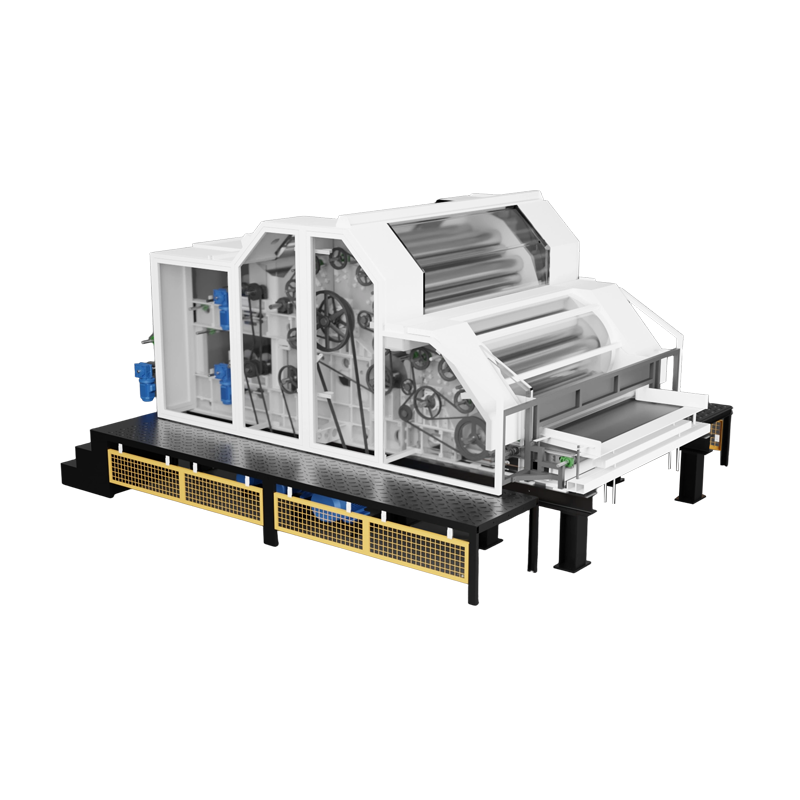
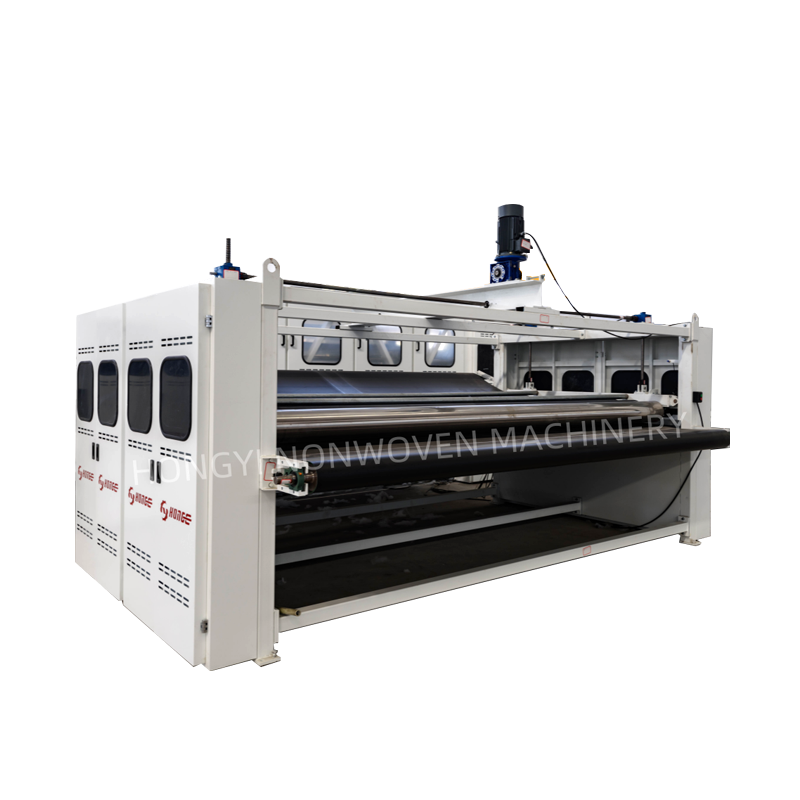
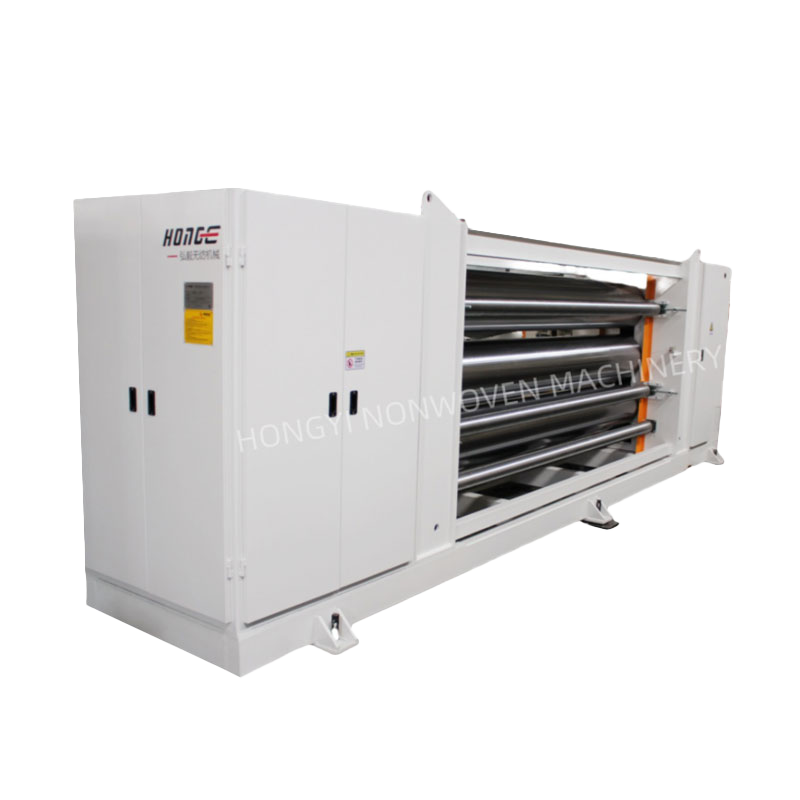
HYSL Carding Machine
1. The Role of Carding in Nonwoven Manufacturing
Nonwoven production begins with fibers rather than yarns. Before a fiber web can be formed, the raw material must be opened, blended, metered, and distributed. Fibers commonly arrive in compressed bales, where they may be entangled, compacted, or mixed with small quantities of dust and foreign matter. Opening and blending equipment loosens these fibers and creates a more consistent feed. The carding machine then performs the next essential operation: separating, aligning, and distributing the fibers into a continuous web.
During carding, fibers pass through a series of cylinders, working rollers, and stripping rollers covered with carding wire. The interaction between these components separates fiber clusters, removes remaining small entanglements, and improves the uniformity of the fiber layer. The resulting web may have predominantly parallel fiber orientation, or it may be modified into a more random structure when a randomizer roller system is installed.
A well-designed carding machine must balance several competing requirements. It must provide sufficient carding intensity without damaging delicate fibers. It must operate at a high production rate while maintaining web uniformity. It must be easy to adjust for different fiber types and product specifications. It must also protect the carding wire, rollers, operators, and downstream equipment from metal contamination or abnormal operating conditions.
The HYSL Carding Machine addresses these requirements through a structured feeding system, multiple carding groups, variable-speed control, automatic safety functions, and optional configuration choices. This makes it suitable for both specialized single-purpose lines and flexible production facilities serving several nonwoven markets.
2. Product Overview
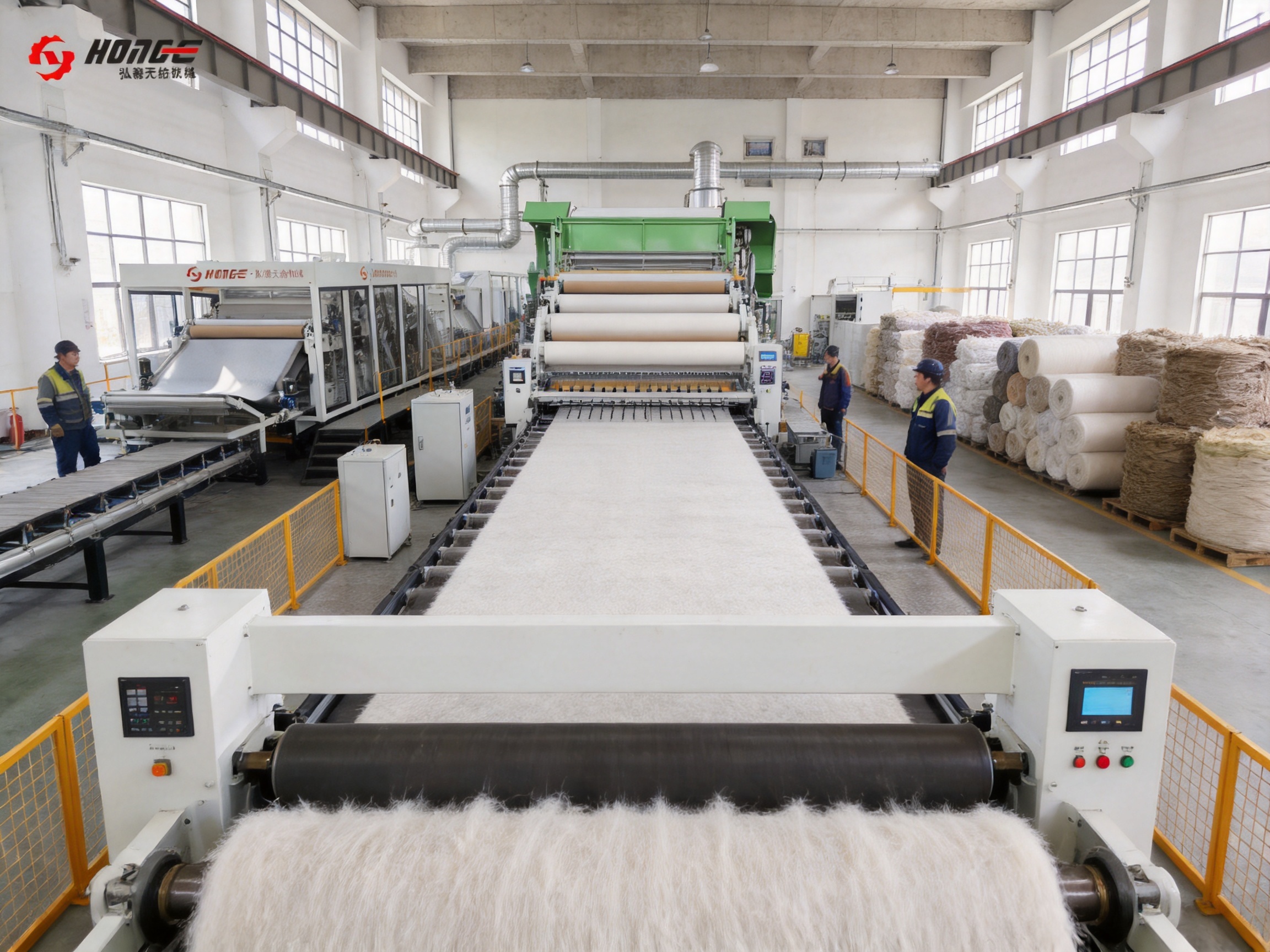
The HYSL Carding Machine is a fully automatic nonwoven carding unit used to process fiber batt after opening and blending. It forms a continuous web that can be delivered to the next production stage. The standard design may include a single main cylinder with double doffers, while other arrangements, including single-cylinder and double-cylinder structures, can be selected according to the product and line requirements.
The machine is available in several working widths, including approximately 1.55 meters, 1.85 meters, 2 meters, 2.5 meters, and 2.8 meters. A representative HYSL-230 configuration has an effective working width of 2,300 millimeters and a main cylinder diameter of approximately 1,230 millimeters. The standard configuration includes five carding groups, working rollers with a diameter of approximately 165 millimeters, and stripping rollers with a diameter of approximately 78 millimeters.
The equipment is designed for integration with automatic nonwoven production lines. Its drive systems can use inverter control or servo-motor technology, depending on the customer’s automation requirements. Variable-speed adjustment is available for the main cylinder, doffers, working rollers, stripping rollers, and feeding rollers. This coordinated control helps maintain synchronization during starting, stopping, speed changes, and production adjustments.
Production capacity depends on the fiber type, web weight, working width, machine configuration, operating speed, and the requirements of the complete line. The supplied technical information indicates output capabilities reaching approximately 750 to 800 kilograms per hour for selected configurations, with maximum output speeds commonly specified between 70 and 100 meters per minute. Actual performance should be confirmed through a technical evaluation based on the customer’s raw material and target product.
3. Main Technical Specifications
The following table summarizes representative specifications. Because carding machines are configurable, final values may vary according to working width, cylinder arrangement, fiber type, and line design.
| Item | Representative Specification |
|---|---|
| Machine model | HYSL or HYSL-230 configuration |
| Machine type | Single cylinder and double doffer; other structures available |
| Working width | 1.55 m, 1.85 m, 2.0 m, 2.5 m, or 2.8 m |
| Representative effective width | 2,300 mm |
| Main cylinder diameter | Approximately 1,230 mm |
| Breast cylinder diameter | Approximately 850 mm |
| Working roller diameter | Approximately 165 mm |
| Stripping roller diameter | Approximately 78 mm |
| Number of carding groups | Five units in the representative configuration |
| Maximum output speed | Approximately 70 to 100 m/min, depending on configuration |
| Maximum stated production capacity | Approximately 750 to 800 kg/h for selected configurations |
| Suitable fibers | Polyester, wool, hemp, PP staple fiber, recycled fiber, low-melt fiber, and other compatible materials |
| Control options | Inverter drives or servo-motor control |
| Safety features | Metal detection, automatic stop alarm, guarding, and electronic safety system |
| Certification information | CE and ISO 9001-related manufacturing credentials as supplied |
The table should be treated as a reference rather than a final purchase specification. A complete technical proposal should identify the exact number of cylinders, doffers, randomizer rollers, working width, control cabinet arrangement, power requirement, carding wire specification, and expected output for the selected material.
4. Advanced Feeding System
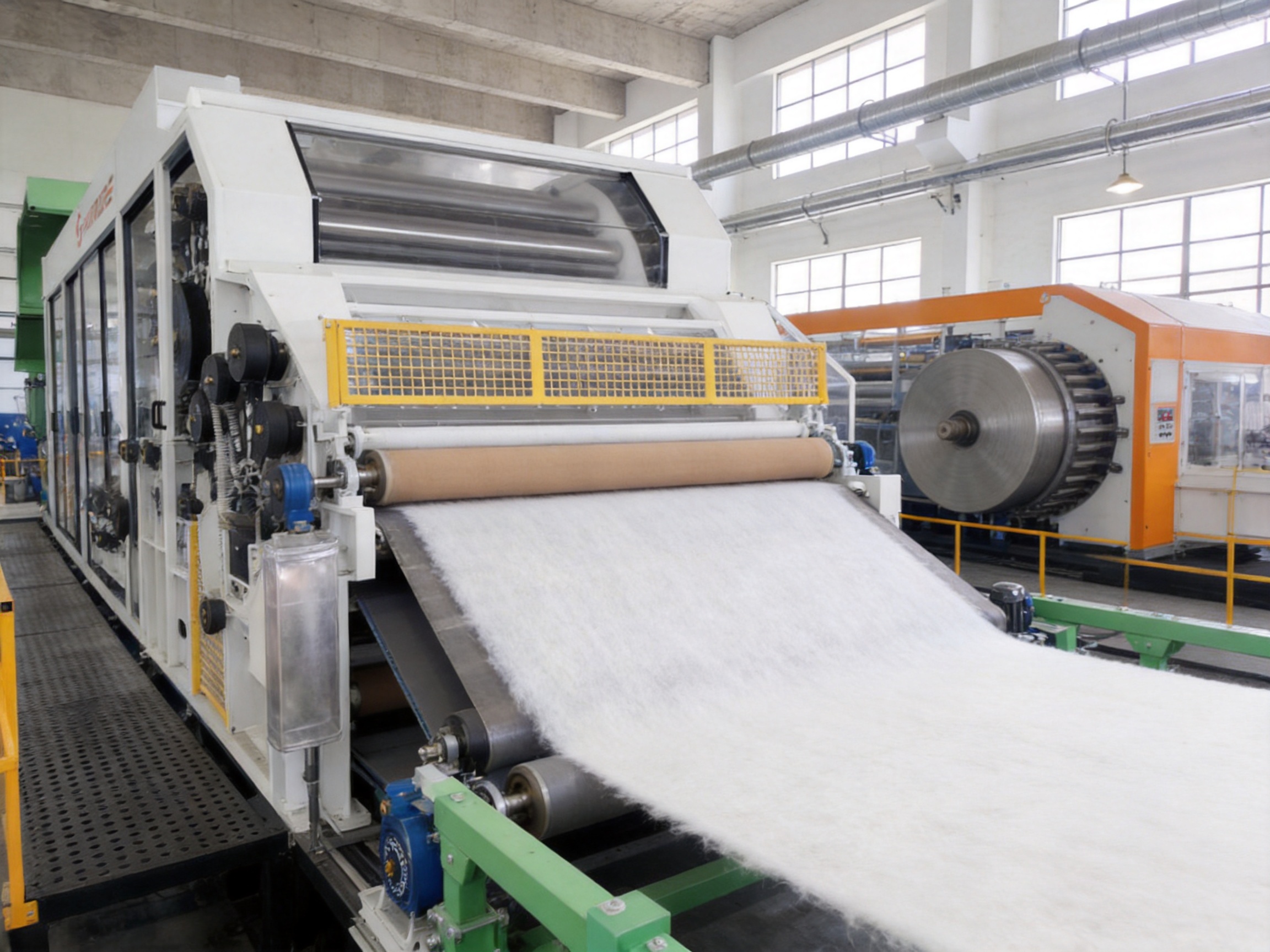
Uniform feeding is the foundation of uniform carding. If the fiber batt enters the carding zone unevenly, even a precisely manufactured carding cylinder cannot fully correct the variation. The HYSL Carding Machine uses a horizontal feeding lattice made from PVC lattice material, together with a pressing roller designed to improve the consistency of fiber delivery.
The feeding system helps regulate the thickness and density of the incoming batt before it reaches the main carding area. By compressing and guiding the batt, the pressing roller supports a more stable feed condition. This is particularly important when the machine is connected to an opening and blending line that delivers material continuously.
Four feeding rollers are included in the described structure. These rollers have an approximate diameter of 90 millimeters and are driven at adjustable speeds. The variable-speed arrangement enables operators to coordinate the feed rate with the main cylinder, doffers, and downstream web-forming equipment. It also allows the line to be adjusted for different web weights and fiber blends.
The feeding section includes an anti-metal protection device at the input area. The device detects metal contamination and can trigger an automatic stop and warning signal. This function is valuable because metal fragments may damage expensive carding wire, working rollers, cylinders, or downstream equipment. Early detection also reduces the risk of producing contaminated material and helps protect personnel.
Compared with a basic feeding arrangement without integrated protection, this configuration provides a stronger combination of metering, safeguarding, and process control. It is especially useful for plants that process recycled fibers or waste fibers, where the risk of foreign material may be higher than in virgin-fiber production.
5. Multi-Stage Carding Performance
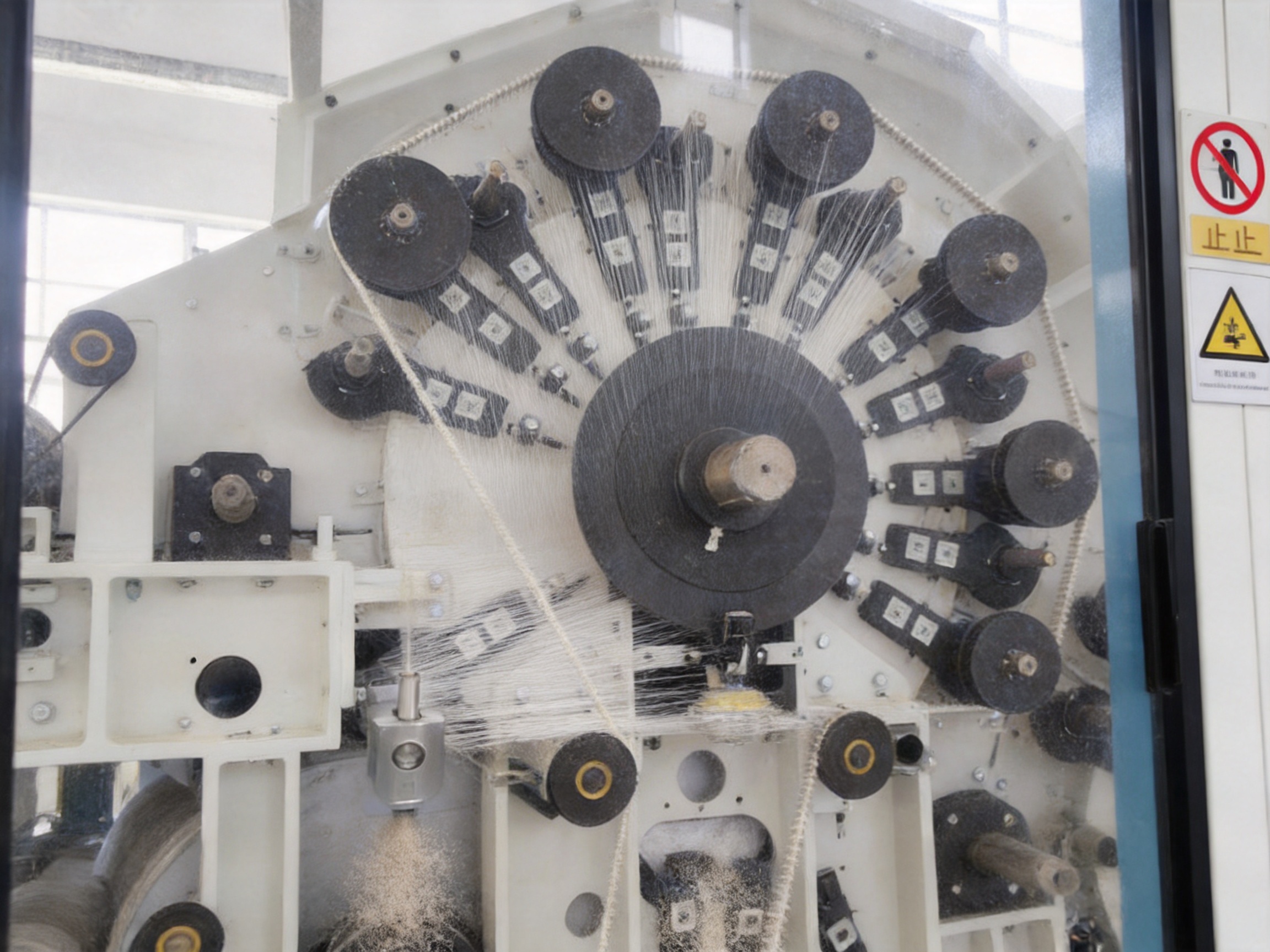
The central carding section contains five sets of working rollers and stripping rollers mounted around the main cylinder in the representative design. These carding groups provide repeated fiber opening and separation as the batt travels through the machine. Multiple carding points improve the machine’s ability to break down fiber clusters and form a more even web.
Working rollers and stripping rollers perform complementary functions. Working rollers engage with the fibers and help separate or transfer them, while stripping rollers remove fibers from the working surfaces and return them to the controlled fiber flow. The exact operating effect depends on roller speed, wire angle, wire density, roller spacing, fiber characteristics, and production speed.
The five-unit carding arrangement gives the machine sufficient carding intensity for many common nonwoven applications. It can help reduce visible fiber clumps, improve web regularity, and create a more stable feed for needle punching or thermal bonding. A controlled and even web also reduces the likelihood of localized thin areas, thick areas, holes, or inconsistent bonding.
The machine’s main cylinder and large rollers are precisely balanced before assembly. Dynamic balance is important at high rotational speeds because vibration can affect web quality, bearing life, noise levels, and machine stability. A well-balanced cylinder supports smoother operation and reduces mechanical stress on the frame and drive system.
Carding wire can be supplied in surface-wound or interlocking forms according to the customer’s requirements. Different wire arrangements may be selected to suit the fiber type, desired web structure, and required carding intensity. The use of high-quality carding wire, including wire supplied by established specialist manufacturers, contributes to consistent fiber handling and longer service performance when properly maintained.
6. Single-Cylinder and Double-Cylinder Options
One of the main advantages of the HYSL design is its configuration flexibility. Customers may select a single-cylinder structure for applications that require a relatively straightforward carding arrangement, or a double-cylinder design when more extensive fiber opening and carding action is needed.
A single-cylinder and double-doffer arrangement is a common choice for many nonwoven wadding and web-forming applications. It provides a practical balance between carding performance, machine footprint, production capacity, and investment cost. The double doffer arrangement can support efficient web delivery and may be adapted to the requirements of the downstream process.
A double-cylinder configuration can provide additional carding action and may be preferred when the raw material requires more intensive separation or when a specific web structure is required. The correct choice depends on fiber length, fineness, crimp, blend ratio, moisture content, web weight, output target, and the final consolidation method.
Randomizer rollers can also be installed when the customer requires a more random fiber orientation. Parallel-laid webs are useful for some products where directional strength is desirable, while randomly oriented webs can provide more balanced properties in multiple directions. The ability to choose randomizer equipment enables the same basic machine platform to support a wider range of products.
7. Variable-Speed Drives and Automatic Synchronization
Nonwoven production lines contain several connected machines. The opening and blending section, feeding system, carding machine, crosslapping or web-forming unit, needle punching machine, oven, winding unit, and cutting equipment must operate in coordination. If one section runs too fast or too slowly, the line may experience web accumulation, tension changes, breaks, uneven weight, or unnecessary downtime.
The HYSL Carding Machine uses variable-speed drives for the main drive, doffers, working rollers, feeding rollers, and other key components. Inverter control can provide economical and practical speed adjustment for many production lines. Servo-motor control may be selected when more precise synchronization, acceleration, deceleration, or position control is required.
The control system is designed to support stable starting and stopping. Gradual acceleration can reduce sudden tension changes in the fiber web and lower mechanical shock. Controlled stopping can also reduce the risk of fiber accumulation inside the carding section. When the machine is integrated with other line equipment, synchronized control helps maintain a continuous and predictable material flow.
Electronic safety functions are integrated into the machine design. Depending on the final configuration, these may include emergency stops, access protection, overload monitoring, abnormal-condition alarms, metal detection, and automatic stopping. Transparent organic-glass safety covers allow operators to observe important areas while maintaining a physical barrier around moving components.
Automation improves more than convenience. It contributes to repeatability, production records, operator safety, and process control. When settings are properly documented, the operator can reproduce suitable conditions for different fiber blends and product specifications. This can reduce dependence on manual adjustment and help maintain consistent quality across production shifts.
8. Dust Removal and Cleaner Operation
Carding generates dust and releases small particles from fibers, particularly when processing short fibers, recycled fibers, waste fibers, or materials containing residual impurities. If dust is not controlled, it can accumulate around moving parts, reduce visibility, affect air quality, and interfere with maintenance.
The HYSL Carding Machine is equipped with an edge-suction system. Dust particles are transferred toward a dedicated dust cage or dust-collection area. This arrangement helps remove loose particles from the working environment and supports cleaner operation around the machine.
Effective dust removal can also contribute to more stable machine performance. Excessive accumulation around rollers and carding wire may affect fiber transfer, increase cleaning requirements, or create an additional fire risk in facilities processing combustible textile fibers. The dust-removal system should be connected to a suitable plant-level extraction arrangement and maintained according to the operating environment.
Dust control is not a replacement for housekeeping, filtration, or fire-prevention procedures. Operators should still clean accessible surfaces, inspect suction ducts, monitor airflow, and follow the manufacturer’s maintenance recommendations. A well-maintained extraction system provides the best results when combined with proper factory ventilation and regular inspection.
9. Protection of Carding Wire and Mechanical Components
Carding wire is a precision working surface and one of the most important wear components in a carding machine. Damage to the wire can reduce carding effectiveness, create web defects, and lead to expensive replacement work. For this reason, protecting the wire is essential for both product quality and operating cost control.
The machine includes a system intended to minimize fiber roller formation. Fiber rollers, sometimes called fiber laps or wrapped fiber accumulations, can form when fibers collect around rollers rather than transferring correctly. If they are not detected promptly, they may damage carding wire or cause unplanned stoppage.
The anti-metal protection device provides another layer of defense. Metal fragments can cut or deform wire points, damage cylinder surfaces, and cause severe mechanical problems. Automatic detection and stopping allow operators to remove the foreign object before it travels deeper into the machine.
Precision balancing of the main cylinder and large rollers further supports the service life of mechanical components. Reduced vibration can lower stress on bearings, couplings, frames, and drive components. It can also improve the working environment by reducing noise and vibration transmitted to the surrounding floor.
Preventive maintenance remains important. Operators should inspect wire condition, roller surfaces, bearings, drive belts or couplings, suction channels, electrical connections, safety switches, and emergency-stop functions. Maintenance intervals should be adjusted according to operating hours, fiber type, production speed, and contamination level.
10. Applications Across Nonwoven Industries
The machine can be configured for a broad range of nonwoven applications. Its final suitability depends on the fiber blend, target web weight, downstream equipment, and performance requirements of the finished product.
10.1 Needle-Punched Geotextiles
Needle-punched geotextiles require a stable and sufficiently uniform web before needle consolidation. The carding machine can prepare polyester, polypropylene, or recycled fiber webs for drainage layers, separation materials, filtration support, erosion-control products, and other civil-engineering applications.
Uniform feeding is particularly important in geotextile production because local variations in basis weight may affect thickness, permeability, tensile strength, and puncture resistance. The carding machine can be integrated with crosslapping and needle punching equipment to build the required web thickness and orientation.
10.2 Nonwoven Carpet and Floor Materials
Carpet underlay, felt backing, automotive floor materials, and other floor-related products may use polyester, recycled fibers, or blended fibers. A controlled carded web helps create consistent bulk and supports stable bonding during needle punching, thermal bonding, or adhesive treatment.
For products requiring improved dimensional stability or specific surface characteristics, the carding configuration may be combined with randomizer equipment or multiple web-forming passes. The selection should be based on the desired balance between machine productivity and product performance.
10.3 Thermal-Bonded Wadding
Thermal-bonded wadding commonly uses polyester fibers, low-melt fibers, or a blend containing a bonding component. The carding machine prepares the fiber web before it enters a thermal bonding oven. Web uniformity influences thickness, resilience, softness, and the consistency of the bonded structure.
For insulation, quilting, furniture padding, mattress filling, and garment interlining, manufacturers may require different densities and loft levels. Adjustable feeding and synchronized speed control make it easier to adapt the machine to different product specifications.
10.4 Automotive Interior Materials
Automotive interior materials often use recycled fibers, polyester fibers, low-melt fibers, or blended constructions. Typical products may include trunk liners, acoustic materials, floor coverings, wheel-arch liners, and interior padding. These products require reliable basis-weight control and stable downstream bonding.
When recycled fibers are used, metal detection and dust management become especially valuable. The machine’s protection systems help reduce the risk of foreign-material damage and support a cleaner production environment.
10.5 Wool, Hemp, and Natural-Fiber Felts
Natural fibers such as wool and hemp can have different lengths, surface characteristics, moisture responses, and entanglement behavior compared with polyester. The carding parameters must therefore be selected carefully. Lower or more carefully coordinated speeds may be required for certain materials, while carding wire and roller settings may need adjustment.
The availability of variable-speed operation and different machine configurations allows the equipment to be evaluated for natural-fiber felt, insulation, craft materials, industrial pads, and other specialty products.
10.6 Cleaning Cloth and Industrial Felt
Needle-punched cleaning cloth, polishing materials, filtration support layers, and industrial felts often require a controlled mixture of fibers and a stable web before consolidation. The carding machine can provide the initial web-forming stage for these products and can be integrated with winding, cutting, and packaging equipment.
11. Advantages Compared with Basic Carding Equipment
Many basic carding machines can open fibers and form a web, but production requirements increasingly demand more than basic mechanical operation. Manufacturers need equipment that can manage variable raw materials, support line automation, protect precision components, and maintain consistent output over long operating periods.
11.1 Configuration Flexibility
The availability of single-cylinder, double-cylinder, double-doffer, and optional randomizer configurations enables the machine to be matched to different products. A fixed-design machine may be economical for one application but less suitable when a factory needs to expand into additional markets. A configurable platform offers more opportunities for future production changes.
11.2 Wider Working-Width Selection
Working widths from approximately 1.55 meters to 2.8 meters allow customers to choose a machine that matches their production scale. Narrower widths may suit specialty products or limited-capacity lines, while wider machines can support higher output and broader webs for industrial applications.
11.3 Integrated Metal Protection
Metal detection at the feeding rollers is an important advantage for facilities using recycled or waste fibers. Without this protection, a foreign metal object may enter the carding area and damage the wire or cylinders. Automatic stopping and warning reduce reaction time and support safer operation.
11.4 Variable-Speed Control
Basic machines with limited speed adjustment can make it difficult to tune the process for different materials. Variable-speed drives allow operators to coordinate fiber feed, carding intensity, doffer delivery, and downstream processing. This improves flexibility and can reduce web defects caused by poor synchronization.
11.5 Dust Management
The integrated edge-suction arrangement provides a more complete approach to dust handling than a machine without dedicated extraction points. Cleaner operating conditions support maintenance, visibility, component protection, and worker comfort.
11.6 Precision Mechanical Preparation
Precision balancing before assembly demonstrates attention to the dynamic behavior of the main cylinder and large rollers. This is important for high-speed operation and can contribute to smoother running, longer bearing life, and reduced vibration.
11.7 International-Oriented Safety Design
The complete electronic safety system, transparent guarding, emergency functions, metal detection, and automatic stop alarm provide a stronger safety foundation than an unprotected machine. Final safety compliance depends on the complete installation, local regulations, electrical design, and customer-site procedures, but these features provide important built-in protection.
12. Manufacturing Strengths and Engineering Approach
Changshu Hongyi Nonwoven Machinery Co., Ltd. specializes in nonwoven machinery and complete production-line solutions. The company has more than 20 years of experience in the nonwoven machinery field and supplies both individual machines and integrated lines. Its product range includes opening and blending machines, carding machines, airlay systems, needle punching machines, thermal bonding equipment, winding and cutting systems, and complete nonwoven production lines.
This product-range experience is valuable when supplying a carding machine because carding performance cannot be evaluated independently from the rest of the line. The company can consider how the carding unit will connect with opening, blending, crosslapping, needle punching, thermal bonding, winding, or cutting equipment. A system-oriented approach helps reduce compatibility problems during installation and commissioning.
The manufacturing approach includes precision assembly of cylinders and rollers, selection of suitable carding wire, integrated electrical control, and configuration according to the customer’s material and product. The use of balanced large rollers supports mechanical stability, while adjustable drives provide process flexibility.
Customers can discuss different working widths, cylinder arrangements, doffer configurations, randomizer requirements, control methods, and suitable materials with the technical team. This customization is important because nonwoven products differ significantly in basis weight, thickness, fiber orientation, tensile properties, and consolidation method.
The company’s equipment has been supplied to customers in more than 20 countries, including markets in Asia, the Middle East, Africa, Europe, and the Americas. International experience can support communication regarding export packaging, installation planning, electrical requirements, spare parts, operator training, and after-sales service.
Factory-direct manufacturing also allows the supplier to coordinate mechanical, electrical, and process-related requirements in one project. For customers purchasing a complete line, this can simplify technical communication and reduce the number of separate equipment interfaces that must be managed.
13. Quality Control and Production Preparation
Reliable carding equipment depends on quality control at several stages. Raw materials for frames, cylinders, rollers, bearings, electrical components, and carding wire should be checked before assembly. Machined surfaces must meet the required dimensional tolerances, and rotating parts must be inspected for balance and runout.
During assembly, the alignment between cylinders, working rollers, stripping rollers, and feeding components must be carefully controlled. Roller spacing has a direct effect on carding performance. Incorrect alignment may produce uneven web formation, excessive fiber damage, abnormal wear, or unstable transfer conditions.
Electrical and control systems should be tested before delivery. Variable-speed drives, sensors, metal detectors, alarms, emergency stops, access switches, and control-panel functions should be verified. A video outgoing inspection may be provided as part of the supply process, helping customers review the machine before shipment.
Before final acceptance, the customer should confirm the selected raw materials, target output, web weight, working width, and downstream equipment. Trial production with representative fiber is recommended whenever possible. A fiber trial can help verify the carding wire selection, speed range, production capacity, dust extraction, and web quality.
The machine is supplied as new equipment and may be packed naked or protected with polyethylene film according to the shipping arrangement. Export preparation should account for the machine’s dimensions, lifting points, electrical cabinet, loose parts, spare parts, and installation tools.
14. Installation and Commissioning Considerations
A carding machine should be installed on a stable and appropriately prepared foundation. The floor must support the machine weight and dynamic loads while maintaining accurate alignment with connected equipment. Adequate clearance should be provided for maintenance access, platform movement, electrical inspection, and removal of large components.
The production hall should have suitable ventilation, dust extraction, lighting, temperature control, and humidity management. Fiber behavior can change with environmental conditions. Excessive humidity may affect feeding and fiber cohesion, while very dry conditions may increase static electricity and dust movement.
Electrical power requirements must be confirmed before installation. The supplied information includes 220 V or customized voltage references, as well as 380/220 V information for certain configurations. The exact voltage, frequency, phase arrangement, installed power, control-cabinet requirements, and local electrical standards should be agreed upon in the final technical specification.
Commissioning normally includes mechanical inspection, lubrication checks, rotation checks, electrical testing, sensor verification, safety-function testing, and gradual no-load operation. Fiber should be introduced progressively rather than immediately at maximum speed. This allows the commissioning team to check feed stability, transfer behavior, dust removal, web formation, and abnormal vibration.
Operators should be trained in normal operation, recipe adjustment, emergency stopping, metal-contamination response, cleaning, lubrication, carding-wire inspection, and safe access procedures. Proper training improves both production results and equipment life.
15. Maintenance and Operating Recommendations
Daily inspection should include the feeding lattice, pressing roller, feeding rollers, visible carding surfaces, doffers, suction points, safety covers, warning lights, and emergency-stop devices. Operators should look for unusual noise, vibration, heat, dust accumulation, fiber wrapping, or changes in web appearance.
Regular cleaning is particularly important when processing recycled fibers, short fibers, or dusty materials. Dust cages, extraction ducts, machine edges, and accessible surfaces should be cleaned according to the factory’s safety procedures. Compressed air should be used carefully because it may disperse dust into the working area or drive particles into bearings and electrical components.
Carding wire should be inspected for broken points, excessive wear, embedded foreign matter, and uneven damage. Worn wire can reduce fiber separation and affect web quality. Replacement schedules depend on operating hours, material abrasiveness, contamination, wire type, and production intensity.
Bearings and drive components should be lubricated and inspected according to the maintenance schedule. Excessive temperature, noise, or vibration may indicate misalignment, lubrication problems, bearing wear, or an imbalance. Early diagnosis can prevent more serious damage.
The metal detector should be tested regularly using the appropriate test procedure. Safety switches, guards, emergency stops, alarms, and automatic stopping functions should also be checked. These tests are essential because safety systems must remain effective throughout the equipment’s operating life.
Production records should include raw-material blend, feed speed, cylinder speed, doffer speed, web weight, operating hours, cleaning activities, wire condition, and maintenance work. Such records help identify the relationship between operating conditions and product quality.
16. Selecting the Correct Configuration
The correct HYSL configuration should be selected through a technical review rather than by working width alone. The first consideration is the raw material. Polyester, wool, hemp, polypropylene, recycled fiber, low-melt fiber, and mixed materials may require different carding conditions.
Fiber fineness and length are also important. The supplied information indicates suitability for fibers in ranges such as approximately 1.5D to 15D and lengths from about 38 to 70 millimeters, depending on the configuration. These values should be treated as reference ranges, and the supplier should confirm compatibility with the actual material.
The second consideration is the final product. A needle-punched geotextile may require a different web structure from thermal-bonded wadding. An automotive acoustic material may need a particular blend and basis-weight distribution. A wool felt product may require different speed and wire settings from a polyester padding product.
The third consideration is production capacity. Customers should determine the desired kilograms per hour, web width, web weight, line speed, operating schedule, and expected expansion plans. A wider machine may provide greater capacity, but the complete line must also be capable of handling the corresponding output.
The fourth consideration is fiber orientation. If a parallel web is preferred, the standard doffer arrangement may be appropriate. If more random orientation is required, randomizer rollers or an alternative web-forming arrangement should be evaluated.
The fifth consideration is automation. Inverter control may be sufficient for many applications, while servo control may be preferred for precise synchronization or advanced production management. The control system should be compatible with the opening line and downstream equipment.
17. Purchase and Project Support
The machine is available for customized orders, with a representative minimum order quantity of one set. Lead time is commonly stated at approximately two to three months, with a representative delivery schedule of around 70 days after the required payment conditions are fulfilled. Final delivery time depends on configuration, manufacturing schedule, inspection, packaging, and shipping arrangements.
Payment may be arranged by telegraphic transfer or letter of credit according to the commercial agreement. Packaging may use naked packing or polyethylene-film protection, with the final method determined by machine size, shipping route, and customer requirements.
After-sales support includes a stated one-year warranty for the supplied equipment, subject to the final contract terms. Technical support may cover installation guidance, operation instructions, maintenance recommendations, spare-parts coordination, and troubleshooting assistance.
Customers should request a complete technical document package before purchase. This package should include the general arrangement drawing, foundation requirements, power list, utility requirements, process-flow diagram, control description, spare-parts list, recommended maintenance schedule, and installation responsibilities.
For complete production lines, it is also important to define the boundary between each machine. The supplier and customer should agree on web-transfer points, control signals, emergency-stop interlocks, dust-extraction connections, material-flow direction, and responsibility for commissioning.
18. Practical Benefits for Manufacturers
For a nonwoven manufacturer, the value of a carding machine extends beyond its nominal speed or output rating. The most important benefit is the ability to produce a stable web repeatedly under controlled conditions. A consistent web can reduce downstream adjustments and improve the final product’s appearance and mechanical properties.
The machine’s configuration flexibility can help a factory serve multiple markets. A manufacturer may produce needle-punched felt, thermal-bonded wadding, automotive materials, cleaning cloth, or geotextile products using different process recipes and fiber blends. This flexibility can improve equipment utilization and reduce dependence on one product category.
Automatic metal detection and safety functions reduce the risk of severe damage and unsafe incidents. Dust removal improves the operating environment and supports cleaner maintenance. Variable-speed drives assist process optimization. Precision-balanced rollers support stable high-speed operation. Together, these features contribute to a more dependable production platform.
The company’s experience with complete nonwoven lines also provides an advantage during project planning. Customers can obtain not only a carding machine but also assistance with related equipment such as opening and blending systems, needle punching machines, thermal bonding ovens, airlay equipment, winding units, and cutting machines.
A factory-direct relationship can also support customization. Instead of selecting a standard machine that may require extensive modification later, customers can discuss working width, cylinder structure, randomizer requirements, wire type, drive control, and product application before production begins.
19. Q&A
Q1: What is the main purpose of the HYSL Carding Machine?
The machine cards opened and blended fibers and forms them into a continuous parallel or random web. The web is then supplied to downstream processes such as needle punching, thermal bonding, quilting, winding, or cutting.
Q2: What fibers can the machine process?
Depending on the selected configuration and process settings, the machine can process polyester staple fiber, wool, hemp, polypropylene staple fiber, recycled fiber, waste fiber, low-melt fiber, and other compatible materials. Fiber length, fineness, crimp, moisture, and blend ratio should be reviewed before final configuration.
Q3: Is the machine available with different working widths?
Yes. Representative working widths include 1.55 meters, 1.85 meters, 2 meters, 2.5 meters, and 2.8 meters. A 2,300-millimeter configuration is also described in the supplied technical information.
Q4: Can the machine produce random fiber webs?
Yes. Randomizer rollers can be installed when a more random fiber orientation is required. The choice between a parallel web and a random web depends on the final product and downstream consolidation process.
Q5: What is the difference between the single-cylinder and double-cylinder versions?
A single-cylinder structure provides a practical arrangement for many applications, while a double-cylinder structure can provide additional carding action for materials or products requiring more intensive fiber separation. The correct selection depends on the fiber and product specification.
Q6: How does the machine protect against metal contamination?
An anti-metal protection device is installed at the input section near the feeding rollers. It can detect metal, trigger an automatic stop, and provide a warning alarm. This helps protect the carding wire, cylinders, rollers, and downstream equipment.
Q7: How many carding groups are included?
The representative HYSL-230 configuration includes five working-roller and stripping-roller carding groups. The final number and arrangement should be confirmed in the technical specification for the selected model.
Q8: What controls are available?
The machine can use inverter drives or servo-motor control. Variable-speed operation is available for major components, including the main drive, doffers, working rollers, and feeding rollers. The selected control system can be coordinated with the complete production line.
Q9: What output can the machine achieve?
Representative technical information indicates maximum speeds of approximately 70 to 100 meters per minute and selected production capacities of approximately 750 to 800 kilograms per hour. Actual output depends on working width, fiber type, web weight, cylinder configuration, and line conditions.
Q10: Is dust removal included?
Yes. The described structure includes an edge-suction system that transfers dust particles to a special dust cage. The customer should provide or confirm the appropriate plant-level extraction and filtration arrangement.
Q11: What safety features are included?
Features include transparent safety covers, electronic safety functions, automatic stop alarms, emergency protection, and metal detection. The final safety design must also comply with local installation requirements and the customer’s factory safety procedures.
Q12: Can the machine be used in a complete nonwoven line?
Yes. It can be integrated with opening and blending machines, crosslappers, needle punching machines, thermal bonding ovens, airlay systems, winding units, and cutting equipment. Line interfaces should be reviewed during the engineering stage.
Q13: What maintenance is required?
Maintenance includes regular cleaning, dust removal, lubrication, bearing inspection, wire inspection, roller inspection, drive-system checks, sensor testing, and safety-function verification. The exact schedule depends on operating hours and the processed fiber.
Q14: Is customization available?
Yes. Customers can discuss working width, cylinder structure, doffer arrangement, randomizer rollers, carding wire, drive type, voltage, automation level, and downstream line integration with the technical team.
Q15: What is the warranty period?
The supplied information states a one-year warranty and after-sales service. The precise warranty scope, exclusions, response procedure, and spare-parts responsibilities should be confirmed in the final commercial contract.
20. Conclusion
The HYSL Carding Machine is a flexible and technically structured solution for converting opened and blended fibers into uniform nonwoven webs. Its main strengths include multiple configuration options, working-width flexibility, five-stage carding in the representative design, variable-speed drives, automatic synchronization, metal detection, dust removal, precision-balanced rollers, and integrated electronic safety functions.
These features provide advantages over basic carding equipment that may lack configuration flexibility, integrated protection, advanced drive control, or dedicated dust-management provisions. The machine can support many nonwoven applications, including needle-punched geotextiles, thermal-bonded wadding, automotive interior materials, carpets, felts, cleaning cloth, and specialty industrial products.
Changshu Hongyi Nonwoven Machinery Co., Ltd. combines individual machine production with complete nonwoven-line engineering. Its experience in opening, carding, web forming, needle punching, thermal bonding, airlay processing, winding, and cutting enables a system-oriented approach to equipment selection and integration.
For the best result, customers should evaluate the machine using their actual fiber, target web weight, required width, production capacity, downstream equipment, and factory conditions. A properly configured and maintained carding machine can become a dependable foundation for consistent nonwoven production and long-term manufacturing development.
References
1. Product technical information for the HYSL Carding Machine, including configuration, structure, operating features, and application data.
2. Representative HYSL-230 product parameters, including working width, cylinder diameter, roller dimensions, carding groups, and production capacity.
3. Manufacturer information for Changshu Hongyi Nonwoven Machinery Co., Ltd., including company experience, equipment range, export markets, and engineering services.
4. General principles of textile fiber opening, blending, carding, web formation, needle punching, and thermal bonding.
5. General industrial practices for nonwoven machinery safety, dust control, preventive maintenance, and production-line integration.