

Content
- 1 Introduction
- 2 What Is Thermal Bonded Wadding?
- 3 Complete Production Process
- 4 Key Technical Specifications
- 5 Advantages Over Conventional and Competing Solutions
- 6 Advanced Manufacturing and Engineering Strengths
- 7 Applications of Thermal Bonded Wadding
- 8 Quality Control During Production
- 9 Installation, Training, and After-Sales Support
- 10 How to Select the Right Configuration
- 11 Operating and Maintenance Recommendations
- 12 Economic Benefits for Manufacturers
- 13 Why This Production Line Is a Practical Investment
- 14 Frequently Asked Questions
- 14.1 What products can be made on a thermal bonded wadding line?
- 14.2 What fibers are suitable for the line?
- 14.3 What is the available grammage range?
- 14.4 What is the maximum finished thickness?
- 14.5 Can the product color be customized?
- 14.6 Can the line produce both soft and hard wadding?
- 14.7 What working widths are available?
- 14.8 What production capacity can be expected?
- 14.9 Does the line require chemical adhesive?
- 14.10 How is the finished product packaged?
- 14.11 How long is the warranty period?
- 14.12 What is the expected delivery time?
- 14.13 Is the machine suitable for international factories?
- 14.14 What information should be provided when requesting a quotation?
- 15 Conclusion
- 16 References
- 17 Product: HYL Thermal Bonded Wadding Production Line
Introduction
Thermal bonded wadding is a versatile nonwoven material used in mattresses, sofa cushions, quilts, furniture padding, medical cushioning, agricultural protection, and many other applications. Its structure combines softness, resilience, controlled thickness, and dimensional stability. Unlike mechanically bonded materials that depend primarily on dense needle penetration or chemical binders, thermal bonded wadding uses heat-sensitive fibers to create a stable web structure. The result is a clean, breathable, and flexible product with a wide range of possible weights, thicknesses, colors, and widths.
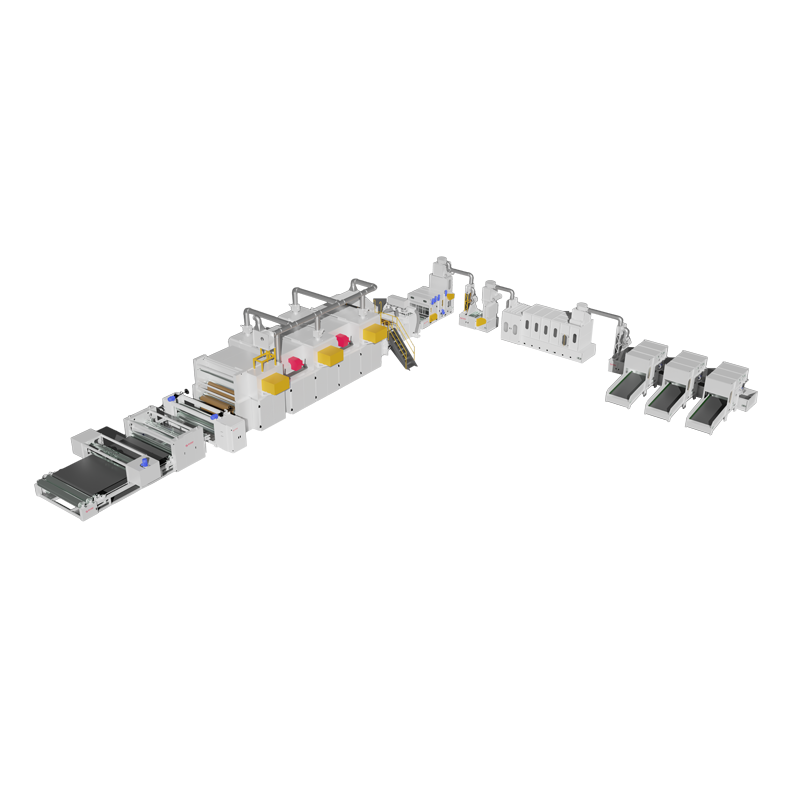
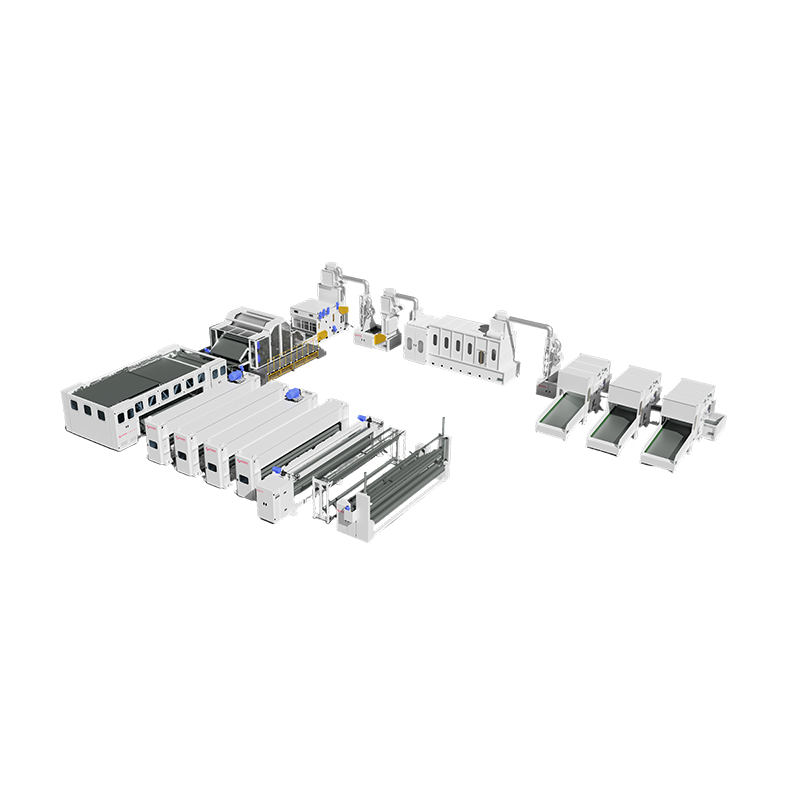
A thermal bonded wadding production line is designed to convert polyester staple fiber, polypropylene staple fiber, and low-melt bonding fibers into a continuous or cut finished product. The complete system normally includes fiber opening and blending, feeding, carding, web forming, thermal bonding, cooling, winding, cutting, inspection, and packaging equipment. Each section contributes to the final quality of the wadding, and the line must be carefully configured according to raw material, target grammage, product thickness, working width, and required output.
The HYL thermal bonded wadding production line is developed for manufacturers that need an automatic and configurable solution for soft and hard wadding production. It is suitable for finished product grammages from approximately 60 gsm to 3,000 gsm in standard descriptions, while customized configurations can support product ranges reaching approximately 5,000 gsm. Working widths can be selected from about 2 meters to 5 meters, with trim widths up to approximately 4,500 millimeters depending on the machine arrangement.
The line is particularly suitable for manufacturers serving home textile, mattress, furniture, medical, and agricultural markets. It supports customized product colors, dimensions, thicknesses, and packaging. With automatic control, robust mechanical construction, energy-conscious heating technology, and an integrated production concept, the line helps reduce manual handling and establish consistent product quality.
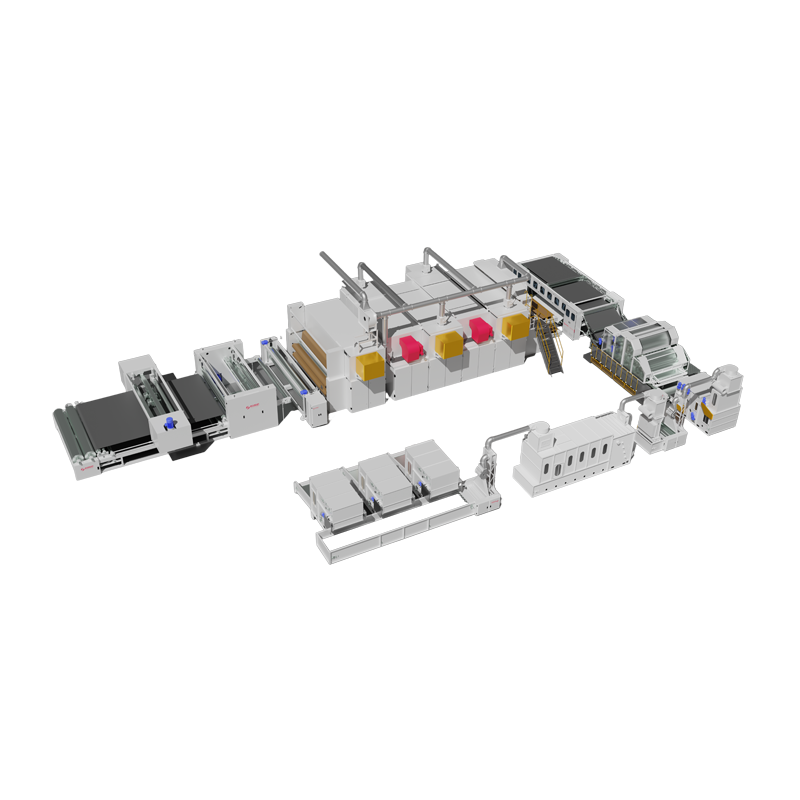
HYL Thermal Bonded Wadding Production Line
What Is Thermal Bonded Wadding?
Thermal bonded wadding is a three-dimensional nonwoven material made by arranging staple fibers into a web and bonding the web through controlled heating. The raw material usually contains a main structural fiber, such as polyester, and a low-melt fiber used as the bonding medium. When the web passes through a thermal bonding oven, the low-melt component softens or melts at a controlled temperature. It connects neighboring fibers without fully destroying the open structure of the web.
After heating, the material is cooled and stabilized. The bonding points hold the fibers together, giving the wadding adequate strength, recovery, thickness retention, and resistance to deformation. The finished product can be soft and lofty for quilts and mattress padding, or firmer and more compact for cushion cores and structural padding.
The precise properties of the product depend on fiber fineness, fiber length, low-melt fiber percentage, web weight, oven temperature, heating time, cooling conditions, and production speed. A higher proportion of bonding fiber generally increases cohesion and firmness, while a lower proportion can preserve greater softness and loft. The best formulation depends on the application and the customer’s performance requirements.
Typical Raw Materials
The production line can process polyester staple fiber and polypropylene staple fiber. The supplied technical information identifies common polyester fiber specifications in the approximate range of 1.5D to 15D and 38 millimeters to 72 millimeters in length. Low-melt fibers may be blended with the primary fiber in different percentages to achieve the desired bonding effect.
Fiber selection influences the hand feel, resilience, recovery, thermal insulation, density, and finished appearance of the wadding. Fine denier fibers can provide a softer surface, while coarser fibers may contribute to bulk and structural support. Shorter or longer staple lengths can also affect web formation and fiber entanglement. For this reason, the opening and blending section must be adjusted to the selected raw material.
Soft Wadding and Hard Wadding
Soft wadding is commonly used in quilts, mattress comfort layers, sofa padding, clothing insulation, and other products where softness and flexibility are important. Hard wadding is used where higher firmness, support, or shape retention is required. Both products can be made on a thermal bonding line, but the fiber blend, production speed, web weight, oven settings, and compression conditions may differ.
A flexible production line enables one manufacturer to serve several markets without installing entirely separate systems. By changing the recipe and process parameters, the same basic line can produce different product categories. This flexibility is valuable for businesses that want to respond to changing customer demand or develop customized products for specific mattress, furniture, or industrial applications.
Complete Production Process
A high-quality thermal bonded wadding line is more than a single heating oven. It is a coordinated system in which every stage influences the next. Poor fiber opening can create lumps, inadequate blending can produce irregular bonding, and unstable web forming can lead to weight variation. Similarly, incorrect thermal conditions can cause shrinkage, excessive hardness, insufficient strength, or surface defects.
1. Fiber Opening
The process begins with opening the compressed staple fiber bales. Opening equipment separates compacted fiber tufts and loosens the material so that it can be blended and fed evenly. Effective opening reduces large fiber clusters and improves the consistency of the downstream web.
The opening section must handle the fiber gently. Excessive mechanical action can shorten fibers, create dust, or damage delicate low-melt components. Insufficient opening, on the other hand, can leave dense tufts that pass into the carding section and result in uneven web formation. The equipment is therefore configured to balance opening intensity with fiber preservation.
2. Fiber Blending
After opening, the main fiber and low-melt bonding fiber are blended according to the product recipe. Consistent blending is essential because local variations in bonding fiber concentration can cause differences in stiffness, thickness, strength, and appearance across the finished roll.
The blending system is designed to distribute different fiber types as uniformly as possible. It can be configured for different material ratios and production requirements. For manufacturers producing several grades, recipe changes should be managed carefully, with suitable cleaning and material identification procedures between products.
3. Feeding
The feeding section delivers the opened and blended fiber to the carding machine at a controlled rate. Stable feeding supports consistent web weight and reduces variation in the machine direction. Automatic feeding also reduces the need for continuous manual intervention.
Feeding accuracy is especially important when producing light products. At low grammages, even a small change in fiber flow can create a noticeable difference in thickness or basis weight. For heavier wadding, feeding stability helps prevent excessive density variation and improves the uniformity of the thermal bonding process.
4. Carding
The carding machine separates, aligns, and distributes fibers into a web. Carding is one of the most important quality-forming stages in the production line. It determines the initial uniformity, orientation, openness, and bulk of the web before thermal bonding.
A properly adjusted carding system produces a smooth and even web with stable width. The working settings depend on fiber denier, staple length, target grammage, line speed, and desired product properties. The carding section can be configured for different specifications, including working widths associated with 1 meter, 1.2 meters, 1.4 meters, 1.6 meters, and 2-meter equipment modules, as well as wider complete line arrangements.
Good carding performance provides several advantages. It helps reduce thin places, limits fiber clumps, improves surface appearance, and supports more uniform heat penetration in the oven. It also makes it easier to achieve repeatable quality when changing between different production recipes.
5. Cross-Lapping or Web Forming
For products that require higher grammage or greater thickness, the carded web may be cross-lapped or otherwise arranged into multiple layers. This process builds the web to the required weight and distributes fibers in different directions. Improved fiber distribution can increase stability and reduce directional weakness.
Web forming must be synchronized with carding speed and the thermal bonding section. If the web is too loose, it may stretch or shift during transfer. If it is too compact, the finished product may lose softness and loft. Accurate web control is therefore essential for producing mattresses, cushions, and other products with consistent thickness.
6. Thermal Bonding Oven
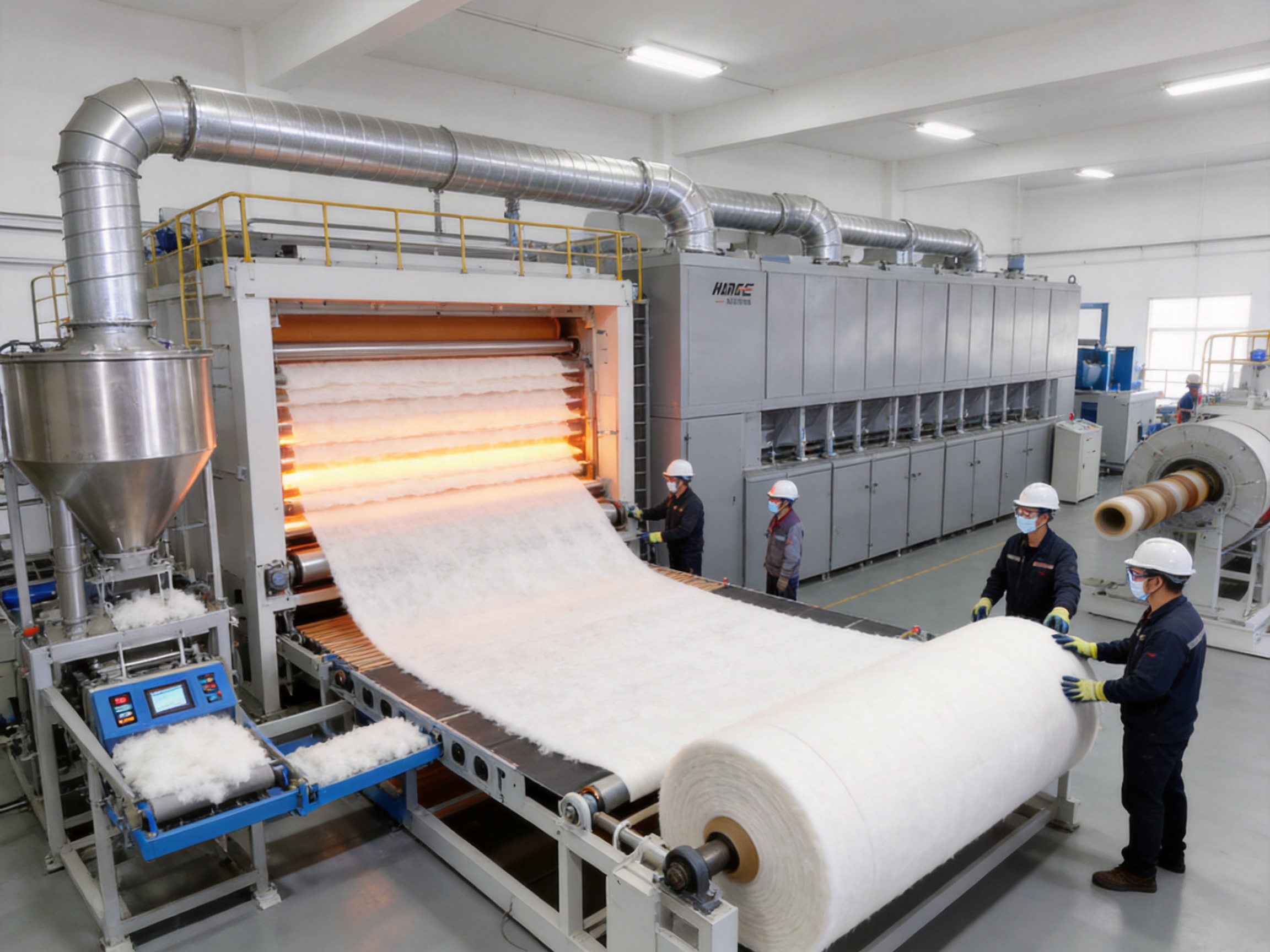
The oven is the core bonding unit of the production line. The web enters a controlled heating zone where low-melt fibers soften and bond the surrounding structural fibers. Temperature, airflow, residence time, and pressure must be controlled according to raw material and product specifications.
A high-quality oven should provide stable temperature distribution across the working width. Uneven heating can create a product that is hard on one side and soft on the other, or dense in the center and loose near the edges. Uniform airflow and carefully designed heating zones help ensure that the web receives consistent thermal treatment.
Oven control is also important for energy efficiency. Excessive temperature wastes energy and may damage the fiber, while insufficient temperature can leave the product weak or unstable. An optimized system uses the lowest practical thermal energy needed to activate the bonding fiber and achieve the required performance.
7. Cooling and Stabilization
After thermal bonding, the material must be cooled and stabilized. Cooling sets the bonding structure and helps the product retain its thickness and shape. It also reduces the risk of deformation during winding, cutting, or packaging.
Controlled cooling is particularly important for thick wadding. The internal layers may retain heat longer than the surface. If the product is wound or compressed before sufficient stabilization, it can experience permanent deformation or uneven thickness. The cooling section should therefore be matched to product weight, thickness, line speed, and final handling requirements.
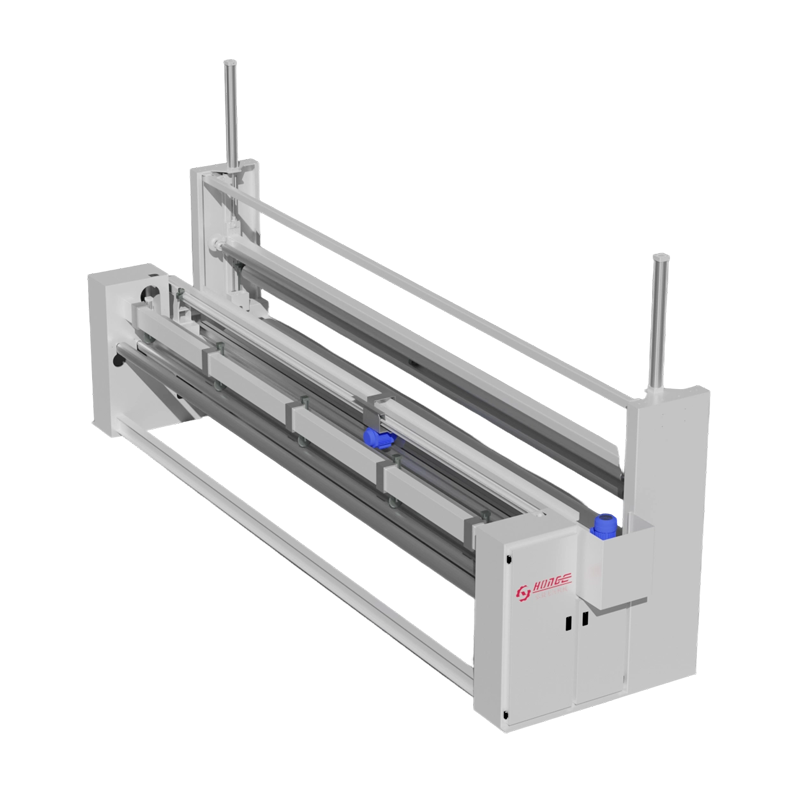
8. Winding
The stabilized wadding can be wound into rolls for storage, transport, or further converting. Winding tension must be adjusted to prevent excessive compression while still creating a stable roll. Different customers may request different roll diameters, core sizes, lengths, or packing methods.
The line supports PE film packaging, and transport arrangements can also include nude packing where appropriate. PE film helps protect the product from dust, moisture, and handling damage. Packaging requirements can be customized according to shipping distance, warehouse conditions, and customer preferences.
9. Cutting and Trimming
Cutting equipment converts the continuous material into specified lengths or widths. Accurate trimming helps remove irregular edges and provides a clean finished product. The maximum trim width indicated for the line is approximately 4,500 millimeters, while the complete working width can be customized within the available equipment range.
Cutting accuracy is important for mattress factories and furniture manufacturers because their downstream processes often use fixed dimensions. Consistent width reduces material waste and simplifies automatic feeding into quilting, laminating, compression, or assembly equipment.
Key Technical Specifications
The following specifications summarize the available configuration range. Actual performance depends on raw material, product formulation, machine layout, operating conditions, and customer requirements. Final technical parameters should be confirmed during project design.
Item |
Typical Specification |
Product type |
Soft or hard thermal bonded wadding |
Raw material |
Polyester staple fiber, polypropylene staple fiber, and low-melt bonding fiber |
Fiber fineness |
Approximately 1.5D to 15D polyester fiber |
Fiber length |
Approximately 38 millimeters to 72 millimeters |
Product grammage |
Approximately 60 gsm to 3,000 gsm in standard configurations; customized configurations may reach approximately 5,000 gsm |
Finished thickness |
Approximately 5 millimeters to 200 millimeters |
Working width |
Approximately 2 meters to 5 meters |
Trim width |
Up to approximately 4,500 millimeters |
Production capacity |
Up to approximately 800 kilograms per hour, depending on product and configuration |
Color |
Customized according to customer requirements |
Packaging |
PE film or other agreed transport packaging |
Automation |
Automatic operation with customized control configuration |
Certification |
CE and ISO9001-related quality systems |
Warranty |
One year |
Delivery period |
Approximately 150 days, subject to final configuration |
Advantages Over Conventional and Competing Solutions
Flexible Product Range
One of the strongest advantages of a configurable thermal bonded wadding line is its ability to produce multiple grades from one integrated system. A manufacturer can produce lightweight quilt padding, medium-weight mattress wadding, thick cushion materials, and firmer structural layers by changing fiber blends and process parameters.
This flexibility is more useful than a narrowly specialized machine when market demand changes frequently. It allows producers to accept more customer orders, test new product formulations, and gradually expand into new applications without replacing the complete production line.
Broad Grammage and Thickness Capability
The stated product range extends from approximately 60 gsm to 3,000 gsm in the standard technical description, with customized configurations capable of reaching approximately 5,000 gsm. Finished thickness can range from approximately 5 millimeters to 200 millimeters. This broad operating envelope gives the line an advantage over equipment designed only for thin quilt wadding or only for dense padding products.
Broad capability does not mean that every specification is produced at the same speed. Light and heavy products require different settings and may generate different output levels. However, a suitably designed line gives manufacturers the equipment foundation needed to cover a wider commercial range.
Wide Working Width
Working widths from approximately 2 meters to 5 meters are suitable for large mattress, furniture, and home textile products. Wider production reduces the number of side-by-side strips required for large articles and can improve productivity in downstream cutting operations.
Width customization also helps manufacturers avoid paying for a machine that is significantly larger than their actual production requirement. A line can be designed around the customer’s factory space, target products, expected output, and available utilities.
Clean Bonding Without Chemical Adhesives
Thermal bonding uses low-melt fibers as the bonding medium. This process avoids the routine application of liquid chemical adhesives during web bonding. The resulting product can maintain an open, breathable structure and a clean fiber-based appearance.
The absence of liquid adhesive application can also simplify certain production and maintenance activities. There is no adhesive mixing system, coating station, or adhesive drying stage of the type required by some chemical bonding processes. The production line instead focuses on accurate fiber preparation and controlled thermal treatment.
Softness and Resilience
Thermal bonded wadding can provide a useful balance between softness and structural recovery. The open fiber structure supports air circulation and cushioning, while the bonded points help the material resist collapse. This makes the product suitable for comfort layers, sofa cushions, mattress padding, and protective packaging.
By selecting different fiber deniers and low-melt fiber percentages, manufacturers can develop products with different hand feels and firmness levels. This is an important competitive advantage because mattress and furniture customers often require a specific balance of support, loft, compression recovery, and surface softness.
Customized Appearance
Finished product color can be customized through the selection and blending of colored fibers. Customized colors can help manufacturers produce private-label products, match customer brand requirements, or distinguish different product grades.
Color consistency depends on correct raw material management and thorough blending. An integrated line with stable material feeding supports repeatable appearance from one production batch to another.
Automatic Operation
Automatic operation reduces manual handling and supports more stable production. Automated feeding, web transfer, oven control, winding, and other functions can reduce the influence of operator fatigue and improve process repeatability.
Automation also improves production data management. Operators can record recipes, monitor temperatures, adjust speed, and identify abnormal conditions more efficiently. A customized control system can be designed according to the customer’s preferred degree of automation and factory management practices.
High Capacity Potential
The indicated production capacity can reach approximately 800 kilograms per hour, depending on the product specification and line configuration. Actual output is affected by grammage, thickness, fiber type, width, heating requirements, and operating speed.
High capacity is valuable for manufacturers serving mattress and furniture markets, where large volumes are required and delivery schedules are often tight. A properly matched production line can reduce bottlenecks and provide a more economical cost per kilogram than small, disconnected machines.
Advanced Manufacturing and Engineering Strengths
More Than Two Decades of Industry Experience
The manufacturer has more than 20 years of experience in the nonwoven machinery field. This experience covers complete production lines as well as individual machines, including opening and blending equipment, feeding and carding machines, airlay systems, needle punching machines, ironing machines, thermal bonding oven machines, winding units, and cutting equipment.
Long-term specialization helps the engineering team understand how individual machines interact within a complete nonwoven process. This is important because a production line can fail to deliver its expected performance if each machine is selected independently without considering material flow, web stability, heating, cooling, and final handling.
Complete Line Integration
The production line is designed as an integrated system rather than a collection of unrelated units. Equipment layout, transfer points, electrical controls, production speed, and thermal treatment can be coordinated during the design stage.
Integrated design supports smoother material flow and helps reduce transfer problems. It also simplifies operator training and maintenance planning. When the customer requires a particular working width, grammage range, packaging method, or output, the equipment configuration can be adapted around those requirements.
Precision Mechanical Construction
The main mechanical materials are predominantly steel and iron, providing the strength required for continuous industrial operation. Structural frames, rollers, heating assemblies, and support components must remain stable under thermal expansion, vibration, and long production cycles.
Accurate fabrication and assembly are especially important in wide machines. Small alignment errors can become significant across a 4-meter or 5-meter working width. Precision engineering helps maintain web alignment, even pressure, stable winding, and consistent finished dimensions.
Energy-Conscious Thermal Design
The thermal bonding oven is engineered to deliver controlled heat to the web. Energy efficiency depends on insulation, airflow management, temperature zoning, heating element selection, exhaust control, and correct operating parameters.
An energy-conscious design reduces unnecessary heat loss and helps lower operating costs. It also improves product consistency by maintaining stable process conditions. Since thermal treatment is often one of the largest energy consumers in the line, improvements in oven efficiency can have a meaningful effect on the total cost of production.
Automatic Control and Monitoring
Automatic control systems can coordinate fiber feeding, web movement, heating, cooling, winding, and cutting. Operators can monitor critical conditions and adjust the line according to product requirements.
Control system customization is useful for factories with different automation standards. Some customers may require a basic automatic system, while others may need recipe storage, alarm records, production monitoring, remote diagnostic capability, or connection to a wider factory management system. The configuration can be discussed during technical planning.
Quality System and Certification
The supplied information identifies ISO9001 and CE certification. A quality management system supports standardized manufacturing, inspection, documentation, and continuous improvement. CE-related compliance supports the requirements applicable to machinery supplied to relevant markets.
Certification does not replace proper installation, operator training, or regular maintenance. It does, however, provide an important framework for manufacturing control and machine safety. Customers should confirm the exact certification scope and documentation required for their destination country before ordering.
International Supply Experience
The company has supplied equipment to more than 20 countries, including Mexico, Argentina, Brazil, Turkey, Algeria, Egypt, Bangladesh, Vietnam, Thailand, and other Asian markets. International experience can help with export packing, technical communication, electrical standards, factory layout coordination, and commissioning support.
Different regions may have different requirements for voltage, frequency, safety guarding, documentation, spare parts, and installation. A machinery supplier with export experience is better positioned to identify these issues before manufacturing is completed.
Applications of Thermal Bonded Wadding
Mattress Manufacturing
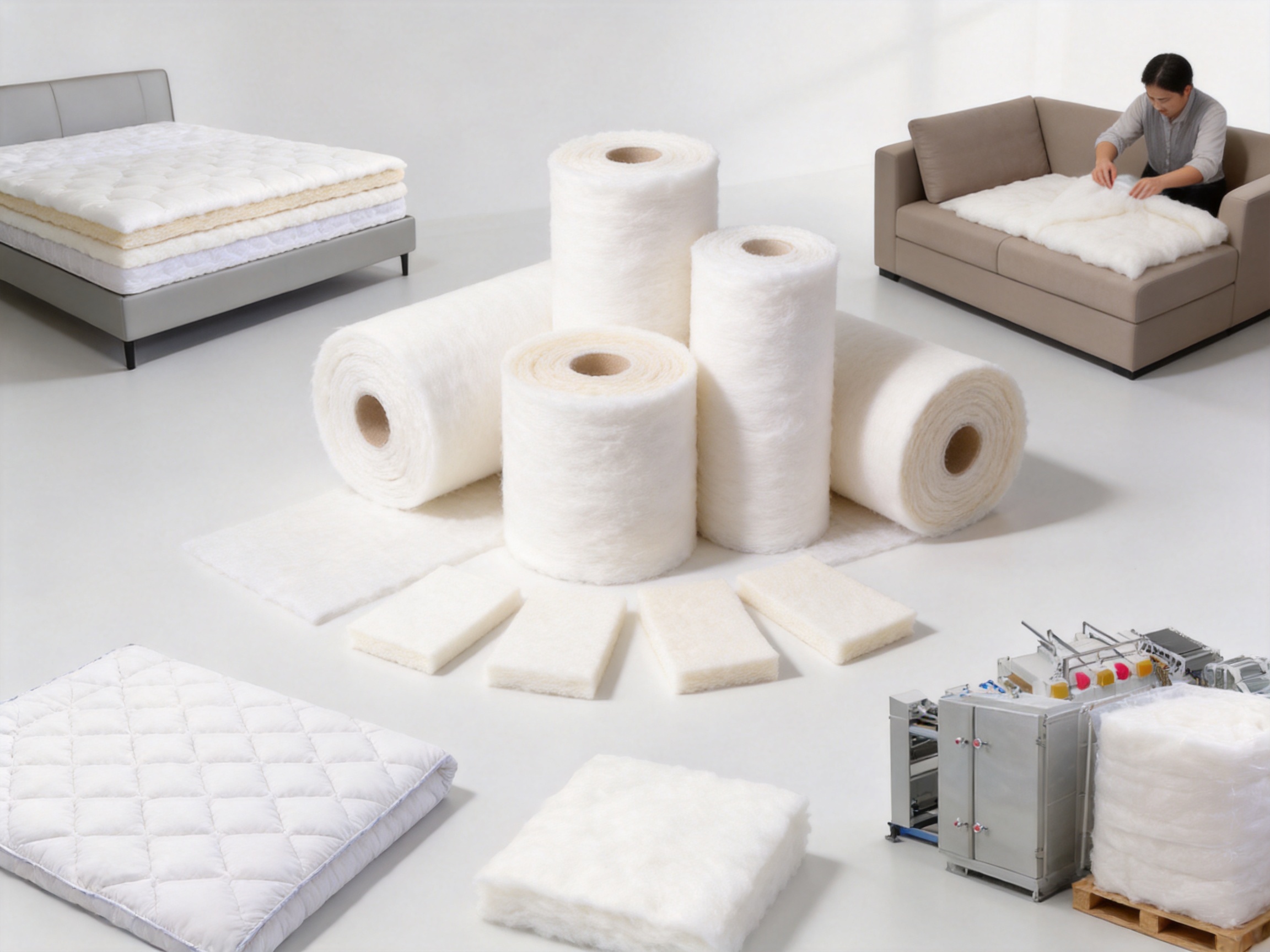
Mattress production is one of the largest application areas for thermal bonded wadding. The material can be used as a comfort layer, insulation layer, support padding, edge treatment, or protective layer between other mattress components.
Mattress manufacturers may require different grades for economy, mid-range, and premium products. A soft, lofty wadding can improve comfort, while a denser or firmer structure can support a more stable mattress construction. Customized width and thickness reduce the need for excessive joining or overlapping during mattress assembly.
Sofa and Cushion Production
Thermal bonded wadding is widely used in sofa cushions, chair padding, seat backs, armrests, and decorative furniture components. Its resilience helps cushion products retain their shape during use, while its softness improves comfort.
Furniture manufacturers often need materials with consistent thickness and easy cutting characteristics. The production line can produce rolls or cut pieces suitable for downstream laminating, sewing, wrapping, or assembly processes.
Quilts and Home Textiles
Soft wadding is suitable for quilts, comforters, mattress toppers, bed covers, and other home textile products. Its lightweight structure provides thermal insulation without excessive weight. Colored fibers can also be used to make products for different customer segments or private-label collections.
The wadding can be supplied in customized widths and roll formats, allowing textile factories to integrate it into quilting or covering lines. Product selection should consider wash resistance, recovery, loft, and the specific requirements of the finished textile.
Medical Packaging and Cushioning
Thermal bonded wadding can be used as a cushioning layer in medical packaging and protective transport products. It can also be used in padding applications associated with medical stretchers or similar equipment where a soft and resilient layer is needed.
Medical applications require careful attention to cleanliness, raw material selection, packaging, and applicable regulatory requirements. The production line itself provides the manufacturing platform, but the final product must be evaluated against the customer’s intended medical use and relevant standards.
Agricultural Protective Fabrics
In agriculture, nonwoven wadding can be used as a protective or cushioning fabric. Potential uses include crop protection, equipment padding, packaging of agricultural products, and insulation-related applications.
The suitable structure depends on whether the material is required to provide cushioning, thermal insulation, air permeability, or temporary protection. Product grammage, fiber type, and thickness can be adjusted to meet the intended field conditions.
Protective and Industrial Padding
Other applications include protective packaging, acoustic or thermal padding, automotive interior components, craft materials, and general industrial cushioning. The ability to produce different thicknesses and densities allows the material to be adapted to many converting processes.
Quality Control During Production
Consistent product quality requires control at every stage rather than final inspection alone. The following quality points should be included in a production management plan.
Raw Material Inspection
Incoming fibers should be checked for denier, staple length, moisture, contamination, color, packaging condition, and low-melt fiber identification. Different materials should be stored separately and clearly labeled to prevent incorrect blending.
Blend Ratio Verification
The ratio of structural fiber to low-melt fiber affects bonding strength and softness. Operators should verify recipes before production and maintain clear records for each batch. Any change in supplier or fiber specification should be evaluated before large-scale production.
Web Weight and Width Monitoring
Web weight should be monitored across the width and along the machine direction. Uneven fiber feeding, carding problems, or cross-lapper instability can create variation. Width control is also important because edge irregularities increase trimming waste and may reduce usable production width.
Temperature and Airflow Control
Oven temperature should be monitored in each relevant heating zone. Airflow must remain sufficiently uniform across the working width. Excessive heat can produce hard, yellowed, shrunk, or damaged material, while insufficient heat may result in weak bonding and poor shape retention.
Finished Product Testing
Typical tests may include grammage, thickness, width, tensile strength, compression recovery, softness, appearance, thermal stability, and bonding integrity. The exact test plan depends on the customer’s product and market requirements.
For mattress and furniture products, compression recovery and thickness consistency are particularly important. For packaging applications, cushioning performance and dimensional stability may be more significant. A clear test plan helps connect machine settings with customer expectations.
Installation, Training, and After-Sales Support
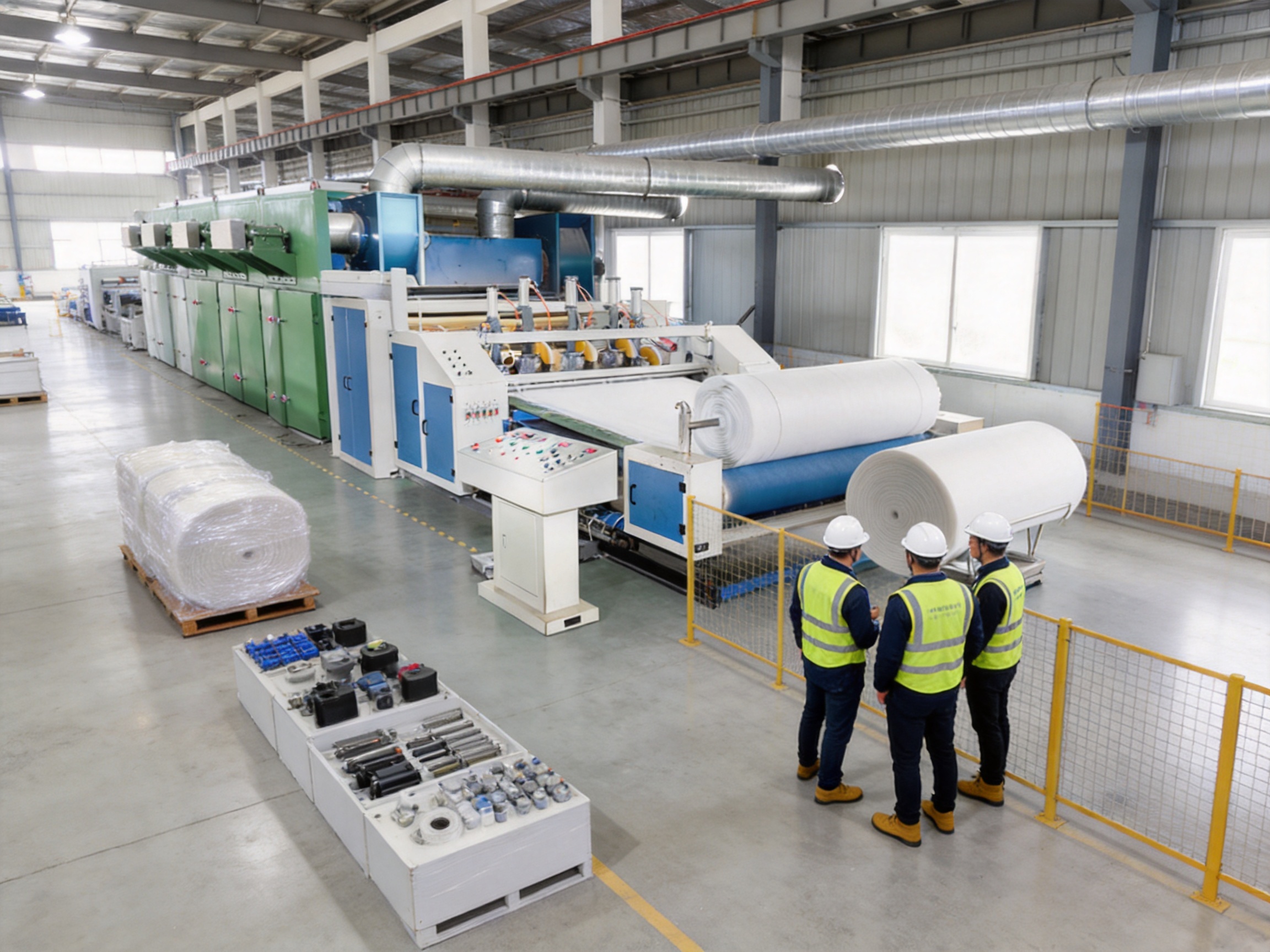
A complete production line requires careful installation because the machines must be aligned and synchronized. The factory floor should be prepared before delivery, including foundations, access routes, electrical supply, ventilation, compressed air if required, heating utilities, and finished-product storage space.
The manufacturer can provide a customized configuration according to customer needs. Before final design, the customer should provide information about target products, expected capacity, raw material, working width, available factory dimensions, local power conditions, and packaging requirements.
Operator training should cover startup, shutdown, recipe changes, cleaning, safety procedures, temperature adjustment, web handling, winding, cutting, and basic troubleshooting. Maintenance personnel should also learn how to inspect bearings, belts, rollers, heating components, sensors, electrical cabinets, and safety devices.
The indicated warranty period is one year. Warranty conditions normally depend on correct installation, proper operation, suitable maintenance, and the use of approved replacement parts. Customers should request a detailed list of recommended spare parts and consumables before commissioning.
Delivery is indicated at approximately 150 days, although the final schedule depends on machine configuration, engineering approval, production workload, inspection, and shipping arrangements. Early confirmation of technical details can reduce delays during manufacturing and installation.
How to Select the Right Configuration
Define the Product Portfolio
The first step is to list the products that will be manufactured. A line intended mainly for thin quilt wadding may require a different carding, oven, and winding configuration from a line designed for 200-millimeter-thick cushion material. If both soft and hard products are required, the control system and thermal section should be planned for recipe flexibility.
Confirm the Target Grammage
Grammage affects fiber consumption, line speed, heating time, cooling demand, and final capacity. Customers should identify the minimum, maximum, and most frequently produced gsm values. A machine selected only for the average product may not perform efficiently at the extremes of the range.
Choose the Working Width
Working width should be based on the dimensions of the main finished products and the available factory space. Wider equipment can improve output, but it also requires more floor area, higher utility capacity, and more substantial handling arrangements.
Evaluate Capacity Realistically
Capacity should be calculated using the actual product mix rather than a maximum theoretical figure. Light products may run at higher speeds, while thick or high-grammage wadding may require longer heating and cooling times. A supplier should provide a capacity estimate based on the customer’s specific raw material and target product.
Plan Utility Requirements
Thermal bonding lines require electrical power and heating energy. Depending on the design, they may also require ventilation, exhaust, compressed air, cooling systems, and adequate lighting. Utility planning should be completed before installation to prevent production limitations after commissioning.
Consider Future Expansion
Manufacturers may begin with a medium-width line and later expand their product range. It is useful to consider future requirements during the initial design stage. Control capacity, spare electrical cabinet space, material handling, and factory layout can sometimes be planned to support later upgrades.
Operating and Maintenance Recommendations
Regular cleaning is essential because loose fibers and dust can accumulate around opening equipment, carding components, sensors, drive systems, and oven filters. Cleaning schedules should be based on production hours and fiber type rather than waiting for visible accumulation.
Carding clothing and working surfaces should be inspected for wear and damage. Worn components can affect fiber separation and web uniformity. Rollers should remain properly aligned, and transfer areas should be checked for fiber buildup or web obstruction.
The oven requires inspection of heating elements, temperature sensors, insulation, airflow paths, exhaust systems, and safety devices. A blocked airflow path can create temperature differences and reduce bonding consistency. Electrical connections should be checked according to a planned maintenance schedule.
Winding and cutting units should be maintained to preserve roll density, edge quality, and cutting accuracy. Excessive winding tension can compress the product, while insufficient tension can create unstable rolls. Blades and cutting tools should be replaced or sharpened when necessary.
Maintenance records should include operating hours, replaced parts, abnormal alarms, temperature settings, cleaning activities, and product quality observations. These records help identify recurring issues and support preventive maintenance.
Economic Benefits for Manufacturers
A thermal bonded wadding production line can improve manufacturing economics in several ways. Integrated processing reduces the need to move semi-finished webs between separate machines. Automatic operation can lower labor requirements and reduce handling damage. Stable web formation and thermal bonding can reduce rejected material caused by irregular thickness or insufficient strength.
Product flexibility also supports better equipment utilization. Instead of depending on one narrow product category, the manufacturer can produce different grades for mattresses, cushions, quilts, packaging, and protective fabrics. This diversified product range can reduce the commercial risk associated with seasonal demand.
Energy efficiency is another important consideration. The oven is a major operating cost center, so stable insulation, controlled heating, and suitable temperature settings can improve the cost per kilogram. The best results come from matching the machine configuration to the actual product range rather than selecting an oversized system without a clear production plan.
Customized PE film packaging protects the output during storage and transport. Lower contamination and moisture exposure can reduce claims and preserve product value, particularly when rolls are shipped internationally or stored for extended periods.
Why This Production Line Is a Practical Investment
The HYL thermal bonded wadding production line combines broad product capability, automatic operation, customized engineering, and international supply experience. Its configuration can be adapted for working widths from approximately 2 meters to 5 meters, product grammages from lightweight wadding to heavy padding, and finished thicknesses from approximately 5 millimeters to 200 millimeters.
Its principal advantage is the balance between flexibility and industrial productivity. The line can serve manufacturers that want to produce soft wadding for home textiles as well as firms that require harder materials for mattresses, cushions, packaging, or protective products. The same production platform can support product development, private-label manufacturing, and larger-volume orders.
The manufacturer’s broader nonwoven machinery experience is also valuable. A company that designs carding, airlay, needle punching, thermal bonding, ironing, winding, and cutting systems can evaluate the entire production process rather than focusing on only one machine. This supports better line matching, improved technical communication, and more practical after-sales assistance.
Customers should still carry out a complete feasibility review before ordering. This review should include raw material trials, target product samples, capacity confirmation, energy analysis, factory layout, installation requirements, safety documentation, spare parts, and local regulatory obligations. When these factors are defined clearly, the production line can become a reliable foundation for long-term nonwoven manufacturing.
Frequently Asked Questions
What products can be made on a thermal bonded wadding line?
The line can produce soft and hard wadding for mattresses, sofa cushions, quilts, furniture padding, medical cushioning, agricultural protective fabrics, protective packaging, and selected industrial applications. The exact product range depends on raw material, low-melt fiber percentage, grammage, thickness, and machine configuration.
What fibers are suitable for the line?
Polyester staple fiber and polypropylene staple fiber can be used as primary materials. Low-melt fibers are added as the thermal bonding medium. The supplied technical information includes polyester fiber in approximate fineness ranges from 1.5D to 15D and staple lengths from 38 millimeters to 72 millimeters.
What is the available grammage range?
The standard technical description identifies a range of approximately 60 gsm to 3,000 gsm. A customized configuration may support products up to approximately 5,000 gsm. Final performance should be confirmed according to the selected raw material, finished thickness, working width, and target output.
What is the maximum finished thickness?
The indicated finished thickness range is approximately 5 millimeters to 200 millimeters. Thick products may require special attention to web forming, oven residence time, cooling, compression, and winding conditions.
Can the product color be customized?
Yes. Product color can be customized by using suitable colored fibers and maintaining consistent blending. The customer should confirm the required color, color tolerance, and raw material availability before production.
Can the line produce both soft and hard wadding?
Yes. The line can be configured for both product types. Softness and firmness are influenced by fiber specification, low-melt fiber percentage, web weight, thermal bonding conditions, and product compression. Different recipes and operating parameters may be required for each grade.
What working widths are available?
The indicated working width range is approximately 2 meters to 5 meters. Other equipment specifications may be available in modular widths, including approximately 1 meter, 1.2 meters, 1.4 meters, 1.6 meters, and 2 meters. The final line width should be selected according to the customer’s products and factory layout.
What production capacity can be expected?
The stated production capacity can reach approximately 800 kilograms per hour. Actual output depends on gsm, thickness, fiber type, width, heating requirements, cooling time, and the overall line configuration. A project-specific capacity calculation is recommended.
Does the line require chemical adhesive?
Thermal bonding uses low-melt fibers as the bonding medium, so liquid adhesive application is not the primary bonding method. The bonding effect is created by controlled heating and subsequent cooling of the fiber web.
How is the finished product packaged?
PE film packaging is available. Depending on shipping requirements, the product may also be supplied with suitable transport protection or agreed nude packing arrangements. Packaging should be selected according to storage duration, moisture conditions, handling method, and destination.
How long is the warranty period?
The indicated warranty period is one year. Warranty details should be reviewed in the commercial and technical contract, including installation conditions, excluded consumables, service responsibilities, and spare-part arrangements.
What is the expected delivery time?
The listed delivery time is approximately 150 days. The actual period depends on final engineering approval, customization, manufacturing schedule, testing, packing, and shipping arrangements.
Is the machine suitable for international factories?
Yes. The equipment has been supplied to customers in more than 20 countries. Before ordering, the customer should confirm local power standards, safety requirements, installation conditions, documentation, and import regulations.
What information should be provided when requesting a quotation?
The customer should provide the target product type, raw material, low-melt fiber percentage, gsm range, thickness range, working width, expected capacity, product color, packaging method, factory dimensions, electrical standard, and preferred automation level. Product samples or detailed specifications are also helpful.
Conclusion
A thermal bonded wadding production line provides an efficient method for producing soft and resilient nonwoven materials across a broad range of applications. By combining opening, blending, feeding, carding, web forming, thermal bonding, cooling, winding, cutting, and packaging, the system converts staple fiber into a consistent commercial product with controlled grammage, thickness, width, and appearance.
The HYL configuration is suitable for manufacturers seeking a flexible and automatic solution for mattress wadding, sofa cushions, quilts, furniture padding, medical cushioning, agricultural fabrics, and industrial protection. Its customizable working width, wide product range, potential capacity of up to approximately 800 kilograms per hour, PE film packaging, and one-year warranty provide a practical basis for industrial investment.
The manufacturer strengthens this offering through more than 20 years of nonwoven machinery experience, complete line integration, precision mechanical construction, automatic control, energy-conscious thermal engineering, CE and ISO9001-related quality systems, and international export experience. These capabilities help customers move from individual machine purchasing toward a coordinated production solution.
For the best result, every project should be designed around the customer’s actual raw materials, product portfolio, capacity targets, factory conditions, and future expansion plans. With correct configuration, installation, operation, and maintenance, a thermal bonded wadding line can support stable production, diversified sales, and long-term growth in the nonwoven materials market.
References
1. Changshu Hongyi Nonwoven Machinery Co., Ltd., Technical Product Information for the HYL Thermal Bonded Wadding Production Line.
2. ISO 9001, Quality Management Systems: Requirements.
3. European Machinery Safety Principles and CE Conformity Assessment Guidance.
4. Nonwoven Fabric Manufacturing Principles: Fiber Opening, Carding, Web Formation, and Thermal Bonding.
5. Industrial Nonwoven Materials Handbook: Applications in Mattresses, Furniture, Medical Packaging, and Agriculture.