

Content
- 1 Why Bale Opening Is Critical in Nonwoven Manufacturing
- 2 How the HYKB Bale Opener Works
- 3 Key Advantages of the HYKB Bale Opener
- 4 Comparison with Less-Controlled Bale Opening Methods
- 5 Manufacturing Strengths Behind the Equipment
- 6 Technical Configuration and Specification Overview
- 7 Applications in Nonwoven Fabric Production
- 8 Operational Benefits for Factory Managers
- 9 Installation, Commissioning, and After-Sales Support
- 10 Maintenance and Production Best Practices
- 11 How to Select the Correct Configuration
- 12 Purchasing and Commercial Information
- 13 Why Work with an Experienced Nonwoven Machinery Manufacturer
- 14 Frequently Asked Questions
- 14.1 What is the main function of the HYKB Bale Opener?
- 14.2 Can the machine blend several fiber types?
- 14.3 Is the machine suitable for PET fiber?
- 14.4 What working widths are available?
- 14.5 What is the machine's capacity?
- 14.6 Does the machine use automatic weighing?
- 14.7 Can the voltage be customized?
- 14.8 What types of nonwoven products can use this machine?
- 14.9 What is the warranty period?
- 14.10 Does the supplier provide installation support?
- 14.11 How long is the delivery period?
- 14.12 What information should be provided when requesting a quotation?
- 15 Conclusion
- 16 References
- 17 Product: HYKB Bale Opener
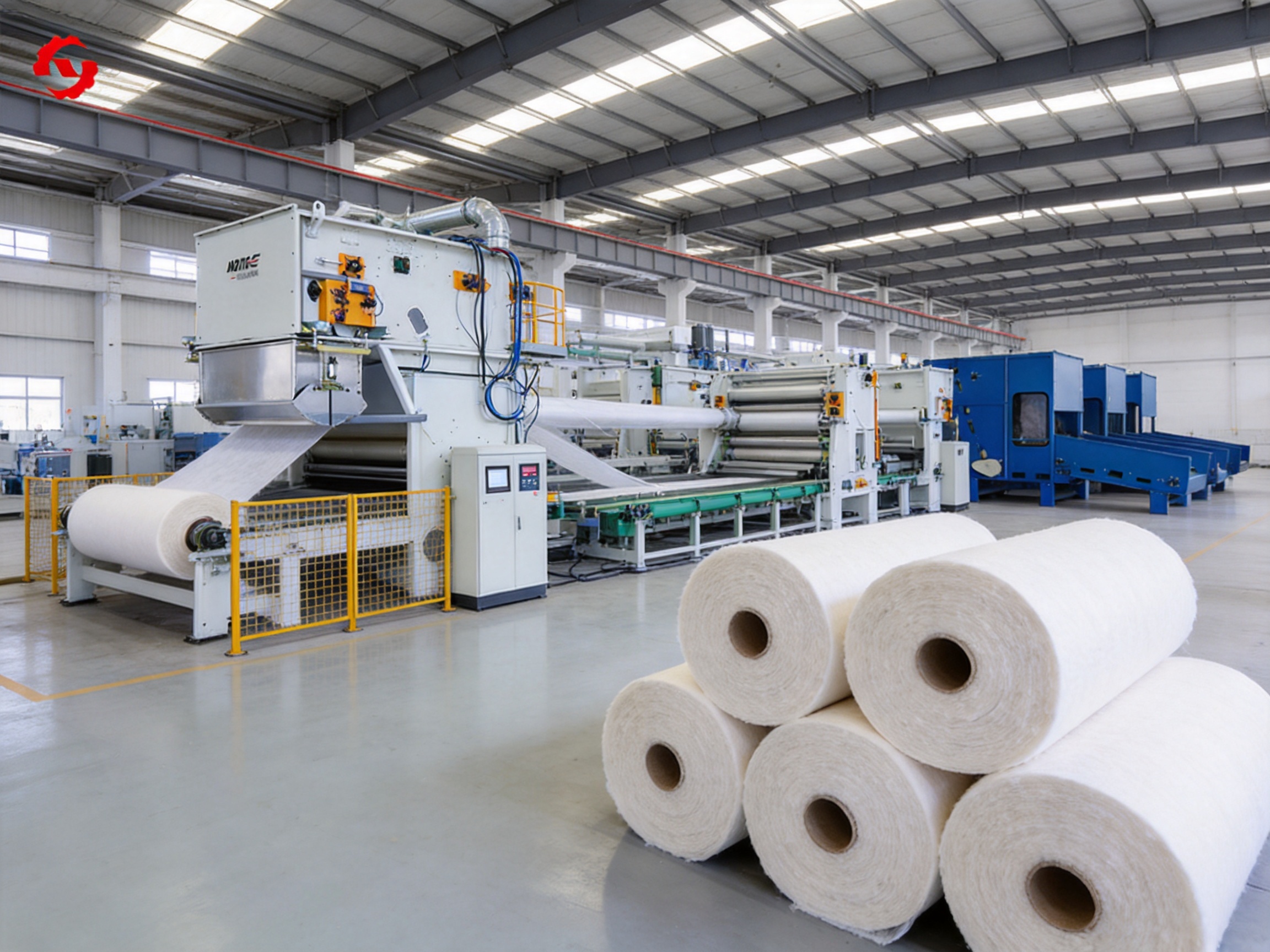
Reliable fiber preparation is the foundation of consistent nonwoven fabric production. Before fibers reach a carding machine, airlay system, web-forming unit, or needle punching line, they must be opened sufficiently, blended evenly, and delivered at a controlled rate. If this early stage is unstable, even advanced downstream equipment may produce uneven webs, inconsistent basis weight, poor bonding, or variable finished-fabric performance.
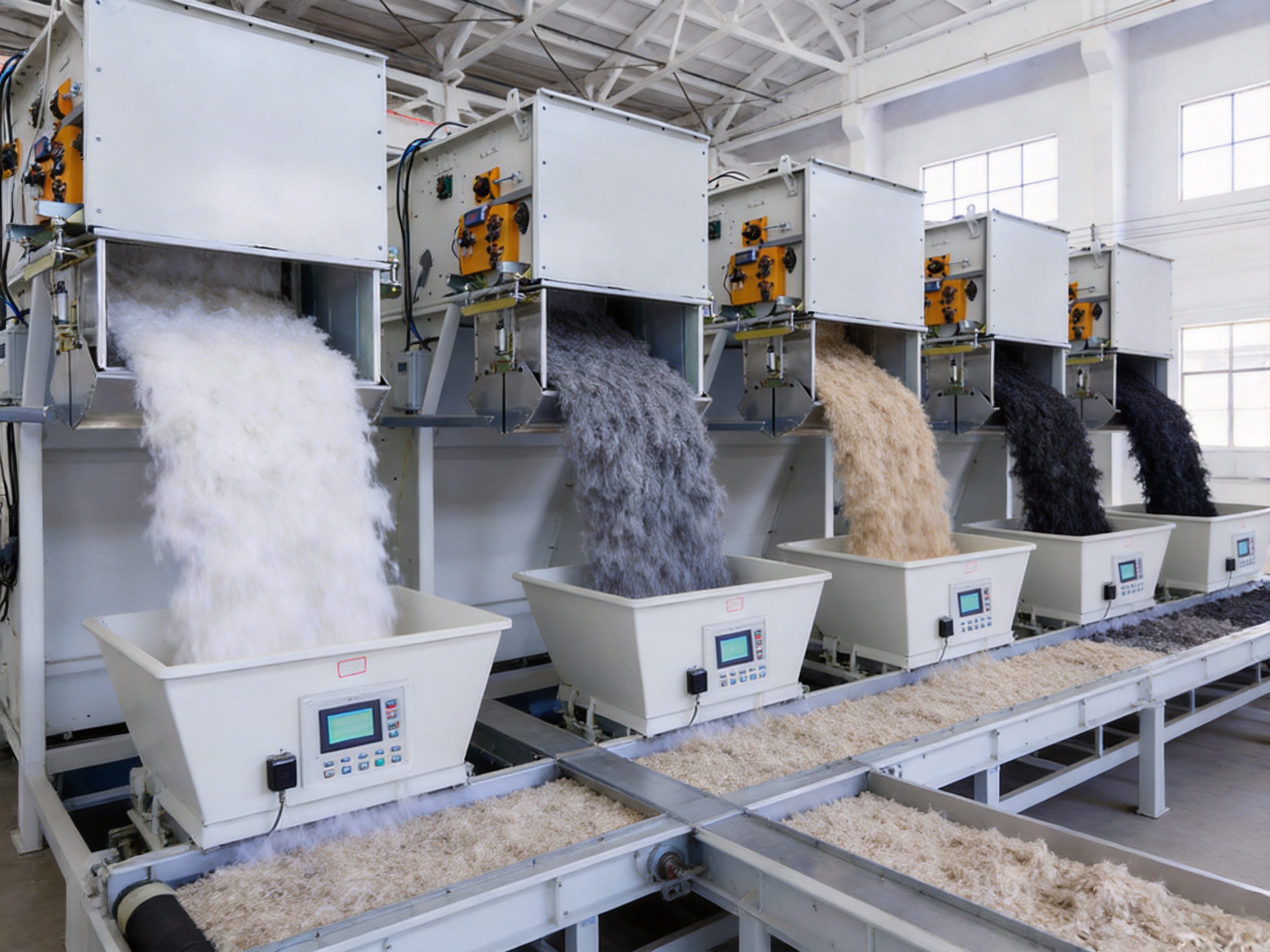
The HYKB Bale Opener is designed to address these preparation requirements in one integrated system. It pre-opens fibers from bales, meters predetermined quantities through an electronic weighing system, and transfers the prepared material through a cross conveyor toward the opening and blending process. The system can also be arranged with several bale opener sets, allowing multiple fiber types to be processed and blended according to a selected recipe.
For manufacturers of needle-punched felt, geotextiles, carpets, filtration media, automotive interior materials, thermal-bonded waddings, and other nonwoven products, the machine offers a practical method of improving raw-material control. Its main value is not simply the mechanical opening of compressed bales. It is the combination of pre-opening, controlled feeding, weighing, proportioning, and flexible multi-fiber operation.
With working-width options from 1 meter to 2 meters, automatic operation, customized voltage, CE certification, and support for nonwoven production applications, the HYKB Bale Opener can be adapted to different line layouts and production requirements. It is supplied by Changshu Hongyi Nonwoven Machinery Co., Ltd., a Chinese manufacturer and supplier with more than 20 years of experience in nonwoven machinery and complete production-line engineering.
Why Bale Opening Is Critical in Nonwoven Manufacturing
Many fibers arrive at the factory in highly compressed bales. Compression reduces transportation and storage costs, but it also causes fibers to form dense layers, compact lumps, and irregular blocks. These conditions make it difficult to feed the material directly into a carding or web-forming machine.
A bale opener performs the first mechanical preparation step by loosening and separating the compressed fiber. The purpose is not necessarily to complete the entire opening process in one machine. Instead, the bale opener prepares the fiber for subsequent equipment by reducing bulk density, separating the material into a more manageable form, and creating a more regular feed.
Fiber preparation is especially important when a production line uses more than one raw material. A typical blend may include virgin polyester, recycled polyester, polypropylene, viscose, wool, jute, or other fibers selected for strength, softness, resilience, insulation, filtration, or cost control. Each material can have a different density, length, crimp, moisture response, and opening behavior.
When the blend is made manually or without reliable metering, the ratio can vary from batch to batch. A higher proportion of one fiber may change tensile strength, loft, handle, thermal performance, or bonding behavior. In contrast, a weighing-based blending system provides a clearer basis for repeatable recipes and more stable downstream processing.
The bale opener therefore affects more than the first stage of the line. Its performance influences the carding load, the evenness of the web, the efficiency of needle penetration, the amount of waste, and the consistency of the finished nonwoven fabric.
How the HYKB Bale Opener Works
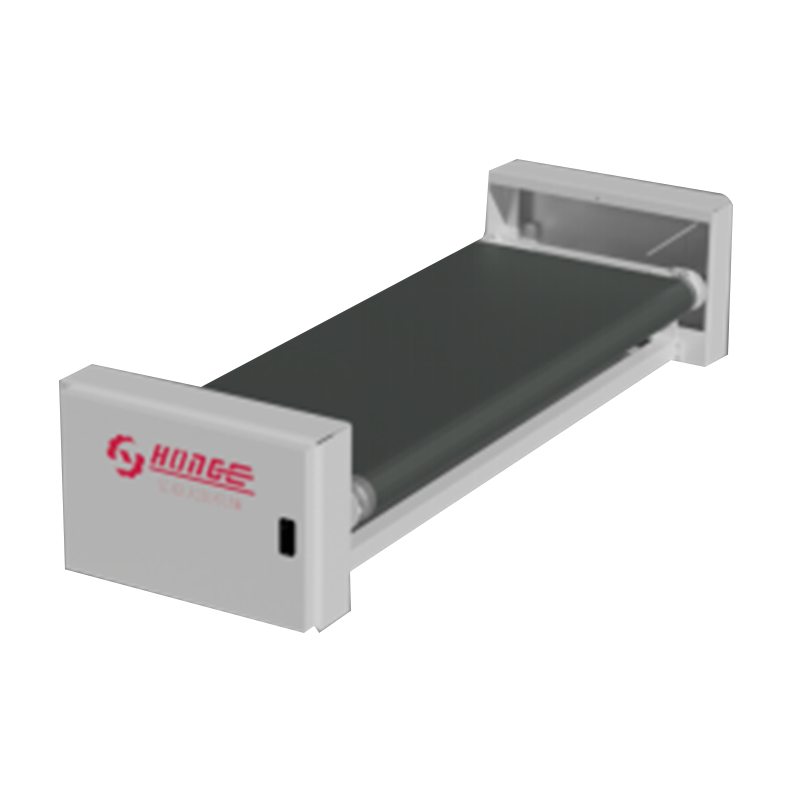
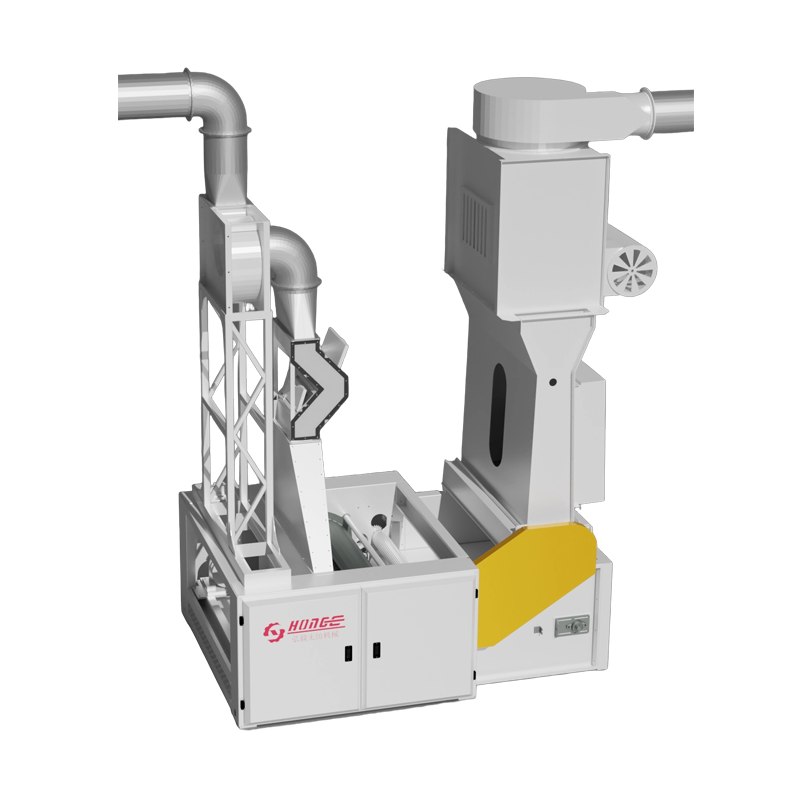
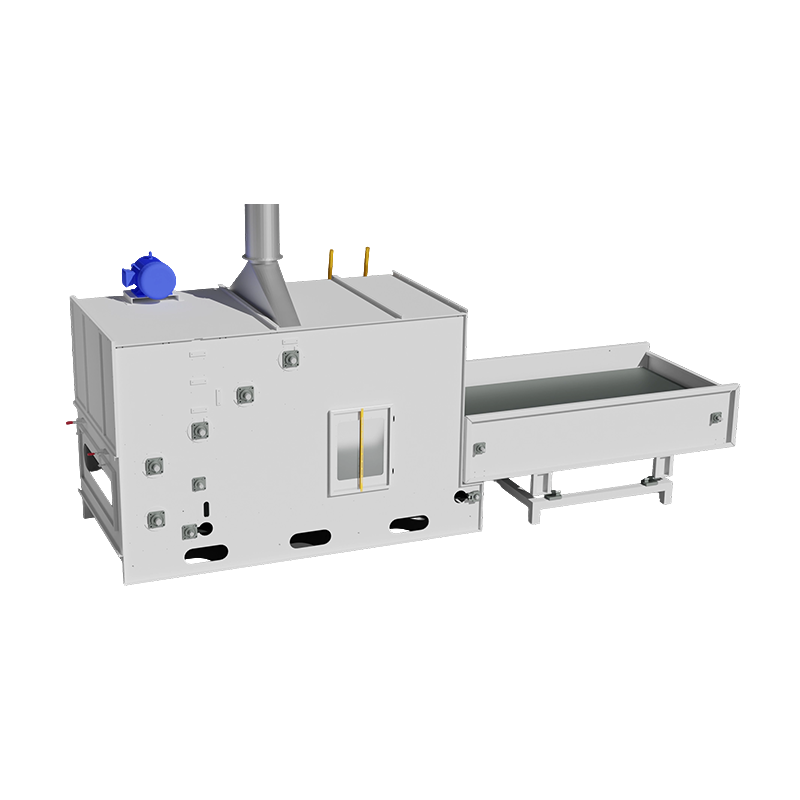
The HYKB Bale Opener is organized into three primary functional sections. Each section performs a different role in preparing and controlling the fiber flow.
Front Section: Fiber Storage
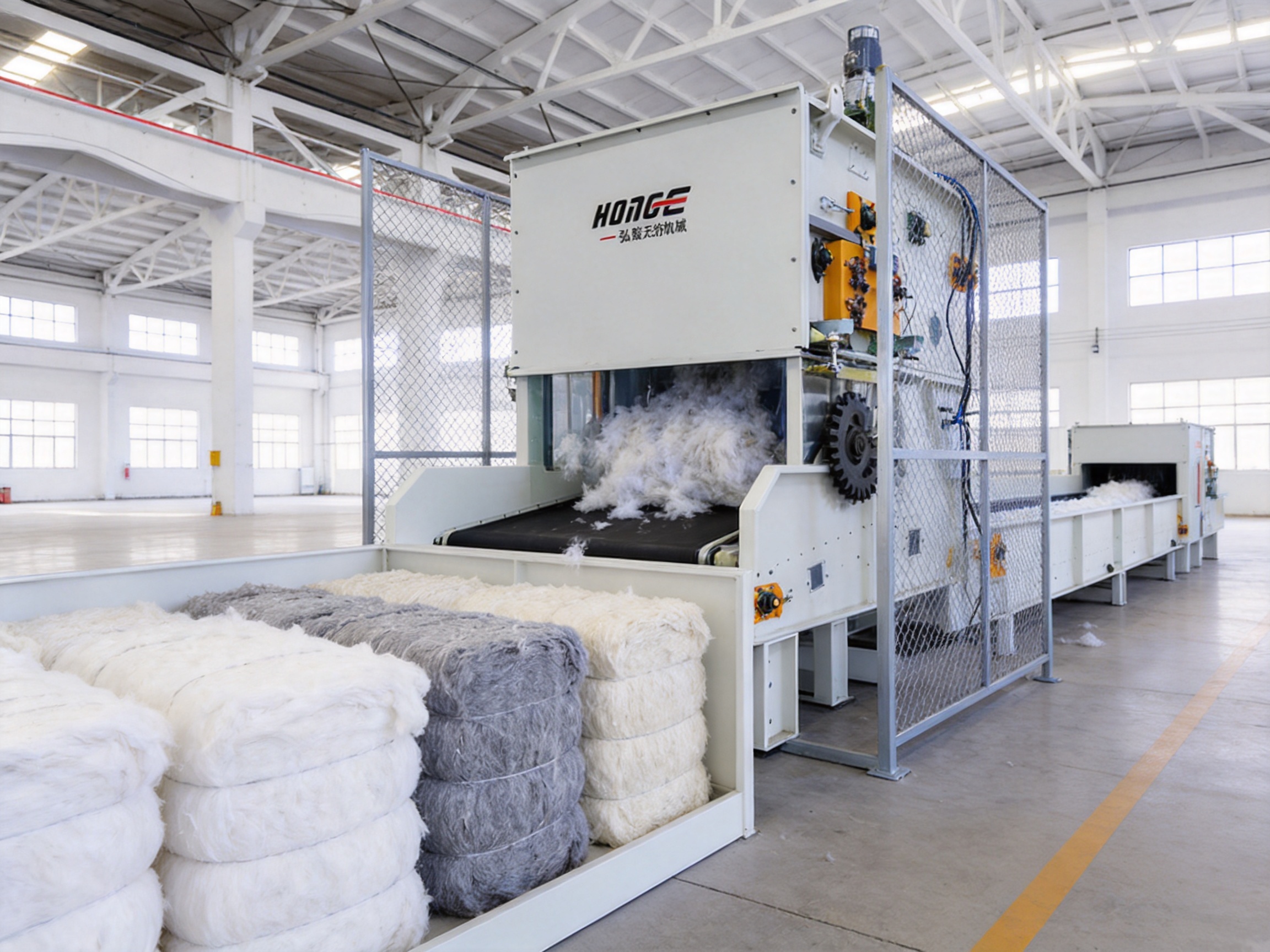
The front part provides a storage area for the fiber bales or pre-opened fiber. This section gives operators a practical working zone for loading raw material and arranging the production sequence. The storage design also helps maintain a continuous supply to the feeding and pre-opening section.
Proper loading is important. Bales should be positioned according to the operating instructions, and different fiber types should be identified clearly when a multi-component recipe is required. Good preparation at this stage helps reduce loading errors and supports more stable automatic operation.
Middle Section: Feeding and Pre-Opening
The middle part feeds the material into the pre-opening mechanism. Fibers that have been compressed during baling are loosened and separated before they move to the weighing stage. This early opening makes the material more suitable for controlled transport and improves the consistency of the material presented to the weighing system.
Pre-opening also helps reduce the risk of large compact pieces entering downstream equipment. A more open and manageable fiber structure supports smoother transfer and can reduce sudden fluctuations in feed demand.
Rear Section: Electronic Weighing and Proportioning
The latter part weighs the fibers according to the required proportions. Electronic weighing provides the control basis for setting a blend recipe. Once the material reaches the target quantity, the system transfers it through a cross conveyor toward the opener or the next stage of the production line.
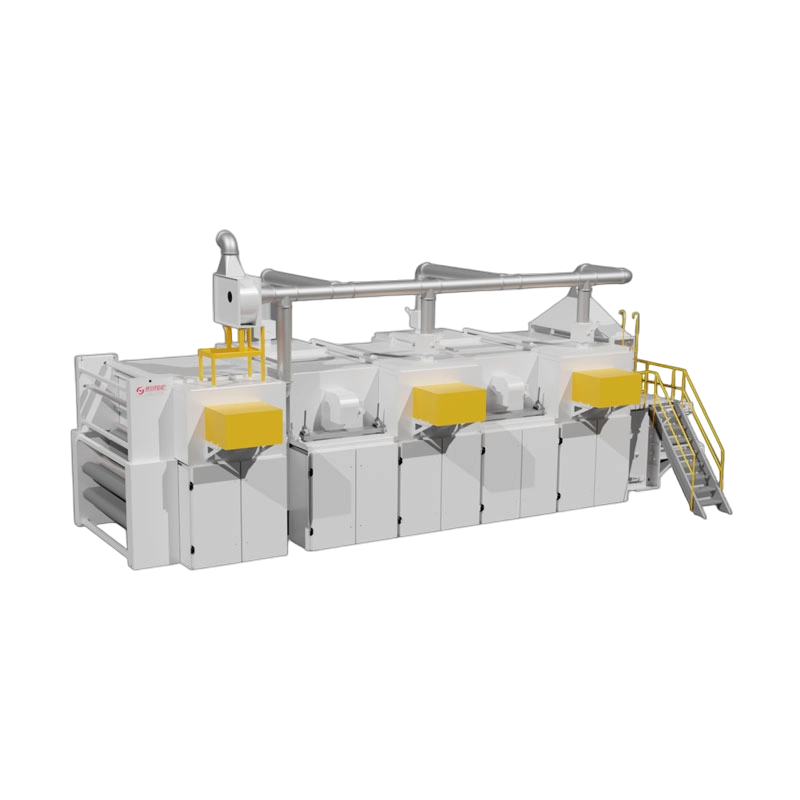
Several bale opener units can work together when a production process requires several fiber types. Each unit can be assigned to a particular raw material, while the combined system manages the relative contribution of each component. This arrangement is more flexible than relying on one manually loaded hopper, particularly when the product specification changes frequently.
The weighing system does not eliminate the need for appropriate calibration, operator supervision, and recipe verification. However, it provides a more structured and measurable method of managing fiber input than visual estimation or purely manual feeding.
Key Advantages of the HYKB Bale Opener
Automatic Fiber Weighing
One of the most important features of the HYKB Bale Opener is its automatic weighing function. The system is designed to quota the fiber input quantity according to the required blend. This gives production personnel a practical way to establish and repeat material recipes.
Automatic weighing can improve production control in several ways. It can reduce dependence on manual measurement, support more consistent blend ratios, simplify production records, and make it easier to repeat an approved formulation. When a manufacturer produces several grades of nonwoven fabric, the ability to change the recipe systematically can also improve production flexibility.
Multi-Fiber Compatibility
The machine is described as suitable for different kinds of fibers, including PET fiber and other materials used in nonwoven production. Its multi-unit configuration allows several fiber types to be processed in one blending operation.
This flexibility is useful for manufacturers that need to balance performance and cost. For example, a product may require a blend of different synthetic fibers for strength and resilience, or a combination of natural and synthetic fibers for a particular texture and processing behavior. The bale opener can support these requirements by providing separate feeding and weighing paths for the selected components.
Improved Production Repeatability
Repeatability is a major competitive requirement in modern nonwoven manufacturing. Customers often expect the same basis weight, thickness, strength, and appearance across multiple orders. Variations in the initial blend can make these objectives difficult to achieve.
By combining pre-opening with electronic weighing, the HYKB system helps create a more controlled starting point. It does not replace process control in carding, web forming, needling, thermal bonding, or winding, but it supports those processes by delivering a better-prepared and more consistently proportioned fiber mixture.
Flexible Working Widths
The available working widths are listed as 1 meter, 1.2 meters, 1.4 meters, 1.6 meters, and 2 meters. This range allows the machine to be considered for different line widths and factory layouts.
A manufacturer producing narrow technical fabrics may select a smaller working width, while a wider production line may require a larger configuration. Selecting the correct width should be based on the complete line design, target capacity, product type, fiber characteristics, and future expansion plans.
Integration with Complete Nonwoven Lines
The bale opener can serve as an upstream unit in a broader nonwoven production system. Depending on the application, the prepared fiber may proceed to additional opening equipment, blending units, carding machines, cross-lappers, airlay systems, needle punching machines, thermal-bonding ovens, winding equipment, or cutting machines.
This integration capability is particularly valuable when a supplier can provide both individual machines and complete lines. The customer can discuss fiber preparation, web formation, bonding, finishing, and material handling as connected stages rather than treating every machine as an isolated purchase.
Automatic and Customized Operation
The available information identifies the HYKB model as automatic and customizable. Voltage can be supplied at 220 V or according to the customer's requirements, subject to confirmation during technical design. Customization may also involve working width, line arrangement, fiber recipe, conveyor direction, controls, and compatibility with adjacent equipment.
Customization should be based on engineering data rather than general assumptions. Fiber length, denier, moisture, bale density, contamination level, target blend ratio, hourly output, and downstream machine capacity all affect the final configuration.
Certification and New-Equipment Supply
The machine is identified as new equipment and is listed with CE and ISO9001:2000 certification information. These credentials support the supplier's emphasis on documented quality management and conformity requirements. Buyers should request the applicable certificates, technical files, electrical standards, and machine documentation for the exact configuration being offered.
Comparison with Less-Controlled Bale Opening Methods
Different factories use different approaches to fiber preparation. Some rely on manual opening, simple storage hoppers, or basic feeding equipment. These methods may be suitable for very small operations or limited product ranges, but they can create disadvantages as output and product complexity increase.
Evaluation Area |
Manual or Basic Feeding Method |
HYKB Bale Opener Approach |
Fiber preparation |
Opening may depend heavily on operator technique |
Mechanical pre-opening supports a more regular feed |
Blend control |
Often based on manual estimation or separate weighing |
Electronic weighing supports predetermined proportions |
Multi-fiber production |
May require additional manual handling |
Several sets can be combined for multiple fiber types |
Recipe repeatability |
Results may vary between batches or shifts |
Recipes can be established and repeated through controlled feeding |
Line integration |
May require improvised material transfer |
Cross-conveyor transfer is designed for connection to the line |
Production flexibility |
Changes may require substantial manual adjustment |
Working widths and multi-unit arrangements support customization |
The main advantage over a basic alternative is process control. The HYKB Bale Opener is not presented merely as a bale-breaking machine. It is a fiber preparation and proportioning unit intended to support the wider objectives of nonwoven manufacturing.
Compared with a single-purpose opener, the electronic weighing and multi-set configuration provide additional value when the customer processes different recipes. Compared with purely manual preparation, the system can reduce repetitive handling and make the blend more measurable. Compared with an improvised line arrangement, its cross-conveyor transfer supports a more organized material flow.
These advantages should be evaluated against the customer's actual production volume and product range. A high-capacity factory may require several units or additional opening equipment, while a smaller factory may need only one configured set. The correct comparison is therefore based on total production performance, not only the purchase price of the individual machine.
Manufacturing Strengths Behind the Equipment
The performance of a bale opener depends on the quality of its engineering, fabrication, electrical integration, assembly, and testing. Changshu Hongyi Nonwoven Machinery Co., Ltd. presents itself as a professional nonwoven machinery manufacturer and trader with more than 20 years of experience in this field.
The company's product range includes complete nonwoven production lines and individual machines. These include needle-punched geotextile lines, nonwoven carpet lines, airlaid waste felt lines, automotive interior material lines, needle-punched cleaning cloth lines, wool felt and jute felt lines, needle punching machines, carding machines, airlay machines, ironing machines, and thermal-bonding wadding oven machines.
This breadth of equipment is significant because a bale opener must operate in relation to the rest of the line. A supplier with experience in carding, web forming, bonding, needling, and winding can better understand the material-flow requirements that arise after bale opening. It can also help customers select a suitable configuration rather than treating fiber preparation as an isolated purchase.
Engineering Based on Application Requirements
Nonwoven products differ considerably. A geotextile line may prioritize high throughput, strong web formation, and stable needling. A carpet line may require a particular blend and bulk profile. Automotive interior materials may require controlled density, consistent thickness, and compatibility with thermal bonding or other finishing steps.
The company emphasizes customized nonwoven machine solutions. In practice, an application-based design process should consider raw-material properties, output targets, working width, downstream equipment, factory space, electrical supply, labor conditions, and local standards.
For the HYKB Bale Opener, this means that the final design should be confirmed using the customer's fiber samples and production data. A technical discussion can determine whether one set is sufficient, whether several sets are needed, how the conveyor should connect to the next machine, and what weighing accuracy and control functions are appropriate.
Complete-Line Manufacturing Capability
A complete-line supplier can coordinate equipment dimensions, conveyor heights, machine speeds, control interfaces, and material-transfer points. This can reduce compatibility problems that sometimes occur when machines are sourced from unrelated manufacturers.
The company's stated ability to provide complete lines and unit machines gives customers two purchasing options. A buyer may order a bale opener for an existing line, or it may request an integrated solution including opening, blending, carding, web forming, needling, thermal bonding, winding, and cutting equipment.
Quality and Production Organization
The equipment information identifies ISO9001:2000 certification and a production capacity of approximately 100 sets per year. The company also describes its focus on efficiency, reliability, quality, advanced technology, precision engineering, automatic control, energy saving, and customization.
These statements indicate a manufacturing approach centered on repeatable engineering and standardized production combined with project-specific adaptation. Buyers should still review the specific inspection procedures applied to the ordered machine. Useful documentation may include component lists, electrical diagrams, assembly records, factory acceptance test results, operating manuals, spare-parts lists, and commissioning records.
International Supply Experience
The company reports that its products have been supplied to more than 20 countries, including Mexico, Argentina, Brazil, Turkey, Algeria, Egypt, Bangladesh, Vietnam, Thailand, and other Asian markets. International supply experience can be beneficial because machinery projects require attention to shipping, packaging, voltage, documentation, installation, training, and communication across different operating environments.
Export experience does not remove the need for project coordination. Customers should confirm site conditions, local electrical requirements, import documentation, installation responsibilities, spare parts, and after-sales arrangements before placing an order.
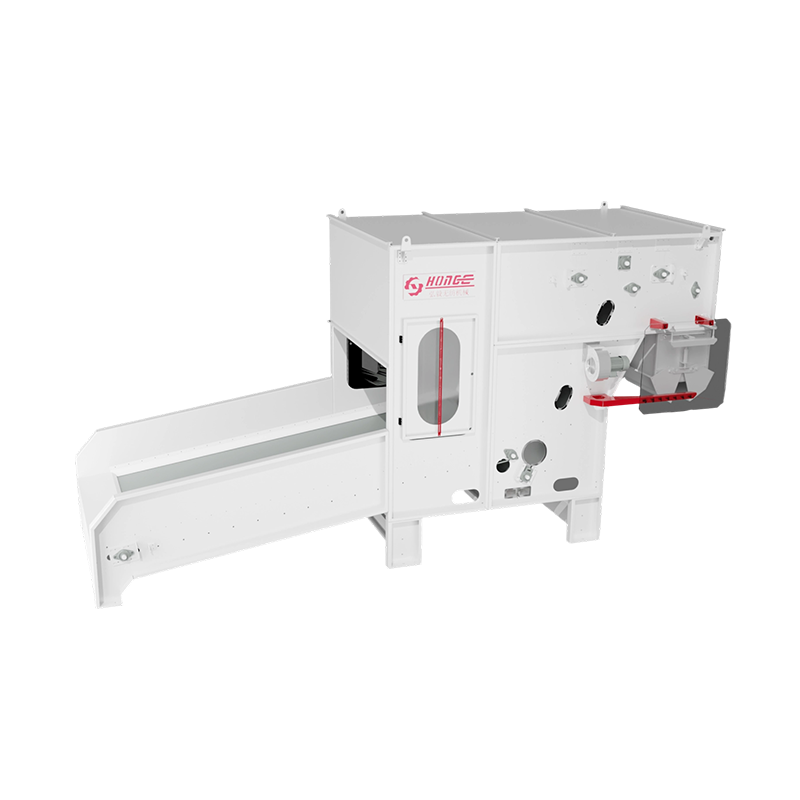
HYKB Bale Opener
Technical Configuration and Specification Overview
The HYKB Bale Opener is available in multiple configurations. The following table summarizes the main information provided for the model. Some specifications may vary according to working width, fiber type, electrical standard, and the final line design.
Item |
Available or Stated Information |
Model |
HYKB |
Primary application |
Nonwoven fabric production and fiber opening and blending |
Working widths |
1 m, 1.2 m, 1.4 m, 1.6 m, and 2 m |
Listed capacity |
Approximately 200 kg/h or 300 kg/h, depending on configuration |
Installed power information |
3.75 kW listed in the trade information; confirm the final configuration |
Voltage |
220 V or customized according to the project |
Automation |
Automatic operation with electronic weighing |
Raw materials |
PET fiber and other fibers suitable for the selected application |
Certification information |
CE and ISO9001:2000 listed |
Condition |
New |
Lead time |
Approximately 2 to 3 months, or about 60 working days under the stated trade terms |
Warranty |
One year or 12 months |
HS code information |
84490090 and 8449009000 are listed; confirm the applicable customs classification |
Two capacity figures, 200 kg/h and 300 kg/h, are provided in the product information. Capacity should be treated as configuration-dependent rather than as a universal output guarantee. Actual performance can be influenced by fiber type, bale condition, moisture, blend ratio, opening requirements, operator loading, and the relationship between the bale opener and downstream machines.
The product information also contains more than one power reference. The stated installed power is 3.75 kW, while another field lists 24 W. Because these entries may relate to different components or may reflect a data-entry inconsistency, the buyer should request a final electrical schedule and motor list for the selected machine before ordering.
Applications in Nonwoven Fabric Production
Needle-Punched Geotextiles
Geotextile production often requires a stable fiber blend and consistent web formation. Variations in fiber distribution can affect tensile properties, elongation, puncture resistance, thickness, and mass per unit area. A bale opener with controlled proportioning can support a repeatable material recipe before carding and cross-lapping.
For recycled or mixed synthetic inputs, effective pre-opening is also important. Compressed fiber must be loosened sufficiently for the subsequent machines to distribute it across the working width. The bale opener is one part of the preparation chain that helps convert dense bales into a processable fiber stream.
Nonwoven Carpets and Felts
Carpet underlay, industrial felt, and related products may use blends selected for resilience, softness, cost, or thermal behavior. Multi-fiber operation allows producers to adjust recipes according to the required product grade.
A controlled blend can also support color and appearance consistency when different raw materials have different visual characteristics. The exact result depends on the entire line, but consistent upstream feeding provides a stronger foundation for uniform web formation and bonding.
Automotive Interior Materials
Automotive interior materials may require controlled thickness, stable density, acoustic performance, thermal resistance, and dimensional behavior. These products frequently use engineered fiber blends and may be manufactured through needle punching, thermal bonding, or combined processes.
The HYKB system can be considered for the fiber preparation stage of such lines. By weighing predetermined percentages and combining several fiber types, it can help production engineers maintain a defined material formulation before the web is formed and bonded.
Cleaning Cloths and Industrial Nonwovens
Cleaning cloths and industrial nonwovens can be produced from synthetic, natural, or recycled fibers. The desired properties may include absorbency, abrasion resistance, softness, strength, lint control, or liquid retention.
Because the raw-material recipe influences these properties, controlled blending is useful when the producer manufactures several grades. The bale opener can help reduce the variation caused by manual proportioning and support a more consistent feed to the carding or airlay process.
Wool, Jute, and Other Natural-Fiber Products
Natural fibers can have irregular lengths, variable moisture, and different opening behavior compared with synthetic fibers. They may require careful handling and suitable machine settings. The system should therefore be evaluated through trials using the actual raw materials.
When properly configured, a multi-fiber bale-opening arrangement can support blends involving wool, jute, and synthetic components. The objective is to create a controlled mixture that can be processed by the selected web-forming and bonding equipment.
Operational Benefits for Factory Managers
A machine investment should be evaluated not only by its mechanical features but also by its effect on daily factory management. The HYKB Bale Opener can provide several operational benefits when it is correctly integrated and maintained.
First, the automatic weighing function can make material consumption easier to track. When the recipe and production quantity are documented, managers can compare theoretical consumption with actual usage and investigate abnormal differences.
Second, the system can help standardize work between shifts. Manual feeding often depends on the experience and judgment of individual operators. A recipe-based weighing arrangement provides a clearer operating reference and can reduce variation between teams.
Third, the machine can improve planning for multiple products. Different fiber mixtures can be scheduled according to product requirements, while separate bale opener sets can be assigned to specific raw materials. This can simplify the transition between formulations, although cleaning and changeover procedures remain important.
Fourth, controlled fiber preparation can support downstream productivity. When the fiber feed is more stable, the carding and web-forming machines may experience fewer sudden changes in load. The actual improvement depends on the full line and the properties of the raw materials.
Finally, a more organized feeding system can contribute to workplace efficiency. Operators can focus on loading, monitoring, inspection, and material management rather than repeatedly measuring and manually transferring fiber.
Installation, Commissioning, and After-Sales Support
The stated trade information includes a 12-month warranty. It also states that, at the buyer's request, two or three workers can be sent to install and commission the line. Under the described arrangement, the buyer provides round-trip air tickets, accommodation, and an allowance of 180 USD per person per day.
Installation planning should begin before the machine arrives. The factory should prepare a level foundation or suitable floor area, electrical connections, access for unloading, lifting equipment, ventilation, lighting, and adequate space for bale storage and operator movement.
The customer should also prepare the downstream connection points. Conveyor height, transfer direction, control signals, emergency-stop circuits, and production-line spacing should be agreed during the engineering stage. A bale opener that is mechanically suitable but poorly aligned with the following machine can cause unnecessary transfer problems.
Commissioning should include mechanical inspection, electrical testing, sensor verification, weighing-system calibration, conveyor checks, emergency-stop testing, and trial operation with the intended fibers. It is advisable to perform production trials using representative bales rather than only lightweight test material.
Operator training should cover loading procedures, recipe entry, weighing verification, start-up and shutdown, emergency response, cleaning, inspection, and basic troubleshooting. Maintenance personnel should receive information about lubrication points, wear components, electrical cabinets, sensors, drives, and recommended spare parts.
Before final acceptance, the buyer and supplier should agree on the acceptance criteria. These may include working width, feeding performance, blend ratio, output range, safety functions, documentation, and compatibility with the connected line.
Maintenance and Production Best Practices
Regular maintenance helps preserve the performance of any bale-opening machine. The machine should be inspected according to a documented schedule rather than only after a fault appears.
Daily Checks
Operators should inspect the feeding area, conveyor surfaces, guards, sensor areas, and visible moving components. Accumulated fiber should be removed from locations where it could interfere with sensors, drives, or mechanical movement.
The operator should also check for unusual noise, vibration, overheating, material accumulation, or irregular transfer. Any change in weighing behavior should be reported promptly because an apparently small measurement problem can affect the entire blend recipe.
Weighing-System Verification
Electronic weighing equipment requires suitable calibration and verification. The frequency depends on operating conditions, local quality requirements, and the manufacturer's instructions. Verification should be performed using an approved method and recorded for traceability.
Loading conditions should remain as consistent as practical. External contact, material buildup, unstable supports, or incorrect zero settings can influence the weighing result. Calibration should also be reviewed after major maintenance or relocation.
Cleaning and Fiber Changeover
When changing from one blend to another, residual fiber can contaminate the next recipe. Cleaning procedures should cover storage areas, feeding components, conveyors, and transfer points. The required level of cleaning depends on the product specification and the sensitivity of the next material.
For color-sensitive or high-value products, a documented changeover checklist can help reduce errors. The checklist may include confirmation of the raw material, recipe, machine settings, remaining fiber, and first-off product inspection.
Spare Parts and Wear Management
Wear components should be identified during the initial purchase. The spare-parts package may include sensors, belts, bearings, electrical components, and other parts recommended for the specific configuration. Keeping critical parts available can reduce downtime, especially when the factory is located far from the equipment supplier.
Maintenance intervals should be adjusted according to production hours, fiber abrasiveness, dust levels, and operating environment. Recycled fibers or materials containing contamination may require more frequent inspection than clean virgin fiber.
How to Select the Correct Configuration
Choosing the correct bale opener requires more than selecting a working width. A technical evaluation should begin with the raw material and finished-product requirements.
Fiber Type and Properties
Provide the supplier with the fiber type, fiber length, denier, crimp, moisture condition, bale density, and any recycled content. These details help determine whether the material can be processed effectively and whether additional opening equipment is required.
Required Blend Recipe
List every component in the blend and specify the target percentage. If the recipe changes frequently, discuss the required number of bale opener sets, cleaning needs, control functions, and changeover procedure.
Target Production Capacity
Capacity should be calculated for the entire line. The bale opener should not be selected solely on the basis of its maximum listed output if the carding machine, cross-lapper, needle loom, oven, or winding machine has a lower capacity.
Working Width and Factory Layout
The working width should match the required web width and the dimensions of adjacent equipment. The factory layout should allow sufficient space for bale loading, inspection, maintenance, and safe movement around the machine.
Electrical and Control Requirements
Confirm voltage, frequency, phase, control-panel requirements, communication interfaces, emergency circuits, and local safety standards. The listed 220 V option and customized-voltage capability should be verified against the buyer's site conditions.
Future Expansion
If the factory expects to add new product grades or increase capacity, the initial layout should allow for additional bale opener sets or downstream equipment. Planning for expansion during the first design stage can be more economical than rebuilding the material-preparation area later.
Purchasing and Commercial Information
The provided trade terms state that 30 percent is paid by telegraphic transfer as a deposit and 70 percent is paid before delivery. The stated delivery period is approximately 60 working days after receipt of the remaining payment, while another product field identifies a lead time of two to three months.
Actual lead time should be confirmed in the sales contract because it can depend on configuration, customization, component availability, factory testing, and shipping preparation. The contract should also clarify the delivery term, packing method, installation scope, commissioning responsibilities, warranty coverage, and documentation.
Packaging is listed as nude packing or wooden-case packing, with PE film also mentioned. The most suitable method depends on transport conditions, route, weather exposure, loading equipment, and the customer's import requirements. Buyers should confirm whether protection against moisture, dust, and corrosion is required for the selected shipment.
The product information lists HS code 84490090 and 8449009000. Customs classifications can vary according to national interpretation and the complete machine configuration. The buyer should confirm the appropriate code with its customs broker and the supplier before shipment.
Trade and technical specifications should be separated clearly. Technical specifications describe the machine's performance and construction, while commercial terms describe payment, delivery, packing, warranty, and services. A complete quotation should include both categories so that expectations are clear.
Why Work with an Experienced Nonwoven Machinery Manufacturer
Nonwoven machinery projects often involve more than one machine and more than one type of raw material. An experienced manufacturer can contribute to line planning, machine matching, production trials, installation, commissioning, and after-sales support.
Changshu Hongyi Nonwoven Machinery Co., Ltd. has built its business around nonwoven machinery rather than general industrial equipment. Its stated product range covers the major stages of many nonwoven processes, from opening and blending to carding, web forming, needle punching, thermal bonding, winding, and cutting.
This specialization can help customers communicate their requirements more efficiently. Instead of describing only the bale-opening problem, the buyer can discuss the desired finished fabric, the current line, the raw materials, and the planned production route. The supplier can then evaluate how the HYKB Bale Opener should be positioned within the complete process.
The company's reported international customer base also indicates experience with export-oriented projects. Its focus on automatic control, energy efficiency, reliability, precision engineering, and customization aligns with the needs of manufacturers seeking stable production and long-term equipment value.
Nevertheless, the best purchasing decision should be based on documented technical evidence. Customers should request references for similar fiber types and applications, production data from comparable installations, videos or factory-acceptance demonstrations, and a detailed scope of supply.
Frequently Asked Questions
What is the main function of the HYKB Bale Opener?
The main function is to pre-open fibers from bales, weigh them according to predetermined percentages, and transfer the material through a cross conveyor for further opening, blending, or downstream nonwoven processing.
Can the machine blend several fiber types?
Yes. Several bale opener sets can be combined so that different fiber types are fed and weighed as part of one blend. The exact number of sets depends on the recipe and the required production capacity.
Is the machine suitable for PET fiber?
PET fiber is listed among the raw materials for the machine. Other fibers may also be considered, but suitability should be confirmed using the actual fiber specifications and, when necessary, a material trial.
What working widths are available?
The listed working widths are 1 meter, 1.2 meters, 1.4 meters, 1.6 meters, and 2 meters. The correct choice depends on the target web width and the configuration of the complete nonwoven line.
What is the machine's capacity?
The product information lists capacities of approximately 200 kg/h and 300 kg/h. The applicable capacity depends on the selected configuration, fiber properties, recipe, operating conditions, and downstream equipment. The final capacity should be confirmed in the technical proposal.
Does the machine use automatic weighing?
Yes. Automatic electronic weighing is a central feature of the HYKB Bale Opener. It is used to control the quantity of fiber entering the blend according to the required proportions.
Can the voltage be customized?
The available information lists 220 V or customized voltage. The buyer should provide the local power standard, frequency, and phase requirements so that the supplier can confirm the electrical configuration.
What types of nonwoven products can use this machine?
The machine can be considered for applications such as geotextiles, carpets, felts, automotive interior materials, cleaning cloths, thermal-bonded products, and other nonwoven fabrics that require controlled fiber preparation and blending.
What is the warranty period?
The stated warranty period is 12 months, also described as a one-year warranty. The contract should define the starting date, covered components, exclusions, and responsibilities for installation and operation.
Does the supplier provide installation support?
The trade information states that two or three workers can be sent for installation and commissioning at the buyer's request. Travel tickets, accommodation, and the stated daily allowance are assigned to the buyer under the described arrangement.
How long is the delivery period?
The listed delivery period is approximately 60 working days after receipt of the remaining payment, and another field states two to three months. The exact schedule should be confirmed in the purchase contract after the configuration is finalized.
What information should be provided when requesting a quotation?
The buyer should provide the fiber types, fiber specifications, blend recipes, target capacity, working width, product application, existing-line information, electrical standard, factory layout, and desired level of automation. Fiber samples and production drawings can make the quotation more accurate.
Conclusion
The HYKB Bale Opener is designed to bring greater control to one of the most important stages in nonwoven production. It combines bale pre-opening, fiber storage, controlled feeding, electronic weighing, and cross-conveyor transfer in a system that can be expanded through multiple sets for multi-fiber blending.
Its principal advantages over less-controlled feeding methods are automatic proportioning, improved recipe repeatability, compatibility with several fiber types, flexible working widths, and integration with complete nonwoven production lines. These features can help manufacturers improve raw-material management and provide a more stable foundation for carding, airlaying, web forming, needle punching, and thermal bonding.
The equipment is available in configurations intended for different widths and capacities, with customized voltage and automatic operation. Because capacity and electrical data may vary by configuration, final technical details should be confirmed through a project-specific quotation and acceptance specification.
Changshu Hongyi Nonwoven Machinery Co., Ltd. supports the product with a broader range of nonwoven machinery and complete-line engineering. Its more than 20 years of industry experience, international supply record, customized-equipment capability, and focus on automatic control and precision engineering make it a suitable supplier to evaluate for fiber-preparation projects.
For manufacturers seeking a reliable route from compressed bale to controlled fiber blend, the HYKB Bale Opener offers a practical and scalable solution. The best results will come from matching the machine carefully to the fiber properties, blend recipe, production target, factory layout, and downstream nonwoven process.
References
1. Changshu Hongyi Nonwoven Machinery Co., Ltd., HYKB Bale Opener product information and technical data.
2. Changshu Hongyi Nonwoven Machinery Co., Ltd., company profile and nonwoven machinery product portfolio.
3. Product trade information covering payment terms, delivery period, warranty, after-sales service, working width, capacity, packing, and certification details.
4. General principles of fiber opening, blending, carding, web formation, and bonding in nonwoven fabric production.
5. General industrial practices for machinery commissioning, electronic weighing verification, preventive maintenance, and production-line integration.