

Content
- 1 Why Edge-Trim Recycling Matters in Nonwoven Manufacturing
- 2 Product Purpose and Working Principle
- 3 Key Advantages of the Edge-Trim Opener
- 4 Comparison with Less-Controlled Recycling Methods
- 5 Technical Specifications
- 6 Design Features for Industrial Use
- 7 Manufacturing Strengths and Engineering Capability
- 8 Integration with Nonwoven Production Lines
- 9 Operational Workflow and Best Practices
- 10 Maintenance and Safety Considerations
- 11 How the Machine Can Improve Factory Economics
- 12 Application Areas
- 13 Purchasing Considerations for International Buyers
- 14 After-Sales Service and Project Support
- 15 Environmental and Resource-Efficiency Benefits
- 16 Why Select a Specialized Nonwoven Machinery Manufacturer
- 17 Recommended Project Selection Process
- 18 Frequently Asked Questions
- 18.1 What is an edge-trim opener?
- 18.2 What materials can the HYBK machine process?
- 18.3 What is the production capacity?
- 18.4 Can the machine process both rolls and pieces?
- 18.5 Does the opener replace a carding machine?
- 18.6 Can several units be used together?
- 18.7 How does the weighing system help?
- 18.8 What is the function of the inverter-connected feeding motor?
- 18.9 What are the main motor specifications?
- 18.10 How much floor space does the machine require?
- 18.11 Can the machine be customized?
- 18.12 What certifications are listed?
- 18.13 What warranty is provided?
- 18.14 How should the recovered fiber be used?
- 18.15 What information should be sent when requesting a quotation?
- 19 Conclusion
- 20 References
- 21 Product: HYBK Edge-Trim Opener
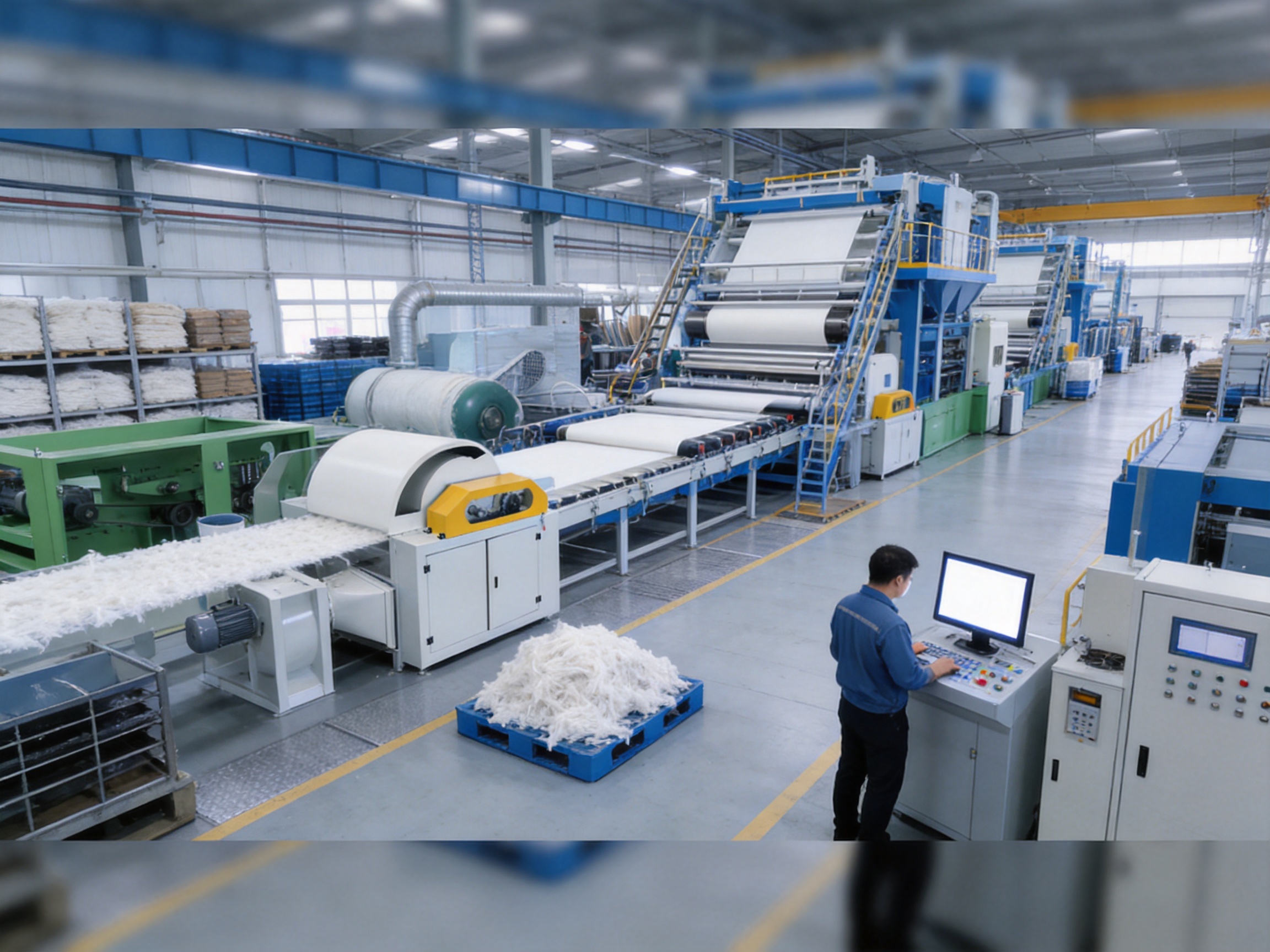
Nonwoven manufacturers continually seek practical ways to improve raw-material utilization, reduce production waste, and maintain stable fiber quality. During the manufacture of nonwoven rolls, mats, cleaning cloths, geotextiles, automotive materials, felts, and other products, lateral edge trims are often removed from the finished web. These trims may appear to be low-value waste, but they can contain a significant quantity of usable fiber. When properly opened and returned to the production system, they can become a valuable secondary raw material.
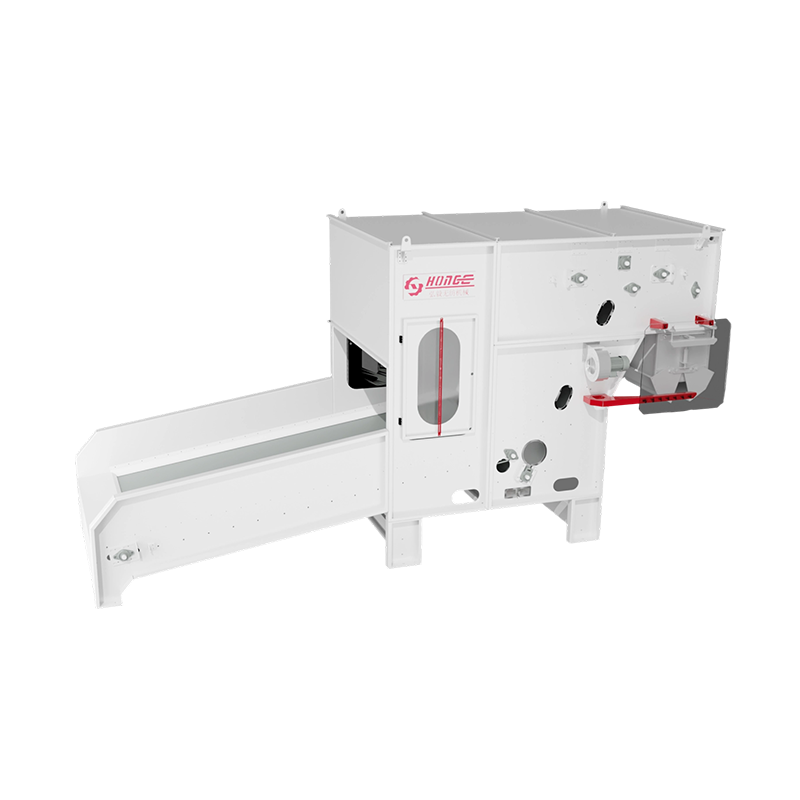
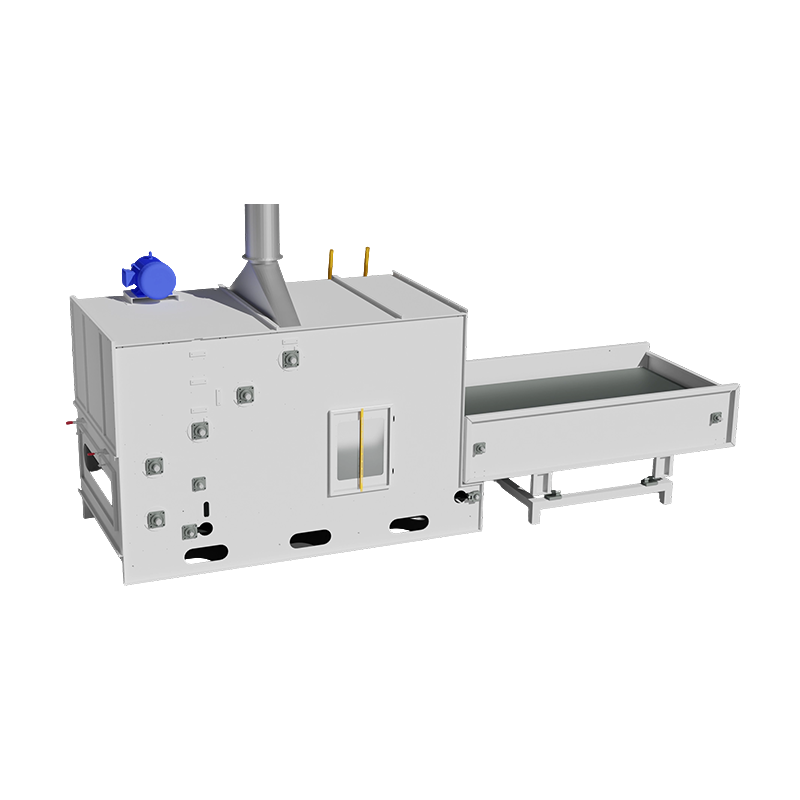
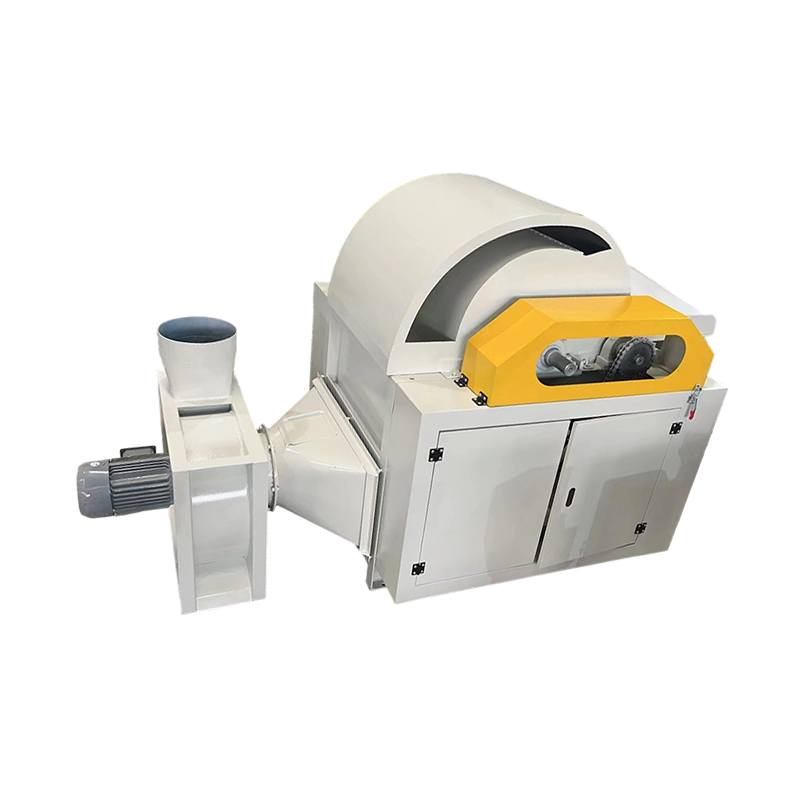
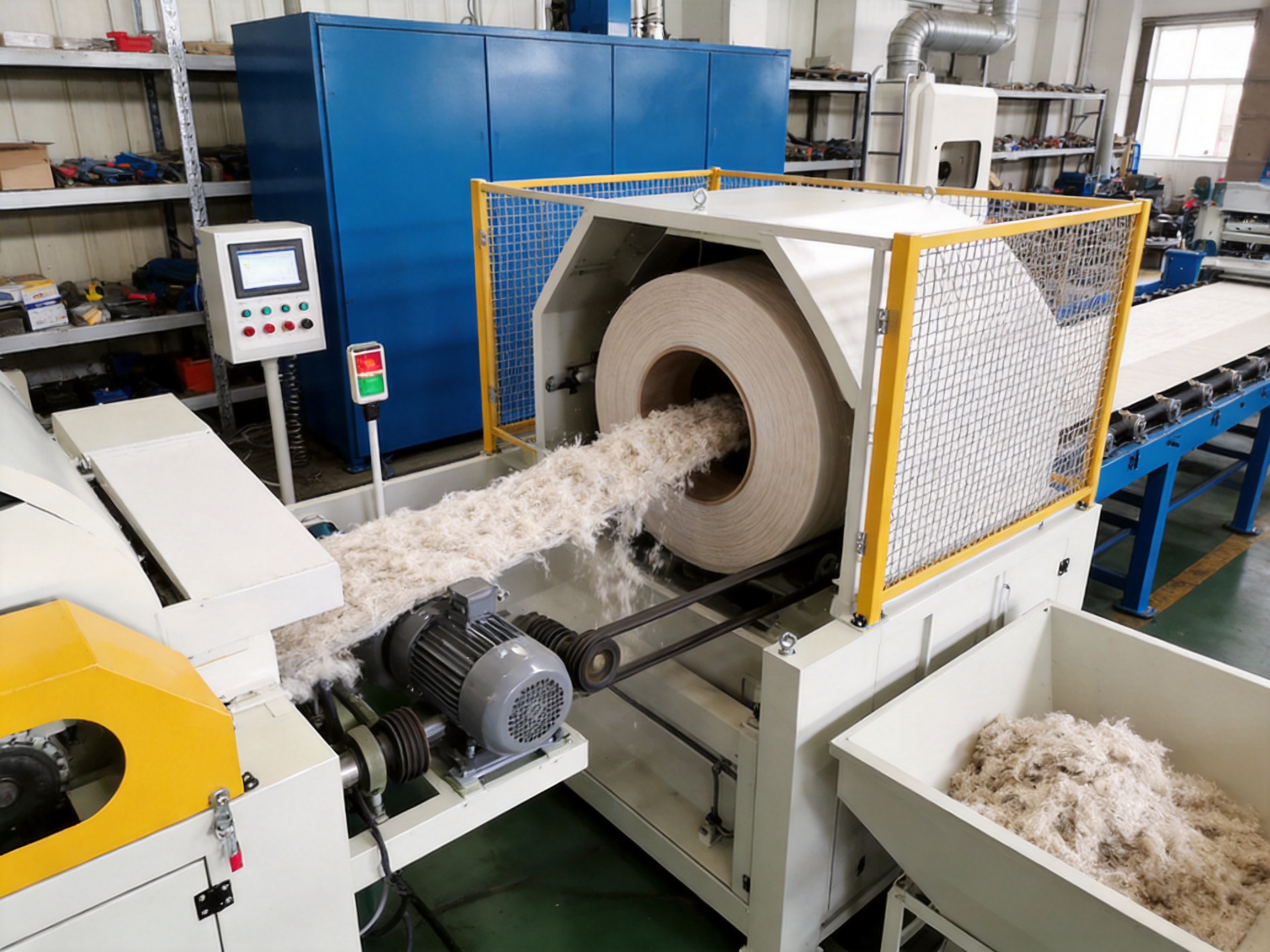
The HYBK Edge-Trim Opener is designed for this purpose. It recycles lateral edge trims from nonwoven production, including trims supplied in roll form or as loose pieces, and loosens the compacted material into reusable fiber. The recovered fiber can then be reintroduced into a suitable production process, helping manufacturers improve material efficiency and reduce disposal costs.
Unlike basic shredding equipment that may process material aggressively without controlling the feed rate, this edge-trim opening machine combines a feeding system, photoelectric sensing, electronic weighing, inverter-connected drive control, and an opening cylinder. This coordinated configuration supports more consistent feeding and makes the machine suitable for integration with broader nonwoven production systems.
With a working width of 800 mm, a 300 mm cylinder diameter, an 11 kW cylinder motor, and a stated production capacity of approximately 50 kg per hour, the machine is intended for controlled recovery applications in nonwoven factories. Its compact dimensions, automatic operation, customizable configuration, and industrial construction make it suitable for both independent recycling stations and integrated production lines.
HYBK Edge-Trim Opener
Why Edge-Trim Recycling Matters in Nonwoven Manufacturing
Nonwoven production often involves continuous webs that must be trimmed to achieve a precise finished width. The edge area may be uneven, compressed, contaminated by production variation, or simply outside the required product specification. Removing this material is necessary for quality control, but discarding it creates a direct loss of fiber and manufacturing cost.
In a high-volume factory, even a relatively small percentage of edge trim can accumulate into a substantial quantity over time. The total loss includes not only the cost of polyester, shoddy fiber, or other raw materials, but also the cost of storage, handling, transportation, and disposal. If the material is sent to an external waste processor, the manufacturer may also lose control of the recovered value.
An edge-trim opener creates another option. Instead of treating the trim as ordinary waste, the manufacturer can process it internally and convert compacted or cut pieces into a more open fiber form. Depending on the characteristics of the recovered material and the requirements of the final product, the fiber may be blended with virgin or recycled materials and returned to carding, airlay, filling, or another compatible process.
This approach can support several operational objectives:
• Improving the utilization rate of purchased fiber.
• Reducing the volume of nonwoven waste sent for disposal.
• Lowering the cost of secondary raw materials.
• Supporting more efficient material-flow management inside the factory.
• Creating a practical recycling route for production trims.
• Increasing the flexibility of production planning when different fiber materials are processed.
The value of the machine is therefore not limited to the opening action itself. It forms part of a broader resource-efficiency strategy. By recovering material at the point where it is generated, a nonwoven producer can shorten the recycling route, simplify internal handling, and make better use of existing production resources.
Product Purpose and Working Principle
The HYBK Edge-Trim Opener is intended to preliminarily loosen fibers from compacted packages, rolls, strips, and pieces of nonwoven trim. The term “preliminarily” is important because the machine is designed to prepare material for reuse rather than necessarily perform every stage of fiber cleaning, fine opening, blending, or web formation.
Trim material is introduced through the feeding section. The feeding system controls the movement of the material toward the opening cylinder. The cylinder, which has a diameter of 300 mm, mechanically separates and loosens the compacted material. The opening action helps transform dense trim into a more workable fiber form that can be conveyed or transferred to a subsequent process.
The feeding motor is rated at 1.5 kW and is connected to an inverter. This arrangement allows the operating speed to be adjusted according to material type, feed density, and production requirements. The main cylinder is driven by an 11 kW motor, providing the mechanical power required for opening the incoming trim.
Photoelectric sensing and electronic weighing are incorporated into the operating concept. These systems help detect material conditions and support controlled quantitative feeding. When the machine is used together with several units, the configuration can also assist in establishing a mixture proportion for different raw-material fibers.
A simplified process sequence can be described as follows:
1. Nonwoven edge trims are collected from the production process.
2. The trims are supplied in roll form, strip form, or pieces form, depending on the production source.
3. The feeding section introduces the material at a controlled rate.
4. Photoelectric sensing assists with material detection and operating coordination.
5. The weighing system supports quantitative feeding and proportion control.
6. The opening cylinder loosens the compacted material into reusable fiber.
7. The opened fiber is transferred to a suitable downstream process or collection system.
This sequence helps create a more stable recycling operation than manual feeding or uncontrolled mechanical tearing. The exact downstream application should be selected according to fiber length, contamination level, bonding characteristics, color, moisture, and the quality requirements of the final nonwoven product.
Key Advantages of the Edge-Trim Opener
Improved Raw-Material Utilization
The primary advantage is the recovery of usable fiber from material that would otherwise be discarded. Nonwoven trims may contain polyester, shoddy fiber, or other fibers that retain value after cutting. By opening the trims, the machine makes it possible to return a portion of this material to the production system.
Improved utilization can have a direct effect on production economics. The actual savings depend on trim percentage, operating hours, material price, recovery rate, and the allowable recycled-fiber ratio in the final product. Nevertheless, the equipment provides a practical foundation for calculating and improving material recovery.
Support for Different Fiber Materials
The machine is available for opening various fibers. The supplied material information identifies shoddy fiber and polyester fiber as examples of suitable raw materials. This flexibility is valuable for factories that manufacture more than one product or process different grades of nonwoven material during the year.
Because fiber behavior varies considerably, operating parameters should be selected according to the material. Soft, bulky, compacted, thermally bonded, or needle-punched trims may require different feed rates and opening conditions. The inverter-connected feeding motor allows the operator or control system to adjust the feeding speed rather than relying on a single fixed setting.
Controlled Quantitative Feeding
In recycling applications, uncontrolled feeding can create inconsistent output. A sudden increase in material density may overload the opening section, while an insufficient feed may reduce productivity. The electronic weighing system and controlled feeding arrangement are intended to support a more stable material flow.
Precise quantitative weighing and feeding also become important when recovered fibers are blended with other raw materials. A manufacturer may wish to maintain a defined proportion of recycled trim in a particular product. Using several units in combination can help establish the mixture proportion of different fiber sources, subject to the final system design and control strategy.
Automated Operation and Coordinated Control
Automation reduces the need for constant manual intervention and helps coordinate the equipment with related machinery. The HYBK design includes automated operation and coordinated control as key features. This may help improve operator convenience, maintain process continuity, and reduce variation caused by manual feeding.
For a nonwoven factory, coordinated control is especially useful when the opener forms part of a larger production system. The recovered fiber may need to be delivered according to the speed of a carding machine, airlay machine, blending system, or other downstream equipment. A coordinated configuration can make it easier to manage the relationship between recycling output and production demand.
Compact Equipment Footprint
The listed dimensions are approximately 1,700 mm by 700 mm by 1,000 mm, with a net weight of approximately 500 kg. This compact design can be beneficial for factories where floor space is limited or where the recycling station must be installed close to the trim-generation point.
A compact machine can also reduce internal transport requirements. If edge trims are moved long distances before processing, the factory may need additional containers, labor, and storage space. Positioning the opener near the cutting or trimming section can support a shorter and more organized material route.
Flexible Configuration
The machine can be customized according to customer needs. Customization may be considered for configuration, color, system arrangement, integration requirements, and other project-specific conditions. Since nonwoven factories differ in material type, line speed, available space, control architecture, and downstream equipment, this flexibility is important.
Customization should be established during the technical discussion. The manufacturer can evaluate the expected trim form, fiber type, required output, electrical standards, feeding arrangement, discharge method, and connection to existing equipment before confirming the final configuration.
Reduced Maintenance Burden
The product is described as having a neat and compact design that is convenient and requires less maintenance. A straightforward mechanical layout can make routine inspection, cleaning, adjustment, and component replacement easier for plant personnel.
Maintenance requirements still depend on the operating environment. Trim materials may contain dust, short fibers, bonding residues, or foreign matter. Regular cleaning and inspection are therefore essential. Operators should pay particular attention to the feeding area, opening cylinder, protective components, electrical cabinet, weighing elements, and drive system.
Comparison with Less-Controlled Recycling Methods
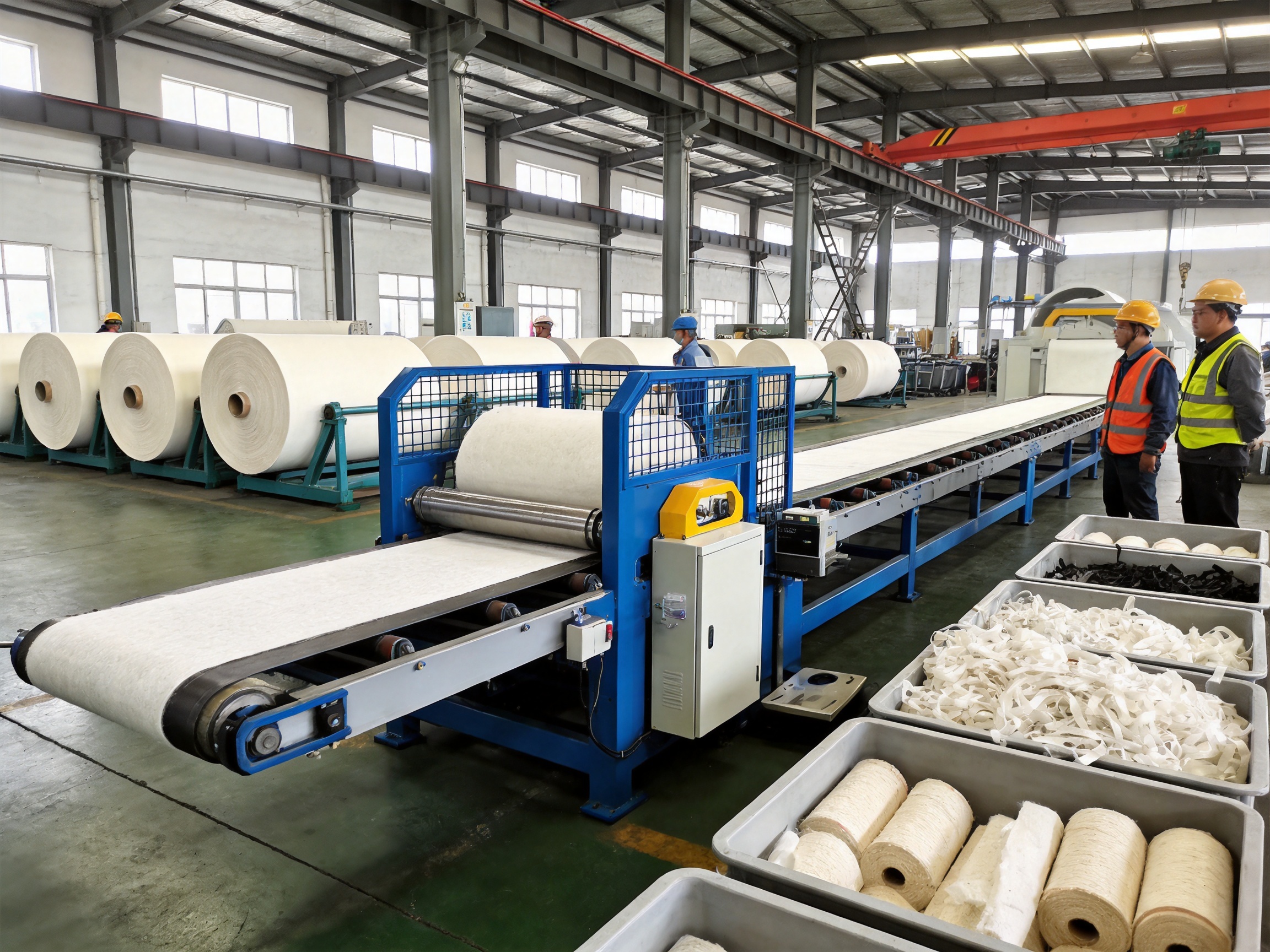
Nonwoven producers may use several informal methods to manage edge trim, including manual tearing, direct disposal, simple cutting, or general-purpose shredding. These approaches may appear inexpensive at first, but they can create limitations in productivity, consistency, safety, and material utilization.
| Processing approach | Typical limitation | Advantage of a dedicated edge-trim opener |
|---|---|---|
| Manual tearing | Labor-intensive and inconsistent in output | Automated feeding and mechanical opening provide a more organized process |
| Direct disposal | Loss of usable fiber and additional waste-handling cost | Converts suitable trim into a reusable fiber stream |
| Uncontrolled shredding | Feed rate and output may vary significantly | Weighing, sensing, and inverter-connected feeding support controlled operation |
| Basic cutting only | Reduces size without necessarily loosening the fiber structure | Opening cylinder helps loosen compacted material for downstream use |
| External recycling | Requires transportation and may reduce control over recovered material | Enables an internal recycling option at the manufacturing site |
The dedicated machine does not eliminate the need for correct material preparation or downstream quality control. Instead, it offers a more systematic solution for a specific production problem. Its advantage lies in combining mechanical opening with controlled feeding and automated coordination rather than relying only on a general-purpose size-reduction device.
Competitor equipment may differ in cylinder design, working width, drive power, automation level, weighing technology, discharge arrangement, and service support. A responsible comparison should therefore examine the complete technical configuration rather than comparing a single motor rating or nominal capacity.
Technical Specifications
The following specifications summarize the supplied information for the HYBK Edge-Trim Opener. Final specifications may vary when the machine is customized for a particular project.
| Item | Specification |
|---|---|
| Model | HYBK |
| Machine description | Edge Trim Opener |
| Working width | 800 mm |
| Cylinder diameter | 300 mm |
| Feeding motor | 1.5 kW, inverter connected |
| Cylinder motor | 11 kW |
| Production capacity | Approximately 50 kg per hour |
| Dimensions | Approximately 1,700 × 700 × 1,000 mm |
| Net weight | Approximately 500 kg |
| Raw-material examples | Shoddy fiber and polyester fiber |
| Automatic grade | Automatic |
| Certification | CE and ISO9001:2000 listed |
| Warranty | One year after-sales warranty listed |
| Construction material | Mechanical components mainly steel and iron |
| Color and configuration | Customizable according to customer requirements |
The stated capacity of 50 kg per hour should be understood as a reference value rather than a universal result for every material. Actual output can be affected by trim density, moisture, bonding strength, fiber type, feeding method, operator settings, and the desired degree of opening. A technical evaluation using representative customer material is recommended before finalizing a production guarantee.
Design Features for Industrial Use
Photoelectric Sensing
Photoelectric sensors help detect the presence or movement of material and can support automatic operating sequences. In a trim-recycling application, sensing is useful because the incoming material may not arrive as a perfectly uniform stream. The sensor system can help the equipment respond to material conditions and coordinate the feeding process.
Electronic Weighing System
Electronic weighing provides information about the quantity of material being processed. This is valuable for production records, mixture control, and stable feeding. When the opener is used to prepare recovered fiber for blending, weighing data can support a more repeatable recipe.
Inverter-Connected Feed Drive
The 1.5 kW feeding motor is connected to an inverter. Variable-speed control allows the material feed to be adjusted to suit the opening conditions. Lower feed speed may be appropriate for dense or difficult material, while a higher setting may be considered for lighter and more easily opened trim, provided that the machine remains within its operating limits.
High-Power Opening Drive
The 11 kW cylinder motor supplies the primary mechanical drive. The opening cylinder must handle material that may be compacted, layered, bonded, or irregularly shaped. Adequate drive power supports stable operation, although the correct relationship between cylinder speed, feed rate, working width, and material condition remains essential.
Steel and Iron Mechanical Construction
The listed mechanical materials are mainly steel and iron. These materials are widely used in industrial nonwoven machinery because they provide structural rigidity and durability when properly designed, fabricated, welded, machined, and finished. The frame and working components must withstand repeated loading, vibration, dust exposure, and continuous production conditions.
Manufacturing quality is not determined by material selection alone. It also depends on dimensional accuracy, weld quality, balance, bearing installation, surface treatment, electrical assembly, and final testing. These areas are important when evaluating a machinery supplier.
Manufacturing Strengths and Engineering Capability
The equipment is supplied by Changshu Hongyi Nonwoven Machinery Co., Ltd., a Chinese manufacturer and trader specializing in nonwoven machinery. The company has more than 20 years of experience in the nonwoven machinery field. This industry-specific experience is relevant because an edge-trim opener must be considered as part of a complete fiber-processing route, not merely as an isolated mechanical device.
The company provides both complete nonwoven production lines and individual machines. Its product range includes needle-punched geotextile lines, nonwoven carpet lines, airlaid waste-felt lines, automotive interior-material lines, needle-punching cleaning-cloth lines, wool-felt and jute-felt lines, needle-punching machines, carding machines, airlay machines, ironing machines, and thermal-bonding wadding oven machines.
This broad portfolio can strengthen the technical design of an edge-trim recycling project. A supplier familiar with opening, blending, carding, airlaying, needle punching, thermal bonding, and winding processes can better understand where recovered fiber may be introduced and what preparation may be required before reuse.
Advanced manufacturing strength in this context includes more than the ability to fabricate a machine frame. It includes process knowledge, equipment integration, control coordination, customer-specific engineering, and understanding of the final nonwoven application. The edge-trim opener benefits from this broader production-line perspective.
Engineering from Material Input to Reuse
A suitable recycling solution begins with the material. The supplier must consider whether the trim is supplied as a continuous strip, a roll, irregular pieces, or a compacted package. The composition may include polyester, shoddy fiber, blended fibers, bonding fibers, or product-specific additives. The final reuse route may involve a carding machine, an airlay system, a blending unit, or another production section.
By assessing the entire route, the machine can be configured more effectively. For example, the discharge arrangement may need to match a pneumatic conveying system, a collection hopper, a weighing unit, or a blending line. Electrical controls may need to communicate with existing equipment. The machine position may also depend on factory layout and trim collection practices.
Customization for Production Requirements
Customization is listed for the configuration, color, and other customer requirements. For industrial buyers, customization may include adjustments to the feeding arrangement, discharge direction, control interface, safety guarding, electrical standard, and integration with upstream or downstream machinery.
Customization also helps manufacturers align the opener with their actual production volumes. A small factory may need a standalone unit with manual loading and simple collection. A larger plant may require automated transfer, recipe control, multiple opening units, and coordinated operation with a continuous production line.
Quality-System Orientation
The machine information lists CE and ISO9001:2000 certification. CE conformity is relevant to applicable European market requirements, while an ISO-based quality-management approach indicates the importance of documented manufacturing and quality procedures. Buyers should request the current certification and conformity documentation applicable to the specific machine and destination market.
Quality assurance for this type of equipment should cover incoming materials, fabrication, machining, component inspection, electrical installation, drive testing, sensor calibration, weighing accuracy, emergency-stop functions, guarding, and final running tests. A professional factory acceptance process can help identify issues before shipment.
Experience in International Supply
The company reports that its products have been supplied to more than 20 countries, including markets in Latin America, Europe-adjacent regions, Africa, Southeast Asia, and other Asian countries. International experience can help with export packing, electrical documentation, communication across different technical standards, installation support, and spare-parts planning.
For a buyer, international supply experience should be evaluated together with the quality of technical documents, response time, commissioning support, warranty handling, and availability of replacement components. These factors influence the long-term value of machinery as much as the initial purchase price.
Integration with Nonwoven Production Lines
The edge-trim opener can be used as auxiliary equipment for nonwoven fabric production. Its role is to recover and prepare material generated by another process. Integration may be carried out in several ways depending on the factory layout and final product requirements.
Integration with Carding Equipment
Carding equipment separates, aligns, and distributes fibers to form a more uniform fiber web. Recovered edge trim may be blended with other fibers before entering the carding process. The proportion of recycled material should be determined through product trials because excessive short fiber, bonding residue, or uneven opening may affect web uniformity and final strength.
A weighing and feeding system can support the introduction of recovered fiber at a controlled rate. The carding line may also require a buffer hopper or blending unit to maintain a consistent feed. The opener itself does not replace carding; it prepares the trim for a process that may further individualize and distribute the fibers.
Integration with Airlay Systems
Airlay technology is used to form a fiber web by distributing fibers through an air stream. Opened edge trim can be suitable for certain airlaid waste-felt, insulation, padding, or composite-material applications, depending on fiber characteristics and product specifications.
In an airlay application, stable feeding is especially important because fluctuations in fiber supply can affect basis weight and web uniformity. The opener’s controlled feed and weighing functions may contribute to a more consistent material supply when properly connected to the airlay system.
Integration with Needle-Punching Lines
Needle-punched products include geotextiles, felts, carpets, cleaning cloths, automotive components, and many other materials. Opened trim can potentially be blended into the fiber preparation stage for suitable products. The correct blend ratio depends on the required tensile strength, thickness, appearance, resilience, and durability.
Because needle-punching lines often process bulky fiber blends, the recovered material may need additional opening or blending before web formation. The edge-trim opener can serve as the first recovery step in this sequence.
Integration with Thermal Bonding Processes
Thermally bonded products may contain low-melting fibers or binder fibers. When trims from these materials are opened, the fiber structure and bonding history should be considered. Some trims may be more compacted or fused than ordinary loose fiber. Process trials are recommended to determine whether the recovered material can be reused directly or should be blended at a controlled ratio.
The company’s experience with thermal-bonded and heat-setting equipment can be useful when evaluating the relationship between trim recovery and final thermal processing. The machine selection should always be based on the actual composition and thermal history of the trim.
Operational Workflow and Best Practices
Collecting and Sorting Edge Trim
Before the material reaches the opener, the factory should establish a collection and sorting procedure. Trims should be separated according to fiber type, color, product grade, and contamination level when these differences matter to the final application.
Mixing incompatible materials may reduce the quality of the recovered fiber or make it difficult to maintain a consistent product recipe. For example, a manufacturer may choose to process white polyester trim separately from dark-colored shoddy fiber or from trims containing a different bonding composition.
Checking Material Condition
Operators should inspect the trims for metal, plastic, paper, oil, excessive moisture, and other foreign matter. The edge-trim opener is designed for fiber opening and should not be treated as a universal waste-processing machine. Removing foreign objects before feeding helps protect the cylinder, feeding section, bearings, and downstream equipment.
Adjusting the Feeding Rate
The inverter-connected feeding motor allows the feed rate to be adjusted. Operators should begin with a conservative setting during commissioning and increase the rate only after observing the machine’s behavior. The correct setting should provide stable material flow without excessive vibration, motor overload, bridging, or uneven discharge.
Monitoring the Opened Fiber
Recovered fiber should be checked regularly for opening quality, remaining compacted pieces, excessive fiber damage, and contamination. If the material is intended for a high-quality nonwoven product, laboratory or production trials should be used to confirm that the recovered fiber does not negatively affect web formation or final performance.
Recording Production Data
Production records can include input weight, output weight, operating hours, material type, feed speed, cylinder settings, downtime, and final reuse ratio. These records help the factory evaluate the economic return of the recycling process and identify opportunities for improvement.
Maintaining a Clean Working Area
Short fibers and dust can accumulate around mechanical and electrical components. A regular cleaning schedule supports safe operation and reduces the risk of sensor obstruction, electrical overheating, bearing contamination, and restricted ventilation. Cleaning procedures should follow the supplier’s recommendations and the factory’s safety rules.
Maintenance and Safety Considerations
Routine maintenance should be included in the total operating plan from the beginning. A dedicated edge-trim opener is a comparatively compact machine, but it contains rotating and powered components that require proper guarding, inspection, and lockout procedures.
Operators should verify that guards are correctly installed before operation. Access doors and inspection panels should not be opened while the cylinder is rotating. Electrical work should be performed by qualified personnel, and the inverter, motor, sensors, and weighing system should be checked according to the manufacturer’s instructions.
Important maintenance activities may include:
• Cleaning accumulated fiber from the feed and cylinder areas.
• Inspecting belts, couplings, bearings, and fasteners.
• Checking the condition and alignment of the opening cylinder.
• Confirming that the photoelectric sensor remains clean and correctly positioned.
• Verifying the accuracy and stability of the electronic weighing system.
• Checking motor current, abnormal noise, vibration, and temperature.
• Inspecting emergency-stop devices and safety interlocks.
• Reviewing electrical connections and inverter status.
• Replacing worn components before they affect production quality.
Preventive maintenance is generally more economical than waiting for a failure. It also helps preserve opening performance. A worn or misaligned opening component may produce inconsistent fiber, increase energy consumption, or place unnecessary stress on the drive system.
How the Machine Can Improve Factory Economics
The financial benefit of an edge-trim opener depends on several measurable factors. The most useful evaluation begins with the amount of trim generated each day and the cost of the material that can be recovered.
| Evaluation factor | Question for the manufacturer | Why it matters |
|---|---|---|
| Trim generation | How many kilograms of edge trim are produced per shift or month? | Determines the available recovery volume |
| Material value | What is the purchase cost of the fiber being discarded? | Estimates the potential raw-material saving |
| Recovery quality | What percentage can be reused in the target product? | Connects opening performance with actual economic value |
| Labor requirement | How much manual sorting and handling is currently required? | Shows possible labor and handling improvements |
| Disposal cost | What is paid for transportation and waste treatment? | Identifies savings outside the raw-material budget |
| Energy consumption | How does the machine fit into the plant energy plan? | Supports a realistic operating-cost calculation |
| Integration cost | What conveyors, hoppers, controls, or installation work are needed? | Provides a complete project investment estimate |
For example, a factory can compare the monthly cost of purchasing replacement fiber with the cost of operating the opener and reintegrating the recovered material. The calculation should include electricity, labor, maintenance, depreciation, installation, and any additional blending or cleaning required. A well-designed recycling project should be evaluated on total cost per usable kilogram, not only on machine price.
Even when the recovered fiber cannot be used in the highest-grade products, it may be suitable for a lower-grade or different product category. This can still reduce waste and improve overall plant utilization. The final application must be confirmed by product testing and customer requirements.
Application Areas
The machine is applicable to manufacturers that generate nonwoven edge trims in roll or piece form. Potential application areas include nonwoven felt, carpet underlay, cleaning cloth, geotextile, automotive interior material, padding, insulation, airlaid material, and other fiber-based products.
In a geotextile plant, recovered fibers may be evaluated for use in products where recycled content and cost control are important. In a carpet or felt plant, trim from production rolls may be collected and opened for blending into suitable grades. In an automotive-material plant, stricter material control may be required, but the same recovery principle can be investigated where specifications allow.
Factories producing several grades may benefit from separate trim streams and controlled blending. A dedicated recycling station can help the manufacturer decide whether recovered material should return to the original product, move to another product, or be sold or transferred for external recycling.
Purchasing Considerations for International Buyers
Before purchasing an edge-trim opener, buyers should provide detailed information about the intended material and process. A supplier can make a more accurate recommendation when it knows the fiber composition, trim shape, input density, moisture content, adhesive or binder presence, expected capacity, and target reuse route.
Important technical questions include:
• Is the input material a continuous edge strip, a roll, loose pieces, or compacted bundles?
• What fibers are present, and are they blended?
• What is the average and maximum trim weight per hour?
• What level of opening is required?
• Will the opened fiber be conveyed pneumatically or collected in a hopper?
• Does the machine need to communicate with an existing line control system?
• What electrical voltage, frequency, and safety standard apply at the installation site?
• Is a single opener sufficient, or is a multi-unit blending arrangement required?
• What documentation, spare parts, and commissioning support are expected?
Material samples are particularly valuable. Trial processing can help determine the suitable feed speed, expected capacity, opening quality, and downstream compatibility. Buyers should also request a clear list of included and excluded equipment, such as conveyors, control cabinets, collection devices, installation tools, and spare parts.
Packaging and transportation should be discussed before shipment. The listed transport options include nude packing or PE-film packing. The appropriate choice depends on shipping distance, container type, humidity exposure, port handling, and the buyer’s import requirements. Critical electrical and precision components may require additional protection.
After-Sales Service and Project Support
The product information lists a one-year warranty. Warranty terms should be confirmed in writing, including the starting date, covered components, exclusions, response procedure, and responsibility for transportation or replacement parts. A clear warranty agreement helps both parties manage expectations.
For a machine that will be integrated into a production line, after-sales support may include technical drawings, electrical diagrams, operating instructions, installation guidance, commissioning assistance, troubleshooting support, and recommended spare-parts lists. Remote support can be useful, while on-site service may be considered for complex line integration.
Staff training should cover safe operation, feed-rate adjustment, sensor care, weighing-system use, routine cleaning, emergency procedures, and preventive maintenance. Proper training helps protect the equipment and improves the likelihood of achieving the expected recovery performance.
Environmental and Resource-Efficiency Benefits
Recycling edge trim supports the principles of resource efficiency and industrial waste reduction. By returning suitable fiber to production, the factory may reduce its demand for newly purchased material and lower the amount of nonwoven waste requiring disposal.
The environmental benefit depends on actual operation. It is not enough to install the machine; the recovered fiber must be used effectively, and the energy and maintenance requirements must be managed. A complete assessment may consider avoided raw-material production, reduced transportation, lower waste treatment, electricity consumption, and the useful life of the equipment.
Internal recycling can also improve traceability. When trim is sorted and processed inside the plant, the manufacturer has greater control over its source and composition. This can be valuable for products that require documented recycled content or controlled material recipes, provided that the factory maintains appropriate records.
Why Select a Specialized Nonwoven Machinery Manufacturer
An edge-trim opener is most valuable when it works reliably with the rest of the nonwoven process. A supplier that understands only general machinery may not be able to evaluate the effect of recovered fiber on carding, airlaying, needle punching, thermal bonding, or winding. A specialized nonwoven machinery manufacturer can approach the project from the perspective of the final fabric.
Changshu Hongyi Nonwoven Machinery Co., Ltd. has more than two decades of experience in the nonwoven machinery field and supplies both complete production lines and individual units. Its product range covers the main stages of fiber preparation and nonwoven formation. This experience supports a more coordinated approach to recycling equipment, especially when the buyer needs a customized solution rather than a standalone machine.
The company’s reported strengths include high efficiency, reliability, quality, advanced technology, precision engineering, automatic control, energy-saving considerations, and customized options. These strengths are relevant to an edge-trim opener because the equipment must balance opening performance, feed stability, energy use, maintenance access, and integration with the existing factory.
Its reported export experience in more than 20 countries also provides a foundation for international project delivery. Buyers should still review the technical proposal, quality documents, reference projects, installation scope, and service terms for their specific order. Due diligence is an important part of every machinery purchase.
Recommended Project Selection Process
A practical selection process can reduce technical and commercial risk.
Step One: Define the Trim Stream
Record the source, form, fiber type, color, density, moisture, contamination level, and average quantity of the trim. Separate materials that cannot be mixed without affecting product quality.
Step Two: Define the Reuse Objective
Determine whether the recovered fiber will return to the same product, enter another product line, or be collected for external processing. Establish the acceptable fiber condition and blend ratio.
Step Three: Confirm Capacity
Compare the expected trim generation with the stated reference capacity of approximately 50 kg per hour. Consider peak production, operating shifts, planned growth, and downtime for cleaning and maintenance.
Step Four: Conduct a Material Trial
Use representative samples to assess the opening result. Review the fiber form, remaining compacted material, visible contamination, output stability, and suitability for downstream processing.
Step Five: Plan Integration
Prepare a layout showing the trim source, opener location, fiber discharge route, collection or blending equipment, electrical connection, control interface, access space, and maintenance clearance.
Step Six: Confirm Documentation and Service
Agree on technical specifications, drawings, manuals, inspection procedures, warranty terms, spare parts, installation responsibilities, and training before production begins.
Step Seven: Measure Results after Installation
Track recovered kilograms, reusable output, energy use, downtime, maintenance, and product performance. Compare these results with the original economic model and make operating adjustments where necessary.
Frequently Asked Questions
What is an edge-trim opener?
An edge-trim opener is a machine that loosens and opens nonwoven production trims so that suitable fiber can be reused in a downstream manufacturing process. It is designed to handle edge trims supplied in roll or piece form and to prepare the material for blending, carding, airlaying, or another compatible operation.
What materials can the HYBK machine process?
The supplied information identifies shoddy fiber and polyester fiber as raw-material examples and states that the machine is available for opening various fibers. Actual suitability depends on the material’s density, bonding condition, moisture, contamination, and final reuse requirements. A material trial is recommended for unusual or heavily bonded trims.
What is the production capacity?
The listed production capacity is approximately 50 kg per hour. Actual output may vary according to the type and condition of the trim, feed rate, opening requirements, and operating configuration.
Can the machine process both rolls and pieces?
Yes. The product description states that it is suitable for recycling lateral edge trims in both roll and pieces form. The feeding arrangement should be confirmed according to the dimensions, density, and presentation of the customer’s material.
Does the opener replace a carding machine?
No. The opener primarily loosens compacted trim. A carding machine or another downstream process may still be required to further separate, blend, align, or form the fibers, depending on the final product.
Can several units be used together?
Yes. The product information states that several units can be combined to set the mixture proportion of different raw-material fibers. The exact multi-unit arrangement should be engineered according to the required recipe, capacity, control system, and downstream equipment.
How does the weighing system help?
The electronic weighing system supports quantitative feeding and can assist with maintaining a more consistent material flow. It is also useful when recovered fiber must be blended at a defined proportion with other raw materials.
What is the function of the inverter-connected feeding motor?
The inverter allows the feeding speed to be adjusted. This helps operators match the feed rate to the material condition, opening requirement, and downstream production demand.
What are the main motor specifications?
The feeding motor is listed as 1.5 kW and inverter connected. The cylinder motor is listed as 11 kW. The cylinder diameter is 300 mm, and the working width is 800 mm.
How much floor space does the machine require?
The listed machine dimensions are approximately 1,700 mm long, 700 mm wide, and 1,000 mm high. Additional space should be reserved for operation, inspection, cleaning, material collection, electrical access, and maintenance.
Can the machine be customized?
Yes. The configuration and color can be customized according to customer needs. Project-specific requirements should be discussed before quotation so that the supplier can confirm the feasible design, controls, dimensions, and integration scope.
What certifications are listed?
The supplied product information lists CE and ISO9001:2000 certification. Buyers should request current documents applicable to the specific machine and destination country.
What warranty is provided?
The listed after-sales service is a one-year warranty. The detailed warranty coverage, exclusions, response process, and logistics responsibilities should be confirmed in the purchase agreement.
How should the recovered fiber be used?
The recovered fiber should be evaluated according to its composition and quality. It may be blended into a suitable carding, airlay, needle-punching, or other nonwoven process. The correct reuse ratio should be confirmed through production trials and final-product testing.
What information should be sent when requesting a quotation?
Buyers should provide the trim material type, form, average and peak quantity, desired capacity, target reuse process, factory electrical standard, available installation space, preferred automation level, discharge method, and any special safety or documentation requirements. Material samples are also recommended.
Conclusion
The HYBK Edge-Trim Opener provides a focused solution for converting nonwoven edge trims into reusable fiber. Its purpose is directly connected to one of the most important challenges in nonwoven manufacturing: improving raw-material utilization while controlling waste and production costs.
Its combination of an 800 mm working width, 300 mm opening cylinder, 11 kW cylinder motor, inverter-connected feeding drive, photoelectric sensing, electronic weighing, automatic operation, and customizable configuration gives manufacturers a practical basis for controlled trim recovery. The compact dimensions and industrial steel-and-iron construction support installation in a variety of factory environments.
Compared with manual handling, direct disposal, or less-controlled shredding, a dedicated opener can provide a more organized recycling route. Its advantages become stronger when the equipment is integrated with carding, airlay, blending, needle-punching, thermal-bonding, or other nonwoven machinery.
The manufacturer’s more than 20 years of nonwoven machinery experience, broad equipment portfolio, international supply history, customization capability, and listed CE and ISO9001:2000 credentials provide additional support for project development. Buyers should confirm performance through material testing and review the complete technical, installation, warranty, and service proposal.
For producers seeking to reduce trim waste and create a more efficient fiber-management system, the edge-trim opener can be an important auxiliary machine. When correctly specified, installed, operated, and maintained, it can help transform production losses into a controlled source of reusable material.
References
1. Product specification sheet for the HYBK Edge-Trim Opener, including dimensions, motor ratings, working width, capacity, and control features.
2. Nonwoven manufacturing process information supplied for fiber opening, blending, carding, airlaying, needle punching, thermal bonding, and winding applications.
3. Company profile and manufacturing information for Changshu Hongyi Nonwoven Machinery Co., Ltd.
4. General industrial guidance on nonwoven production waste reduction and fiber-recovery practices.
5. General equipment-selection principles for automated feeding, electronic weighing, variable-frequency drive control, and production-line integration.