

Content
- 1 1. The Role of a Batt Feeder in Nonwoven Production
- 2 2. Product Overview
- 3 3. Minimum-Draft Feeding for Better Web Integrity
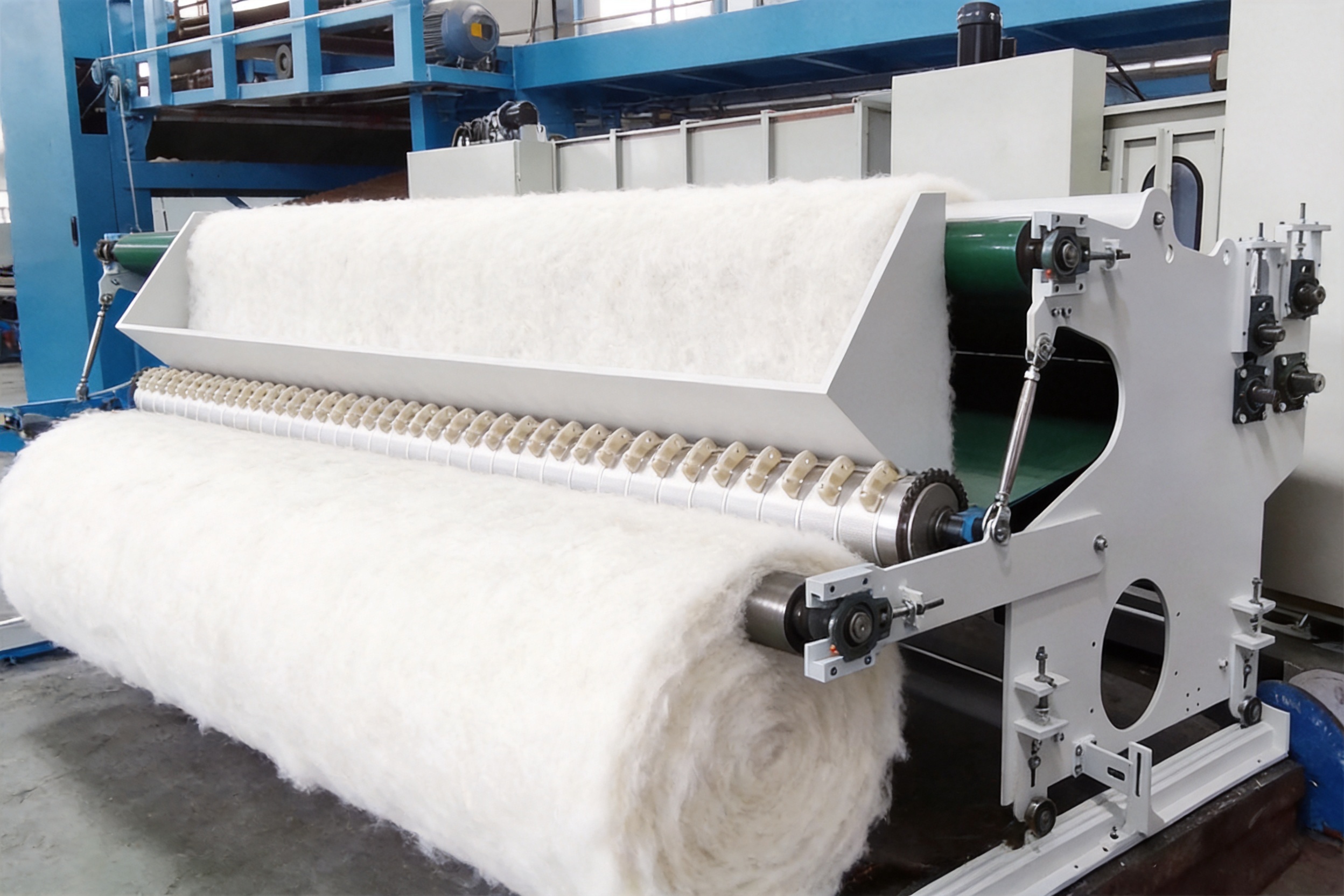
- 4 4. Anti-Static Wedge-Shaped Feeding Device
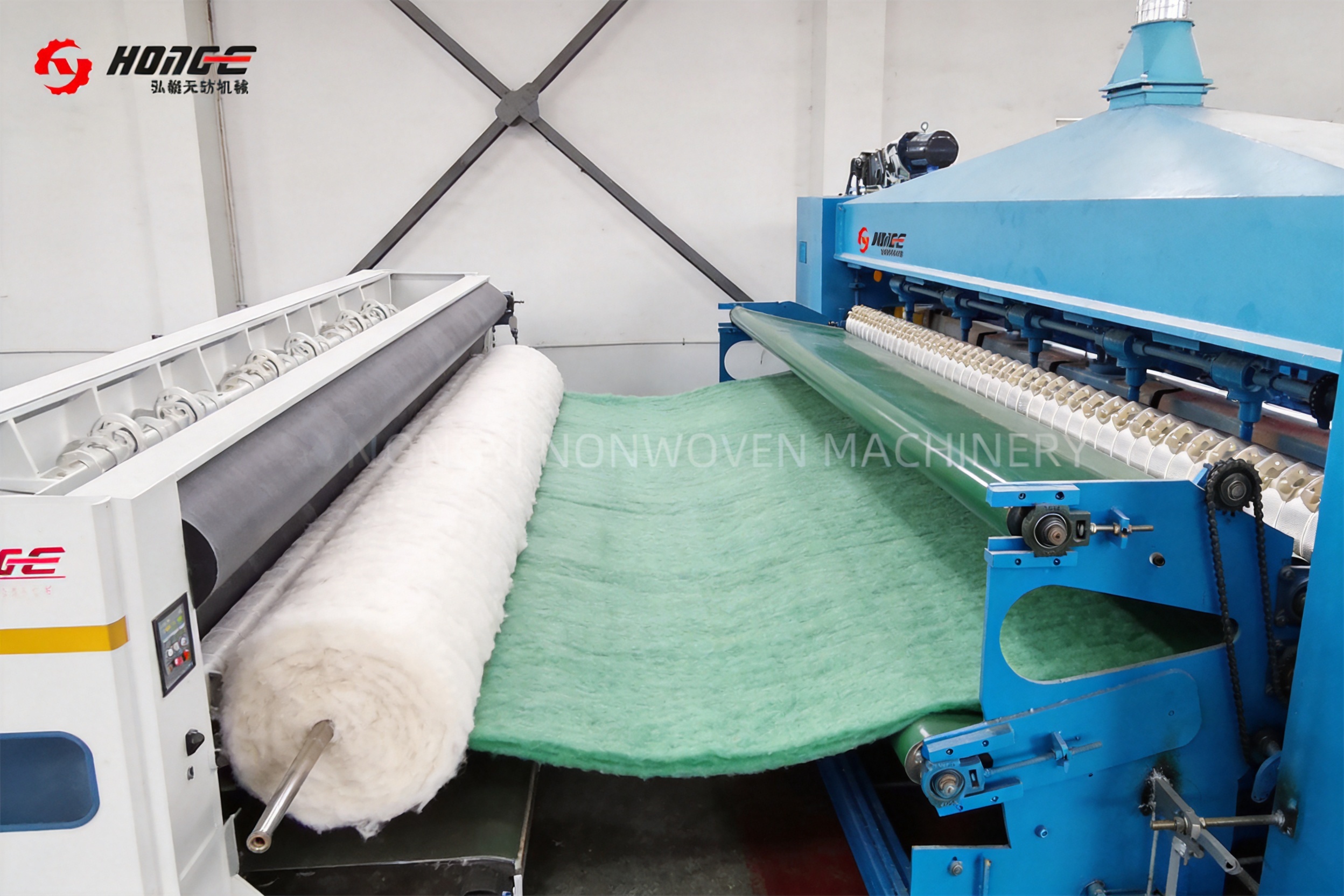
- 5 5. Nylon-Finger Feeding Rollers
- 6 6. Inverter and Servo Drive Options
- 7 7. Movable Structure for Installation and Maintenance
- 8 8. Suitable Materials and Applications
- 9 9. Advantages Compared with Basic Feeding Solutions
- 10 10. Manufacturing Strengths and Engineering Capability
- 11 11. Manufacturing Process and Quality-Control Approach
- 12 12. Installation and Commissioning Considerations
- 13 13. Operating Guidelines
- 14 14. Maintenance and Service
- 15 15. How to Select the Correct Configuration
- 16 16. Productivity, Quality, and Cost Considerations
- 17 17. Why Manufacturer Experience Matters
- 18 18. Typical Troubleshooting Questions
- 19 19. Frequently Asked Questions
- 19.1 Q1: What is the main purpose of the HYWR Batt Feeder?
- 19.2 Q2: What materials can the machine handle?
- 19.3 Q3: What is the maximum working width?
- 19.4 Q4: What is the maximum listed web weight?
- 19.5 Q5: Can the roller gap be adjusted?
- 19.6 Q6: Does the machine use a servo motor?
- 19.7 Q7: Is the batt feeder suitable for a new production line?
- 19.8 Q8: Is the machine movable?
- 19.9 Q9: What maintenance is required?
- 19.10 Q10: What after-sales service is available?
- 19.11 Q11: Can the machine be customized?
- 19.12 Q12: What should be included in an inquiry?
- 20 20. Conclusion
- 21 References
- 22 Product: HYWR Batt Feeder
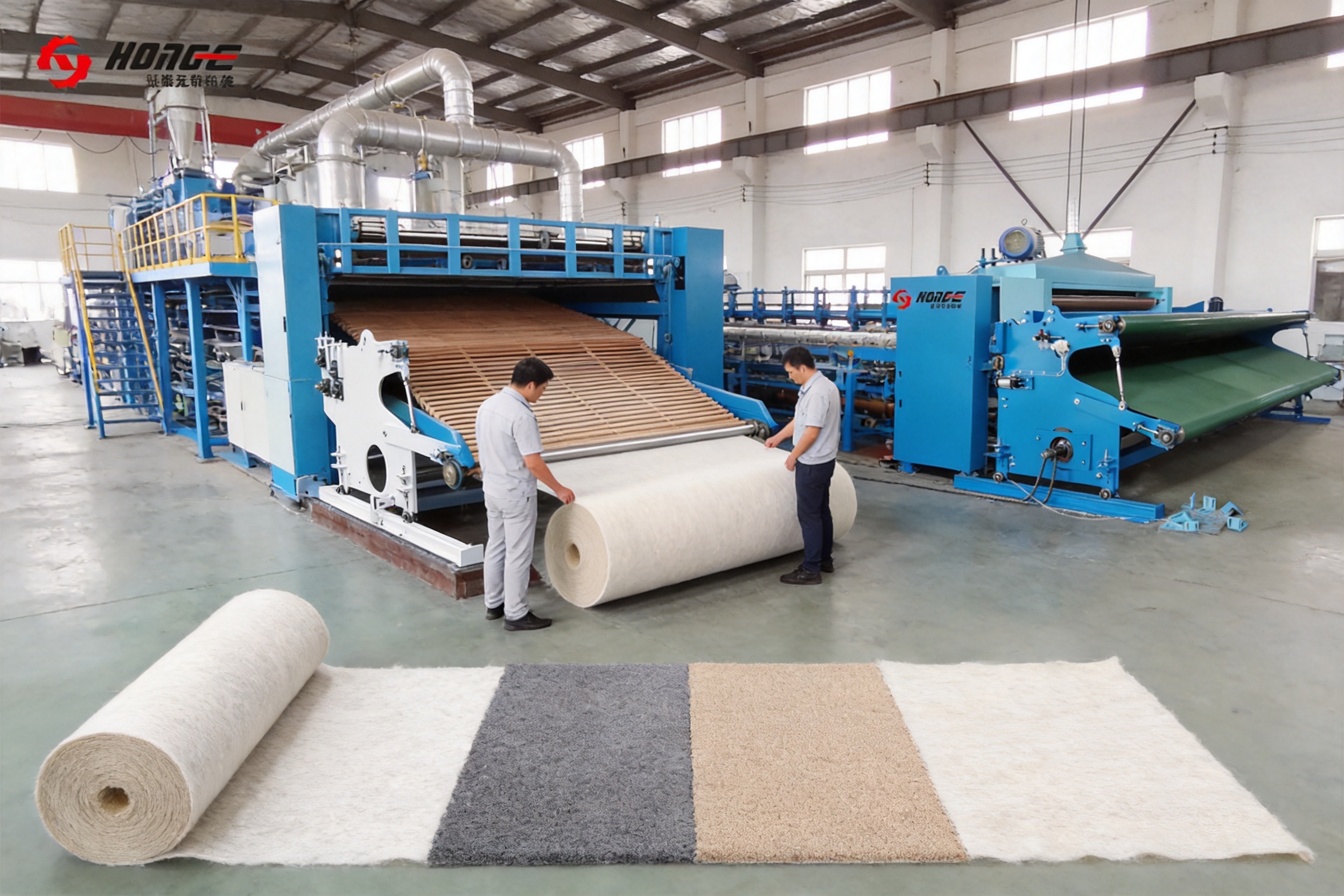
In a needle-punched nonwoven production line, the batt feeder performs a critical but sometimes underestimated function. It transfers the voluminous web produced by a cross lapper to the pre-needle loom or needle-punching machine while maintaining a stable feed rate, consistent web structure, and minimum draft. When this transfer is poorly controlled, the web may become stretched, compressed, laterally displaced, or unevenly distributed before it reaches the needle loom. These defects can influence fabric weight, thickness, strength, appearance, and downstream production stability.
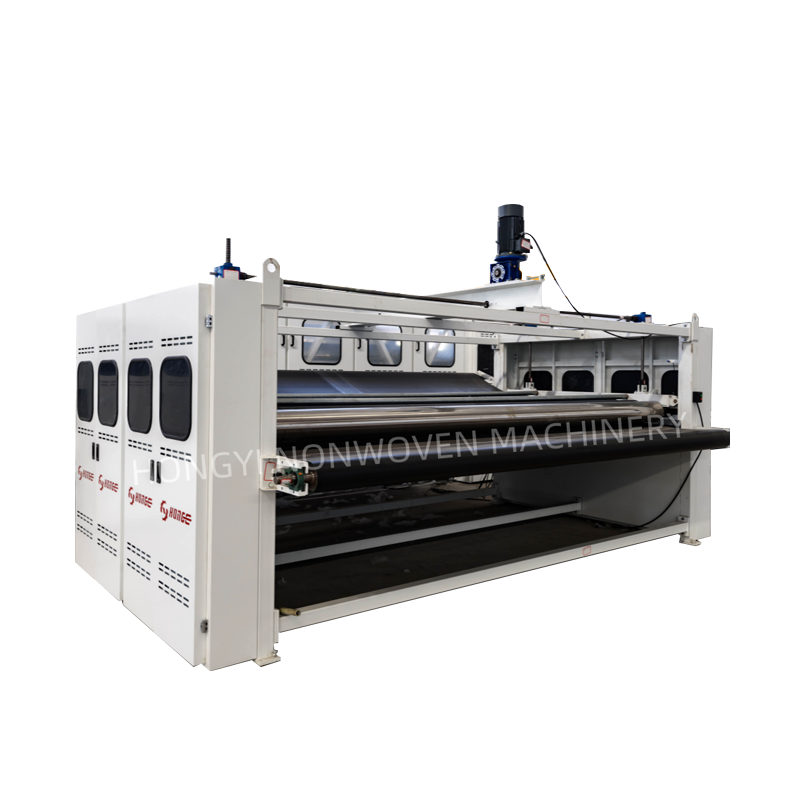
The HYWR Batt Feeder is designed to provide controlled, even, and low-draft feeding for voluminous nonwoven webs. It is suitable for production lines processing polyester fiber, PET, polypropylene, and other fiber blends used in geotextiles, automotive materials, carpets, filtration media, insulation products, felt, cleaning cloth, and related nonwoven applications. With a working width of up to 10 meters, adjustable feeding components, inverter or servo drive options, and a movable structure for maintenance, the machine can be adapted to different production line layouts and product requirements.
Manufactured by Changshu Hongyi Nonwoven Machinery Co., Ltd., the batt feeder reflects the company’s long-term experience in nonwoven machinery engineering. The manufacturer supplies both individual machines and complete nonwoven production lines, supporting customers with equipment design, customization, manufacturing, installation assistance, and after-sales service.
1. The Role of a Batt Feeder in Nonwoven Production
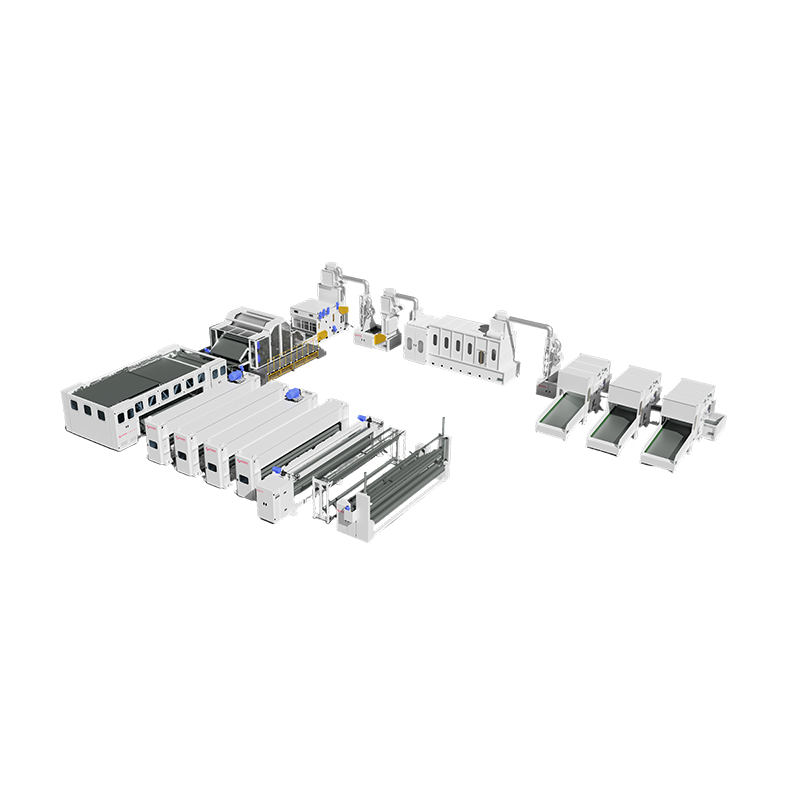
A typical needle-punched nonwoven production process may include fiber opening, blending, feeding, carding, web forming, cross lapping, batt feeding, pre-needling, additional needling, drafting, winding, cutting, thermal treatment, or other finishing operations. Each section affects the final quality of the material. The batt feeder is positioned between the cross lapper and the pre-needle loom, where it receives a thick and relatively loose batt and delivers it to the needle-punching machine.
The cross lapper builds the web by depositing carded fiber layers in a controlled zigzag pattern. This creates the required batt thickness and cross-machine direction uniformity. However, the resulting batt is often bulky, delicate, and difficult to transport without deformation. If it is pulled too strongly, the fibers and layers can shift. If it is fed too slowly or irregularly, the needle loom may receive an inconsistent amount of material.
The batt feeder provides a controlled transition between these two machines. Its main objectives are:
To transfer the batt smoothly from the cross lapper to the needle loom.
To reduce unnecessary stretching, known as draft, during feeding.
To maintain consistent web weight and thickness across the working width.
To coordinate the material speed with the needle loom and upstream equipment.
To reduce web disturbance during acceleration, deceleration, and normal operation.
To support stable production of heavy, wide, and voluminous nonwoven materials.
For products such as geotextiles or industrial felts, even small variations in web density can affect tensile strength, puncture resistance, permeability, and dimensional stability. A reliable batt feeder therefore contributes directly to the quality and productivity of the complete line.
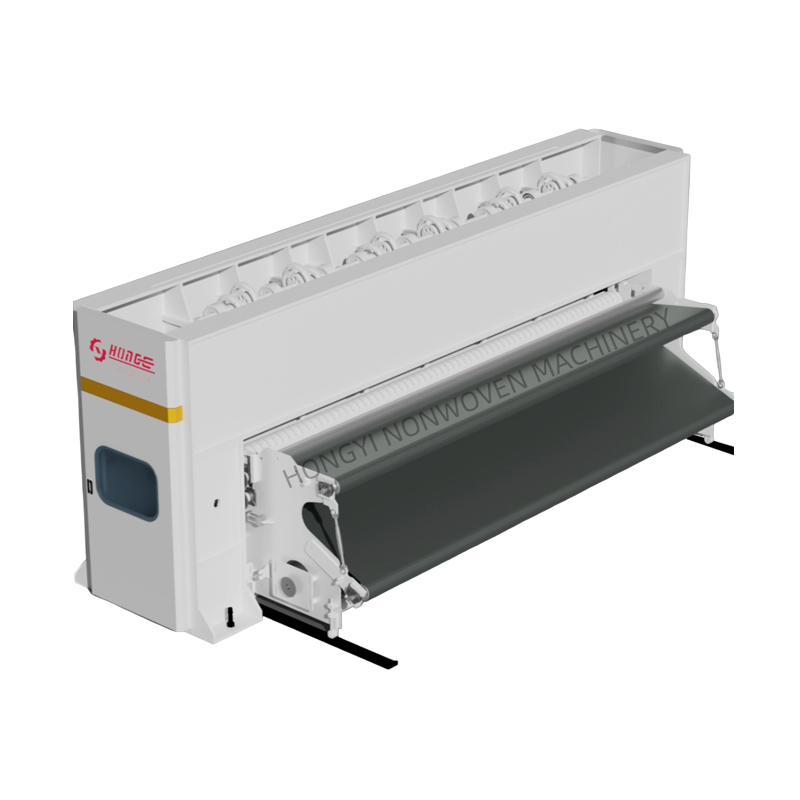
HYWR Batt Feeder
2. Product Overview
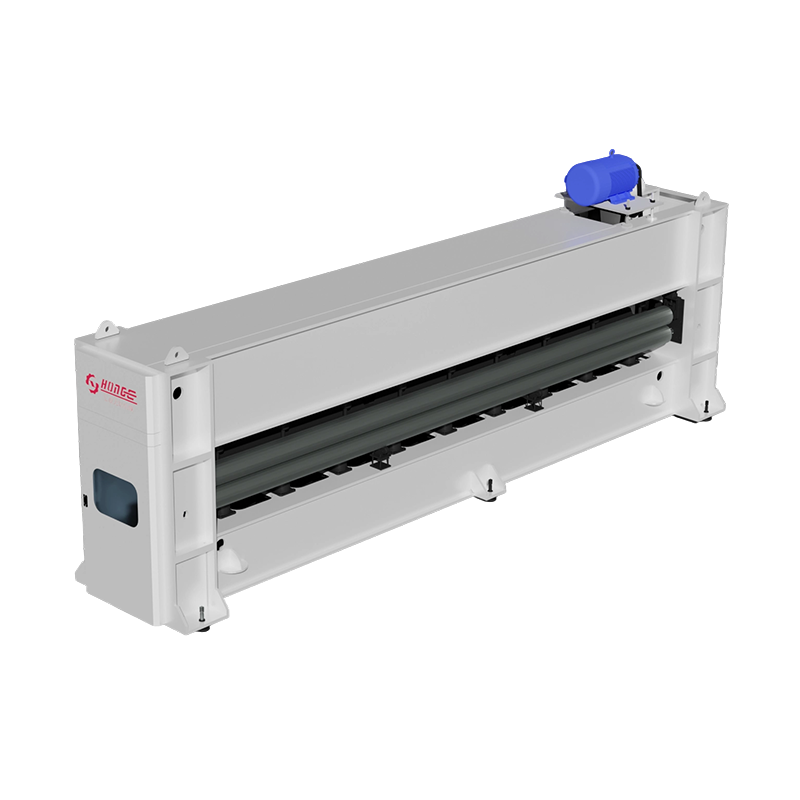
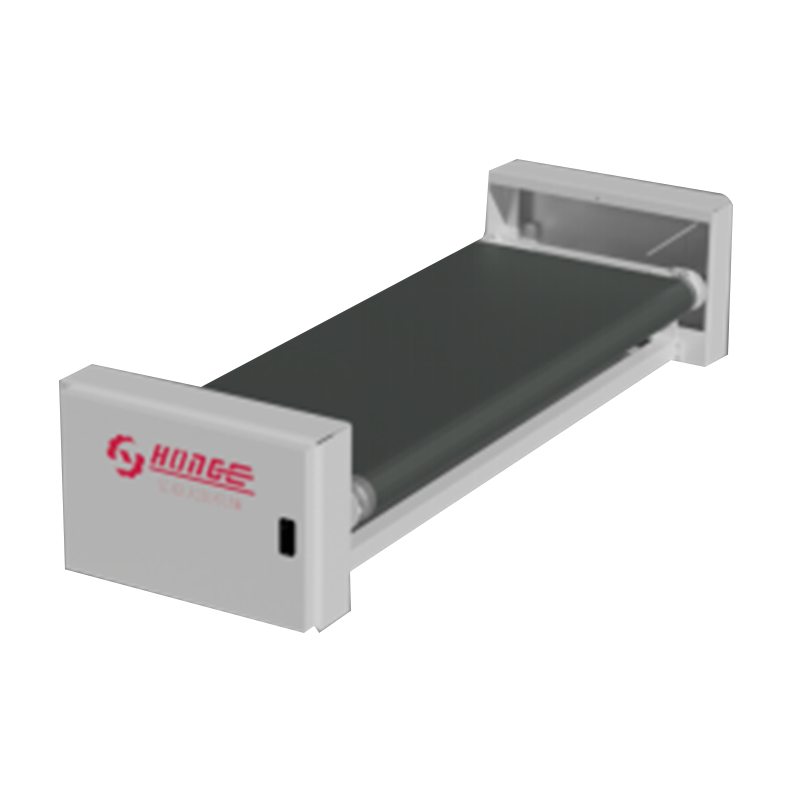
The HYWR Batt Feeder is an auxiliary machine for nonwoven fabric production. It is primarily used to feed voluminous webs from a cross lapper to a needle loom with minimum draft. The machine is configured for automatic operation and can be customized according to the customer’s line arrangement, working width, material characteristics, and production requirements.
The equipment is suitable for webs with a maximum specified weight of approximately 2,000 grams per square meter and working widths up to 10 meters. The driving motor range is listed as approximately 3.75 to 6.75 kilowatts, depending on the machine configuration and working width. The structure may also be adapted to suit the upstream cross lapper, downstream pre-needle punching machine, and available factory space.
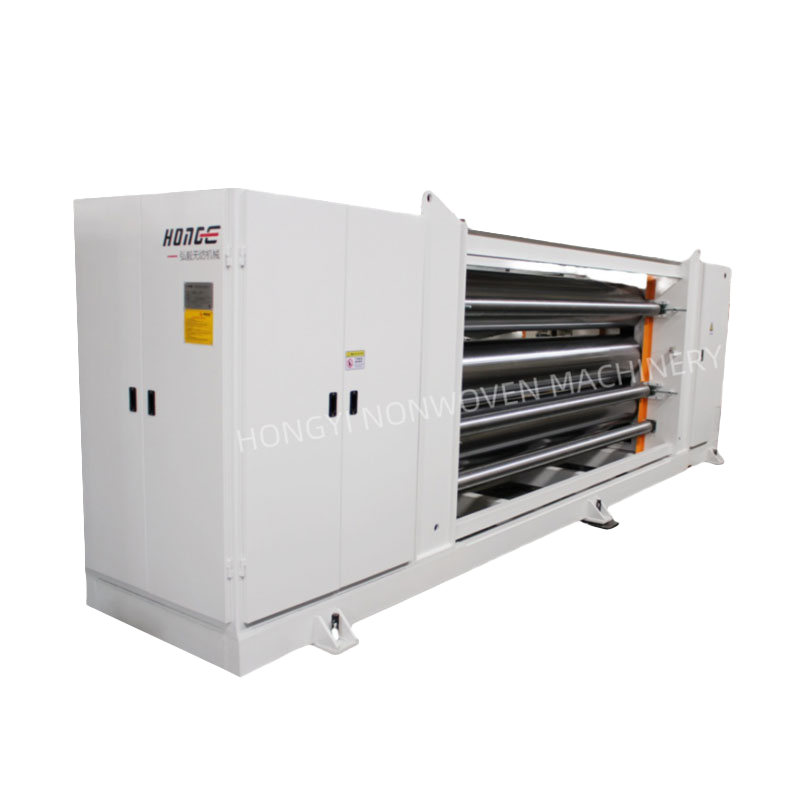
Important features include an anti-static wedge-shaped feeding device, nylon-finger feeding rollers, adjustable roller clearance, inverter or servo motor drive, and a movable construction for operation and maintenance. These features address common challenges associated with transporting bulky fiber webs through a continuous nonwoven production line.
2.1 Main Technical Characteristics
| Item | Specification or Configuration |
|---|---|
| Machine type | Batt feeder for nonwoven production |
| Primary application | Feeding voluminous webs from a cross lapper to a needle loom |
| Working width | Up to 10 meters, according to the line configuration |
| Maximum web weight | Up to approximately 2,000 grams per square meter |
| Driving motor | Approximately 3.75–6.75 kW, depending on configuration |
| Drive options | Inverter drive or servo motor drive |
| Feeding components | Anti-static wedge-shaped device and nylon-finger feeding rollers |
| Roller adjustment | Adjustable gap between feeding rollers |
| Machine structure | Movable for operation, adjustment, and maintenance |
| Automation | Automatic operation with customized control configuration |
| Certification | CE and ISO9001:2000 listed in the supplied product information |
| Warranty | One-year after-sales warranty listed in the supplied product information |
The exact configuration should be confirmed after reviewing the fiber type, web weight, target production speed, cross lapper specifications, needle loom requirements, and factory layout. A properly matched batt feeder is more effective than a standard machine selected only by nominal width.
3. Minimum-Draft Feeding for Better Web Integrity
One of the principal advantages of the machine is its focus on minimum-draft feeding. Draft refers to the difference between the material speed at one point and the speed at another point. In a nonwoven batt, excessive draft can elongate the web in the machine direction and reduce the amount of fiber material per unit length. This may lead to lower basis weight, uneven thickness, and a change in the orientation of fibers and layers.
In a cross-lapped web, the problem can be particularly significant because the batt contains overlapping layers that must remain evenly distributed. Uncontrolled pulling can disturb the lap pattern and create localized variations. These variations may not be obvious during visual inspection, but they can become evident after needle punching, calendaring, thermal bonding, coating, or use in a finished product.
The batt feeder is designed to avoid using the downstream needle loom as the only pulling force. Instead, the feeding rollers provide a controlled transfer action. The feeder can be synchronized with the surrounding machines through an inverter-based or servo-based drive system. This helps the operator establish an appropriate speed relationship between the cross lapper, batt feeder, and needle loom.
Minimum-draft operation offers several potential benefits:
More stable basis weight along the machine direction.
Reduced distortion of cross-lapped layers.
Improved control of finished thickness.
More consistent needling conditions.
Lower risk of web tearing or excessive stretching.
Better repeatability when producing different grades of nonwoven material.
The actual degree of draft depends on many factors, including fiber length, crimp, batt density, moisture, static electricity, web weight, line speed, roller pressure, and the settings of the upstream and downstream machines. The feeder provides the mechanical and control foundation for low-draft operation, while final optimization is performed during commissioning and production trials.
4. Anti-Static Wedge-Shaped Feeding Device
Static electricity can affect the movement and handling of synthetic fibers, especially polyester, PET, polypropylene, and other materials with relatively low moisture absorption. Static buildup may cause fibers to cling to machine surfaces, accumulate around rollers, separate unevenly, or behave inconsistently during web transfer.
The anti-static wedge-shaped feeding device is intended to improve the movement of the batt into the feeding area. Its wedge-shaped geometry supports a gradual transition rather than an abrupt compression point. This is important when handling a thick and low-density web, because sudden compression or sharp changes in direction can disturb the batt structure.
By addressing static-related behavior and guiding the batt into the rollers, the device can help reduce web disturbance. It also supports more reliable feeding when the line processes lightweight or bulky material. The precise anti-static performance depends on the fiber properties, ambient humidity, grounding arrangement, and production conditions. For this reason, the machine should be installed with appropriate electrical grounding and maintained according to the manufacturer’s recommendations.
Compared with a simple conveyor or a basic smooth roller arrangement, a dedicated anti-static guiding device provides a more suitable interface for loose fiber webs. It recognizes that a batt is not a conventional sheet material. It is a three-dimensional structure whose fibers can move, expand, compress, and react to surface conditions.
5. Nylon-Finger Feeding Rollers
The feeding rollers use nylon-finger elements to engage with and transport the batt. This type of roller is designed for handling bulky fibrous material without relying only on a smooth, hard contact surface. The fingers can provide a more effective grip on the web while limiting uncontrolled slippage.
For thick webs, a smooth roller may require higher pressure to maintain traction. Excessive pressure can compress the web, mark the surface, or cause uneven density. A finger-type roller can help distribute contact and transport the batt with a more suitable combination of engagement and gentleness. The correct result depends on the material and the roller setting, so operators should adjust the system carefully during production setup.
The gap between the feeding rollers is adjustable. This is a valuable feature because different products may have substantially different web weights and thicknesses. A thin web may require a smaller working clearance, while a high-loft batt may need more space to avoid unnecessary compression. Adjustable clearance also allows the same machine platform to accommodate changes in fiber blend, web density, and production specification.
Correct roller adjustment can help prevent several common problems:
Insufficient grip, which may cause slipping or irregular feeding.
Excessive compression, which may reduce loft and alter basis weight.
Uneven pressure across the machine width.
Fiber accumulation caused by incorrect contact conditions.
Web edge disturbance during entry into the needle loom.
The roller setting should be checked as part of normal production preparation. It is also important to keep the roller surfaces clean and inspect the nylon fingers for wear or damage. Consistent mechanical condition is essential for consistent web feeding.
6. Inverter and Servo Drive Options
The batt feeder can be driven by an inverter system or a servo motor system. Both options allow the feeding speed to be adjusted to the requirements of the production line, but they offer different levels of control and functionality.
6.1 Inverter Drive
An inverter drive regulates motor speed by controlling the electrical frequency supplied to the motor. It is a practical and economical solution for many nonwoven lines. Operators can adjust the feeder speed to coordinate with the cross lapper and needle loom, compensate for different product specifications, and establish a stable production rate.
Inverter control is often suitable when the line requires reliable speed regulation without highly complex synchronization. It can also contribute to energy efficiency by allowing the motor to operate closer to the required speed rather than running continuously at full speed.
6.2 Servo Motor Drive
A servo drive provides more precise control of speed, acceleration, deceleration, and position-related movement. It can be beneficial for lines that require highly accurate synchronization or frequent product changes. Servo control may also improve the response of the feeder during speed adjustments, helping reduce sudden tension changes in the batt.
The choice between inverter and servo drive should be based on the line’s control architecture, production speed, required accuracy, operating habits, and budget. A servo system may offer additional control performance, while an inverter system may provide a cost-effective solution for applications with less demanding synchronization requirements.
Because the machine is customizable, the drive selection can be discussed during technical planning. The manufacturer can evaluate the cross lapper signal, needle loom speed reference, control cabinet requirements, communication method, and operator interface before finalizing the configuration.
7. Movable Structure for Installation and Maintenance
The batt feeder is designed to be movable for operation and maintenance. This feature can simplify positioning during line installation and provide better access to working components. In a large nonwoven production line, the available space around the cross lapper and needle loom may be limited. A movable machine can make alignment and service work more convenient.
Maintenance access is particularly important around feeding rollers, anti-static components, guide surfaces, sensors, and drive assemblies. If operators cannot easily reach these parts, routine inspection may be delayed. Delayed maintenance can result in fiber accumulation, roller wear, inaccurate settings, and unplanned downtime.
A movable structure may also provide practical benefits during:
Initial line alignment.
Cleaning and removal of accumulated fibers.
Roller replacement or adjustment.
Electrical inspection and drive maintenance.
Product changeover and trial production.
Access to the needle loom or cross lapper for separate maintenance work.
Mobility does not replace the need for correct final positioning and secure operation. Once the machine is placed in its working position, it must be aligned, stabilized, and connected according to the installation instructions. The purpose of the movable design is to improve flexibility and access, not to compromise structural stability.
8. Suitable Materials and Applications
The supplied product information lists PET, PP, polyester fiber, and 100% polypropylene among the applicable raw materials. These fibers are widely used in industrial nonwovens and can be processed individually or in blends, depending on the product design.
8.1 Geotextiles
Needle-punched geotextiles often require large working widths, stable basis weight, and consistent thickness. They may be used for filtration, separation, drainage, reinforcement, erosion control, and protection in civil engineering projects. A stable batt feeder helps preserve the uniformity of the web before the needling stage, which is important for finished mechanical and hydraulic properties.
8.2 Automotive Interior Materials
Automotive interior materials may include carpet substrates, trunk liners, insulation layers, acoustic materials, and molded fiber components. These applications can require controlled density, good surface appearance, and reliable processing of polyester or polypropylene fibers. Low-draft feeding supports better control of the web before needling or thermal treatment.
8.3 Nonwoven Carpets and Felts
Carpet underlays, felt products, wool felt, jute felt, and cleaning cloth may be produced through needle-punching processes. The desired thickness and loft can vary significantly between products. Adjustable roller clearance is useful when the production line changes from a relatively compact web to a more voluminous batt.
8.4 Filtration and Insulation Materials
Filtration and insulation products often depend on a controlled fiber distribution and consistent thickness. Although the final performance also depends on fiber selection, needling density, finishing, and other process parameters, uniform feeding is a necessary part of producing repeatable material.
8.5 Industrial and Specialty Nonwovens
The machine can also be considered for other industrial felts, protective layers, composite substrates, and technical nonwovens. Before ordering, the customer should provide information about the fiber blend, web weight, thickness, width, speed, and downstream processing requirements.
9. Advantages Compared with Basic Feeding Solutions
Many nonwoven lines require more than a simple conveyor between the cross lapper and needle loom. A basic conveyor may transport material, but it may not provide adequate control over web draft, roller pressure, static behavior, or synchronization. The batt feeder is designed specifically for the physical characteristics of a voluminous fiber batt.
9.1 Purpose-Built Web Handling
The machine is engineered for loose and bulky nonwoven webs rather than compact sheets. The wedge-shaped device and nylon-finger rollers are intended to guide and grip the batt while limiting unnecessary deformation. This specialized arrangement can provide a more stable transition than general-purpose transport equipment.
9.2 Adjustable Material Contact
The adjustable gap between the rollers allows the operator to match the feeding conditions to the product. A fixed roller gap may be acceptable for one product but unsuitable for another. Adjustability improves the production line’s ability to handle multiple materials and specifications.
9.3 Flexible Drive Configuration
Inverter and servo drive options allow the feeder to be matched to different control philosophies and performance requirements. Customers can select a practical speed-control arrangement rather than being forced into one standard drive system.
9.4 Wide-Width Capability
A working width of up to 10 meters makes the machine suitable for wide nonwoven production lines. Wide-width capability is especially relevant to geotextiles, construction materials, and other industrial products where slitting or seaming a narrow web would be inefficient.
9.5 Maintenance Accessibility
The movable structure can make it easier to access machine components and coordinate maintenance with adjacent equipment. This is a practical advantage over fixed arrangements that leave limited working space around the feeding section.
9.6 Customization
The machine is listed as customized, with working width, configuration, and mechanical details adjusted according to customer needs. Customization is important because nonwoven production lines differ in layout, material, speed, and control requirements. A correctly integrated machine is generally more valuable than a nominally standardized machine that does not match the rest of the line.
10. Manufacturing Strengths and Engineering Capability
Changshu Hongyi Nonwoven Machinery Co., Ltd. is described as a professional nonwoven machinery manufacturer and trader in China with more than 20 years of experience in the nonwoven machinery field. The company supplies complete production lines and individual machines, including opening and blending equipment, feeding and carding equipment, web forming and needle-punching equipment, thermal bonding and heat-setting equipment, airlay machines, winding and cutting equipment, and auxiliary machinery such as batt feeders.
This product range gives the manufacturer a broad understanding of how a batt feeder interacts with the rest of a nonwoven line. A company that supplies only one isolated machine may focus narrowly on the equipment itself. By contrast, a manufacturer involved in complete lines can consider upstream fiber preparation, carding performance, cross-lapper behavior, needle loom requirements, winding, cutting, and final product specifications during the design process.
10.1 Complete-Line Perspective
The performance of a batt feeder depends on the equipment around it. The cross lapper determines how the batt is built and delivered. The needle loom determines the required input speed and web stability. The control system determines how speed references and signals are exchanged. A complete-line perspective helps the manufacturer assess these interfaces before production.
10.2 Mechanical Engineering
The machine uses steel and iron as the main mechanical materials according to the supplied information. Proper mechanical engineering includes frame rigidity, roller alignment, bearing support, drive transmission, guide arrangement, access design, and protection of moving components. For a wide machine, structural stiffness and alignment are especially important because small deviations can affect web handling across the full width.
10.3 Electrical and Control Integration
Inverter or servo drive selection is only one part of the control system. The machine also requires suitable sensors, speed references, emergency-stop circuits, operator controls, and connection points to adjacent equipment. Depending on the project, the control system can be configured to support automatic operation and coordinated line speed adjustment.
10.4 Quality and Documentation
The supplied information lists CE and ISO9001:2000 certification. These references indicate a focus on recognized quality and compliance systems. Customers should request the applicable technical documentation, electrical drawings, operating manuals, inspection records, and certification details for the final machine configuration.
10.5 International Supply Experience
The company reports that its products have been supplied to more than 20 countries, including Mexico, Argentina, Brazil, Turkey, Algeria, Egypt, Bangladesh, Vietnam, Thailand, and other Asian countries. Experience with international customers can support communication about export packing, electrical standards, factory conditions, spare parts, installation coordination, and production training.
11. Manufacturing Process and Quality-Control Approach
A reliable batt feeder begins with an appropriate engineering process. The machine should not be designed from width alone. A professional project normally begins with technical communication about the complete production line and the intended product range.
11.1 Requirement Review
The manufacturer reviews the customer’s raw materials, web weight, width, thickness, production speed, line arrangement, and downstream needle loom. Information about the cross lapper delivery height and interface points is also important. This stage helps determine the machine dimensions, roller arrangement, drive rating, control method, and movable structure.
11.2 Mechanical Design
After the requirements are confirmed, the machine frame, feeding device, rollers, guides, drive components, adjustment mechanisms, and maintenance access are designed. Wide-width equipment requires careful attention to cross-machine alignment and load distribution. The structure must support smooth operation while allowing reasonable access for cleaning and service.
11.3 Component Preparation
Steel and iron parts are prepared through cutting, machining, drilling, welding, and finishing processes. Dimensional accuracy is important for frame assembly and roller alignment. Components such as motors, inverters, servo systems, bearings, rollers, sensors, and electrical cabinets are selected according to the agreed configuration.
11.4 Assembly and Alignment
During assembly, the feeding rollers and associated components must be positioned accurately. Parallelism and clearance influence the way the batt enters the machine. Drive components should be installed to minimize vibration and irregular movement. The electrical and mechanical systems are then connected and checked together.
11.5 Factory Testing
Before shipment, the manufacturer can perform mechanical inspections, drive tests, control-function checks, emergency-stop verification, and dry-running tests. Where practical, the machine may be tested with representative material or evaluated together with related equipment. The purpose is to identify alignment, speed-control, or interface issues before delivery.
11.6 Export Preparation
The machine can be supplied with nude packing or PE film according to the product information and customer requirements. Packaging must consider the machine’s size, transport method, loading conditions, humidity exposure, and destination. For international projects, clear marking and careful preparation of loose parts and technical documents are essential.
12. Installation and Commissioning Considerations
Correct installation is necessary to obtain the expected performance from the batt feeder. The machine should be positioned according to the approved layout, with adequate space for operation, inspection, cleaning, and maintenance. The floor should be sufficiently level and strong to support the equipment and maintain alignment.
The inlet and outlet heights must be matched to the cross lapper and needle loom. If the transition angle is unsuitable, the batt may buckle, drag, or become stretched. The machine should be aligned with the material centerline, and the working width should be checked across the full machine span.
Electrical installation should include correct power supply, grounding, motor protection, emergency-stop wiring, and control connections. If a servo system is used, encoder and communication connections must be installed according to the control design. If an inverter is used, acceleration and deceleration settings should be configured to prevent sudden changes in web tension.
Commissioning normally begins at low speed. Operators can check the material path, roller clearance, static behavior, edge tracking, and synchronization before increasing the speed. Web weight and thickness should be measured at several points across the width and along the production direction. Adjustments should be recorded so that the line can be returned to a stable setting after maintenance or product changeover.
13. Operating Guidelines
Before starting the machine, operators should confirm that the web path is clear, guards are in position, emergency-stop devices are functional, and the feeding rollers are correctly adjusted. Any tools, packaging materials, or loose fibers near moving components should be removed.
The machine should be started at a controlled speed and synchronized with the upstream and downstream equipment. The operator should observe whether the batt enters the feeding device smoothly and whether the needle loom receives a consistent web. If the batt is being stretched, compressed, folded, or laterally displaced, the line should be stopped or slowed for adjustment.
Roller clearance should be selected according to the web thickness and density. Excessively tight clearance may compress the web or increase drive load. Excessively open clearance may reduce grip and cause feeding irregularities. The appropriate position should be established through controlled trials and documented for each product specification.
Static electricity should be monitored, particularly when processing synthetic fibers in dry conditions. Grounding, environmental humidity, cleanliness, and anti-static provisions should be maintained. Operators should avoid touching or adjusting moving components while the machine is running.
For product changes, the feeder should be cleaned and inspected. New settings should be introduced gradually, and the first production meters should be checked for basis weight, thickness, appearance, and web integrity.
14. Maintenance and Service
Routine maintenance helps preserve feeding accuracy and reduce unplanned downtime. Daily or shift-based checks may include visual inspection of rollers, guide surfaces, guards, fasteners, electrical indicators, and fiber accumulation. Operators should also listen for abnormal noise and observe vibration or irregular roller movement.
Periodic maintenance may include checking bearing condition, drive alignment, motor mounting, electrical connections, sensor operation, and the condition of nylon-finger rollers. Worn or damaged fingers should be replaced before they affect the web surface or feeding stability.
Fiber dust and loose material should be removed using appropriate cleaning procedures. Accumulation around bearings, sensors, motors, and electrical cabinets can interfere with operation or reduce component life. Cleaning intervals depend on the fiber type, production speed, and factory environment.
The movable structure should be inspected to ensure that its locking or stabilizing arrangements remain secure during production. If the machine is moved for maintenance, it must be correctly repositioned and realigned before restarting the line.
The product information lists a one-year warranty. Warranty conditions, excluded items, response procedures, spare-parts availability, and remote or on-site service arrangements should be confirmed in the purchase contract. Customers should retain maintenance records and provide operating information when requesting technical support.
15. How to Select the Correct Configuration
Customers should provide detailed information before requesting a quotation. The following data is particularly useful:
Fiber type, blend ratio, fiber length, and fiber fineness.
Target web weight and maximum web thickness.
Required working width and usable production width.
Target line speed and normal operating speed.
Cross lapper model, outlet height, and delivery direction.
Needle loom model, inlet height, and required feeding speed.
Available power supply and preferred control standard.
Factory layout, maintenance space, and material flow direction.
Required automation level and communication with the central line control system.
Export destination and applicable safety or electrical requirements.
This information allows the manufacturer to determine whether an inverter or servo drive is more appropriate, how the feeding rollers should be configured, and what mechanical dimensions are needed. It also reduces the risk of costly modifications after delivery.
16. Productivity, Quality, and Cost Considerations
The value of a batt feeder should be assessed through its contribution to the complete line rather than by purchase price alone. An inexpensive transport device may appear attractive initially, but poor web control can lead to material waste, unstable needle-punching, frequent operator intervention, and inconsistent finished products.
A dedicated batt feeder can support productivity by reducing interruptions caused by web distortion or feeding instability. It can support quality by improving the consistency of the material entering the needle loom. It can also support operational efficiency through adjustable settings, automatic drive control, and improved access for maintenance.
Energy consumption depends on the motor configuration, operating speed, web load, transmission efficiency, and production schedule. The listed motor range of approximately 3.75–6.75 kilowatts provides a general reference, but the final selection should be based on the actual machine width and process requirements. Inverter or servo control can help match power use to operating conditions, although the complete energy performance should be evaluated for the entire line.
Customers should also consider spare parts, operator training, installation support, warranty service, and the manufacturer’s ability to supply related equipment. A supplier with complete-line experience may simplify communication when several machines must work together.
17. Why Manufacturer Experience Matters
Nonwoven machinery requires knowledge of fibers, web behavior, mechanical transport, drive control, and final product performance. More than 20 years of experience in this field gives the manufacturer a practical foundation for understanding different process conditions. This experience is relevant when a customer needs a machine that must work with existing equipment rather than a completely new standard line.
Changshu Hongyi Nonwoven Machinery Co., Ltd. offers equipment for opening and blending, feeding and carding, web forming, needle punching, thermal bonding, heat setting, airlay production, winding, cutting, and other auxiliary functions. Its product portfolio includes needle-punched geotextile lines, nonwoven carpet lines, airlaid waste felt lines, automotive interior material lines, needle-punching cleaning cloth lines, wool felt lines, and jute felt lines.
This range indicates an ability to work with different fibers, web structures, production scales, and finished product requirements. It also supports project solutions that combine individual machines with line-level engineering. The company’s stated focus includes efficiency, reliability, quality, advanced technology, precision engineering, automatic control, energy-saving features, and customization.
For overseas customers, experience in supplying equipment to countries in Latin America, Europe, Africa, and Asia may help with project coordination and export requirements. Each project still requires individual confirmation of standards, documentation, installation, and service scope.
18. Typical Troubleshooting Questions
18.1 Why is the web being stretched?
Possible causes include excessive speed difference between the feeder and needle loom, incorrect roller clearance, excessive downstream pulling force, or unsuitable acceleration settings. Check the speed references and reduce the difference gradually. The web should be observed at both the inlet and outlet of the feeder.
18.2 Why is the web slipping at the rollers?
Slipping may result from excessive clearance, contaminated roller surfaces, worn nylon fingers, insufficient drive torque, or an unsuitable web density. Clean and inspect the rollers, then adjust the gap carefully. If the problem continues, the drive and material properties should be reviewed.
18.3 Why does static electricity cause feeding instability?
Dry air, synthetic fibers, inadequate grounding, and contamination can increase static behavior. Check the grounding system and anti-static components, improve housekeeping, and consider environmental conditions. The appropriate solution depends on the fiber and factory environment.
18.4 Why is the web uneven across the width?
Possible causes include uneven cross-lapper delivery, roller misalignment, inconsistent roller gap, edge guidance problems, or variations in the upstream carded web. The batt feeder should be checked together with the cross lapper and needle loom rather than evaluated in isolation.
18.5 Why does the machine vibrate?
Vibration may be related to loose fasteners, drive misalignment, bearing wear, an unbalanced rotating component, or an unstable foundation. Stop the machine safely and inspect the mechanical system before continuing production.
19. Frequently Asked Questions
Q1: What is the main purpose of the HYWR Batt Feeder?
Its main purpose is to feed a voluminous nonwoven web from a cross lapper to a needle loom evenly and with minimum draft.
Q2: What materials can the machine handle?
The supplied information lists PET, PP, polyester fiber, and 100% polypropylene. Other materials or blends may be possible after technical evaluation of fiber properties and web conditions.
Q3: What is the maximum working width?
The listed working width is up to 10 meters. The final width depends on the customer’s cross lapper, needle loom, product specification, factory layout, and required usable width.
Q4: What is the maximum listed web weight?
The supplied technical information lists a web weight of up to approximately 2,000 grams per square meter. The actual operating range should be confirmed for the specific fiber blend, thickness, speed, and feeding configuration.
Q5: Can the roller gap be adjusted?
Yes. The gap between the nylon-finger feeding rollers is adjustable so that the machine can be adapted to different web thicknesses and densities.
Q6: Does the machine use a servo motor?
The machine can use an inverter drive or a servo motor drive. The choice depends on the required synchronization accuracy, production speed, control architecture, and customer preference.
Q7: Is the batt feeder suitable for a new production line?
Yes. It can be integrated into a new line and can also be considered for upgrading an existing line. The manufacturer should review the upstream and downstream equipment before confirming the final design.
Q8: Is the machine movable?
Yes. The machine is designed to be movable for operation and maintenance. It must be properly positioned, aligned, and secured during production.
Q9: What maintenance is required?
Routine maintenance includes cleaning fiber accumulation, checking rollers and nylon fingers, inspecting bearings and drive components, verifying electrical connections, checking sensors, and confirming the stability of the movable structure.
Q10: What after-sales service is available?
The supplied information lists a one-year warranty. The precise service scope, installation assistance, spare-parts support, and response process should be confirmed in the commercial and technical agreement.
Q11: Can the machine be customized?
Yes. The product information lists the configuration as customizable. Working width, drive system, mechanical interface, controls, and other details can be discussed according to the production line requirements.
Q12: What should be included in an inquiry?
An inquiry should include fiber type, blend, web weight, web thickness, working width, line speed, cross lapper information, needle loom information, electrical requirements, factory layout, and desired automation level.
20. Conclusion
The batt feeder is an essential link between cross-lapping and needle punching. Its performance affects how successfully a voluminous web reaches the needle loom without stretching, folding, compressing, or becoming uneven. The HYWR Batt Feeder is designed specifically for this application, combining low-draft feeding, an anti-static wedge-shaped device, nylon-finger rollers, adjustable roller clearance, inverter or servo drive options, and a movable structure.
With a listed working width of up to 10 meters and compatibility with products weighing up to approximately 2,000 grams per square meter, the machine can serve a wide range of industrial nonwoven applications. Its adjustable and customizable design allows it to be matched to different fiber materials, web structures, production speeds, and line layouts.
The manufacturer’s more than 20 years of experience, complete range of nonwoven machinery, international supply background, and ability to provide both unit machines and complete production lines are important advantages for customers planning a new installation or upgrading an existing facility. A properly selected and integrated batt feeder can help improve web consistency, reduce production losses, simplify maintenance, and support reliable needle-punched nonwoven manufacturing.
For a final quotation and technical proposal, customers should provide complete information about the web, line speed, cross lapper, needle loom, working width, control system, and factory conditions. This enables the equipment to be configured for the actual process rather than selected only from general specifications.
References
1. Changshu Hongyi Nonwoven Machinery Co., Ltd., HYWR Batt Feeder Product Information and Technical Specifications.
2. Changshu Hongyi Nonwoven Machinery Co., Ltd., Nonwoven Machinery Product Range and Company Information.
3. International Organization for Standardization, Quality Management Systems: General Principles and Requirements.
4. European Committee for Standardization, General Principles for Machinery Safety and Conformity Assessment.
5. Albrecht, W., Fuchs, H., and Kittelmann, W., Nonwoven Fabrics: Raw Materials, Manufacture, Applications, Characteristics, Testing Processes.
6. Lawrence, C. A., Advances in Technical Nonwovens.
7. General engineering principles for carded web formation, cross-lapping, batt handling, and needle-punching processes.
8. Technical guidance for the operation, adjustment, inspection, and maintenance of industrial nonwoven production machinery.