

Content
- 1 What Is a Cross Lapper?
- 2 Operating Principle of the HYPW Cross Lapper
- 3 Key Technical Specifications
- 4 Reinforced Mechanical Construction
- 5 Anti-Static Conveying and Laying Curtains
- 6 Servo and Frequency-Conversion Drive Options
- 7 Digital Control and Process Compensation
- 8 Uniformity and Product Quality Advantages
- 9 Advantages Compared with Conventional Cross Lappers
- 10 Manufacturing Strengths and Engineering Approach
- 11 Production and Assembly Considerations
- 12 Application Areas
- 13 Energy and Operational Efficiency
- 14 Installation and Line Integration
- 15 Maintenance Recommendations
- 16 How to Select the Correct Configuration
- 17 Recommended Production Workflow
- 18 Safety and Operator Training
- 19 Purchasing and Project Support
- 20 Why Engineering Experience Matters
- 21 Q&A About the Cross Lapper
- 21.1 What is the main function of this machine?
- 21.2 What is the maximum output width?
- 21.3 What is the maximum operating speed?
- 21.4 What materials can be processed?
- 21.5 Can the input width be customized?
- 21.6 Does the machine use servo control?
- 21.7 How does the machine improve batt uniformity?
- 21.8 Why are anti-static curtains important?
- 21.9 What type of control system is provided?
- 21.10 Is the output width detected automatically?
- 21.11 Can the cross lapper be installed in an existing line?
- 21.12 What warranty is provided?
- 21.13 What information should be supplied for a quotation?
- 21.14 How long is the production lead time?
- 22 Conclusion
- 23 References
- 24 Product: HYPW Cross Lapper
In modern nonwoven production, web formation is one of the most important stages in determining final fabric quality. The fiber web must be distributed evenly, transferred smoothly, and controlled accurately before it enters needle punching, thermal bonding, heat setting, or another consolidation process. Any variation in web weight, width, thickness, edge formation, or machine tension can affect the strength, appearance, dimensional stability, and overall performance of the finished material.
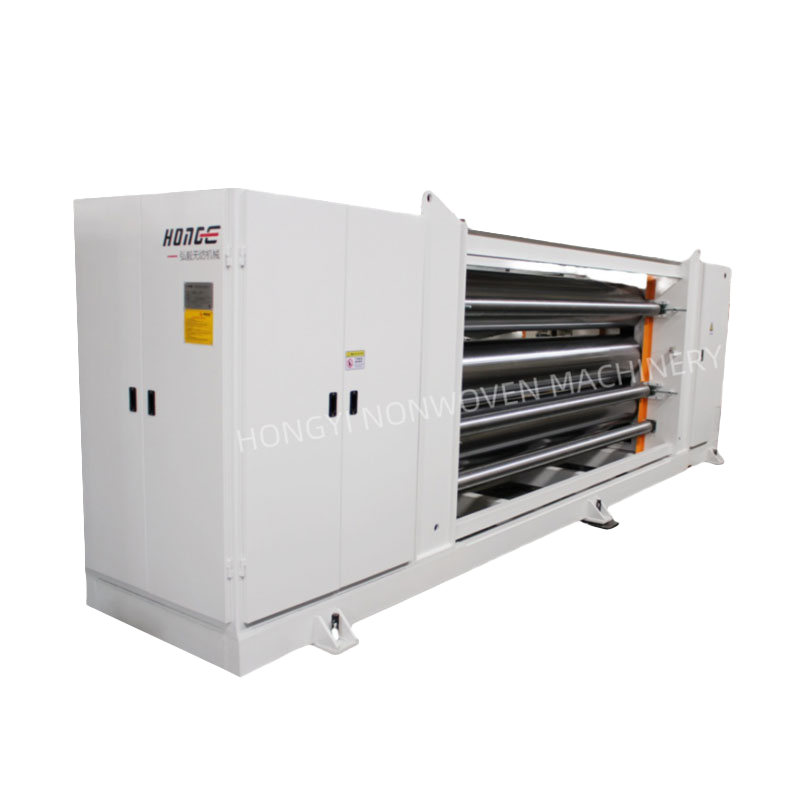
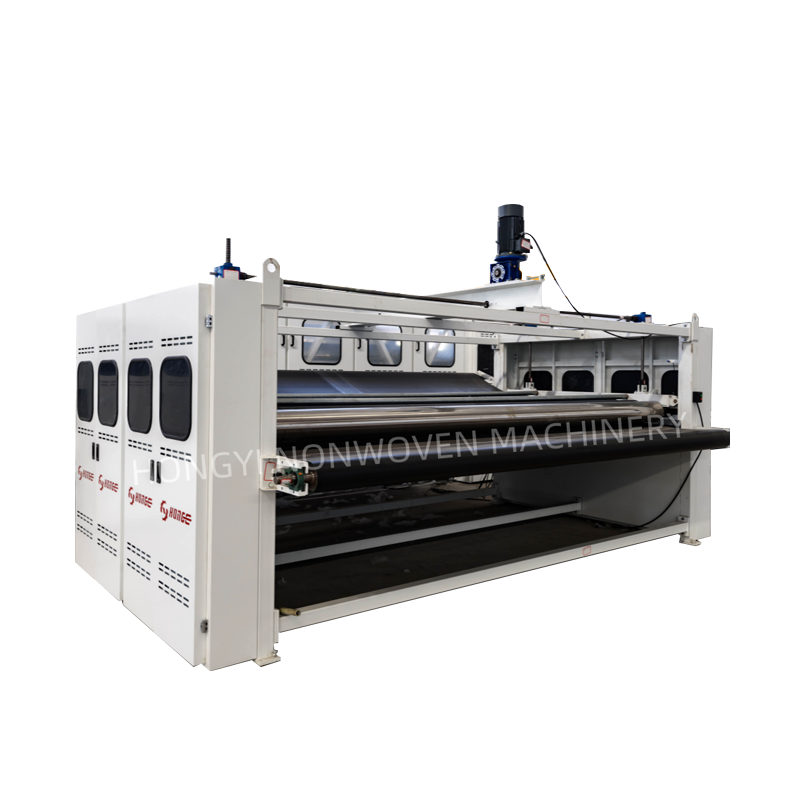
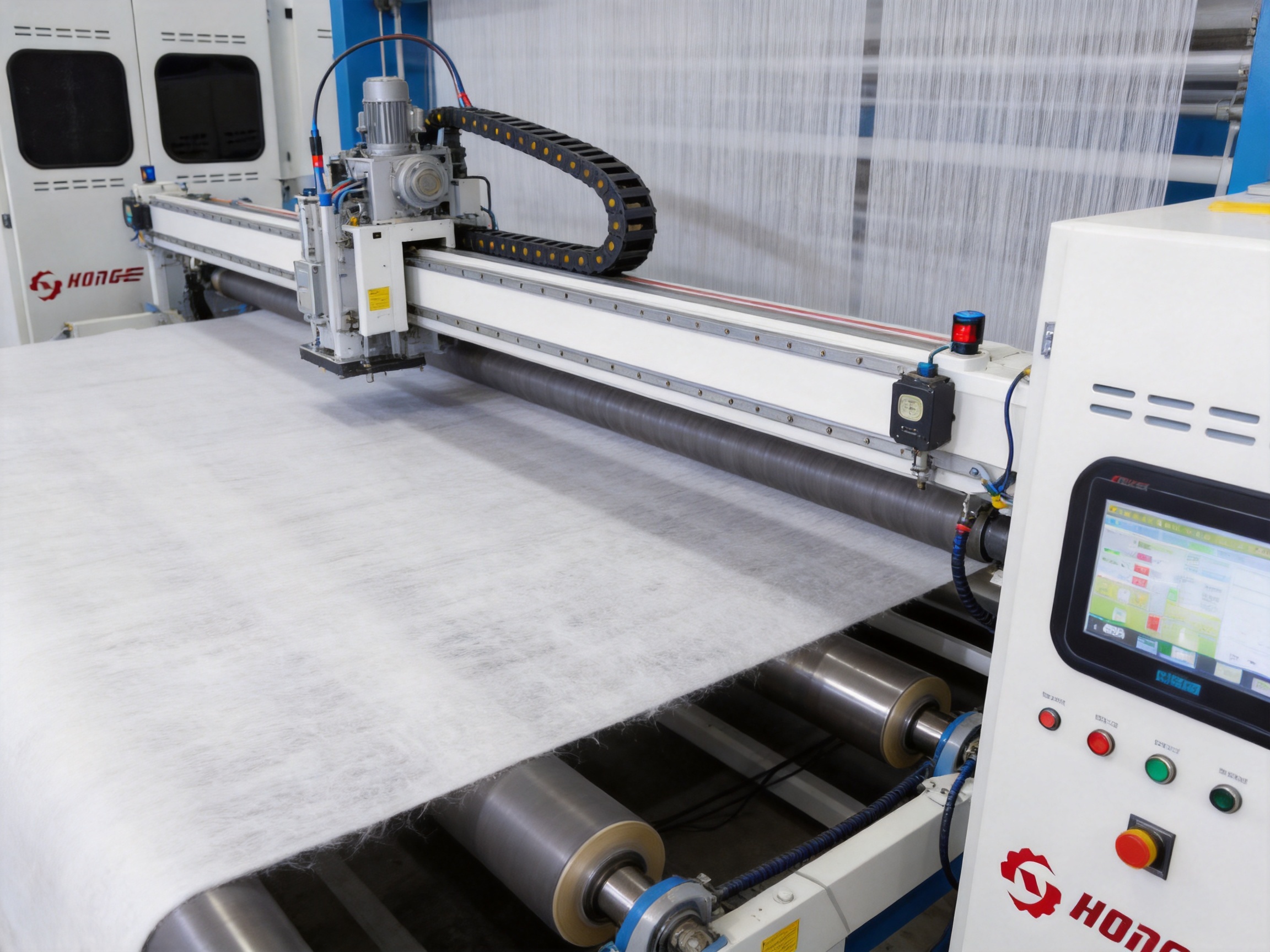
The HYPW Cross Lapper is designed to address these requirements with a high-speed, automated system for folding and layering fiber webs from a carding machine. It converts the incoming web into a wider fiber batt with a controlled width, weight, and thickness, then transfers the batt to the next production stage. The machine is suitable for nonwoven applications using polyester fiber, polypropylene staple fiber, and other compatible materials.
With a maximum output apron width of 7,000 mm and a maximum operating speed of 100 m/min, this cross lapper is intended for producers that require stable, high-volume production. Its reinforced frame, anti-static conveying curtains, synchronized transmission, servo or frequency-conversion drive, automatic correction system, and data-based compensation functions provide a combination of mechanical strength and process intelligence.
Rather than treating cross lapping as a simple reciprocating movement, the equipment coordinates web laying, apron motion, width control, tension management, and process data. This integrated approach helps manufacturers produce fiber batt with a smooth surface, neat edges, and improved uniformity.
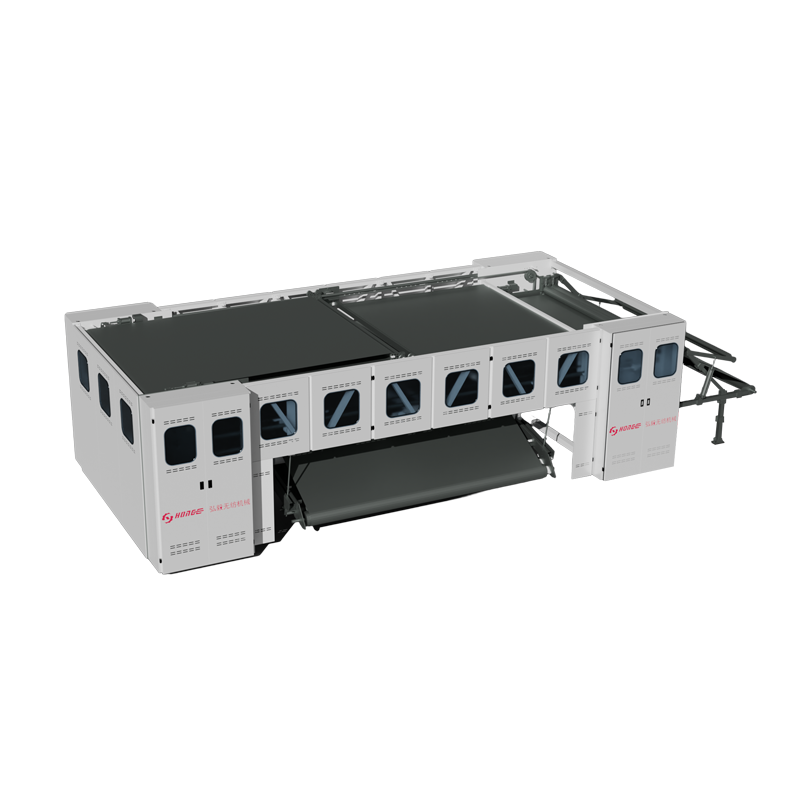
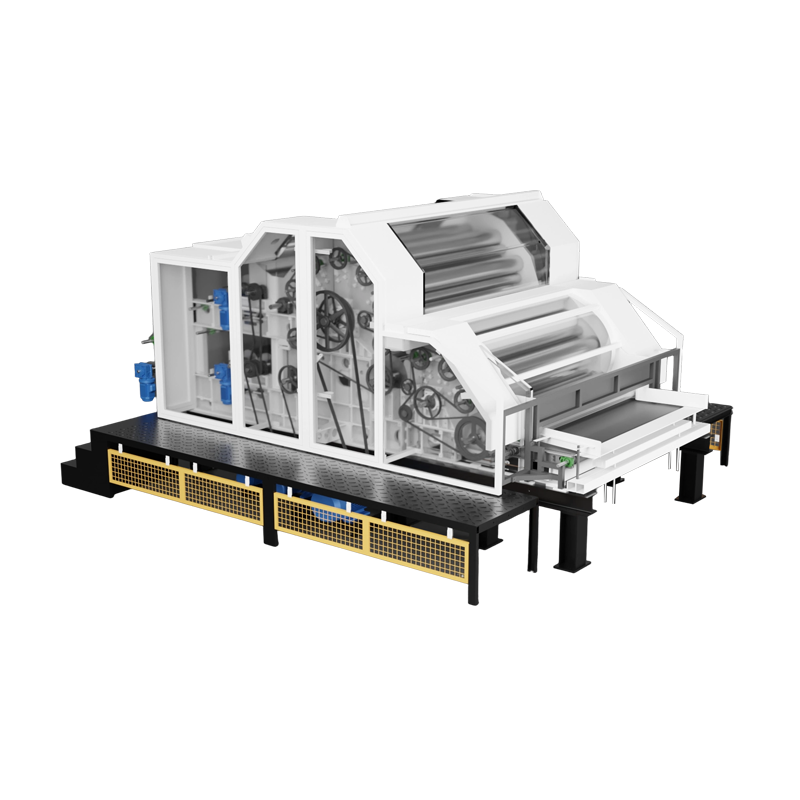
HYPW Cross Lapper
What Is a Cross Lapper?
A cross lapper is a web-forming machine installed after a carding machine in many nonwoven production lines. A carding machine separates, aligns, and forms fibers into a continuous web. This web is normally relatively narrow compared with the desired finished product width. The cross lapper receives the web, folds it transversely, and lays successive layers onto an output apron.
By placing multiple layers across the width of the output apron, the machine increases the batt width and builds the required basis weight and thickness. The resulting fiber batt can then be sent to a needle punching machine, thermal bonding oven, calender, heat-setting unit, or another downstream process.
The cross-lapping operation has a direct influence on the longitudinal and transverse properties of the final nonwoven fabric. The carded web generally has a higher degree of fiber orientation in the machine direction. Cross lapping distributes layers across the width and helps create a more balanced structure. The number of layers, overlap pattern, line speed, web width, and movement profile can be adjusted according to the product specification.
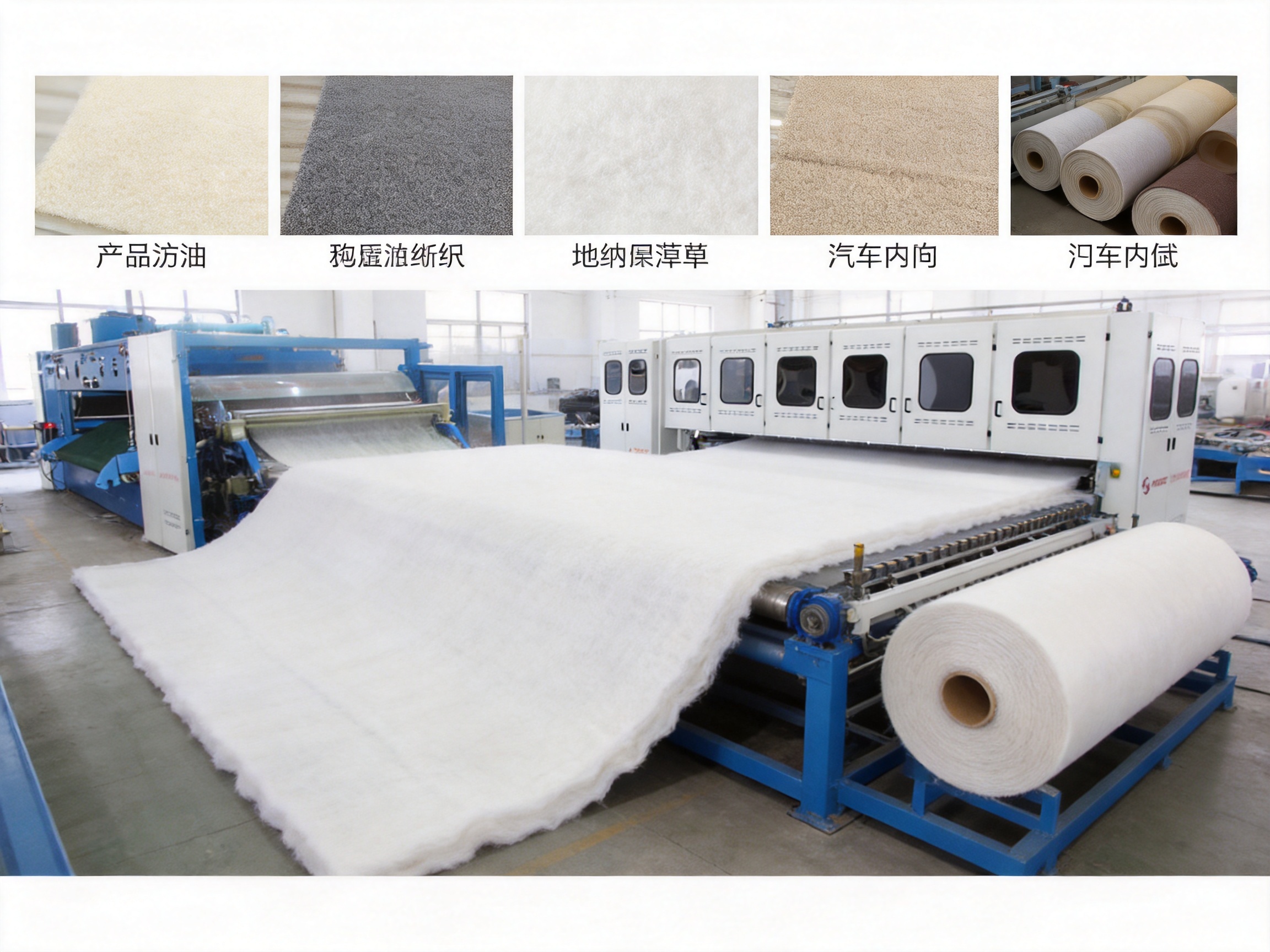
For products such as geotextiles, filtration materials, automotive interior components, carpets, felts, insulation, cleaning cloths, and other technical nonwovens, consistent web formation is essential. A small weight variation in the batt may become a visible or functional defect after needle punching or thermal consolidation. A reliable cross lapper therefore plays an important role in the whole production line, not merely as a transfer device but as a precision web-forming system.
Operating Principle of the HYPW Cross Lapper
The HYPW Cross Lapper receives a continuous fiber web from a carding machine through the input apron. The input width is designed to match the carding machine and can be configured according to the line arrangement. The web then passes through the lapping section, where reciprocating movement lays the web alternately across the output apron.
The output apron carries the layered fiber batt toward the next process. The relationship between input speed, laying speed, reciprocating speed, and output apron speed determines the final batt width, basis weight, and thickness. These movements are coordinated through the control system to reduce excessive tension and prevent unwanted stretching or breakage of the cotton or fiber layer.
The laying and reciprocating actions are controlled in segments. This segmented control allows the machine to manage the motion profile more precisely than a basic fixed-speed mechanism. Acceleration, deceleration, reversing, and synchronization can be adjusted to support stable operation at higher speeds.
The reciprocating transmission uses synchronous belt drive technology. A synchronous belt provides positive motion transmission with limited slippage and helps maintain a precise relationship between the drive motor and moving components. Compared with less accurate transmission arrangements, synchronized motion contributes to more consistent web placement and reduced variation across the batt.
After the fiber web has been laid into the required width and thickness, the output section transfers it forward, where it may be lightly compressed or guided before entering the next production procedure. The output batt is intended to have a smooth surface, high uniformity, and neatly formed edges.
Key Technical Specifications
The following table summarizes the main available specifications. Final values may vary according to the selected configuration, carding machine width, fiber type, production target, and customer requirements.
| Item | Specification |
|---|---|
| Machine model | HYPW |
| Machine type | Automatic cross lapper |
| Primary function | Folding and layering carded fiber web into a controlled-width and controlled-weight batt |
| Maximum input width | Up to 2,900 mm |
| Input apron width | Configured to match the carding machine |
| Output apron width | Approximately 3,000 mm to 7,000 mm |
| Maximum speed | Up to 100 m/min |
| Drive options | High-performance frequency-conversion drive or servo drive |
| Control system | PLC-based control with man-machine interface |
| Compatible fibers | Polyester fiber, polypropylene staple fiber, and other suitable staple fibers |
| Electrical supply | Commonly 380 V, 50 Hz; other configurations can be discussed |
| Certification | CE and ISO9001:2000 listed for the supplied equipment |
| Automation level | Automatic operation with alarm and monitoring functions |
| Configuration | Customizable according to customer requirements |
| Warranty information | One-year after-sales warranty stated for the equipment |
| Typical lead time | Approximately two to three months, subject to configuration and order conditions |
Reinforced Mechanical Construction
High-speed cross lapping places demanding requirements on the frame and moving assemblies. Every reversing movement generates dynamic forces. If the frame flexes, vibrates, or gradually loses alignment, the laying pattern may become inconsistent. Mechanical instability can also increase wear on bearings, belts, rollers, curtains, and guide components.
The HYPW Cross Lapper uses a reinforced frame constructed with 8 mm thick steel plates. This structure is intended to provide a stable foundation for the reciprocating and conveying systems. A rigid frame helps maintain alignment during continuous operation and supports reliable performance when the machine is operated at higher speeds.
The use of reinforced steel construction offers several practical benefits. It can reduce deformation caused by operating loads, improve the stability of the drive system, and support more accurate movement of the lapping unit. It also creates a stronger platform for installation and connection with the carding machine and downstream equipment.
Mechanical strength is particularly important in wide-width equipment. A cross lapper configured for an output width of up to 7,000 mm must maintain stable movement across a large working area. The reinforced structure helps the machine accommodate this width while preserving the accuracy required for uniform web deposition.
The curtain drive rollers are manufactured from seamless steel pipes. Special reinforcement is provided at the bearing ends, where the rollers experience concentrated loads. Reinforced bearing ends can help reduce the possibility of deformation and improve the service life of the roller assembly under continuous production conditions.
Anti-Static Conveying and Laying Curtains
Static electricity is a common issue in fiber processing. Friction between fibers, belts, rollers, and conveying surfaces can create electrostatic charges. Static may cause fibers to cling to machine components, disturb web transfer, attract dust, or create irregularities in the laid batt.
The HYPW Cross Lapper uses anti-static PVC curtains for conveying, folding, and compensation functions. These curtains are designed to support stable fiber movement while reducing the effects of static electricity. Their use is especially relevant when processing synthetic fibers such as polyester and polypropylene, which can exhibit electrostatic behavior under dry operating conditions.
The bottom belt is made from aluminum alloy. This construction provides a combination of low weight and structural rigidity. A lighter moving component can reduce the load on the drive system, while sufficient rigidity helps preserve the geometry of the output conveying surface.
An anti-static, high-strength carbon curtain is also used to help avoid stress deformation during cotton or fiber layer operation. The curtain must withstand repeated movement while maintaining its shape. If a curtain stretches unevenly, the web may be deposited with variations in overlap, width, or thickness. High-strength materials help maintain more consistent motion over extended production periods.
The conveying surfaces are important to the complete process because the fiber web is relatively delicate before consolidation. A surface that is too aggressive may disturb the web, while a surface with poor control may allow slippage or stretching. The selected curtain and belt arrangement is intended to transfer the web smoothly from the carding machine to the lapping and output sections.
Servo and Frequency-Conversion Drive Options
The drive system is one of the main differences between a conventional cross lapper and a modern high-performance unit. The HYPW model can use a high-performance frequency-conversion drive or a servo drive, depending on the required production configuration.
Frequency-conversion control allows motor speed to be adjusted according to process requirements. It supports smoother starting and stopping, more flexible production speed adjustment, and improved coordination between the cross lapper and connected machines. This is useful when the line processes different fiber types, basis weights, or product widths.
Servo drive technology offers a higher level of motion control. Servo systems can respond rapidly to command changes and accurately control position, speed, and acceleration. In a reciprocating cross lapper, this can improve the precision of reversing movements and help maintain the programmed laying pattern.
The drive system is designed for stable operation and fast response. Fast response is important because the lapping carriage must change direction repeatedly without creating excessive shock or web tension. Controlled acceleration and deceleration help reduce mechanical stress while supporting consistent web placement.
Compared with a simple mechanical transmission operating at a fixed speed, an electronically controlled drive can provide greater flexibility. It allows production parameters to be stored or adjusted through the control interface, making it easier for operators to change product specifications without extensive mechanical intervention.
Digital Control and Process Compensation
The HYPW Cross Lapper uses a data control system to support the uniformity of the output batt. Operators can input process data and set operating parameters through a man-machine interface. This interface provides a practical way to adjust production conditions and monitor the machine during operation.
Important process parameters may include the required output width, lapping pattern, operating speed, compensation values, and synchronization settings. The exact available parameters depend on the final machine configuration and control program. By placing these functions within a digital control system, the operator can manage the machine through a more consistent procedure.
The output uniformity can be fully compensated according to actual process requirements. In nonwoven production, material characteristics and line conditions may vary. Fiber length, crimp, moisture, static charge, carding performance, and production speed can all influence the web. Compensation functions help the operator respond to these changes and optimize the distribution of the batt.
The machine also uses a unique corrective control principle to support web alignment and output stability. Correction is important when the web or apron position deviates from the intended path. Without correction, small deviations could accumulate and lead to uneven edges or misalignment with downstream equipment.
Automatic detection is provided for the output bottom curtain width. This function helps monitor the actual operating condition and can provide useful information for production control and maintenance. Automatic detection reduces reliance on manual measurement and can help identify abnormal conditions at an earlier stage.
Abnormal fault alarms are generated automatically. An alarm system helps operators identify equipment problems and respond more quickly. Depending on the configuration, alarms may relate to drive status, sensor signals, movement conditions, safety circuits, or other monitored functions. Early notification can reduce the risk of extended downtime and protect the web from being processed under unsuitable conditions.
Uniformity and Product Quality Advantages
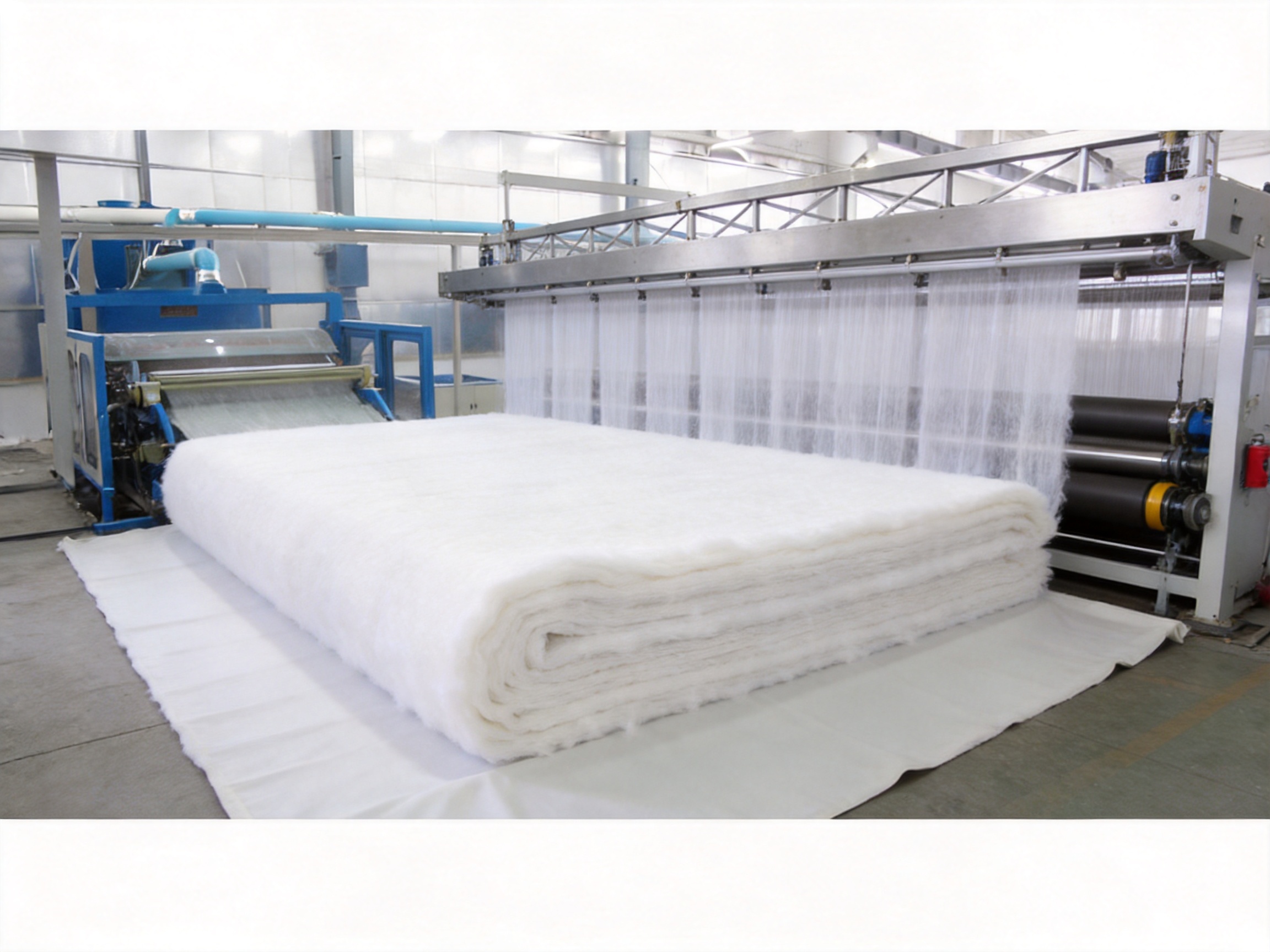
The primary performance advantage of a cross lapper is its ability to form a uniform fiber batt. The HYPW machine is designed to fold and pave the carded web evenly into a controlled width and thickness. This directly supports the quality requirements of downstream consolidation processes.
A uniform batt has a more consistent basis weight across its width. This can help produce nonwoven fabric with more stable thickness, strength, density, and appearance. For geotextiles, consistent basis weight can contribute to predictable filtration and separation performance. For automotive materials, it can help improve surface consistency and acoustic or cushioning properties. For carpets and felts, it can support more regular density and better visual quality.
The output layer is designed to have a smooth surface. A smooth surface helps downstream machines process the batt with fewer disturbances. It may also reduce visible defects after needle punching, thermal bonding, or other finishing procedures.
The product edges are formed neatly and can be trimmed accurately. Clean edges are valuable when the nonwoven material must be slit, laminated, sewn, molded, or installed in a specified width. Better edge control can also reduce material waste and simplify downstream cutting.
Stable web formation helps protect the fiber structure. The synchronized input and output control is designed to avoid excessive stretching or breakage of the fiber layer. If the web is stretched during transfer, the final batt may have reduced local density or irregular fiber orientation. Coordinated movement supports a more controlled transition between machines.
The equipment is therefore advantageous over basic cross lapping arrangements that rely on less precise speed coordination, manual correction, or fixed mechanical settings. Its combination of motion control, compensation, automatic detection, and structural reinforcement is intended to provide more repeatable production results.
Advantages Compared with Conventional Cross Lappers
Higher Production Potential
With a maximum speed of 100 m/min, the HYPW Cross Lapper is designed for higher-speed operation. Actual output depends on the fiber material, batt weight, width, lapping pattern, carding capacity, and downstream process, but the rated speed provides a basis for efficient production planning.
Higher speed can improve production capacity when the carding machine and downstream equipment are properly matched. It may also help manufacturers respond to larger orders without adding a complete additional line. However, speed must always be balanced with web uniformity and equipment stability. The machine’s reinforced frame and controlled drive system are intended to support this balance.
Wider Output Range
The output apron width can be configured from approximately 3,000 mm to 7,000 mm. This range allows the equipment to serve both medium-width and wide-width nonwoven production lines. The output width can be selected according to the intended product and the requirements of the downstream needle punching or thermal bonding equipment.
A wide output range is an advantage for manufacturers producing multiple product categories. It can also support future expansion if the producer plans to increase working width or enter wider technical textile markets.
More Precise Motion Control
Servo or frequency-conversion drive technology provides more accurate control than a simple fixed-speed system. Controlled acceleration, deceleration, and reversing help reduce shock and improve the consistency of web placement.
The use of synchronous belt transmission in the reciprocating movement also supports accurate synchronization. This is particularly useful when the lapping pattern must be repeated consistently over long production periods.
Improved Adaptability
Different products require different batt weights, thicknesses, widths, and densities. A machine with adjustable digital parameters can accommodate these changes more conveniently than a system that depends mainly on manual mechanical adjustments.
The HYPW Cross Lapper is configurable according to customer needs. The input apron can be matched to the carding machine, and the overall system can be integrated into different line designs. This flexibility is useful for producers working with polyester, polypropylene, and other staple fiber blends.
Reduced Risk of Web Damage
The synchronized control of input and output movement is intended to reduce stretching and breakage of the fiber web. Anti-static curtains also help manage fiber behavior during transfer. These features can reduce the risk of defects caused by unstable web handling.
Better Operator Information
The man-machine interface gives operators a centralized method for setting parameters and entering process data. Automatic fault alarms and output curtain width detection provide additional operating information. These functions can make the machine easier to supervise than equipment that offers limited feedback.
Manufacturing Strengths and Engineering Approach
The performance of a cross lapper depends not only on its design concept but also on how the equipment is manufactured, assembled, tested, and integrated. Changshu Hongyi Nonwoven Machinery Co., Ltd. has more than 20 years of experience in the nonwoven machinery field. This experience covers both individual machines and complete nonwoven production lines.
The company supplies equipment for needle-punched geotextiles, nonwoven carpets, airlaid waste felt, automotive interior materials, cleaning cloths, wool felt, jute felt, and other products. This broad application background is valuable when configuring a cross lapper because web-forming requirements differ according to fiber type, product density, consolidation method, and final use.
Experience with complete production lines also supports better machine integration. A cross lapper must communicate mechanically and electrically with the carding machine before it and the needle punching, thermal bonding, or other equipment after it. Correct matching of width, speed, transfer height, control signals, and material flow is essential for a stable line.
The company emphasizes high efficiency, reliability, quality, advanced technology, precision engineering, automatic controls, energy-saving capabilities, and customization. These priorities are reflected in the HYPW design through reinforced structural components, controlled drives, data-based adjustment, and automatic monitoring functions.
Core components listed for the machine include PLC, bearings, gearbox, motor, pressure vessel, and gears. These components are central to reliable industrial operation. Proper component selection, accurate installation, alignment, lubrication, and commissioning all influence machine service life.
Quality management is supported by ISO9001:2000 certification information, while CE certification is listed for the equipment. Customers should confirm the exact certification documents and applicable electrical and safety standards for the specific configuration and destination market before purchase.
The company has supplied machinery to more than 20 countries, including markets in Latin America, Europe, Africa, Southeast Asia, and other regions. International project experience can help with export packing, installation coordination, electrical adaptation, technical communication, and after-sales support.
Production and Assembly Considerations
Manufacturing a wide-width cross lapper requires attention to dimensional accuracy. The frame, roller supports, aprons, drive components, sensors, and guide systems must be assembled according to a controlled reference line. Misalignment in one section may affect the entire web path.
Large structural assemblies should be inspected for flatness, squareness, and connection accuracy before final installation. Roller alignment is particularly important because the web and curtains depend on consistent roller geometry. Bearing housings and reinforced roller ends must be installed without excessive stress.
The reciprocating system requires careful adjustment of synchronous belts, pulleys, tensioning devices, and movement limits. Belt tension that is too low may cause inaccurate transmission, while excessive tension can increase bearing and motor loads. Correct commissioning procedures are therefore necessary before the machine enters continuous production.
Electrical and control-system assembly is equally important. Sensors must be positioned accurately, control cabinets must be wired clearly, and the PLC program must correspond to the actual machine configuration. Emergency stops, protective devices, alarms, and interlocks should be tested systematically during commissioning.
The company’s ability to customize configurations allows the equipment to be adapted to the customer’s existing line. Before manufacture, technical details such as carding machine width, desired output width, fiber type, target basis weight, line speed, downstream equipment, plant layout, voltage, and control requirements should be confirmed.
Application Areas
Needle-Punched Geotextiles
Geotextile production often requires wide, heavy, and uniform fiber batt. The cross lapper forms the batt before needle punching, helping create the thickness and basis weight needed for separation, filtration, drainage, protection, or reinforcement applications.
Uniform web distribution is important because geotextiles may be installed over large areas and must perform consistently under soil, aggregate, water, or traffic loads. The available wide output configuration makes the machine suitable for producers targeting broad geotextile products.
Nonwoven Carpets and Felts
Carpet underlay, felt, floor covering substrates, and related products require stable thickness and even density. The smooth output batt and controlled edges can support subsequent needle punching, adhesive application, coating, or cutting processes.
When producing wool felt, jute felt, or blended fiber products, the lapping pattern can help create a suitable fiber arrangement for consolidation. Final settings should be determined through trials because natural fibers may behave differently from synthetic staple fibers.
Automotive Interior Materials
Automotive interior components may include trunk liners, floor coverings, insulation layers, acoustic materials, and molded fiber products. These applications often require controlled weight, thickness, resilience, and surface quality.
A cross lapper with accurate web distribution can provide a stable starting structure for needle punching, thermal bonding, resin treatment, lamination, or molding. The appropriate configuration depends on the specific fiber blend and final component design.
Thermal Bonded Wadding
For thermal bonding lines, the cross lapper forms a batt that can enter a thermal bonding oven or heat-setting unit. Uniformity is essential because the thermal process must consolidate the material consistently across the working width.
Polyester and polypropylene staple fibers may be used in suitable product designs. The thermal bonding temperature, residence time, air circulation, and fiber blend must be selected separately from the cross-lapping settings.
Cleaning Cloths and Industrial Nonwovens
Cleaning cloths and industrial nonwovens may require a specific combination of absorbency, strength, flexibility, and thickness. A controlled batt structure helps downstream needle punching or bonding processes produce repeatable fabric properties.
Energy and Operational Efficiency
Production efficiency is influenced by more than rated speed. A stable machine can reduce stoppages, minimize web waste, and simplify changeovers. Automatic control functions help operators manage production parameters consistently, while fault alarms can shorten troubleshooting time.
The use of servo or frequency-conversion drives can also support efficient power management by allowing the machine to operate at the required speed rather than continuously running at a fixed maximum. Actual energy consumption depends on motor size, production speed, web weight, operating hours, and the complete line configuration.
The aluminum-alloy bottom belt contributes to a lighter conveying structure. Lower moving mass can help reduce the energy required for acceleration and deceleration, especially in systems with repeated movement. At the same time, the belt must retain sufficient rigidity for stable web transport.
Efficiency should be evaluated across the complete line. The cross lapper, carding machine, needle punching machine, thermal bonding unit, fans, compressors, and auxiliary equipment must be matched. A cross lapper operating faster than the carding or consolidation equipment will not necessarily increase total production.
Installation and Line Integration
Installation should begin with a review of the plant layout and production-line sequence. Adequate space is needed for the machine frame, moving components, control cabinet, operator access, maintenance areas, and material flow. The output direction and connection height must match the next machine.
The input apron width should correspond to the carding machine. The transfer between machines must be smooth, without a gap or height difference that causes the web to sag, fold, or stretch. Electrical signals for start, stop, speed synchronization, and fault status should be coordinated between the machines.
The foundation must be sufficiently level and stable. Wide equipment is sensitive to installation accuracy, so the machine should be leveled and aligned according to the supplier’s technical instructions. After mechanical installation, the aprons, curtains, rollers, sensors, drive belts, and safety devices should be inspected before trial operation.
Commissioning should normally proceed in stages. First, the machine can be operated without material at low speed to verify movement direction, reversing action, belt tracking, sensor response, and safety functions. The next stage can use a small amount of fiber at reduced speed. After the web path is confirmed, speed and production parameters can be increased gradually.
Customers should provide accurate information before manufacture, including local voltage and frequency, carding machine details, output width, target production capacity, fiber types, product range, downstream equipment, environmental conditions, and preferred automation functions. This information allows the supplier to prepare a more suitable configuration.
Maintenance Recommendations
Regular maintenance is essential for preserving web uniformity and protecting the machine’s moving components. Operators should inspect the curtains, belts, rollers, bearings, gearboxes, motors, sensors, and structural connections according to a planned schedule.
The conveying and laying curtains should be checked for wear, contamination, stretching, cracks, or tracking problems. A damaged or uneven curtain can affect web transfer and may produce irregular layers. Cleaning procedures should be selected according to the curtain material and the type of fiber being processed.
Synchronous belts should be inspected for tension, alignment, tooth wear, and damage. Belt guards should remain properly installed during operation. Any unusual noise, vibration, or movement should be investigated rather than ignored.
Rollers should be checked for surface condition and alignment. The bearing ends and bearing housings require particular attention because they support the rotating load. Lubrication should follow the recommended schedule and lubricant specification.
The PLC, sensors, control cabinet, and alarm system should be kept clean and protected from excessive fiber accumulation. Operators should record alarms and corrective actions. Repeated alarms may indicate an underlying mechanical, electrical, or process problem that requires technical inspection.
The frame and fasteners should be inspected periodically. High-speed reciprocating motion can gradually loosen connections if they are not maintained correctly. Any sign of structural movement, abnormal vibration, or misalignment should lead to a controlled shutdown and inspection.
How to Select the Correct Configuration
The first selection factor is the required finished product width. The cross lapper must provide an output apron width that matches the product and downstream equipment. Producers should consider not only the current width but also possible future products.
The second factor is carding machine width. The input apron must accept the carded web without compression, excessive overlap, or unsupported edges. The carding machine’s actual production capacity should be compared with the cross lapper’s maximum handling speed.
Fiber type is another important consideration. Polyester and polypropylene staple fibers may have different crimp, friction, static, and web-forming behavior. Natural fibers such as wool or jute can also require different handling conditions. Trials and process consultation are recommended when introducing a new material.
The required batt weight and thickness affect the lapping pattern and production speed. Heavy products may require slower operation or a different number of layers, while lightweight products may require careful tension control to prevent disturbance.
Customers should also decide whether a frequency-conversion drive or servo drive is more appropriate. A frequency-conversion system may be suitable for many standard production requirements, while a servo system may be preferred when precise motion control, rapid response, and advanced product flexibility are priorities.
Finally, the control and communication requirements of the complete line should be specified. The machine can be customized according to customer needs, but customization is most effective when the technical requirements are defined clearly before production begins.
Recommended Production Workflow
A typical production workflow begins with fiber opening and blending. The selected fibers are opened, mixed, and prepared for carding. The carding machine then separates and aligns the fibers, producing a continuous web with the required preliminary structure.
The web enters the HYPW Cross Lapper through the input apron. The machine folds and lays the web transversely, building the required batt width and thickness. The PLC and drive system coordinate the movement of the input, lapping, compensation, and output sections.
The layered batt then moves to the selected consolidation process. In a needle-punched line, needles entangle the fibers mechanically. In a thermal bonding line, heat activates bonding fibers or softens thermoplastic components. Other lines may use adhesives, calendering, hydroentanglement, or combined processes.
After consolidation, the material may be heat set, calendered, coated, slit, wound, cut, or packed. The quality of the final fabric depends on every stage, but the cross lapper has a particularly strong influence on the initial weight and thickness distribution.
Quality control should include checks of web width, batt weight, thickness, edge condition, surface appearance, and line speed. These measurements can be compared with control-system data to identify process drift and optimize settings.
Safety and Operator Training
Cross lappers contain moving belts, rollers, curtains, reversing assemblies, and drive components. Operators must be trained in safe startup, normal operation, emergency stopping, cleaning, and maintenance procedures.
Protective guards and safety devices should not be removed or bypassed. Access to moving areas should be restricted during operation. Before maintenance, the equipment must be stopped, isolated from power, and secured against unexpected movement according to the plant’s lockout and safety procedures.
Operators should understand the meaning of alarms and know when to stop the line. A minor web problem may be corrected through an approved operating adjustment, while abnormal noise, vibration, belt damage, or repeated electrical alarms should be referred to qualified maintenance personnel.
Training should cover both machine operation and process control. Operators need to understand how changes in speed, width, layer count, compensation, and tension may affect the finished batt. Well-trained personnel can make more effective adjustments and reduce unnecessary material waste.
Purchasing and Project Support
As a China-based nonwoven machinery manufacturer and supplier, Changshu Hongyi Nonwoven Machinery Co., Ltd. provides both individual machines and complete production-line solutions. This allows customers to purchase a cross lapper as part of a new line or integrate it into an existing nonwoven project.
Customization is available for configuration, color, electrical supply, input width, output width, and related requirements. Customers should confirm all customized items in the technical agreement, including performance targets, scope of supply, spare parts, installation responsibilities, training, acceptance testing, and warranty conditions.
The stated after-sales service includes a one-year warranty. Video outgoing inspection is also listed as provided. Pre-shipment inspection records, photographs, test videos, electrical documentation, operation manuals, spare-parts lists, and commissioning procedures can be requested as part of the project documentation.
Export packing may use nude packing or PE film, depending on the component and shipping arrangement. The appropriate packing method should be reviewed for the destination, transport route, storage conditions, and moisture protection requirements.
A typical lead time is stated as two to three months, although the actual schedule depends on machine configuration, customization, production workload, inspection, and shipping arrangements. Early technical confirmation is recommended for customers with fixed installation deadlines.
Why Engineering Experience Matters
A cross lapper is most effective when it is selected as part of a process rather than as an isolated machine. The correct output width, drive capacity, control logic, and web-transfer arrangement depend on the carding and consolidation equipment around it.
A supplier with experience in complete nonwoven lines can evaluate these relationships more effectively. Knowledge of needle-punched geotextiles, carpets, felts, automotive materials, thermal-bonded wadding, and cleaning cloths provides a broader understanding of how different products behave during web formation.
Changshu Hongyi’s more than 20 years of experience in nonwoven machinery supports this type of engineering approach. Its product range includes carding machines, needle punching machines, airlaid machines, ironing machines, thermal bonding oven machines, and complete production lines. This background enables the company to discuss the cross lapper in relation to the entire manufacturing process.
International supply experience is also important. Equipment exported to different countries may require changes in voltage, documentation, control standards, packing, operator training, and spare-parts planning. A supplier familiar with global projects can help reduce communication and integration risks.
Q&A About the Cross Lapper
What is the main function of this machine?
The main function is to fold and layer the fiber web received from a carding machine. It forms the web into a specified width, weight, and thickness before transferring the batt to a downstream process such as needle punching or thermal bonding.
What is the maximum output width?
The available output apron width is approximately 3,000 mm to 7,000 mm, with a maximum listed width of 7,000 mm. The final width should be selected according to the product specification and the downstream machine.
What is the maximum operating speed?
The listed maximum speed is 100 m/min. Actual production speed depends on web weight, fiber type, batt width, lapping pattern, carding capacity, downstream processing, and the required quality level.
What materials can be processed?
The machine is listed for polyester fiber, polypropylene staple fiber, and other suitable staple fibers. Wool, jute, blends, and other materials may require process evaluation and configuration adjustments.
Can the input width be customized?
Yes. The input apron width is designed to match the carding machine. Customers should provide the carding machine’s working width and web-transfer details during the technical design stage.
Does the machine use servo control?
The machine can use a high-performance frequency-conversion drive or a servo drive. The appropriate choice depends on the required precision, production range, speed response, budget, and control architecture.
How does the machine improve batt uniformity?
It combines segmented web-laying control, synchronized input and output movement, corrective control, data-based compensation, stable reciprocating transmission, and automatic monitoring. These functions help distribute the web evenly and reduce stretching, edge irregularity, and thickness variation.
Why are anti-static curtains important?
Anti-static curtains help reduce the effects of electrostatic charge generated during fiber processing. They can support smoother web transfer, reduce fiber adhesion to machine surfaces, and help maintain more stable batt formation, particularly when processing synthetic fibers.
What type of control system is provided?
The equipment uses a PLC-based control system with a man-machine interface. Operators can set parameters, input process data, monitor machine operation, and receive automatic fault alarms through the control system.
Is the output width detected automatically?
Automatic detection of the output bottom curtain width is listed as one of the machine functions. This helps monitor the operating condition and provides process information for adjustment and supervision.
Can the cross lapper be installed in an existing line?
It may be integrated into an existing line if the carding machine, downstream equipment, plant layout, electrical system, transfer height, and control signals are compatible. A technical review is needed before confirming the installation.
What warranty is provided?
The listed after-sales service includes a one-year warranty. The exact warranty scope, exclusions, response process, and parts coverage should be confirmed in the purchase agreement.
What information should be supplied for a quotation?
Customers should provide the desired output width, carding machine width, target speed, fiber materials, product type, batt weight, batt thickness, downstream process, plant voltage, control preferences, layout constraints, and delivery destination.
How long is the production lead time?
The stated lead time is approximately two to three months. The actual schedule depends on the machine specification, customization, factory production plan, testing, and shipping conditions.
Conclusion
The HYPW Cross Lapper is a high-speed web-forming machine developed for manufacturers that need stable, uniform, and flexible batt production. Its role is to transform the narrow carded web into a controlled-width layered batt suitable for needle punching, thermal bonding, heat setting, and other nonwoven processes.
Its main advantages include a reinforced 8 mm steel frame, seamless steel curtain drive rollers with reinforced bearing ends, anti-static and high-strength curtains, an aluminum-alloy bottom belt, synchronous belt transmission, servo or frequency-conversion drive options, PLC control, automatic fault alarms, corrective control, data-based compensation, and automatic output-width detection.
With an output width of approximately 3,000 mm to 7,000 mm and a maximum listed speed of 100 m/min, the machine can serve a broad range of nonwoven applications. Its customizable configuration allows it to be matched with different carding machines, fiber materials, production targets, electrical systems, and downstream processes.
The equipment’s value is strengthened by the manufacturer’s experience in nonwoven machinery and complete production-line engineering. More than 20 years of industry experience, international supply capability, product-line knowledge, automatic control expertise, and customization support provide a practical foundation for customers planning new installations or upgrading existing lines.
For the best result, buyers should evaluate the cross lapper together with the entire production process. Correct matching of carding capacity, output width, consolidation speed, fiber properties, control signals, and plant layout will help the machine achieve its intended performance and contribute to a more efficient and reliable nonwoven production line.
References
1. Product technical information for the HYPW Cross Lapper, including operating functions, construction features, control functions, and listed specifications.
2. Nonwoven web-forming process principles, including carding, cross lapping, batt formation, and downstream consolidation.
3. General industrial guidance on servo drives, frequency-conversion drives, synchronous belt transmission, and automated PLC control.
4. General maintenance principles for nonwoven machinery, including belt inspection, roller alignment, bearing care, sensor cleaning, and safety procedures.
5. Manufacturer information regarding nonwoven machinery production, complete production lines, international supply experience, customization, warranty, and quality management.