

Content
- 1 1. The Role of Pneumatic Feeding in Nonwoven Production
- 2 2. Product Overview and Operating Principle
- 3 3. Main Technical Characteristics
- 4 4. Product Specifications
- 5 5. Advantages Compared with Conventional Mechanical Feeding
- 6 6. Applications in Nonwoven Manufacturing
- 7 7. Manufacturing and Engineering Strengths
- 8 8. Manufacturing Process and Quality-Control Considerations
- 9 9. Installation, Commissioning, and Maintenance
- 10 10. How the Feeder Improves Overall Production Efficiency
- 11 11. Selecting the Correct Configuration
- 12 12. Why Choose a Specialized Nonwoven Machinery Manufacturer?
- 13 13. Customer Support and Commercial Information
- 14 14. Frequently Asked Questions
- 14.1 Q1. What is the primary function of the pneumatic feeder?
- 14.2 Q2. Can the feeder process recycled fibers?
- 14.3 Q3. Is a belt weigher included as standard?
- 14.4 Q4. What are the common working widths?
- 14.5 Q5. What production capacity can the machine achieve?
- 14.6 Q6. Can the feeder feed an oven directly?
- 14.7 Q7. How does the machine compare with a basic mechanical hopper?
- 14.8 Q8. What electrical supply is required?
- 14.9 Q9. What is the warranty period?
- 14.10 Q10. How long is the delivery period?
- 14.11 Q11. What maintenance does the machine require?
- 14.12 Q12. Can the machine be integrated into an existing production line?
- 15 15. Conclusion
- 16 References
- 17 Product: HYQY Pneumatic Feeder
In modern nonwoven manufacturing, stable fiber preparation and accurate feeding are essential to product quality. Even when opening, blending, carding, and bonding equipment are well designed, an unstable feeding stage can create uneven web weight, irregular thickness, poor cross-direction uniformity, and unnecessary production waste. A pneumatic feeder is designed to solve this critical problem by combining controlled air movement, intermediate fiber storage, adjustable pressure, and accurately regulated delivery.
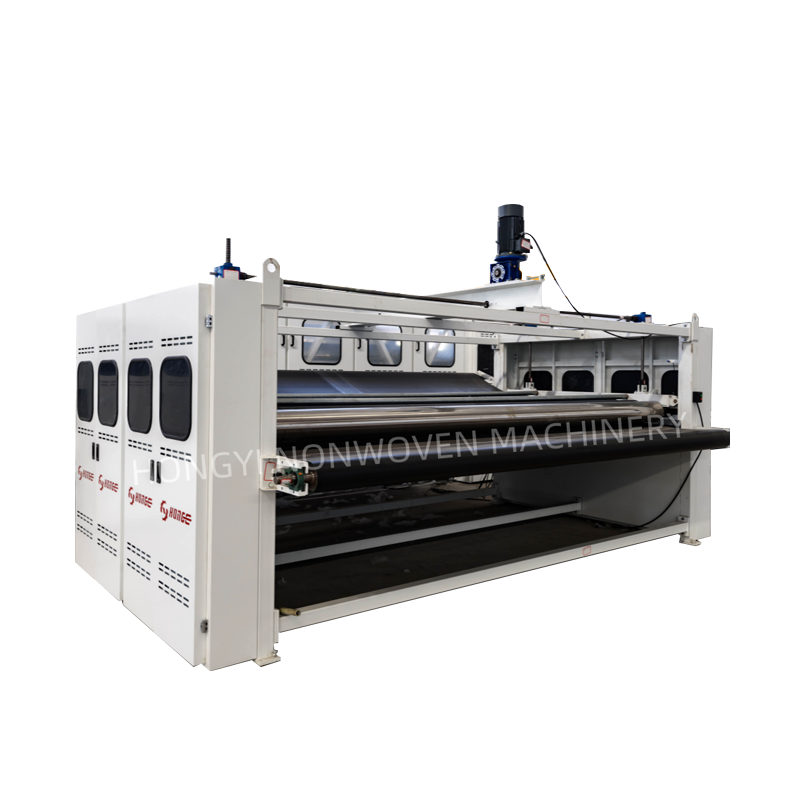
The HYQY Pneumatic Feeder is developed for nonwoven production lines that require consistent fiber distribution before carding, direct web formation, oven feeding, or other bonding processes. It receives opened and blended fibers, temporarily stores and mixes them, and then forms an even fiber layer for the next production stage. Its air-pressure feeding principle supports stable cross-direction distribution while allowing operators to adjust output thickness and feeding speed according to the required product specification.
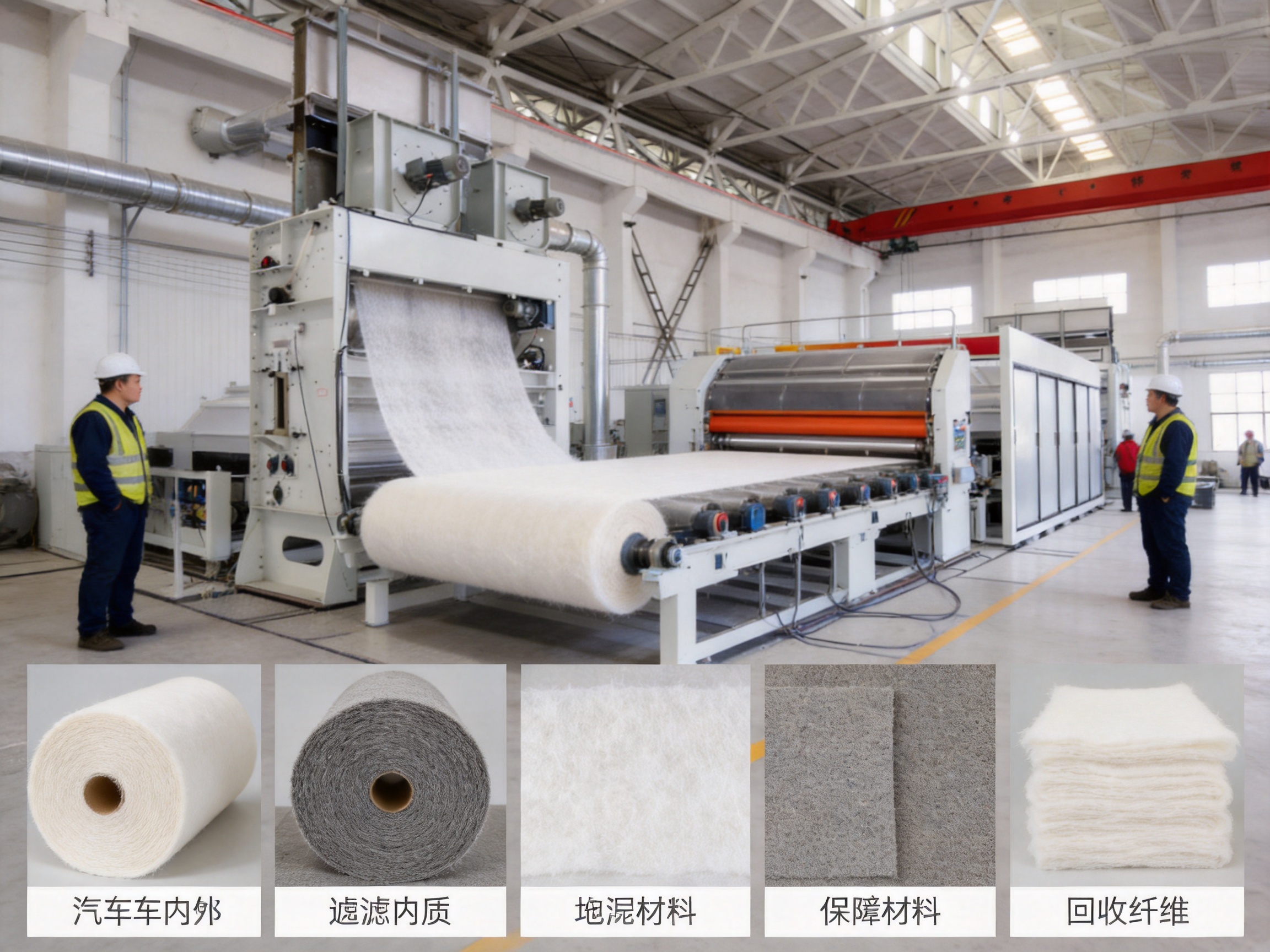
Designed for virgin fibers, recycled fibers, long fibers, short fibers, and commonly used PET fibers, the machine can be integrated into different nonwoven manufacturing configurations. It is suitable for manufacturers producing automotive interior materials, geotextiles, filtration materials, thermal-bonded wadding, carpets, cleaning cloths, insulation products, and other fiber-based materials.
1. The Role of Pneumatic Feeding in Nonwoven Production
A nonwoven production line depends on the controlled movement of loose fibers through several stages. Fibers may first pass through opening and blending equipment, where compressed fiber tufts are separated and mixed. After that stage, the material must be delivered evenly to a carding machine or a web-forming and bonding system.
This transfer stage is more demanding than simple mechanical conveying. Loose fibers have different lengths, densities, moisture levels, and surface characteristics. Some fibers flow easily, while others tend to form clumps or bridge inside a hopper. Recycled fibers may contain irregular tufts, and short fibers may be more sensitive to air velocity and pressure. If the material is fed unevenly, the final web may show visible or hidden variations in basis weight.
A pneumatic feeder addresses these challenges by using controlled air flow to guide the fibers. Instead of relying only on a mechanical conveyor or an uncontrolled storage hopper, the system creates a managed environment in which fiber movement, residence time, storage level, and delivery rate can be adjusted. This provides a more stable material flow to the downstream equipment.
The feeder can perform several related functions:
• It receives opened and blended fibers from the upstream opening and blending system.
• It stores a controlled quantity of fibers in an enclosed upper and lower chamber.
• It uses air flow to guide and distribute fibers across the working width.
• It creates a relatively even fiber batt or web layer.
• It supplies carding machines with a stable and continuous fiber feed.
• It can feed ovens or other bonding systems when direct web formation is required.
• It can be equipped with a belt-weighing system to support weight control in both cross-machine and machine directions.
• It provides adjustable output thickness and feeding speed for different product requirements.
The result is a more controlled transition between fiber preparation and web formation. This makes the pneumatic feeder an important component rather than a simple auxiliary conveyor.
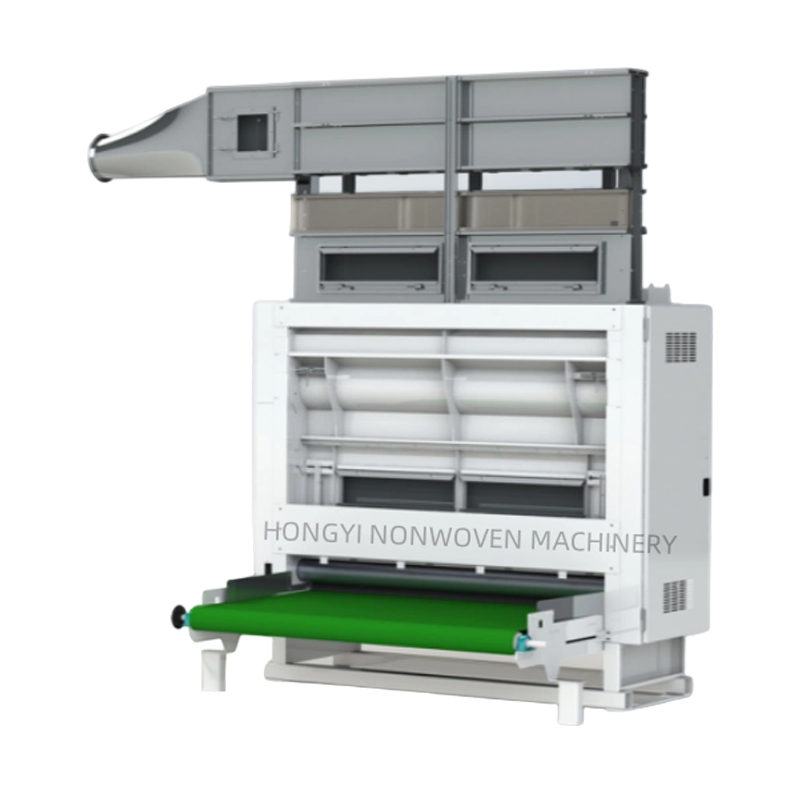
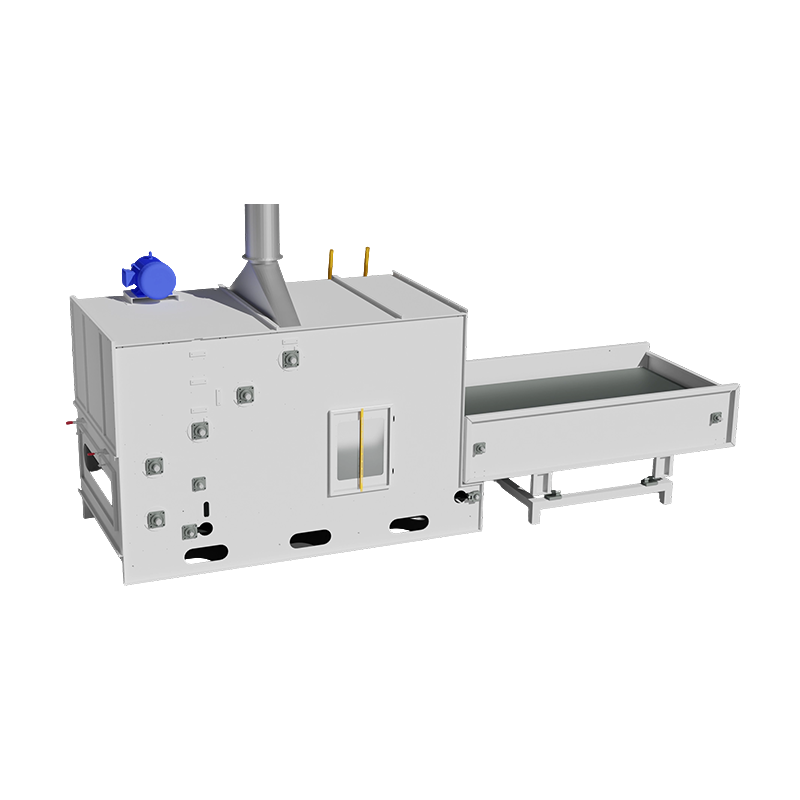
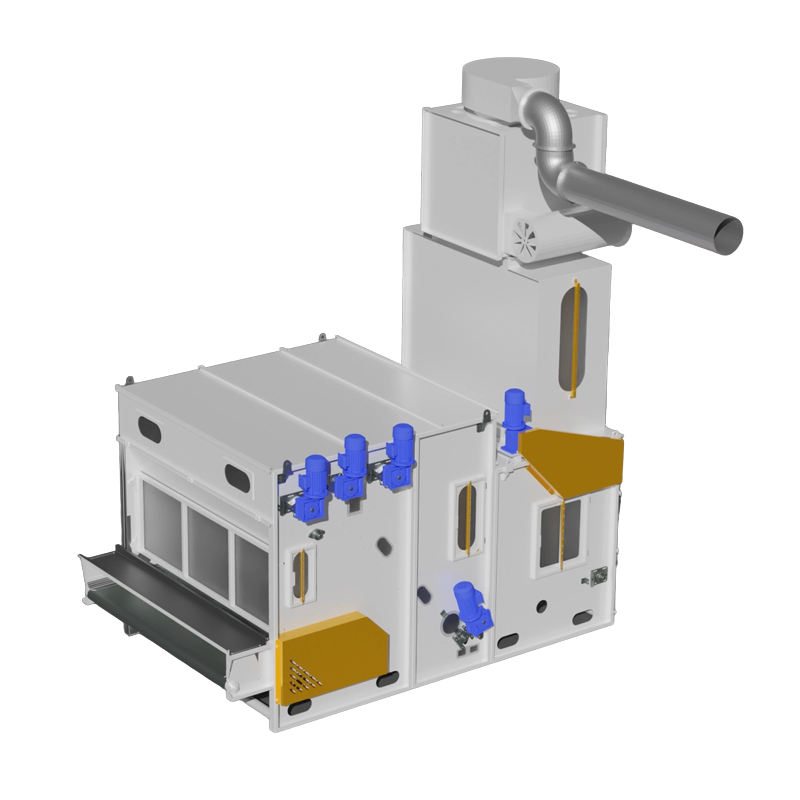
HYQY Pneumatic Feeder
2. Product Overview and Operating Principle
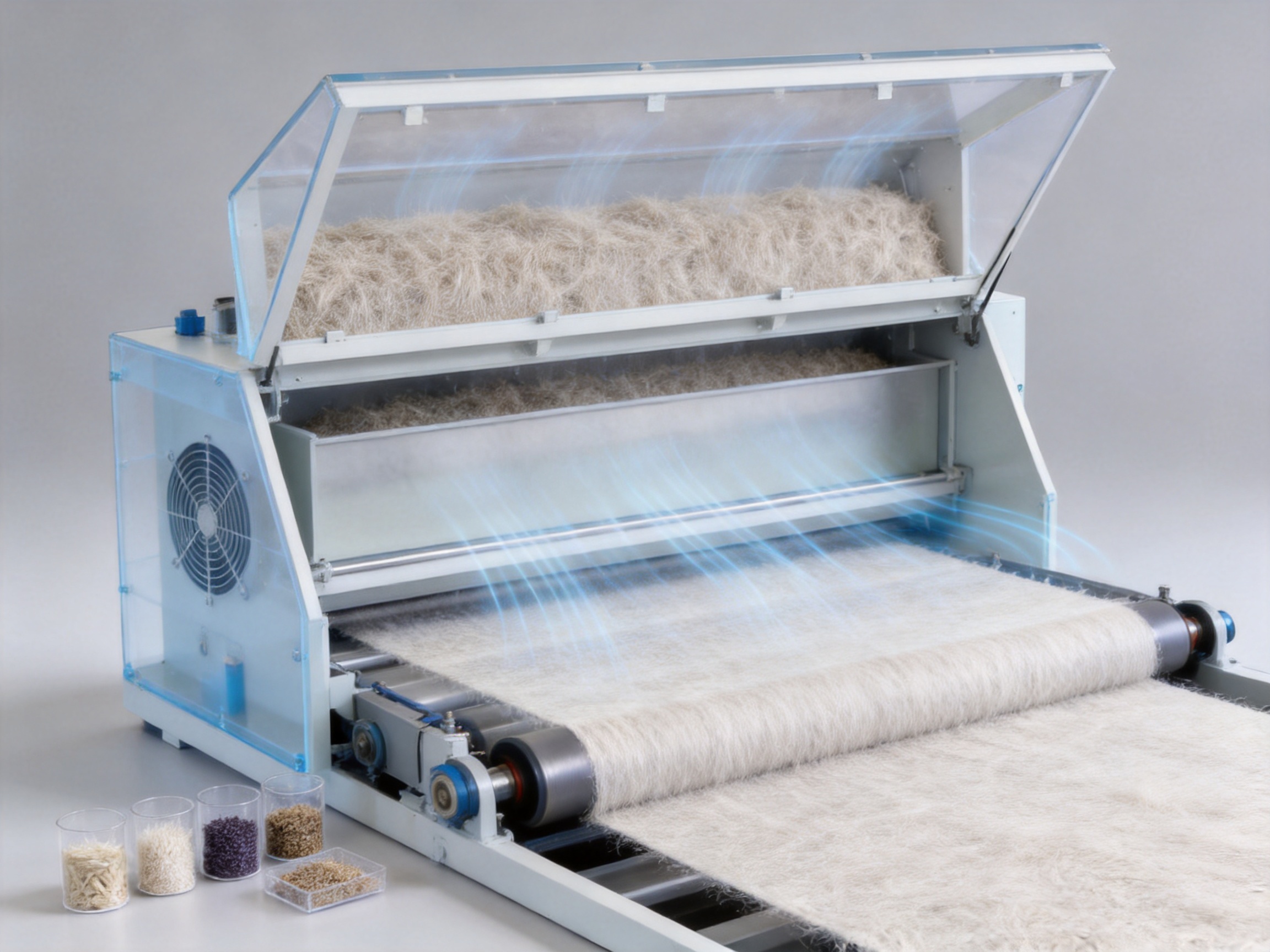
The HYQY Pneumatic Feeder uses an enclosed, pressurized air-control structure. Its upper and lower chambers are equipped with built-in fans controlled through variable-speed inverters. The fan speed can be adjusted to match the fiber type, production rate, and downstream machine requirements.
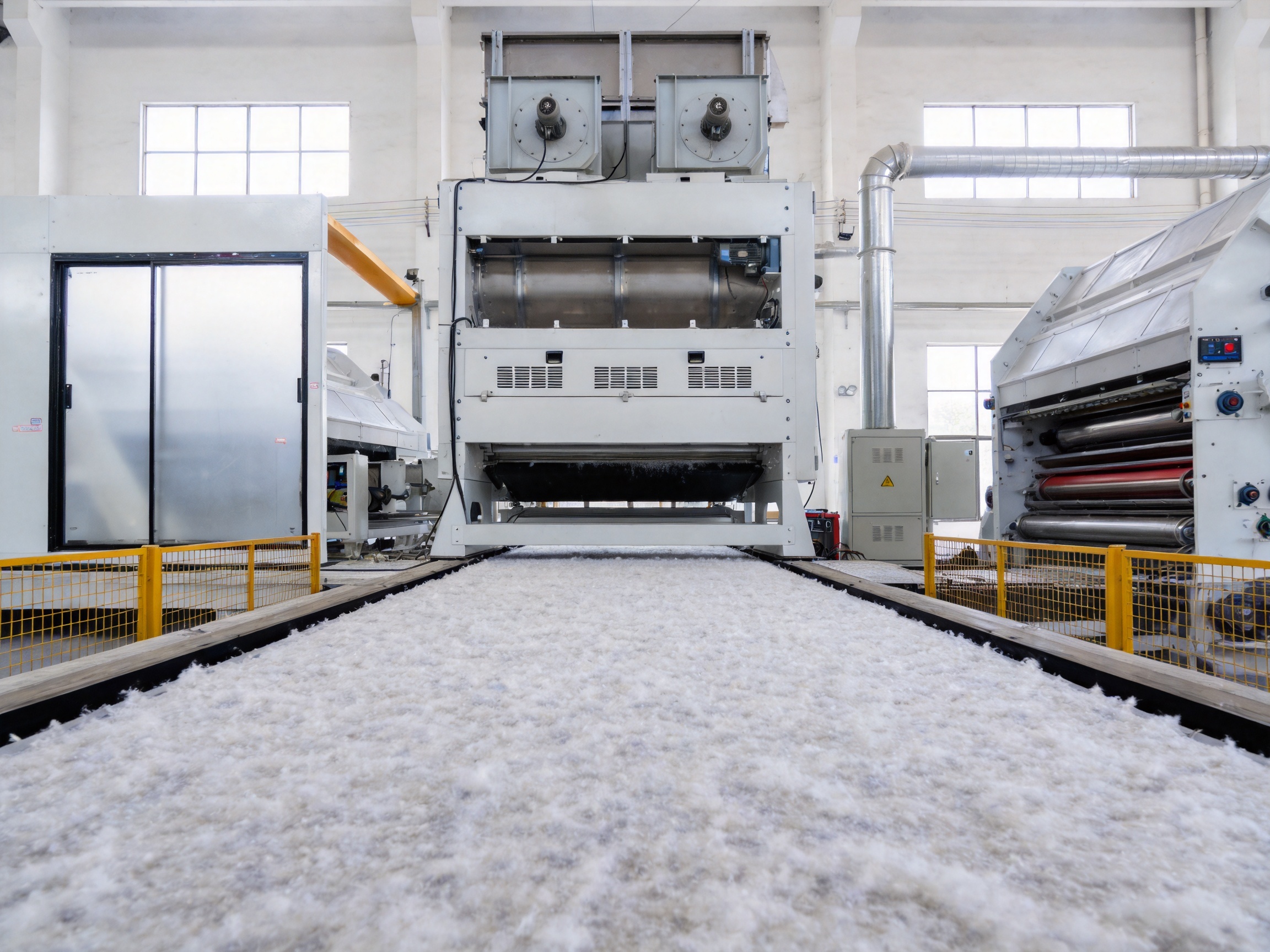
Fibers enter the upper section after opening and blending. The airflow helps spread and guide the fiber material while the storage section maintains a controlled supply. As the fibers move through the system, the pneumatic pressure and feeding time can be adjusted to achieve an even distribution. The lower section then delivers the prepared fiber layer toward the carding machine or the selected bonding process.
The machine is designed as a closed and pressurized system. This structure helps reduce uncontrolled fiber loss and supports a cleaner production environment. It also allows the operator to regulate air conditions instead of depending solely on gravity or mechanical agitation.
The operating process can be summarized as follows:
1. Opened and blended fibers enter the feeder.
2. The fibers are held in the storage chamber under controlled conditions.
3. Built-in fans generate and regulate the required air flow.
4. Air-flow guiding distributes the fibers across the working width.
5. The feeding time and pneumatic pressure are adjusted according to production needs.
6. Output rollers deliver the fiber layer at a controlled rate.
7. The resulting batt or web is transferred to a carding machine, oven, or other downstream process.
8. When installed, a belt weigher provides additional feedback for longitudinal and cross-direction weight control.
This arrangement gives production personnel greater control over the material than a basic feeding hopper. It is especially useful when the downstream carding machine operates at high speed or when the final product must meet strict basis-weight tolerances.
3. Main Technical Characteristics
3.1 Upper and Lower Chambers
The two-chamber structure provides a controlled buffer between upstream fiber preparation and downstream web formation. This buffer helps reduce sudden fluctuations in fiber supply. It also gives the feeder time to distribute fibers before they reach the output rollers.
The chambers are designed as part of a sealed and pressurized system. This is important for maintaining consistent air conditions and reducing the influence of external disturbances. In a properly configured line, the chambers can help prevent the sudden accumulation or shortage of fibers that may otherwise lead to web irregularities.
3.2 Variable-Speed Fan Control
Built-in fans are operated through variable-speed inverter control. This allows the air flow to be adjusted rather than fixed at one level. Different fiber types require different handling conditions. Long fibers, short fibers, virgin fibers, and recycled fibers do not respond identically to air movement.
Variable-speed control allows the operator to make practical adjustments during commissioning and production. The air flow can be increased when stronger conveying force is required or reduced when delicate distribution and lower turbulence are preferred. Inverter control also supports coordinated operation with the output rollers and the upstream opening equipment.
3.3 Adjustable Feeding Time
The feeding time determines how long fibers remain in the controlled feeding cycle and how material is delivered to the next process. Adjustable feeding time is useful when changing product weight, fiber composition, production speed, or working width.
Rather than requiring a complete mechanical redesign for every product, the operator can adjust the feeding parameters within the machine’s working range. This supports a wider product portfolio and makes the equipment suitable for manufacturers that process several fiber blends.
3.4 Pneumatic Pressure Regulation
The pneumatic control system is designed for high accuracy and adjustable pressure. Controlled pressure supports even fiber distribution across the web width and helps stabilize the output layer. It is particularly valuable when the downstream process requires a uniform input batt.
Pressure regulation also provides flexibility during startup. Operators can begin with a moderate setting, observe the fiber behavior, and gradually adjust the pressure until the desired distribution is achieved. This reduces the need for rough manual correction and helps protect the consistency of the production process.
3.5 Adjustable Output Thickness
The thickness of the output fiber web can be adjusted according to production requirements. Thickness adjustment is important because different products may require different input batt structures. A lightweight thermal-bonded material, a dense automotive interior component, and a heavy geotextile may all require different feeding conditions.
Output thickness is influenced by fiber type, production speed, air pressure, feeding time, and roller speed. The machine provides a platform in which these variables can be coordinated instead of controlled independently.
3.6 Inverter-Controlled Output Rollers
The output feeding rollers are controlled by inverter technology. Roller speed directly influences material delivery and can be coordinated with downstream equipment. Smooth speed adjustment helps the machine adapt to different production rates and product weights.
Inverter control also supports gradual startup and controlled speed changes. This can reduce sudden mechanical stress and prevent abrupt fiber surges at the beginning of a production run. When connected to a wider line control system, the output roller speed can be adjusted to maintain a stable relationship with the carding or bonding equipment.
3.7 Optional Belt-Weighing System
A belt weigher can be installed to provide additional control of fiber weight. The system is intended to improve stability in both the cross-machine and longitudinal directions. This is especially important when the final product is sold according to basis weight or when uniform density is essential for performance.
Without weight feedback, operators may need to rely on manual sampling and periodic adjustments. A belt-weighing system provides more immediate information about the material being delivered. It can therefore serve as an additional safeguard for weight stability and reduce the risk of gradual production drift.
4. Product Specifications
The machine is available in configurations suitable for different production line widths and capacity requirements. The commonly stated working widths are 2,200 mm and 2,800 mm, while the technical working-width range is approximately 2,000 mm to 2,800 mm. Other dimensions and layouts may be customized according to the customer’s line design.
| Item | Typical Specification |
| Model | HYQY |
| Product type | Pneumatic fiber feeder |
| Working width | Approximately 2,000 mm to 2,800 mm; common configurations include 2,200 mm and 2,800 mm |
| Production capacity | Approximately 500 kg/h to 1,000 kg/h, depending on material and configuration |
| Installed power | Approximately 55 kW to 75 kW |
| Fiber materials | PET fiber, virgin fibers, recycled fibers, long fibers, and short fibers |
| Control method | Pneumatic control with variable-speed inverter regulation |
| Optional system | Belt weigher for additional weight control |
| Electrical supply | 220 V or customized; line configurations may also use 380 V or 415 V according to project requirements |
| Certification | CE and ISO9001:2000 listed in the supplied specifications |
| Warranty | 12 months |
| Typical lead time | Approximately 60 days after deposit, subject to final configuration |
| Trade terms | EXW, FOB, CFR, and CIF |
| HS code | 8449009000 |
Actual performance depends on fiber length, fiber density, moisture, blend ratio, opening quality, web weight, working width, and downstream machine speed. For this reason, the final technical specification should be confirmed during project engineering. The manufacturer can customize dimensions, voltage, layout, control requirements, and integration details for a specific nonwoven line.
5. Advantages Compared with Conventional Mechanical Feeding
5.1 More Uniform Cross-Direction Distribution
One of the most important advantages of pneumatic feeding is its ability to distribute fibers across the working width using controlled air flow. A basic mechanical conveyor may transport material from one point to another, but it may not adequately correct uneven fiber concentration from side to side.
Air-flow guiding helps disperse the fibers before they reach the output section. This can produce a more homogeneous input batt and improve the stability of downstream carding or bonding. Better cross-direction uniformity is particularly valuable for wide machines, where even a small distribution difference can create noticeable variation in the finished roll.
5.2 Better Longitudinal Stability with Weight Feedback
When equipped with a belt weigher, the feeder can provide additional control over weight in the machine direction. Longitudinal stability is important because variations may appear as periodic light and heavy zones in the final material.
The weighing system does not replace correct opening, blending, or carding, but it adds a valuable control layer. It helps the production team identify changes in material delivery and make timely adjustments to roller speed, feeding time, or pneumatic conditions.
5.3 Broader Fiber Compatibility
The machine can handle long, short, virgin, and recycled fibers. This flexibility allows manufacturers to use one feeding concept for multiple product categories. It is also relevant to manufacturers that are increasing recycled content or developing products from mixed fiber formulations.
Fiber compatibility still depends on correct machine setup. Recycled fibers may require different pressure and airflow than virgin fibers, while long fibers may need careful control to avoid entanglement or bridging. The adjustable design allows these operating conditions to be tuned instead of forcing all materials through a single fixed setting.
5.4 Better Suitability for High-Performance Carding Machines
High-performance carding machines often operate within strict limits for input consistency. If the fiber feed fluctuates, the card may not be able to compensate completely. Uneven feed can affect web formation, production efficiency, and final product uniformity.
The pneumatic feeder is suitable for carding systems that require controlled weight and stable productivity. By preparing a more even layer before the card, the feeder helps the carding machine operate under more consistent conditions.
5.5 Adjustable Production Parameters
Fixed mechanical feeders can be difficult to adapt when manufacturers change products. The HYQY system provides adjustable pneumatic pressure, feeding time, fan speed, output thickness, and roller speed. This gives operators a broader process window.
Adjustability is also valuable during commissioning. Each fiber blend may behave differently, and the ideal settings are often established through production trials. A system with multiple adjustable parameters allows the line to be optimized without extensive mechanical modification.
5.6 Enclosed and Cleaner Operation
The sealed and pressurized structure helps contain loose fibers and reduces uncontrolled material escape. A cleaner feeding area can improve housekeeping, reduce airborne fiber accumulation, and support more comfortable maintenance work.
Clean operation also contributes to more stable machine performance. Excess fiber deposits around sensors, rollers, and drive components can increase the need for cleaning and may interfere with inspection. An enclosed design helps manage this risk, although regular cleaning and maintenance remain necessary.
6. Applications in Nonwoven Manufacturing
6.1 Card Feeding
The primary application is feeding a carding machine. After fibers are opened and blended, the pneumatic feeder forms a controlled layer that enters the card. The card then individualizes and aligns the fibers to create the required web structure.
A stable card feed can support better web uniformity, smoother operation, and more consistent production. This is useful for needle-punched nonwovens, thermal-bonded materials, automotive products, filtration media, and industrial felts.
6.2 Direct Feeding to Thermal Bonding Ovens
Some production lines use the feeder to deliver a prepared fiber layer directly to an oven or another thermal bonding system. In such applications, thickness and basis-weight uniformity are especially important because the bonding process must heat the web consistently.
An uneven input layer may cause differences in bonding strength, loft, density, or surface appearance. Controlled pneumatic distribution helps prepare a more consistent layer before thermal treatment.
6.3 Automotive Interior Materials
Automotive interior materials often require repeatable density, controlled thickness, adequate resilience, and stable acoustic or thermal performance. The feeder can contribute to these requirements by maintaining a more consistent fiber supply to carding and bonding equipment.
Automotive products may use combinations of virgin and recycled fibers. The adjustable air-pressure and roller-control systems provide a useful basis for handling different formulations during product development and mass production.
6.4 Geotextiles and Heavy Nonwovens
Geotextile production requires reliable web formation over considerable widths and production volumes. Heavy webs can place high demands on the fiber feeding stage. Uneven fiber distribution may reduce tensile uniformity or create weak areas after needle punching.
The feeder’s capacity range and adjustable output structure make it suitable for lines producing heavy needle-punched materials, provided that the complete line is configured for the required basis weight and throughput.
6.5 Carpet and Felt Production
Needle-punched carpets, wool felts, jute felts, and cleaning cloths often depend on a stable fiber batt before needle punching. A uniform batt can help the needle-punching machine produce more consistent thickness and density.
The feeder can be integrated with opening, blending, carding, crosslapping, and needle-punching equipment as part of a complete production line. Its flexibility is useful for manufacturers producing several types of felt or carpet material.
6.6 Recycled Fiber Products
Recycled fiber streams may contain wider variation in length, tuft size, and flowability than virgin materials. A pneumatic feeder with adjustable air movement and storage control can help manage this variation before the material reaches the card or bonding section.
Recycling-focused manufacturers should evaluate the fiber preparation system as a complete package. The quality of opening and blending has a direct effect on feeder performance. Nevertheless, the feeder’s adjustable operating window provides an important advantage when raw material conditions change.
7. Manufacturing and Engineering Strengths
The manufacturer, Changshu Hongyi Nonwoven Machinery Co., Ltd., has more than 20 years of experience in the nonwoven machinery field. Its product range includes complete production lines and individual machines for needle-punched geotextiles, carpets, airlaid waste felt, automotive interior materials, cleaning cloths, wool felt, jute felt, thermal bonding, carding, airlaying, ironing, and related processes.
This broad product experience is important because a pneumatic feeder cannot be engineered effectively in isolation from the rest of the line. The best feeder configuration depends on the opening and blending equipment upstream, the card or web former downstream, the final bonding method, the target product weight, and the required production speed.
Experience with complete lines gives the manufacturer a practical understanding of these relationships. It can support customers not only with a feeder but also with system layout, machine matching, control coordination, and customized production solutions.
7.1 Integrated Nonwoven Machinery Knowledge
A supplier focused only on one type of machine may not fully understand the interaction between fiber preparation and web formation. A manufacturer with experience in carding, needle punching, thermal bonding, airlaying, and finishing equipment can evaluate the complete production path.
This integrated knowledge supports better equipment selection. For example, the required feeder capacity should correspond to the carding machine’s actual throughput rather than being selected only according to a nominal width. Similarly, the air-pressure settings must be considered alongside fiber preparation quality and downstream web requirements.
7.2 Customization Capability
The feeder is listed as customizable in the supplied product information. Customization may involve working width, dimensions, electrical voltage, control configuration, outlet height, connection points, and integration with existing machinery.
Customized engineering is valuable when a customer is expanding an existing line instead of building a completely new factory. Existing machines may have fixed positions, different transfer heights, or specific control interfaces. A configurable feeder can be adapted to those practical conditions.
7.3 Quality and Certification Framework
The equipment is listed with CE and ISO9001:2000 certification information. A quality-management framework supports consistent manufacturing procedures, documentation, inspection, and corrective action. CE-related conformity is also relevant for customers exporting equipment or operating it in markets that require applicable safety documentation.
Certification does not replace project-specific technical verification. Customers should still review electrical standards, guarding, emergency-stop arrangements, control cabinets, noise expectations, and local installation requirements before final acceptance. However, the listed certification provides a useful foundation for international projects.
7.4 Factory and Export Experience
The company is based in Changshu, Jiangsu Province, China, and reports that its products have been supplied to more than 20 countries, including markets in Latin America, Europe-adjacent regions, Africa, and Asia. International project experience can help reduce communication difficulties concerning packing, documentation, electrical standards, installation, and commissioning.
The company offers EXW, FOB, CFR, and CIF trade terms. Equipment may be supplied in nude packing or with PE film protection, depending on the shipping plan and customer requirements. Export packaging should be finalized according to the machine dimensions, route, container plan, and destination conditions.
8. Manufacturing Process and Quality-Control Considerations
Producing a reliable pneumatic feeder requires more than assembling a fan, hopper, and roller. The complete machine must be designed so that air flow, fiber movement, structural strength, electrical control, and service access work together.
8.1 Engineering Review
The manufacturing process begins with a review of the customer’s production requirements. Important information includes fiber type, fiber length, recycled content, target basis weight, working width, production speed, upstream equipment, downstream equipment, available electrical supply, factory layout, and expected operating environment.
This information determines the proper machine size and configuration. It also helps identify whether a belt weigher, special sensor arrangement, customized outlet, or specific communication interface is required.
8.2 Structural Fabrication
The upper and lower chambers must maintain their shape under operating conditions and provide suitable support for fans, rollers, sensors, access doors, and other components. Structural fabrication should emphasize accurate dimensions, stable welding, appropriate surface treatment, and accessible inspection points.
Good structural accuracy is important because misalignment can affect air sealing, roller operation, and fiber distribution. Strong and properly finished frames also support long-term reliability in a production environment where vibration, dust, and continuous operation are present.
8.3 Air-System Assembly
The air-handling system is central to the feeder’s performance. Fans, ducts, seals, pressure-control components, and chamber openings must be coordinated to produce the required flow pattern. Air leakage can reduce efficiency and make the system more difficult to control.
During assembly and testing, the air system should be inspected for sealing quality, fan rotation, abnormal vibration, pressure response, and control stability. The objective is not simply to generate high air volume but to achieve controlled and repeatable fiber guidance.
8.4 Drive and Inverter Integration
The feeding rollers and fans use variable-speed inverter control. Correct drive selection and parameter setting are important for smooth acceleration, speed adjustment, overload protection, and synchronization with the production line.
Inverter integration should include appropriate electrical protection, grounding, cable routing, thermal management, and control logic. Operators should be able to adjust the major process parameters clearly and safely from the control interface.
8.5 Sensor and Control Testing
Storage control is listed as using a photosensor. Sensors help identify fiber level or material presence and can support automatic feeding decisions. Sensor positioning must take into account fiber color, reflectivity, dust, accumulation, and the expected operating range.
Testing should verify sensor response under realistic fiber conditions rather than only under an empty-machine condition. The control system should respond correctly to high-level, low-level, blocked-flow, and abnormal operating situations.
8.6 Factory Inspection
Before shipment, the machine should undergo dimensional inspection, electrical inspection, control-function testing, drive testing, fan testing, and, where practical, material trials. A video outgoing-inspection service is listed among the product information, which can help customers review machine operation before delivery.
Factory inspection is particularly important for customized equipment. It provides an opportunity to confirm working width, connection locations, electrical requirements, safety devices, and customer-specific control functions before the machine is packed.
9. Installation, Commissioning, and Maintenance
9.1 Installation Planning
The installation area should provide enough space for the feeder, upstream and downstream machines, electrical cabinets, access doors, maintenance activities, and fiber cleaning. The floor must be capable of supporting the equipment and maintaining alignment with adjacent machines.
Utility requirements should be confirmed before shipment. These include electrical power, grounding, compressed air if required by the final configuration, ventilation, lighting, and safe access. The exact voltage may be 220 V or another customized supply such as 380 V or 415 V, depending on the project.
9.2 Initial Commissioning
Commissioning should begin with an empty-machine inspection. The operator should verify fan rotation, roller rotation, emergency stops, guards, sensors, inverter settings, and control-panel functions. The machine can then be tested at low speed before gradually increasing production conditions.
Fiber trials should begin with a known material and a moderate production rate. Operators can adjust fan speed, pneumatic pressure, feeding time, roller speed, and output thickness while observing the distribution of the fiber layer. Once the basic settings are established, the line can be tested at the target speed.
9.3 Fiber-Specific Adjustment
There is no single setting that is ideal for every fiber. Long fibers may need careful air control to prevent undesirable entanglement, while short fibers may require conditions that minimize dust and unstable flow. Recycled fibers may need additional attention because of their irregular tuft structure.
Operators should record the settings used for different products. A simple production recipe can include fiber blend, fan speed, pressure, feeding time, roller speed, target weight, and downstream machine speed. This helps shorten changeover time and improves repeatability.
9.4 Routine Maintenance
Routine maintenance should include inspection and cleaning of chambers, sensors, air passages, fans, rollers, belts, guards, and electrical cabinets. Loose fibers should not be allowed to accumulate around moving parts or ventilation openings.
Bearings, drive components, seals, and belts should be checked according to the manufacturer’s maintenance schedule. Inverter alarms and unusual motor temperatures should be investigated promptly. Corrective maintenance is usually less disruptive when small abnormalities are addressed before they become production failures.
9.5 Safety Practices
Operators should never reach into the feeder while fans, rollers, or other moving components are operating. Lockout and tagout procedures should be applied before internal cleaning, inspection, or repair. Access doors and protective guards must remain correctly installed during normal operation.
Because nonwoven fibers can accumulate in production areas, housekeeping is also part of safe operation. Regular removal of loose fiber reduces the risk of blocked ventilation, sensor interference, and excessive dust accumulation.
10. How the Feeder Improves Overall Production Efficiency
Production efficiency is not measured only by machine speed. It also includes usable output, material waste, changeover time, downtime, labor requirements, and the consistency of the finished product.
A stable fiber feeder can improve efficiency in several ways. First, it reduces the risk that downstream equipment will be starved or overloaded. Second, it helps operators maintain a more consistent web weight, which can reduce off-specification rolls. Third, adjustable settings make it easier to change products without replacing the complete feeding system.
The optional belt weigher can provide further benefits by supporting faster detection of weight variation. Early detection helps operators correct the process before a large quantity of material is affected. In production environments where raw materials are expensive or final products have strict specifications, this control can have a meaningful economic effect.
Efficiency also depends on the reliability of the equipment. The feeder is designed for automatic operation and can be integrated into an automated nonwoven line. Automatic control reduces dependence on constant manual feeding and enables operators to focus on process supervision, quality checks, and planned maintenance.
11. Selecting the Correct Configuration
Customers should evaluate several factors before ordering a pneumatic feeder.
11.1 Working Width
The working width should correspond to the actual production width of the card, oven, or web-forming machine. A feeder that is too narrow may create edge losses or require unsuitable distribution methods. A feeder that is significantly wider than the production line may increase cost and energy use without providing a practical benefit.
11.2 Capacity
The stated production capacity is approximately 500 kg/h to 1,000 kg/h, but actual performance depends on fiber properties and the required web weight. Capacity should be evaluated together with working width and line speed. A high nominal capacity does not automatically mean that every fiber blend can be processed at the same rate.
11.3 Fiber Type
Customers should provide detailed information about fiber length, denier, material type, recycled content, moisture, blend ratio, and opening condition. This allows the manufacturer to recommend appropriate air-control and roller settings.
11.4 Belt Weigher Requirement
A belt weigher is recommended when the product requires strict weight control or when the customer wants improved feedback for automatic adjustment. For simpler applications, the machine may be configured without this option, depending on the production target.
11.5 Electrical and Control Integration
The customer should confirm local voltage, frequency, motor requirements, control cabinet location, communication protocols, emergency-stop standards, and upstream or downstream interlocks. Early confirmation prevents delays during installation.
11.6 Layout and Material Transfer
Connection height, machine orientation, maintenance clearance, and transfer distance should be reviewed using a layout drawing. The feeder must align correctly with the opening and blending machine on one side and the card or bonding equipment on the other.
12. Why Choose a Specialized Nonwoven Machinery Manufacturer?
Purchasing a pneumatic feeder from a specialized nonwoven machinery manufacturer offers advantages over sourcing a general-purpose conveying machine. A nonwoven specialist understands that the objective is not simply to move fibers. The objective is to create a stable, usable, and uniform fiber layer that supports the performance of the complete line.
A specialist can consider fiber behavior, card feeding, web formation, thermal bonding, needle punching, production width, and final product requirements together. This is particularly valuable for customers ordering a complete line or integrating the feeder with existing equipment.
Changshu Hongyi Nonwoven Machinery Co., Ltd. combines manufacturing and trading experience with a product portfolio covering individual machines and complete production lines. Its reported export experience, customization capability, CE and ISO9001:2000 information, and after-sales warranty provide a practical basis for international cooperation.
The company also supplies equipment for different nonwoven sectors rather than focusing on one narrow application. This broad experience can help customers compare alternative process routes and select a feeding solution appropriate for needle-punched, thermal-bonded, airlaid, or composite materials.
13. Customer Support and Commercial Information
The supplied commercial information includes a one-year warranty, video outgoing inspection, and a lead time of approximately two to three months. The detailed trade information states a lead time of about 60 days after deposit. Because final delivery time depends on configuration, customization, production scheduling, inspection, and shipping arrangements, the confirmed contract schedule should be used as the final reference.
The listed payment condition is 30 percent deposit, with the remaining 70 percent payable before loading. Trade terms include EXW, FOB, CFR, and CIF. Customers should confirm which costs are included in the selected term, including inland transport, export documentation, ocean freight, insurance, installation support, and destination charges.
After-sales support should be discussed before purchase. Important points include installation guidance, electrical documentation, operation manuals, spare-parts recommendations, remote troubleshooting, commissioning support, and the procedure for warranty claims. These details can make a significant difference to the startup of an international production line.
14. Frequently Asked Questions
Q1. What is the primary function of the pneumatic feeder?
The primary function is to receive opened and blended fibers, store and mix them in a controlled chamber, and form an even fiber layer for a carding machine, oven, or other bonding system. It improves the stability of fiber delivery before web formation.
Q2. Can the feeder process recycled fibers?
Yes. The machine is designed to manage virgin and recycled fibers, as well as long and short fibers. The correct air pressure, fan speed, feeding time, and roller speed must be established according to the actual fiber properties.
Q3. Is a belt weigher included as standard?
The belt weigher is described as an available option. It can provide additional control of cross-direction and longitudinal weight stability. Customers should specify whether this option is required when confirming the technical proposal.
Q4. What are the common working widths?
Commonly listed working widths are 2,200 mm and 2,800 mm. The technical information also gives a working-width range of approximately 2,000 mm to 2,800 mm. Customized dimensions may be available for specific production lines.
Q5. What production capacity can the machine achieve?
The stated capacity is approximately 500 kg/h to 1,000 kg/h. Actual capacity depends on fiber type, fiber preparation, web weight, working width, air settings, and downstream equipment. A project-specific evaluation is recommended.
Q6. Can the feeder feed an oven directly?
Yes. It can be used to create a direct fiber web layer for feeding ovens or other bonding systems. The required configuration depends on the oven inlet, target web thickness, bonding method, and production speed.
Q7. How does the machine compare with a basic mechanical hopper?
The pneumatic feeder provides controlled air-flow guidance, adjustable pneumatic pressure, variable-speed fans, adjustable feeding time, output-thickness control, and inverter-controlled output rollers. These features provide more process control than a basic hopper or simple mechanical conveyor.
Q8. What electrical supply is required?
The supplied information lists 220 V or customized voltage and also identifies 220 V, 380 V, and 415 V as possible configurations. The final voltage, frequency, motor arrangement, and control-cabinet specification must be confirmed for the installation country.
Q9. What is the warranty period?
The listed warranty period is 12 months or one year. Warranty conditions, exclusions, installation requirements, and responsibilities for shipping or replacement parts should be confirmed in the purchase contract.
Q10. How long is the delivery period?
The product information indicates approximately two to three months, with detailed trade information stating about 60 days after deposit. The final schedule depends on the approved design, customization, payment, inspection, and shipping plan.
Q11. What maintenance does the machine require?
Routine maintenance includes cleaning fiber accumulation, inspecting fans and air passages, checking sensors, examining rollers and drive components, reviewing inverter alarms, and verifying safety devices. Maintenance frequency depends on operating hours, fiber type, and production conditions.
Q12. Can the machine be integrated into an existing production line?
Yes. The machine is customizable and can be designed around existing upstream and downstream equipment. The customer should provide layout drawings, transfer heights, line speeds, working widths, electrical information, and control requirements before final engineering.
15. Conclusion
The pneumatic feeder is a key process machine for manufacturers seeking more stable fiber delivery and better web uniformity. By combining controlled air flow, enclosed storage chambers, adjustable pressure, variable-speed fan control, inverter-driven output rollers, and optional belt weighing, the HYQY Pneumatic Feeder provides a flexible solution for card feeding and direct web formation.
Its advantages are particularly relevant to high-performance nonwoven lines that require close control of cross-direction distribution, longitudinal weight stability, fiber compatibility, and production repeatability. The machine can handle a broad range of materials, including PET fiber, virgin fibers, recycled fibers, long fibers, and short fibers, when correctly configured and operated.
The manufacturer’s more than 20 years of nonwoven machinery experience, broad range of complete production lines and individual machines, customization capability, international supply experience, and stated quality certifications provide additional value for customers planning new installations or upgrading existing systems.
For the best result, the feeder should be selected as part of the complete process rather than as an isolated machine. Fiber characteristics, production width, target basis weight, downstream equipment, control architecture, electrical standards, and maintenance requirements should all be reviewed during the engineering stage. With the correct configuration and commissioning, pneumatic feeding can help manufacturers achieve a more uniform web, lower production variation, improved process control, and more reliable nonwoven production.
References
1. Product technical information for the HYQY Pneumatic Feeder, including working width, capacity, installed power, control features, and trade terms.
2. Changshu Hongyi Nonwoven Machinery Co., Ltd., company information and nonwoven machinery product portfolio.
3. General principles of fiber opening, blending, card feeding, web formation, thermal bonding, and needle punching in nonwoven production.
4. General industrial practices for variable-frequency drive control, pneumatic material handling, belt weighing, and automatic process regulation.
5. General maintenance and safety practices for enclosed fiber-processing machinery and nonwoven production lines.