

Content
- 1 1. What Is an Airlaid Waste Felt Production Line?
- 2 2. Why Recycle Fiber Waste into Felt?
- 3 3. Main Process Flow
- 4 4. Key Technical Specifications
- 5 5. Advantages over Conventional and Competing Solutions
- 5.1 5.1 Wider Raw-Material Flexibility
- 5.2 5.2 Reduced Dependence on Traditional Carding
- 5.3 5.3 Efficient Waste Conversion
- 5.4 5.4 High Product Weight and Thickness Capability
- 5.5 5.5 Customizable Width and Configuration
- 5.6 5.6 Support for Multiple End-Use Industries
- 5.7 5.7 Automatic Operation and Process Coordination
- 6 6. Applications of Airlaid Waste Felt
- 7 7. Manufacturing Strengths of the Machinery Supplier
- 8 8. Manufacturing and Quality-Control Considerations
- 9 9. Operating Parameters That Influence Product Quality
- 10 10. Installation, Maintenance, and Safety
- 11 11. How to Select the Correct Configuration
- 12 12. Economic and Sustainability Benefits
- 13 13. Recommended Project Workflow
- 14 14. Frequently Asked Questions
- 14.1 14.1 What materials can the line process?
- 14.2 14.2 Can it process recycled PET fiber?
- 14.3 14.3 Does the process completely replace carding?
- 14.4 14.4 What is the working width?
- 14.5 14.5 What product weights can be manufactured?
- 14.6 14.6 What thickness can the finished felt reach?
- 14.7 14.7 What is the expected production capacity?
- 14.8 14.8 Is the line fully automatic?
- 14.9 14.9 Can the line produce both rolls and sheets?
- 14.10 14.10 Is thermal bonding required for all products?
- 14.11 14.11 What industries use the finished material?
- 14.12 14.12 Can the configuration be customized?
- 14.13 14.13 What should be prepared before requesting a quotation?
- 14.14 14.14 What after-sales support is available?
- 15 15. Conclusion
- 16 References
- 17 Product: HYL Airlaid Waste Felt Production Line
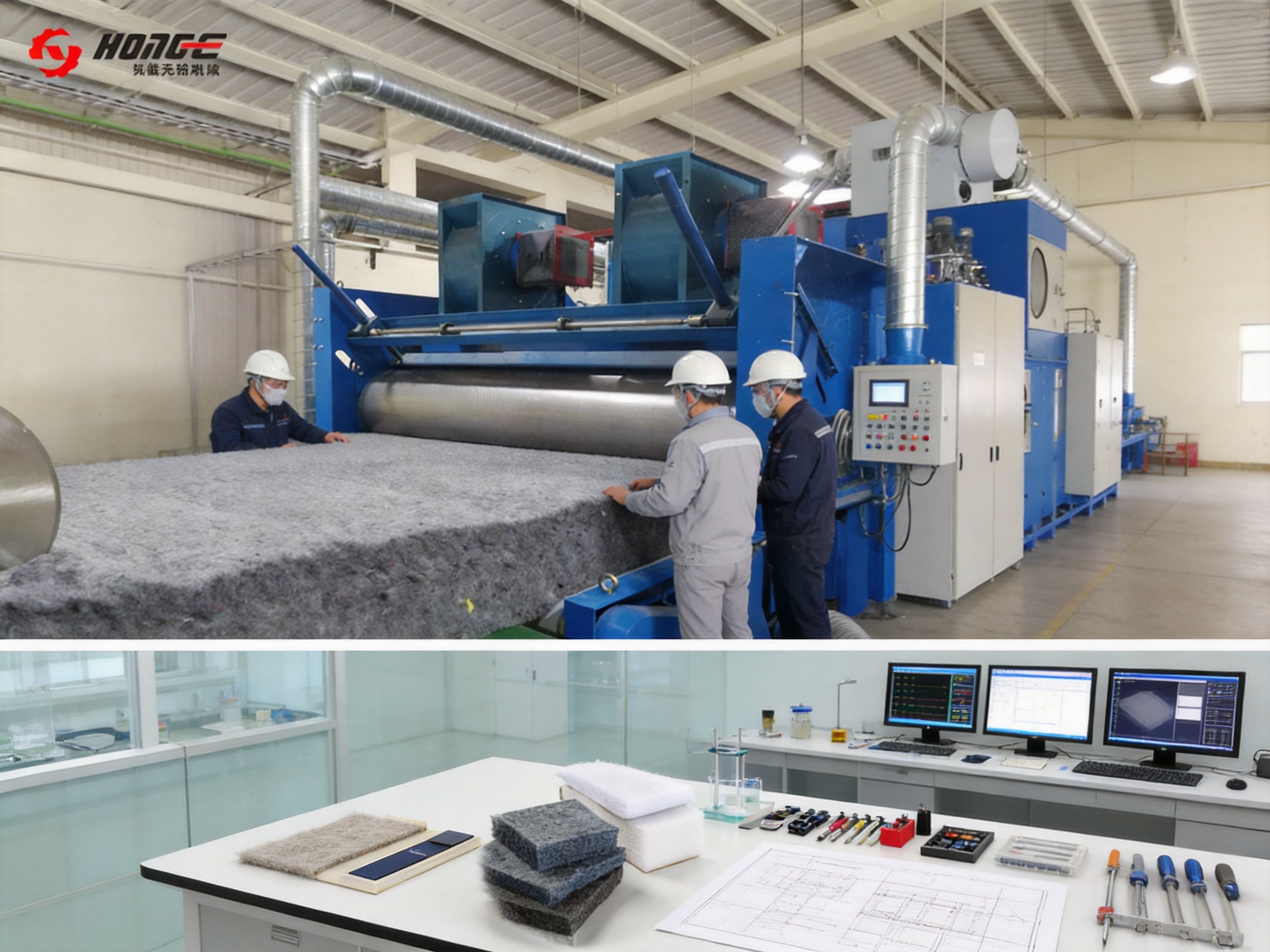
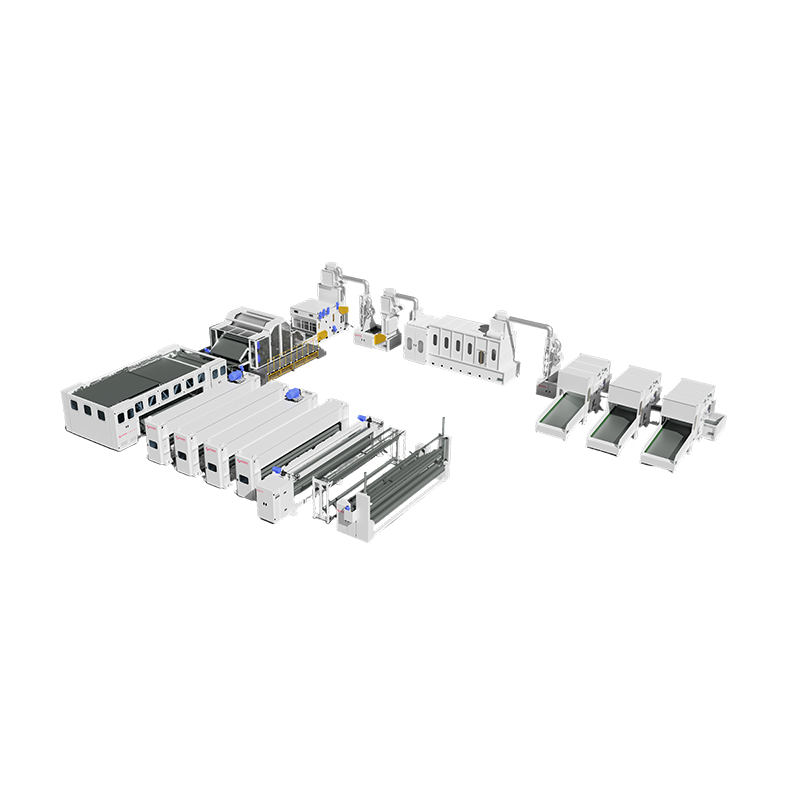
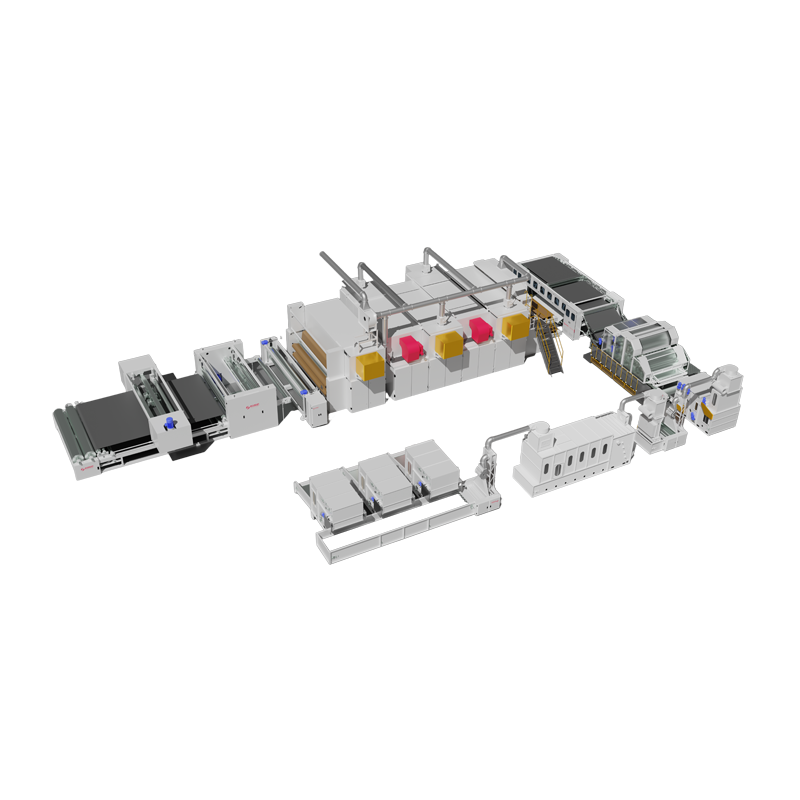
The airlaid waste felt production line is designed for manufacturers that need to convert textile waste, recycled fibers, and other suitable fiber materials into thick, uniform, and functional nonwoven felt. It combines waste opening, fiber preparation, dust removal, airlaid web forming, reinforcement, thermal treatment, and winding or cutting into an integrated production solution.
Unlike conventional nonwoven lines that depend heavily on carefully prepared virgin fibers and traditional carding, an airlaid waste felt line is designed to process a broader range of fiber lengths and recycled feedstocks. The HYL airlaid waste felt production line can handle fibers ranging approximately from 5 mm to 85 mm, depending on raw material characteristics and the selected configuration. This makes the line suitable for textile scraps, waste fiber felt, recycled polyester fibers, natural fibers, cotton, wool, low-melt fibers, and other compatible materials.
Finished products can be supplied for automotive interiors, building insulation, furniture protection, packaging, mattress components, industrial padding, acoustic applications, and other fields that require a thick, resilient, and economical nonwoven material. The line is available with working widths from approximately 1500 mm to 2800 mm, a product weight range of about 500 gsm to 7500 gsm, and finished thicknesses from approximately 5 mm to 200 mm. Production capacity can be configured in the range of approximately 500 kg/h to 1000 kg/h.
Because raw materials, product specifications, and reinforcement methods vary between customers, the machinery configuration can be customized. The equipment supplier provides complete production lines as well as individual machines and process support for customers entering or expanding in the nonwoven industry.
1. What Is an Airlaid Waste Felt Production Line?
An airlaid waste felt production line is a nonwoven manufacturing system that uses controlled airflow to distribute opened fibers into a web. The fibers are separated, transported, and deposited by air rather than being arranged mainly through the mechanical actions of a conventional carding machine.
After the fibers are deposited, the loose web is consolidated through one or more reinforcement methods. Depending on the target application, reinforcement may include thermal bonding, oven treatment, mechanical needling, adhesive assistance, or a combination of technologies. The selected method determines the final strength, flexibility, bulk, surface feel, compression recovery, and temperature resistance of the finished felt.
The main purpose of the line is to transform loose or irregular waste fibers into a continuous and usable nonwoven product. Its integrated design reduces the need for separate manual handling between opening, web forming, and reinforcement stages. This improves production continuity and can help manufacturers achieve a more stable output than a fragmented process built from unrelated machines.
The system is especially valuable when the feedstock contains fibers with different lengths, moderate variations in density, or a mixture of recovered textile materials. The airlaid process can distribute these materials into a relatively open and thick structure, making it suitable for products that require bulk rather than the thin, highly oriented structure commonly associated with some carded webs.
2. Why Recycle Fiber Waste into Felt?
Textile and fiber waste represents both a disposal challenge and a potential manufacturing resource. Cutting scraps, production leftovers, discarded felt, reclaimed polyester, and other fiber residues can occupy significant storage space if they are not reused. Converting them into felt provides a practical route for recovering material value.
Recycling suitable waste fibers can reduce dependence on virgin raw materials. The exact economic and environmental benefit depends on the type, cleanliness, moisture content, and transportation distance of the feedstock, as well as the energy used by the plant. Nevertheless, an efficient recycling line gives manufacturers more flexibility in material sourcing and can support a circular production strategy.
Waste-based felt is also suitable for applications where absolute fiber uniformity is less important than thickness, cushioning, thermal performance, noise reduction, or cost efficiency. Automotive underlay, furniture protection, packaging pads, insulation boards, and industrial padding are examples of products that may benefit from recovered fiber content.
The airlaid waste felt production line supports this approach by incorporating opening and cleaning stages before web formation. These stages help separate compressed fiber bundles, remove a portion of unwanted dust and foreign matter, and prepare the material for more consistent distribution. The level of cleaning required depends on the source and condition of the waste fibers.
Manufacturers should still establish a clear raw-material management system. Incoming materials should be sorted according to fiber type, color, contamination level, moisture, and fiber length. A well-managed feedstock program improves product stability and reduces the risk of blockages, excessive dust, or variations in the finished felt.
3. Main Process Flow
The production process is arranged around a sequence of preparation, forming, consolidation, and finishing operations. Although the final equipment arrangement is customized, a typical line includes the following stages.
3.1 Raw-Material Feeding
Suitable fiber waste and other selected fibers are introduced into the feeding system. The feeding unit regulates the flow of material into the opening section and helps prevent sudden surges. Stable feeding is important because uneven material supply can create variations in web weight and product thickness.
Raw materials may include natural fiber, cotton fiber, wool, polyester fiber, recycled waste fiber, low-melt fiber, and blends of these materials. The actual blend should be determined according to the required product properties and the thermal behavior of the selected fibers.
3.2 Waste Opening
Waste fibers often arrive in compressed bales, tangled lumps, rolls, or irregular scraps. The opening equipment breaks these formations apart and loosens the fiber mass. Effective opening helps expose individual fibers and improves the ability of the air system to transport and distribute them.
Opening intensity must be matched to the raw material. Excessive mechanical action may shorten or damage fibers, while insufficient opening may leave large bundles in the feedstock. The machinery configuration can therefore be adjusted according to fiber type, fiber length, moisture, and the desired product structure.
3.3 Dust Removal and Material Cleaning
Recycled fibers may contain dust, short fiber fragments, loose particles, and other unwanted matter. The dust-removal section separates a portion of these contaminants before web formation. This improves working conditions and can help protect downstream equipment.
Dust extraction should be designed together with the opening and air-conveying systems. Proper airflow balance supports stable fiber transport and reduces uncontrolled dust release around the machinery. Customers should also consider factory ventilation, filtration, fire prevention, and routine cleaning when planning the installation.
3.4 Airlaid Web Forming
In the airlaid forming section, loosened fibers are carried by controlled air and deposited onto a moving forming surface. The airflow, material feed rate, forming speed, and distribution structure influence the weight and uniformity of the web.
Airlaid forming is particularly useful for thick nonwoven products because it can create a lofty web with fibers distributed through the thickness. The process is not limited to the narrow orientation patterns associated with some conventional web-forming methods. This can support three-dimensional structures with useful cushioning and insulation characteristics.
For manufacturers processing waste fibers of varying lengths, airlaid forming provides an alternative to relying exclusively on a traditional carding process. The line is designed to accommodate a broader raw-material range, although each material must still be tested to confirm suitability and product quality.
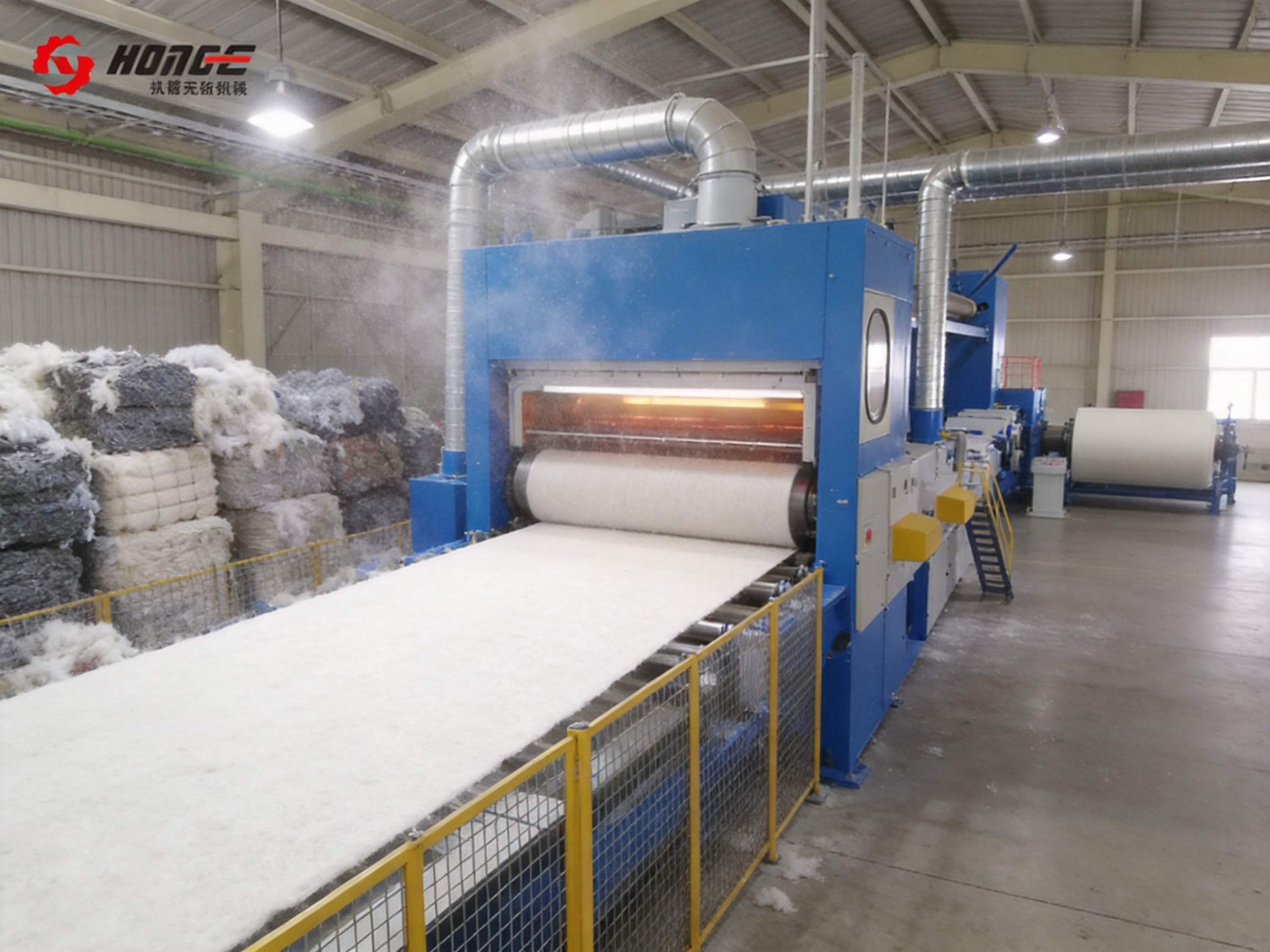
3.5 Web Reinforcement
The loose web must be consolidated before it can be handled and converted into a finished product. The appropriate reinforcement method depends on the target application, fiber blend, thickness, and performance requirements.
Thermal bonding may be used when the blend contains thermoplastic or low-melt fibers. Heat activates the bonding component and joins fibers at selected points. This method can provide a stable structure while preserving a degree of bulk.
Mechanical needling may be selected when the product requires fiber entanglement and resistance to separation. Needling penetrates the web with barbed needles, causing fibers to interlock through the thickness. The final strength and surface characteristics depend on needle density, penetration depth, line speed, and the initial web structure.
Other reinforcement arrangements may be selected for specialized products. A customized line allows the supplier and customer to coordinate opening, forming, bonding, needling, heat setting, winding, and cutting according to the intended market.
3.6 Thermal Treatment and Heat Setting
Where heat-sensitive or thermoplastic fibers are used, thermal treatment can stabilize the web and help control the final dimensions. Heat setting may improve thickness retention, bonding, shape stability, or surface consistency.
Temperature, residence time, airflow, and cooling conditions must be controlled according to the fiber blend. Natural fibers, polyester, and low-melt fibers respond differently to heat. A properly selected thermal process avoids excessive shrinkage, surface hardening, discoloration, or loss of resilience.
3.7 Winding and Cutting
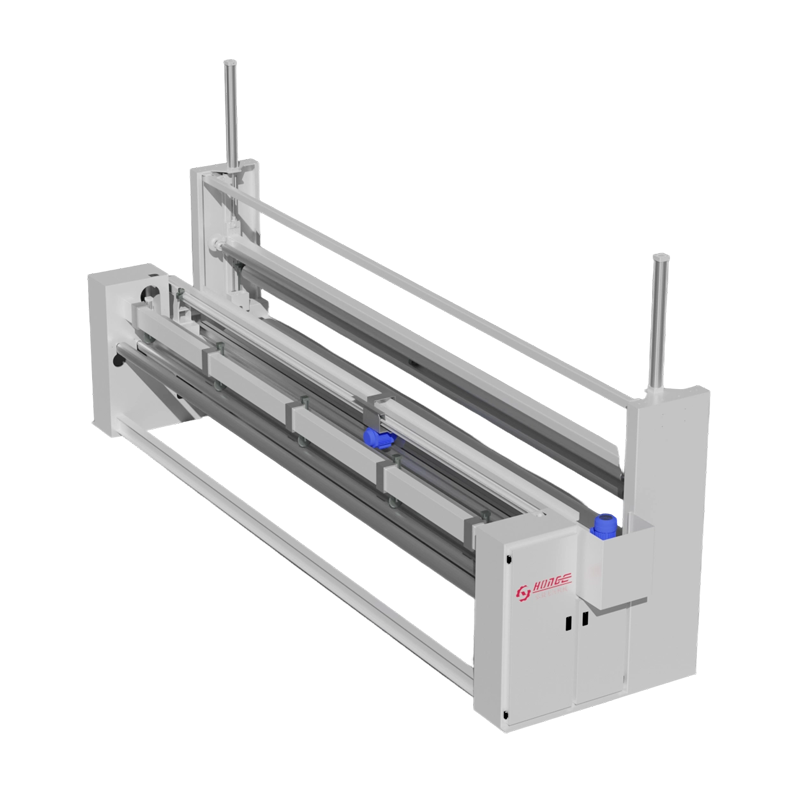
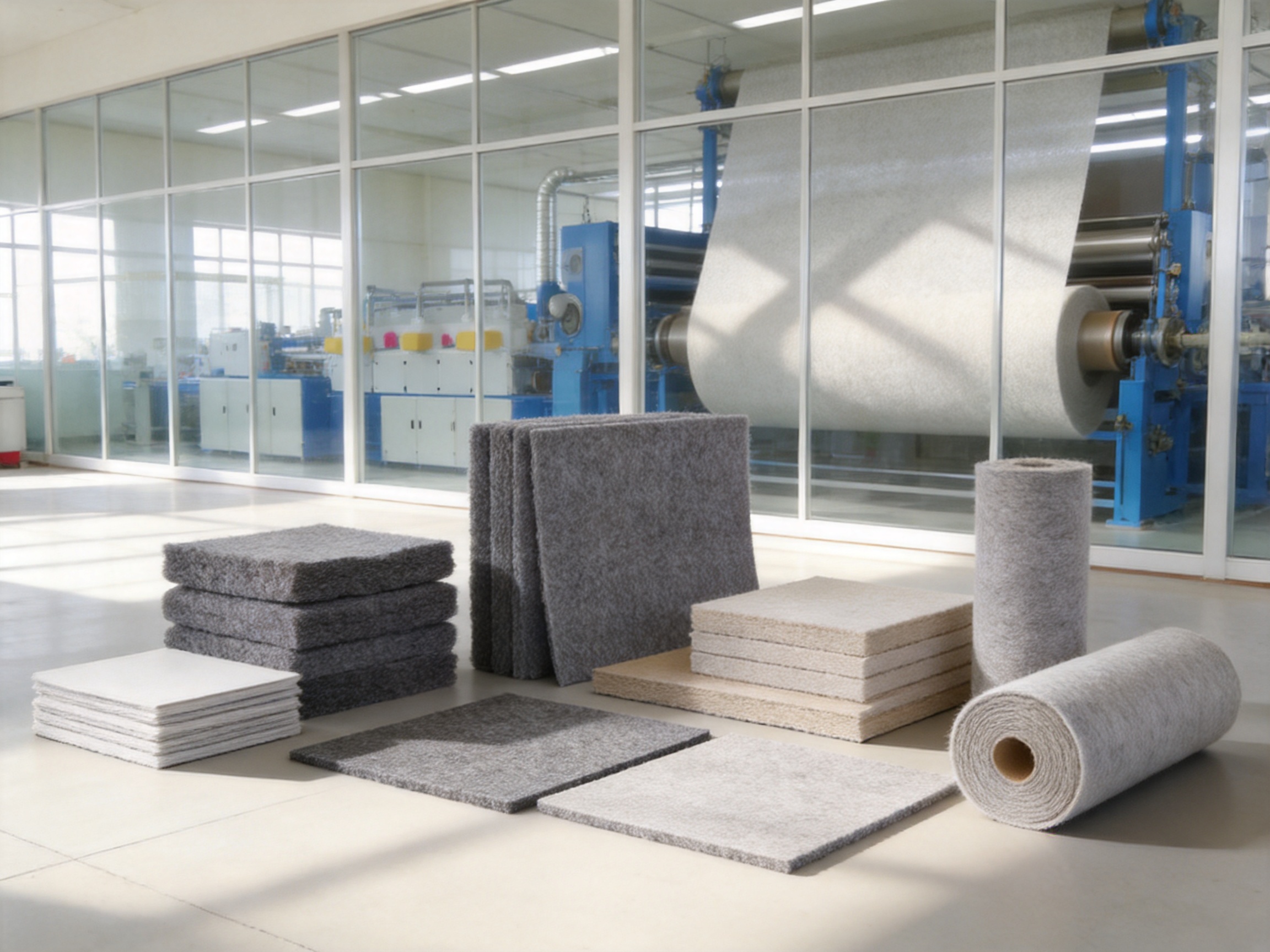
After reinforcement and any required thermal treatment, the continuous felt can be wound into rolls or cut into sheets and specified lengths. Winding equipment should maintain appropriate tension without excessively compressing the product. Cutting equipment can be configured according to customer requirements for roll width, sheet length, edge trimming, and packaging format.
The finished product may be supplied as a continuous roll, a fixed-length sheet, a die-cut component, or another converted form. The final handling arrangement depends on the customer’s downstream process.
HYL Airlaid Waste Felt Production Line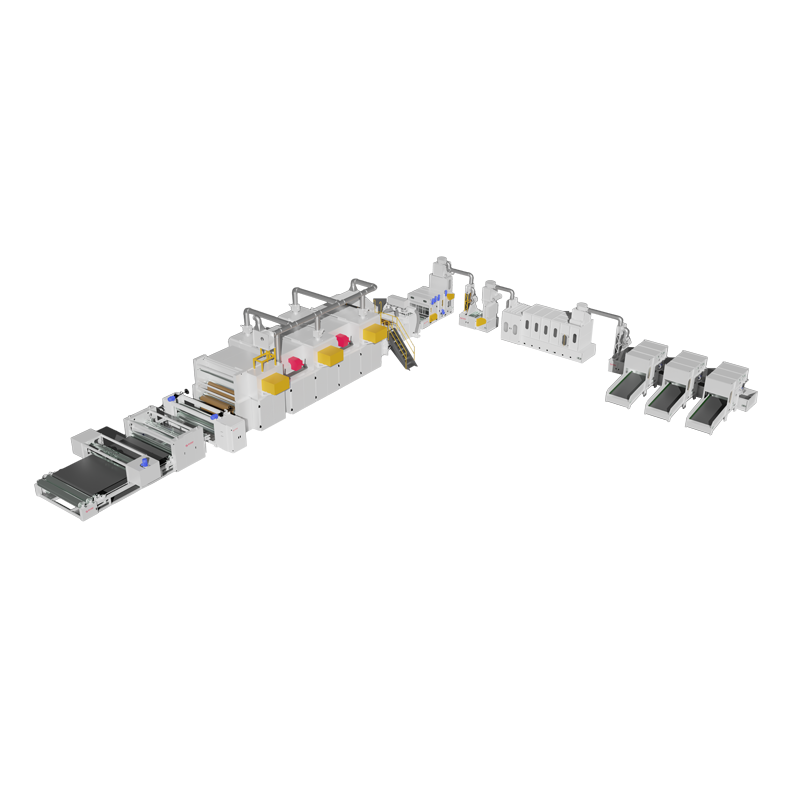
4. Key Technical Specifications
| Item | Typical Specification |
|---|---|
| Equipment type | Airlaid waste felt production line |
| Model designation | HYL |
| Suitable raw materials | Natural fiber, cotton, wool, polyester, recycled waste fiber, low-melt fiber, and compatible blends |
| Approximate fiber length range | 5 mm to 85 mm, subject to material testing and configuration |
| Working width | 1500 mm to 2800 mm |
| Finished product weight | 500 gsm to 7500 gsm |
| Finished product thickness | 5 mm to 200 mm |
| Production capacity | Approximately 500 kg/h to 1000 kg/h |
| Automation | Automatic operation with configuration selected according to customer requirements |
| Configuration | Customizable according to raw materials, product specifications, and production targets |
| Certification information | CE and ISO9001 certification information provided for the equipment and manufacturer |
| Construction materials | Mechanical components mainly manufactured from steel and iron |
| Finished-product formats | Rolls, sheets, or cut lengths according to the downstream application |
The specifications above represent the stated operating range rather than a guarantee that every configuration will achieve every listed value simultaneously. Capacity and product quality depend on fiber type, moisture, contamination, blend ratio, product weight, thickness, reinforcement method, line speed, and operating conditions.
5. Advantages over Conventional and Competing Solutions
5.1 Wider Raw-Material Flexibility
One of the most important advantages of an airlaid waste felt line is its ability to work with a broad selection of recovered fibers. Conventional equipment designed for carefully prepared virgin fibers may require more uniform input material. In contrast, an airlaid waste felt system is developed specifically for recycling and reuse applications.
The ability to process textile scraps, waste felt, recycled polyester, natural fiber, cotton, wool, and low-melt fiber gives manufacturers more options when establishing a raw-material supply chain. This is valuable when the availability or price of one fiber type changes.
Material flexibility does not mean that sorting and preparation are unnecessary. A stable production program still requires appropriate testing and control. However, the line can be configured to accommodate a wider range of input conditions than a process limited to a narrow virgin-fiber specification.
5.2 Reduced Dependence on Traditional Carding
Traditional carding remains useful for many nonwoven products, but it may not be the best solution for every recycled waste application. Some waste fibers are too short, too irregular, too tangled, or too variable for efficient carding without intensive preparation.
Airlaid forming provides a different method of web construction. The fibers are opened and distributed through an air system, reducing the need to create a highly uniform card feed. This can make the process more practical for thick felt and recycled materials.
The airlaid approach can also reduce the risk of excessive fiber damage associated with repeated mechanical processing. The precise result depends on equipment settings and raw-material condition, but the process is designed to support efficient conversion while protecting useful fiber length.
5.3 Efficient Waste Conversion
An integrated line connects opening, dust removal, web forming, and reinforcement. This reduces the need to transfer loose fibers manually between independent machines. A continuous arrangement can improve material flow, reduce handling losses, and support more consistent production scheduling.
Waste conversion efficiency is affected by contamination, moisture, fiber type, and the proportion of unusable material. Nevertheless, the integrated system provides a practical platform for recovering fibers that might otherwise be discarded or used only in low-value applications.
5.4 High Product Weight and Thickness Capability
The stated product range of approximately 500 gsm to 7500 gsm and 5 mm to 200 mm covers many thick-felt applications. These characteristics are important for automotive padding, insulation, protective packaging, furniture protection, and cushioning products.
Compared with thin nonwoven processes, an airlaid line can be designed to build a deeper and more open web. This supports products where bulk, compressibility, sound absorption, and thermal resistance are more important than a thin surface structure.
5.5 Customizable Width and Configuration
Working widths from approximately 1500 mm to 2800 mm allow customers to select a production scale that matches their target products and factory layout. The configuration can be adapted to the required raw materials, output, product weight, reinforcement process, winding format, and automation level.
Customization is especially important because waste-felt manufacturers do not all use the same feedstock. A line for recycled polyester may require different opening, cleaning, and bonding arrangements from a line for wool, cotton, or mixed textile scraps.
5.6 Support for Multiple End-Use Industries
The same basic production platform can serve several markets. Automotive manufacturers may require interior felts, trunk liners, wheel-arch materials, underbody padding, or acoustic components. Building-material producers may use the felt for insulation and sound-reduction products. Furniture and logistics companies may require protective pads and packaging materials.
This application flexibility helps manufacturers diversify their customer base. It also allows them to adjust product weight, thickness, fiber blend, and reinforcement method for different market requirements.
5.7 Automatic Operation and Process Coordination
The line is designed for automatic operation, with controls coordinating material feeding, web formation, reinforcement, and finishing. Automation can help operators maintain repeatable settings and reduce manual intervention in routine production.
Automation does not eliminate the need for trained personnel. Operators must still monitor raw-material quality, machine condition, dust levels, temperature, web weight, thickness, and finished-product appearance. A well-designed control system gives the production team better information and more consistent adjustment capability.
6. Applications of Airlaid Waste Felt
6.1 Automotive Interior Materials
Automotive interiors require materials that balance weight, durability, cushioning, acoustic performance, thermal behavior, and cost. Recycled-fiber felt can be used in selected interior and semi-structural applications, subject to the vehicle manufacturer’s specifications and testing requirements.
Potential applications include interior padding, trunk components, floor underlay, wheel-arch liners, parcel-shelf materials, and acoustic insulation. The ability to produce thick and dense felt allows manufacturers to develop different grades for absorption, cushioning, and protection.
Automotive customers may require strict control of odor, fogging, flammability, emissions, dimensional stability, and mechanical performance. The production line can provide the manufacturing platform, but the final product must be engineered and tested against the applicable vehicle and regulatory requirements.
6.2 Building Insulation
Nonwoven felt made from recycled or natural fibers can be used in thermal and acoustic insulation products. Its porous structure can help reduce heat transfer and absorb sound, while its thickness can be adjusted for different installation requirements.
Building applications may include wall insulation, roof insulation, floor underlay, pipe protection, acoustic panels, and equipment-room sound control. Product design must take into account moisture, fire performance, compression, biological resistance, and local building regulations.
6.3 Furniture Protection and Transit Materials
Furniture manufacturers and logistics companies use protective materials to prevent scratches, dents, and surface damage during handling and transportation. Thick felt can be produced in rolls or sheets and cut to suit furniture dimensions.
Compared with some plastic-based protection materials, fiber felt can provide a soft contact surface and may be produced with recycled content. The finished material can be designed for repeated handling, cushioning, and temporary protection during warehouse or delivery operations.
6.4 Packaging and Industrial Padding
Industrial products often need internal padding to prevent movement and reduce impact during shipping. Airlaid waste felt can be converted into pads, separators, liners, and cushioning layers for equipment, components, and fragile products.
The suitable specification depends on product weight, transport conditions, vibration, humidity, and packaging design. The production line can manufacture different thicknesses and densities, allowing the packaging supplier to match the felt to the protected item.
6.5 Mattress and Bedding Components
Selected fiber blends and reinforcement methods can be used to manufacture padding layers for mattresses, cushions, and bedding products. The key requirements may include resilience, breathability, softness, thickness retention, and resistance to fiber migration.
When recycled materials are used in bedding, hygiene, traceability, cleanliness, and applicable consumer-product standards must be carefully controlled. The machinery supplier can customize the line, while the product manufacturer remains responsible for confirming that the finished material meets the relevant market requirements.
6.6 Agricultural and Industrial Uses
Depending on composition and treatment, thick nonwoven felt may also be used for agricultural coverings, equipment padding, filtration support, floor protection, and general industrial applications. The precise suitability depends on moisture resistance, chemical exposure, tensile strength, temperature, and dimensional stability.
7. Manufacturing Strengths of the Machinery Supplier
Changshu Hongyi Nonwoven Machinery Co., Ltd. is a China-based manufacturer and supplier specializing in nonwoven machinery. The company has more than 20 years of experience in the nonwoven machinery field and provides both complete production lines and individual machines.
Its product range includes needle-punched geotextile production lines, nonwoven carpet production lines, airlaid waste felt production lines, automotive interior material lines, needle-punching cleaning cloth lines, wool felt lines, jute felt lines, needle-punching machines, carding machines, airlaid machines, ironing machines, and thermal bonding wadding oven machines.
This broad product range is significant because a waste-felt project may require more than one machine category. A customer may need opening equipment, feeding equipment, airlaid forming equipment, needle punching, thermal bonding, heat setting, winding, cutting, dust removal, and auxiliary systems. A supplier with experience across these areas can coordinate the line more effectively than a company that provides only one isolated machine.
7.1 Complete-Line Engineering
Complete-line engineering involves more than placing individual machines in sequence. The equipment must be matched according to throughput, fiber movement, working width, web weight, reinforcement requirements, electrical controls, dust extraction, and factory space.
The supplier’s experience with complete nonwoven lines supports the integration of these functions. Customers can discuss the intended product, raw material, capacity, and factory conditions before the final configuration is determined.
7.2 Customization Based on Customer Needs
The airlaid waste felt line is not restricted to one fixed specification. Working width, product range, material handling, control system, reinforcement method, winding arrangement, and cutting format can be considered during the engineering stage.
Customization allows the machinery to be aligned with local power conditions, factory layout, labor structure, product standards, and market demands. It also helps prevent customers from purchasing equipment that is oversized for their initial operation or unsuitable for their planned fiber blend.
7.3 Mechanical Construction and Industrial Durability
The stated mechanical construction uses mainly steel and iron. These materials are widely used in industrial nonwoven equipment because they provide a stable foundation for moving assemblies, web-forming units, rollers, frames, and reinforcement systems.
Durability depends on engineering quality, component selection, fabrication accuracy, installation, lubrication, cleaning, and maintenance. A production line processing recycled fibers must be designed for demanding conditions, including dust, fiber accumulation, vibration, and continuous operation.
7.4 Quality and Certification Orientation
The equipment information includes CE and ISO9001 certification references. CE-related conformity supports the consideration of applicable European machinery and safety requirements, while ISO9001 reflects a quality-management framework.
Certification should always be reviewed against the actual machine configuration, delivery scope, and destination-country requirements. Customers should request the applicable technical documents, safety information, electrical standards, and acceptance criteria during the purchasing process.
7.5 International Supply Experience
The company reports supplying products to more than 20 countries, including Mexico, Argentina, Brazil, Turkey, Algeria, Egypt, Bangladesh, Vietnam, Thailand, and other Asian markets. International supply experience can help with export packaging, documentation, installation coordination, communication, and after-sales support.
Global projects often involve different electrical standards, languages, factory conditions, import procedures, and operator-training needs. A supplier familiar with overseas projects can help identify these matters earlier in the process.
7.6 After-Sales and Long-Term Cooperation
The supplied information includes a one-year warranty and technical support associated with the equipment. After-sales service may include installation guidance, commissioning assistance, operation instructions, troubleshooting support, and spare-parts coordination, depending on the commercial agreement.
Long-term line performance depends on regular maintenance and the availability of wear parts. Customers should clarify the warranty scope, response procedure, recommended spare-parts list, remote support method, and service responsibilities before signing the contract.
8. Manufacturing and Quality-Control Considerations
Advanced machinery manufacturing begins with a clear understanding of the customer’s raw materials and finished products. Before production, the supplier should collect information about fiber type, fiber length, moisture, contamination, blend ratio, target gsm, thickness, width, capacity, reinforcement method, and operating schedule.
Raw-material trials can help confirm whether the opening system, airlaid forming unit, and bonding or needling section are suitable. Trial results may also help determine the correct machine speed, airflow, feeding rate, temperature, and reinforcement density.
Mechanical fabrication requires accurate cutting, welding, machining, assembly, and alignment. Rollers and moving components must be positioned correctly to prevent web deviation, excessive vibration, and uneven pressure. Frames should provide sufficient rigidity for continuous operation.
Electrical and control-system integration is another important manufacturing stage. Sensors, motors, inverters, temperature controls, safety switches, and operator interfaces must work together. Emergency-stop systems, guards, access protection, and dust-management arrangements should be considered as part of the complete machine design.
Factory testing before shipment can identify assembly or control issues. Depending on the contract, inspection may include no-load running, component checks, electrical testing, safety verification, control-system testing, and production trials with customer-supplied material.
Installation and commissioning are equally important. The customer’s factory must provide suitable foundations, power supply, ventilation, compressed air if required, dust extraction, lifting access, and safe working space. Operators should be trained in start-up, shutdown, cleaning, adjustment, and emergency procedures.
9. Operating Parameters That Influence Product Quality
9.1 Fiber Blend
The blend ratio influences bonding, strength, softness, bulk, density, and thermal behavior. Polyester and low-melt fibers may support thermal bonding, while natural fibers can contribute absorbency, texture, or insulation characteristics. Recycled blends should be tested for compatibility before full-scale production.
9.2 Fiber Length
Fiber length affects opening, transportation, web distribution, entanglement, and final strength. The stated 5 mm to 85 mm range provides broad flexibility, but short fibers and long fibers may behave differently in the air system. Adjustments to opening intensity and airflow may be required.
9.3 Moisture and Contamination
Excess moisture can affect feeding, opening, bonding, and product weight. Contamination can cause defects, unpleasant odor, equipment wear, or failure to meet application standards. Incoming material should therefore be stored in dry conditions and inspected before use.
9.4 Web Weight and Thickness
Web weight is influenced by feed rate and forming speed. Thickness is affected by fiber volume, consolidation pressure, needle penetration, thermal treatment, and winding tension. Operators should monitor both weight and thickness because a product may meet one measurement while failing the other.
9.5 Thermal Conditions
When thermal bonding or heat setting is used, temperature must correspond to the softening or melting behavior of the bonding fibers. Too little heat may result in weak bonding, while excessive heat may reduce bulk, create hard spots, or damage the material.
9.6 Reinforcement Density
Needle density and penetration influence tensile strength, tear resistance, surface appearance, and compression recovery. A heavily needled product may become denser and less soft, while insufficient reinforcement may produce poor handling strength.
10. Installation, Maintenance, and Safety
Before installation, the factory should confirm that the floor can support the equipment and that sufficient space is available for material storage, operator access, maintenance, and finished-product handling. The layout should also provide a logical movement path for raw materials and finished rolls.
Dust management is essential when processing loose fibers. Extraction ducts, filters, cleaning procedures, and fire-prevention measures should be designed according to the material and local regulations. Accumulated fiber dust can affect machine operation and create safety risks if not controlled.
Routine maintenance may include cleaning feeding areas, opening units, air ducts, forming chambers, rollers, needles, ovens, and cutting equipment. Lubrication, belt inspection, electrical checks, temperature-control verification, and fastener inspection should follow the supplier’s instructions.
Wear parts should be replaced before they cause secondary damage. Needles, belts, bearings, seals, knives, filters, and other components may require periodic replacement depending on operating hours and raw-material abrasiveness.
Operators should use appropriate personal protective equipment and follow lockout procedures during maintenance. Guards must remain in position during normal operation, and emergency stops should be tested according to the factory’s safety program.
11. How to Select the Correct Configuration
The first selection factor is the raw material. Customers should provide representative samples rather than relying only on general descriptions such as “textile waste” or “recycled fiber.” Samples allow the supplier to evaluate fiber length, density, contamination, moisture, color, and opening behavior.
The second factor is the target product. A 500 gsm automotive padding material requires a different process balance from a 7500 gsm insulation felt. The customer should specify the intended weight, thickness, width, strength, softness, compression, color, surface condition, and packaging format.
The third factor is production capacity. A line designed for 500 kg/h may be appropriate for a medium-scale plant, while a 1000 kg/h configuration may be selected for a larger operation. Actual capacity varies according to the product and feedstock, so capacity should be confirmed through technical discussion and testing.
The fourth factor is reinforcement technology. Thermal bonding is suitable for selected thermoplastic blends, while needle punching may be preferred for products requiring mechanical fiber entanglement. Some applications may require a combination of methods.
The fifth factor is factory infrastructure. Electrical supply, floor plan, ventilation, dust collection, material storage, lifting equipment, and operator access all influence the final design. Early coordination reduces installation delays and unexpected modification costs.
The sixth factor is future expansion. Customers may initially produce one product but later add automotive, insulation, packaging, or furniture-protection grades. A modular and customizable line can provide more flexibility for future market development.
12. Economic and Sustainability Benefits
The economic value of an airlaid waste felt line comes from several sources. It can use lower-cost waste fiber, produce higher-value nonwoven materials, reduce manual material handling, and support multiple product categories. The actual return on investment depends on material costs, labor, energy, maintenance, selling prices, utilization, and local market conditions.
Recycling can also reduce disposal expenses and improve the use of materials already present in the customer’s production network. Textile manufacturers may process their own cutting waste, while recycling companies may source waste from multiple factories.
Energy consumption should be considered carefully, especially when thermal bonding or heat setting is included. The most suitable configuration balances the required product performance with reasonable operating energy. Proper insulation, airflow control, maintenance, and production scheduling can help improve energy efficiency.
Sustainability claims should be supported by traceable material data and product testing. Recycled content, production waste, emissions, fire behavior, and end-of-life options should be documented according to customer and regulatory requirements.
13. Recommended Project Workflow
A successful project normally begins with an initial technical consultation. The customer describes the raw materials, target products, capacity, working width, factory conditions, and expected delivery schedule.
The next step is raw-material and product evaluation. Samples are tested to determine opening requirements, airlaid behavior, bonding performance, thickness, weight, strength, and appearance.
After the test stage, the supplier prepares a preliminary process flow and equipment configuration. This document should identify the main machines, auxiliary systems, control method, estimated capacity, installation requirements, and product range.
The customer then reviews the technical proposal and confirms commercial, electrical, safety, packaging, installation, training, and warranty requirements. Clear acceptance criteria should be written into the contract.
During manufacturing, the customer may review drawings, key components, control arrangements, and inspection results. A factory acceptance test can be arranged when appropriate.
After shipment and installation, the line is commissioned with suitable raw materials. Operators receive training, and the production parameters are adjusted to achieve the approved product standard.
Finally, the customer establishes routine production records. These may include raw-material batch, blend ratio, line speed, feeding rate, temperature, needle settings, product weight, thickness, output, defects, and maintenance activity.
14. Frequently Asked Questions
14.1 What materials can the line process?
The line can be configured for natural fibers, cotton, wool, polyester, recycled waste fiber, low-melt fiber, textile scraps, waste felt, and compatible blends. The exact material range depends on fiber length, contamination, moisture, blend ratio, and product requirements. Representative material testing is recommended before final equipment selection.
14.2 Can it process recycled PET fiber?
Yes, recycled PET fibers are among the suitable material options listed for the line. The final process must consider fiber length, denier, thermal behavior, cleanliness, and whether the product will be reinforced by thermal bonding, needle punching, or another method.
14.3 Does the process completely replace carding?
The line uses airlaid web-forming technology instead of relying on a traditional carding process for the main web-forming stage. This makes it suitable for many waste-fiber applications. However, the best process depends on the product, and some projects may still include additional fiber-preparation equipment.
14.4 What is the working width?
The stated working width is approximately 1500 mm to 2800 mm. Other dimensions or related specifications may be customized according to the customer’s product and factory requirements. The final effective width should be confirmed in the technical proposal.
14.5 What product weights can be manufactured?
The stated product gsm range is approximately 500 gsm to 7500 gsm. Actual production capability depends on the fiber blend, web-forming conditions, consolidation method, thickness, line speed, and required uniformity.
14.6 What thickness can the finished felt reach?
The stated finished-product thickness range is approximately 5 mm to 200 mm. Thickness is influenced by web bulk, fiber density, reinforcement, thermal treatment, compression, and winding conditions.
14.7 What is the expected production capacity?
The stated production capacity is approximately 500 kg/h to 1000 kg/h. Actual output depends on product weight, thickness, material type, contamination, reinforcement method, machine speed, and operating efficiency.
14.8 Is the line fully automatic?
The equipment is described as automatic, with control systems coordinating the main process. The specific automation level depends on the selected configuration. Operators are still required for material preparation, quality monitoring, parameter adjustment, cleaning, maintenance, and safe operation.
14.9 Can the line produce both rolls and sheets?
The line can be arranged for winding, cutting, or both, depending on the customer’s requirements. Roll diameter, sheet length, edge trimming, and packaging format should be confirmed during the engineering stage.
14.10 Is thermal bonding required for all products?
No. The reinforcement method depends on the product and fiber composition. Thermal bonding is suitable for selected thermoplastic and low-melt fiber blends, while needling or other methods may be more appropriate for different applications.
14.11 What industries use the finished material?
Typical applications include automotive interiors, building insulation, furniture protection, transit packaging, industrial padding, mattress components, acoustic materials, and other products requiring thick nonwoven felt.
14.12 Can the configuration be customized?
Yes. The configuration can be customized according to raw material, working width, product weight, thickness, capacity, reinforcement method, color, winding and cutting requirements, factory layout, and customer production objectives.
14.13 What should be prepared before requesting a quotation?
Customers should prepare raw-material samples, expected product specifications, target capacity, desired working width, finished-product format, available factory space, power-supply information, destination country, and any required product standards. This information helps the supplier prepare a more accurate proposal.
14.14 What after-sales support is available?
The supplied information includes a one-year warranty. Depending on the agreement, support may include installation guidance, commissioning, operator training, troubleshooting, technical documentation, and spare-parts assistance. The detailed service scope should be confirmed in the contract.
15. Conclusion
The airlaid waste felt production line provides a practical solution for converting textile scraps, waste felt, recycled PET fibers, and other suitable materials into thick nonwoven products. Its central advantage is the combination of waste-fiber flexibility and airlaid web formation, allowing manufacturers to work with materials that may be difficult to process through conventional carding alone.
The line covers the major stages of production, including opening, dust removal, feeding, airlaid forming, reinforcement, thermal treatment, winding, and cutting. With a working width of approximately 1500 mm to 2800 mm, a product range of approximately 500 gsm to 7500 gsm, finished thicknesses from approximately 5 mm to 200 mm, and capacity of approximately 500 kg/h to 1000 kg/h, it can serve a wide variety of industrial applications.
Its suitability for automotive interiors, insulation, packaging, furniture protection, bedding components, acoustic materials, and industrial padding allows manufacturers to diversify their product portfolio. Custom engineering further helps match the line to specific raw materials, quality targets, factory conditions, and production plans.
Changshu Hongyi Nonwoven Machinery Co., Ltd. combines more than 20 years of nonwoven machinery experience with complete-line engineering, customized configurations, international supply experience, automatic control options, and after-sales support. These capabilities provide a foundation for customers seeking a reliable and adaptable waste-fiber recycling solution.
As with any industrial project, successful results depend on correct raw-material preparation, equipment selection, commissioning, operator training, safety management, and ongoing maintenance. A detailed technical evaluation and material trial should be completed before finalizing the production line.
References
1. Product technical information for the HYL Airlaid Waste Felt Production Line, including working width, product gsm range, finished thickness, raw-material options, and production capacity.
2. Changshu Hongyi Nonwoven Machinery Co., Ltd. company information and nonwoven machinery product portfolio.
3. General principles of airlaid web forming, fiber opening, nonwoven web consolidation, and thermal bonding.
4. General guidelines for recycled textile-fiber preparation, dust control, nonwoven production safety, and industrial equipment maintenance.
5. General application requirements for automotive interior materials, building insulation, protective packaging, furniture protection, and industrial felt products.