

Content
- 1 1. The Role of Fiber Mixing in Nonwoven Manufacturing
- 2 2. Product Overview
- 3 3. Main Advantages of the Fiber Mixing Machine
- 3.1 3.1 Proportional weighing for recipe control
- 3.2 3.2 Compatibility with many raw materials
- 3.3 3.3 Integrated opening, weighing, mixing, and storage
- 3.4 3.4 Automatic operation and photoelectric control
- 3.5 3.5 Robust welded steel construction
- 3.6 3.6 Steel rollers for leveling and cotton removal
- 3.7 3.7 Continuous transfer to the next process
- 4 4. Technical Specifications
- 5 5. How the Machine Works
- 6 6. Applications in Nonwoven Production
- 7 7. Advantages Compared with Basic Blending Methods
- 8 8. Manufacturing Strengths and Engineering Capability
- 9 9. Installation and Commissioning Considerations
- 10 10. Operation and Maintenance
- 11 11. Safety and Production Management
- 12 12. Purchasing Guidance for International Buyers
- 13 13. Service, Warranty, and Long-Term Cooperation
- 14 14. Why the HYHM System Is a Practical Choice
- 15 15. Frequently Asked Questions
- 15.1 Q1: What is the main function of the HYHM Fiber Mixing Machine?
- 15.2 Q2: Which fibers can be processed?
- 15.3 Q3: How does the machine control the blend ratio?
- 15.4 Q4: What is the reference production capacity?
- 15.5 Q5: What working widths are available?
- 15.6 Q6: Can the equipment be customized?
- 15.7 Q7: Is the machine suitable for a complete nonwoven production line?
- 15.8 Q8: What is the difference between the front and rear sections?
- 15.9 Q9: Does the machine require manual operation?
- 15.10 Q10: What power supply is required?
- 15.11 Q11: What certifications are listed?
- 15.12 Q12: What warranty is provided?
- 15.13 Q13: How long is the lead time?
- 15.14 Q14: Can the machine process recycled fibers?
- 15.15 Q15: What should be checked before commissioning?
- 16 16. Conclusion
- 17 References
- 18 Product: HYHM Fiber Mixing Machine
Consistent fiber preparation is the foundation of stable nonwoven fabric production. Before fibers reach a carding machine, airlay system, needle punching line, thermal bonding oven, or other forming equipment, they must be opened, proportioned, blended, and delivered in a controlled manner. Variations at this early stage can lead to uneven web weight, unstable tensile strength, inconsistent appearance, poor bonding, and unnecessary production waste. The HYHM Fiber Mixing Machine is designed to address these challenges through pre-opening, proportional weighing, controlled conveying, fiber blending, storage, and feeding in one integrated system.
Developed for nonwoven manufacturers that process different fiber types and recipes, the machine combines mechanical opening equipment, an electronic belt weighing system, photoelectric control technology, a cross conveyor, and a fiber storage section. Its purpose is not simply to move fiber from one point to another. It is engineered to help production teams achieve a repeatable blend according to a predetermined percentage, while maintaining a continuous material supply for downstream machinery.
The system is suitable for polyester fiber, polypropylene staple fiber, wool, cotton, coir fiber, jute fiber, ES fiber, and other compatible raw materials. It can be configured for different working widths, including 1.6 meters and 2 meters, and is available as a customized solution for specific factory layouts, raw material characteristics, production capacities, and control requirements.
For manufacturers seeking an efficient fiber blending machine supplier and a complete nonwoven machinery partner, the equipment represents a practical combination of accurate feeding, robust construction, adaptable processing, and production-line integration.
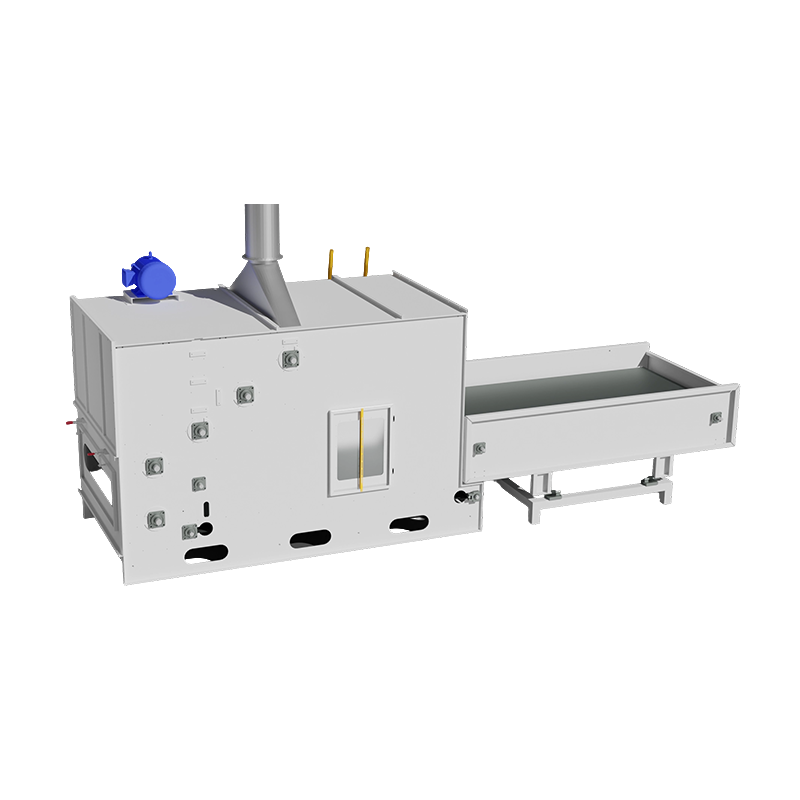
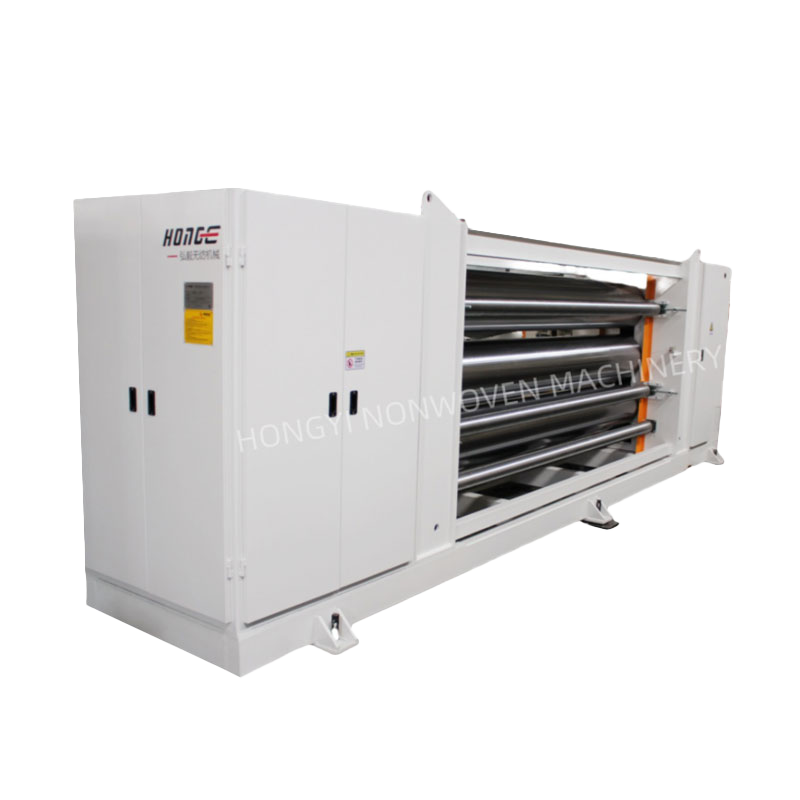
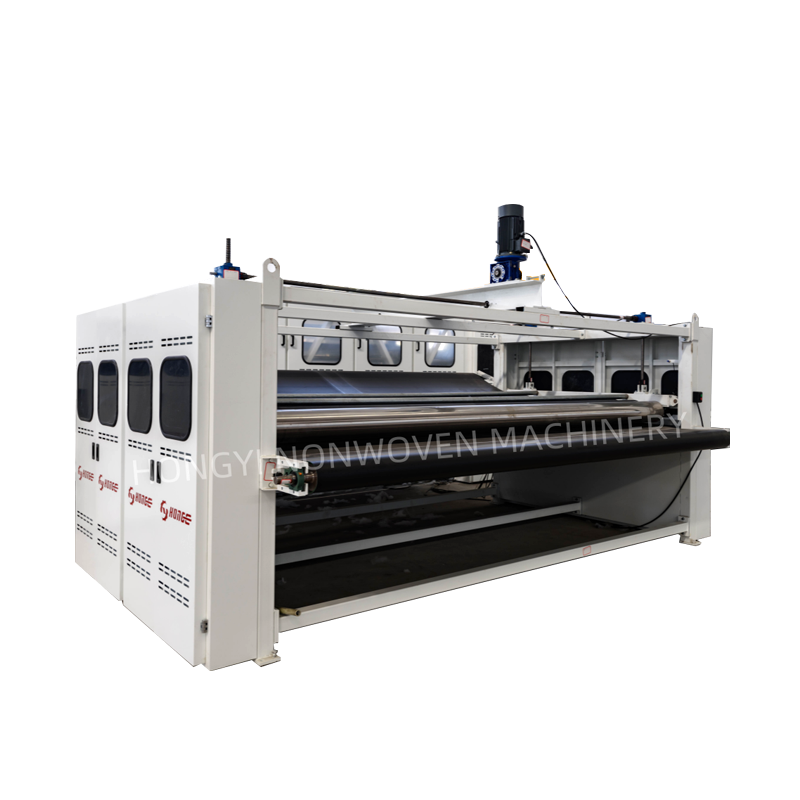
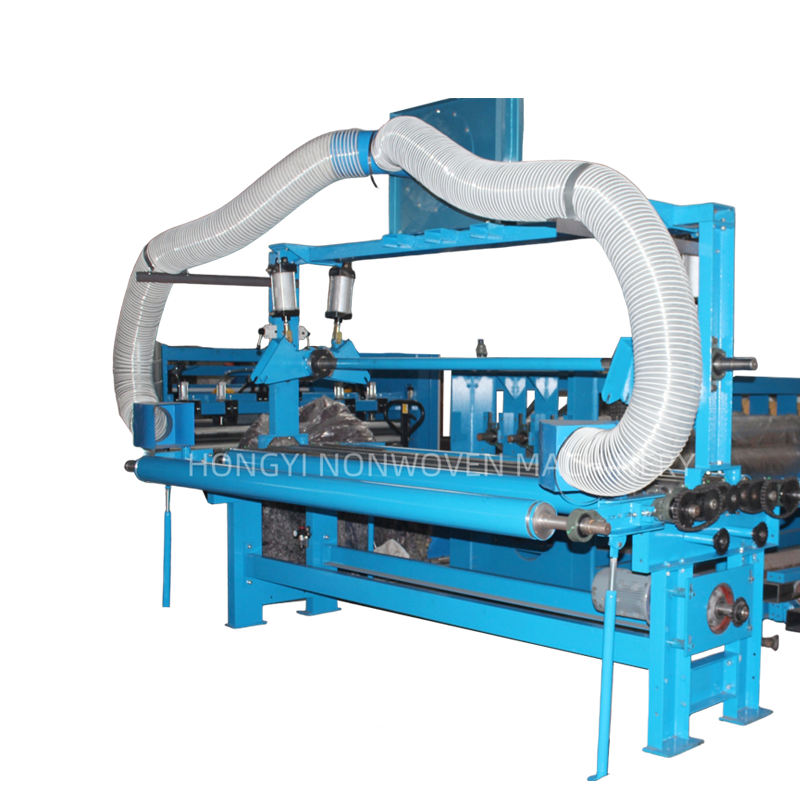
HYHM Fiber Mixing Machine
1. The Role of Fiber Mixing in Nonwoven Manufacturing
Nonwoven production begins with raw materials that are often supplied in compressed bales. Fibers in a bale are compacted, entangled, and unevenly distributed. If these fibers are placed directly into a carding or web-forming machine without adequate opening and blending, the downstream process may receive material with inconsistent density and composition.
Fiber mixing is therefore a critical preparation stage. It normally includes several connected operations:
1. Removing or loosening fiber from bales.
2. Pre-opening compacted fiber tufts.
3. Measuring the required quantity of each material.
4. Combining different fiber types or colors according to the production recipe.
5. Transferring the blend to a storage or feeding section.
6. Supplying the blended material continuously to the next machine.
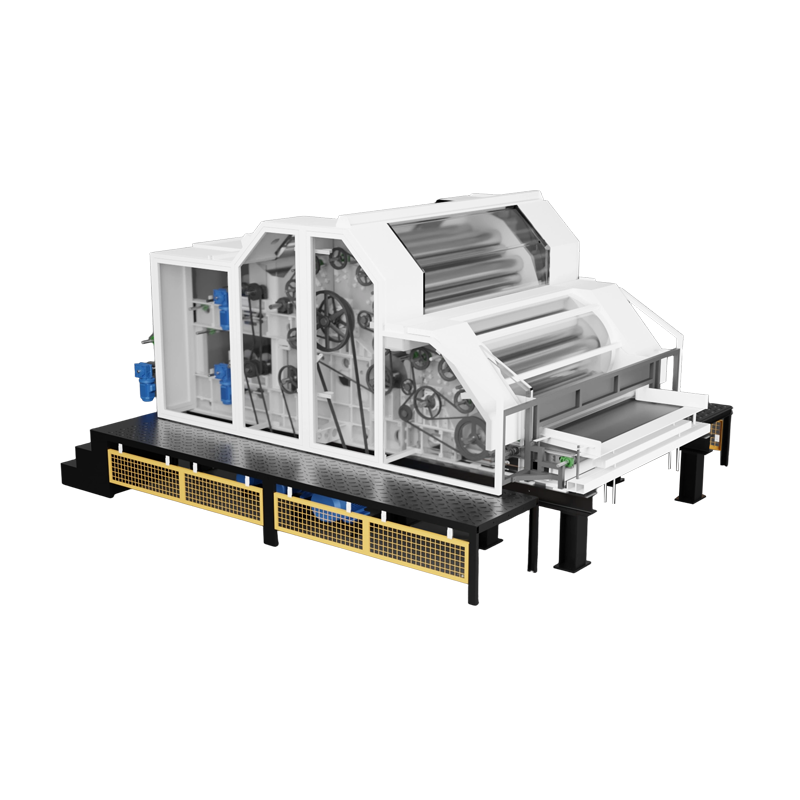
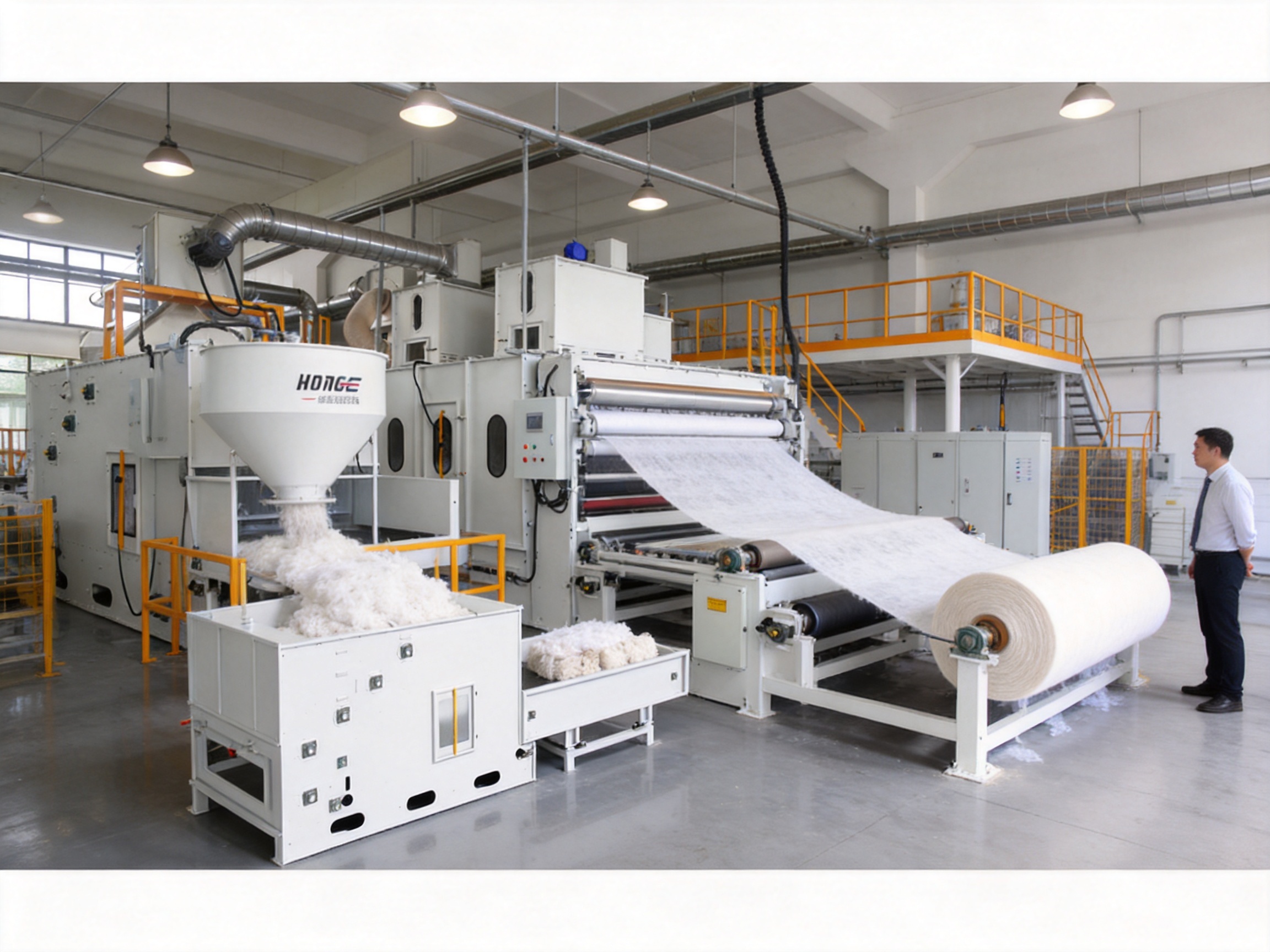
The HYHM Fiber Mixing Machine integrates these functions into a coordinated system. The front section is used for fiber weighing and mixing, while the rear section is designed for storage and feeding. This arrangement helps reduce manual handling and creates a more organized material flow between bale opening and the next production process.
In applications such as needle-punched geotextiles, automotive interior materials, cleaning cloth, wool felt, jute felt, carpet, and other technical nonwovens, the quality of the blend can directly influence final product performance. A reliable blend supports more stable basis weight, more uniform fiber distribution, and better process repeatability.
2. Product Overview
The HYHM Fiber Mixing Machine is an automatic fiber blending and weighing system for nonwoven production. Its primary function is to pre-open different fibers, weigh them according to predetermined percentages, blend them, and transfer the prepared material through a cross conveyor to the next process.
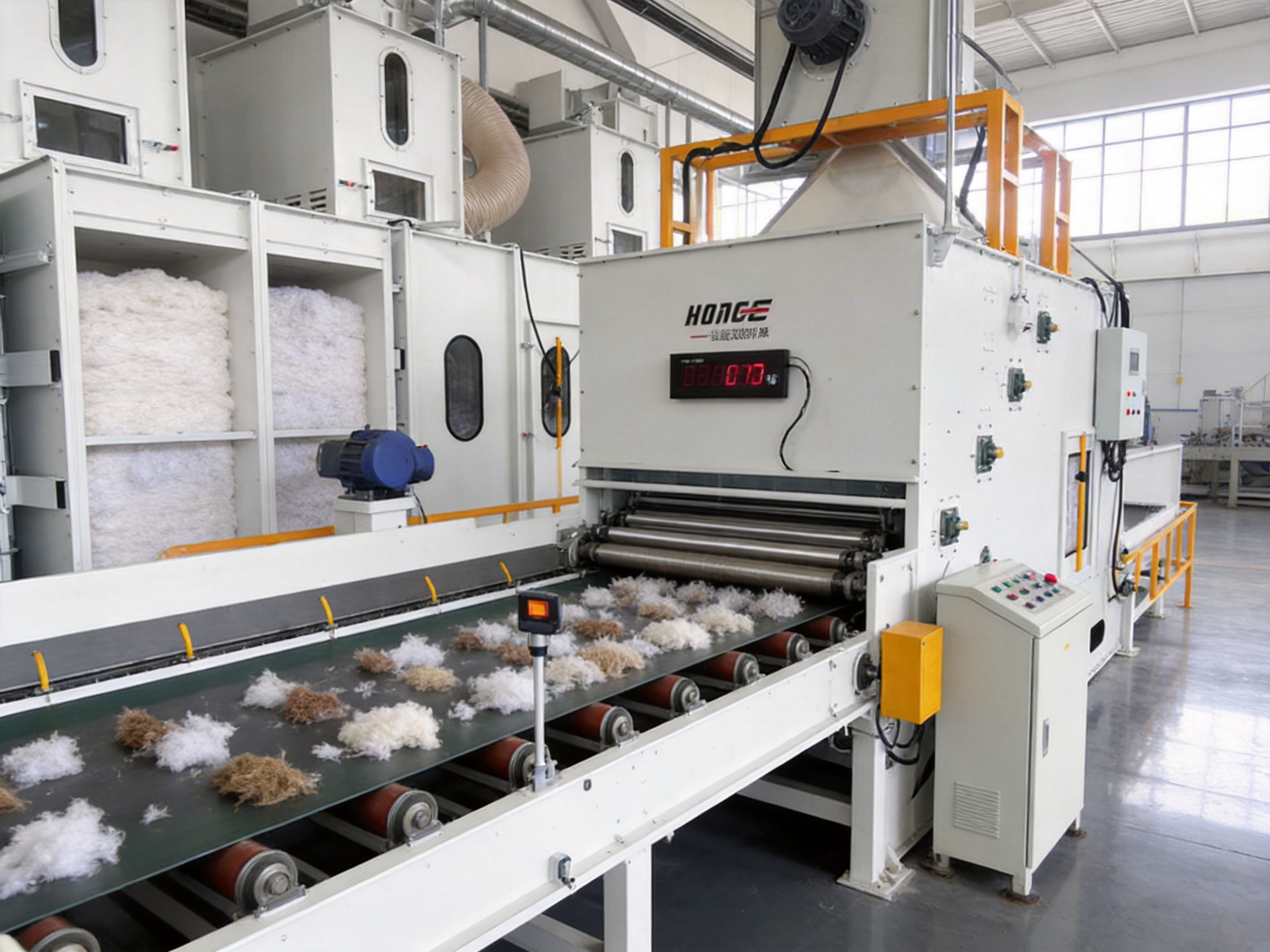
The equipment uses an electronic belt scale for quantitative measurement. Unlike a simple volume-based feeder, a belt weighing system measures material according to weight, allowing the operator to set or adjust the target proportion of each component. This is particularly valuable when the raw materials have different densities, lengths, crimp levels, or packing conditions.
The machine body adopts a welded steel plate structure. This construction provides a solid foundation for the weighing system, feeding conveyor, beating devices, storage cabinet, motors, and related control components. The feeding area consists of a PVC conveyor belt, supporting frame, and associated parts. Steel rollers are used in the beating devices for cotton leveling and cotton removal, helping prepare the material for stable transfer.
The front area performs weighing and mixing duties. After the materials have been processed and combined, the rear area stores and feeds the blended fiber. This separation improves the organization of the process and allows the material flow to remain continuous rather than relying entirely on intermittent manual feeding.
Key operating concept
The operating concept can be summarized as follows:
Raw fiber bales are placed into the relevant feeding area.
The machine loosens and pre-opens the fiber to improve material handling.
Each fiber component is weighed through the electronic weighing system.
The control system manages the target proportions and feeding sequence.
The blended material is transferred by conveyor and prepared for storage.
The rear storage section supplies material to the next production stage.
This approach is suitable for factories that need a more controlled alternative to manual weighing and batch-by-batch blending.
3. Main Advantages of the Fiber Mixing Machine
3.1 Proportional weighing for recipe control
One of the most important advantages of the HYHM system is proportional weighing. Fiber recipes are often defined by percentages rather than by a single raw material. For example, a manufacturer may combine polyester with polypropylene, blend different fiber lengths, or add natural fibers to synthetic fibers. The desired result depends on maintaining the correct proportion over the production run.
The electronic belt scale measures the material as it moves through the feeding process. This supports quantitative weighing and helps reduce the variation associated with manual estimation. When the recipe is controlled more accurately, the finished nonwoven fabric can achieve greater consistency in basis weight, softness, bulk, strength, absorbency, or thermal response, depending on the application.
Compared with basic manual blending or non-weighing feeding equipment, proportional weighing provides a clearer and more repeatable production method. It also makes it easier for operators to change recipes when the factory produces multiple grades of nonwoven material.
3.2 Compatibility with many raw materials
The machine can handle a broad range of fiber materials, including polyester fiber, polypropylene staple fiber, wool, cotton, coir fiber, jute fiber, and ES fiber. This versatility is useful for companies that manufacture both synthetic and natural-fiber nonwovens or that produce several product categories on the same site.
Different fibers behave differently during processing. Polyester and polypropylene may have different bulk, friction, and feeding characteristics. Wool, cotton, coir, and jute can contain more irregular tufts or natural variation. ES fiber may require careful handling to preserve its form before thermal bonding. A machine intended for diverse materials must therefore combine controlled conveying with suitable opening and beating components.
The HYHM design provides a foundation for processing these materials while allowing the manufacturer to customize relevant details according to the fiber blend, line speed, working width, and final product requirements. Material trials and engineering confirmation remain important before final configuration, particularly when processing unusually long, sticky, recycled, or highly contaminated fibers.
3.3 Integrated opening, weighing, mixing, and storage
Another advantage is functional integration. Instead of using completely separate systems for pre-opening, weighing, blending, storage, and feeding, the machine combines these operations into one coordinated unit. Integration can reduce transfer points, simplify material handling, and save factory floor space.
A more integrated layout can also reduce the risk of incorrect manual transfer. When operators move fiber between independent machines, there is a greater possibility of mixing errors, material loss, or contamination. A connected machine provides a more direct path from bale preparation to downstream feeding.
The storage section at the rear is especially useful because it acts as a buffer between the mixing process and the next machine. If the downstream equipment consumes fiber at a different momentary rate, the storage cabinet can help maintain a more stable supply. This supports smoother production and reduces the need for constant manual intervention.
3.4 Automatic operation and photoelectric control
The machine is specified as automatic and uses photoelectric control technology. Automatic operation can improve production continuity and help operators manage the process through a control interface rather than relying on repeated manual adjustments.
Photoelectric control is used to monitor material presence, level, or operating conditions at suitable points in the system. By coordinating sensor signals with the conveyor, weighing process, and feeding functions, the equipment can respond more consistently to changes in material flow.
Automation also supports safer operation. Operators can supervise the process from a more suitable position instead of reaching into the material path or repeatedly handling fiber near moving components. Appropriate guarding, emergency stops, electrical protection, and operator training should be included as part of the complete installation.
3.5 Robust welded steel construction
The main body uses a steel plate welding structure. A welded frame is advantageous in a production environment because it offers rigidity and can support the loads and vibration associated with conveyors, rollers, motors, and fiber movement.
Compared with a lightly constructed frame, a properly engineered welded structure can improve alignment stability and reduce movement during operation. Stable alignment is important for the belt scale and conveyor because excessive vibration or frame deformation may affect feeding accuracy and component life.
The steel structure can also be adapted to the customer’s factory arrangement. The supplier’s customization capability allows dimensions, connections, feeding orientation, storage arrangements, and downstream interfaces to be reviewed according to the complete production line.
3.6 Steel rollers for leveling and cotton removal
The beating devices for cotton leveling and cotton removal use steel rollers. These rollers assist in loosening, leveling, and controlling the fiber layer as it passes through the machine.
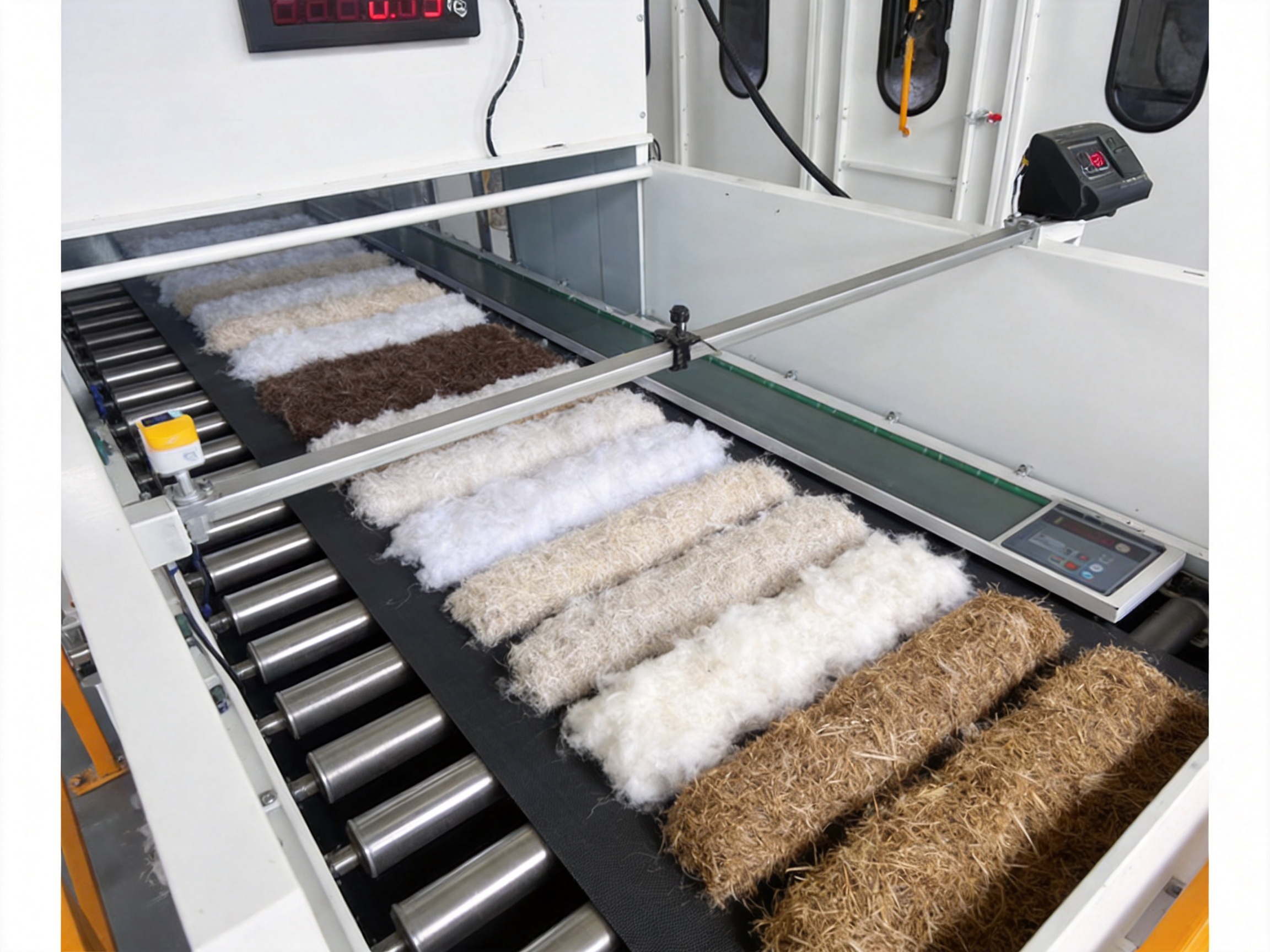
For fibers supplied in compressed bales, leveling is important because uneven tufts can cause irregular feeding. The roller arrangement helps distribute material more consistently and supports the operation of the weighing and conveyor sections. Steel rollers are also suitable for industrial use where the machine must operate continuously and withstand regular mechanical loading.
The exact roller arrangement and operating speed should be selected according to the material. Natural fibers, recycled fibers, and synthetic fibers can respond differently to beating intensity. A controlled setting is needed to open the material without causing excessive fiber damage, dust generation, or unnecessary short-fiber formation.
3.7 Continuous transfer to the next process
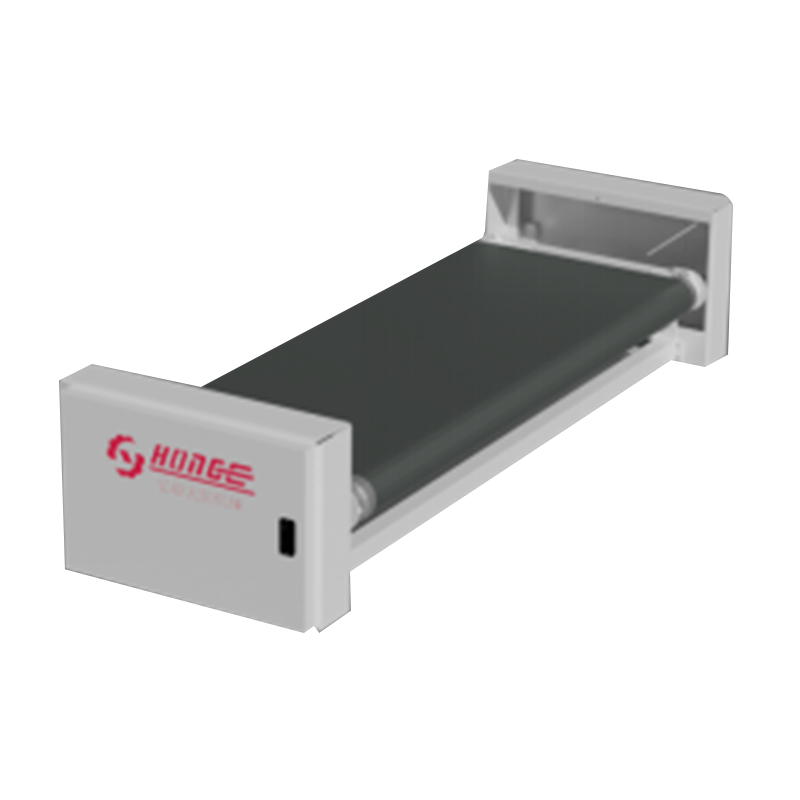
After weighing and blending, material is transferred through a cross conveyor to the next process. Continuous transfer is valuable in a production line because it reduces the possibility of interruptions between fiber preparation and web formation.
When the mixing system is properly synchronized with carding, airlay, or other downstream equipment, the entire line can operate with fewer manual pauses. This may improve labor productivity and make the production sequence easier to monitor.
The conveyor also creates a clear material path. A defined path helps plant personnel identify where material enters, where weighing occurs, where blending is completed, and where storage or feeding begins. This supports easier maintenance and troubleshooting.
4. Technical Specifications
The following specifications are provided for the standard product information and should be confirmed during the technical quotation stage. Final parameters may vary according to the selected configuration, fiber type, production requirement, and customer layout.
| Item | Specification |
|---|---|
| Model | HYHM |
| Equipment type | Automatic fiber mixing and blending machine |
| Primary application | Nonwoven fabric production |
| Working width | 1.6 m or 2 m; product parameters list 2,000 mm |
| Weighing method | Belt electronic scale |
| Reference capacity | 350 kg/h |
| Installed power | 16.25 kW according to the product parameter listing |
| Automatic grade | Automatic |
| Raw material compatibility | Polyester, polypropylene staple fiber, wool, cotton, coir, jute, ES fiber, and other suitable materials |
| Control features | Electronic weighing and photoelectric control |
| Certification information | CE and ISO9001:2000 listed in the product information |
| Warranty information | One year |
| Reference package size | 380 cm × 120 cm × 150 cm |
| Reference gross weight | 8,000 kg |
| Reference lead time | 2–3 months |
One catalog entry lists power as 24 W, while the detailed product parameters list installed power as 16.25 kW. Because a complete industrial fiber mixing machine would normally require substantially more power than a small control component, customers should request confirmation of the correct total installed power, motor ratings, voltage, and electrical configuration before placing an order. The equipment information also indicates a standard voltage of 220 V or a customized voltage, which should likewise be verified against the customer’s local electrical supply.
5. How the Machine Works
5.1 Fiber loading and preparation
Production begins with the loading of fiber from bales or prepared raw-material positions. The operator should ensure that the selected materials correspond to the production recipe and that excessive foreign matter, hard contaminants, or unsuitable packaging materials are removed before feeding.
Correct loading is important because a weighing system can control quantity, but it cannot compensate for an incorrectly identified fiber type. Material labeling, batch management, and basic incoming inspection should therefore be part of the factory’s operating procedure.
5.2 Pre-opening
The pre-opening stage loosens compressed fiber and separates larger tufts into a more manageable form. The purpose is to improve the uniformity of the material presented to the weighing and mixing sections.
Pre-opening should be strong enough to improve distribution but controlled enough to protect fiber quality. Excessive mechanical action can increase dust, damage delicate fibers, or alter the effective fiber length. The operating settings should be adjusted according to the raw material and final application.
5.3 Weighing according to predetermined percentages
Once the fibers are prepared, the electronic belt weighing system measures the material. The desired percentages may be determined by the finished product specification, laboratory trial, customer requirement, or process engineer’s formulation.
For example, a technical felt may require a high percentage of polyester for strength and dimensional stability, while a different product may combine synthetic fiber with wool, cotton, jute, or coir to obtain a particular texture, bulk, or environmental profile. The weighing system helps translate the recipe into a controlled material flow.
5.4 Blending and leveling
After the components are measured, the machine combines them into a total blend. The beating and leveling elements assist in distributing the materials across the working width. Uniform distribution at this stage is essential because localized concentrations of one fiber can continue through the downstream process and appear as weak points or visible variations in the finished fabric.
Good blending does not necessarily mean aggressive mixing. The objective is to achieve a stable and representative distribution without creating excessive fiber damage. This balance is one reason why mechanical construction, roller design, belt speed, and control settings must be matched to the material.
5.5 Storage and feeding
The rear section stores the prepared blend and feeds it toward the next stage. This buffer function helps separate the timing of mixing from the timing of downstream consumption. It can also help maintain a steady material supply when the carding machine or web-forming equipment operates at a different instantaneous rate.
Storage capacity and feeding performance should be considered together. The storage cabinet must hold enough material to support stable operation without creating excessive residence time or compaction. The correct arrangement depends on line speed, product basis weight, raw-material bulk, and the requirements of the following machine.
6. Applications in Nonwoven Production
6.1 Needle-punched geotextiles
Geotextile production commonly uses polyester or polypropylene fibers and may require precise control of basis weight and fiber composition. Stable blending supports uniform web formation before needle punching. A consistent feed can contribute to more even fabric thickness, tensile performance, puncture resistance, and elongation.
6.2 Nonwoven carpets
Carpet manufacturers may use combinations of synthetic fibers, recycled fibers, or fibers with different colors and characteristics. The mixing machine provides a practical method for preparing the blend before carding and web formation. Consistent material distribution can help reduce visible shade variation and improve the uniformity of the carpet structure.
6.3 Automotive interior materials
Automotive interior nonwovens may require carefully selected fiber combinations to balance weight, acoustic performance, stiffness, thermal behavior, and bonding response. Polyester, polypropylene, ES fiber, and recycled materials may be used in different formulations. Proportional weighing is valuable when the blend must meet a defined engineering specification.
6.4 Wool, jute, cotton, and coir felt
Natural fibers such as wool, jute, cotton, and coir can be used to manufacture felt, insulation, padding, mats, and other products. These materials may vary naturally in length, moisture, bulk, and surface characteristics. A controlled opening and blending process helps reduce the impact of raw-material variation and prepares a more consistent feed for web formation.
6.5 Cleaning cloth and industrial wiping materials
Cleaning cloth may use polyester, cotton, viscose, recycled fibers, or blended compositions. The required blend can influence absorbency, softness, strength, and cost. The machine’s ability to process multiple fiber categories makes it suitable for factories producing several cleaning-material specifications.
6.6 Thermal-bonded wadding
ES fiber and other thermally responsive fibers may be blended with polyester or other staple fibers for thermal-bonded wadding. In such applications, the blend ratio influences bonding, loft, recovery, and final thickness. Accurate mixing before carding and oven treatment supports a more stable thermal bonding process.
7. Advantages Compared with Basic Blending Methods
Many small factories begin with manual weighing, floor blending, or simple conveyor feeding. These methods may be acceptable for limited output or experimental work, but they become increasingly difficult to manage as production volume and product variety increase.
The HYHM system offers several practical improvements over basic methods:
Improved recipe repeatability: Electronic weighing provides a more controlled basis for maintaining material proportions than visual estimation or container counting.
Lower dependence on manual labor: Automatic transfer, storage, and feeding reduce repeated lifting, carrying, and manual replenishment.
Better process continuity: The integrated machine provides a steady material path from preparation to downstream production.
More efficient use of factory space: Combining several functions in one machine can reduce the footprint compared with multiple separate stations.
Greater production flexibility: The equipment can be used for various synthetic and natural fibers and can support different recipes after suitable adjustment.
Improved traceability: Defined weighing and operating parameters make it easier to record and repeat a successful production recipe.
Reduced material handling losses: Fewer manual transfer points can help reduce fiber spillage, contamination, and accidental mixing errors.
These advantages do not eliminate the need for operator supervision. Fiber properties, moisture, bale density, and contamination levels still affect the process. However, the machine provides a more controlled technical foundation than a purely manual system.
8. Manufacturing Strengths and Engineering Capability
The supplier behind the HYHM Fiber Mixing Machine is a nonwoven machinery manufacturer and trader with more than 20 years of experience in the nonwoven machinery field. Its product scope covers individual machines and complete production lines, including needle-punched geotextile lines, nonwoven carpet lines, airlaid waste felt lines, automotive interior material lines, needle-punching cleaning cloth lines, wool felt lines, and jute felt lines.
This broad product range is important because a fiber mixer should not be evaluated in isolation. It must connect properly with opening equipment, carding machines, crosslappers, airlay systems, needle punching machines, thermal bonding ovens, ironing machines, winding equipment, and cutting equipment. Experience with complete lines allows the supplier to consider upstream and downstream requirements during the design process.
8.1 Integrated line engineering
A complete nonwoven line includes many interacting variables. Working width, line speed, web weight, fiber blend, transfer height, conveyor direction, electrical control, and floor layout all affect machine compatibility. A manufacturer with experience in complete lines can help coordinate these details instead of supplying a disconnected unit with uncertain interfaces.
The HYHM machine can be reviewed as part of a wider system. For example, the feeding rate may need to match the carding machine’s capacity, while the storage section may need to be positioned according to the available space and the direction of material flow. Such planning helps reduce commissioning problems and unnecessary modifications at the customer’s site.
8.2 Customization
The equipment information identifies the product as customizable. Customization may involve working width, voltage, conveyor arrangement, feeding direction, storage capacity, control configuration, material-contact components, and connection details.
Customization should be based on actual production data rather than general preference. Important information includes the fiber types, blend ratios, target capacity, finished product width, basis-weight range, downstream machine model, factory ceiling height, available floor area, and local electrical standards.
8.3 Manufacturing quality control
The welded steel structure, rollers, conveyor system, weighing components, motors, electrical cabinet, sensors, and control system must work together accurately. Manufacturing quality control should therefore include dimensional checks, weld inspection, component verification, electrical testing, conveyor alignment, sensor testing, and trial operation.
The listed CE and ISO9001:2000 information indicates that the product and company are associated with recognized quality and conformity systems. Customers should request the current certification documents, technical drawings, electrical schematics, and inspection records applicable to the specific machine being ordered.
8.4 Factory acceptance and outgoing inspection
Video outgoing inspection is listed as provided. A video inspection can allow customers to review the appearance, operation, control cabinet, conveyor movement, safety features, and key functions before shipment.
For a more complete acceptance process, the buyer may also request a factory test using representative fiber materials. The test can examine weighing stability, feeding uniformity, storage behavior, emergency-stop response, sensor operation, and compatibility with the agreed production recipe. A documented acceptance checklist helps ensure that technical expectations are shared by both parties.
9. Installation and Commissioning Considerations
Successful installation begins before the machine arrives. The customer should prepare a level foundation or suitable support structure, electrical supply, lifting equipment, access routes, ventilation where needed, and sufficient clearance for maintenance.
The machine’s reference package size is approximately 380 cm by 120 cm by 150 cm, with a listed gross weight of approximately 8,000 kg. These figures should be used for preliminary logistics planning, but the final packing list and shipping dimensions should be confirmed before transport.
The installation area should allow operators to load material safely and maintenance personnel to access belts, rollers, bearings, motors, sensors, and electrical components. Space should also be reserved for cleaning, inspection, and the removal of accumulated fiber or dust.
Electrical preparation
The voltage is listed as 220 V or customized. Because industrial factories may use different voltage, frequency, phase, and grounding arrangements, the customer should confirm these details with the supplier. The total installed power should also be clarified, particularly because the supplied information contains both a 24 W entry and a 16.25 kW installed-power entry.
The electrical installation should include suitable circuit protection, grounding, emergency-stop circuits, cable routing, and compliance with local regulations. The control cabinet should be positioned where operators can observe the line while remaining away from moving components.
Mechanical commissioning
Commissioning should begin with an empty-machine inspection. Technicians should verify frame stability, fastener tightness, belt tracking, roller alignment, guarding, lubrication points, and the free movement of components.
The next step is usually a low-speed test without production material. This confirms the direction of motor rotation, sensor response, conveyor movement, emergency-stop function, and communication between machine sections. Material should be introduced gradually, beginning with a small quantity before the line is operated at the target capacity.
Recipe and weighing calibration
Weighing accuracy should be checked using a suitable calibration procedure. The operator should compare the control-system reading with a verified reference weight and adjust the system if necessary. Calibration may need to be repeated after installation, relocation, major maintenance, or changes to the belt or weighing components.
Because raw materials differ in bulk density and flow behavior, the machine should be tested using the actual fibers intended for production. A setting that works for polyester may not deliver the same result for cotton, wool, coir, or jute. The final operating recipe should record feeding speed, roller settings, sensor positions, weighing parameters, and material sequence.
10. Operation and Maintenance
Daily operation
Before starting the machine, operators should inspect the material path, confirm that the correct fiber has been loaded, check the emergency-stop devices, and ensure that protective guards are installed. The conveyor, rollers, weighing section, and storage area should be free of foreign objects.
During operation, operators should monitor the material level, belt movement, blend appearance, control alarms, and the supply to the downstream machine. Sudden changes in material flow may indicate a blocked chute, slipping belt, sensor problem, excessive moisture, or abnormal bale density.
Cleaning
Fiber dust and loose tufts can accumulate around rollers, frames, sensors, and conveyor supports. Regular cleaning helps protect moving parts and maintain sensor performance. Cleaning frequency depends on the fiber type and production environment.
Compressed air should be used carefully because it can spread dust into bearings, electrical cabinets, or other sensitive areas. Vacuum cleaning or approved industrial extraction is often preferable for removing loose fiber and dust. Electrical components must be isolated and protected according to the manufacturer’s instructions.
Mechanical maintenance
Belts, rollers, bearings, chains, fasteners, and motor couplings should be inspected according to a planned maintenance schedule. Any abnormal noise, vibration, heat, or belt deviation should be investigated promptly.
The welded frame should be checked for cracks, deformation, or loosened connections. Although the steel structure is designed for industrial service, long-term vibration, accidental impact, or improper installation can affect alignment.
Weighing-system maintenance
The electronic belt scale is a key component of the machine and requires special attention. The belt should remain clean and correctly tensioned. Material buildup can change the effective belt load or interfere with accurate measurement.
Periodic verification should compare the displayed quantity with a known reference. If the measured result changes unexpectedly, possible causes include belt tracking, sensor drift, mechanical friction, uneven material distribution, electrical interference, or a change in the fiber’s flow characteristics.
11. Safety and Production Management
Fiber-processing machinery contains moving belts, rollers, beating devices, and rotating components. Operators should never reach into the machine during operation. Guards, covers, interlocks, and emergency stops should remain in place and functional.
Before maintenance, the machine should be stopped, isolated from its power source, and secured against accidental restart. Lockout and tagout procedures should be applied in accordance with the factory’s safety policy and local regulations.
Some fibers can generate airborne dust, particularly during opening and beating. The production area should have appropriate ventilation and dust-control measures. Operators may require personal protective equipment such as eye protection, hearing protection, gloves suitable for the task, and respiratory protection where risk assessment requires it.
Safety training should cover normal operation, emergency stop use, cleaning, jam removal, electrical isolation, and reporting of abnormal conditions. A machine can only provide its intended benefits when it is integrated into a disciplined production-management system.
12. Purchasing Guidance for International Buyers
When evaluating a fiber mixing machine, buyers should look beyond the headline capacity. The suitability of the equipment depends on the relationship between the machine, the fiber recipe, and the complete production line.
Buyers should provide the following information when requesting a quotation:
The types and grades of fiber to be processed.
The percentage of each component in the blend.
The target production capacity and operating hours.
The required working width.
The expected product basis-weight range.
The type and model of downstream machinery.
The available electrical voltage and frequency.
The desired level of automation and data recording.
The factory layout and material-flow direction.
The destination country’s safety and conformity requirements.
It is also advisable to request a full technical proposal that identifies the included components, excluded components, installation requirements, spare parts, warranty terms, delivery schedule, inspection procedure, and after-sales service.
The listed lead time is two to three months. Actual delivery may depend on customization, production scheduling, component availability, inspection, packaging, and shipping arrangements. International buyers should coordinate drawings and approvals early so that engineering changes do not delay manufacture.
13. Service, Warranty, and Long-Term Cooperation
The product information lists a one-year warranty and video outgoing inspection. These services provide a starting point for buyer support, but the final contract should define the warranty scope, response method, replacement-parts policy, remote assistance, installation support, and responsibility for consumable components.
Because the machine is part of a larger nonwoven line, technical support should consider the complete process rather than only the mixer. If the downstream carding machine is overloaded, if the fiber blend is unsuitable, or if the storage section is incorrectly synchronized, the apparent problem may not be located in the mixer itself.
A long-term service relationship is especially valuable for companies entering a new nonwoven product category. The supplier’s experience with needle-punched, airlaid, thermal-bonded, and other nonwoven processes can help customers evaluate expansion plans, additional machines, production-line upgrades, and recipe changes.
The company reports that its machinery has been supplied to more than 20 countries, including markets in Latin America, the Middle East, Africa, and Asia. International experience can support communication about export packing, documentation, voltage adaptation, installation coordination, and local operating conditions.
14. Why the HYHM System Is a Practical Choice
The HYHM Fiber Mixing Machine is designed around several production priorities that are important to modern nonwoven manufacturers: consistent recipe control, broad fiber compatibility, automatic operation, continuous material transfer, robust construction, and integration with a complete line.
Its strongest value is the combination of proportional weighing and material preparation. A machine that only conveys fiber cannot ensure a controlled blend. A machine that only mixes without accurate weighing may produce an inconsistent recipe. By combining electronic belt weighing with pre-opening, leveling, blending, storage, and feeding, the HYHM system addresses the complete preparation cycle.
Its compatibility with synthetic and natural fibers also supports production flexibility. Manufacturers can use the same general equipment platform for products ranging from polyester and polypropylene nonwovens to wool, cotton, jute, coir, and ES-fiber applications, subject to technical confirmation and appropriate adjustment.
The welded steel structure, steel rollers, PVC conveyor belt, automatic controls, and customizable configuration provide a practical industrial foundation. The supplier’s experience with individual machines and complete production lines further strengthens the equipment’s value for customers that need coordinated nonwoven machinery rather than isolated components.
15. Frequently Asked Questions
Q1: What is the main function of the HYHM Fiber Mixing Machine?
The machine pre-opens fiber, weighs different raw materials according to predetermined percentages, blends the materials, stores the prepared blend, and feeds it to the next nonwoven production process.
Q2: Which fibers can be processed?
The listed compatible materials include polyester fiber, polypropylene staple fiber, wool, cotton, coir fiber, jute fiber, and ES fiber. Other materials may be considered after a technical review and material trial.
Q3: How does the machine control the blend ratio?
The system uses a belt electronic scale for proportional weighing. The target quantity or percentage of each material is set according to the production recipe, and the material flow is controlled through the machine’s feeding and control functions.
Q4: What is the reference production capacity?
The product parameters list a reference capacity of 350 kg/h. Actual capacity depends on fiber type, blend ratio, working width, bulk density, feeding behavior, and the selected operating settings.
Q5: What working widths are available?
The product information lists 1.6 m and 2 m working widths, with 2,000 mm specified in the detailed parameters. The final working width should be confirmed according to the customer’s downstream machine and product requirements.
Q6: Can the equipment be customized?
Yes. The product is identified as customizable. Possible customization areas include working width, voltage, material-flow direction, storage arrangement, control configuration, feeding connections, and factory-layout requirements.
Q7: Is the machine suitable for a complete nonwoven production line?
Yes. It can be used as an upstream fiber preparation and blending unit for carding, airlay, needle-punching, thermal-bonding, and other nonwoven production systems. The interface requirements should be reviewed during engineering.
Q8: What is the difference between the front and rear sections?
The front section is used for fiber weighing and mixing. The rear section is dedicated to fiber storage and feeding, creating a buffer and supplying prepared material to the next process.
Q9: Does the machine require manual operation?
The machine is classified as automatic, but operators are still required to load the correct materials, monitor operation, inspect the blend, perform cleaning, and carry out scheduled maintenance.
Q10: What power supply is required?
The information lists 220 V or customized voltage. The detailed parameter list states 16.25 kW installed power, while another catalog field lists 24 W. These values should be clarified with the supplier before ordering so that the correct electrical design can be prepared.
Q11: What certifications are listed?
The product information lists CE and ISO9001:2000. Customers should request current copies of the applicable certification and conformity documents for the specific machine configuration.
Q12: What warranty is provided?
The listed after-sales service is a one-year warranty. The purchase contract should define the warranty scope, exclusions, service response, and spare-parts arrangements.
Q13: How long is the lead time?
The reference lead time is two to three months. Customization, technical approval, production scheduling, inspection, and shipping requirements may affect the final delivery schedule.
Q14: Can the machine process recycled fibers?
The supplied information does not specifically confirm every recycled-fiber application. Recycled fibers may differ significantly in length, contamination, moisture, and bulk. A technical evaluation and material trial should be completed before confirming suitability.
Q15: What should be checked before commissioning?
Operators should check the foundation, frame, belt alignment, roller movement, electrical connections, sensor operation, emergency stops, guards, weighing calibration, and communication with downstream equipment. Trial operation should begin at low speed and with a limited quantity of material.
16. Conclusion
The HYHM Fiber Mixing Machine provides an integrated solution for pre-opening, proportional weighing, blending, storage, and feeding of fibers used in nonwoven production. Its electronic belt scale supports recipe control, while the automatic control system and photoelectric technology contribute to stable operation. The welded steel body, steel beating rollers, PVC conveyor belt, and customizable configuration are intended for continuous industrial use.
For manufacturers working with polyester, polypropylene, wool, cotton, coir, jute, ES fiber, or other suitable raw materials, the machine can improve the organization and repeatability of fiber preparation. Its front weighing and mixing section, combined with a rear storage and feeding section, helps create a continuous material route toward carding, airlay, needle punching, thermal bonding, or other downstream processes.
The equipment is also supported by a supplier with more than two decades of experience in nonwoven machinery and a product range that includes complete production lines and individual units. This combination of machine functionality, customization, line-engineering experience, and international supply capability makes the HYHM system a practical option for factories seeking improved fiber blending performance and long-term production flexibility.
References
1. Product technical information for the HYHM Fiber Mixing Machine, including operating principle, raw-material compatibility, specifications, and packaging data.
2. Nonwoven Fabric Manufacturing Process Documentation, covering fiber preparation, carding, web formation, needle punching, thermal bonding, and material handling.
3. Industrial Belt Weighing and Continuous Feeding Guidelines, covering calibration, material-flow control, belt alignment, and weighing-system maintenance.
4. Machinery Safety and Risk-Control Principles for Textile and Nonwoven Equipment, covering guarding, emergency stops, lockout procedures, and operator training.
5. Quality-Control Practices for Nonwoven Production Lines, covering raw-material inspection, blend-ratio management, basis-weight consistency, and process verification.
6. International Technical Information for Fiber Opening, Blending, Carding, Airlay, Needle-Punching, and Thermal-Bonding Machinery.