

Content
- 1 The Role of a Batt Feeder in Nonwoven Production
- 2 Product Overview
- 3 Minimum-Draft Feeding for Better Web Uniformity
- 4 Anti-Static Wedge-Shaped Feeding Device
- 5 Nylon-Finger Rollers with Adjustable Gap
- 6 Inverter and Servo Motor Drive Options
- 7 Wide-Width Configuration for Industrial Applications
- 8 Material Compatibility
- 9 Advantages Compared with Basic Feeding Arrangements
- 10 How the Machine Improves Product Quality
- 11 Manufacturing Strengths and Engineering Approach
- 12 Quality Management and Certification
- 13 Customization for Different Production Lines
- 14 Installation and Commissioning Considerations
- 15 Operation and Daily Maintenance
- 16 Energy and Production Efficiency
- 17 Applications Across Nonwoven Industries
- 18 Why Manufacturer Experience Matters
- 19 Packaging, Delivery, and After-Sales Support
- 20 Selection Guide for Buyers
- 21 Technical Advantages at a Glance
- 22 Frequently Asked Questions
- 22.1 What is the main purpose of the batt feeder?
- 22.2 Which machines are connected to the batt feeder?
- 22.3 Can the machine process synthetic fibers?
- 22.4 What is the maximum working width?
- 22.5 What web weight can the feeder handle?
- 22.6 How is the feeding speed controlled?
- 22.7 Why are the feeding rollers equipped with nylon fingers?
- 22.8 Can the roller gap be adjusted?
- 22.9 Does the machine address static electricity?
- 22.10 Is the machine movable?
- 22.11 What motor power is specified?
- 22.12 Can the equipment be customized?
- 22.13 What certifications are listed?
- 22.14 What warranty is provided?
- 22.15 Where is the equipment manufactured?
- 23 Conclusion
- 24 References
- 25 Product: HYWR Batt Feeder
Modern nonwoven fabric production depends on stable material flow, accurate web control, and reliable coordination between individual machines. In a needle-punched production line, the batt feeder plays a particularly important role because it transfers a voluminous web from the cross lapper to the pre-needle loom or needle punching machine. If the web is pulled too aggressively, fed unevenly, or exposed to excessive draft, the final fabric may show variations in basis weight, thickness, strength, and surface appearance.
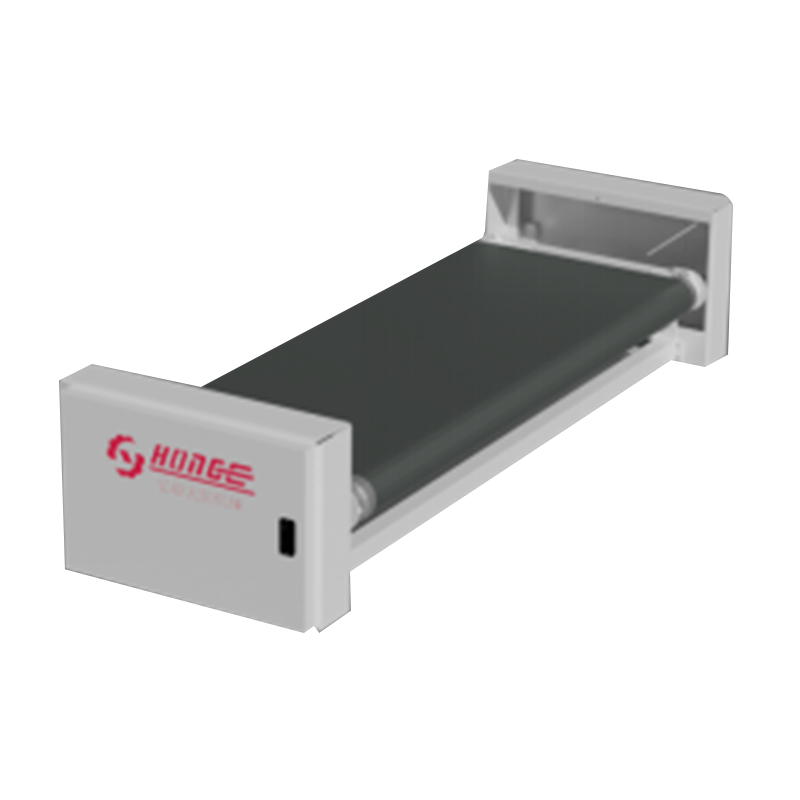
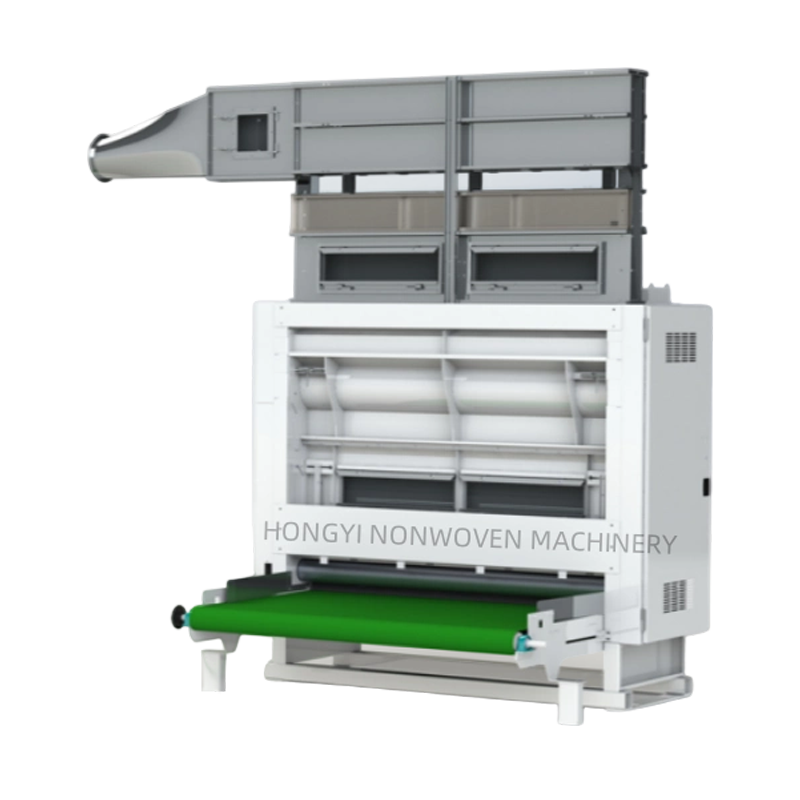
The HYWR Batt Feeder is designed to solve these problems through controlled, low-draft feeding of cross-lapped webs. It provides a stable connection between the cross lapper and needle loom, helping manufacturers maintain web uniformity while improving production continuity. Its anti-static wedge-shaped feeding device, adjustable nylon-finger rollers, inverter or servo-driven feeding system, and movable construction make it suitable for a broad range of nonwoven applications.
With a working width of up to 10 meters, the machine can be configured for large-format production lines. It is suitable for polyester, PET, PP, polypropylene, and other commonly processed fiber materials. The equipment can handle webs with a listed weight of up to 2,000 grams per square meter, while its configuration can be adapted to the requirements of different pre-needle punching machines and production layouts.
The Role of a Batt Feeder in Nonwoven Production
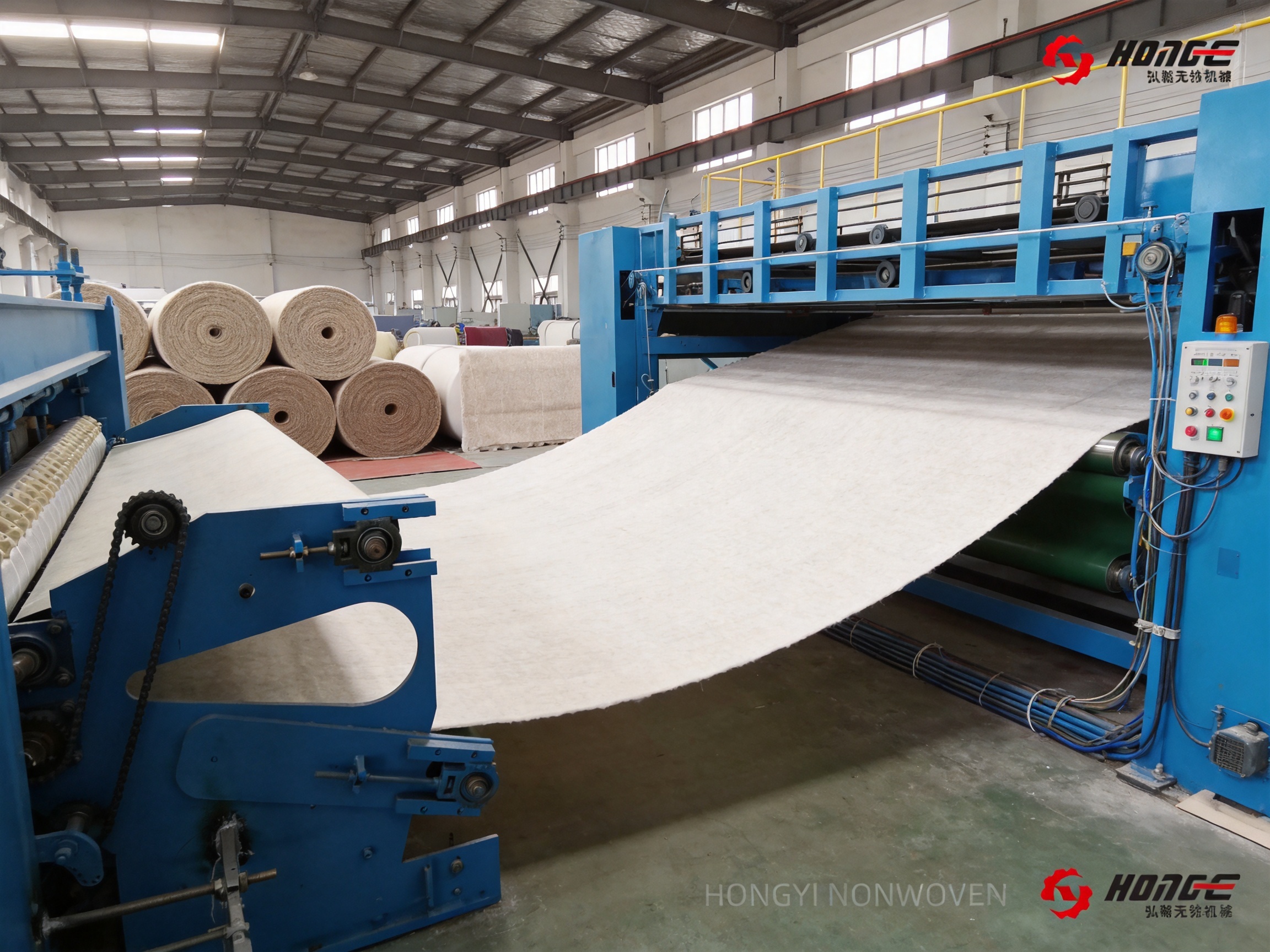
A cross lapper forms a web by laying carded fibers in multiple overlapping layers. This process increases the web width and builds the thickness and mass required for products such as geotextiles, carpets, filtration media, automotive interior materials, mattress components, insulation, cleaning cloths, and industrial felts. After the cross-lapping stage, the loose and voluminous batt must be delivered to the needle loom in a controlled manner.
This transfer stage is more demanding than simply moving material from one conveyor to another. A cross-lapped batt contains a large quantity of loosely arranged fibers. It can be sensitive to tension, compression, static electricity, acceleration, and variations in roller speed. Any uncontrolled pulling force may elongate the batt in the machine direction, reduce its thickness, disturb the cross-lapped structure, or create uneven density across the web.
The batt feeder is therefore used to provide a controlled transition. It receives the material from the cross lapper, supports the batt, and delivers it to the needle loom with minimum draft. The objective is to preserve the structure created by the carding and cross-lapping processes while ensuring a continuous and evenly distributed feed into the needle punching zone.
In a complete production line, the performance of the batt feeder influences the effectiveness of all upstream and downstream equipment. A highly capable carding machine cannot compensate for a batt feeder that stretches the web. Similarly, a high-speed needle loom cannot achieve consistent output if the incoming batt fluctuates in thickness or feeding speed. The feeder is a connecting unit, but its effect extends throughout the entire line.
Product Overview
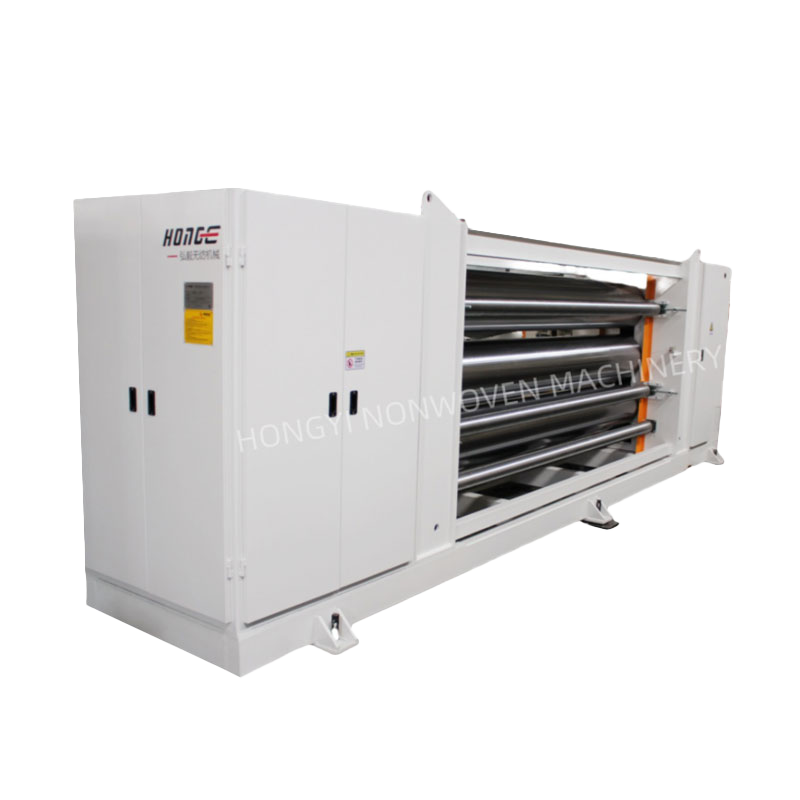
The HYWR Batt Feeder is an auxiliary machine for nonwoven fabric production. It is primarily installed between a cross lapper and a pre-needle loom or needle punching machine. Its principal function is to convey thick, voluminous webs evenly while keeping draft as low as possible.
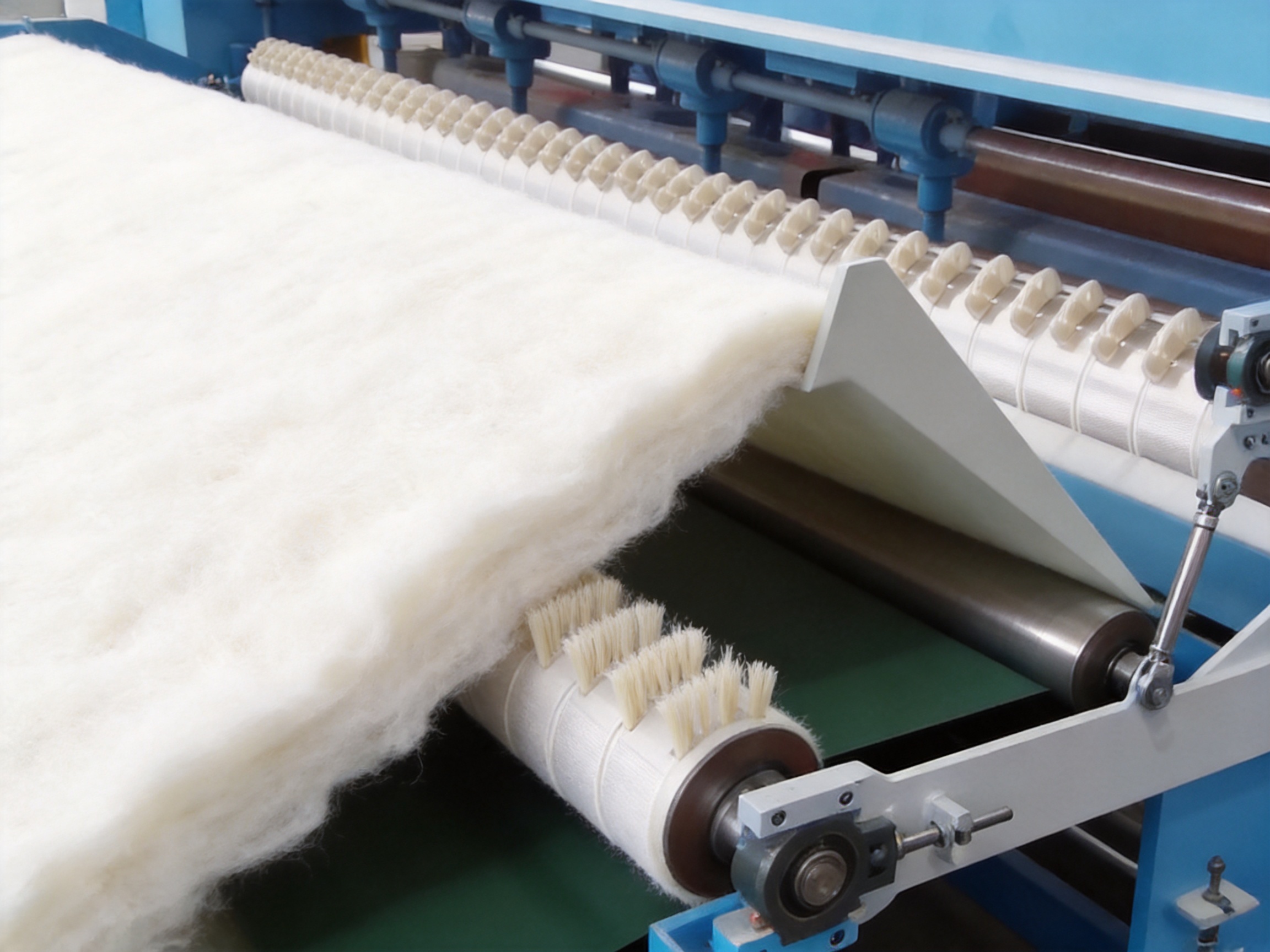
The machine is designed around four practical requirements: stable feeding, minimized web distortion, flexible adjustment, and convenient maintenance. The feeding rollers are equipped with nylon fingers to engage the batt effectively without relying on excessive compression. The gap between rollers can be adjusted according to web thickness and material characteristics. An anti-static wedge-shaped feeding device helps guide the web and reduce disturbances associated with static buildup.
The drive system may use an inverter or a servo motor. This gives users a choice between economical variable-speed control and more precise servo-based synchronization. The selection can be matched to the control architecture of the production line, desired automation level, and required feeding accuracy.
The machine is also movable, supporting easier operation, inspection, and maintenance. This feature can be valuable when the production line layout must be changed, when access is needed for cleaning, or when the feeder must be repositioned to match another needle loom.
| Item | Specification or Feature |
|---|---|
| Product type | Batt feeder for nonwoven fabric production |
| Main application | Feeding voluminous webs from a cross lapper to a needle loom |
| Feeding objective | Even transfer with minimum draft |
| Working width | Up to 10 meters |
| Web weight | Up to 2,000 grams per square meter |
| Driving motor | Approximately 3.75–6.75 kW |
| Feeding device | Anti-static wedge-shaped structure |
| Rollers | Nylon-finger feeding rollers with adjustable gap |
| Drive options | Inverter drive or servo motor drive |
| Supported materials | PET, PP, polyester fiber, and 100% polypropylene |
| Automation | Automatic operation with customized configuration |
| Construction | Steel and iron mechanical materials, configured for industrial use |
| Maximum winding diameter listed | Up to 1,200 mm |
| Certification | CE and ISO9001:2000 quality management certification |
| After-sales support | One-year warranty |
Minimum-Draft Feeding for Better Web Uniformity
Draft refers to the difference between the speed at which material enters a machine and the speed at which it leaves. In nonwoven production, draft is not always undesirable; controlled draft may be used for specific process effects. However, uncontrolled or excessive draft is a common cause of web deformation, especially when the material is thick, loose, and only lightly bonded.
The batt feeder is engineered to transfer the web with minimum draft. This helps preserve the mass distribution created by the carding and cross-lapping processes. When the batt reaches the needle loom in a more stable condition, the needle punching operation can consolidate the fibers more evenly. This supports better control of fabric weight, thickness, tensile strength, tear resistance, and appearance.
Minimum-draft feeding is particularly important for heavy needle-punched products. Geotextiles, automotive felts, carpet substrates, and industrial fabrics may require high basis weights and substantial thickness. If the batt is stretched before needling, the final fabric may become lighter or thinner than intended in some zones. It may also develop differences between the machine direction and cross direction.
The feeding system does not operate in isolation. The correct gap between the nylon-finger rollers, the appropriate drive speed, and the synchronization between the cross lapper and needle loom are all important. Operators can adjust these factors according to fiber length, web thickness, basis weight, moisture conditions, and production speed. The combination of adjustable mechanical contact and controllable drive speed gives the machine a practical range of operating flexibility.
Anti-Static Wedge-Shaped Feeding Device
Static electricity can be generated when synthetic fibers move across surfaces, contact rollers, or separate from one another. Materials such as polyester, PET, PP, and polypropylene may be especially sensitive to static under dry environmental conditions. Static buildup can make the web cling to machine surfaces, attract dust, disturb web edges, or cause inconsistent transfer.
The anti-static wedge-shaped feeding device is intended to support smoother web guidance. Its geometry helps lead the voluminous batt into the feeding section while reducing abrupt changes in direction. The design contributes to a more gradual and controlled transition from the cross lapper to the feeder rollers.
Static control is not only a matter of product quality. It also supports safer and cleaner production. Excessive static can cause loose fibers to accumulate around machine components, increase cleaning requirements, and interfere with sensors or control elements. By addressing the feeding zone with an anti-static design, the machine provides an additional measure of process stability.
Actual static performance depends on fiber type, ambient humidity, production speed, machine grounding, and the overall line configuration. For this reason, the anti-static feeding device should be considered part of a complete static-control strategy rather than a substitute for proper electrical grounding and appropriate factory conditions.
Nylon-Finger Rollers with Adjustable Gap
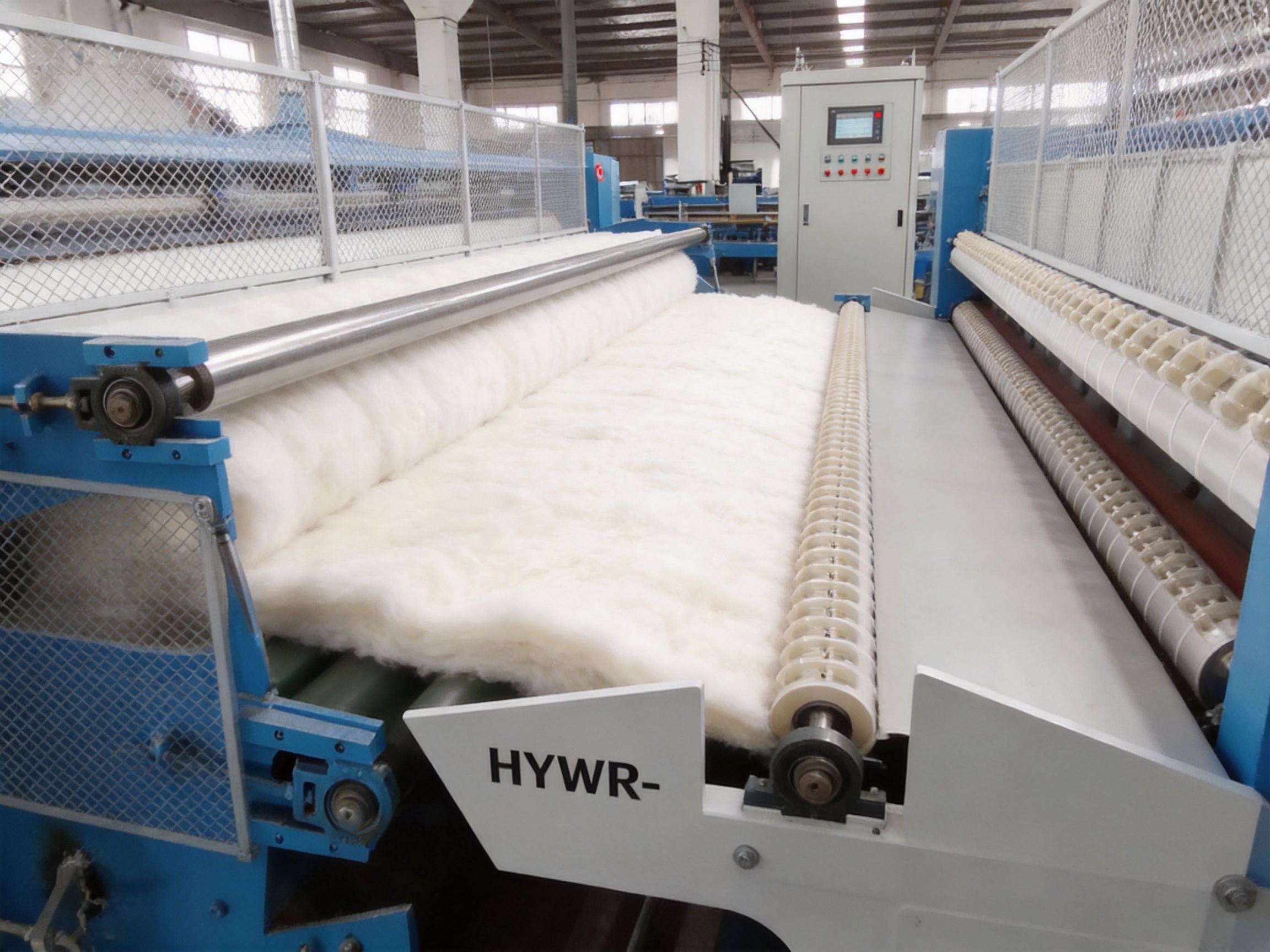
The feeding rollers are fitted with nylon fingers that engage the batt across its width. Compared with a smooth roller surface, fingered rollers can provide more effective contact with a loose and bulky web. The fingers help guide the material into the feeding path and reduce the risk of surface slipping.
Nylon is suitable for this application because it offers a balance of strength, wear resistance, and relatively gentle contact with textile fibers. The roller design is intended to handle the batt without unnecessary crushing. This is important when the web must retain its thickness until it enters the needle loom.
The gap between the rollers is adjustable. This is a central operating feature because different products may vary significantly in thickness, density, fiber blend, and compressibility. A thin polyester web may require a different setting from a heavy polypropylene geotextile batt. The ability to change the gap allows operators to adapt the feeder rather than being limited to one fixed material condition.
Correct adjustment can improve feeding consistency and reduce mechanical stress. If the gap is too wide, the rollers may fail to control the batt effectively. If it is too narrow, the material may be compressed excessively or experience unnecessary resistance. Operators should make adjustments gradually and confirm the resulting web weight, thickness, and visual uniformity at the needle loom inlet.
Inverter and Servo Motor Drive Options
The drive system is available with inverter or servo motor control. Both arrangements provide variable-speed operation, but they serve different levels of process control and investment requirements.
An inverter-driven system offers a practical and economical method for adjusting roller speed. It can be integrated into a production line where speed changes are relatively gradual and where the control requirements do not demand the highest level of positional precision. Inverter control is widely used in industrial textile machinery because it is robust, familiar to operators, and suitable for many continuous processes.
A servo-driven system can offer more precise speed regulation and improved synchronization with adjacent machines. This may be useful when the cross lapper and needle loom must operate within a narrow speed relationship, when the product has demanding basis-weight tolerances, or when the line uses a higher level of automated control. Servo technology can also support more responsive adjustments during production changes.
The choice between inverter and servo drive should be based on the production specification, line control system, product range, operating speed, and required return on investment. The availability of both options is an advantage because it allows the batt feeder to be configured for different factory conditions instead of forcing every customer into a single control arrangement.
The drive motor specification is listed at approximately 3.75 to 6.75 kilowatts. The final motor selection can depend on working width, web weight, production speed, roller configuration, and the requirements of the connected needle punching machine.
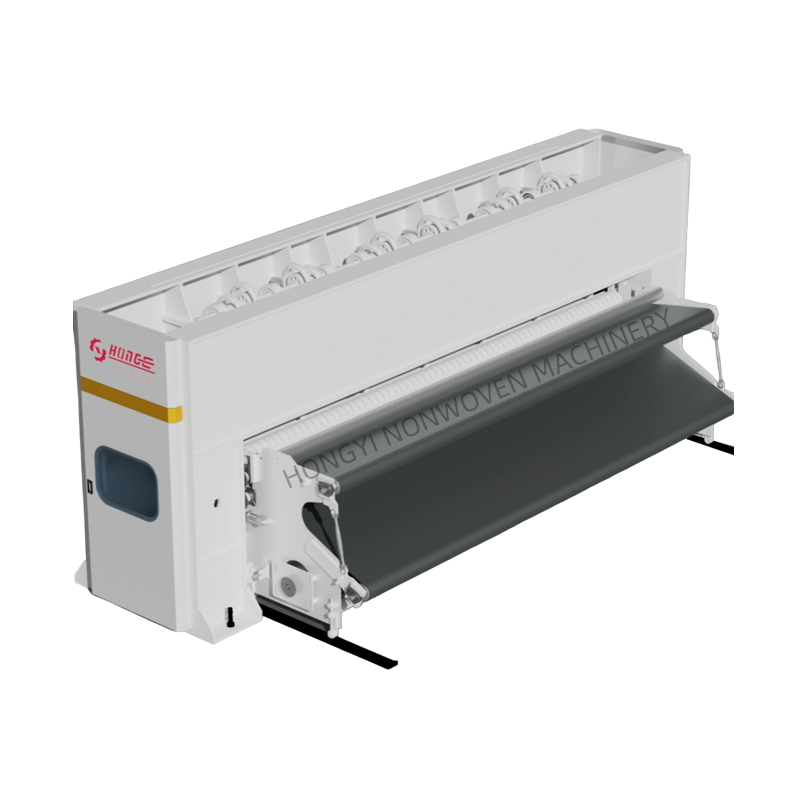
HYWR Batt Feeder
Wide-Width Configuration for Industrial Applications
The machine is specified for working widths of up to 10 meters. Wide-width capability is important for manufacturers producing large rolls of geotextile, carpet substrate, insulation felt, filtration media, or automotive materials. A wide machine can reduce the need for later slitting or joining and can make better use of high-capacity upstream and downstream equipment.
Large-width feeding creates technical challenges. The frame must maintain adequate rigidity across the full working width. Roller alignment must be controlled so that the web receives consistent treatment from one side to the other. Drive transmission, support structures, guarding, and access arrangements must all be considered in the mechanical design.
A wide batt feeder must also accommodate cross-directional differences in the web. Cross-lapped material can be sensitive to variations in layer placement, edge condition, and local thickness. The feeder’s function is to transfer the web as evenly as possible across the width without introducing additional distortion.
Because not every customer requires the maximum width, the equipment can be configured according to the pre-needle punching machine and the production line. This avoids treating a standard design as suitable for every application. Width, drive configuration, roller arrangement, control system, and other details can be discussed during the technical specification stage.
Material Compatibility
The listed raw materials include PET, PP, polyester fiber, and 100% polypropylene. These materials are widely used in needle-punched nonwovens, but each has its own processing characteristics.
Polyester and PET fibers are commonly selected for geotextiles, automotive products, filtration materials, carpets, and technical felts. They can provide useful strength, dimensional stability, and resistance to many environmental conditions. Polypropylene is valued for its low density, chemical resistance, and suitability for applications where lightweight construction is important.
Fiber length, denier, crimp, blend ratio, moisture content, and web basis weight can all affect feeder performance. A heavy batt may require a different roller gap and speed relationship from a light batt. Fiber blends may respond differently to static electricity and compression. The adjustable feeding system enables the operator to accommodate these differences more effectively.
The machine should be selected as part of a complete material-processing plan. Upstream carding must create a suitable fiber web, cross-lapping must establish the required layer arrangement, and the needle loom must be correctly matched to the batt weight and intended bonding level. The feeder supports these stages by providing a controlled material bridge.
Advantages Compared with Basic Feeding Arrangements
Some production lines use simple conveyors or fixed roller devices to move a batt from the cross lapper to the needle loom. These solutions may be adequate for limited applications, but they can provide less control over draft, web compression, static, and synchronization.
The HYWR Batt Feeder offers several advantages over a basic fixed feeding arrangement.
Controlled low-draft transfer
A basic transfer conveyor may move the web but may not be designed specifically for preserving the structure of a thick, voluminous batt. The batt feeder is developed for the transition between cross-lapping and needle punching, with emphasis on minimum draft and stable handover.
Adjustable material contact
Fixed-gap rollers can limit the usable product range. The adjustable gap of the nylon-finger rollers allows the machine to handle different batt thicknesses and densities with greater flexibility.
Improved speed adaptability
A single fixed-speed motor may restrict coordination with other machines. Inverter or servo drive options allow the feeder speed to be adjusted and synchronized more effectively with the cross lapper and needle loom.
Better handling of static-sensitive fibers
The anti-static wedge-shaped feeding device addresses a common problem in synthetic fiber processing. Although overall static control also depends on factory conditions and grounding, the feeder design provides a more suitable interface for static-sensitive material than a simple open transfer point.
Support for large working widths
With a listed working width of up to 10 meters, the equipment is suitable for large industrial lines. This gives manufacturers more opportunity to match the feeder with wide cross-lappers and needle punching machines.
Maintenance accessibility
The movable construction supports easier access during inspection, cleaning, adjustment, and servicing. A machine that is difficult to access can increase downtime and complicate routine maintenance. Mobility is therefore a practical advantage, particularly in factories where space and line access must be carefully managed.
How the Machine Improves Product Quality
Consistent feeding contributes to consistent fabric quality. The batt feeder does not independently determine the final properties of the nonwoven fabric, but it helps protect the material condition required for successful needle punching.
Basis-weight uniformity is one important result. If the incoming web is stretched or compressed irregularly, the needle loom may consolidate different amounts of material in different zones. A stable feeder reduces the risk of these variations and helps maintain the intended mass per unit area.
Thickness control is also affected. A voluminous batt that is excessively compressed before needling may produce a product with lower loft or a different density profile. Conversely, insufficient control may cause uneven entry into the needle board. Adjustable roller spacing helps operators balance containment and gentle handling.
Mechanical properties can benefit from improved web stability. Tensile strength, tear strength, puncture resistance, and dimensional behavior are influenced by fiber orientation and density. Because the feeder seeks to minimize draft, it helps preserve the cross-lapped structure before the needles consolidate the fibers.
Surface appearance is another consideration. Uneven feeding can contribute to streaks, thin areas, thick areas, or irregular edges. A smoother transfer may reduce visible defects and improve the consistency of rolls supplied to customers.
For technical products, quality stability is especially important. A geotextile must meet defined mass and performance requirements. Automotive interior materials must maintain repeatable thickness and acoustic or cushioning behavior. Carpet substrates require consistent structure for coating, printing, and finishing. In each case, stable feeding is a valuable part of process control.
Manufacturing Strengths and Engineering Approach
The supplier is a professional nonwoven machinery manufacturer and trader with more than 20 years of experience in the nonwoven machinery field. Its product range covers complete production lines and individual machines for several nonwoven technologies. This breadth gives the company practical knowledge of how auxiliary equipment must operate within a complete manufacturing system.
Its equipment portfolio includes needle-punched geotextile lines, nonwoven carpet lines, airlaid waste felt lines, automotive interior material lines, needle-punching cleaning cloth lines, wool felt and jute felt lines, needle punching machines, carding machines, airlaid machines, ironing machines, and thermal bonding wadding oven machines.
This experience is relevant to batt feeder development because the feeder must be compatible with the behavior of carded and cross-lapped material and with the requirements of needle punching. A company that understands only one machine category may have limited insight into line synchronization. A manufacturer with experience across carding, web forming, feeding, needling, thermal bonding, and finishing can approach the feeder as part of a complete process.
The company emphasizes efficiency, reliability, quality, advanced technology, and precision engineering. The equipment is designed with automatic control options, energy-saving considerations, and customized configurations. These strengths support the development of a batt feeder that can be adapted to different line widths, material types, and operating requirements.
Manufacturing mechanical equipment for wide nonwoven lines requires attention to fabrication accuracy, frame strength, roller alignment, drive integration, electrical control, safety guarding, and maintainability. Each of these areas affects the final performance of the feeder. A robust frame with poor alignment will not provide stable feeding. A precise mechanical system without appropriate control integration will be difficult to synchronize. A high-performance machine that is difficult to maintain may create avoidable downtime.
The company’s experience in producing complete lines and unit machines allows customers to request either an individual batt feeder or a broader nonwoven machinery solution. This flexibility can be useful for factories expanding an existing line, replacing an older transfer system, or developing a new production project.
Quality Management and Certification
The equipment is listed with CE and ISO9001:2000 certification. CE conformity supports the use of the machine in markets where applicable European safety, health, and environmental requirements must be addressed. ISO quality management certification indicates the use of a documented quality framework for relevant production and business processes.
Certification does not eliminate the need for correct installation, commissioning, operator training, and maintenance. However, it provides customers with an important reference when comparing machinery suppliers. Buyers should also confirm the exact scope of certification, the applicable machine configuration, electrical standards, and local compliance requirements before ordering.
Quality management is especially important for customized equipment. A wide batt feeder may include customer-specific dimensions, drive components, control interfaces, safety devices, and line connections. A structured quality process helps control the transition from technical discussion to design, fabrication, assembly, testing, packing, and delivery.
Customization for Different Production Lines
Nonwoven producers rarely have identical operating conditions. A line producing lightweight polyester felt may require a different configuration from a line producing dense polypropylene geotextile. A new factory may need a complete automatic control system, while an existing plant may need a feeder that communicates with legacy equipment.
The batt feeder can be customized according to customer needs. The main customization topics may include working width, roller arrangement, motor and drive selection, control interface, machine movement, safety protection, material-contact settings, and connection with the upstream cross lapper and downstream needle loom.
The listed working width is up to 10 meters, but the actual width should be matched to the useful width of the connected machines. The maximum web weight is listed at up to 2,000 grams per square meter, while the customer’s actual product range should be reviewed during technical design.
When requesting a quotation, customers should provide as much process information as possible. Useful data includes fiber type, fiber blend, fiber length, target basis weight, batt thickness, production speed, working width, needle loom model, cross lapper model, power supply, factory layout, and control requirements.
Clear technical information allows the manufacturer to select suitable drive power, roller gap range, frame dimensions, and control functions. It also reduces the risk of mismatches during installation and commissioning.
Installation and Commissioning Considerations
Before installation, the factory should confirm that the floor can support the equipment and that sufficient space is available for operation, inspection, cleaning, and maintenance. The path of the web should be checked carefully. The feeder must align with both the cross lapper outlet and the needle loom inlet.
Electrical power, grounding, control cables, emergency-stop circuits, and communication interfaces should be prepared according to the approved technical documentation. Where servo control is selected, the line controller and feedback signals must be coordinated with the rest of the production system.
Mechanical alignment is essential. The feeder frame should be leveled, the rollers should be parallel, and the working width should be centered relative to adjacent machines. Incorrect alignment can produce edge wandering, uneven roller contact, and irregular web delivery.
Initial commissioning should begin at low speed. Operators can verify the direction of rotation, roller gap, web path, emergency stops, sensor functions, and speed response before gradually increasing production speed. The first trial should monitor web weight, thickness, edge condition, draft, and the appearance of the material entering the needle loom.
Training should cover normal operation, adjustment procedures, static-control practices, cleaning, lubrication where applicable, inspection points, and troubleshooting. A clear operating routine helps the machine deliver stable performance over a longer service life.
Operation and Daily Maintenance
Before starting the machine, operators should inspect the web path, remove foreign objects, confirm that guards are in place, and verify that the rollers can rotate freely. The gap should be set according to the material and product specification. The drive system should be checked for alarms or abnormal conditions.
During operation, staff should observe the batt as it leaves the cross lapper and enters the feeder. The web should remain stable across the working width without excessive stretching, folding, or edge displacement. Unusual vibration, noise, material accumulation, or roller slippage should be investigated promptly.
Daily cleaning is important when processing loose fibers. Accumulated lint can interfere with moving parts, sensors, electrical components, and roller surfaces. The cleaning method should follow the manufacturer’s instructions and should not introduce compressed fiber into sensitive components.
Periodic maintenance may include checking fasteners, bearings, transmission components, electrical connections, grounding, safety switches, and drive parameters. Wear on nylon fingers should be monitored. Damaged or excessively worn fingers may reduce effective material engagement and should be replaced according to the maintenance schedule.
Maintenance records can help identify trends. If the feeder repeatedly requires speed correction, produces edge variation, or develops abnormal vibration, the issue may involve roller alignment, drive calibration, upstream web formation, or downstream needle loom settings. Recording operating conditions makes troubleshooting more systematic.
Energy and Production Efficiency
Energy efficiency in nonwoven production is influenced by motor selection, operating speed, line utilization, maintenance condition, and process stability. The batt feeder uses a relatively compact drive power range of approximately 3.75 to 6.75 kilowatts, with the final requirement depending on configuration and application.
Stable feeding can also improve overall production efficiency indirectly. If web defects cause frequent stops, material waste, roll rejection, or rework, the energy and labor cost per acceptable product increases. By reducing disturbances at the transfer point, the feeder can support more continuous operation.
Variable-speed inverter or servo control allows the machine to operate according to actual production requirements. Running at an unnecessarily high speed can increase mechanical stress and energy consumption. Running at an unsuitable low speed can interrupt line balance. Appropriate control enables the feeder to match the line rather than operate independently.
Maintenance contributes to energy performance as well. Misalignment, excessive friction, worn bearings, and material buildup can increase drive load. Regular inspection helps preserve efficient operation and reduces the risk of unexpected downtime.
Applications Across Nonwoven Industries
Needle-punched geotextiles
Geotextiles often require high and consistent basis weight, broad working widths, and reliable mechanical properties. A controlled batt feeder helps maintain the layer distribution needed for needle punching and supports consistent roll quality.
Nonwoven carpets
Carpet substrates and underlay materials may require stable thickness and smooth surfaces. Minimum-draft feeding helps protect the web structure before needling, supporting the requirements of later coating, lamination, or finishing operations.
Automotive interior materials
Automotive felts and interior components are produced to repeatable dimensional and performance standards. The feeder’s adjustable contact and controllable drive can help accommodate different fiber blends and product weights.
Filtration and industrial felt
Filtration materials often depend on consistent density and thickness. A stable supply of material into the needle loom supports more predictable pore structure and fabric formation, although the final filtration performance also depends on fiber selection and needling parameters.
Insulation and cushioning products
Thermal and acoustic products may use bulky fiber webs that are sensitive to compression and stretching. The feeder’s adjustable roller gap and minimum-draft objective are appropriate for handling these materials before consolidation.
Cleaning cloth and technical textiles
Needle-punched cleaning cloths and other technical fabrics require uniform fiber distribution and repeatable roll structure. Stable feeding can reduce irregularities that would otherwise appear during needling or finishing.
Why Manufacturer Experience Matters
Purchasing a batt feeder is not only a decision about motor power or working width. It is a decision about how the machine will interact with the entire production line. Manufacturer experience matters because successful integration requires knowledge of web formation, material behavior, needle punching, drive control, and industrial commissioning.
A company with more than two decades in the nonwoven machinery field can draw on experience from different production technologies and customer requirements. Its exposure to complete lines and individual machines supports a more comprehensive approach to equipment selection.
International supply experience is also valuable. The company has supplied machinery to more than 20 countries, including Mexico, Argentina, Brazil, Turkey, Algeria, Egypt, Bangladesh, Vietnam, Thailand, and other Asian markets. International projects often require attention to different electrical standards, factory conditions, shipping methods, documentation practices, and service expectations.
Factory-direct communication can simplify customization and technical clarification. Customers can discuss the material, line layout, target product, and control requirements directly with the equipment supplier instead of relying only on a generic catalog specification.
Packaging, Delivery, and After-Sales Support
The listed transport package is nude packing or PE film, depending on project requirements. Packaging should be agreed according to transport distance, shipping method, climate exposure, port handling, and the sensitivity of electrical or precision components.
For international shipments, customers should confirm the packing list, machine dimensions, gross weight, lifting points, spare parts, electrical documentation, installation instructions, and commissioning responsibilities. Proper logistics planning helps reduce delays during customs clearance and factory installation.
The equipment includes a one-year warranty. Warranty conditions should be reviewed in the commercial and technical contract, including the starting date, covered components, exclusions, response procedures, and responsibilities for installation and operation.
After-sales service is most effective when the customer maintains accurate records of machine settings, alarms, spare parts, and production conditions. Photos, videos, drive information, and detailed descriptions can help technicians diagnose issues more quickly.
Selection Guide for Buyers
Before choosing a batt feeder, buyers should evaluate the complete process rather than focusing on one specification. The following questions can help establish a suitable configuration.
What is the maximum product width?
The feeder working width must correspond to the usable width of the cross lapper and needle loom. A width of up to 10 meters is listed, but the actual project width should include appropriate allowances for edge control and machine integration.
What is the heaviest web weight?
The listed web weight is up to 2,000 grams per square meter. Buyers should provide both average and maximum basis weight, together with batt thickness and density, so the drive and roller arrangement can be reviewed accurately.
Which fibers will be processed?
PET, polyester, PP, and 100% polypropylene are listed materials. Fiber length, fineness, crimp, blend ratio, and static behavior should also be shared because these factors influence feeding performance.
How precise must synchronization be?
For basic applications, inverter control may be sufficient. For demanding production lines requiring close speed coordination and fast response, a servo-driven system may be more appropriate.
How accessible is the installation area?
The movable design supports operation and maintenance, but the plant should still provide sufficient clearance for cleaning, inspection, roller adjustment, and component replacement.
What level of automation is required?
Customers should clarify whether the feeder will operate independently or communicate with a central line control system. This affects the selection of sensors, control cabinet functions, communication protocols, and operator interface.
Technical Advantages at a Glance
| Requirement | Relevant Equipment Feature | Expected Production Benefit |
|---|---|---|
| Preserving loose batt structure | Minimum-draft feeding design | Reduced web stretching and more stable material entry |
| Handling different thicknesses | Adjustable roller gap | Improved flexibility across product specifications |
| Managing synthetic fibers | Anti-static wedge-shaped feeding device | Smoother guidance and reduced static-related disturbance |
| Reliable web engagement | Nylon-finger feeding rollers | More effective contact with voluminous webs |
| Line speed coordination | Inverter or servo drive | Adjustable speed and improved synchronization |
| Large industrial production | Working width up to 10 meters | Compatibility with broad-format lines |
| Maintenance access | Movable construction | Easier inspection, cleaning, and servicing |
| Project adaptation | Customized configuration | Better matching with material and line requirements |
| Quality assurance | CE and ISO9001:2000 listed certification | Structured basis for equipment evaluation |
Frequently Asked Questions
What is the main purpose of the batt feeder?
The main purpose is to feed a voluminous web from the cross lapper to the needle loom evenly and with minimum draft. It provides a controlled material transition between web forming and needle punching.
Which machines are connected to the batt feeder?
It is generally installed between a cross lapper and a pre-needle loom or needle punching machine. The exact connection depends on the production line design and the customer’s equipment models.
Can the machine process synthetic fibers?
Yes. The listed materials include PET, PP, polyester fiber, and 100% polypropylene. Actual performance depends on fiber properties, web weight, speed, and correct adjustment.
What is the maximum working width?
The listed working width is up to 10 meters. The final working width should be confirmed according to the connected cross lapper, needle loom, product width, and factory layout.
What web weight can the feeder handle?
The listed web weight is up to 2,000 grams per square meter. The final operating range should be confirmed during technical evaluation because web thickness, density, fiber type, and production speed also affect machine selection.
How is the feeding speed controlled?
The feeding system can be driven by an inverter or a servo motor. An inverter provides variable-speed operation, while a servo system can offer more precise synchronization and speed response.
Why are the feeding rollers equipped with nylon fingers?
The nylon fingers help engage and guide the voluminous batt. They provide effective contact while supporting gentler handling than an arrangement that depends on excessive compression.
Can the roller gap be adjusted?
Yes. The gap between the feeding rollers is adjustable. This allows the operator to adapt the machine to different web thicknesses, densities, and material conditions.
Does the machine address static electricity?
The feeder includes an anti-static wedge-shaped feeding device. Overall static control also depends on proper grounding, humidity, fiber characteristics, and the conditions of the complete production line.
Is the machine movable?
Yes. The movable construction supports operation, inspection, and maintenance. The specific movement arrangement should be confirmed according to the selected configuration and factory layout.
What motor power is specified?
The listed driving motor range is approximately 3.75 to 6.75 kilowatts. The correct power depends on working width, web weight, production speed, and the final mechanical configuration.
Can the equipment be customized?
Yes. Configuration can be customized according to customer requirements. Common considerations include working width, drive type, control system, line interface, roller settings, and installation arrangement.
What certifications are listed?
The product information lists CE and ISO9001:2000 certification. Customers should confirm the exact certification documents and applicable scope for the ordered machine configuration.
What warranty is provided?
The listed after-sales service is a one-year warranty. Commercial warranty conditions, exclusions, and service procedures should be confirmed in the purchase agreement.
Where is the equipment manufactured?
The machine is manufactured in China by Changshu Hongyi Nonwoven Machinery Co., Ltd., located in Changshu City, Suzhou City, Jiangsu Province. The company supplies nonwoven machinery and complete production line solutions to customers in multiple international markets.
Conclusion
The batt feeder is a key auxiliary machine for manufacturers that need reliable transfer of thick and voluminous nonwoven webs between a cross lapper and a needle loom. Its performance directly affects web stability, basis-weight uniformity, thickness consistency, and the efficiency of the needle punching process.
The HYWR Batt Feeder combines minimum-draft feeding, an anti-static wedge-shaped feeding device, nylon-finger rollers, adjustable roller spacing, inverter or servo drive options, and a movable structure. With a working width of up to 10 meters and a listed web-weight capability of up to 2,000 grams per square meter, it is intended for demanding industrial applications across geotextiles, carpets, automotive materials, technical felts, insulation, filtration, and other needle-punched products.
Its principal advantage over a basic transfer arrangement is the combination of controlled web handling and configuration flexibility. The machine is designed not merely to move material, but to preserve the condition of the batt as it enters the needle punching stage. Adjustable contact, variable-speed control, static-conscious feeding, and line-specific customization allow the equipment to be adapted to a wider range of production requirements.
The manufacturer’s more than 20 years of experience in nonwoven machinery, broad product portfolio, complete-line capabilities, international project experience, and focus on precision engineering provide additional support for customers seeking an integrated solution. For factories planning a new line, upgrading an existing production system, or replacing an unreliable transfer unit, the batt feeder offers a practical path toward more stable and efficient nonwoven production.
References
1. Product specification and technical information supplied for the HYWR Batt Feeder.
2. General principles of cross-lapping, batt handling, and needle-punched nonwoven production.
3. Industrial guidance on variable-frequency drives and servo motor control in continuous textile machinery.
4. General engineering practices for static control, machine grounding, and synthetic fiber processing.
5. Quality management and machinery conformity information associated with CE marking and ISO9001-based manufacturing systems.
6. Technical considerations for geotextile, carpet substrate, automotive felt, filtration media, insulation, and industrial nonwoven production lines.