

Content
- 1 Why Bale Opening Is Critical in Nonwoven Production
- 2 Working Principle of the HYKB Bale Opener
- 3 Key Product Advantages
- 4 Technical Specifications
- 5 Comparison with Basic Bale Opening Equipment
- 6 Applications Across Nonwoven Industries
- 7 Manufacturing Strengths of the Supplier
- 8 Production Process and Factory-to-Customer Workflow
- 9 Operation and Maintenance Recommendations
- 10 How to Select the Correct Configuration
- 11 Commercial and Service Considerations
- 12 Advantages for Factory Owners and Production Managers
- 13 Questions and Answers
- 13.1 What is the main purpose of the HYKB Bale Opener?
- 13.2 Can the machine process more than one type of fiber?
- 13.3 Is the bale opener suitable for recycled fiber?
- 13.4 What working widths are available?
- 13.5 What capacity can the machine achieve?
- 13.6 Does the machine include automatic weighing?
- 13.7 Can the machine be integrated into an existing nonwoven line?
- 13.8 What downstream machines can receive material from the bale opener?
- 13.9 What certifications are listed?
- 13.10 How long is the warranty?
- 13.11 Does the supplier provide installation support?
- 13.12 What should be prepared before installation?
- 13.13 Can the voltage be customized?
- 13.14 Is the machine available for wholesale or OEM projects?
- 14 Conclusion
- 15 References
- 16 Product: HYKB Bale Opener
In modern nonwoven manufacturing, the quality of the finished fabric depends heavily on the preparation of the fiber feedstock. Before fibers reach a carding machine, airlay system, thermal bonding line, or needle punching machine, they must be opened, loosened, blended, and delivered in a stable and controlled manner. If the material is fed unevenly or if different fiber types are not mixed according to the required formulation, the final product may show variations in weight, strength, appearance, thickness, absorbency, or bonding performance.
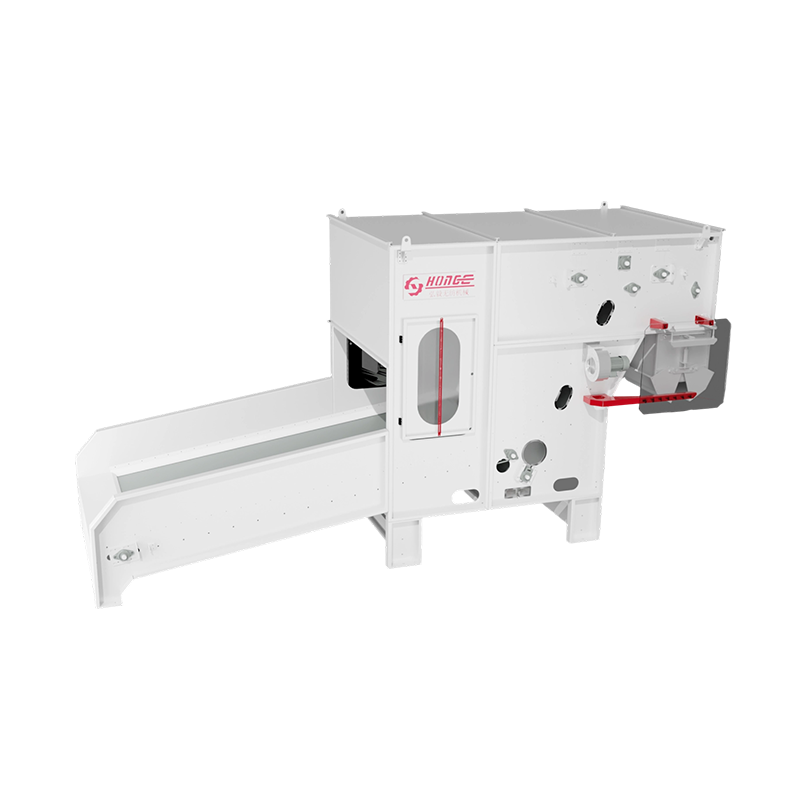
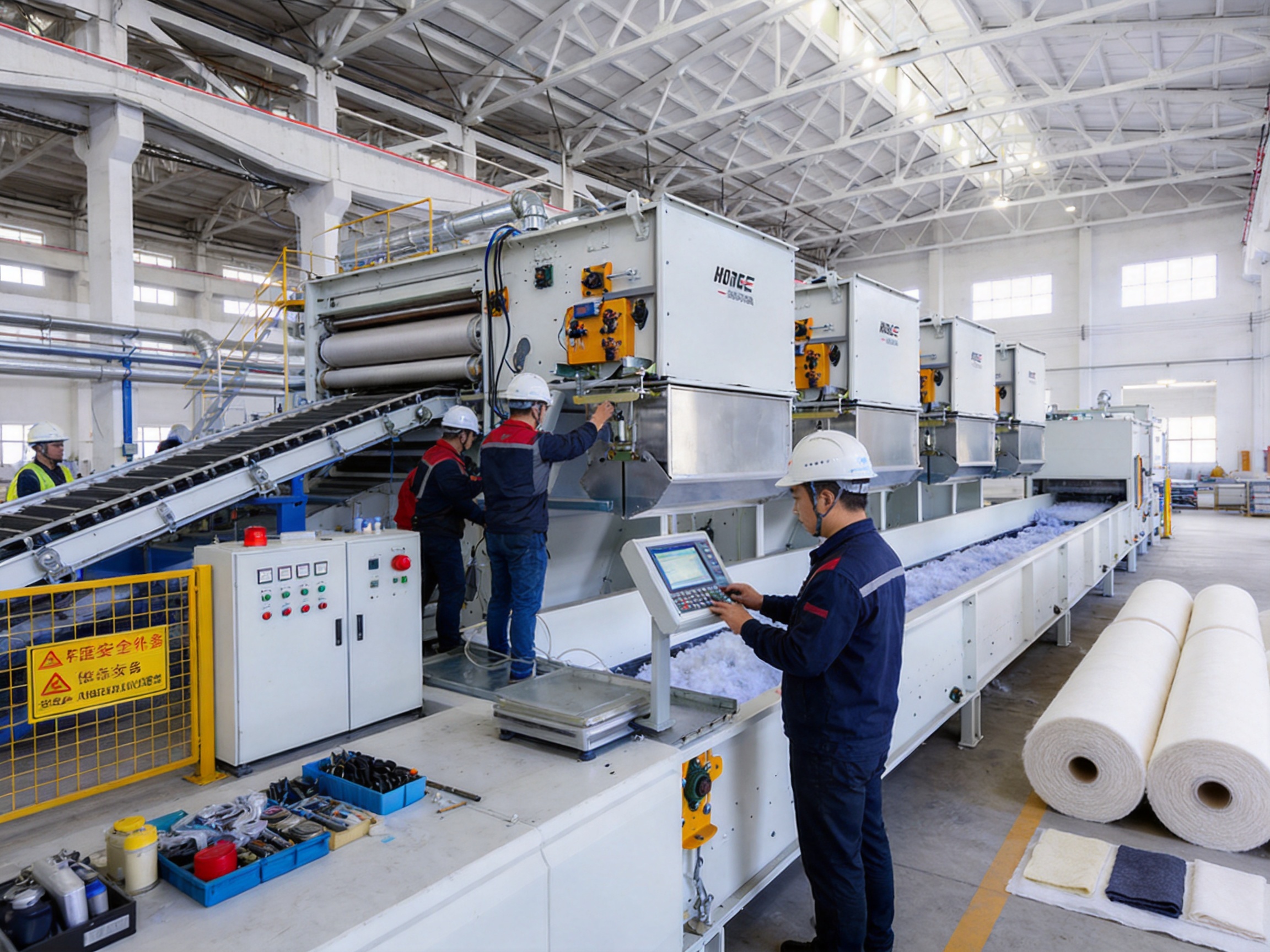
The HYKB Bale Opener is designed to address these challenges at the beginning of the nonwoven production process. It pre-opens fibers from bales, stores and feeds the material, weighs predetermined quantities, and transfers the fibers toward the next opening or blending stage. Its configuration supports the processing of different fiber types and allows multiple bale opener units to work together when a production process requires a complex blend.
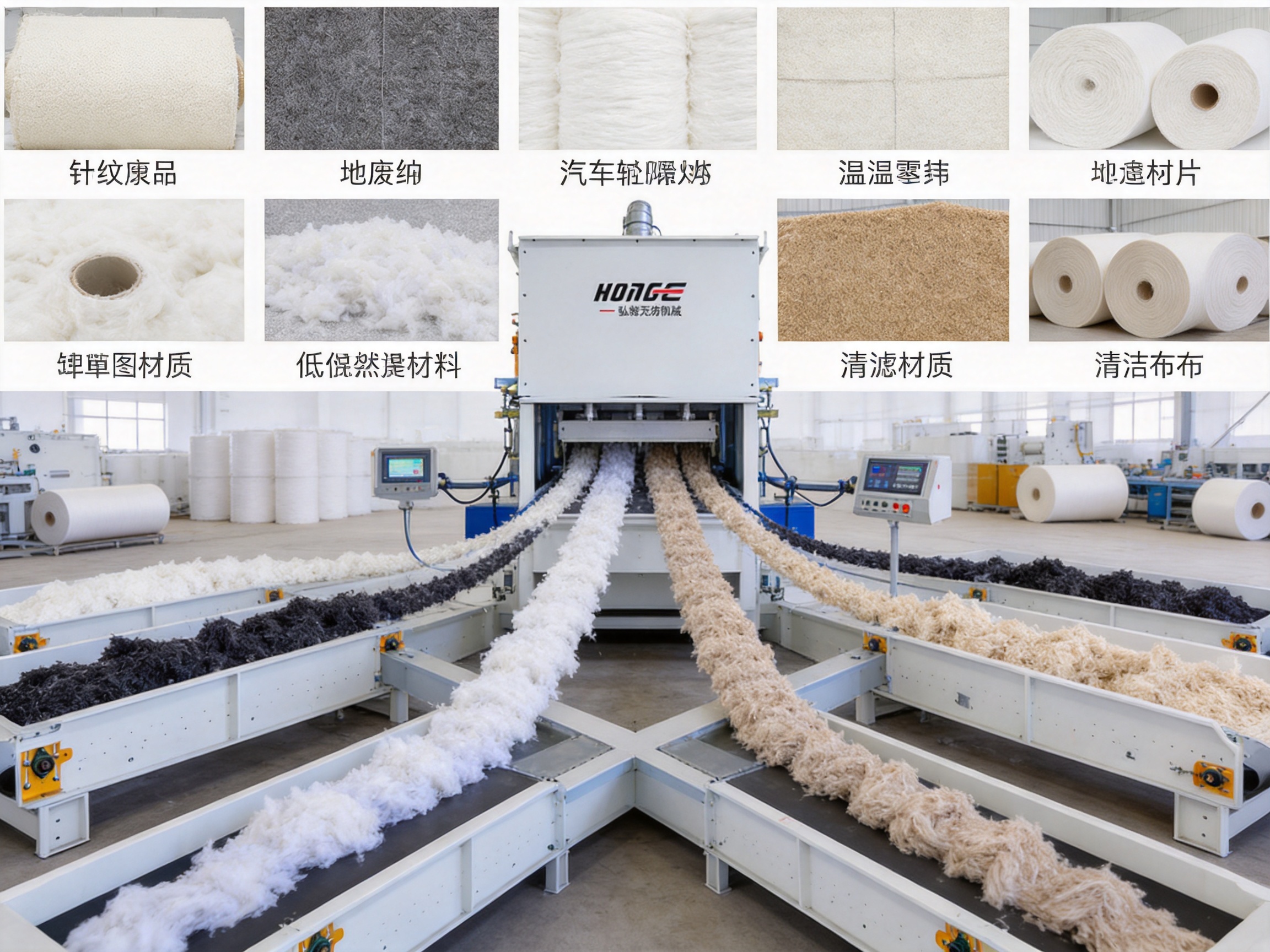
As a key machine in an opening and blending system, the bale opener combines mechanical preparation with automatic proportion control. This gives manufacturers a more repeatable raw-material preparation process than manual feeding or simple unregulated opening equipment. It is suitable for a wide range of nonwoven applications, including needle-punched fabrics, thermal-bonded wadding, airlaid materials, automotive interior products, filtration media, geotextiles, carpets, cleaning cloths, insulation products, and other fiber-based technical materials.
The machine is supplied by Changshu Hongyi Nonwoven Machinery Co., Ltd., a professional Chinese manufacturer and supplier of nonwoven machinery with more than 20 years of experience in the field. The company develops both individual machines and complete nonwoven production lines, providing equipment for opening, blending, carding, web forming, needle punching, thermal bonding, airlay production, winding, cutting, and related processes.
HYKB Bale Opener
Why Bale Opening Is Critical in Nonwoven Production
Most synthetic, natural, and recycled fibers arrive at a factory in compressed bales. Compression makes transportation and storage more economical, but it also means that the fibers are compacted and may contain dense areas, clumps, irregular sections, or differences in moisture and fiber orientation. A bale cannot normally be fed directly into a carding or web-forming machine without preliminary preparation.
The first purpose of a bale opener is to remove fibers from the bale in a controlled way. The second purpose is to loosen the fibers sufficiently for subsequent machines to separate and distribute them. The third purpose is to maintain a consistent material flow. In blended-fiber production, the machine must also help ensure that every batch contains the intended proportions of the selected raw materials.
Manual bale opening may be acceptable for very small-scale production, laboratory trials, or occasional specialty orders. However, it becomes inefficient and inconsistent when production volumes increase. Manual handling depends on operator judgment, is physically demanding, and makes it difficult to repeat an exact recipe over many hours or production shifts. A machine equipped with electronic weighing and controlled transfer provides greater stability and reduces dependence on manual estimation.
Inconsistent blending can create several production problems. A higher proportion of one fiber may change the tensile strength or softness of a fabric. Excessive recycled content may affect appearance or web uniformity. An insufficient quantity of bonding fiber may reduce thermal bonding performance. Uneven distribution of low-melt fibers can produce weak points in a bonded web. The bale opener helps reduce these risks by combining pre-opening with controlled weighing and proportion management.
Working Principle of the HYKB Bale Opener
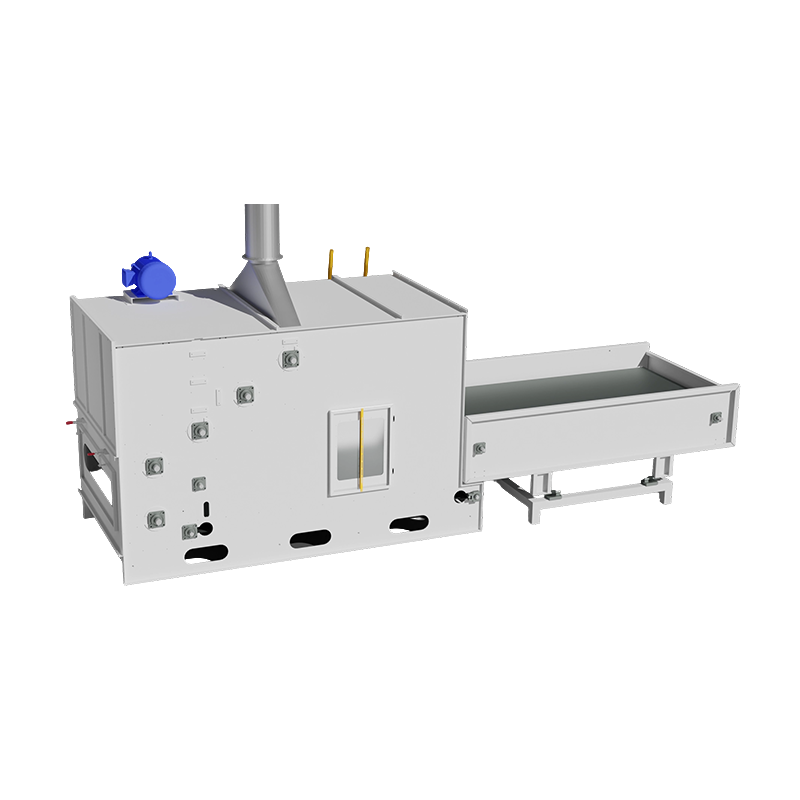
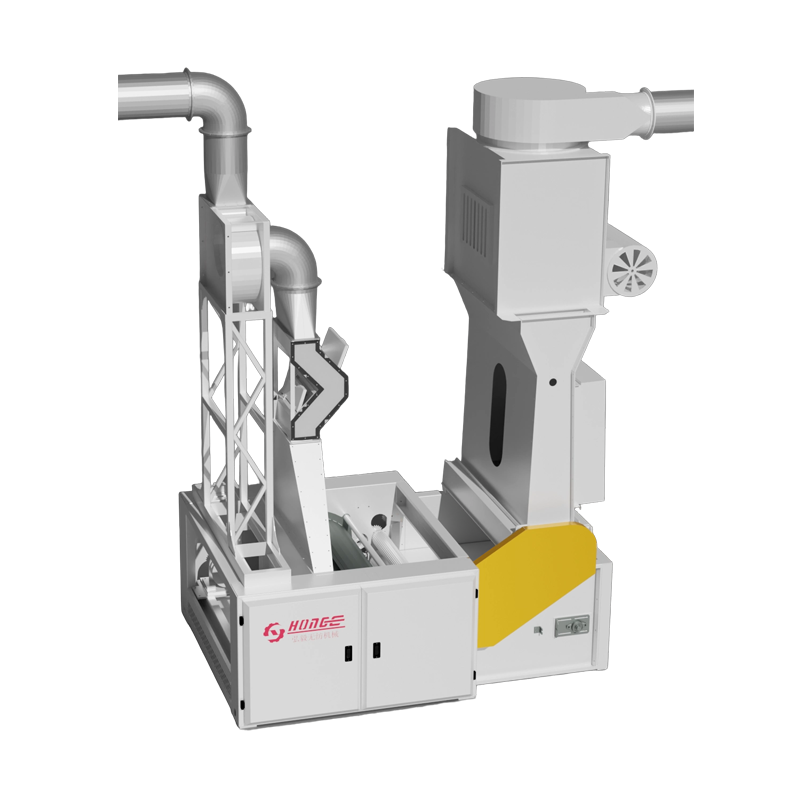
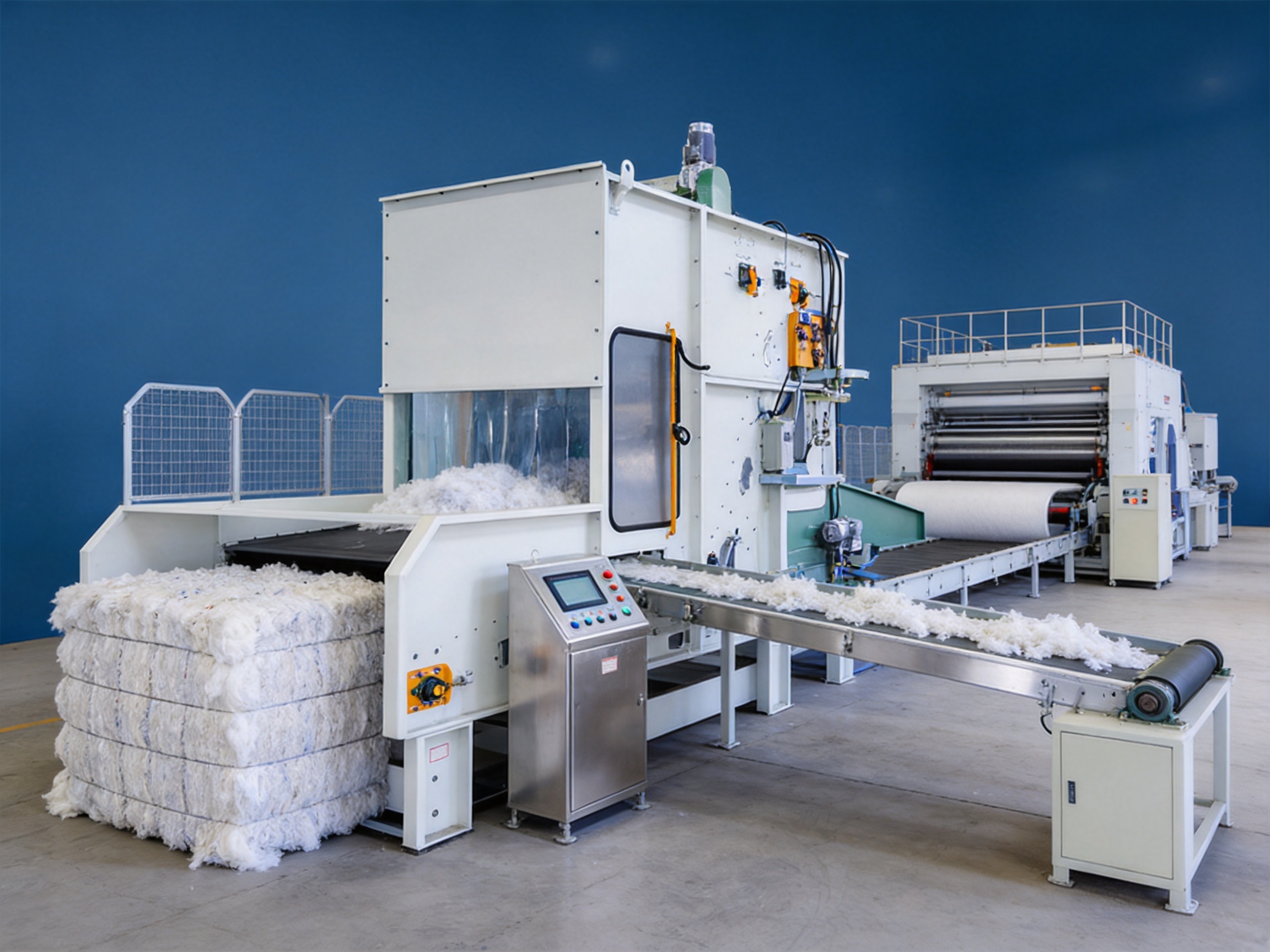
The HYKB Bale Opener is organized into three principal functional sections: the front storage area, the middle feeding and pre-opening area, and the latter weighing and proportion-control area. Each section contributes to a continuous and coordinated fiber preparation process.
Front Fiber Storage Section
The front part of the machine provides space for fiber storage. Bales or prepared fiber material can be positioned in this section so that the feeding mechanism can draw material forward in a controlled sequence. The storage arrangement supports continuous operation by allowing the operator to prepare the next material position while the machine is processing the current feed.
Effective storage at the beginning of the machine also helps organize different raw materials. For example, a production recipe may include polyester staple fiber, recycled fiber, low-melt bonding fiber, viscose, cotton, wool, jute, or another specialty material. By assigning materials to appropriate feed positions, the operator can create a more organized production workflow and reduce the possibility of mixing the wrong fibers before the recipe is established.
The storage section is especially useful when the production line operates for extended periods. Instead of repeatedly carrying small quantities of fiber to the next machine, the operator can load the material into the designated area and allow the automatic feeding process to regulate the supply. This improves labor utilization and supports a more stable material flow.
Middle Feeding and Pre-Opening Section
The middle section performs feeding and preliminary opening. Fiber is taken from the bale or storage area and moved toward the opening components, where compacted material is loosened. Pre-opening does not replace the finer opening and separation functions of downstream equipment; rather, it prepares the material so that subsequent machines can work more efficiently.
Proper pre-opening can reduce the size and density of fiber clumps before the material enters a fine opener, blending machine, carding machine, or airlay system. It can also help distribute the fiber across the working width and make the feed more uniform. This is important because downstream equipment performs best when it receives material at a reasonably consistent rate and condition.
The pre-opening process must be balanced. Excessive mechanical action can damage sensitive fibers, shorten fiber length, or create unwanted neps. Insufficient opening may leave dense lumps that are difficult for downstream machinery to separate. The HYKB design is intended to provide practical pre-opening for a broad range of fiber materials while allowing the overall line configuration to be selected according to the raw material and product requirements.
Weighing and Proportion-Control Section
The latter part of the machine is designed for weighing fibers according to predetermined proportions. Electronic weighing provides a more measurable method of controlling the recipe than manual volume estimation. Once the desired percentage or quantity of each fiber has been established, the equipment can coordinate the supply of materials and transfer them toward the opener or blending stage.
In a multi-fiber production process, several bale opener units can be combined. Each unit may be assigned to a particular fiber, allowing the system to create a specified blend from several independent feeds. This modular approach is valuable for manufacturers that produce different grades or need to change recipes during production.
The material is transferred by a cross conveyor to the opener. This arrangement helps bring separately prepared fibers together in a coordinated stream. The resulting material can then continue to the next opening or blending stage before entering carding, web forming, airlay, thermal bonding, or needle punching equipment.
Key Product Advantages
Automatic Weighing for More Consistent Blends
One of the most important advantages of the HYKB Bale Opener is its automatic weighing function. The system is designed to quota the fiber input quantity and support recipe-based blending. This helps improve repeatability from batch to batch and reduces the risk of large variations caused by manual feeding.
Automatic weighing is particularly valuable when a product contains several fiber types with different functions. A structural fiber may provide strength, a soft fiber may improve hand feel, and a low-melt fiber may provide thermal bonding. The correct ratio of these materials is essential to the final product. Controlled weighing makes it easier to maintain the intended formulation throughout a production run.
Electronic weighing also provides a practical basis for production records. A manufacturer can document the quantities of materials used, compare actual consumption with the planned recipe, and investigate deviations more effectively. This supports better process control and may assist with internal quality management or customer-specific manufacturing requirements.
Multi-Fiber Compatibility
The machine is suitable for processing a variety of fibers, including PET fiber and other commonly used nonwoven raw materials. Depending on the line design and selected operating parameters, it can support blends of virgin synthetic fiber, recycled fiber, natural fiber, specialty fiber, and bonding fiber.
Multi-fiber compatibility gives manufacturers greater product flexibility. A single production facility may need to produce lightweight nonwoven sheets in one order, durable needle-punched geotextiles in another order, and soft thermal-bonded wadding for a third customer. The ability to configure several bale opener units and adjust the blending recipe makes it easier to respond to these changing requirements.
Before production, the user should confirm fiber length, denier, moisture content, density, contamination level, and other raw-material characteristics with the equipment supplier. Different fibers may require different feeding and opening conditions. A properly engineered system should consider the complete material path rather than treating all fibers as identical.
Modular Expansion Through Multiple Units
The HYKB Bale Opener can be used as an individual unit or as part of a combined system. Several sets can be arranged to accommodate multiple fiber types in one operation. This modular concept provides a practical alternative to purchasing a completely different machine for every recipe.
For a basic production requirement, one unit may be sufficient for pre-opening and controlled feeding. As product requirements become more complex, additional units can be integrated for separate fiber streams. The system can therefore grow with the production plan, subject to the capacity and layout limits of the complete line.
Multiple-unit configurations also provide clearer material management. Each fiber can have a designated feed position, reducing confusion during setup and making recipe changes easier to organize. This is especially useful in plants that operate with several raw-material grades or that regularly change between products.
Improved Feed Stability for Downstream Machinery
Carding machines, airlay machines, thermal bonding ovens, needle punching machines, and other downstream equipment require a relatively stable supply of prepared fiber. Sudden surges or interruptions can affect the output weight, web formation, machine loading, and final fabric quality.
By combining storage, pre-opening, weighing, and cross-conveyor transfer, the bale opener helps create a more controlled feed. The pre-opened fiber is easier for later equipment to process, while the weighing function helps regulate the quantity delivered from each material stream.
A stable feed can also improve equipment utilization. When a carding machine receives material at a consistent rate, operators may spend less time correcting blockages, clearing uneven feed, or compensating for fluctuations in web weight. The benefits are not limited to the bale opener itself; they can extend through the entire production line.
Reduced Manual Handling
Manual bale opening is physically demanding and may require several workers when production speeds are high. It also introduces variation because different operators may remove or distribute material differently. Automating the primary feeding and weighing tasks can reduce repetitive manual work and allow personnel to focus on loading, inspection, monitoring, maintenance, and quality control.
Reduced manual intervention does not mean that operators are unnecessary. Skilled personnel remain important for checking fiber condition, confirming recipes, monitoring alarms, cleaning working areas, and adjusting the line when raw-material properties change. The difference is that the operator supervises a controlled process rather than performing every feeding movement by hand.
Flexible Working Widths and Configurations
The listed working-width options include 1.0 meter, 1.2 meters, 1.4 meters, 1.6 meters, and 2.0 meters. These options allow the machine to be considered for different production line widths and capacity requirements.
Working width affects the way the bale opener integrates with downstream machinery. A machine selected for a narrow pilot line may not be suitable for a wide industrial carding or web-forming line. By offering multiple specifications, the manufacturer can better match the equipment to the actual line layout, product width, and expected output.
Working width should be evaluated together with fiber type, target capacity, opening intensity, conveying distance, and the design of connected machines. The correct selection is not based on width alone. A complete technical review helps ensure that the bale opener and the rest of the line operate as a coordinated system.
Technical Specifications
The following information summarizes the principal specifications provided for the HYKB Bale Opener. Final values may vary according to the selected configuration, electrical standard, raw material, and complete line design. Customers should confirm the technical proposal before placing an order.
| Item | Specification |
|---|---|
| Model | HYKB |
| Equipment type | Bale opener for fiber pre-opening, weighing, and blending |
| Application | Nonwoven fabric production |
| Working widths | 1.0 m, 1.2 m, 1.4 m, 1.6 m, and 2.0 m |
| Listed capacity options | Approximately 200 kg/h and 300 kg/h |
| Raw material | PET fiber and other applicable fibers |
| Automation | Automatic feeding and electronic weighing configuration |
| Power information | Configuration-dependent; listed data includes 3.75 kW, subject to confirmation |
| Voltage | 220 V or customized according to project requirements |
| Certification | CE and ISO 9001:2000 listed |
| Condition | New |
| Customization | Available according to the production line and customer requirements |
| Warranty | One year or 12 months |
| HS code | 84490090 and 8449009000 listed in the supplied information |
The supplied technical information contains more than one power value, including a listed installed power of 3.75 kW and a separate value of 24 W. These values may refer to different components, instruments, or configurations. The final power requirement should therefore be confirmed in the formal quotation and electrical schematic rather than inferred from a general product listing.
Comparison with Basic Bale Opening Equipment
Basic bale opening equipment may perform only one primary function: removing compressed fibers from a bale. While this can be sufficient for a simple single-fiber application, it may not provide the control required for modern blended nonwoven products. The HYKB system is differentiated by combining several preparation functions in one coordinated process.
| Evaluation point | Basic manual or simple opener | HYKB Bale Opener approach |
|---|---|---|
| Fiber removal | May depend heavily on manual handling | Mechanized feeding from the storage area |
| Pre-opening | Limited or inconsistent depending on the design | Dedicated feeding and pre-opening section |
| Recipe control | Often based on operator estimation | Electronic weighing and predetermined proportions |
| Multi-fiber blending | May require separate manual preparation | Several units can be combined for multiple fibers |
| Material transfer | May require additional manual movement | Cross-conveyor transfer to the opener |
| Production repeatability | More dependent on operator technique | Improved through controlled feeding and weighing |
| Product flexibility | Better suited to simple recipes | Suitable for varied fiber blends and line configurations |
| Integration | May require additional modifications | Designed for connection with nonwoven opening and blending systems |
This comparison does not mean that every simple opener is unsuitable for industrial use. Equipment selection should always reflect the material, output, product specification, and budget. However, a manufacturer seeking controlled multi-fiber blending may obtain greater process value from a system that includes automatic weighing and modular coordination.
The most significant competitive advantage is functional integration. Instead of treating storage, feeding, opening, weighing, and transfer as unrelated tasks, the HYKB concept brings them into one production sequence. This can reduce the number of manual transitions between stages and make the overall line easier to manage.
Applications Across Nonwoven Industries
Needle-Punched Geotextiles
Geotextiles often require carefully prepared polyester, polypropylene, or recycled fiber feedstock. Uniform fiber opening and blending support consistent web formation before the material enters the carding and needle punching stages. Stable preparation can contribute to more consistent mass per unit area and mechanical properties across the fabric width.
For geotextiles, the suitable blend may depend on the required tensile strength, elongation, puncture resistance, drainage function, and durability. A bale opener with proportion control allows the producer to manage recipes for different grades rather than relying on one fixed raw-material combination.
Nonwoven Carpets and Floor Coverings
Nonwoven carpets may use colored fibers, recycled fibers, natural fibers, or blended materials. In these products, fiber distribution affects surface appearance, thickness, resilience, and color uniformity. Controlled pre-opening and blending can help reduce visible variation and support a more stable feed to the web-forming equipment.
When several color or fiber types are used, the ability to operate multiple bale opener units can simplify recipe organization. The final suitability depends on the fiber characteristics and the requirements of the carding or airlay system.
Automotive Interior Materials
Automotive interior products may require a combination of structural fiber, recycled content, and thermally bondable fiber. These materials can be used in trunk liners, acoustic components, insulation products, trim substrates, and other interior applications.
In this sector, consistent density, thickness, acoustic behavior, and dimensional stability are important. A controlled blending stage helps manufacturers maintain the intended formulation before the material is formed and bonded. It also supports product development when different fiber combinations are tested for weight reduction, recycled content, comfort, or acoustic performance.
Thermal-Bonded Wadding
Thermal-bonded wadding commonly uses a blend of base fibers and low-melt bonding fibers. The percentage of bonding fiber must be controlled carefully. Too little may result in insufficient cohesion, while too much may affect softness, loft, air permeability, or cost.
The bale opener can prepare these fibers according to a predetermined recipe before the mixture reaches the carding and thermal bonding equipment. Consistent pre-opening is also useful because the bonding fiber must be distributed throughout the web to achieve even bonding during heating.
Airlaid Products and Waste Felt
Airlaid systems often process short fibers, recycled materials, wood pulp, or other materials that require carefully regulated feeding. Although the exact opening arrangement depends on the raw material, a controlled upstream preparation stage can help stabilize the material delivered to the airlay machine.
Waste felt and recycled-fiber production may involve raw materials with greater variation in density or composition. The operator may need to monitor contamination, moisture, and fiber condition more closely. The bale opener provides a mechanical starting point for organizing and conditioning the feed before finer opening or separation takes place.
Cleaning Cloths, Wool Felt, and Jute Felt
Needle-punched cleaning cloths, wool felt, and jute felt may use natural or recycled fibers with different opening characteristics from standard polyester. These materials may require careful adjustment of feed rates and opening intensity. A configurable opening and blending system gives the manufacturer a better foundation for processing different fiber recipes on one production platform.
Natural fibers can be sensitive to excessive mechanical action and may have different moisture behavior. For this reason, a production trial and technical assessment are recommended before finalizing the machine configuration. The bale opener should be integrated with the appropriate downstream opener, card, or airlay machine for the selected fiber.
Manufacturing Strengths of the Supplier
Changshu Hongyi Nonwoven Machinery Co., Ltd. has more than two decades of experience in the nonwoven machinery sector. This experience is valuable because a bale opener is rarely purchased as an isolated item. It normally forms part of a connected production system, and the performance of the machine depends on how well it matches the downstream process.
The company provides both individual nonwoven machines and complete production lines. Its equipment range includes needle punching machines, carding machines, airlay machines, ironing machines, thermal bonding oven machines, winding machines, cutting machines, and related auxiliary equipment. This broader product portfolio allows the supplier to evaluate the bale opener in the context of the complete manufacturing process.
Experience across multiple applications also supports more practical project planning. A customer producing geotextiles may require a different opening and blending arrangement from a customer producing automotive insulation or thermal-bonded wadding. The supplier can consider working width, capacity, fiber type, line speed, control requirements, and factory layout when preparing a solution.
Engineering and Customization
The machine is listed as customizable. Customization may include working width, voltage, feeding arrangement, conveyor layout, number of units, control functions, and connection points for other machines. The exact scope should be defined in the technical agreement.
Customization is especially important for factories that already own part of a production line. A new bale opener may need to connect to an existing opener, card, conveyor, airlay machine, or control system. The supplier must review the dimensions, elevations, material direction, electrical requirements, and production capacity of the existing equipment before confirming compatibility.
For a new complete line, customization can begin with the product specification. The target fabric width, basis weight, raw-material blend, production speed, bonding method, and final winding or cutting format all influence the design of the upstream opening section. A properly matched bale opener helps prevent bottlenecks at the beginning of the line.
Quality Management and Inspection
The supplied information lists ISO 9001:2000 and CE certification. These references indicate a focus on documented quality management and conformity requirements. Buyers should request the current certificates, technical files, inspection records, and applicable compliance documentation for the exact machine configuration.
Quality assurance for a bale opener should include inspection of the frame, feeding components, weighing system, conveyor, electrical cabinet, guards, sensors, and control functions. Factory testing may include no-load operation, sensor verification, weighing checks, conveyor movement, emergency-stop testing, and trial feeding with suitable fiber material.
When the machine is part of a complete line, testing should also examine communication and material transfer between connected machines. The objective is not only to confirm that each individual component runs, but also to verify that the complete system performs as intended.
International Supply Experience
The company reports that its products have been supplied to more than 20 countries, including markets in Latin America, the Middle East, North Africa, Southeast Asia, and other regions. International project experience may help with export packing, documentation, electrical standards, installation coordination, and communication with overseas customers.
For an importing customer, the project involves more than manufacturing. It may also include commercial terms, shipping arrangements, customs documentation, site preparation, installation, commissioning, operator training, spare parts, and after-sales support. A supplier familiar with export projects can help coordinate these stages more effectively.
Production Process and Factory-to-Customer Workflow
A reliable bale opener begins with a clear understanding of the customer’s production requirements. Before manufacturing starts, the supplier should collect information about raw materials, target capacity, working width, product types, blend ratios, downstream equipment, available factory space, voltage, and local safety expectations.
Step One: Technical Requirement Review
The first stage is the technical review. Customers should provide fiber samples or detailed raw-material information whenever possible. Fiber length, denier, moisture, density, bale size, contamination, recycled content, and bonding characteristics can all influence the feeding and opening design.
The supplier should also review the expected output. The listed capacity options are approximately 200 kg/h and 300 kg/h, but practical capacity may depend on the fiber and operating conditions. A bulky low-density fiber may behave differently from a dense synthetic fiber. The capacity of the bale opener must be compatible with the output of the downstream card or web-forming machine.
Step Two: Mechanical and Electrical Design
After the requirements are confirmed, the supplier develops the equipment arrangement. This includes the storage section, feed path, pre-opening components, weighing system, cross conveyor, drive arrangement, sensors, control cabinet, safety guards, and connection points.
The electrical design should be matched to the customer’s available voltage and frequency. The supplied product information lists 220 V or customized voltage. The final electrical specification should include motor ratings, control voltage, sensor requirements, cabinet dimensions, communication interfaces, and protection devices.
Step Three: Component Fabrication and Assembly
Manufacturing normally includes frame preparation, machining or fabrication of working components, assembly of feeding and opening parts, installation of the weighing mechanism, conveyor installation, wiring, and control-panel integration. Dimensional accuracy is important because misalignment may affect material transfer and create unnecessary wear.
Components that contact or guide fiber should be inspected for sharp edges, inappropriate clearances, surface damage, and contamination. The working environment around the machine should also be considered because loose fibers can accumulate around moving parts, sensors, and electrical cabinets if housekeeping is not maintained.
Step Four: Factory Testing
Before shipment, the machine should undergo factory inspection and testing. Functional checks may include starting and stopping each drive, checking sensor signals, verifying weighing responses, testing emergency stops, confirming conveyor direction, and inspecting the interaction between the control system and mechanical components.
Where practical, a trial using representative fiber can provide additional information about feeding behavior and material transfer. Customers should clarify whether a material trial is included, what sample quantity is required, and whether the test results will be recorded in the acceptance documentation.
Step Five: Export Packing and Shipment
The supplied trade information lists nude packing or wooden-case packing, with PE film also mentioned in the transport information. The suitable packing method depends on the machine size, shipping route, moisture exposure, handling requirements, and customer preference.
For overseas delivery, the buyer and supplier should agree on packing marks, spare-parts packaging, moisture protection, lifting points, shipping dimensions, gross weight, and documentation. Clear packing information helps reduce delays during unloading and installation.
Step Six: Installation and Commissioning
The supplier states that it can send two or three workers for installation and commissioning at the buyer’s request. The buyer is responsible for round-trip air tickets, accommodation, and an allowance stated as 180 United States dollars per person per day in the supplied information. These commercial conditions should be confirmed in the purchase contract.
Before technicians arrive, the buyer should complete the foundation, floor preparation, electrical supply, compressed-air or utility connections if required, lighting, ventilation, lifting equipment, and access routes. The production area should be clean and ready for assembly. Delays in site preparation can increase installation time and costs.
Commissioning normally includes mechanical adjustment, sensor calibration, electrical testing, dry running, material feeding, recipe setup, operator instruction, and production observation. The final acceptance procedure should define the performance criteria, test materials, operating time, acceptable tolerances, and documentation to be provided.
Operation and Maintenance Recommendations
Daily Inspection
Operators should inspect the storage area, feeding path, pre-opening components, weighing section, conveyor, guards, and control panel before starting production. Any foreign objects, fiber buildup, loose fasteners, unusual noise, or damaged components should be addressed before the machine is placed under load.
The weighing system should be checked for obstruction or contamination. If fibers accumulate around the weighing platform or sensor area, the measured value may become inaccurate. The operator should follow the supplier’s cleaning instructions and avoid applying force to sensitive components.
Fiber Cleanliness
Raw-material cleanliness has a direct effect on machine reliability. Metal, plastic, stones, wire, packaging remnants, or other foreign objects may damage opening components or create safety hazards. Recycled fiber should be inspected and prepared according to the quality required by the complete line.
Where the material contains dust or loose particles, the production area may require appropriate ventilation and dust-control measures. Operators should use suitable personal protective equipment and follow local occupational-health requirements.
Calibration and Recipe Verification
The electronic weighing system should be checked periodically according to the supplier’s maintenance recommendations. Calibration intervals may depend on operating hours, environmental conditions, material type, and the required accuracy of the finished product.
At the beginning of a new recipe, operators should verify that the correct fiber has been loaded into each assigned position. The target proportions, machine settings, and production record should be reviewed before the line starts. A small trial may be used to confirm the blend before full-scale production.
Cleaning and Preventive Maintenance
Regular cleaning helps maintain stable feeding and reduces the risk of fiber accumulation near moving parts. Cleaning frequency depends on the material and production schedule, but the machine should not be allowed to accumulate excessive lint or dust.
Preventive maintenance may include checking bearings, chains, belts, fasteners, guards, sensors, electrical connections, conveyor surfaces, and opening components. Wear parts should be inspected for deformation, abrasion, or loss of working effectiveness. Replacing a worn component during planned maintenance is generally preferable to waiting for an unexpected breakdown.
Operator Training
Operators should understand the machine’s operating sequence, emergency-stop locations, weighing controls, recipe settings, alarm indications, cleaning procedures, and safe isolation practices. Training should also explain how to respond to material blockage, abnormal noise, sensor errors, and unexpected changes in feed rate.
Only authorized personnel should adjust electrical controls or make mechanical changes to the opening section. Lockout and isolation procedures should be followed before maintenance or cleaning inside guarded areas.
How to Select the Correct Configuration
The correct bale opener configuration depends on more than the nominal capacity. Customers should evaluate the complete production process and answer several practical questions before ordering.
What Fibers Will Be Processed?
The machine selection should consider whether the raw material is polyester, polypropylene, viscose, cotton, wool, jute, recycled fiber, low-melt fiber, or a combination. Fiber length, denier, moisture, density, and contamination can affect opening behavior and conveying performance.
What Blend Ratios Are Required?
A single-fiber production line may need only one material stream, while a technical nonwoven product may require several. If the recipe changes frequently, the number and arrangement of bale opener units should support efficient changeover and clear material identification.
What Is the Required Output?
The capacity of the bale opener should match the carding, airlay, or other downstream machinery. A machine that cannot supply enough material will limit the production line, while an excessively large machine may add unnecessary cost and complexity. Actual capacity should be evaluated using the intended material rather than relying only on a nominal figure.
What Working Width Is Appropriate?
The working width should correspond to the web width and the physical dimensions of the connected machines. Available options include 1.0 meter, 1.2 meters, 1.4 meters, 1.6 meters, and 2.0 meters. The selected width should also fit the factory layout and allow safe access for loading, cleaning, and maintenance.
What Level of Automation Is Required?
Customers should determine whether they need automatic weighing only, full recipe control, centralized line control, production data recording, alarm communication, or integration with an existing supervisory system. These requirements should be confirmed during the design stage.
Commercial and Service Considerations
The supplied trade information indicates payment terms of 30 percent by telegraphic transfer as a deposit and 70 percent before delivery. The stated delivery time is approximately 60 working days after receipt of the remaining payment, while another specification lists a lead time of two to three months. The final schedule should be confirmed in the formal quotation because manufacturing time may depend on customization, component availability, factory testing, and shipping arrangements.
The listed warranty is 12 months or one year. Buyers should clarify when the warranty begins, which parts are covered, how consumable or wear components are treated, and what information is required when a service claim is submitted.
After-sales service should be discussed before the purchase order is issued. Important topics include installation scope, commissioning, operator training, remote technical assistance, spare-parts availability, response time, travel expenses, and documentation language. A clear service agreement reduces uncertainty for both parties.
Customers should also request a recommended spare-parts list. Commonly useful items may include sensors, belts, bearings, electrical fuses, switches, control components, and selected wear parts. The exact list depends on the final machine design and should be prepared by the supplier.
Advantages for Factory Owners and Production Managers
For factory owners, the main benefit of the HYKB Bale Opener is the possibility of building a more controlled and flexible raw-material preparation process. Automatic weighing can reduce formulation errors, while multi-unit integration can support a broader range of products.
For production managers, the system provides a clearer operating sequence. Fiber is stored, fed, pre-opened, weighed, and transferred in a defined direction. This makes it easier to establish standard operating procedures and identify the source of a problem if the final fabric shows an abnormality.
For quality managers, controlled blending can support improved traceability and batch consistency. The production team can record the planned recipe, actual material usage, operating conditions, and inspection results. Although the bale opener cannot eliminate all sources of variation, it provides a stronger foundation for process control.
For maintenance managers, a modular machine arrangement can make the equipment easier to understand and service. Preventive maintenance can be organized by section, and the supplier’s broader experience with nonwoven machinery may support troubleshooting across the complete line.
Questions and Answers
What is the main purpose of the HYKB Bale Opener?
The main purpose is to pre-open fibers from bales, control the quantity of each fiber through electronic weighing, and transfer the prepared material toward an opener or blending stage. It is designed to improve the consistency of raw-material preparation before carding, web forming, thermal bonding, airlay processing, or needle punching.
Can the machine process more than one type of fiber?
Yes. Several bale opener units can be combined so that different fiber types are handled in separate streams and blended according to predetermined proportions. The exact number of units and suitable materials should be confirmed according to the product recipe and line capacity.
Is the bale opener suitable for recycled fiber?
It may be suitable for recycled fiber, provided that the material is prepared to an appropriate condition and the machine configuration is matched to its density, cleanliness, fiber length, and moisture. A trial with representative recycled material is recommended before final approval.
What working widths are available?
The listed working widths are 1.0 meter, 1.2 meters, 1.4 meters, 1.6 meters, and 2.0 meters. The appropriate option depends on the width of the downstream production line, target output, factory layout, and customer requirements.
What capacity can the machine achieve?
The supplied information lists approximately 200 kg/h and 300 kg/h capacity options. Actual output depends on fiber properties, blend composition, bale condition, machine configuration, and operating settings. Final capacity should be confirmed through technical evaluation or a material trial.
Does the machine include automatic weighing?
Yes. Automatic weighing is one of the main functions described for the equipment. It is intended to control fiber input quantities and support blending according to predetermined percentages.
Can the machine be integrated into an existing nonwoven line?
It may be integrated into an existing line after a technical review. The supplier should check working height, material direction, conveyor connections, electrical requirements, control communication, capacity, and available floor space before confirming compatibility.
What downstream machines can receive material from the bale opener?
Depending on the line design, the prepared fiber may be transferred to a fine opener, blending machine, carding machine, airlay machine, or another fiber-preparation unit. The correct connection depends on the intended product and process sequence.
What certifications are listed?
The supplied information lists CE and ISO 9001:2000. Customers should request the current certification documents and confirm that they apply to the specific configuration being purchased.
How long is the warranty?
The listed warranty is one year or 12 months. The purchase contract should define the warranty start date, covered items, exclusions, customer responsibilities, and service process.
Does the supplier provide installation support?
The supplier states that it can send two or three workers for installation and commissioning at the buyer’s request. Travel tickets, accommodation, and the stated daily allowance are to be provided by the buyer according to the supplied commercial information.
What should be prepared before installation?
The buyer should prepare the foundation or floor area, electrical supply, lifting and unloading equipment, access routes, lighting, ventilation, production materials, and trained personnel. The final equipment layout and utility requirements should be confirmed before shipment.
Can the voltage be customized?
Yes. The listed information indicates 220 V or customized voltage. The final voltage, frequency, motor specifications, and control-cabinet requirements should be confirmed before manufacturing.
Is the machine available for wholesale or OEM projects?
The supplied business information indicates that wholesale and OEM orders are welcome. Project requirements, customization scope, delivery conditions, and technical responsibilities should be defined in the formal quotation and contract.
Conclusion
The HYKB Bale Opener is designed as a practical foundation for controlled fiber preparation in nonwoven production. Its combination of bale storage, feeding, pre-opening, electronic weighing, and cross-conveyor transfer addresses several weaknesses associated with manual or unregulated material preparation.
Its strongest advantages include automatic proportion control, compatibility with multiple fiber types, modular combination of several units, flexible working widths, reduced manual handling, and improved feed stability for downstream machinery. These features make it relevant to manufacturers producing geotextiles, carpets, automotive materials, thermal-bonded wadding, airlaid products, cleaning cloths, wool felt, jute felt, and other nonwoven products.
The equipment also benefits from the supplier’s broader experience in nonwoven machinery and complete production lines. Changshu Hongyi Nonwoven Machinery Co., Ltd. can provide individual machines as well as integrated solutions involving opening, carding, web forming, needle punching, thermal bonding, airlay processing, winding, cutting, and auxiliary equipment.
For the best result, the machine should be selected as part of a complete process rather than as an isolated component. Fiber characteristics, recipe complexity, working width, capacity, downstream equipment, factory layout, electrical standards, installation planning, and after-sales service should all be reviewed before purchase.
When correctly configured and maintained, the bale opener can help manufacturers establish a more repeatable, flexible, and efficient raw-material preparation system. By improving the consistency of the fiber feed at the beginning of the line, it supports better control of the processes that determine the quality and performance of the finished nonwoven fabric.
References
1. Changshu Hongyi Nonwoven Machinery Co., Ltd., HYKB Bale Opener product information and technical specifications.
2. Changshu Hongyi Nonwoven Machinery Co., Ltd., Nonwoven machinery product range and company profile.
3. Supplied trade information for bale opener equipment, including warranty, delivery, installation, packaging, capacity, working width, and electrical data.
4. General principles of fiber opening, blending, carding, web formation, thermal bonding, airlay processing, and needle punching in nonwoven manufacturing.
5. General industrial practices for nonwoven machinery installation, preventive maintenance, operator training, and production-line commissioning.