

Content
- 1 Why Accurate Batt Weight Control Matters
- 2 Working Principle of the Weighing Belt
- 3 Main Product Advantages
- 4 Comparison with Conventional Weight-Control Methods
- 5 Role in a Complete Nonwoven Manufacturing Line
- 6 Engineering and Manufacturing Strengths
- 7 Technical Parameters
- 8 Operational Benefits for Nonwoven Manufacturers
- 9 Installation and Commissioning Considerations
- 10 Maintenance and Reliability Practices
- 11 Recommended Purchasing and Technical Evaluation Procedure
- 12 Applications Supported by the Equipment
- 13 Q&A
- 13.1 What is the main purpose of the weighing belt?
- 13.2 Is the machine only a weighing device?
- 13.3 What basis-weight range is identified for the featured configuration?
- 13.4 What is the working width?
- 13.5 Can the system be integrated with an existing carding line?
- 13.6 What types of fiber can be used?
- 13.7 How does automatic control reduce weight variation?
- 13.8 Does automatic leveling eliminate laboratory testing?
- 13.9 What power supplies are listed?
- 13.10 What control system is used?
- 13.11 What after-sales service is offered?
- 13.12 Why is supplier experience important for this equipment?
- 14 Conclusion
- 15 References
- 16 Product: HYYZY Weighing Belt For Nonwoven Fabric Production
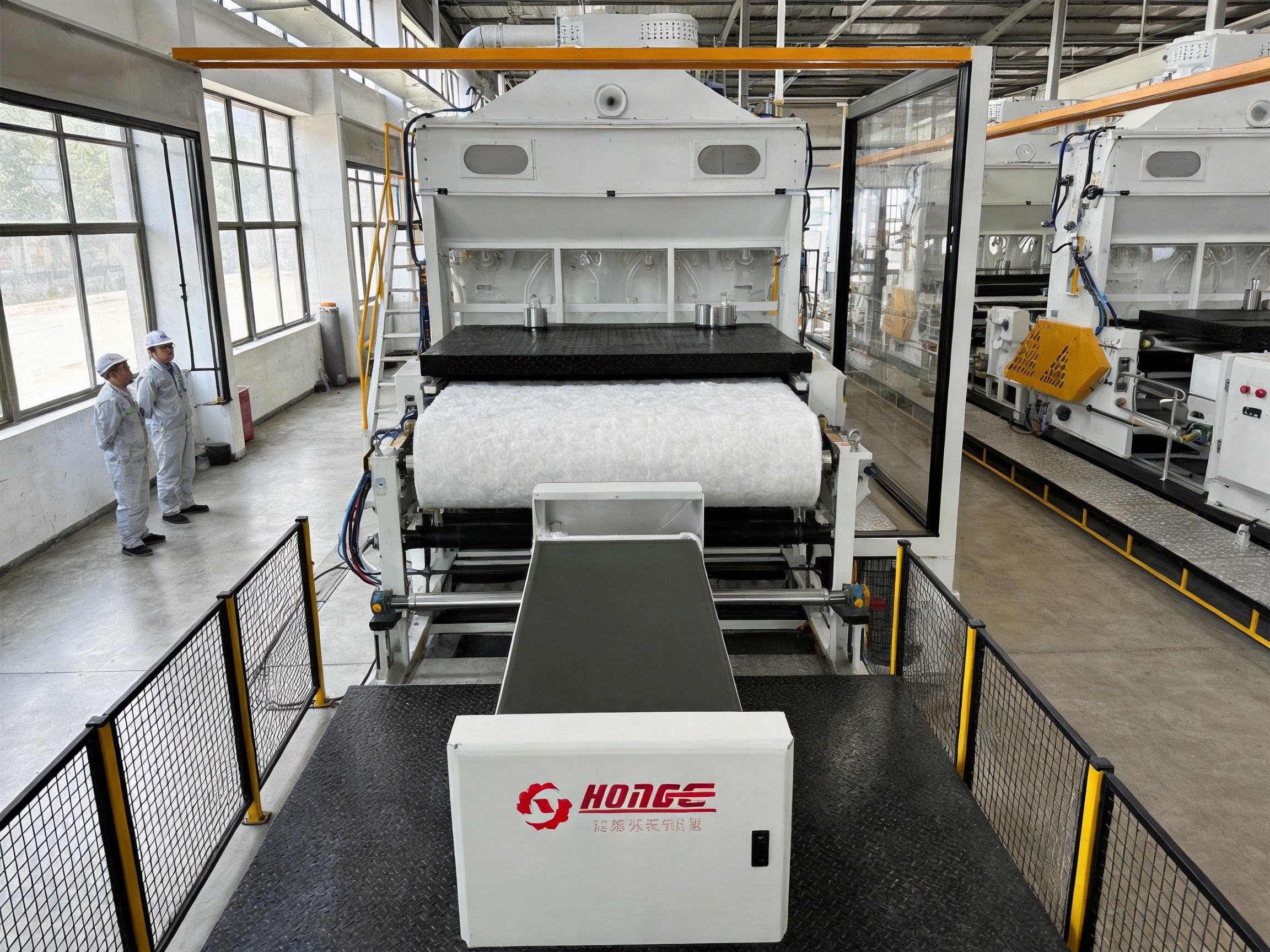
Consistent basis weight is one of the most important requirements in modern nonwoven fabric manufacturing. Whether the finished material is used for geotextiles, filtration media, automotive interiors, carpets, cleaning cloths, insulation, hygiene products, or other technical applications, variations in fiber mass directly affect product performance, appearance, strength, cost, and customer acceptance. A small change in the amount of fiber delivered to the carding machine can produce noticeable longitudinal or cross-machine weight deviations in the final web.
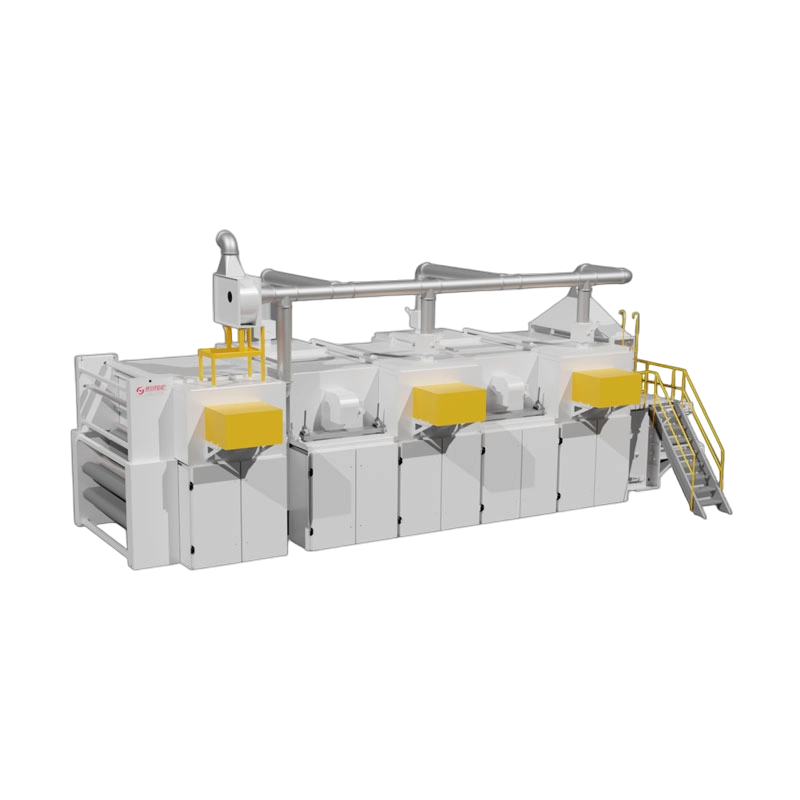
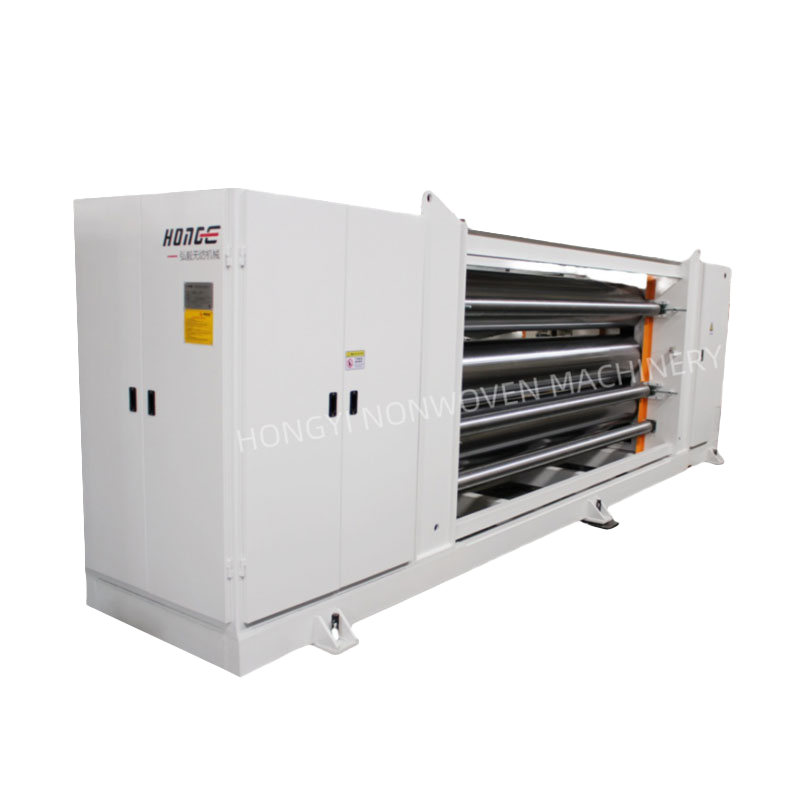
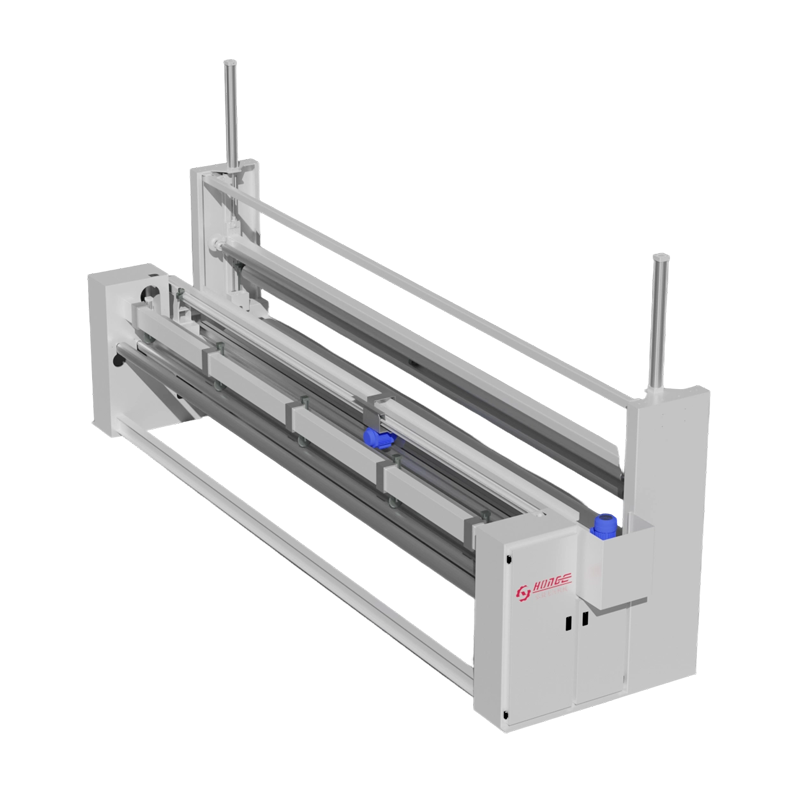
The HYYZY weighing belt for nonwoven fabric production is designed to address this challenge through continuous online measurement and automatic feed correction. The system monitors the actual batt weight passing across a load-cell-controlled apron and uses the measurement signal to adjust the feed rolls. In this way, the equipment helps maintain a more stable web weight at the card doffers and supports consistent production over extended operating periods.
As an assistant machine for nonwoven production lines, the weighing belt can be integrated with fiber preparation, feeding, carding, web forming, needle punching, thermal bonding, airlay, winding, and cutting systems. Its primary role is not simply to measure fiber. It creates a closed-loop control process in which measurement, calculation, adjustment, and verification operate together. This approach is especially valuable for producers seeking higher automation, reduced material waste, improved product uniformity, and more reliable production data.
Why Accurate Batt Weight Control Matters
Nonwoven fabric is manufactured by forming a fiber web and then bonding or consolidating that web through mechanical, thermal, chemical, or combined processes. Before the web is bonded, the fiber batt must be distributed at a controlled mass per unit area. If the batt is too light, the finished product may not achieve the required thickness, tensile strength, tear resistance, absorbency, filtration performance, or insulation value. If it is too heavy, the producer may consume unnecessary raw material and increase manufacturing costs.
Weight instability can originate at several points in a production line. Fiber opening may be uneven, the feeding hopper may experience changing material levels, different fiber blends may flow at different rates, and mechanical wear may affect feed-roll performance. Even when upstream machinery is operating correctly, small changes can accumulate and become visible in the final web. Manual inspection cannot respond quickly enough to all of these changes, particularly on high-speed lines.
A weighing belt provides a continuous source of process information. Rather than relying only on occasional laboratory samples, operators can observe the actual mass flow of the batt while production is running. The control system can then command the card feed rolls or related feeding equipment to compensate for deviations. This makes the process more responsive and reduces the delay between a weight change and the corrective action.
For manufacturers producing several grades of nonwoven fabric, reliable weight control also makes product changeovers easier. Different products may require different target weights, fiber types, line speeds, and bonding conditions. A digital control system can support repeatable settings and help operators reproduce approved production parameters more accurately.
Working Principle of the Weighing Belt
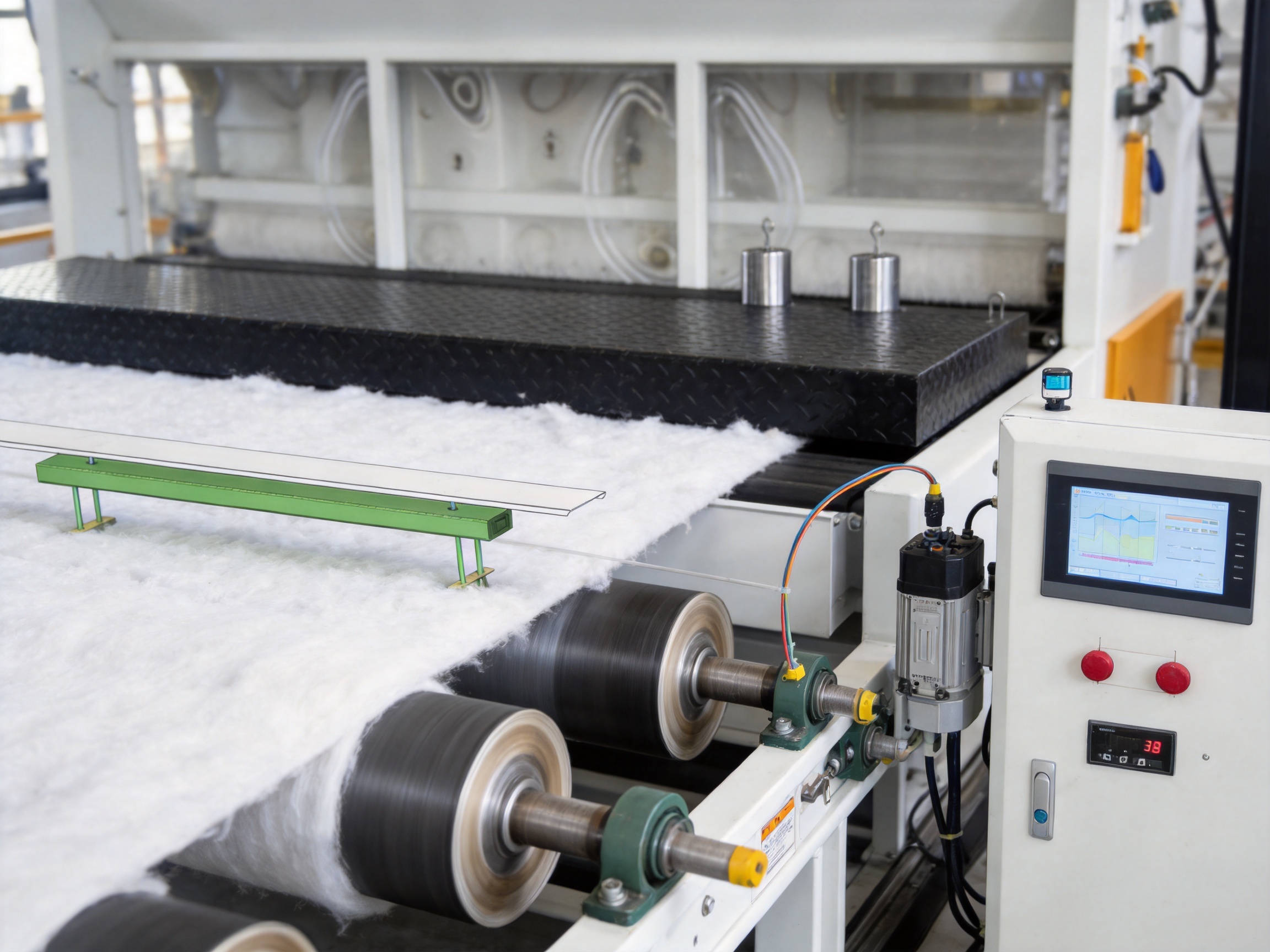
The HYYZY system is based on a load-cell-controlled apron or weighing belt positioned within the fiber delivery path. As the fiber batt travels over the controlled section, the load cell detects the load applied by the material. The control unit processes this information together with operating parameters such as line speed and target basis weight.
When the measured value differs from the preset target, the control system sends a correction signal to the inverter-driven feed rolls. The feed-roll speed is adjusted to increase or decrease the amount of fiber entering the carding machine. This is a continuous feedback process rather than a one-time adjustment. As conditions change, the system continues to monitor the batt and modify the feed rate as needed.
The purpose of the correction is to stabilize the web weight presented at the card doffers. A stable doffer web provides a better foundation for downstream cross-lapping, needling, thermal bonding, or other consolidation operations. It also reduces the likelihood that a variation introduced during feeding will remain in the finished roll.
The system uses a digital microcomputer processing platform with online dynamic control. This allows measurement signals to be analyzed rapidly and converted into operating commands. In a properly configured line, the weighing belt, feed rolls, carding machine, and line control system operate in synchronization. The result is a more coordinated production process than one based on independent manual settings.
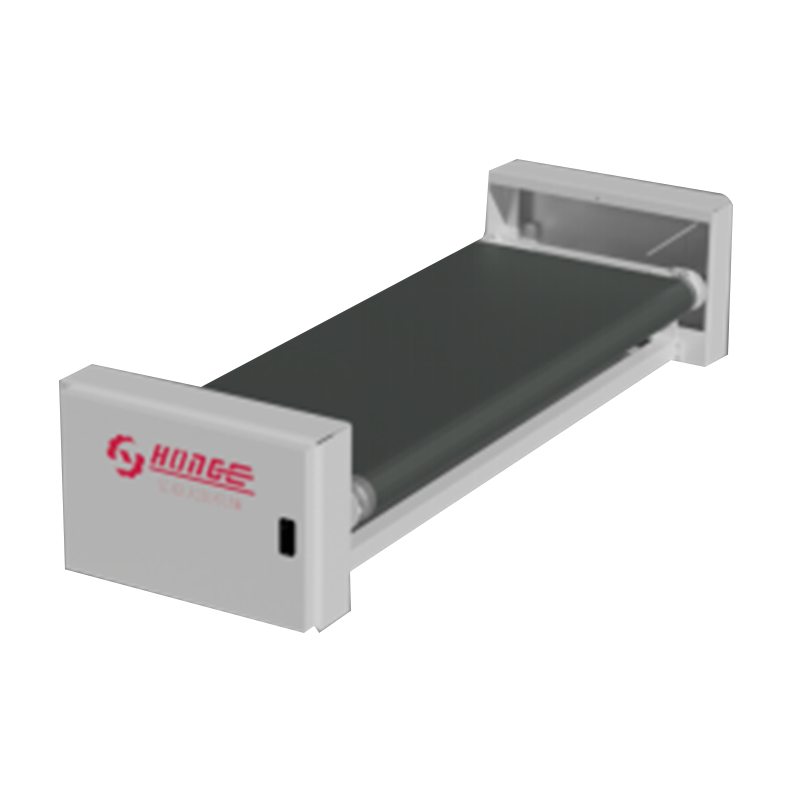
HYYZY Weighing Belt For Nonwoven Fabric Production
Main Product Advantages
Continuous Online Measurement
One of the most important advantages of the weighing belt is its ability to measure the fiber batt during production. Conventional production arrangements may depend heavily on manual weighing, operator observation, or periodic sampling. Those methods remain useful for quality verification, but they do not provide the same immediate response as online measurement.
Continuous measurement helps identify changes before they become extensive defects. If fiber delivery begins to fall below the target, the control system can initiate a feed correction. If the delivered batt becomes too heavy, the system can reduce the feed rate. This reduces the time during which the line operates outside the desired specification.
Closed-Loop Automatic Correction
The product combines measurement with adjustment. This is a significant distinction between an automatic leveler and a passive weighing device. The load-cell signal is used to control the speed of the feed rolls through inverter technology. The equipment therefore supports closed-loop operation rather than merely displaying a weight value for the operator.
Closed-loop control can reduce dependence on manual intervention and help maintain stable operation during changes in raw-material flow, machine speed, or production conditions. It is particularly useful on long production runs in which even a small deviation could affect a substantial quantity of finished fabric.
Improved Longitudinal Gram-Weight Stability
Longitudinal gram deviation refers to the variation in basis weight along the length of the produced web or roll. Excessive longitudinal variation can cause inconsistent thickness, uneven bonding, differences in mechanical strength, and customer complaints. The weighing belt is designed to control this variation by correcting the feed rate in response to actual batt measurements.
More stable longitudinal weight can also improve the performance of downstream equipment. Needle-punching machines, thermal bonding ovens, and winding systems operate more consistently when the incoming web has a predictable mass profile. Stable input conditions can make it easier to set needle density, penetration depth, oven temperature, residence time, winding tension, and other process parameters.
Digital Microcomputer Processing
The digital microcomputer system provides a modern control foundation for online dynamic adjustment. Digital processing can support rapid signal handling, parameter storage, alarm management, and communication with other line-control functions. It also gives the operator a clearer interface for entering target values and monitoring equipment status.
Compared with purely mechanical or manual regulation, digital processing can offer greater repeatability. Once appropriate production settings have been established, operators can use the same control logic for subsequent batches, subject to verification and adjustment for raw-material differences.
Inverter Speed Control
Inverter control enables the feed-roll speed to be adjusted smoothly according to the correction signal. Smooth speed regulation is preferable to abrupt on-and-off control because it can reduce mechanical shock and help prevent sudden changes in fiber delivery. It also supports synchronization between the feed rolls and the carding machine.
The inverter-based arrangement can be adapted to different operating speeds and production requirements. The final control response depends on the line design, sensor calibration, drive configuration, material characteristics, and selected control parameters, but the use of variable-speed drives provides a flexible foundation for automatic adjustment.
Wide Basis-Weight Application Range
The stated control range for the web layer gram weight between the feeding machine and carding machine is 200 to 5000 grams per square meter for a panel width of 2800 millimeters. This broad range allows the equipment to support both relatively lightweight products and heavy technical nonwovens.
The practical production range for a particular installation depends on fiber type, batt thickness, line speed, feed configuration, carding capacity, and the required accuracy. Nevertheless, the specified range demonstrates that the equipment is intended for diverse nonwoven applications rather than a single narrow product category.
Adaptability to Customized Lines
Nonwoven factories rarely have identical layouts or identical product programs. Some plants require a compact assistant machine for a single carding line, while others need integration into a complete automated production line with multiple feeders, cards, cross-lappers, needle looms, ovens, or winders. The product information identifies customized configuration as an available option.
Customization may involve working width, electrical voltage, control interfaces, machine color, layout, connection method, and other customer-specific requirements. These details should be finalized during technical discussions so that the weighing belt matches the existing equipment and the intended production process.
Comparison with Conventional Weight-Control Methods
| Control approach | Typical operating method | Response to variation | Automation level | Suitability for continuous production |
|---|---|---|---|---|
| Manual visual adjustment | Operator observes the batt and changes feed settings by experience | Delayed and dependent on operator judgment | Low | Limited for high-speed or long-duration production |
| Periodic laboratory sampling | Samples are collected and weighed at intervals | Useful for verification but not immediate correction | Low to medium | Suitable as quality control support, not as the only control method |
| Passive belt weighing | Weight information is displayed without automatic feed correction | Operator must apply the adjustment | Medium | Better visibility but limited automatic response |
| Load-cell weighing with inverter feed control | Online measurement is linked to variable-speed feed-roll adjustment | Automatic and continuous within configured control limits | High | Well suited to integrated nonwoven lines |
The comparison shows why an automatic weighing belt can provide an advantage over simpler methods. Manual and sampling-based approaches still have a role in production management, but they do not normally correct deviations as they occur. A passive weighing system improves visibility but leaves the response to the operator. By combining load-cell measurement, digital processing, and inverter speed control, the HYYZY design supports a more complete control loop.
This does not mean that an automatic leveler eliminates the need for skilled operators. Correct calibration, suitable raw-material preparation, regular maintenance, and quality verification remain essential. The advantage is that operators can work with better process information and a machine that performs routine corrections continuously.
Role in a Complete Nonwoven Manufacturing Line
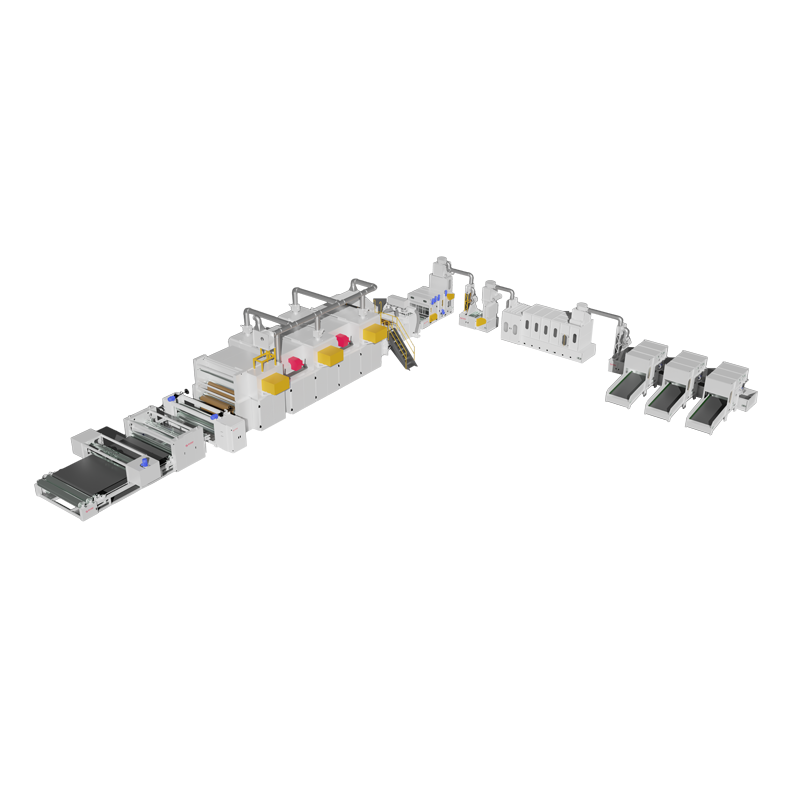
The weighing belt is categorized as assistant equipment for nonwoven fabric production, but its influence extends across the entire line. It is positioned at a critical point between fiber feeding and carding, where the mass flow must be stabilized before web formation. The quality of this input affects the performance of subsequent equipment.
Fiber Opening and Feeding
Opening equipment separates and loosens compressed fibers before they are delivered to the feeding system. The feeding machine then meters the prepared fibers toward the carding machine. Variations in fiber density, blend ratio, moisture, static charge, and opening quality can affect the apparent bulk and the actual mass flow. The weighing belt provides a measurement point after or within the feeding route so that the delivered batt can be controlled more accurately.
Carding
The carding machine arranges and individualizes fibers to form a web. If the incoming batt weight changes, the card may produce a web with corresponding mass variation. Stable feeding allows the card to operate closer to its intended condition and helps reduce the burden on downstream correction processes.
Cross-Lapping and Web Forming
In many heavy nonwoven applications, the carded web is cross-lapped to build the required width and thickness. A stable card web supports a more consistent cross-lapped structure. This can help reduce variation in the final web and make it easier to achieve the required basis weight profile.
Needle Punching
Needle-punched products rely on the entanglement of fibers through repeated needle penetration. Product strength, thickness, surface appearance, and dimensional stability are influenced by the quantity and distribution of fibers entering the needle loom. A more uniform batt can improve the consistency of needle-punching results and reduce the risk of thin or overloaded sections.
Thermal Bonding and Heat Setting
Thermally bonded products pass through an oven or other heating equipment where fibers soften, melt, or bond. The amount of fiber entering the oven affects heat transfer, residence-time requirements, finished thickness, and energy consumption. More stable web weight can help operators maintain more consistent thermal conditions and avoid unnecessary over-processing.
Winding and Cutting
Stable basis weight is also important when the finished product is wound into rolls or cut into sheets. Uneven thickness may lead to irregular roll hardness, telescoping, winding tension problems, or inconsistent sheet dimensions. By helping stabilize the material before consolidation, the weighing belt contributes to more predictable finishing operations.
Engineering and Manufacturing Strengths
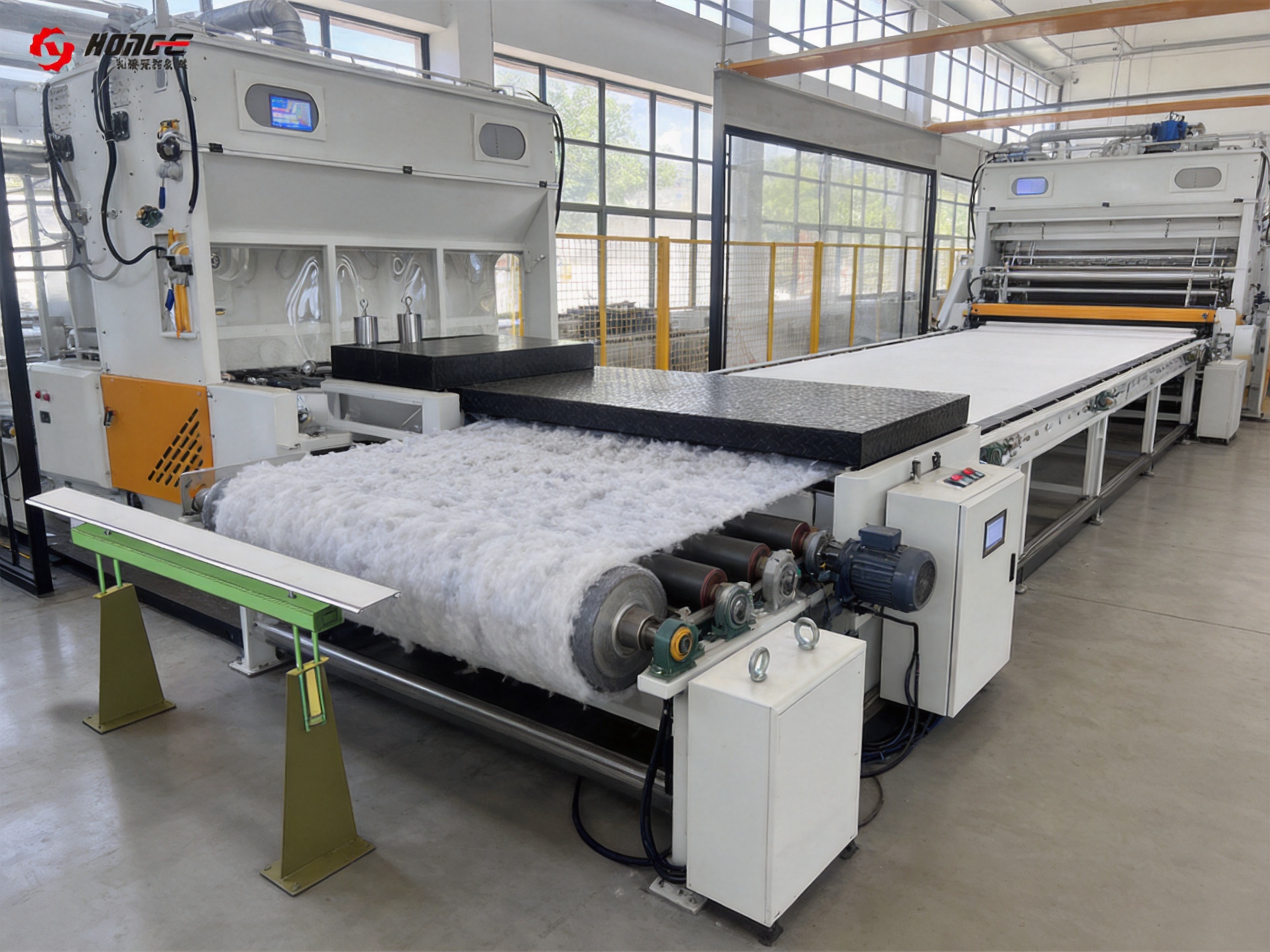
Changshu Hongyi Nonwoven Machinery Co., Ltd. is a professional nonwoven machinery manufacturer and trader with more than 20 years of experience in the nonwoven machinery field. This experience is relevant to the development of assistant equipment because weighing and leveling systems must be understood in the context of the complete production line. A control device cannot deliver its full value if it is designed without considering fiber preparation, carding, web formation, bonding, and finishing conditions.
The company supplies complete nonwoven production lines as well as individual machines. Its product range includes needle-punched geotextile lines, nonwoven carpet lines, airlaid waste-felt lines, automotive interior material lines, needle-punched cleaning-cloth lines, wool-felt lines, jute-felt lines, needle-punching machines, carding machines, airlaid machines, ironing machines, and thermal-bonded wadding oven machines.
This broad manufacturing scope provides several practical advantages. First, the company can evaluate the weighing belt as part of a wider process rather than as an isolated component. Second, customers seeking a complete line can coordinate the specifications of the feeder, card, leveling system, web former, bonding equipment, and winding system with one supplier. Third, customers purchasing a standalone unit can request a configuration intended to work with existing machinery.
Process-Oriented Design
The equipment is designed around a clear process objective: measure the actual batt weight and adjust the feed-roll operation to maintain a constant web weight at the doffers. This process-oriented approach is more useful than focusing only on individual components. The load cell, apron, drive system, control cabinet, digital processor, and operator interface must work together to achieve the required production result.
During engineering, important considerations include the working width, target basis-weight range, fiber composition, expected production speed, installation position, upstream feeder design, carding capacity, electrical supply, and control communication. A supplier with experience across multiple nonwoven technologies can better understand how these factors interact.
Automation and Control Capability
The product uses PLC and touch-screen control according to the supplied configuration information. PLC control is widely used in industrial production because it can coordinate sensors, drives, alarms, interlocks, and operating sequences. A touch screen gives operators access to production settings and status information in a more direct format than a collection of independent manual controls.
Automation can support consistent operation across shifts and reduce the influence of individual operator habits. It can also make troubleshooting more systematic by displaying alarms or abnormal conditions. The exact functions available depend on the final configuration, so customers should confirm historical data, recipe management, alarm logging, remote communication, and other requirements before ordering.
Customization and Line Integration
The company states that the configuration can be customized according to customer needs. The listed specification range includes widths from 2000 to 7600 millimeters, while the featured technical parameters identify a 2800-millimeter working width. This means the presented model should be understood as a 2800-millimeter configuration, with other widths potentially available through project-specific engineering.
Customization is particularly important when the machine is installed in an existing factory. The customer may need to match an existing card width, connect to a particular feeder, accommodate restricted floor space, use a local voltage standard, or exchange signals with a central production-control system. A careful technical survey before manufacturing helps avoid installation delays and ensures that mechanical and electrical interfaces are compatible.
Quality and Certification Orientation
The product information identifies CE and ISO9001:2000 certification. Certification and quality-management systems do not replace technical evaluation, but they indicate an organized approach to product manufacture and compliance. Customers should request the applicable certificates, inspection records, electrical documentation, and acceptance criteria for the specific machine supplied.
The company also provides video outgoing inspection. This can help customers review machine operation before shipment, particularly when international travel is difficult. A factory acceptance procedure should ideally include empty-running tests, load-cell verification, feed-roll response, control-panel inspection, alarm checks, emergency-stop tests, and confirmation of the agreed technical parameters.
International Supply Experience
The company reports supplying products to more than 20 countries, including markets in Latin America, Europe-adjacent regions, Africa, Southeast Asia, and other Asian countries. International project experience can be valuable because export machinery must be prepared for different electrical standards, documentation requirements, shipping conditions, installation practices, and operator expectations.
International supply also encourages a more disciplined approach to packaging, spare parts, manuals, remote support, and commissioning. For a production-line component that affects product quality, after-sales support is an important part of the purchasing decision.
Technical Parameters
| Parameter | Supplied specification | Engineering significance |
|---|---|---|
| Model | HYYZY | Identifies the featured weighing-belt and auto-leveling configuration |
| Working width | 2800 mm | Defines the effective batt-control width for the featured machine |
| Web layer gram-weight range | 200–5000 gsm | Supports a broad range of lightweight and heavy nonwoven products |
| Host power supply | 220 V | Requires confirmation against the customer’s factory electrical standard |
| Monitor power supply | DC 24 V | Provides low-voltage power for the monitoring and control section |
| Control method | PLC and touch screen | Supports automated operation and operator interaction |
| Automatic grade | Automatic | Indicates automatic online control rather than manual-only adjustment |
| Customization | Available | Allows project-specific mechanical, electrical, and control adaptation |
| Certification information | CE and ISO9001:2000 listed | Supports compliance and quality-management evaluation |
| Warranty information | One year | Provides a stated after-sales service period |
| Lead time | Approximately 2–3 months | Useful for production planning and project scheduling |
The power information should be reviewed carefully during technical confirmation. The host supply is listed as 220 V and the monitor supply as DC 24 V, while other product information may describe electrical details in different ways depending on the configuration. The customer should confirm rated voltage, phase, frequency, total connected load, control-cabinet requirements, motor power, and local electrical standards before signing the final technical agreement.
Operational Benefits for Nonwoven Manufacturers
Reduced Raw-Material Waste
When a web runs above the target basis weight, the producer consumes more fiber than necessary. When it runs below the target, the material may fail quality requirements and require reprocessing or rejection. Automatic correction can reduce the duration and extent of off-specification operation. Over time, even a small improvement in basis-weight control can generate meaningful raw-material savings, especially in high-volume production.
More Consistent Product Quality
Uniform basis weight is closely connected to customer expectations. A product with stable mass distribution is more likely to maintain consistent thickness, tensile strength, tear resistance, density, air permeability, and surface appearance. The exact relationship depends on the fiber blend and consolidation method, but stable feeding provides a better starting point for quality control.
Higher Process Visibility
A digital monitoring system gives operators a clearer understanding of what is happening in the feeding and carding section. Rather than adjusting the machine only when a finished roll fails inspection, operators can observe the process as it runs. This supports preventive action and can assist maintenance teams in identifying problems related to sensors, drives, material flow, or mechanical components.
Improved Labor Efficiency
Automatic leveling reduces the need for constant manual feed-roll adjustment. Operators can focus more attention on material preparation, safety, quality verification, line coordination, and maintenance. Automation does not remove the requirement for trained personnel, but it allows skilled employees to spend less time performing repetitive corrections.
Better Repeatability Between Production Batches
Digital settings and automatic control can make it easier to reproduce a product specification. When the same fiber blend and target weight are used again, stored or documented parameters can provide a starting point for setup. Operators must still verify actual performance, but repeatability is generally improved compared with relying only on handwritten settings or personal experience.
Installation and Commissioning Considerations
Successful performance depends on correct installation. Before delivery, the customer and supplier should confirm the machine footprint, material-flow direction, conveyor or apron height, connection points, control-cabinet position, access for maintenance, and relationship to the carding machine. Adequate space should be reserved for inspection, cleaning, calibration, and replacement of wear parts.
The weighing section should be installed on a stable structure that is isolated as far as practical from excessive vibration. Vibration, mechanical contact, uneven support, or buildup of fiber around the weighing components can affect measurement accuracy. The installation environment should also be kept as clean as possible, because loose fiber and dust can interfere with moving parts, sensors, and cooling arrangements.
Commissioning should include an empty-running test and a loaded production test. During the empty-running test, engineers can verify drive direction, emergency stops, inverter response, sensor signals, communication, alarms, and interlocks. During the loaded test, the line should be operated with the intended fiber material over a suitable range of conditions so that the weighing signal and feed correction can be evaluated.
Calibration should be performed according to the supplier’s procedure and checked against an independent reference method. The target is not simply to obtain a displayed value; it is to verify that the displayed value corresponds to the actual delivered batt under operating conditions. Calibration may need to be repeated after relocation, major maintenance, sensor replacement, or significant changes in the production setup.
Maintenance and Reliability Practices
Routine cleaning is essential in nonwoven production because loose fibers and dust are unavoidable. Operators should remove accumulated material from the belt, apron, guards, sensors, and surrounding frame according to the recommended maintenance schedule. Cleaning methods should not damage load cells, electrical connectors, protective coatings, or control components.
Mechanical inspection should cover belt tracking, apron condition, bearings, rollers, fasteners, guards, and drive components. Abnormal noise, vibration, belt drift, or changes in motor behavior may indicate a developing problem. Early attention can prevent a minor mechanical issue from affecting weight control or causing unplanned downtime.
Electrical maintenance should include inspection of cables, terminals, grounding, control-cabinet ventilation, inverter status, and emergency-stop circuits. The 24-volt monitoring supply and the main host supply should be checked against the approved electrical drawings. Any modification to the control system should be completed by qualified personnel and documented for future service.
Load-cell performance should be checked at defined intervals. If the measured value begins to drift, possible causes may include overload, vibration, material buildup, cable damage, temperature changes, structural contact, or calibration loss. Troubleshooting should begin with a physical inspection before replacing electronic components.
Preventive maintenance records are useful for identifying trends. Recording calibration dates, belt adjustments, alarm events, sensor replacement, and production deviations can help the factory plan service activities and improve overall equipment effectiveness.
Recommended Purchasing and Technical Evaluation Procedure
Customers evaluating the HYYZY weighing belt should first define the production objective. Important information includes the target product, fiber type, blend ratio, basis-weight range, working width, line speed, carding capacity, downstream process, and expected annual operating hours. A clear production profile allows the supplier to recommend an appropriate configuration.
The customer should then provide drawings or photographs of the existing line if the weighing belt is intended for retrofit installation. The supplier needs to understand the available space, material-flow direction, mounting points, feeder arrangement, card inlet height, existing control system, and electrical supply. For a new line, the machine can be considered during the overall layout and automation design.
Performance targets should be written into the technical agreement. These may include working width, applicable gram-weight range, measurement method, control response, operating speed, permitted deviation, interface requirements, factory acceptance testing, installation support, warranty terms, and spare-parts supply. Clear acceptance criteria reduce misunderstandings after delivery.
Customers should also confirm the scope of supply. The scope may include the weighing belt, load cell, feed rolls, inverter, PLC cabinet, touch screen, cables, sensors, software, manuals, tools, spare parts, installation supervision, commissioning, and operator training. The exact scope varies by project and should be stated in writing.
Finally, customers should evaluate the supplier’s ability to provide long-term support. A machine may operate for many years, so the availability of technical documentation, replacement sensors, drive components, control-system support, and remote troubleshooting can be as important as the initial purchase price.
Applications Supported by the Equipment
The weighing belt is suitable for nonwoven production lines using materials such as polyester fiber, polypropylene staple fiber, and other compatible staple fibers. Its potential applications include geotextiles, carpet substrates, automotive interior materials, filtration products, cleaning cloths, insulation materials, felts, and various needle-punched or thermally bonded nonwovens.
For geotextile production, stable weight contributes to more consistent mass distribution and mechanical performance across the roll. For automotive interior materials, consistent density and thickness can support downstream molding and trimming operations. For carpets and felts, uniform feeding helps maintain an even appearance and predictable handle. For cleaning cloths and filtration materials, stable basis weight can help maintain product performance and conversion efficiency.
The system can also support factories that manufacture multiple product grades on one line. By changing target settings and confirming the correct mechanical and process conditions, the producer can use the automatic leveling function as part of a flexible manufacturing strategy.
Q&A
What is the main purpose of the weighing belt?
The main purpose is to measure the actual weight of the fiber batt passing over the load-cell-controlled apron and automatically adjust the feed rolls. This helps maintain a more constant web weight at the carding-machine doffers.
Is the machine only a weighing device?
No. It is designed as an automatic weighing and leveling system. The measurement signal is processed digitally and used to control the feed-roll speed through inverter regulation.
What basis-weight range is identified for the featured configuration?
The supplied information identifies a web layer gram-weight range of 200 to 5000 grams per square meter for a 2800-millimeter panel width. The effective range for a specific project should be confirmed according to fiber type, line speed, feeder capacity, and carding conditions.
What is the working width?
The featured technical parameters specify a working width of 2800 millimeters. Other widths may be available through customized engineering, with the listed specification range extending from 2000 to 7600 millimeters.
Can the system be integrated with an existing carding line?
It can be considered for retrofit or new-line integration, subject to a technical review. The supplier should confirm the physical layout, feed direction, card inlet height, electrical supply, communication signals, and control requirements before production.
What types of fiber can be used?
The product information identifies polyester fiber and polypropylene staple fiber among the applicable raw materials. Other fibers may be possible, but compatibility should be assessed according to fiber length, fineness, bulk, moisture, static behavior, blend ratio, and feeding characteristics.
How does automatic control reduce weight variation?
The load cell continuously detects the batt load. The digital control system compares the measurement with the target and sends a correction signal to the inverter-driven feed rolls. The feed rate is then increased or decreased to compensate for the measured deviation.
Does automatic leveling eliminate laboratory testing?
No. Online leveling improves process control, but laboratory testing and finished-product inspection remain important. Independent verification confirms actual product performance and helps identify differences between online measurements and final material properties.
What power supplies are listed?
The supplied technical parameters list a 220-volt host power supply and a DC 24-volt monitor power supply. Customers should confirm phase, frequency, total power, control-cabinet requirements, and local electrical compatibility in the final technical documentation.
What control system is used?
The product information identifies PLC and touch-screen control, together with a digital microcomputer processing system and inverter speed control. The final interface and available functions should be confirmed for each customized project.
What after-sales service is offered?
The product information lists a one-year warranty and video outgoing inspection. Customers should confirm the detailed warranty scope, commissioning support, training, spare-parts policy, response time, and remote-service arrangements before ordering.
Why is supplier experience important for this equipment?
The weighing belt interacts with feeding, carding, web forming, and downstream consolidation equipment. A supplier experienced in complete nonwoven lines can better evaluate these relationships and provide a configuration that supports the overall process rather than only the individual machine.
Conclusion
The HYYZY weighing belt for nonwoven fabric production is designed to provide continuous batt-weight measurement and automatic feed correction at a critical point in the manufacturing process. Its load-cell-controlled apron, digital processing system, inverter speed regulation, PLC control, and touch-screen interface support a closed-loop approach to web-weight management.
Compared with manual adjustment, periodic sampling, or passive weighing, the system offers faster response, greater automation, improved process visibility, and better potential for longitudinal gram-weight stability. These advantages can help manufacturers reduce raw-material waste, improve consistency, simplify repeat production, and support more reliable downstream processing.
The machine is also supported by the broader capabilities of Changshu Hongyi Nonwoven Machinery Co., Ltd., a supplier with more than 20 years of experience in nonwoven machinery and a product range covering individual machines and complete production lines. Its experience with carding, needle punching, thermal bonding, airlay processing, web formation, and finishing equipment is valuable when designing a weighing and leveling system for a complete production environment.
For the best result, the weighing belt should be selected as part of a clearly defined process plan. Working width, basis-weight range, fiber type, line speed, electrical supply, mechanical layout, control interfaces, calibration procedures, acceptance criteria, and after-sales support should all be confirmed before manufacture. When properly integrated and maintained, the system can become an important foundation for stable, efficient, and highly automated nonwoven fabric production.
References
1. Product technical information for the HYYZY weighing belt for nonwoven fabric production, including operating principle, characteristics, and technical parameters.
2. Supplier information for Changshu Hongyi Nonwoven Machinery Co., Ltd., including company experience, product range, manufacturing capabilities, certification information, and international supply experience.
3. General principles of nonwoven fabric manufacturing, including fiber preparation, feeding, carding, web formation, needling, thermal bonding, winding, and cutting.
4. Industrial guidance on load-cell measurement, variable-frequency drive control, PLC automation, and closed-loop process regulation.
5. General quality-control practices for basis-weight measurement and uniformity evaluation in nonwoven fabric production.