

Content
- 1 Introduction
- 2 What Is an Airlaid Waste Felt Production Line?
- 3 Core Production Process
- 4 Key Technical Specifications
- 5 Advantages Compared with Conventional Production Equipment
- 6 Applications of Airlaid Waste Felt
- 7 Engineering and Manufacturing Strengths
- 8 Energy, Sustainability, and Operational Efficiency
- 9 Product Quality Control
- 10 Installation and Project Planning
- 11 Maintenance and Service Considerations
- 12 Why Choose a Customized Airlaid Waste Felt Solution?
- 13 Frequently Asked Questions
- 13.1 What materials can the HYL Airlaid Waste Felt Production Line process?
- 13.2 What fiber lengths are suitable for the airlaid process?
- 13.3 What products can be made on the line?
- 13.4 What are the available working widths?
- 13.5 What GSM and thickness ranges are available?
- 13.6 What is the production capacity?
- 13.7 Does the line use needle punching?
- 13.8 Can the line process recycled fibers without carding?
- 13.9 How is the equipment customized?
- 13.10 What certifications are associated with the equipment?
- 13.11 How long is the warranty?
- 13.12 Where is the equipment manufactured?
- 14 Conclusion
- 15 References
- 16 Product: HYL Airlaid Waste Felt Production Line
Introduction
The demand for sustainable nonwoven materials is increasing across the automotive, construction, furniture, packaging, filtration, and general industrial sectors. Manufacturers are under pressure to reduce production costs, improve material utilization, process more recycled fibers, and supply products with stable thickness, strength, and density. At the same time, many traditional nonwoven production systems are designed primarily for relatively clean and uniform virgin fibers. This creates difficulties when factories need to process textile scraps, waste felt, recycled polyester, and other fiber residues with different lengths, shapes, and levels of contamination.
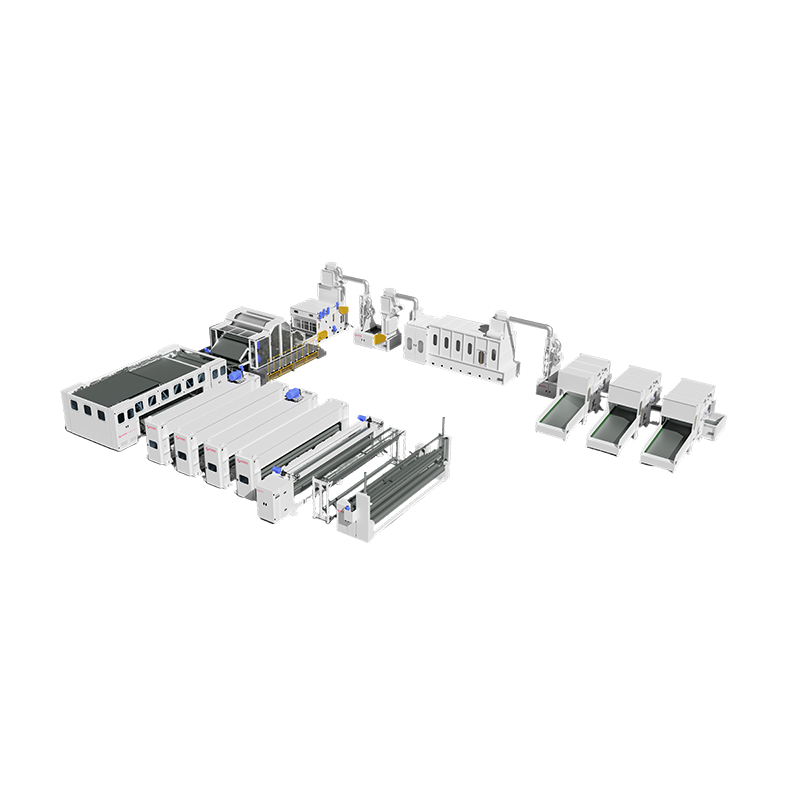
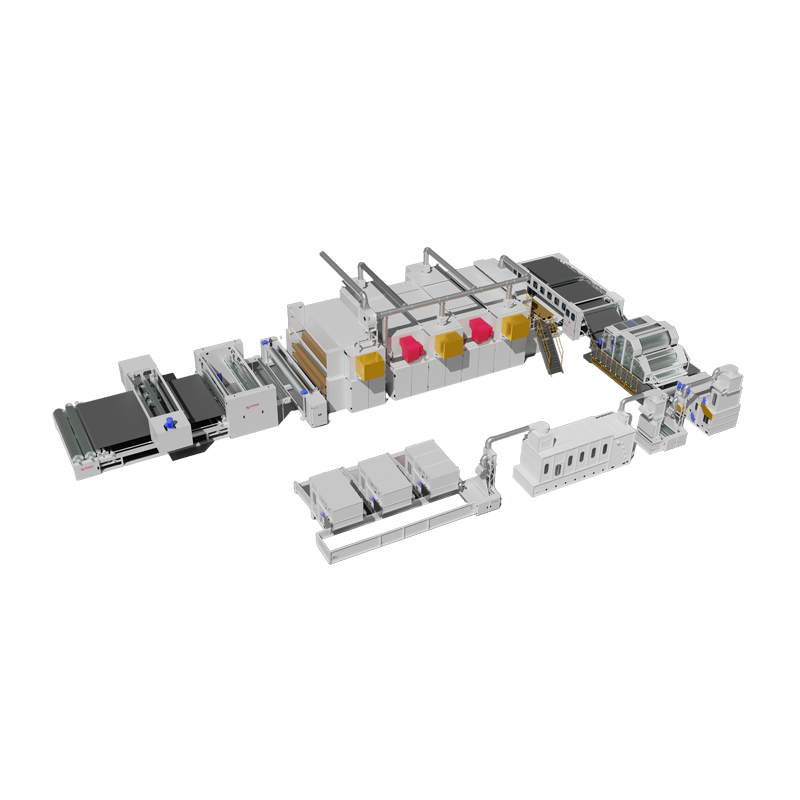
The HYL Airlaid Waste Felt Production Line is designed specifically for this production challenge. It uses air-laid web forming technology to convert a broad range of waste and recycled fibers into thick, uniform, and functional felt products. The line integrates waste opening, fiber separation, dust removal, air-laid web formation, reinforcement, and related finishing operations into a coordinated production system. It can be configured for different raw materials, product structures, widths, thicknesses, weights, and output requirements.
Unlike a conventional carding-based line that may require relatively consistent fiber length and quality, an air-laid waste felt line is better suited to mixed, short, irregular, and recycled fibers. The HYL system is designed to handle fiber waste with lengths from approximately 5 to 85 millimeters, providing greater flexibility for raw material sourcing. This makes it suitable for manufacturers that want to transform production waste into saleable nonwoven products rather than sending valuable fibers to disposal or low-value applications.
With working widths from 1500 to 2800 millimeters, a product GSM range of approximately 500 to 7500 GSM, finished thicknesses from 5 to 200 millimeters, and production capacities of approximately 500 to 1000 kilograms per hour, the line can support both standard and customized industrial production. Changshu Hongyi Nonwoven Machinery Co., Ltd. provides complete equipment solutions, customized configurations, technical support, and factory-direct manufacturing for customers in China and international markets.
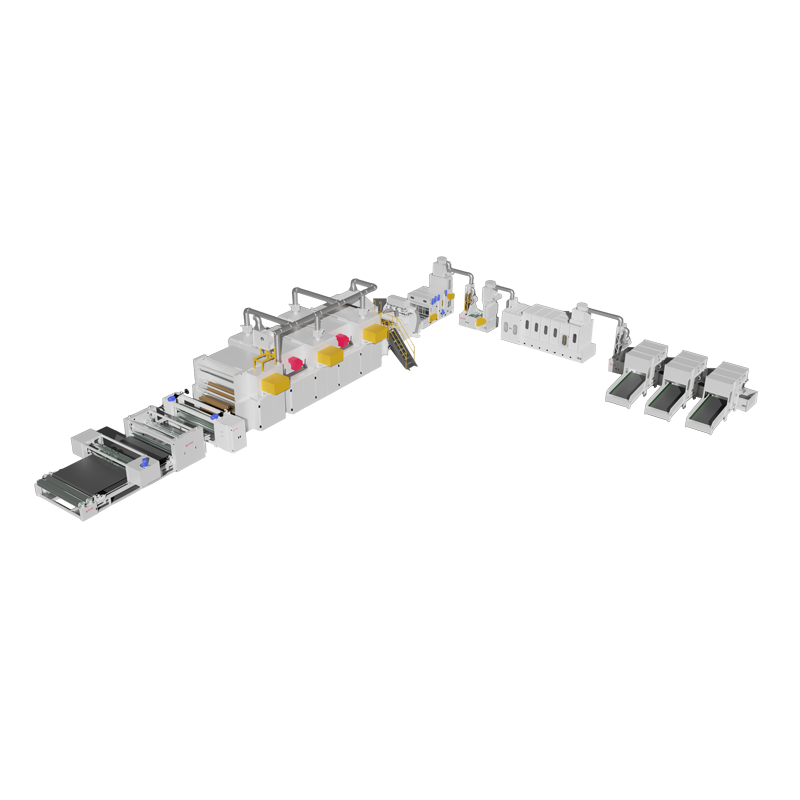
HYL Airlaid Waste Felt Production Line
What Is an Airlaid Waste Felt Production Line?
An airlaid waste felt production line is a nonwoven manufacturing system that distributes opened fibers through an air stream to form a web. Instead of relying entirely on mechanical carding to align and transfer fibers, the airlaid process suspends and transports fibers through controlled airflow before depositing them onto a forming surface. The result is a web with a more random fiber orientation, which can provide useful bulk, softness, insulation performance, and three-dimensional structure.
The system is especially effective for waste fibers and recycled materials because the raw material does not need to possess the same uniformity required by some conventional processes. Textile waste, recycled polyester, cotton fiber, wool, natural fiber, low-melt fiber, and waste felt can be prepared, opened, blended, and formed into a web. Depending on the product design, the web may then be reinforced by needle punching, thermal bonding, adhesive bonding, or another suitable method.
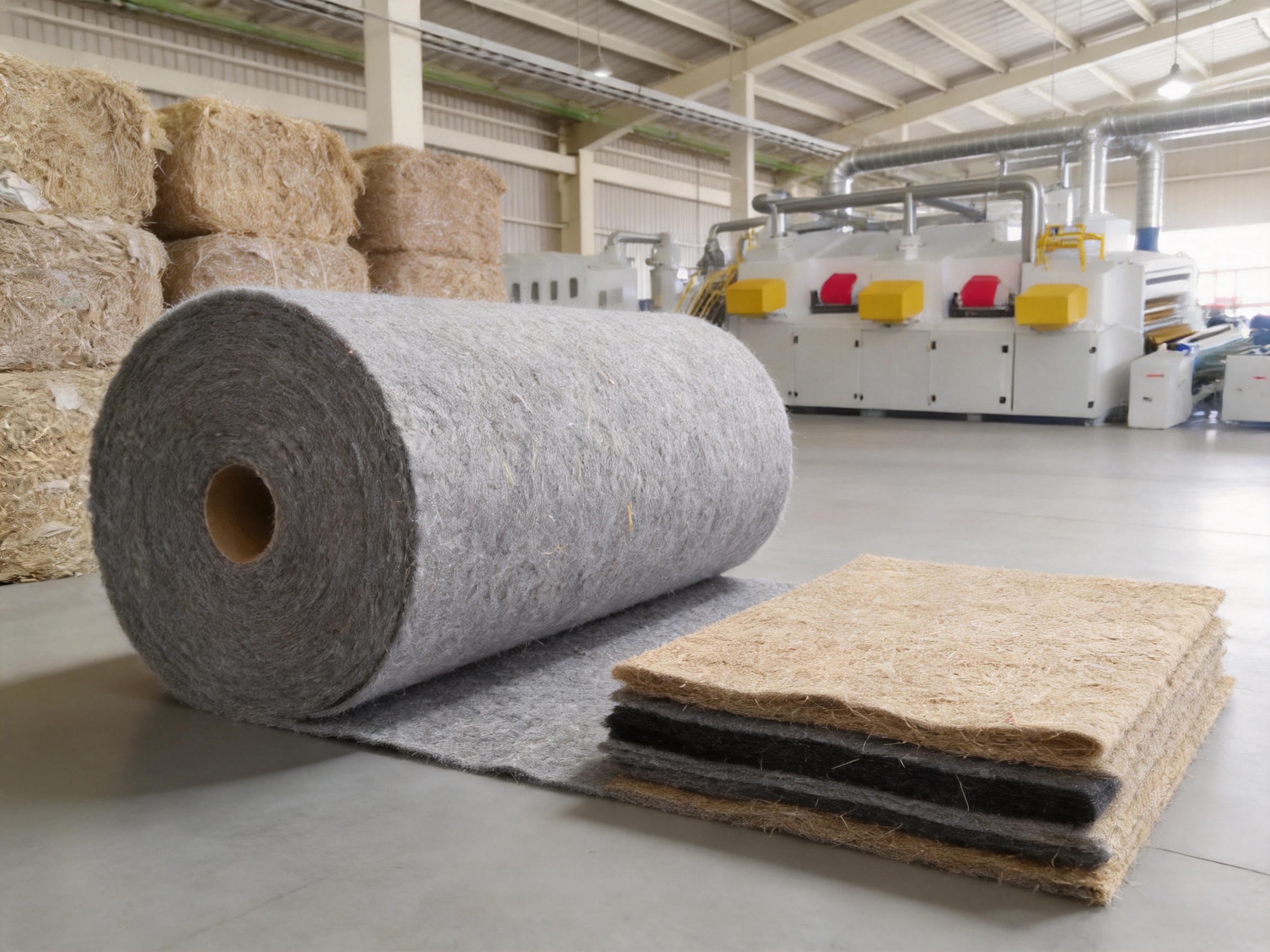
The line is not limited to a single finished product. It can produce automotive interior felts, sound and thermal insulation materials, furniture protection pads, packaging materials, transit protection products, construction insulation layers, and other thick nonwoven materials. The final configuration is selected according to the raw material, target density, required strength, production width, finished thickness, and downstream finishing method.
Because the line is modular, manufacturers can choose equipment combinations that correspond to their production objectives. A basic system may focus on opening, dust removal, airlaid forming, and needle punching. A more advanced system may include multiple opening units, blending systems, automatic feeding, thermal bonding equipment, edge trimming, winding, cutting, dust filtration, and automated control. This allows the equipment to grow with the customer’s product range and production capacity.
Core Production Process
Raw Material Preparation
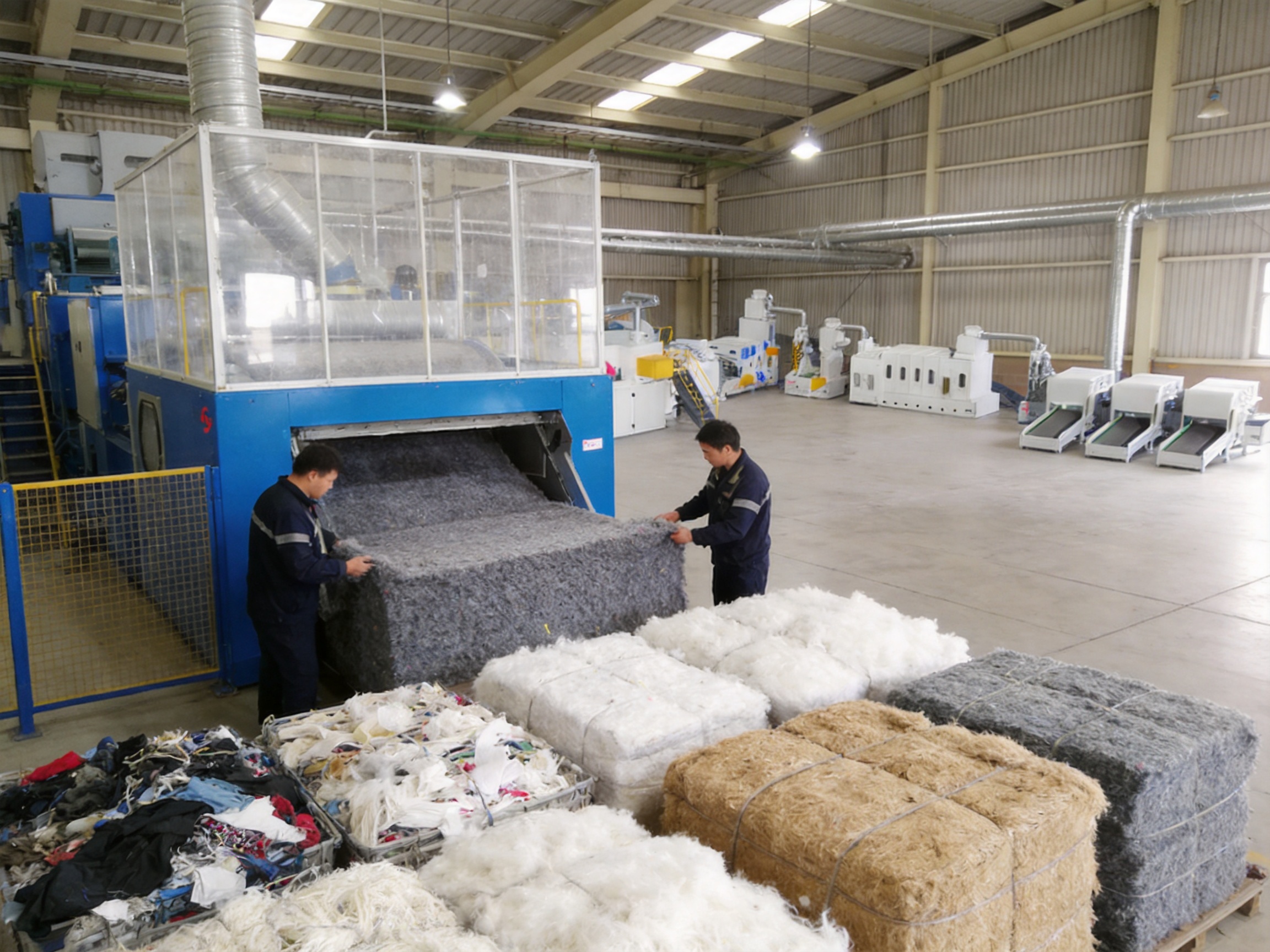
The first stage is the preparation of the raw materials. Typical materials include natural fibers, cotton fiber, wool, polyester fiber, recycled PET fiber, low-melt fiber, textile scraps, waste felt, and other reusable fiber residues. Materials may arrive in bales, loose pieces, roll waste, cutting waste, or compacted production scraps.
Before entering the line, operators generally inspect the raw materials and remove oversized foreign objects, hard contaminants, metal pieces, plastic parts, and materials that are unsuitable for the intended product. Proper sorting improves product quality and protects the opening and feeding equipment. When the line is used for recycling, a consistent material-sorting procedure helps maintain stable color, density, moisture, and fiber composition.
Opening and Fiber Separation
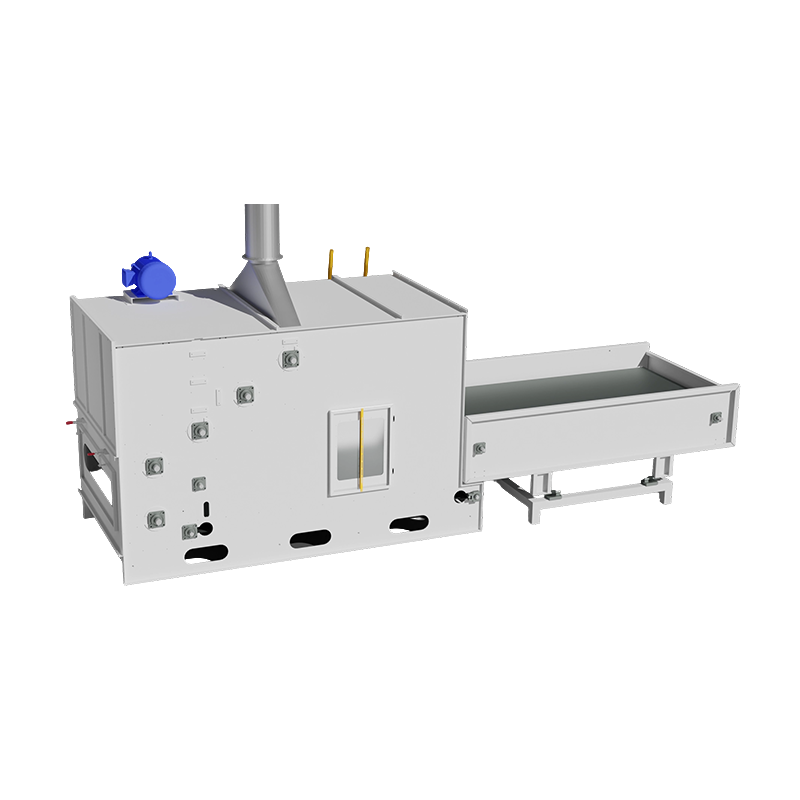
The opening section breaks apart compressed bales, felt pieces, and compacted fiber clusters. Its purpose is not simply to reduce the size of the material; it must also separate fiber bundles carefully enough to support good web formation while limiting unnecessary fiber damage. The opening configuration can be adapted to different raw materials and required production rates.
For waste felt and textile scraps, controlled opening is important because the material may contain fibers with different lengths and levels of entanglement. Excessive mechanical action can shorten the fibers further, create dust, and reduce the strength of the final web. A suitable opening arrangement helps release usable fibers while preserving as much of their original performance as possible.
Dust Removal and Cleaning
Waste fibers often contain dust, short fiber fragments, and loose impurities. The dust-removal section separates unwanted particles from the usable fiber stream. This improves the working environment, reduces contamination in the finished product, and supports stable operation of the airlaid forming unit.
An effective dust-removal system also contributes to equipment reliability. Excess dust can accumulate on fans, filters, sensors, forming surfaces, and electrical components. By controlling dust at an early stage, the production line can operate more consistently and maintenance intervals can be managed more effectively. The exact cleaning and filtration configuration can be selected according to the composition of the waste material and local environmental requirements.
Blending and Proportioning
Many products require a blend of different fibers. For example, recycled fibers may be combined with polyester, low-melt fiber, cotton, wool, or other materials to achieve the required balance of strength, resilience, softness, thermal performance, and bonding behavior. The blending stage helps distribute the selected components through the material stream.
Stable blending is particularly important when low-melt fibers are included for thermal bonding. The bonding fiber must be distributed evenly so that the finished felt has consistent strength and thickness rather than weak or overly rigid areas. Depending on the configuration, the line can be designed with appropriate feeding and mixing equipment to support repeatable formulations.
Air-Laid Web Formation
After preparation, fibers are transported by air into the web-forming section. Controlled airflow distributes the material across the working width and deposits it on a forming surface. The airlaid process creates a web with a largely random fiber arrangement, which is valuable for thick, bulky, and insulating materials.
Air-laid forming offers several advantages when processing recycled and waste fibers. It can accommodate short fibers that are difficult to process through traditional carding. It can also produce a web with high loft and a relatively uniform cross-sectional structure. By adjusting airflow, feed rate, forming speed, and material distribution, operators can control the basis weight and thickness of the web.
For high-GSM products, multiple forming stages or repeated web deposition may be used to build the required thickness. The forming system must be carefully coordinated with the feed section because fluctuations in fiber supply can directly affect the transverse and longitudinal uniformity of the product. Automatic control and appropriate sensor arrangements help maintain a stable process.
Web Reinforcement
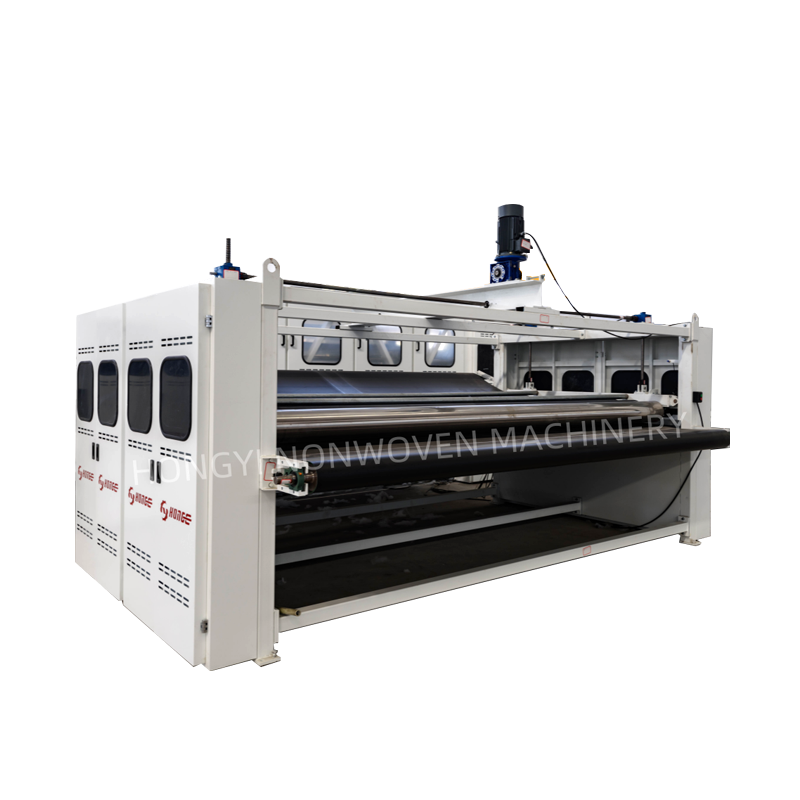
The newly formed web normally requires reinforcement before it can be handled, transported, cut, wound, or delivered to the customer. Needle punching is a common reinforcement method for airlaid waste felt. Needles penetrate the web and entangle the fibers, increasing cohesion and improving dimensional stability.
The needle-punching parameters can be selected according to the required product performance. Important variables include needle density, needle penetration depth, production speed, number of needle boards, and the type of needle used. A lightly reinforced web may be appropriate for soft packing or furniture protection, while a more heavily reinforced web may be required for automotive interiors, construction insulation, or demanding industrial applications.
Thermal bonding may also be incorporated when the material contains suitable thermoplastic or low-melt fibers. Heat activates the bonding component and creates points of connection within the web. This can improve shape retention, surface stability, and resistance to compression. The final reinforcement method depends on the customer’s raw material and product specifications.
Finishing, Cutting, and Winding
Once the web has achieved the required structure, the line may include edge trimming, thickness control, slitting, cross-cutting, roll winding, or sheet stacking. These operations allow the manufacturer to supply material in the form preferred by the customer.
Roll products are useful for continuous applications and automated downstream processing. Sheets may be preferred for automotive components, furniture protection, packaging inserts, and construction panels. Accurate cutting reduces material waste and helps maintain consistent dimensions. A suitable winding or cutting system can therefore improve both product presentation and production economics.
Key Technical Specifications
| Item | Typical Specification |
|---|---|
| Equipment model | HYL Airlaid Waste Felt Production Line |
| Suitable raw materials | Natural fiber, cotton fiber, wool, polyester fiber, recycled PET fiber, textile scraps, waste felt, recycled waste fiber, and low-melt fiber |
| Working width | 1500 to 2800 millimeters |
| Product GSM range | Approximately 500 to 7500 GSM |
| Finished product thickness | Approximately 5 to 200 millimeters |
| Production capacity | Approximately 500 to 1000 kilograms per hour |
| Control level | Automatic, with configuration determined by project requirements |
| Configuration | Customized according to raw material and finished-product requirements |
| Certification | CE and ISO9001-related quality management certification |
| Mechanical construction | Primarily steel and iron components |
| Transport method | Nude packing or PE film, according to shipping requirements |
| After-sales support | One-year warranty and technical service support |
The specifications above are reference values rather than a single fixed machine design. An airlaid waste felt line should be engineered around the customer’s materials, target products, factory layout, utilities, labor model, and local standards. A technical discussion before ordering is therefore essential. The working width, opening capacity, fan arrangement, filtration system, forming method, reinforcement unit, and finishing equipment can all influence the final output.
Advantages Compared with Conventional Production Equipment
Broader Raw Material Compatibility
One of the most important advantages of the HYL system is its ability to process a wide variety of fiber waste. Conventional carding lines may perform best when the input material has a relatively narrow fiber-length range, consistent moisture, and limited contamination. Waste materials rarely meet these conditions. Textile cutting waste, recycled fibers, and waste felt may contain short fibers, long fibers, tangled pieces, and mixed compositions.
The airlaid process provides greater tolerance for these variations. It can handle fibers in the approximate range of 5 to 85 millimeters, allowing manufacturers to use raw materials that might otherwise be difficult to process economically. This helps reduce dependence on virgin fibers and can lower the cost of raw material procurement.
Reduced Fiber Damage
Traditional mechanical processing can subject fibers to repeated carding, stripping, and transfer actions. When waste fibers have already been weakened or shortened by previous production processes, excessive mechanical treatment may further reduce fiber length and strength. Airlaid web formation uses airflow as the main transport and distribution mechanism, which can reduce reliance on intensive fiber alignment and repeated mechanical handling.
Reduced fiber damage can contribute to better product performance and more efficient use of the available raw material. It may also reduce the amount of dust and short waste created during processing. The actual result depends on the raw material and process settings, but the basic airlaid principle is well suited to recycling applications where preservation of usable fiber is important.
High Product Thickness and Bulk
Airlaid technology is capable of producing bulky webs with significant thickness and low-to-medium density structures. This is valuable in automotive interior felt, insulation, furniture protection, packaging, and transit protection products. The product range of approximately 5 to 200 millimeters in finished thickness allows manufacturers to address applications that require more bulk than many conventional thin nonwoven products.
The random fiber structure can also contribute to sound absorption and thermal insulation. When the material is engineered with suitable density and reinforcement, the air spaces between fibers can help reduce heat transfer and attenuate sound. Product performance must be verified through testing, but the airlaid structure provides a strong foundation for these applications.
Efficient Recycling and Waste Utilization
Waste conversion is a central purpose of this equipment. Instead of treating textile scraps and waste felt as disposal materials, factories can process them into useful nonwoven products. This supports a circular production model in which waste from one operation becomes an input for another.
Recycling can create several economic benefits. It may reduce waste disposal costs, lower the purchase volume of virgin materials, improve resource utilization, and create additional product lines. It can also help manufacturers respond to customer requirements for recycled content and more sustainable supply chains.
Flexible Product Development
The broad GSM and thickness ranges allow the same basic production platform to serve different markets. A manufacturer may produce relatively soft furniture protection material, denser automotive felt, thick construction insulation, and protective packaging products by changing the fiber recipe, web weight, reinforcement intensity, and finishing settings.
This flexibility is especially useful for companies that serve multiple industries. Rather than investing in a separate machine for every product type, the customer can develop a family of materials around one adaptable production line. Customized configuration and modular equipment selection make it possible to balance investment with future expansion plans.
Improved Material Utilization
A well-designed airlaid line can make effective use of fibers that are too short, irregular, or mixed for other processes. Better utilization means that more of the purchased or recovered raw material is converted into a finished product. This can improve the overall yield of the factory.
Material utilization also depends on proper preparation, filtration, process control, and product design. Hongyi’s equipment approach combines these stages into a complete line rather than treating the forming machine as an isolated unit. This integrated concept helps customers consider the entire material flow, from waste feeding to final roll or sheet output.
Applications of Airlaid Waste Felt
Automotive Interior Materials
Automotive manufacturers use nonwoven felt in trunk liners, interior panels, wheel-arch coverings, package trays, floor components, insulation layers, and other areas. These materials may need to provide a combination of low weight, dimensional stability, sound absorption, thermal insulation, impact protection, and compatibility with molding or lamination processes.
Airlaid waste felt can be developed for different automotive requirements by selecting suitable fibers and reinforcement parameters. Recycled polyester, textile waste, low-melt fibers, and other components can be blended to create a product with the desired balance of bulk and stability. The final material should be evaluated for odor, flammability, compression recovery, acoustic performance, moisture behavior, and compatibility with the vehicle assembly process.
Building and Thermal Insulation
Thick nonwoven felt can be used in building insulation, equipment insulation, roof-related applications, wall systems, and other areas where thermal resistance and sound reduction are important. Airlaid structures can retain a substantial volume of air within the web, supporting insulation performance.
For construction applications, manufacturers may select polyester, natural fibers, recycled fibers, or blended materials according to fire, moisture, mechanical, and environmental requirements. Product thickness and density can be adjusted for different installation methods. Additional surface treatments or laminated layers may be applied after the basic felt is produced.
Furniture Protection and Transit Padding
Furniture, appliances, glass products, and sensitive industrial components often require protective materials during storage and transportation. Thick felt can cushion surfaces, separate parts, reduce abrasion, and protect corners or finished surfaces from scratches.
Waste felt and textile scraps are particularly suitable for this market because the application often values cushioning and surface protection more than extremely high tensile strength. The production line can create rolls or cut sheets in dimensions suited to packing operations. Using recycled material can also improve the sustainability profile of protective packaging.
Packaging Materials
Airlaid felt can be used as an insert, separator, wrapping layer, protective pad, or cushioning component. It can be cut into custom shapes and combined with paperboard, film, molded components, or other packaging materials.
The required GSM and thickness depend on the product being protected. Delicate goods may require a soft, low-abrasion surface, while heavy products may require denser and more strongly reinforced felt. The flexibility of the HYL production platform allows manufacturers to design different grades for different packaging customers.
Industrial and General-Purpose Products
Additional applications include filtration preforms, cleaning materials, acoustic panels, agricultural coverings, mattress components, carpet underlay, shoe and garment components, and industrial cushioning. Product suitability depends on the fiber composition, bonding method, surface treatment, and end-use standards.
Manufacturers can use the line as a foundation for product development. By changing the mixture of natural and synthetic fibers, adding thermally bondable components, or modifying needle-punching conditions, they can create products with different softness, resilience, surface appearance, and dimensional stability.
Engineering and Manufacturing Strengths
More Than Twenty Years of Industry Experience
Changshu Hongyi Nonwoven Machinery Co., Ltd. has more than twenty years of experience in the nonwoven machinery field. This experience covers complete production lines and individual machines, including needle-punching lines, carding machines, airlaid machines, thermal bonding systems, ironing machines, winding and cutting equipment, and auxiliary machinery.
Long-term experience is valuable because a production line must perform as a coordinated system. Opening, feeding, dust removal, air transport, web formation, reinforcement, and finishing cannot be optimized independently. Practical knowledge of material behavior and factory operation helps the supplier recommend a configuration that is more realistic for the customer’s actual production objectives.
Complete Equipment Integration
Hongyi supplies complete nonwoven production solutions rather than only individual equipment units. This allows the company to consider the full production sequence, including material storage, feeding, opening, cleaning, forming, reinforcement, cutting, winding, and packaging.
Integrated engineering can reduce compatibility problems between machines. Speeds, material transfer points, fan capacity, control signals, and product handling can be coordinated during the design stage. It also gives customers a single technical contact for the main production system, which can simplify installation, commissioning, and future troubleshooting.
Customized Configuration
Every waste fiber project has different requirements. One customer may process cotton and textile scraps, while another may use recycled PET or waste felt. Some manufacturers need a high-capacity automotive line, while others require a more compact system for furniture protection or packaging materials.
For this reason, the HYL line can be customized according to the customer’s raw materials, production capacity, factory dimensions, final product range, and automation requirements. Working width, forming configuration, reinforcement method, control system, dust-removal arrangement, and downstream equipment can be discussed during the technical design process.
Quality-Oriented Mechanical Construction
The mechanical structure of the line is primarily manufactured from steel and iron components selected for industrial service. The frame, support structure, housings, rollers, working sections, and other mechanical parts must withstand continuous operation, vibration, fiber impact, and the weight of large production assemblies.
Manufacturing quality affects more than appearance. Stable machine geometry supports accurate web formation, reliable roller alignment, predictable needle penetration, and consistent material transport. Proper fabrication, assembly, inspection, and testing are therefore important parts of the supplier’s production responsibility.
Automatic Control and Process Stability
Automatic control helps coordinate the speed and operation of different units. Depending on the configuration, the control system may manage feeding rates, fan operation, web-forming parameters, line speed, reinforcement speed, alarms, and safety functions.
Automation can reduce operator workload and improve repeatability. It allows production teams to record and reproduce process settings when changing between products. Automatic systems can also help identify abnormal conditions, such as overload, material blockage, excessive dust, or loss of airflow, before they develop into serious problems.
International Supply Experience
Hongyi’s equipment has been supplied to more than twenty countries, including markets in Latin America, the Middle East, Africa, Southeast Asia, and other regions. International project experience requires attention to electrical standards, factory conditions, transportation, installation, operator training, spare parts, and after-sales communication.
The company’s export experience supports customers that need factory-direct machinery for international production projects. Each installation still requires project-specific planning, but a supplier with experience in different operating environments can help anticipate common challenges during delivery and commissioning.
Energy, Sustainability, and Operational Efficiency
The HYL Airlaid Waste Felt Production Line contributes to sustainability primarily by enabling the reuse of waste fibers. Recycling does not eliminate the need for responsible material preparation or quality control, but it can substantially improve the value recovered from textile and nonwoven waste streams.
Compared with a process based entirely on virgin raw materials, a recycled-fiber line can reduce dependence on new resources. The exact environmental benefit depends on the source of the waste, transport distance, energy consumption, dust treatment, product lifetime, and end-of-life pathway. Nevertheless, converting waste into durable insulation, automotive, packaging, or protective products can support a more circular materials economy.
Energy efficiency should be considered at the complete-line level. Fans, opening machines, needle-punching units, thermal bonding equipment, dust collectors, and downstream motors all contribute to total energy use. Correct sizing of each unit helps avoid unnecessary consumption. Automatic controls can also allow equipment to operate at a speed appropriate to the current production requirement rather than running every component at maximum capacity.
Regular maintenance is another part of efficient operation. Clean filters, properly adjusted rollers, sharp and correctly selected needles, lubricated bearings, and stable electrical connections help maintain output and prevent avoidable downtime. A maintenance plan should include inspection of wear parts, dust-removal equipment, drive systems, web-forming components, and safety devices.
Product Quality Control
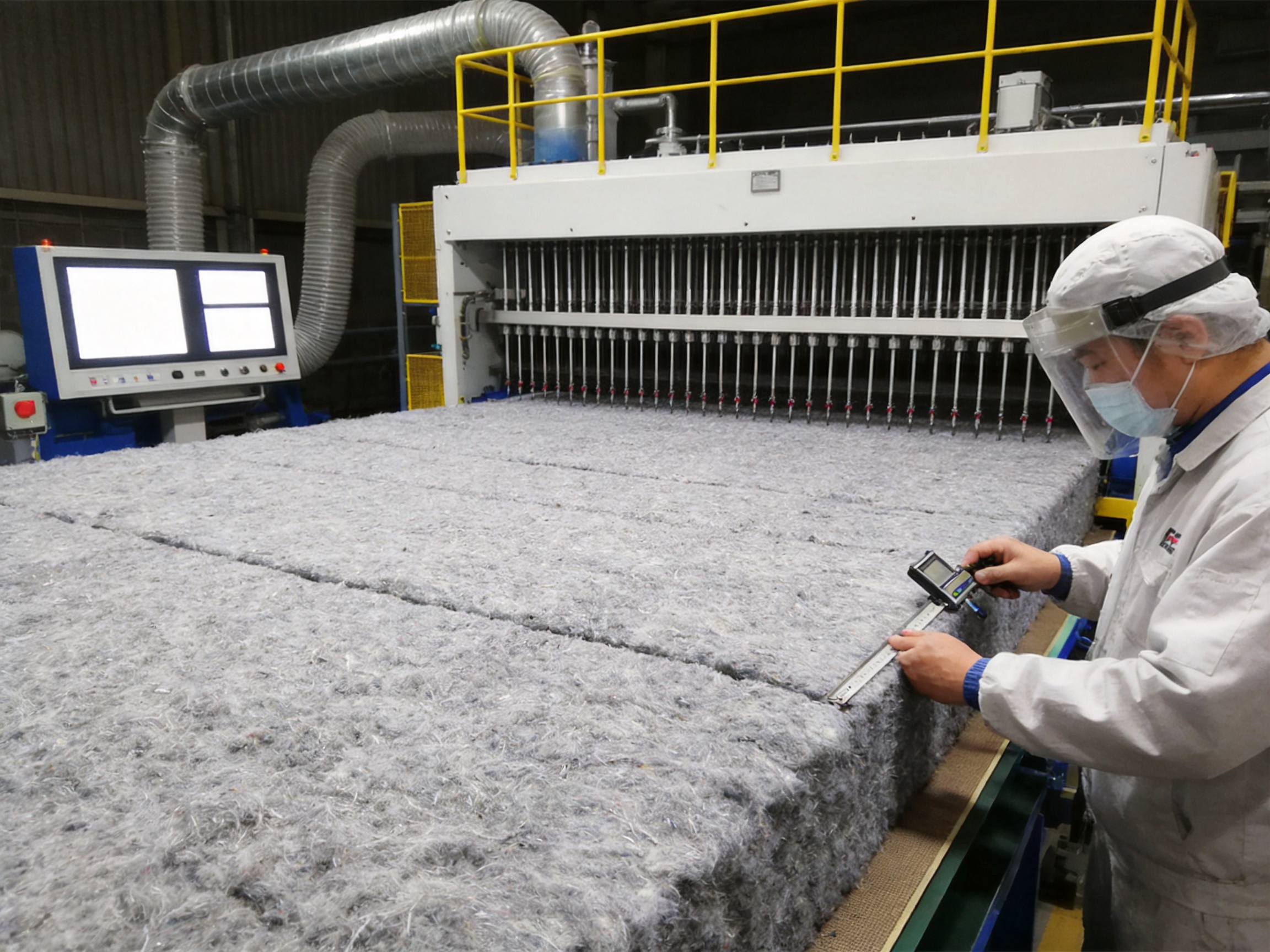
Quality control begins with the incoming raw material. Operators should monitor fiber composition, moisture, contamination, color, fiber length, and bale density. Recycled material may vary from batch to batch, so recording the characteristics of each input batch helps explain changes in finished-product performance.
During production, important process indicators include feed rate, air volume, web weight, working width, line speed, needle density, needle penetration, thermal-bonding temperature, and finished thickness. These parameters should be adjusted systematically rather than changed randomly. A stable process makes it easier to identify the cause of defects and maintain repeatable product grades.
Finished-product inspection may include basis weight, thickness, width, tensile strength, tear strength, compression behavior, recovery, surface appearance, moisture, thermal conductivity, acoustic performance, and dimensional stability. The appropriate tests depend on the final application. Automotive and construction customers may require additional safety or performance testing, while packaging customers may focus on cushioning and surface protection.
Uniformity across the full working width is particularly important for industrial felt. Variations from one side to the other may cause problems during die cutting, lamination, molding, or assembly. Proper material distribution, air balancing, feed control, and regular machine calibration help reduce these variations.
Installation and Project Planning
Before installation, the customer should prepare a suitable factory area with adequate floor strength, ceiling height, access for transportation, ventilation, electrical supply, compressed air if required, and dust-handling provisions. The line layout should provide enough space for raw-material storage, operator access, maintenance, finished-product handling, and safe movement of personnel.
The expected raw material should be tested before the final configuration is confirmed. Small-scale trials or sample evaluations can help determine the appropriate opening method, airlaid settings, reinforcement approach, and product recipe. These tests are especially useful when the waste stream contains mixed fibers or variable contamination.
Capacity should be defined carefully. A stated capacity range, such as 500 to 1000 kilograms per hour, depends on product GSM, thickness, raw-material characteristics, web strength, reinforcement intensity, and operating speed. A high-GSM product may run at a different speed from a lighter product. Customers should therefore evaluate capacity according to the actual product mix rather than a single maximum number.
Installation and commissioning generally include mechanical positioning, electrical connection, control-system inspection, dry running, material feeding, process adjustment, and operator training. The customer’s production team should be involved in commissioning so that operators understand the relationship between machine settings and product quality.
Maintenance and Service Considerations
Regular cleaning is essential for a waste-fiber production line. Dust and loose fibers should be removed from accessible machine surfaces, guards, sensors, fans, filters, electrical cabinets, and material transfer points. Cleaning frequency depends on the raw material and production schedule.
Wear parts require periodic inspection. These may include opening components, feed rollers, belts, bearings, needles, needle boards, cutting blades, seals, and filter elements. Replacing worn parts before they fail can reduce unplanned downtime and protect other machine components from damage.
Operators should also monitor unusual vibration, noise, temperature, airflow, material accumulation, and changes in product appearance. Early detection is often the most effective way to prevent a minor mechanical or process issue from becoming a major production interruption.
Changshu Hongyi provides a one-year warranty for the equipment, subject to the agreed commercial and technical conditions. Technical support, spare-parts planning, operating guidance, and after-sales communication should be discussed during the quotation and contract stages. Customers should maintain a list of critical spare parts and establish clear procedures for reporting equipment problems.
Why Choose a Customized Airlaid Waste Felt Solution?
A standard machine specification cannot fully describe a waste-fiber production project. The same machine may produce different results when processing cotton waste, recycled polyester, wool, or mixed textile scraps. Product requirements also vary significantly between automotive felt, building insulation, furniture protection, and packaging materials.
Customization allows the line to match the actual process. It can address the fiber-length distribution, density, moisture, contamination, and blending requirements of the raw material. It can also accommodate the customer’s preferred product width, thickness, GSM, reinforcement level, roll diameter, sheet length, and packing method.
A customized line can improve the relationship between investment and output. Instead of paying for unnecessary equipment, the customer can select the modules needed for the planned product range while leaving room for future expansion. Conversely, customers with demanding output targets can specify additional opening capacity, automated feeding, stronger dust control, multiple reinforcement stages, or advanced finishing equipment from the beginning.
The best design process is collaborative. The customer should provide raw-material samples, product drawings or specifications, target capacity, factory information, local electrical standards, and expected working schedules. The machinery supplier can then evaluate the material flow and recommend a suitable configuration.
Frequently Asked Questions
What materials can the HYL Airlaid Waste Felt Production Line process?
The line can be configured for natural fiber, cotton fiber, wool, polyester fiber, recycled PET fiber, textile scraps, waste felt, recycled waste fiber, low-melt fiber, and other suitable materials. The exact combination depends on the raw-material condition and finished-product requirements. Material samples should be reviewed before final equipment selection.
What fiber lengths are suitable for the airlaid process?
The line is designed to handle a broad range of fiber lengths, approximately 5 to 85 millimeters. This range provides greater flexibility than systems that require a narrow and uniform fiber length. Actual performance depends on fiber type, contamination, moisture, opening settings, and the desired web structure.
What products can be made on the line?
Typical products include automotive interior felt, sound and thermal insulation materials, furniture protection pads, packaging materials, transit protection products, construction insulation, carpet underlay, and other thick nonwoven materials. Product development should include performance testing for the specific end use.
What are the available working widths?
The typical working-width range is approximately 1500 to 2800 millimeters. The final width is selected according to the customer’s product dimensions, factory layout, capacity target, and downstream cutting or winding requirements.
What GSM and thickness ranges are available?
The stated product range is approximately 500 to 7500 GSM, with finished thicknesses of approximately 5 to 200 millimeters. These values are reference ranges. The practical combination of GSM, thickness, density, and reinforcement depends on the raw material and the product specification.
What is the production capacity?
The reference production-capacity range is approximately 500 to 1000 kilograms per hour. Actual output depends on the material, product GSM, finished thickness, web density, line speed, reinforcement method, and operating conditions.
Does the line use needle punching?
Needle punching can be included as a web-reinforcement method. The needle-punching configuration is selected according to the required cohesion, strength, density, surface structure, and production speed. Thermal bonding or other reinforcement methods may also be considered when suitable fibers are used.
Can the line process recycled fibers without carding?
The line uses air-laid web-forming technology rather than relying on a traditional carding process as the primary forming method. Opening, cleaning, feeding, and air distribution are still important preparation stages. This design is especially suitable for mixed and irregular waste fibers that may be difficult to process through conventional carding alone.
How is the equipment customized?
Customization may include the opening system, dust-removal arrangement, blending section, feeding equipment, working width, forming unit, reinforcement equipment, control system, cutting or winding section, and product-handling configuration. The design is based on raw-material tests and the customer’s target products.
What certifications are associated with the equipment?
The supplied information identifies CE and ISO9001-related certification. Certification requirements can vary by destination country and project. Customers should confirm the applicable electrical, safety, environmental, and installation requirements during the technical and commercial negotiation.
How long is the warranty?
The listed after-sales service includes a one-year warranty. The detailed warranty scope, exclusions, commissioning responsibilities, spare parts, and service terms should be confirmed in the formal quotation and purchase contract.
Where is the equipment manufactured?
The equipment is manufactured by Changshu Hongyi Nonwoven Machinery Co., Ltd. in Jiangsu Province, China. The company supplies nonwoven machinery and complete production lines to customers in China and overseas markets.
Conclusion
The HYL Airlaid Waste Felt Production Line provides a practical solution for converting textile scraps, waste felt, recycled polyester, and other fiber residues into valuable nonwoven materials. Its airlaid forming technology is suited to a wide range of fiber lengths and compositions, helping manufacturers overcome the raw-material limitations associated with some conventional carding-based systems.
With working widths of approximately 1500 to 2800 millimeters, product weights from approximately 500 to 7500 GSM, finished thicknesses from approximately 5 to 200 millimeters, and production capacities of approximately 500 to 1000 kilograms per hour, the line can support diverse industrial applications. Its products may serve automotive interiors, building insulation, furniture protection, packaging, transit protection, and other markets that require thick, lightweight, resilient, or insulating nonwovens.
The main advantages of the system include broad raw-material compatibility, efficient waste utilization, reduced limitations on fiber length, flexible product development, high product bulk, integrated processing, and customized configuration. These advantages are supported by Changshu Hongyi Nonwoven Machinery Co., Ltd.’s experience in nonwoven machinery, complete-line engineering, automatic control, mechanical manufacturing, international supply, and after-sales service.
For a successful project, equipment selection should be based on actual raw-material samples, target product specifications, capacity expectations, factory conditions, and local compliance requirements. When these factors are evaluated carefully, an airlaid waste felt production line can become both a recycling solution and a reliable platform for producing competitive nonwoven materials.
References
1. Changshu Hongyi Nonwoven Machinery Co., Ltd., HYL Airlaid Waste Felt Production Line technical product information.
2. Changshu Hongyi Nonwoven Machinery Co., Ltd., Nonwoven machinery product and company capability information.
3. ISO 9001, Quality Management Systems—Requirements.
4. European Conformity requirements applicable to industrial machinery and related equipment.
5. General technical principles of air-laid web formation, fiber opening, nonwoven web reinforcement, and recycled-fiber processing.