

Content
- 1 The Role of Pneumatic Feeding in Nonwoven Production
- 2 Operating Principle of the HYQY Pneumatic Feeder
- 3 Core Design Features
- 4 Performance Advantages Compared with Conventional Feeding Methods
- 5 Technical Specifications
- 6 Manufacturing and Engineering Strengths
- 7 Application Areas
- 8 Installation, Commissioning, and Production Optimization
- 9 Maintenance and Reliability
- 10 Energy and Operating Efficiency
- 11 Why the Equipment Is a Competitive Choice
- 12 Purchasing and Project Planning Considerations
- 13 Integration into a Complete Nonwoven Production Line
- 14 Quality Benefits in the Finished Nonwoven Fabric
- 15 Safety and Responsible Operation
- 16 Frequently Asked Questions
- 16.1 What is the main purpose of the HYQY Pneumatic Feeder?
- 16.2 Can the feeder be used before a carding machine?
- 16.3 Can it feed an oven directly?
- 16.4 What fibers can the machine handle?
- 16.5 What are the standard working widths?
- 16.6 What is the production capacity?
- 16.7 How does the belt weigher help production?
- 16.8 Is the machine fully automatic?
- 16.9 Can the pneumatic feeder be customized?
- 16.10 What installed power is required?
- 16.11 What voltage options are available?
- 16.12 How long is the warranty?
- 16.13 What is the expected delivery time?
- 16.14 What trade terms are available?
- 16.15 Does the manufacturer provide complete production lines?
- 16.16 What should a customer provide before requesting a quotation?
- 17 Conclusion
- 18 References
- 19 Product: HYQY Pneumatic Feeder
In nonwoven manufacturing, the feeding stage has a direct influence on the performance of every downstream process. Fiber must be opened, blended, stored, measured, and delivered in a controlled manner before it enters a carding machine, airlay system, oven, or other bonding unit. If the fiber feed is uneven, the final fabric may show weight variation, weak areas, poor thickness consistency, irregular bonding, and unstable production efficiency. A reliable pneumatic feeder therefore serves as much more than a material-transfer device. It is a process-control machine that helps convert loose, variable fibers into a stable and homogeneous batt or web.
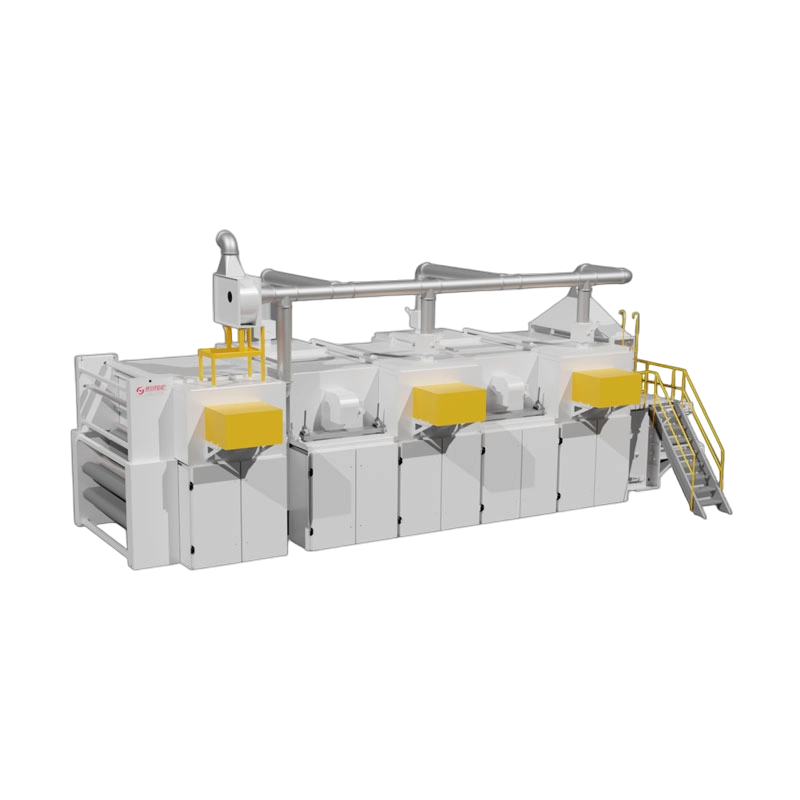
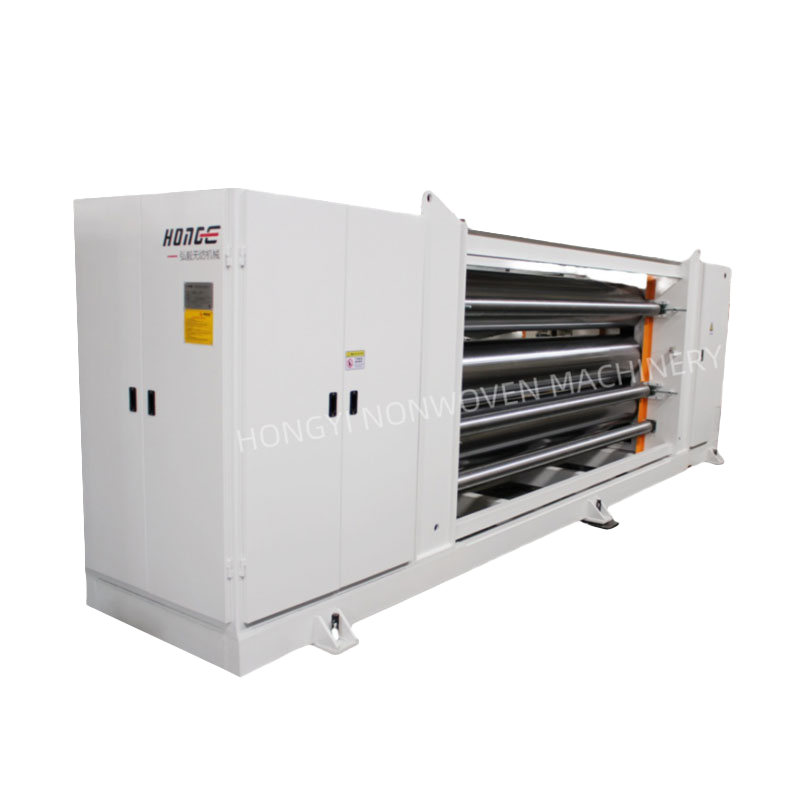
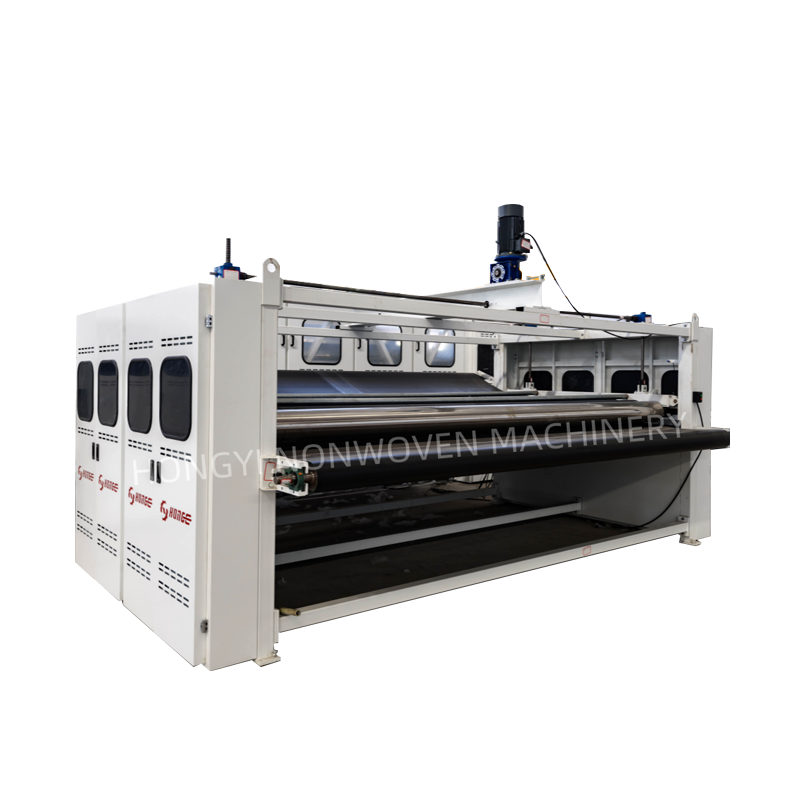
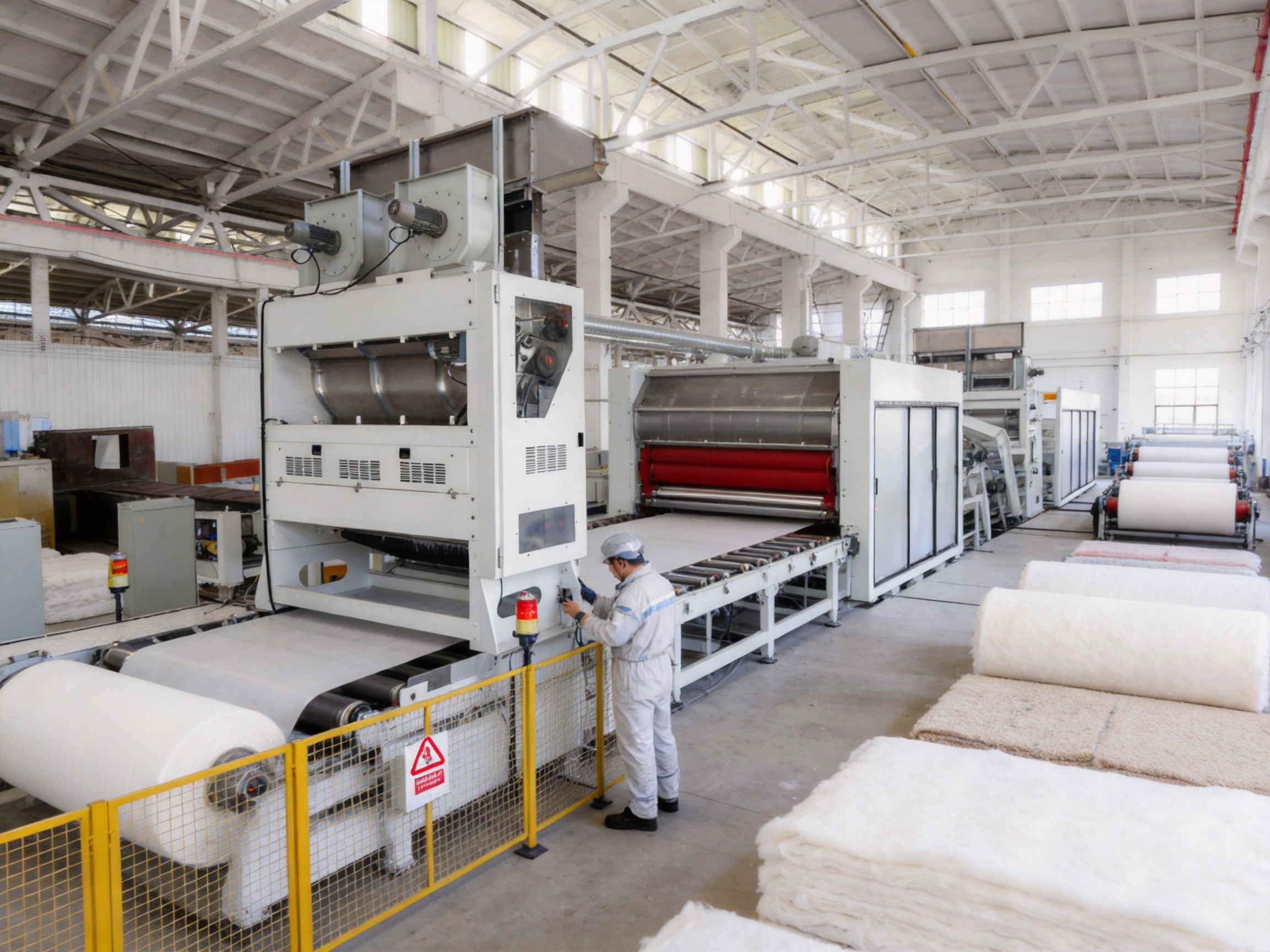
The HYQY Pneumatic Feeder is designed for this purpose. It receives opened and blended fibers, stores them temporarily, regulates the airflow and feeding conditions, and creates an even fiber layer for the next production stage. The equipment can be used as a card-feeding system or as a direct feeding unit for ovens and other bonding systems. Its controlled air-pressure operation, adjustable web thickness, variable-speed drive, and optional belt-weighing system make it suitable for nonwoven producers that require consistent cross-direction and longitudinal weight.
Manufactured by Changshu Hongyi Nonwoven Machinery Co., Ltd., the pneumatic feeder is intended for both individual machine integration and complete nonwoven production lines. The supplier has more than 20 years of experience in the nonwoven machinery field and provides equipment for needle-punched geotextiles, carpets, automotive interior materials, cleaning cloths, wool felt, jute felt, thermal-bonded wadding, airlaid materials, and other nonwoven applications. This broad application background supports the development of feeding equipment that can be adapted to different fibers, production capacities, and downstream processes.
The Role of Pneumatic Feeding in Nonwoven Production
Nonwoven production begins with raw fibers that may vary in length, fineness, density, moisture content, and origin. These fibers can be virgin polyester, recycled fibers, natural fibers, short fibers, long fibers, or blends of several materials. Opening and blending equipment separates fiber tufts and distributes different components through the material stream. However, opening and blending alone does not guarantee a uniform supply to the next machine.
After opening, fibers need to be accumulated in a controlled storage area and released at a stable rate. A conventional mechanical feeder may move fiber effectively, but mechanical conveying alone can create pressure changes, compaction, bridging, or uneven distribution. A pneumatic feeder uses controlled air movement to transport and form the fiber layer. This method supports more consistent distribution, especially when the production line requires precise control of basis weight and web thickness.
The feeding system is particularly important before carding. A carding machine performs better when the incoming fiber supply is stable across the working width. Excessive material in one section can overload carding elements, while insufficient material can create thin areas in the web. Both conditions may reduce product quality and increase the possibility of line stoppages. By preparing a more homogeneous batt, the pneumatic feeder gives the carding machine a better-controlled input.
The equipment can also feed fibers directly toward an oven or another bonding system. In thermal bonding applications, the amount of fiber entering the bonding zone influences thickness, density, tensile strength, softness, and dimensional stability. Uniform feeding helps the bonding system operate within a more predictable range. As a result, the feeder can contribute to improved process stability even though it is positioned before the actual bonding stage.
For producers of geotextiles, filtration materials, automotive interior products, insulation, padding, carpets, and industrial felts, the ability to maintain consistent web weight is essential. The pneumatic feeder supports this requirement through controlled pressure, adjustable feeding time, regulated outlet speed, and optional weighing feedback.
Operating Principle of the HYQY Pneumatic Feeder
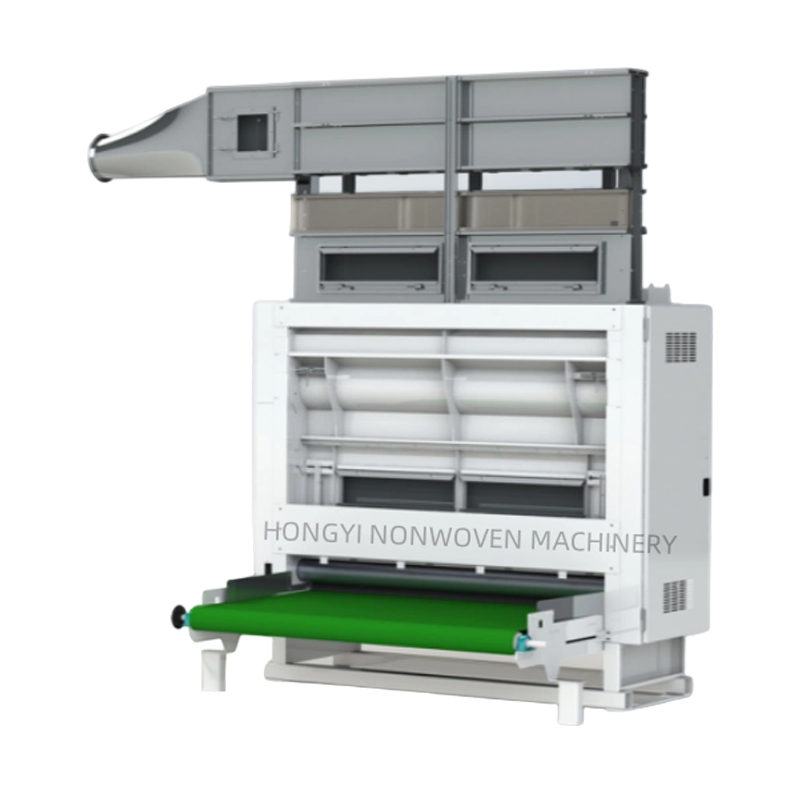
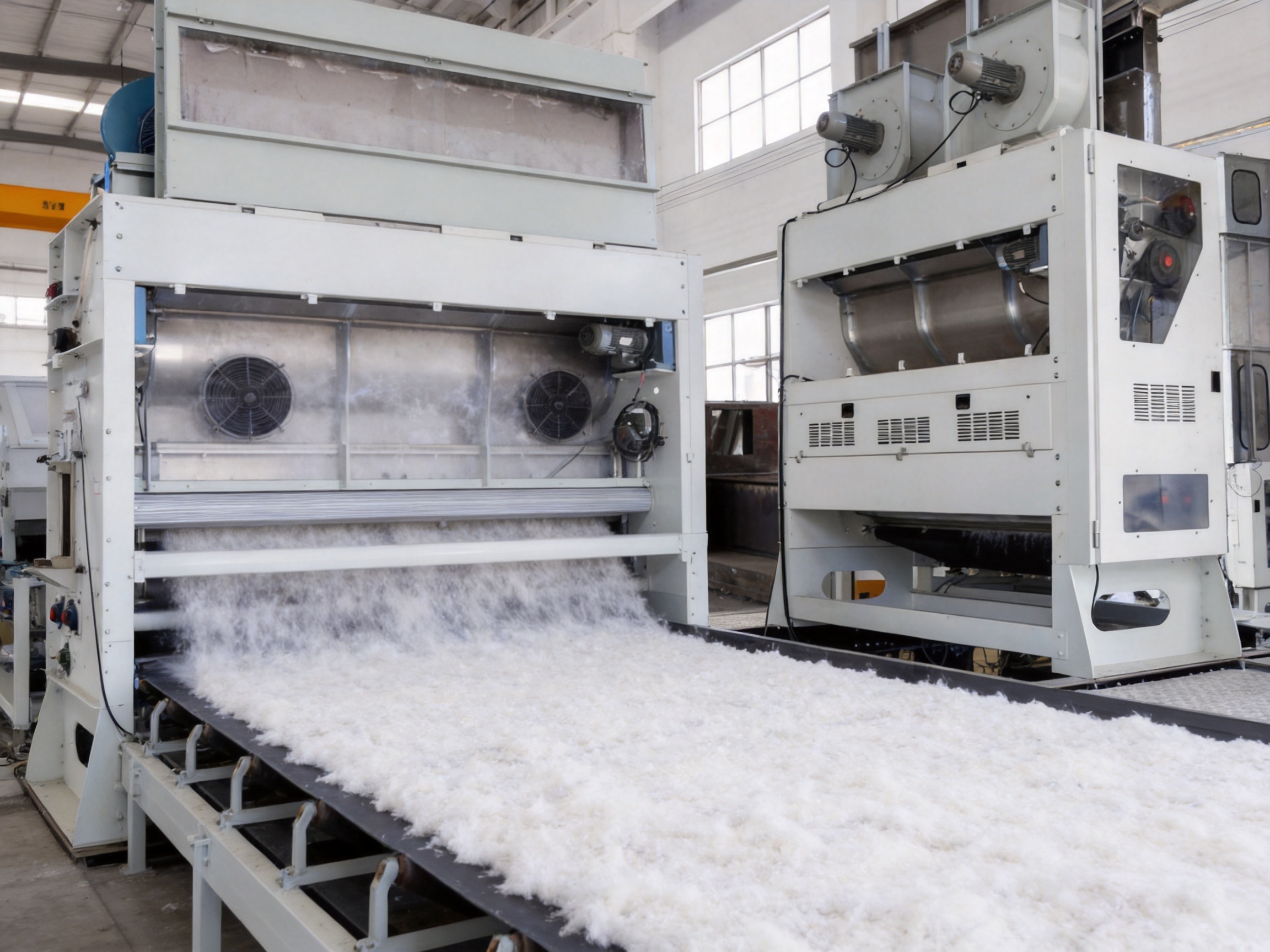
The HYQY Pneumatic Feeder operates through a combination of fiber storage, air movement, pressure regulation, and controlled mechanical discharge. Opened and blended fibers enter the upper section of the machine. The material is temporarily stored while built-in fans and the air-control system maintain the required internal airflow and pressure conditions.
The upper and lower chambers work as part of a sealed, pressurized system. Airflow guides the fibers and supports their distribution throughout the working width. The feeding time can be adjusted according to the required production rate and the characteristics of the material. This adjustment helps operators match the feeder to the opening and blending equipment on the upstream side and to the carding, oven, or bonding equipment on the downstream side.
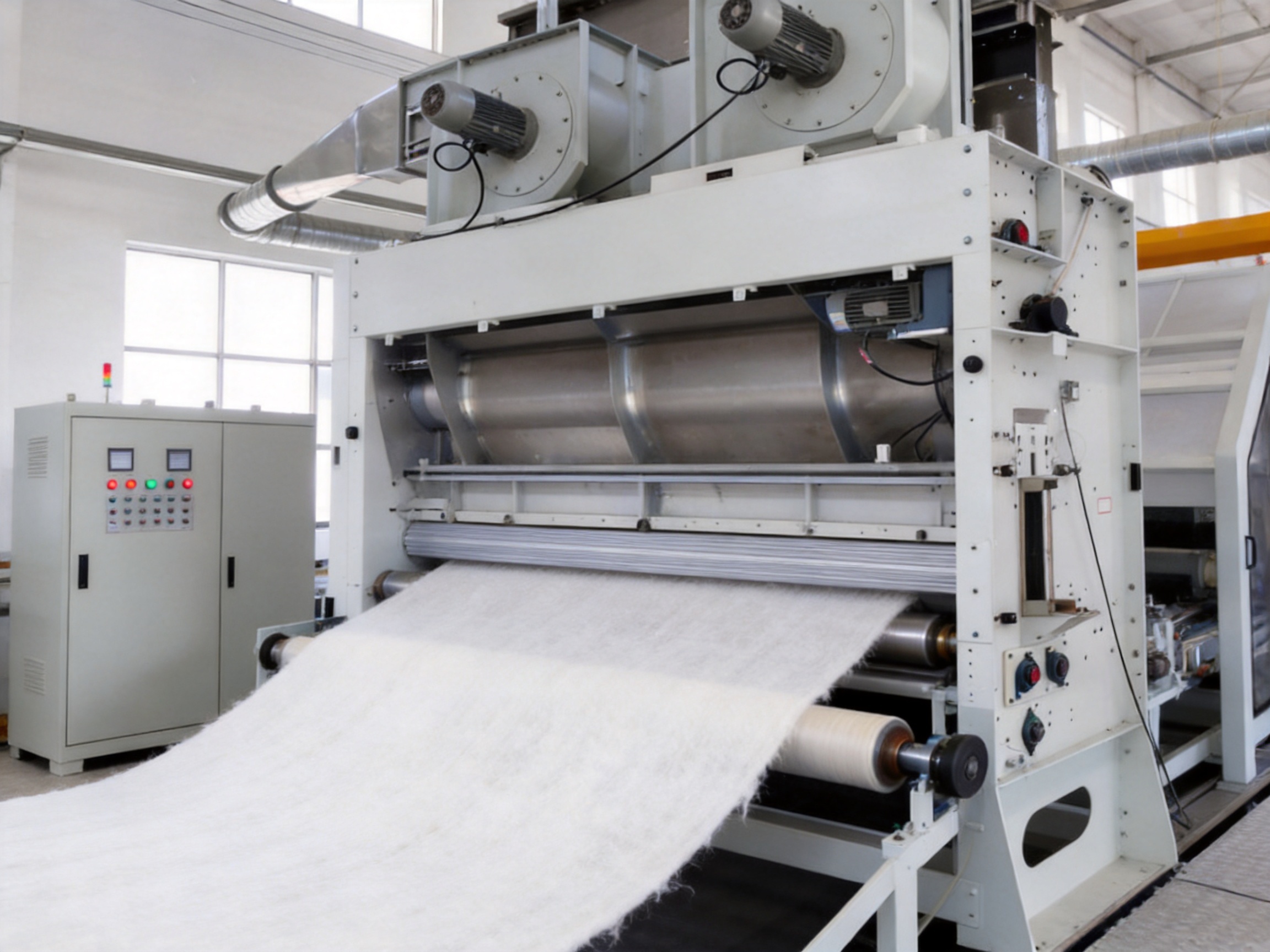
After the fiber has been distributed, output rollers discharge the formed layer. The rollers are controlled by an inverter, allowing the output speed to be adjusted. Changing the roller speed changes the amount of fiber delivered over time and can also influence the thickness of the output batt. The pressure system and output control work together so that the machine can produce a web with the required uniformity.
Where a belt weigher is installed, the equipment can provide additional control over the web weight in both the cross direction and the longitudinal direction. The weighing system monitors the material flow and gives the production line a further reference for stabilizing output. This is particularly useful for products with strict basis-weight tolerances or for high-capacity lines where small variations can become significant over long production runs.
The system is designed to handle long, short, virgin, and recycled fibers. Actual performance depends on fiber properties, blend ratios, moisture, upstream opening quality, production speed, and the configuration selected for the project. For this reason, a technical review is recommended before ordering so that working width, installed power, control functions, and downstream interface can be matched to the intended application.
HYQY Pneumatic Feeder
Core Design Features
Sealed Upper and Lower Chambers
The upper and lower chambers form a controlled operating environment for fiber storage and pneumatic forming. A sealed arrangement helps reduce uncontrolled air leakage and supports more stable pressure conditions. This is important because changing pressure can influence how fibers spread and settle. Stable airflow helps reduce irregular accumulation and supports more consistent web formation across the machine width.
The chambers include built-in fans controlled through variable-speed inverters. Inverter control allows the air movement to be adjusted according to production conditions. Different fibers require different handling characteristics. A lightweight, fine fiber may respond differently to airflow than a coarse or recycled fiber. Adjustable fan speed gives the operator or control system greater flexibility when setting up the line.
Adjustable Airflow Guidance
Fiber feeding takes place through air-flow guidance rather than relying solely on mechanical pushing. The airflow carries and distributes the fiber material inside the feeder, helping create a more even layer before discharge. Feeding time is adjustable, allowing the machine to be coordinated with the output of the opening and blending equipment.
Air-guided feeding can be advantageous when the raw material contains fibers with different lengths or densities. Instead of applying the same mechanical force to every material, the system uses controllable air movement to support dispersion and accumulation. This makes the equipment suitable for a broad range of nonwoven fiber recipes, provided that the machine is correctly configured for the selected material.
Accurate Pneumatic Control
The pneumatic control system is designed for precise and adjustable pressure management. Pressure is one of the most important operating variables in an air-forming feeder. Too little pressure may result in poor distribution or inadequate material movement. Excessive pressure may disturb the fiber arrangement, increase energy use, or create unstable discharge. Adjustable pressure allows the system to be tuned for the required web structure.
The controlled pneumatic design is especially valuable for high-performance carding lines. Carding machines generally require a consistent feed to maintain productivity and fabric quality. By reducing variation before carding, the feeder helps the overall line operate with stricter process tolerances.
Adjustable Output Thickness
The thickness of the output fiber web can be adjusted according to product requirements. Thickness may be changed through a combination of feeding rate, air pressure, storage level, outlet roller speed, and other line parameters. This adjustment is useful when a producer manufactures several product grades on the same line.
For example, a lightweight nonwoven product may require a relatively thin and evenly distributed batt, while a padding or insulation product may require a thicker layer. The ability to change the output condition without replacing the complete feeder improves production flexibility and can reduce the time required for product changeovers.
Inverter-Controlled Output Rollers
The output rollers are controlled by an inverter. Variable-speed roller control enables the operator to regulate the delivery rate and coordinate the feeder with downstream equipment. Inverter control can also support smoother starting and stopping, reduce mechanical shock, and provide more precise adjustment than a fixed-speed drive.
When connected to an appropriate automatic control system, the roller drive can become part of a broader production-control strategy. The line may use information from a belt weigher, photosensor, or other monitoring device to maintain a more stable flow of material. The final configuration depends on the automation level required by the customer.
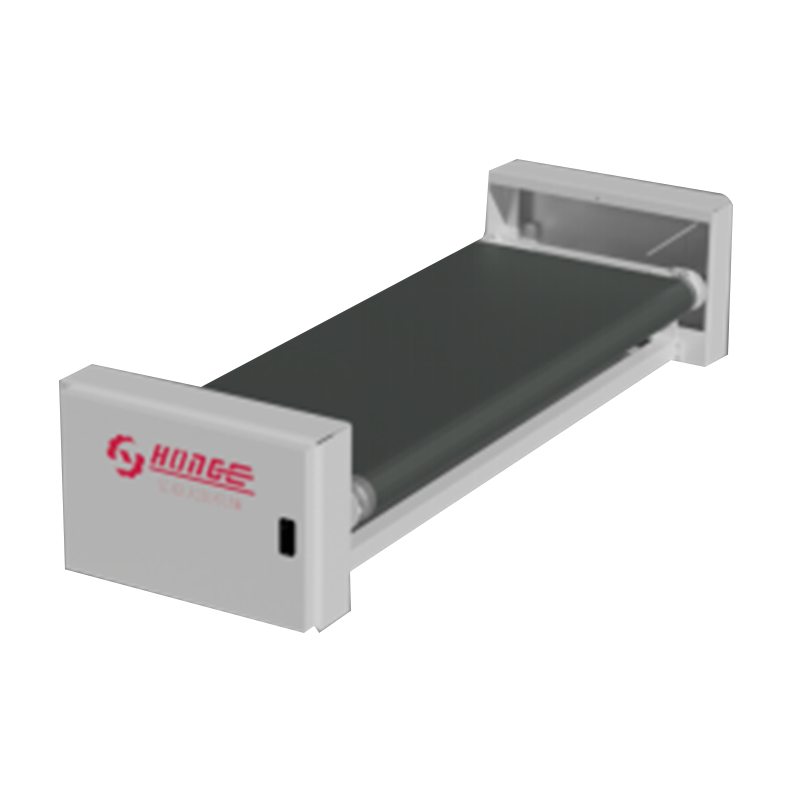
Optional Belt-Weighing System
A belt weigher can be installed to improve control of fiber weight in the cross direction and longitudinal direction. The cross direction refers to variation from one side of the machine to the other, while the longitudinal direction refers to variation along the length of the continuously produced web.
Both types of variation can affect the finished product. Cross-direction differences may produce one edge that is heavier or lighter than the other. Longitudinal variation may cause repeating heavy and light zones as the line runs. A belt-weighing system offers a measurement basis for identifying these changes and supporting corrective adjustment.
The weighing option is particularly appropriate for customers producing technical nonwovens, construction materials, filtration media, automotive components, or other products where stable basis weight is commercially important. It may also reduce material waste by allowing the line to operate closer to the target weight instead of using excessive fiber as a safety margin.
Performance Advantages Compared with Conventional Feeding Methods
More Uniform Fiber Distribution
The primary advantage of pneumatic feeding is its ability to distribute fibers through controlled airflow. Conventional mechanical feeding systems may depend heavily on the consistency of a hopper load or the action of screws, aprons, pins, or rollers. These systems can be effective, but they may require additional measures when the material is very light, mixed, recycled, or prone to bridging.
The HYQY system combines air movement with controlled storage and regulated outlet discharge. This approach supports a more homogeneous fiber layer and helps reduce local concentration differences. It is not a substitute for proper opening and blending, but it provides an additional stage of distribution between fiber preparation and web formation.
Improved Control of Product Weight
Product weight is one of the most important economic and quality indicators in nonwoven manufacturing. If the basis weight is too low, the product may fail strength, coverage, or insulation requirements. If it is too high, the producer consumes unnecessary raw material and may increase production cost.
The feeder supports weight control through adjustable feeding time, pneumatic pressure, outlet roller speed, and optional belt weighing. These features allow a production line to approach its target more consistently. The result can be improved raw-material utilization and more predictable product properties.
Compatibility with Different Fiber Types
The machine can manage long, short, virgin, and recycled fibers. This flexibility is important because modern nonwoven producers increasingly use recycled content and blended raw materials. Recycled fibers may have irregular lengths or different levels of cohesion compared with virgin fibers. A controllable pneumatic system gives the producer more adjustment options when changing recipes.
Fiber compatibility does not mean that every material can be processed under identical settings. Each fiber type may require a different airflow level, pressure, storage condition, and roller speed. The advantage is that these parameters can be adjusted rather than fixed, supporting a wider operating window than a simple non-adjustable feeder.
Better Integration with High-Performance Carding Lines
A carding machine can only work as consistently as its feed allows. An unstable fiber supply may limit carding speed, cause uneven web formation, or create unnecessary adjustments. The pneumatic feeder is designed to prepare a stable batt for the carding process and can therefore help carding equipment operate closer to its intended productivity.
For carding lines with strict tolerances, the optional weighing system offers an additional monitoring function. This allows the feeder to become part of a more complete quality-control arrangement rather than operating as an isolated material-transfer machine.
Flexible Use in Different Bonding Processes
The feeder can supply carding machines, ovens, and other bonding systems. This makes it suitable for both mechanically bonded and thermally bonded product lines, depending on the overall configuration. A producer may use the same basic feeding concept for different product families, while adjusting the working width, capacity, and controls to meet each project’s requirements.
Reduced Dependence on Manual Adjustment
Automatic control and inverter-based adjustment reduce the need for continuous manual intervention. Operators can set the required parameters and monitor the production process rather than repeatedly correcting uneven material flow by hand. This can improve working efficiency and make production results less dependent on individual operator experience.
Automation also supports more repeatable production. When a product is manufactured again using the same raw material recipe and target weight, stored operating parameters can provide a useful starting point. Final settings still require verification, but repeatability can shorten preparation time and reduce setup variation.
Technical Specifications
The supplied technical information identifies standard working widths of approximately 2,200 millimeters and 2,800 millimeters, with a technical working-width range of 2,000 to 2,800 millimeters. Some project information also indicates that customized widths may be available. Because the final design depends on the complete production line, customers should confirm the requested width during quotation and engineering review.
| Item | Technical Information |
|---|---|
| Product name | Pneumatic Feeder |
| Model | HYQY |
| Main application | Nonwoven fabric production |
| Typical working width | 2,200 mm / 2,800 mm |
| Technical working-width range | 2,000–2,800 mm |
| Production capacity | Approximately 500–1,000 kg/h |
| Installed power | Approximately 55–75 kW |
| Material compatibility | Long, short, virgin, and recycled fibers |
| Control method | Adjustable pneumatic control and inverter-controlled drives |
| Optional control feature | Belt-weighing system |
| Automation grade | Automatic |
| Voltage | 220 V or customized; project configurations may also use 380 V or 415 V |
| Certification information | CE and ISO9001-related certification information supplied |
| Warranty | 12 months |
| Estimated lead time | Approximately 60 days after deposit, subject to project confirmation |
The capacity range is stated as approximately 500 to 1,000 kilograms per hour. Actual output depends on fiber type, blend ratio, target basis weight, working width, web thickness, line speed, and the performance of the upstream opening and blending equipment. Installed power is listed at approximately 55 to 75 kilowatts for the technical configuration. Electrical specifications should be confirmed before manufacture because voltage, frequency, control-panel requirements, and local electrical standards vary by destination.
The product information also contains some broader, non-standard entries, such as a customized width range and general application references. These should not be interpreted as universal operating limits. A professional quotation should define the exact machine width, capacity, motor arrangement, control functions, air requirements, dimensions, and interface points for the customer’s production line.
Manufacturing and Engineering Strengths
Specialized Nonwoven Machinery Experience
Changshu Hongyi Nonwoven Machinery Co., Ltd. has more than 20 years of experience in the nonwoven machinery field. This specialization is important because nonwoven equipment requires knowledge of both mechanical engineering and fiber behavior. A general-purpose conveyor or hopper manufacturer may understand material handling, but nonwoven production also involves web uniformity, fiber opening, batt formation, carding compatibility, bonding behavior, and basis-weight control.
The company’s product range includes complete production lines and individual machines. Its equipment portfolio covers needle-punched geotextile lines, nonwoven carpet lines, airlaid waste felt lines, automotive interior material lines, needle-punched cleaning cloth lines, wool felt and jute felt lines, needle-punching machines, carding machines, airlaid machines, ironing machines, and thermal-bonding oven equipment.
This range gives the manufacturer a practical understanding of how a pneumatic feeder must work within a larger line. The feeder can be evaluated not only as a stand-alone machine but also as part of an integrated sequence from raw-fiber preparation to final web consolidation.
Complete-Line and Unit-Machine Capability
Some customers require only a replacement feeder or an additional feeding unit. Others need a complete nonwoven production line, including opening, blending, carding, cross-lapping, needle punching, thermal bonding, winding, cutting, and auxiliary systems. A supplier able to provide both unit machines and complete lines can simplify technical coordination.
For a single-machine project, the manufacturer can focus on matching the feeder to the existing upstream and downstream equipment. For a complete-line project, it can coordinate machine widths, speed ranges, control logic, material transfer, and production targets across the entire system. This flexibility is useful for producers with different levels of investment and different modernization plans.
Customized Engineering
The pneumatic feeder is available as a customized solution. Customization may involve working width, production capacity, voltage, layout, storage volume, feeding arrangement, belt-weighing functions, control-panel configuration, and connection to other machines. Custom engineering is especially important when the customer is replacing equipment in an existing factory, where floor space and machine positions may already be fixed.
Customization should begin with a review of the raw materials and final products. Important information includes fiber length, fiber fineness, blend ratio, virgin or recycled content, moisture level, target basis weight, required web width, expected output, and the type of downstream process. The manufacturer can then propose a configuration that balances capacity, accuracy, energy consumption, and investment cost.
Automatic Control and Process Stability
The machine is described as automatic and uses variable-speed inverter control for fans and output rollers. Automatic control provides more consistent operation than a purely manual system. It can regulate the main process variables and help synchronize the feeder with adjacent equipment.
The use of a photosensor for storage control is also identified in the supplied information. A photosensor can help monitor the material level or storage condition and support automatic feeding decisions. The precise function depends on the control design, sensor arrangement, and customer requirements. In a complete line, such sensors can contribute to smoother material transfer and reduce the risk of empty or overloaded storage sections.
Quality and Compliance Orientation
The equipment information includes CE and ISO9001-related certification references. CE conformity is relevant to applicable European market requirements, while an ISO9001 quality-management framework indicates an organized approach to production and quality control. Customers should request the specific certificates, declarations, and technical files applicable to the ordered configuration.
Quality in machinery manufacturing depends on more than certification. It also involves accurate fabrication, correct assembly, reliable electrical components, proper alignment, effective guarding, appropriate testing, and clear documentation. The supplier provides video outgoing inspection information, which can help customers review machine operation before shipment. Factory acceptance procedures should be agreed upon in advance and may include dry running, control-function checks, safety checks, and material trials where practical.
Global Export Experience
The company has supplied products to more than 20 countries, including markets in Latin America, Africa, Southeast Asia, South Asia, and other regions. International experience can assist with export packing, electrical adaptation, documentation, remote technical communication, and installation coordination.
The equipment may be shipped under EXW, FOB, CFR, or CIF trade terms. Transport packaging can use nude packing or protective polyethylene film according to the machine structure and shipping arrangement. Customers should confirm the packing method, loading plan, spare-parts list, documentation, and insurance responsibility before shipment.
Application Areas
Needle-Punched Geotextiles
Geotextile production commonly requires a stable fiber web before cross-lapping and needle punching. Variations in the incoming batt can affect finished thickness, mass per unit area, tensile properties, and puncture resistance. A pneumatic feeder can help prepare a consistent feed for the carding stage, supporting more uniform web formation before mechanical consolidation.
For recycled polyester or mixed fiber geotextiles, adjustable airflow and pressure are useful because recycled feedstock may not behave identically to virgin material. The correct operating settings must be established through trials, but the adjustable design gives the producer a practical basis for optimization.
Automotive Interior Materials
Automotive interior products often require controlled thickness, low variation, and reliable bonding. Materials may include polyester fibers, recycled fibers, bicomponent fibers, or blends designed for acoustic, thermal, or cushioning performance. A stable feeder supports a consistent fiber supply before carding and thermal bonding.
In automotive applications, traceability and repeatability are also important. Automatic control, recorded settings, and weighing options can support production documentation and help manufacturers maintain repeatable conditions across batches.
Thermal-Bonded Wadding and Insulation
Wadding and insulation products rely on a controlled fiber mass and thickness. If the web is uneven, the final product may have inconsistent thermal resistance, loft, softness, or compression behavior. The pneumatic feeder can deliver a more even batt to the oven or bonding system, where heat and pressure consolidate the fibers.
Different insulation grades may require different web thicknesses and weights. Adjustable output and variable-speed discharge allow the producer to change the feeding condition for different product specifications.
Nonwoven Carpets and Felt
Carpet underlay, felt, and padding products often use a combination of virgin and recycled fibers. The material may be relatively bulky and may require high throughput. A feeder with a capacity of approximately 500 to 1,000 kilograms per hour can be considered for medium- and higher-output applications, subject to material testing and complete-line design.
Even distribution is important for carpet appearance and mechanical performance. A stable input to the carding or airlay process can reduce irregularity in the finished material and support more efficient needle punching or thermal bonding.
Cleaning Cloths and Industrial Nonwovens
Cleaning cloths and industrial nonwovens may use short fibers, recycled fibers, or specialized blends. These products can be sensitive to variation in strength, absorbency, thickness, and surface structure. The feeder’s ability to handle different fiber categories and adjust airflow provides useful flexibility for such production programs.
Installation, Commissioning, and Production Optimization
Successful performance depends on correct installation as well as machine design. Before delivery, the customer should prepare a level foundation, sufficient clearance for maintenance, electrical power, compressed-air or pneumatic-system requirements where applicable, ventilation, and safe access to inspection points. The machine layout should allow operators to inspect the upper and lower chambers, fans, rollers, sensors, and control cabinet.
The feeder should be aligned carefully with the opening and blending machine on the upstream side. Incorrect alignment may cause material accumulation, leakage, or an uneven transfer stream. The downstream connection to the carding machine, oven, or bonding system should also be checked for width, height, speed synchronization, and material-transfer conditions.
Commissioning normally begins with an unloaded inspection. Motors, fans, inverters, sensors, emergency stops, guards, and control functions should be checked before fiber is introduced. The next step is a low-speed material trial. Operators can gradually adjust airflow, pressure, feeding time, storage level, and roller speed while observing fiber distribution and output thickness.
When the required material flow has been established, the line can be increased toward the intended production rate. Measurements should be taken across the working width and along the production direction. If a belt weigher is installed, it should be calibrated and compared with independent weight checks. The purpose is to establish a relationship between machine settings and actual basis weight.
Fiber type is a major factor in optimization. Long fibers may require different air movement from short fibers. Recycled fibers may have different bulk density and cohesion than virgin fibers. Blended materials should be opened sufficiently before entering the feeder so that the pneumatic system is not expected to correct poor upstream mixing. The feeder is most effective when the entire fiber-preparation sequence is properly balanced.
Operators should record the settings used for each product grade. Useful records include fiber recipe, fan speed, pressure, feeding time, roller speed, storage level, line speed, target weight, actual weight, and observed web thickness. This information can reduce future setup time and help identify the cause of changes in product quality.
Maintenance and Reliability
The machine is described as having stable operation, low noise, easy maintenance, and reliable performance. Regular maintenance is still necessary to preserve these advantages. Fiber dust can accumulate around fans, sensors, seals, rollers, and access areas. A planned cleaning schedule helps maintain airflow and prevents buildup from affecting sensor readings or mechanical movement.
Fans and inverter-controlled drives should be inspected according to the maintenance instructions. Operators should monitor unusual vibration, temperature rise, noise, or changes in airflow. Output rollers should be checked for wear, alignment, surface contamination, and correct tension. Worn or contaminated rollers may influence the uniformity and thickness of the discharged batt.
Photosensors and other monitoring devices should be kept clean and correctly positioned. A dirty sensor may provide unreliable storage-level information and cause unnecessary feeding changes. Electrical cabinets should be maintained in accordance with local safety rules, with power isolated before inspection or service.
Pneumatic components, seals, ducts, and pressure-control elements should be checked for leakage. Uncontrolled air leakage can reduce the effectiveness of the pressurized system and increase energy consumption. Any unusual loss of pressure should be investigated rather than compensated for by continually increasing fan speed.
Preventive maintenance should include inspection of fasteners, bearings, belts, couplings, protective guards, emergency-stop devices, and control connections. The exact maintenance intervals depend on operating hours, fiber dust levels, production speed, and environmental conditions. A spare-parts plan is recommended for components that are critical to production continuity.
The supplier’s one-year warranty provides coverage according to the agreed commercial and technical terms. Customers should clarify what is included, how service requests are handled, which parts are covered, and whether commissioning or remote support is included. For export projects, it is beneficial to agree on communication procedures and troubleshooting documentation before shipment.
Energy and Operating Efficiency
The machine uses fans and variable-speed drives to control pneumatic feeding. Variable-speed operation can be more efficient than running fans or rollers continuously at a fixed maximum speed, particularly when the production line is operating below its highest capacity. The correct energy result depends on the selected motor sizes, operating point, fiber type, production rate, and control strategy.
Energy efficiency should be assessed as part of the complete line rather than by considering the feeder alone. A feeder that delivers a stable web may help reduce waste, overfeeding, rejected material, and unnecessary reprocessing. These indirect savings can be important in high-volume production.
Accurate weight control also supports material efficiency. When the web is consistently close to the target basis weight, the producer can avoid excessive over-weight production. The optional belt weigher can support this goal by providing continuous information about material flow. It may also help identify drift before a large quantity of off-specification product is produced.
Noise control is another practical consideration. The supplied product information identifies low noise as one of the machine’s features. Actual noise levels depend on fan speed, enclosure, installation, building structure, and surrounding equipment. A site assessment should determine whether additional acoustic treatment or personal hearing protection is required.
Why the Equipment Is a Competitive Choice
The competitive value of the HYQY Pneumatic Feeder lies in the combination of pneumatic forming, adjustable control, broad fiber compatibility, and integration support. Some competing feeders may provide basic mechanical transfer but fewer options for pressure adjustment or continuous weight control. Others may offer high automation but require a more specialized and costly configuration. The HYQY concept is positioned between these extremes by providing essential process-control functions while allowing the customer to customize the equipment around the intended line.
Its ability to serve both carding and direct bonding applications is another advantage. A producer does not necessarily need separate feeding concepts for every nonwoven product family. With the appropriate project configuration, the same equipment platform can support different production routes.
The option of a belt weigher strengthens the machine’s position for quality-sensitive applications. Weight stability is a measurable production objective, and the weighing system provides information that basic visual inspection cannot deliver. This can be especially valuable when producing technical materials with narrow tolerance requirements.
The use of inverter control for fans and output rollers also gives the machine a wider adjustment range. A fixed-speed feeder may operate satisfactorily at one production point but become difficult to optimize when the material recipe or target weight changes. Variable-speed control provides more flexibility for product development and production scheduling.
Another advantage is the supplier’s ability to provide complete nonwoven lines and individual units. Customers can purchase a feeder for an existing installation, request a customized machine, or develop a complete line with coordinated equipment. This can reduce the number of technical interfaces and simplify responsibility for line integration.
Competitiveness should always be evaluated against the customer’s actual requirements. Important comparison criteria include tested capacity, web uniformity, energy consumption, automation level, service response, spare-parts availability, safety design, installation support, and total cost of ownership. A lower initial price does not necessarily provide the lowest production cost if the feeder causes waste or requires frequent manual adjustment.
Purchasing and Project Planning Considerations
Before requesting a final quotation, customers should provide detailed production information. The most useful information includes the fiber types, average and maximum fiber length, virgin or recycled content, blend recipe, target basis weight, finished-product width, production speed, expected hourly output, and downstream machine model.
The customer should also specify whether the feeder will supply a carding machine, an oven, an airlay unit, or another bonding system. The connection height and transfer distance may affect the machine layout. Available factory space, local voltage, frequency, environmental conditions, and export requirements should be included in the technical inquiry.
A clear technical specification should state the guaranteed or expected capacity, working width, installed power, machine dimensions, control components, belt-weigher options, sensor arrangement, safety devices, documentation, and acceptance criteria. If the customer requires a specific brand of motor, inverter, sensor, or control component, this should be agreed before the order is placed.
Commercial terms supplied for this product include EXW, FOB, CFR, and CIF. The stated payment arrangement is a 30 percent deposit, with the remaining 70 percent payable before loading. The stated lead time is approximately 60 days after receipt of the deposit, while another product entry indicates a two- to three-month lead time. Because production schedules can vary according to customization and factory workload, the final delivery date should be written into the sales contract.
The machine may be transported using nude packing or polyethylene-film protection. For international shipping, customers should confirm whether additional wooden cases, moisture protection, corrosion protection, lifting points, or container-securing measures are needed. Documentation should include the operating manual, electrical drawings, spare-parts list, inspection information, and applicable certificates.
Integration into a Complete Nonwoven Production Line
A pneumatic feeder normally operates between opening and blending equipment and the next web-forming or bonding stage. The complete process may include bale opening, fiber blending, fine opening, pneumatic feeding, carding, cross-lapping, needle punching, thermal bonding, winding, cutting, and packaging. The feeder must be selected according to the capacity and width of the surrounding equipment.
If the upstream opener produces more material than the feeder can accept, the storage section may become overloaded. If the feeder capacity is too high for the carding machine, stable control may become more difficult at low production rates. Proper line balancing is therefore essential. Capacity should be considered at the fiber recipe and target basis weight that the customer actually intends to produce, not only at a theoretical maximum.
Control communication is also important. The feeder may need start, stop, speed, level, alarm, and emergency signals exchanged with adjacent machines. A coordinated control system can prevent material accumulation during downstream stoppages and can restart the line more smoothly after an interruption.
For lines that produce different products, recipe management can be useful. A control system may store basic settings for several fiber blends and target weights. Operators can then select an appropriate starting recipe and make final adjustments during commissioning. This approach supports repeatable production while preserving the flexibility required for different materials.
Quality Benefits in the Finished Nonwoven Fabric
The feeder does not determine every property of the finished fabric, but it contributes to several important quality factors. A more uniform input layer can support improved thickness consistency, more stable basis weight, and more predictable fiber orientation before carding or bonding.
In needle-punched products, a consistent batt can contribute to more even needling and fewer local weak points. In thermal-bonded products, stable fiber distribution can promote more uniform bonding and reduce variations in loft or density. In insulation, padding, and automotive materials, a controlled web can support consistent recovery, softness, compression, and acoustic or thermal behavior.
For technical nonwovens, quality consistency is often more valuable than a short-term increase in nominal speed. A feeder that helps reduce variation may improve customer acceptance, reduce returns, and lower the amount of material downgraded due to unevenness. The economic benefit should therefore be considered over the full production life of the machine.
When a belt weigher is used, production personnel can compare actual weight with target weight and identify changes caused by fiber moisture, blend variation, upstream feed instability, or mechanical wear. This measurement-based approach is more reliable than adjusting the machine only through visual observation.
Safety and Responsible Operation
Nonwoven production involves moving rollers, rotating fans, electrical drives, fiber dust, and potentially high-temperature downstream equipment. The feeder should be installed and operated with appropriate guards, emergency stops, warning labels, and lockout procedures. Operators should receive training before running the equipment.
Access doors and inspection covers should remain closed while the machine is operating unless the equipment has been specifically designed for safe inspection. Power must be isolated before removing fiber blockages or servicing rollers, fans, sensors, and electrical components. Compressed-air or pneumatic pressure should also be released where required by the maintenance procedure.
Fiber dust management is important for both product quality and workplace safety. The factory should provide suitable ventilation and housekeeping. Accumulated lint and dust should not be allowed to collect around motors, electrical cabinets, hot surfaces, or other potential ignition sources. The required dust-control method depends on the fiber type and local regulations.
Safety requirements may differ by destination market. Customers should review the machine’s risk assessment, electrical standards, guarding, emergency-stop arrangement, and conformity documentation during the engineering stage. Any special requirements should be communicated before manufacture.
Frequently Asked Questions
What is the main purpose of the HYQY Pneumatic Feeder?
The machine receives opened and blended fibers, stores them in a controlled chamber, and forms an even fiber layer for a carding machine, oven, or other bonding system. Its purpose is to stabilize the fiber supply and support homogeneous web formation.
Can the feeder be used before a carding machine?
Yes. It can be used as a card-feeding system. The controlled pneumatic feed is intended to provide a stable batt for carding machines that require consistent fiber distribution and strict weight tolerances.
Can it feed an oven directly?
Yes, depending on the complete line design. The feeder can provide a fiber web directly to an oven or another bonding system. The final connection, working width, capacity, and control interface should be confirmed for the specific project.
What fibers can the machine handle?
The supplied information states that the machine can manage long, short, virgin, and recycled fibers. Suitable settings depend on fiber length, fineness, bulk density, moisture, blend ratio, and the required output web. Material trials may be recommended for unusual or difficult fiber blends.
What are the standard working widths?
Typical listed working widths are 2,200 millimeters and 2,800 millimeters. The technical information also gives a working-width range of approximately 2,000 to 2,800 millimeters, while customized dimensions may be discussed for particular projects.
What is the production capacity?
The listed production capacity is approximately 500 to 1,000 kilograms per hour. Actual capacity depends on fiber properties, target basis weight, web thickness, machine width, line speed, and upstream and downstream equipment.
How does the belt weigher help production?
The belt weigher provides additional monitoring of fiber weight in the cross direction and along the production direction. It can help operators identify variation and maintain the output closer to the target basis weight, particularly in technical or quality-sensitive products.
Is the machine fully automatic?
The product is identified as automatic and includes inverter-controlled fans and output rollers. Photosensor-based storage control is also listed. The exact automation functions depend on the selected configuration and the control requirements of the customer’s production line.
Can the pneumatic feeder be customized?
Yes. Customization may include working width, capacity, voltage, machine layout, weighing functions, sensors, control interfaces, and downstream connections. Engineering details should be agreed before production begins.
What installed power is required?
The listed installed power is approximately 55 to 75 kilowatts. The final electrical requirement depends on the selected configuration, motor arrangement, working width, control system, and local power standard.
What voltage options are available?
The product information lists 220 volts or customized voltage. Other project information refers to 220 V, 380 V, and 415 V configurations. The customer should confirm voltage, frequency, phase, and electrical standards during technical planning.
How long is the warranty?
The stated warranty period is 12 months, or one year. The scope of warranty coverage and the service procedure should be specified in the sales agreement.
What is the expected delivery time?
The listed lead time is approximately 60 days after deposit, while another entry indicates two to three months. The actual schedule depends on customization, component availability, testing, packing, and shipping arrangements and should be confirmed in the contract.
What trade terms are available?
The supplied commercial information lists EXW, FOB, CFR, and CIF. The selected term determines the division of transport cost, insurance, export handling, and delivery responsibility.
Does the manufacturer provide complete production lines?
Yes. The company supplies complete nonwoven production lines as well as individual machines. Its product range includes equipment for needle-punched, thermal-bonded, airlaid, carpet, automotive, felt, geotextile, and other nonwoven applications.
What should a customer provide before requesting a quotation?
The customer should provide the fiber types and blend ratios, target product, working width, target basis weight, desired capacity, downstream equipment, factory voltage, available space, and preferred automation level. This information enables a more accurate technical and commercial proposal.
Conclusion
The HYQY Pneumatic Feeder is designed to solve one of the most important challenges in nonwoven production: delivering a stable and homogeneous fiber layer to the next process. Its sealed upper and lower chambers, built-in variable-speed fans, adjustable airflow, pneumatic pressure control, inverter-controlled output rollers, and optional belt-weighing system provide multiple ways to manage fiber distribution and web weight.
The machine is suitable for card-feeding applications and can also be integrated with ovens or other bonding systems. Its ability to handle long, short, virgin, and recycled fibers gives nonwoven producers flexibility as raw-material requirements change. The listed working widths of 2,200 and 2,800 millimeters, capacity range of approximately 500 to 1,000 kilograms per hour, and installed power range of approximately 55 to 75 kilowatts provide a basis for preliminary project planning.
Its competitive advantage is not limited to the feeder’s individual functions. The manufacturer combines specialized nonwoven experience, customized engineering, automatic control, complete-line capability, international export experience, and after-sales support. These strengths can help customers select a feeder that is properly matched to their opening, carding, bonding, winding, and cutting equipment.
For producers seeking better weight stability, lower material variation, broader fiber compatibility, and improved integration with modern nonwoven lines, a pneumatic feeder with optional weighing and automatic control can be a valuable investment. Final performance should be verified through a detailed technical specification, material evaluation, commissioning procedure, and agreed acceptance criteria.
References
1. Product technical information supplied for the HYQY Pneumatic Feeder, including operating functions, features, dimensions, capacity, power, and control options.
2. Manufacturer profile and company information supplied for Changshu Hongyi Nonwoven Machinery Co., Ltd.
3. General principles of nonwoven fiber opening, blending, carding, web forming, pneumatic feeding, thermal bonding, and needle punching.
4. General industrial practices for basis-weight control, belt weighing, variable-frequency drive operation, machine commissioning, and preventive maintenance.
5. General machinery-safety principles for guarding, emergency stopping, electrical isolation, fiber-dust control, and maintenance procedures.