

Content
- 1 1. The Role of a Pneumatic Feeder in Nonwoven Manufacturing
- 2 2. Operating Principle and Fiber Flow
- 3 3. Main Performance Advantages
- 4 4. Technical Configuration
- 5 5. Pneumatic Feeding Compared with Conventional Feeding Methods
- 6 6. Sealed and Pressurized Construction
- 7 7. Control System and Automation
- 8 8. Fiber-Web Quality and Production Benefits
- 9 9. Manufacturing Strengths of the Supplier
- 10 10. Engineering and Production Process
- 11 11. Installation and Commissioning Considerations
- 12 12. Maintenance and Operating Practices
- 13 13. Applications Across Nonwoven Industries
- 14 14. Customization and Project Support
- 15 15. Why Choose an Integrated Nonwoven Machinery Supplier?
- 16 16. Buyer Selection Checklist
- 17 17. Frequently Asked Questions
- 17.1 Q1: What is the main purpose of the HYQY Pneumatic Feeder?
- 17.2 Q2: Can the machine feed both virgin and recycled fibers?
- 17.3 Q3: Is a belt weigher included as standard?
- 17.4 Q4: What working widths are available?
- 17.5 Q5: What production capacity can be expected?
- 17.6 Q6: How is the web thickness adjusted?
- 17.7 Q7: How does the pneumatic feeder improve uniformity?
- 17.8 Q8: Can the feeder be connected to an existing carding line?
- 17.9 Q9: What electrical voltages are available?
- 17.10 Q10: What certification and warranty information is available?
- 17.11 Q11: How long is the delivery period?
- 17.12 Q12: Does the supplier provide complete nonwoven production lines?
- 17.13 Q13: What maintenance is required?
- 17.14 Q14: Can the machine be customized?
- 18 18. Conclusion
- 19 References
- 20 Product: HYQY Pneumatic Feeder
Modern nonwoven production depends on stable fiber preparation, controlled feeding, and accurate web formation. Even when opening and blending equipment performs well, the quality of the final fabric can be affected by irregular fiber delivery before carding, thermal bonding, oven bonding, or another downstream process. Variations in fiber weight, cross-machine distribution, layer thickness, and feeding speed may lead to uneven fabric density, inconsistent strength, unstable basis weight, and unnecessary production waste.
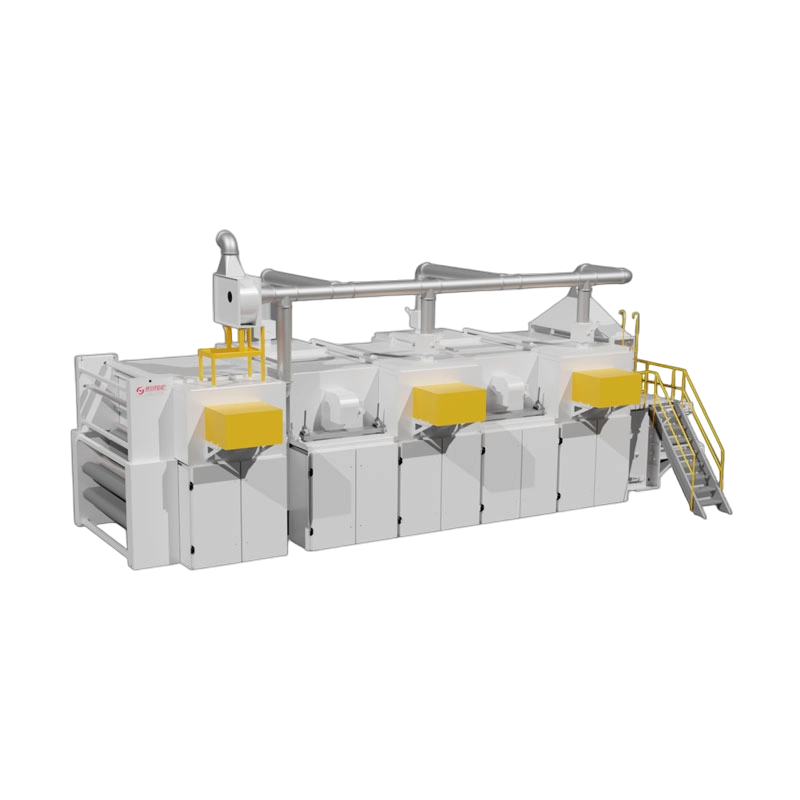
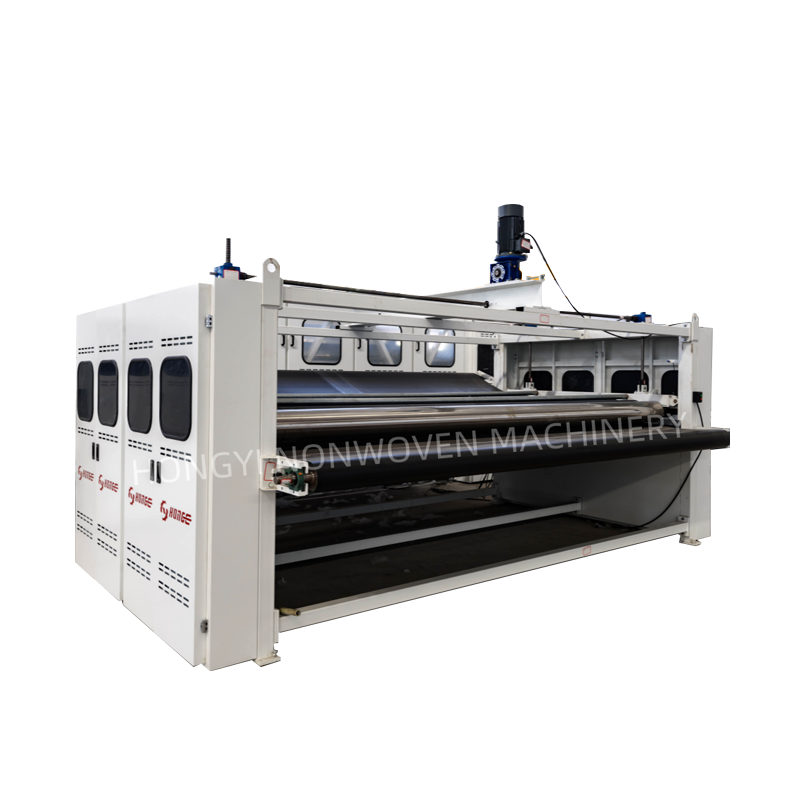
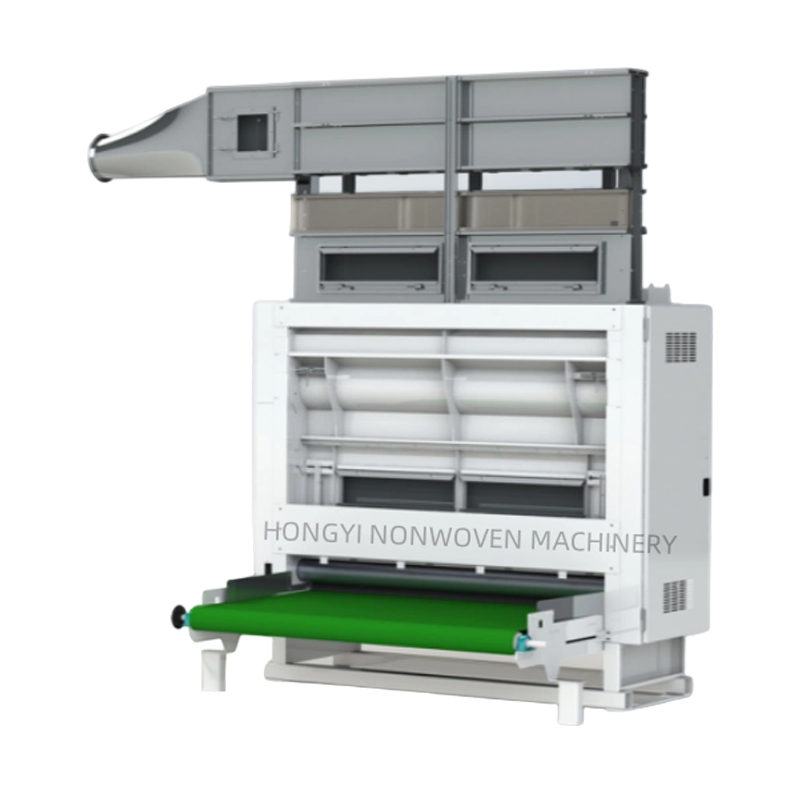
The HYQY Pneumatic Feeder is designed to address these challenges. It receives opened and blended fibers, temporarily stores them, and forms an even fiber layer or batt for the next production stage. Depending on the line configuration, the feeder can supply a carding machine, a direct web-forming system, an oven, or another bonding unit. Its air-pressure feeding principle supports accurate cross-sectional control and helps create a more homogeneous fiber web.
Manufactured by Changshu Hongyi Nonwoven Machinery Co., Ltd., the pneumatic feeder is intended for industrial nonwoven applications requiring reliable fiber distribution, adjustable production parameters, and compatibility with different fiber types. The equipment can process long fibers, short fibers, virgin fibers, recycled fibers, and materials such as polyester fiber when correctly matched with the opening and blending system.
With working-width options commonly covering approximately 2,000 to 2,800 millimeters, production capacity in the range of about 500 to 1,000 kilograms per hour, and installed power of approximately 55 to 75 kilowatts, the HYQY system is suitable for medium- and high-capacity nonwoven production lines. Customized configurations can also be discussed according to the required fiber, product, line speed, working width, and downstream equipment.
HYQY Pneumatic Feeder
1. The Role of a Pneumatic Feeder in Nonwoven Manufacturing
A pneumatic feeder is positioned between fiber opening and the following web-forming or bonding operation. Its primary responsibility is to transform a fluctuating stream of opened fibers into a controlled, even, and continuously delivered fiber layer. This function is particularly important because the opened fiber mass is usually light, irregular, and easily influenced by air movement, static electricity, moisture, fiber length, and blending conditions.
After fibers pass through an opening and blending machine, they must be distributed consistently before entering a carding machine or another forming unit. If the material is delivered unevenly, the card may receive excessive fiber in one section and insufficient fiber in another. The result can be a nonuniform web, unstable fabric weight, and higher adjustment requirements for the operator.
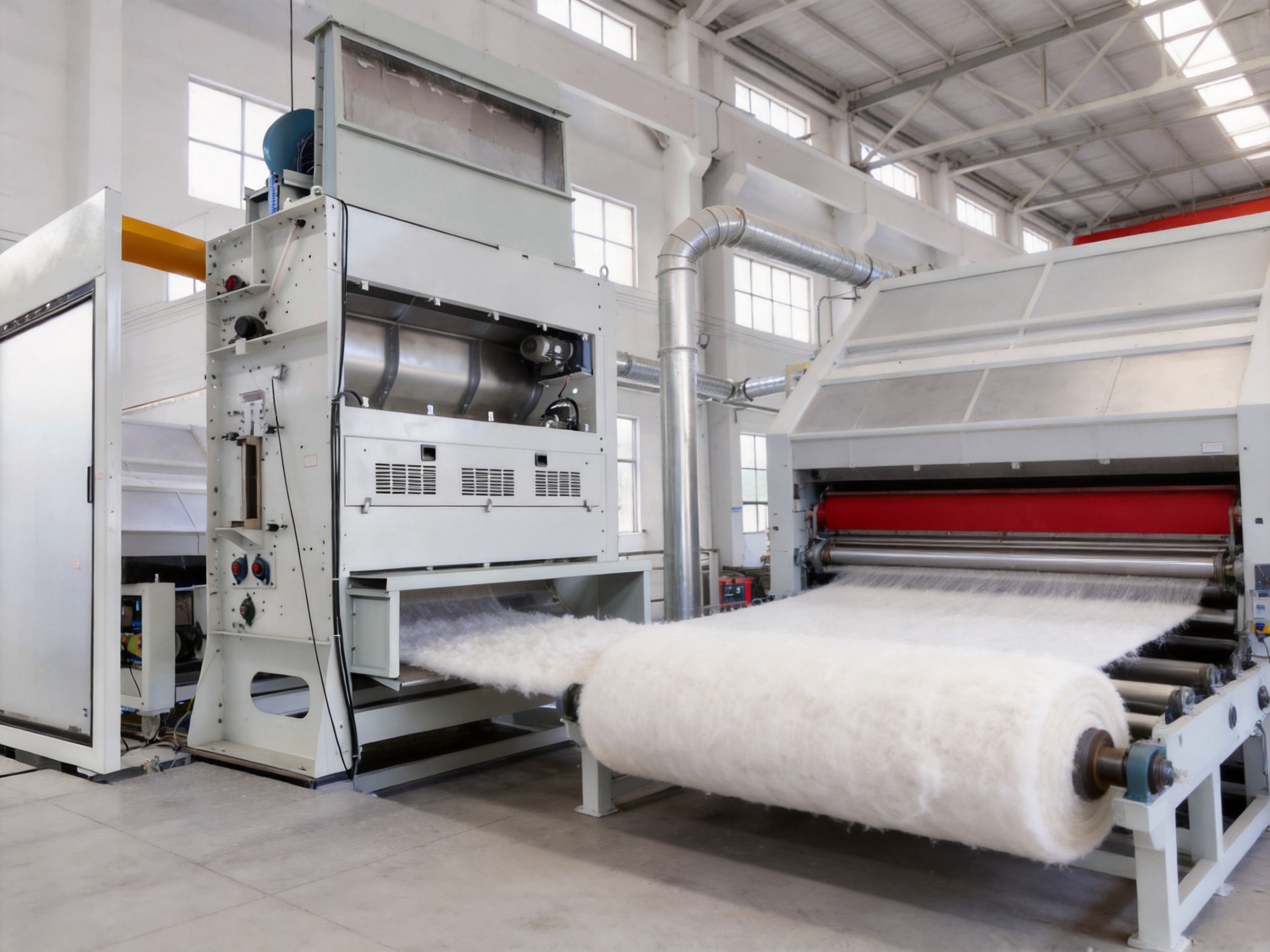
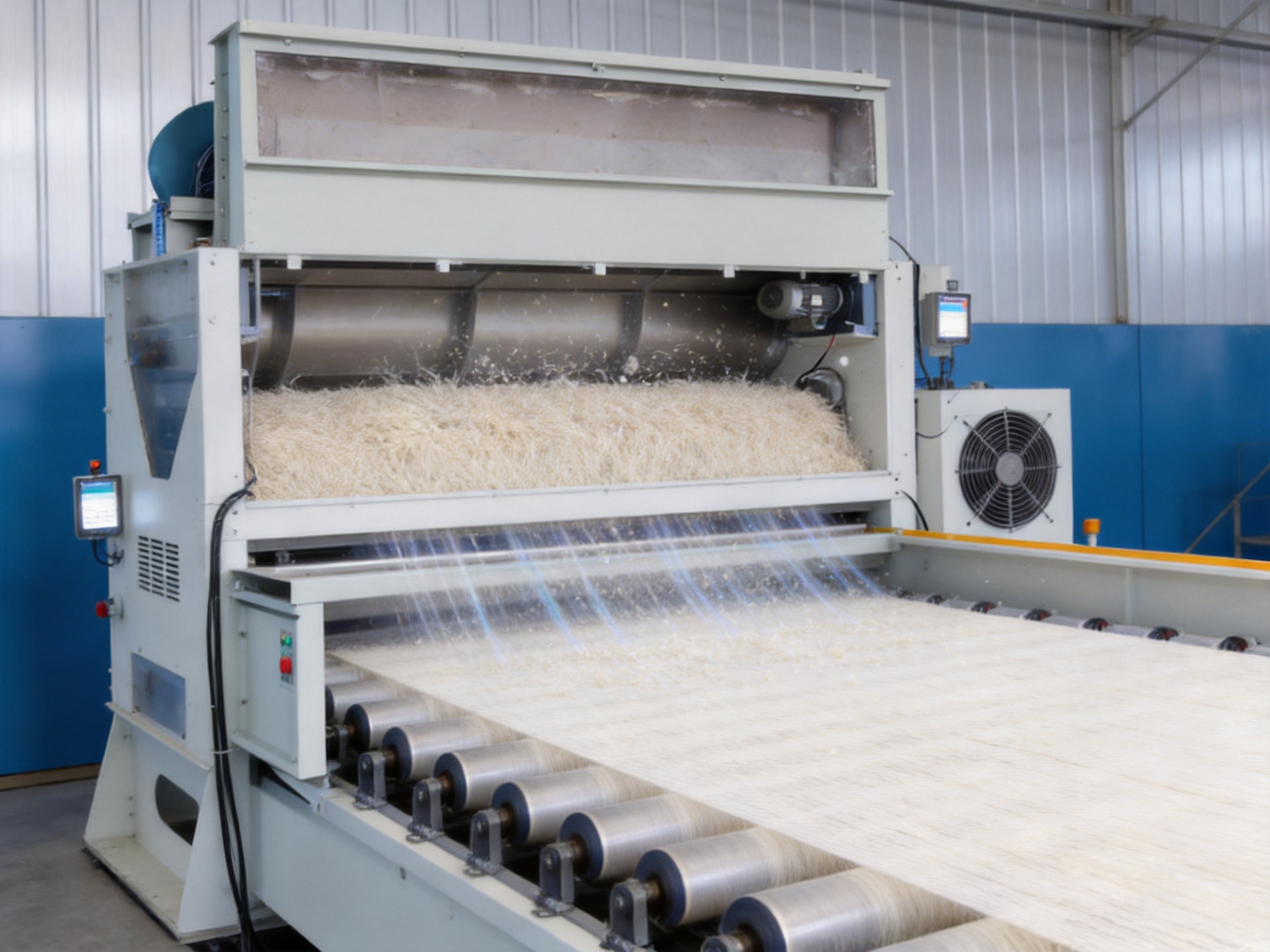
The HYQY Pneumatic Feeder uses a controlled air-flow system to guide fibers through the feeding process. Fibers are collected and stored in an upper chamber, transferred through the system, and formed into an output layer with adjustable thickness. The controlled pressure and air circulation help reduce abrupt changes in fiber distribution, while the output rollers regulate the delivery of the formed batt to the next machine.
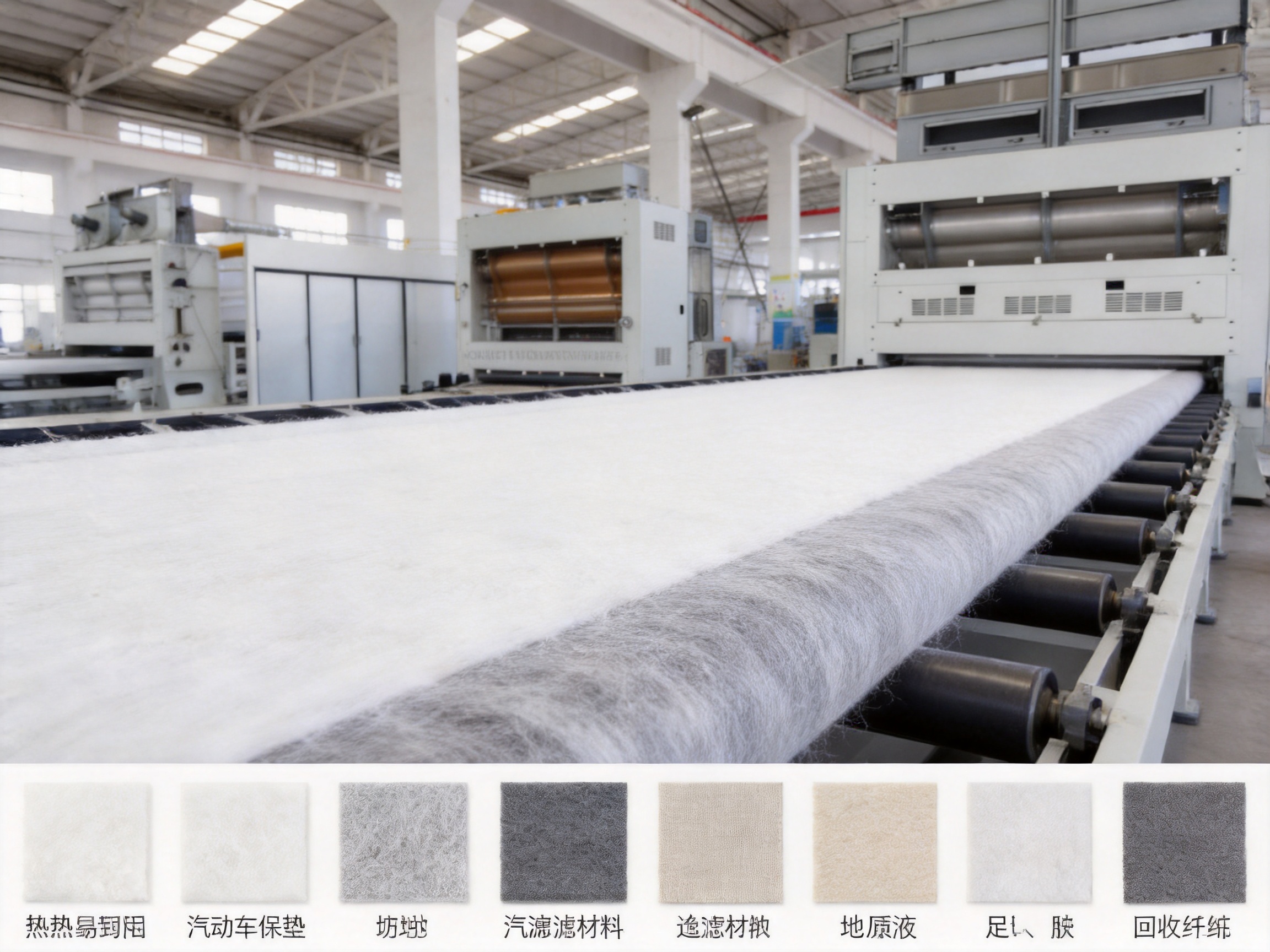
In a card feeding application, the feeder provides a stable material supply to the carding machine. In a direct web-forming application, it may deliver fiber directly to ovens or bonding systems, depending on the production-line design. This flexibility allows the same equipment concept to serve different types of nonwoven production, including wadding, padding, filtration materials, automotive interior materials, geotextiles, cleaning cloths, felts, and other fiber-based products.
The feeder does not replace the opening and blending machine or the carding machine. Instead, it improves the coordination between them. By stabilizing the fiber flow, it allows upstream equipment to work more effectively and gives downstream equipment a more consistent input condition.
2. Operating Principle and Fiber Flow
The operating principle is based on a sealed and pressurized air-controlled system. The upper and lower chambers work together to receive, store, guide, and discharge the opened fibers. Built-in fans create the air movement required for fiber transport and distribution. Fan speed can be regulated through variable-frequency inverter control, allowing the operator to adjust the air volume according to the material and production requirement.
When fibers enter the upper chamber, the air-flow system helps disperse them across the working width. The storage area provides a buffer between the opening and blending equipment and the next process. This buffer is important because the output of an opener may not be perfectly synchronized with the instantaneous demand of the card or bonding machine.
Photosensor-based storage control can be used to monitor the fiber level. When the storage level changes, the control system can adjust the feeding operation to maintain a stable supply. This reduces the possibility of an empty chamber, excessive accumulation, or sudden material surges.
Within the forming section, air pressure is adjusted to influence how fibers settle and how evenly they are distributed. The pressure control system is designed for high accuracy and can be set according to fiber type, fiber length, blend composition, target web weight, and required thickness. Since different fibers respond differently to air movement, adjustability is essential for practical production.
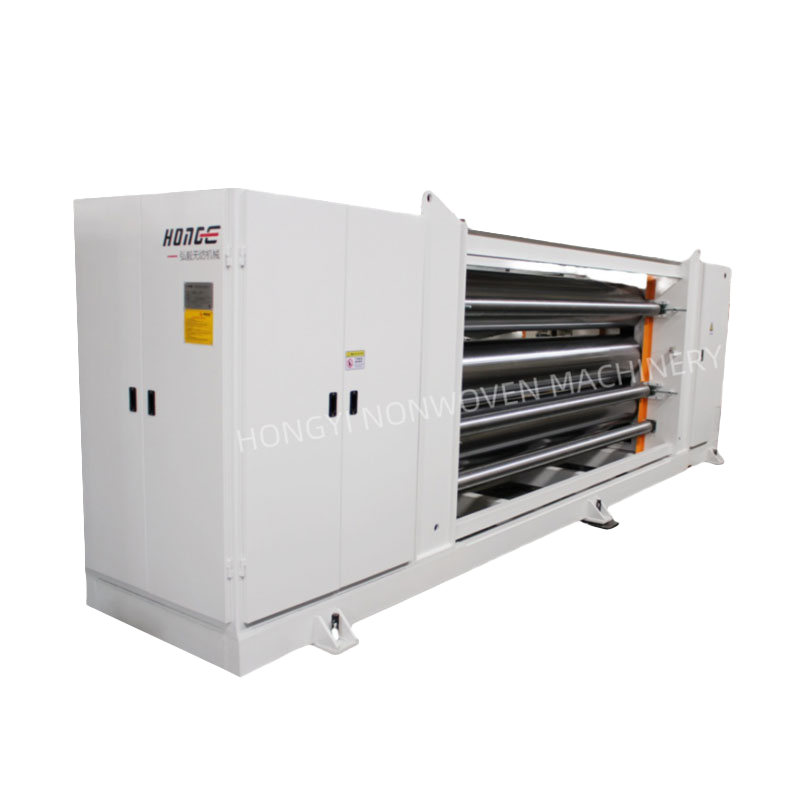
The output rollers then transport the formed fiber layer toward the next machine. Their speed is controlled by an inverter, allowing the delivery rate to be synchronized with the carding machine, oven, or bonding system. By coordinating air flow, storage level, pressure, and roller speed, the feeder helps maintain a stable web structure throughout continuous operation.
3. Main Performance Advantages
3.1 Improved Cross-Machine Uniformity
One of the most important advantages of the HYQY Pneumatic Feeder is its focus on cross-machine uniformity. Conventional mechanical feeding arrangements may create localized concentrations of fiber, particularly when the material is light, bulky, or difficult to distribute. Air-flow guidance provides a broader and more controlled method of moving fiber across the working width.
Improved cross-sectional accuracy helps reduce variations from one side of the web to the other. This is valuable for products in which fabric weight and thickness must remain within tight tolerances. Better cross-machine uniformity can also support more consistent tensile strength, absorbency, thermal insulation, filtration behavior, and appearance.
3.2 Stable Longitudinal Weight
Longitudinal stability refers to consistency in the direction of production. If the fiber supply fluctuates during operation, the resulting nonwoven fabric may show periodic heavy and light sections. These variations may be caused by irregular upstream feeding, changing storage levels, or unstable delivery speed.
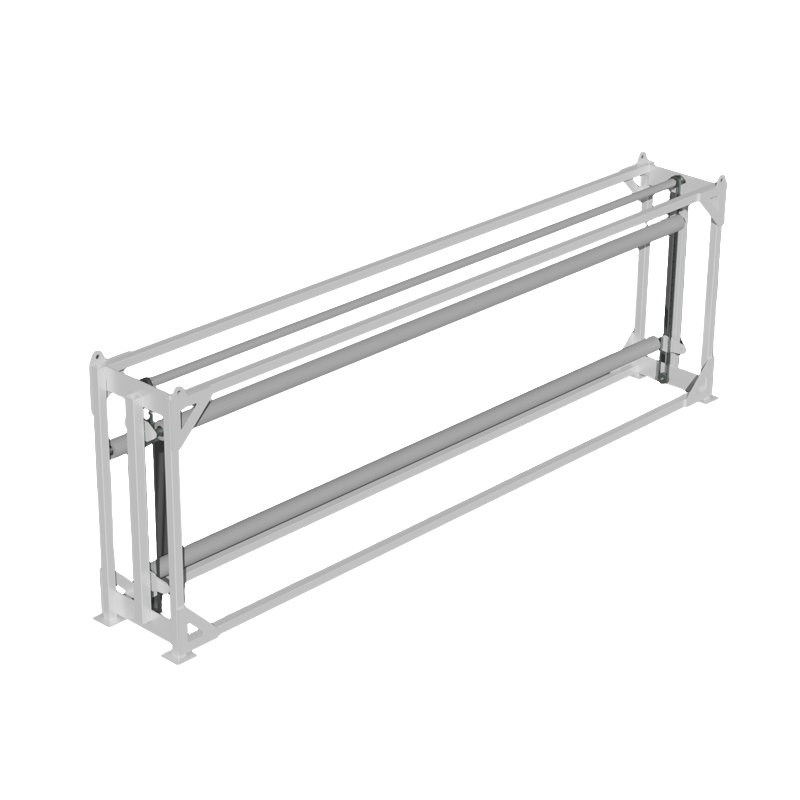
The pneumatic feeder provides a storage buffer and controlled output system to reduce such fluctuations. For applications requiring even tighter control, the machine can be equipped with a belt-weighing system. The belt weigher provides additional monitoring of material weight and can help maintain a more stable output over time.
Stable longitudinal weight is particularly important for high-speed production and for materials sold according to a specified basis weight. It can reduce off-specification production and support more predictable raw-material consumption.
3.3 Adjustable Fiber-Web Thickness
Different products require different thicknesses and densities. Wadding, insulation, automotive padding, filtration media, and geotextiles may each use a different target web structure. The HYQY system allows the thickness of the output fiber web to be adjusted according to production needs.
Thickness adjustment can be coordinated with pressure, fan speed, storage level, fiber blend, and roller speed. This provides operators with several process variables rather than relying on a single mechanical setting. Proper adjustment helps achieve a stable web while preserving the natural loft and distribution of the fibers.
3.4 Compatibility with Diverse Fiber Materials
The feeder can be configured for long fibers, short fibers, virgin fibers, and recycled fibers. Polyester fiber is one example of a suitable raw material, while other materials may be used after confirming their characteristics and compatibility with the complete line.
Recycled fibers often vary more widely in length, crimp, cleanliness, and bulk density than virgin fibers. A controlled pneumatic feeding system is beneficial because the air flow and pressure can be adjusted to accommodate these differences. However, correct opening, blending, dust removal, and process preparation remain important for reliable operation.
3.5 Integration with Carding and Bonding Systems
The machine can be used as a card feeding system or as part of a direct fiber web-forming arrangement. This makes it suitable for lines in which fibers are fed to a carding machine, as well as lines where the formed layer proceeds directly to an oven or another bonding unit.
Integration is supported by adjustable feeding time, inverter-controlled output rollers, and configurable working width. The specific connection design should be determined according to the layout and technical requirements of the entire production line.
4. Technical Configuration
| Product | HYQY Pneumatic Feeder |
| Application | Nonwoven fiber feeding and web formation |
| Common working width | Approximately 2,000–2,800 mm |
| Available listed working widths | 2.2 m and 2.8 m |
| Production capacity | Approximately 500–1,000 kg/h |
| Installed power | Approximately 55–75 kW |
| Control method | Variable-frequency inverter control and pneumatic adjustment |
| Storage control | Photosensor-based control available |
| Optional weight control | Belt-weighing system |
| Raw materials | Virgin, recycled, long, short, and polyester fibers, subject to configuration |
| Automatic grade | Automatic |
| Voltage | 220 V or customized; other industrial voltage configurations may be discussed |
| Certification | CE and ISO9001 listed |
| Warranty | 12 months |
| Typical lead time | Approximately 60 days after deposit, subject to final specification |
| Trade terms | EXW, FOB, CFR, and CIF |
The figures above represent the listed technical range and should be confirmed during the engineering stage. Actual capacity depends on fiber type, blend ratio, target basis weight, web thickness, working width, line speed, and the performance of connected equipment.
The working width can be selected according to the required product width and the configuration of the carding or bonding line. A wider machine can support higher output and wider products, but it may also require greater air volume, larger fan capacity, stronger structural support, and appropriate downstream equipment.
Installed power is also related to the selected configuration. Fan motors, control systems, output rollers, sensors, belt weighing, and auxiliary devices all contribute to the final electrical requirement. Before ordering, the customer should confirm voltage, frequency, control-cabinet requirements, safety standards, and plant electrical conditions.
5. Pneumatic Feeding Compared with Conventional Feeding Methods
Nonwoven manufacturers can use several methods to deliver fiber to a card or forming machine. Mechanical conveyors, apron feeders, vibrating feeders, chute feeding systems, and pneumatic systems may all be suitable in specific applications. The most appropriate method depends on the fiber properties and the required production performance.
A mechanical feeding system generally relies on belts, aprons, lattices, or rollers to move fiber. Such systems can be robust and relatively straightforward, but they may require careful adjustment to prevent uneven distribution. Light or bulky fibers may not spread uniformly when moved only by mechanical contact.
A vibrating feeder can help move material continuously, but vibration alone may not provide the same degree of air-assisted distribution across a wide working width. Excessive vibration can also affect delicate fiber structures or create noise and maintenance requirements.
A pneumatic feeder uses controlled air movement to support fiber transport and dispersion. This is especially useful when the material has low bulk density or when the production line requires accurate cross-sectional regulation. The sealed air system also gives the machine a more controlled internal environment than an open feeding arrangement.
Compared with less integrated systems, the HYQY configuration combines storage, air-flow guidance, pneumatic pressure adjustment, photosensor control, inverter-controlled rollers, and optional belt weighing. This combination gives the operator a broader set of tools for maintaining consistent output.
The competitive advantage is not simply that the machine uses air. Its value comes from the coordinated control of several process stages. Air flow distributes the fibers, the chambers provide buffering, pressure influences the web structure, sensors monitor storage, rollers control delivery, and weighing can support process feedback. This integrated approach is better suited to production lines with strict weight and productivity tolerances.
6. Sealed and Pressurized Construction
The upper and lower chambers are designed as part of a sealed and pressurized air-controlled system. A sealed structure helps direct the air flow through the intended path and reduces uncontrolled leakage. It can also make the operating conditions more stable when the machine is correctly installed and maintained.
Built-in fans with variable-speed inverter control allow the air movement to be adjusted without relying only on fixed-speed operation. Lower speed may be appropriate for lightweight fibers or lower output, while higher speed may be required for greater throughput or more difficult material. The correct setting must be established through commissioning and production trials.
Pressurized control is important because the same air-flow condition is not suitable for every fiber. Fibers with different lengths, crimp levels, surface finishes, and bulk densities will react differently. Adjustable pressure gives the operator the ability to reduce over-dispersion, prevent insufficient transport, and improve the uniformity of the formed layer.
The sealed construction also supports cleaner operation when connected to the appropriate dust-handling and plant ventilation arrangements. Nonwoven fiber preparation can generate dust and fly, so the complete line should be designed with suitable extraction, filtration, grounding, and housekeeping procedures.
7. Control System and Automation
Automation is essential for maintaining repeatable nonwoven production. The HYQY Pneumatic Feeder is listed as an automatic machine and uses adjustable control elements to coordinate material storage and output. The automatic functions reduce the need for constant manual intervention and help operators focus on process monitoring.
Photosensors can monitor the fiber level in the storage area. When the level reaches a selected condition, the feeding sequence can respond accordingly. This helps prevent unstable feeding caused by excessive storage or insufficient material. Sensor placement and calibration should be checked regularly because dust accumulation or misalignment can affect measurement accuracy.
Inverter control is used for the fans and output feeding rollers. Variable-frequency control allows speed changes to be made smoothly and supports synchronization with other machines. Smooth adjustment is preferable to abrupt on-and-off operation because it reduces sudden changes in fiber flow and mechanical stress.
For lines equipped with a belt weigher, the weighing function can provide additional information about the material being delivered. The weighing signal may be used by the control system or by the operator to make adjustments to the feeding rate. The final control architecture depends on the customer’s automation requirements and the design of the complete production line.
During project planning, customers should confirm whether they require a standalone control cabinet, centralized line control, remote monitoring, data recording, alarm management, recipe storage, or communication with a supervisory control system. Customized automation can make the machine easier to operate and more suitable for repeat production.
8. Fiber-Web Quality and Production Benefits
A uniform fiber web is the foundation for consistent nonwoven fabric. When fibers are distributed evenly before carding or bonding, downstream processes can operate under more stable conditions. This may improve the final fabric’s appearance, basis weight, thickness, tensile performance, softness, resilience, and bonding consistency.
For thermal-bonded products, a stable web allows heat to be applied more evenly. Excessive local fiber concentration may require additional thermal energy or create areas with insufficient bonding. A consistent layer helps the oven or heat-setting system work more predictably.
For needle-punched products, uniform feeding supports more consistent needling density and fabric structure. Although the needle-punching process has its own parameters, an uneven input web can result in variations in thickness and strength that are difficult to correct later.
For automotive interior materials, wadding, insulation, and filtration media, stable basis weight can be especially important. These products may need to meet customer specifications for thickness, density, air permeability, acoustic performance, or thermal behavior. The pneumatic feeder helps establish a repeatable starting condition for those requirements.
Improved feeding accuracy can also reduce raw-material waste. If the line produces fewer heavy or light sections, less material may need to be downgraded or removed. Better control can contribute to more efficient use of virgin and recycled fibers, although total savings depend on the complete line and operating discipline.
9. Manufacturing Strengths of the Supplier
Changshu Hongyi Nonwoven Machinery Co., Ltd. is described as a professional nonwoven machinery manufacturer and trader with more than 20 years of experience in the nonwoven machinery field. Its product scope includes both individual machines and complete production lines.
The company’s equipment range includes needle-punched geotextile lines, nonwoven carpet lines, airlaid waste felt lines, automotive interior material lines, needle-punched cleaning cloth lines, wool felt lines, jute felt lines, needle-punching machines, carding machines, airlaid machines, ironing machines, and thermal-bonding wadding oven machines.
This broad product portfolio is a practical advantage for pneumatic-feeder customers. A supplier that understands opening, blending, feeding, carding, web formation, bonding, and finishing can evaluate the feeder as part of the complete process rather than as an isolated machine. This helps reduce interface problems between individual units.
The company states that its products have been supplied to more than 20 countries, including countries in Latin America, the Middle East, Africa, Southeast Asia, and other regions. International project experience can support export documentation, shipping coordination, installation planning, and communication across different operating environments.
Its stated manufacturing focus includes efficiency, reliability, quality, advanced technology, precision engineering, automatic control, energy-saving capabilities, and customization. These priorities are directly relevant to pneumatic feeding, where mechanical construction, air-flow design, sensor placement, control logic, and line synchronization must work together.
10. Engineering and Production Process
10.1 Requirement Confirmation
The manufacturing process begins with technical communication. The supplier needs to understand the customer’s raw materials, target products, required width, production capacity, basis weight, web thickness, line arrangement, and downstream equipment. Fiber samples may be useful when the material includes recycled fibers, mixed fibers, difficult-to-open fibers, or unusual bulk characteristics.
10.2 Process and Layout Design
After the requirements are confirmed, the feeder configuration and connection points can be determined. Engineers consider the position of the opening and blending machine, the height and direction of fiber transfer, the card or bonding machine inlet, maintenance access, electrical routing, air extraction, and the available factory space.
Layout planning is important because pneumatic feeding depends on correct alignment and controlled air movement. Inadequate transitions, sharp changes in direction, or poor sealing may influence fiber distribution and increase operating problems.
10.3 Structural Fabrication
The chambers, frames, access panels, ducts, support structures, and roller assemblies are fabricated according to the approved design. Dimensional accuracy is important for maintaining suitable clearances, preventing air leakage, and ensuring that the machine can be connected correctly to adjacent equipment.
Fabrication quality also affects maintenance. Properly designed access doors and service areas allow operators to inspect sensors, fans, rollers, seals, and internal surfaces without unnecessary dismantling.
10.4 Fan and Air-Flow Integration
Fans and air-flow components are installed as part of the controlled pneumatic system. Their performance must match the selected working width and fiber application. Inverter control is integrated so that air volume can be adjusted during commissioning and production.
Air-flow integration requires attention to sealing, pressure distribution, inspection points, and safe operation. The objective is to create a stable movement of fiber rather than excessive turbulence or dead zones within the chamber.
10.5 Control and Sensor Installation
The automatic control system is assembled with inverter drives, photosensors, pressure controls, roller controls, and other specified components. Wiring is arranged for serviceability and protected against the operating environment. The control cabinet should be matched to the customer’s power supply and local safety requirements.
Each sensor and drive should be checked during testing. Calibration, alarm functions, emergency-stop circuits, and control responses are important parts of the inspection process before shipment.
10.6 Trial Assembly and Testing
Trial assembly allows the manufacturer to verify the fit of major components, the position of access points, the operation of rollers, and the installation of electrical and pneumatic elements. No-load testing can identify abnormal vibration, noise, overheating, loose connections, or control errors.
Where appropriate, material testing can be performed using representative fibers. The results can help determine suitable fan speed, pressure, storage level, and delivery-roller settings. Final production performance still depends on the customer’s complete line, raw materials, and installation conditions.
10.7 Inspection and Export Preparation
The equipment is inspected before shipment. Video outgoing inspection is listed as available, which can help customers review the machine’s operating condition before loading. Export preparation may include nude packing or polyethylene-film protection, depending on the shipping arrangement and customer requirements.
Documentation should include operating instructions, electrical information, spare-parts recommendations, installation notes, and commissioning guidance. Clear documentation supports faster installation and reduces avoidable startup errors.
11. Installation and Commissioning Considerations
Installation should be carried out on a suitable foundation with enough space for operation, inspection, and maintenance. The machine must be aligned with the upstream and downstream equipment. Incorrect height or centerline alignment can affect material transfer and may create unnecessary stress on connecting structures.
Electrical installation should confirm the local voltage, frequency, motor protection, grounding, and control-cabinet requirements. The listed equipment may be configured for 220 V or customized industrial voltage conditions, while other project information references 220 V, 380 V, and 415 V options. The exact electrical specification must be confirmed before production.
The air-flow system should be inspected for leakage, obstruction, and incorrect connection. Seals, inspection covers, ducts, and access panels must be properly installed. If the machine is connected to a dust-extraction system, the extraction volume should be balanced so that it does not disturb the intended fiber distribution.
Commissioning normally begins at low speed and with a conservative material feed. Operators can gradually adjust fan speed, pneumatic pressure, storage level, and output-roller speed while checking the web. The objective is to establish a stable fiber layer without excessive turbulence, fiber accumulation, or irregular delivery.
After the initial settings are established, the line can be tested at progressively higher speeds. Samples should be taken across the web width and along the production direction. Measuring basis weight and thickness at multiple positions provides useful information for fine adjustment.
12. Maintenance and Operating Practices
Routine maintenance is necessary to preserve feeding accuracy. Operators should inspect the interior of the chambers, fan inlets, air passages, rollers, seals, sensors, and access doors. Fiber accumulation can change air-flow behavior and reduce the accuracy of storage or pressure control.
Photosensors should be kept clean and correctly aligned. Dust or fiber deposits may cause false readings. Sensor performance should be included in the regular maintenance checklist, particularly when the machine operates with recycled fibers or materials that generate higher levels of fly.
Output rollers should be checked for wear, contamination, alignment, and correct tension. A roller surface that is dirty or worn may affect delivery speed and web thickness. Inverter settings should also be reviewed if the operating behavior changes.
Fans and motors require inspection according to the manufacturer’s maintenance recommendations. Abnormal noise, vibration, temperature, or electrical current may indicate a developing problem. Early inspection can prevent unplanned downtime and protect the quality of the formed web.
Operators should record important production settings, including fiber blend, fan speed, pressure, storage level, roller speed, target basis weight, and actual output. A process record makes it easier to reproduce successful settings when the same product is manufactured again.
13. Applications Across Nonwoven Industries
13.1 Thermal-Bonded Wadding
Thermal-bonded wadding requires an even fiber layer before the material passes through a heating and bonding zone. The pneumatic feeder can help deliver a stable batt, allowing the oven to bond the web more consistently.
13.2 Automotive Interior Materials
Automotive interior components may require controlled weight, thickness, resilience, and acoustic or thermal performance. A stable feeding system supports the production of uniform padding and insulation materials made from virgin or recycled fibers.
13.3 Needle-Punched Geotextiles
Geotextile production often requires consistent fabric structure and weight over a wide working width. The pneumatic feeder can serve as an upstream feeding unit for carding and needle-punching lines, subject to the overall line design and material requirements.
13.4 Cleaning Cloth and Felt Products
Cleaning cloths, wool felts, jute felts, and related products may use different fiber blends and web structures. Adjustable pneumatic feeding gives the operator flexibility when changing between products or raw-material compositions.
13.5 Recycled Fiber Applications
Recycled fibers are increasingly used to reduce waste and raw-material consumption. Their variability makes process control more important. The feeder’s adjustable air flow, pressure, and delivery system can help manage material differences when paired with appropriate opening and blending equipment.
14. Customization and Project Support
Customization may involve working width, voltage, machine dimensions, color, control arrangement, roller configuration, belt-weighing integration, and connection details. Since nonwoven production lines differ substantially, a customized design is often more effective than a standard machine installed without engineering review.
The supplier can discuss complete production-line solutions as well as individual machines. This is useful for customers building a new line, expanding an existing line, replacing an outdated feeder, or improving the consistency of an established process.
Customers should provide information about the raw material, target product, expected capacity, desired basis weight, downstream equipment, factory layout, power supply, and preferred trade terms. The available trade terms include EXW, FOB, CFR, and CIF. Payment and lead-time arrangements should be confirmed in the final commercial contract.
The listed standard commercial information includes a 12-month warranty and a typical lead time of approximately 60 days after deposit. Actual delivery time may vary according to customization, production scheduling, inspection requirements, shipping conditions, and the complexity of the complete line.
15. Why Choose an Integrated Nonwoven Machinery Supplier?
A pneumatic feeder influences the operation of the machines connected to it. If the feeder supplier understands only the feeding unit, it may be more difficult to identify problems caused by carding speed, opening performance, oven demand, web consolidation, or line synchronization.
An integrated nonwoven machinery supplier can evaluate the production sequence from fiber preparation to final fabric formation. This broader perspective helps determine whether a problem originates in fiber opening, storage, air distribution, roller speed, card feeding, or downstream bonding.
Changshu Hongyi Nonwoven Machinery Co., Ltd. offers individual machines and complete lines, which supports this integrated approach. Its experience across carding, airlay, needle punching, thermal bonding, ironing, and other nonwoven processes can be applied when selecting and configuring a pneumatic feeder.
For international buyers, factory-direct communication can simplify technical discussion, customization, spare-parts planning, and after-sales coordination. The company’s stated export experience across more than 20 countries also demonstrates familiarity with overseas project requirements.
16. Buyer Selection Checklist
Before purchasing a pneumatic feeder, the buyer should define the target production capacity. Capacity should be expressed together with fiber type, target basis weight, working width, and line speed because a nominal kilogram-per-hour figure alone does not fully describe performance.
The buyer should also identify whether the feeder will supply a carding machine, an oven, a thermal-bonding system, an airlay line, or another forming unit. The inlet and outlet conditions of the connected equipment determine the required machine height, transition design, control signals, and delivery speed.
Fiber information should include length, fineness, crimp, moisture, blend ratio, recycled content, and bulk density where available. Representative samples are recommended for unusual or recycled materials.
Electrical and factory conditions must be confirmed in advance. These include voltage, frequency, available power, foundation strength, installation space, dust extraction, ambient temperature, and local safety requirements.
Finally, the buyer should confirm the scope of supply. Important items may include the control cabinet, belt weigher, sensors, connection ducts, spare parts, installation supervision, operator training, manuals, inspection videos, warranty terms, and after-sales support.
17. Frequently Asked Questions
Q1: What is the main purpose of the HYQY Pneumatic Feeder?
The main purpose is to receive opened and blended fibers, store them temporarily, and form an even fiber layer for a carding machine, oven, bonding system, or another downstream process. It is designed to improve cross-sectional uniformity and provide controlled continuous feeding.
Q2: Can the machine feed both virgin and recycled fibers?
Yes. The listed application includes long, short, virgin, and recycled fibers. Actual suitability depends on the fiber properties and the configuration of the opening, blending, dust-removal, and downstream equipment. Recycled materials should be evaluated through technical testing before final production settings are established.
Q3: Is a belt weigher included as standard?
The machine can be equipped with a belt weigher for improved control of weight in both the cross-machine and longitudinal directions. Whether it is included as standard or supplied as an option should be confirmed in the quotation and technical agreement.
Q4: What working widths are available?
Common listed working widths include 2.2 meters and 2.8 meters. The technical range is approximately 2,000 to 2,800 millimeters, while customized dimensions may be discussed for specific projects.
Q5: What production capacity can be expected?
The listed technical capacity is approximately 500 to 1,000 kilograms per hour. Actual output depends on fiber type, blend, basis weight, web thickness, working width, line speed, and the performance of connected machines.
Q6: How is the web thickness adjusted?
Web thickness can be adjusted through a combination of pneumatic pressure, air-flow volume, storage conditions, fiber feed, and output-roller speed. The correct combination is established during commissioning according to the product specification.
Q7: How does the pneumatic feeder improve uniformity?
Controlled air flow distributes fibers across the working width, while the sealed chambers and adjustable pressure system help stabilize fiber placement. Inverter-controlled rollers regulate delivery, and optional weighing provides additional feedback for weight control.
Q8: Can the feeder be connected to an existing carding line?
It may be connected to an existing carding line after checking the mechanical, electrical, and process interfaces. Working width, inlet height, line speed, control signals, fiber capacity, and available installation space should all be reviewed before ordering.
Q9: What electrical voltages are available?
The listed information includes 220 V and customized voltage configurations, with other project references including 380 V and 415 V. The exact voltage, frequency, motor specification, and control-cabinet design must be confirmed for the customer’s country and factory.
Q10: What certification and warranty information is available?
The machine is listed with CE and ISO9001-related certification information. A 12-month warranty is listed. The final certification documents, warranty scope, exclusions, and service conditions should be confirmed in the purchase contract.
Q11: How long is the delivery period?
The listed lead time is approximately 60 days after receipt of the deposit, while another commercial entry indicates two to three months. The final schedule depends on specifications, customization, production planning, inspection, and shipping arrangements.
Q12: Does the supplier provide complete nonwoven production lines?
Yes. The supplier provides both unit machines and complete nonwoven production lines, including systems for needle-punched geotextiles, carpets, airlaid felt, automotive materials, cleaning cloths, wool felt, jute felt, and thermal-bonded products.
Q13: What maintenance is required?
Routine maintenance includes cleaning chambers and air passages, inspecting fans and motors, checking rollers and seals, cleaning and aligning photosensors, reviewing inverter operation, and tightening electrical and mechanical connections. Maintenance frequency depends on operating hours and fiber conditions.
Q14: Can the machine be customized?
Yes. Customization may cover working width, dimensions, voltage, color, control system, belt weighing, machine connections, and other project requirements. Technical details should be finalized before fabrication begins.
18. Conclusion
The HYQY Pneumatic Feeder is designed to provide controlled, accurate, and continuous fiber delivery for nonwoven production. Its air-pressure feeding principle, sealed upper and lower chambers, adjustable pneumatic control, variable-speed fans, photosensor storage control, inverter-controlled output rollers, and optional belt-weighing system work together to improve fiber-web uniformity.
Compared with simpler feeding arrangements, the system offers more comprehensive control of cross-machine distribution, longitudinal weight stability, web thickness, and line synchronization. Its ability to handle different fiber categories makes it suitable for a wide range of nonwoven applications, including carded products, thermal-bonded wadding, automotive materials, geotextiles, felts, cleaning cloths, and recycled-fiber products.
The equipment is supported by Changshu Hongyi Nonwoven Machinery Co., Ltd., a supplier with more than 20 years of experience in nonwoven machinery and a product range covering individual machines and complete production lines. Its manufacturing and engineering capabilities allow the feeder to be considered as part of a complete process rather than as an isolated component.
For buyers seeking improved production consistency, reduced feeding variation, and flexible integration with nonwoven lines, the pneumatic feeder offers a practical solution. Final performance should always be confirmed through technical specification, material evaluation, layout review, commissioning, and complete-line testing.
References
1. Product technical information for the HYQY Pneumatic Feeder, including operating principle, characteristics, dimensions, capacity, power, and control functions.
2. Changshu Hongyi Nonwoven Machinery Co., Ltd. company profile and product portfolio information.
3. General principles of fiber opening, blending, pneumatic feeding, carding, web formation, and nonwoven bonding.
4. Industrial practices for nonwoven basis-weight control, cross-machine uniformity, longitudinal stability, and production-line synchronization.
5. General equipment-maintenance principles for fiber-processing machinery, variable-frequency drives, sensors, fans, rollers, and pneumatic systems.