

Content
- 1 What Is Thermal Bonded Wadding?
- 2 Main Production Process
- 3 Thermal Bonding Technology
- 4 Product Specifications and Configuration Options
- 5 Advantages Compared with Conventional Wadding Equipment
- 6 Manufacturing Strengths and Engineering Capability
- 7 Applications of Thermal Bonded Wadding
- 8 Quality Control for Thermal Bonded Wadding
- 9 Installation, Operation, and Maintenance
- 10 Why Select a Complete-Line Manufacturer?
- 11 Purchasing Considerations
- 12 Q&A
- 12.1 What products can the thermal bonded wadding line manufacture?
- 12.2 What fibers can be used?
- 12.3 Why is low-melt fiber used?
- 12.4 Can the line produce both soft and firm wadding?
- 12.5 What is the available working width?
- 12.6 What GSM range can be produced?
- 12.7 What is the maximum production capacity?
- 12.8 Can product color and size be customized?
- 12.9 Is the production line automatic?
- 12.10 What packaging is used?
- 12.11 What warranty is provided?
- 12.12 How long is the delivery period?
- 12.13 How can customers improve product quality?
- 13 Conclusion
- 14 References
- 15 Product: HYL Thermal Bonded Wadding Production Line
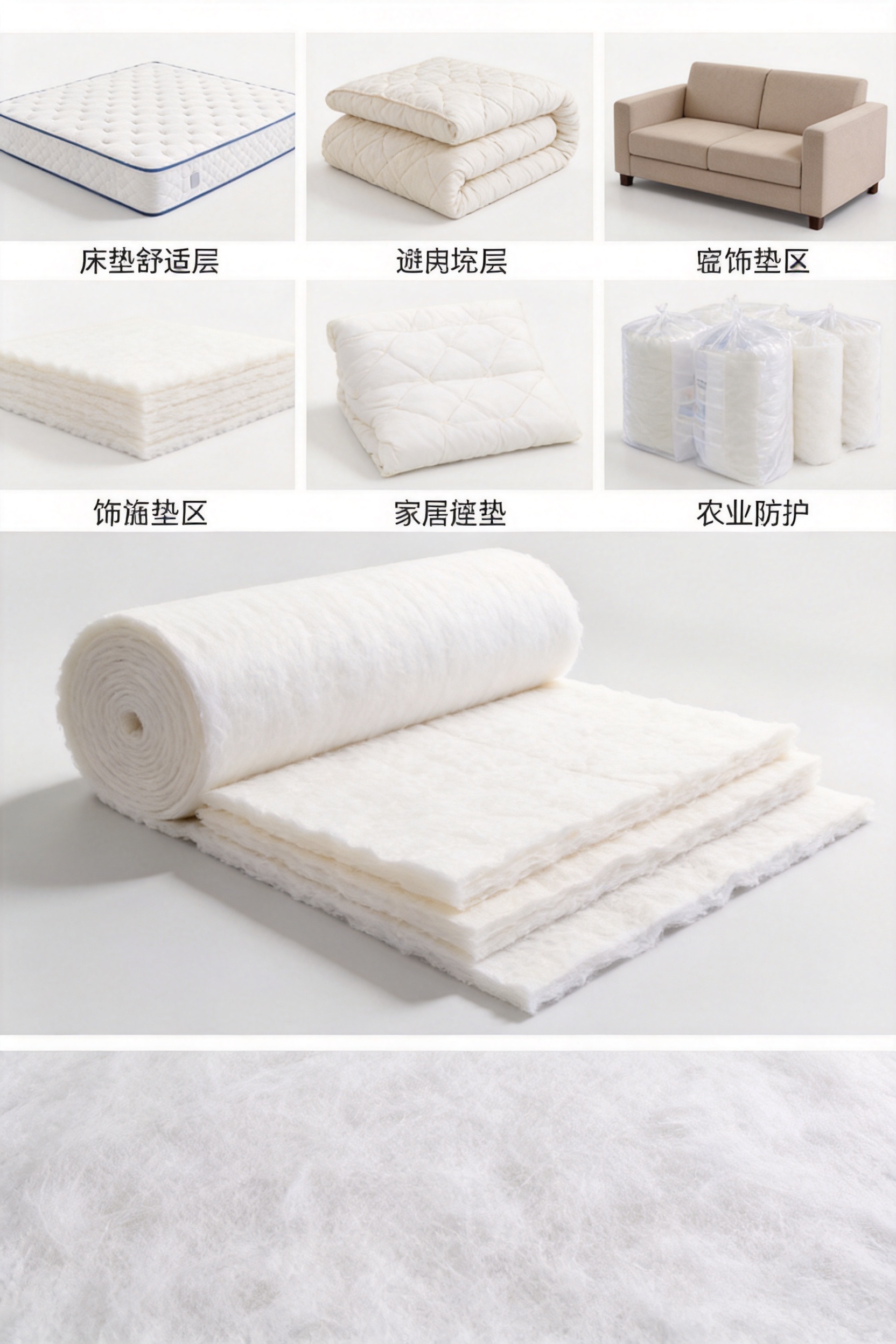
Thermal bonded wadding is an important nonwoven material used in mattresses, sofa cushions, quilts, furniture padding, medical cushioning, agricultural protection, and many other products. Its combination of softness, resilience, breathability, low weight, and customizable thickness makes it suitable for manufacturers that need a versatile alternative to foam, conventional batting, and mechanically bonded fiber structures.
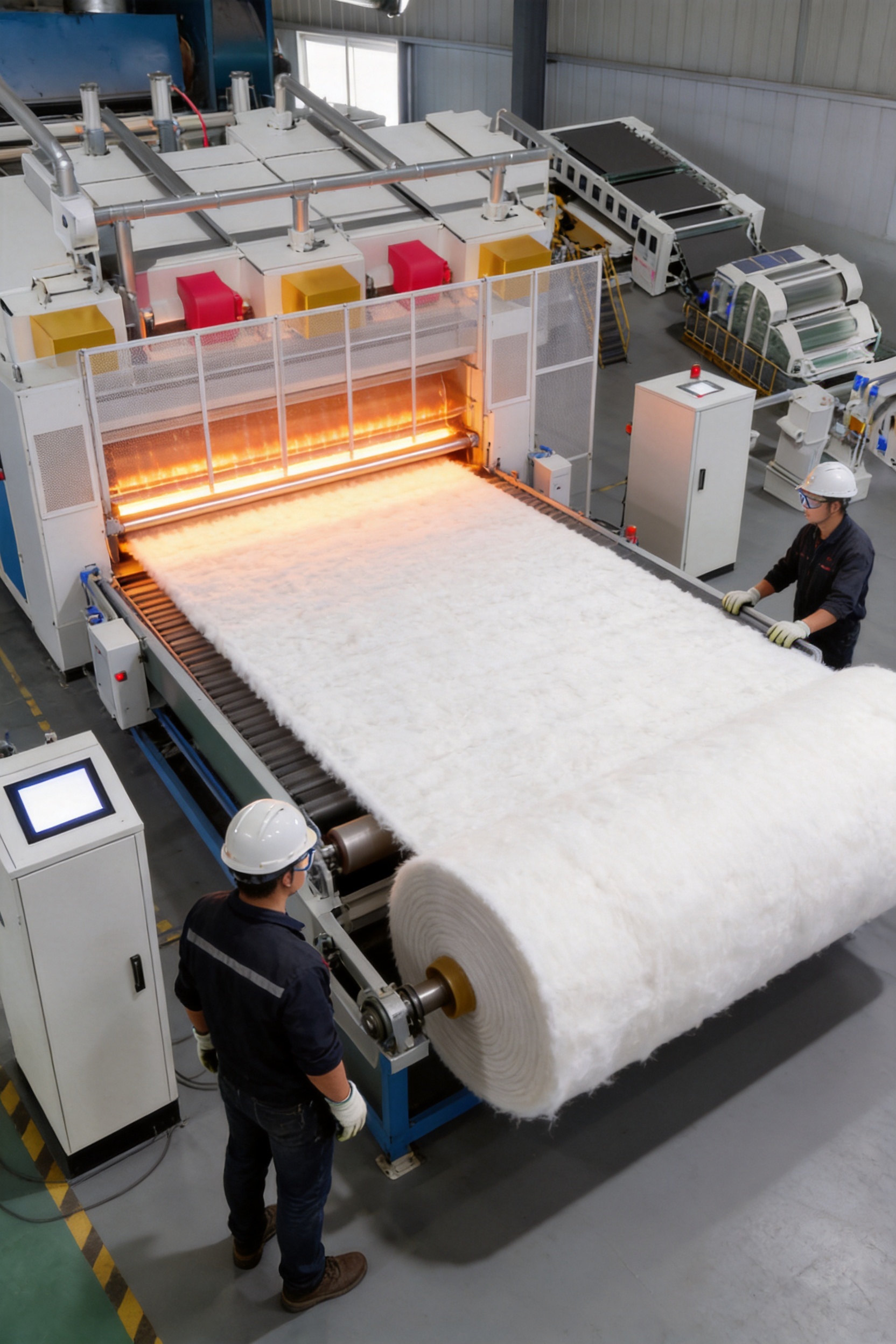
The HYL Thermal Bonded Wadding Production Line is designed to manufacture soft or hard wadding by blending polyester fibers, polypropylene staple fibers, and low-melt fibers. During production, the fiber web is formed, heated, bonded, cooled, and finished into a stable nonwoven sheet or roll. The low-melt component acts as the bonding medium, allowing the fibers to form an integrated structure without relying on chemical adhesives throughout the product.
For manufacturers, the value of a thermal bonded wadding line is not limited to the oven or the forming machine. A successful system must provide consistent fiber opening, accurate blending, uniform web formation, reliable thermal bonding, stable width control, smooth winding, and convenient adjustment for different product specifications. The line must also be adapted to the customer’s raw materials, target GSM, product thickness, working width, production capacity, and factory layout.
Changshu Hongyi Nonwoven Machinery Co., Ltd. supplies customized nonwoven machinery and complete production lines for international customers. Its experience covers thermal bonding equipment, carding machines, airlay systems, needle punching machines, winding equipment, cutting machines, and other units used in nonwoven production. The company’s manufacturing approach combines complete-line engineering, mechanical fabrication, electrical control integration, commissioning, and after-sales support.
What Is Thermal Bonded Wadding?
Thermal bonded wadding is a fibrous nonwoven material in which selected fibers are joined by heat. The raw material normally includes a main structural fiber, such as polyester, together with a low-melt fiber. When the fiber web passes through a thermal bonding oven, the low-melt component softens or melts at a controlled temperature. It then bonds adjacent fibers at contact points. After cooling, the bonded web retains its shape and strength.
The process differs from needle punching because the primary bonding mechanism is heat rather than repeated needle penetration. It also differs from adhesive bonding because the bonding medium is incorporated into the fiber blend instead of being applied as a liquid or spray over the web. This can help manufacturers produce a soft, clean, and flexible material with a controlled hand feel.
The final characteristics depend on several factors, including fiber denier, fiber length, blend ratio, low-melt fiber percentage, web orientation, oven temperature, line speed, compression, cooling conditions, and winding tension. A carefully balanced process can produce either soft wadding for quilts and cushions or firmer wadding for mattress layers, upholstery, packaging, and protective materials.
Main Production Process
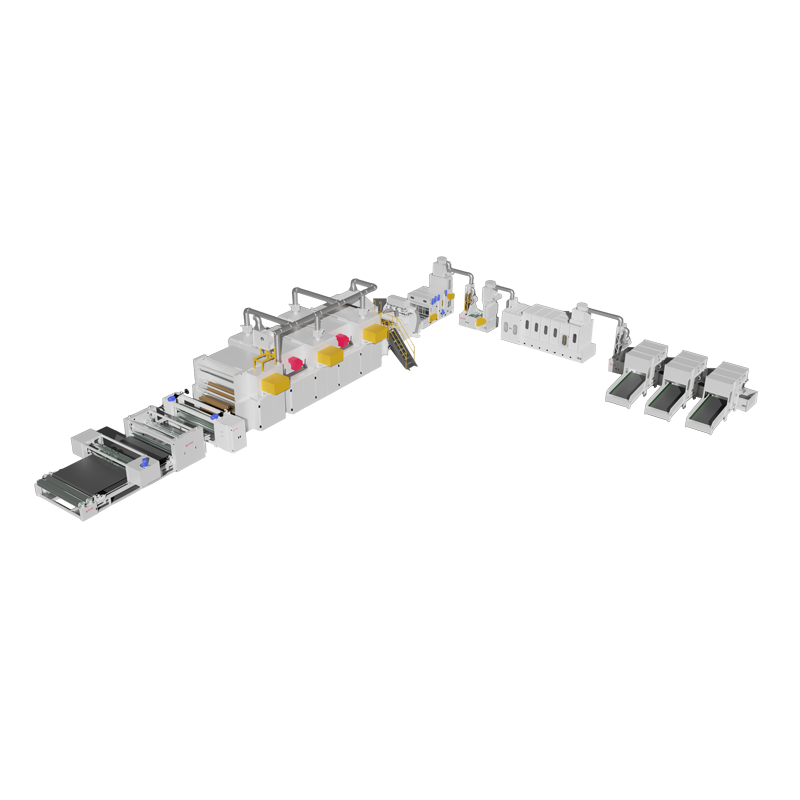
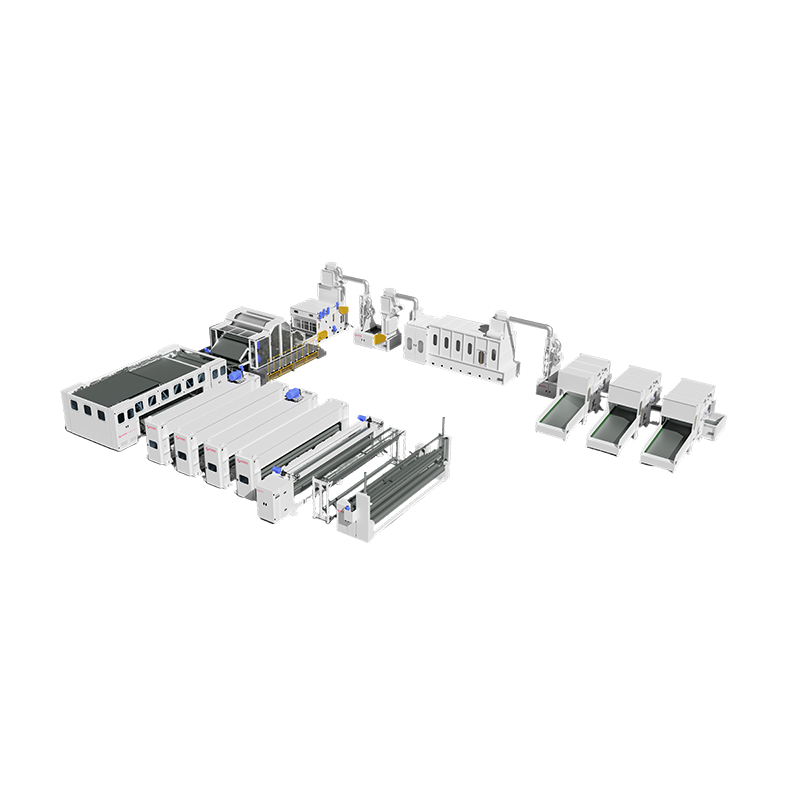
A thermal bonded wadding production line is generally arranged as a continuous process. The exact configuration can be customized, but the principal stages normally include raw material preparation, fiber opening, blending, carding or airlay web formation, cross-lapping or web layering, thermal bonding, cooling, edge trimming, winding, and cutting or packaging.
Raw Material Feeding and Preparation
The quality of the finished wadding begins with the preparation of the raw material. The HYL line can be configured for polyester staple fiber, polypropylene staple fiber, and low-melt fibers. The supplied technical information indicates typical polyester fiber specifications of approximately 1.5D to 15D and 38 mm to 72 mm in length. The appropriate selection depends on the desired softness, loft, strength, recovery, and surface appearance.
Fibers are supplied to the opening and blending section in a controlled manner. The opening equipment separates compressed fiber tufts and reduces large clusters before the material enters the blending system. Proper opening helps prevent uneven fiber distribution, excessive neps, and local differences in density.
Accurate blending is especially important for thermal bonded products because the low-melt fiber must be distributed throughout the web. If the bonding fiber is concentrated in some areas and absent in others, the final product may show weak zones, hard spots, uneven shrinkage, or inconsistent compression recovery. A well-designed feeding system helps maintain a stable blend as the line operates.
Opening and Blending
The opening and blending section is responsible for preparing a homogeneous fiber mixture. Depending on the raw materials and production target, the system may include bale opening, pre-opening, fine opening, weighing or metering devices, mixing chambers, and feeding equipment. The components are selected according to the fiber type, the number of fiber blends, and the expected production rate.
The main advantage of a controlled opening and blending process is repeatability. Operators can establish a defined recipe for a particular product, then adjust the percentage of low-melt fiber or the proportion of different structural fibers when a new specification is required. This is more efficient than manually mixing fibers and helps reduce variations between production batches.
For a manufacturer serving several markets, recipe flexibility is valuable. A soft mattress wadding may require a different fiber blend and thermal profile from a firm furniture pad. Similarly, an agricultural protective fabric may prioritize thickness and resilience, while a medical cushioning layer may require a clean and uniform surface. The line can be configured to support these different product objectives.
Carding and Web Formation
After opening and blending, the fibers are formed into a web. Carding equipment separates, aligns, and distributes the fibers. The resulting web has a controlled width and basis weight and can be supplied to subsequent layering equipment. Carding is particularly useful when the manufacturer requires a more uniform surface and a controlled fiber orientation.
For certain product specifications, airlay or other web-forming methods may be included. Airlay technology can provide a more random fiber orientation and can be useful for thicker or more bulky products. The choice between carding, airlay forming, or a combined arrangement depends on the target GSM, thickness, product appearance, fiber type, and required production capacity.
Uniform web formation is one of the most important competitive factors in wadding production. A product may have an acceptable average GSM while still suffering from local thin areas or dense zones. Advanced feeding, carding, and web-forming equipment helps reduce these variations before the material reaches the bonding oven.
Layering and Cross-Lapping
For medium- and high-GSM products, a single carded web may not provide the required thickness or density. Layering equipment can place multiple webs together, while a cross-lapper can arrange the web in overlapping layers across the working width. This allows the manufacturer to produce thicker materials while maintaining a more balanced structure.
Cross-lapping also helps control the relationship between machine direction and cross direction. A web with excessive machine-direction orientation may have different tensile strength, elongation, and compression behavior in the two directions. By adjusting the layering pattern, line speed, and web feed, the production line can be adapted to the required mechanical properties.
The configuration is not identical for every customer. Some projects require a compact soft wadding line, while others need a high-capacity system for thick mattress or upholstery products. Hongyi can customize the production arrangement according to the customer’s material recipe, factory space, finished width, GSM range, and expected output.
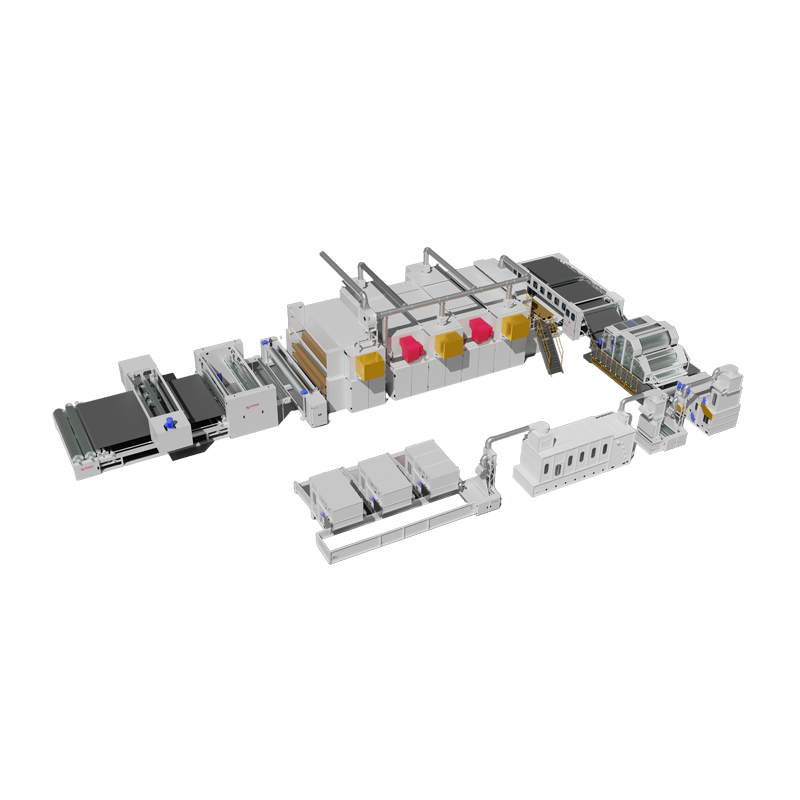
HYL Thermal Bonded Wadding Production Line
Thermal Bonding Technology
The thermal bonding oven is the central processing unit of the line. It applies controlled heat to the fibrous web so that the low-melt fiber softens and creates bonding points. The temperature, airflow, dwell time, web tension, and compression must be coordinated carefully. Excessive heat can damage or harden the product, while insufficient heat can leave the web weak and unstable.
Controlled Heating
A modern thermal bonding system generally uses multiple heating zones. Multiple zones make it possible to control the heating profile gradually rather than exposing the material to one abrupt temperature change. This can improve process stability when manufacturing thick wadding, high-GSM products, or materials with different fiber blends.
Temperature control must match the melting or softening characteristics of the low-melt fiber. The structural fiber should remain stable while the bonding component becomes sufficiently mobile to join the fibers. The correct temperature range is determined by the fiber supplier’s technical data and verified through production trials.
Air circulation inside the oven is also important. The hot air must move through the web evenly so that the center and edges receive comparable thermal treatment. Uneven airflow may cause differences in bonding strength, thickness, color, or shrinkage across the working width. Proper insulation and circulation design can also support energy efficiency and improve the working environment.
Bonding and Product Handle
The amount of low-melt fiber and the heating conditions influence the handle of the finished product. A lower bonding level may produce a softer, loftier wadding, while a higher bonding level may create a firmer and more dimensionally stable material. The final result also depends on the structural fiber, web density, and cooling process.
Manufacturers can use these adjustments to serve different applications. Soft wadding is suitable for quilts, cushion fillings, and comfort layers. Harder or denser wadding can be used for mattress support layers, furniture padding, packaging protection, and automotive or industrial materials. The same basic line can therefore support multiple product grades when the machine configuration and process recipes are properly selected.
Cooling and Stabilization
After heating, the bonded web must be cooled in a controlled manner. Cooling allows the low-melt bonding material to solidify and helps stabilize the final dimensions. If the web is wound before it has adequately cooled, internal heat may contribute to deformation, sticking, shrinkage, or roll instability.
A well-coordinated cooling section also contributes to consistent thickness and surface quality. The cooling conditions should be selected together with the oven temperature, line speed, product GSM, and thickness. Thick products generally require more time and careful cooling than lightweight materials.
Product Specifications and Configuration Options
The HYL Thermal Bonded Wadding Production Line is intended for customized industrial production. The supplied specifications identify a working width range of approximately 2 m to 5 m, with a trim width of up to 4,500 mm in the listed configuration. Other information identifies available specifications such as 1 m, 1.2 m, 1.4 m, 1.6 m, and 2 m. These figures should be treated as configuration options rather than one fixed machine size.
The listed GSM range varies according to the production configuration. One technical table identifies 60 GSM to 3,000 GSM, while the broader machine information identifies 60 GSM to 5,000 GSM. In practice, the achievable range depends on the selected opening, web-forming, layering, thermal bonding, and winding equipment, as well as the fiber blend and required line speed. The final range should be confirmed during technical design.
| Item | Typical Listed Specification | Configuration Consideration |
| Product type | Soft or hard thermal bonded wadding | Determined by fiber recipe, bonding level, and process settings |
| Working width | Approximately 2 m to 5 m | Selected according to finished product width and plant layout |
| Trim width | Up to approximately 4,500 mm | Depends on the selected machine arrangement |
| GSM range | Approximately 60 GSM to 3,000 GSM; configurations up to 5,000 GSM are listed | Requires confirmation based on product thickness and line design |
| Finished thickness | Approximately 5 mm to 200 mm | Influenced by fiber type, layering, compression, and thermal treatment |
| Production capacity | Up to approximately 800 kg/h in the listed data | Actual output depends on GSM, width, speed, and material |
| Raw materials | Polyester fiber, polypropylene staple fiber, and low-melt fiber | Fiber specifications and blend ratio are selected for the target product |
| Packaging | PE film or nude packing for machinery transport | Finished-product packaging can be designed to customer requirements |
| Automation | Automatic operation | Control level and auxiliary systems can be customized |
| Certification | CE and ISO9001-related quality systems are listed | Applicable documentation should be confirmed for each project |
| Warranty | One year | Terms are subject to the commercial contract |
Because thermal bonded wadding is produced for different industries, customization is more important than selecting a standard machine from a catalog. A mattress manufacturer may need a wide line with high throughput and stable thickness. A smaller upholstery producer may prioritize flexibility, lower investment, and fast product changeover. A supplier for medical or agricultural materials may place greater emphasis on surface uniformity, cleanliness, and special packaging.
Advantages Compared with Conventional Wadding Equipment
Flexible Product Range
One of the main advantages of the HYL line is its ability to support a broad range of wadding products. By changing the fiber recipe, web-forming settings, number of layers, oven conditions, and winding parameters, manufacturers can produce lightweight, medium-weight, or high-GSM products. This flexibility allows a single production facility to serve several market segments.
Some competing systems may be optimized for only a narrow range of materials or one specific product thickness. A line designed with modular feeding, forming, bonding, and finishing sections can provide greater adaptability. The value of this flexibility increases when a manufacturer receives customized orders or wants to introduce new products without purchasing an entirely separate line.
Adhesive-Free Fiber Bonding
Thermal bonding uses low-melt fibers as the bonding medium. This avoids the need for conventional liquid adhesive application across the web. The result can be a clean and soft material with no adhesive spraying stage. It may also simplify process control because the bonding function is integrated into the fiber blend.
The absence of liquid adhesive does not mean that every thermal bonded product has identical environmental characteristics. Product safety, emissions, recyclability, and end-of-life performance depend on the selected fibers, additives, operating conditions, and local regulations. Nevertheless, thermal bonding can be an attractive process for manufacturers seeking a dry, fiber-based bonding method.
Stable Thickness and Resilience
Thermally bonded fibers form a three-dimensional structure that can retain loft and recover after compression. This property is valuable in mattress padding, sofa cushions, quilt fillings, and protective materials. The appropriate combination of fiber denier, web density, and bonding level can provide a balance between softness and shape retention.
Mechanical needle punching can create strong fiber entanglement, but it may alter the surface and handle of lightweight wadding. Adhesive bonding can provide rigidity but may reduce softness or breathability if applied excessively. Thermal bonding offers another route in which product firmness and resilience can be adjusted through fiber selection and heat treatment.
Wide Working Width and Industrial Throughput
The listed HYL configurations support working widths from approximately 2 m to 5 m and production capacity up to approximately 800 kg/h, depending on the product and machine arrangement. Wide working widths are useful for mattress and upholstery manufacturers because they reduce the number of parallel production passes required for large-format products.
Actual output should always be evaluated against GSM and finished thickness. A lightweight 100 GSM product can run at a different speed from a 3,000 GSM product. The same applies to a thick 200 mm material compared with a compact 5 mm wadding. Therefore, capacity claims should be assessed using a complete production profile rather than a single maximum number.
Customization for Customer Requirements
The product color, size, width, configuration, and packaging can be customized. Customers may select a machine layout based on their building dimensions and material flow. Control systems, auxiliary equipment, edge trimming, winding, cutting, and inspection functions can also be considered during project engineering.
Customization is especially important when raw materials are not identical to those used in a standard reference project. Differences in fiber length, denier, crimp, melting behavior, moisture, and blend ratio can influence opening, web formation, and thermal bonding. A supplier with experience in complete nonwoven lines can help integrate these factors into the machine design.
Manufacturing Strengths and Engineering Capability
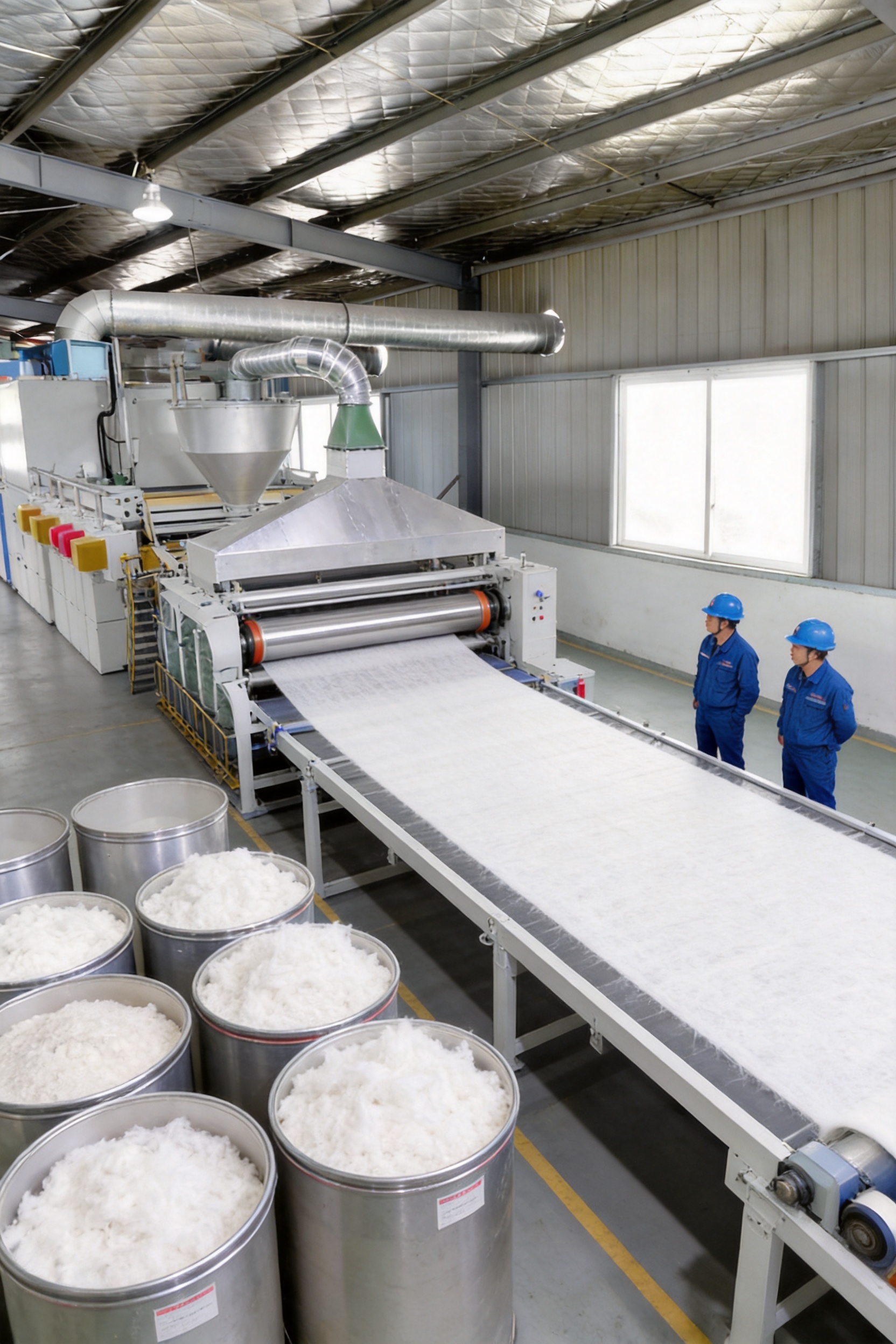
Changshu Hongyi Nonwoven Machinery Co., Ltd. has more than 20 years of experience in the nonwoven machinery field, according to the supplied company information. Its product range includes complete nonwoven production lines and individual machines such as needle punching machines, carding machines, airlay machines, ironing machines, winding equipment, cutting equipment, and thermal bonding oven systems.
This breadth is relevant to thermal bonded wadding because the finished line requires coordination between several machine sections. An opening machine from one supplier, a carding system from another supplier, and a thermal oven from a third supplier may create compatibility problems involving speed control, web tension, electrical communication, and production data. A complete-line manufacturer can design these sections as one integrated process.
Mechanical Fabrication
The listed machine materials are mainly steel and iron. Robust mechanical construction is essential because the line operates continuously under load, heat, vibration, and tension. Frames, rollers, transmission components, support structures, and access platforms must be manufactured and assembled accurately to maintain alignment.
Mechanical accuracy affects more than appearance. Misalignment can cause uneven web tension, edge folding, roll telescoping, vibration, premature bearing wear, and irregular product thickness. A professional manufacturing process should therefore include machining, welding, surface treatment, assembly inspection, and functional testing before shipment.
Electrical and Automatic Control
The line is identified as automatic, allowing the operator to manage production through coordinated controls rather than manually adjusting every machine section. An automatic system can help synchronize feeding speed, carding speed, web transport, cross-lapping, oven speed, cooling, winding, and cutting.
Automation also supports recipe repeatability. Once a product has been developed, operators can record the principal settings and use them as a starting point for future production. The exact level of automation depends on the project budget and technical requirements, but common functions include motor speed control, temperature monitoring, alarm management, emergency stopping, and interlocking between machine sections.
Energy and Process Efficiency
Thermal bonding requires energy for heating and air circulation, so oven efficiency is an important factor in operating cost. Proper insulation, controlled airflow, suitable heating zones, and stable line speed can reduce unnecessary energy consumption. The most efficient process is not always the one with the lowest oven temperature; it is the one that delivers the required bonding result with controlled heat input and minimal waste.
Material efficiency is also important. Accurate fiber feeding reduces blend errors, while stable web formation reduces off-specification material. Edge trimming can be controlled to match the required finished width. Winding and cutting equipment can then produce saleable rolls or sheets with consistent dimensions.
Testing and Commissioning
Commissioning should be treated as a technical production stage rather than simply machine installation. Before the line is accepted, the supplier and customer should verify material feeding, web uniformity, thermal bonding, width, GSM, thickness, winding quality, safety functions, and control-system performance.
Trial production is particularly important when the customer uses a new blend of polyester and low-melt fibers. The supplier can use trial data to establish temperature zones, line speed, web layering, and cooling conditions. The customer can then evaluate softness, compression recovery, tensile behavior, thickness retention, and surface appearance.
Applications of Thermal Bonded Wadding
Mattresses and Bedding
Mattress production is one of the most important applications for thermal bonded wadding. The material can be used as a comfort layer, insulation layer, filling layer, or protective layer between other mattress components. Different GSM and thickness levels allow manufacturers to create products ranging from lightweight bedding to dense support structures.
Thermal bonded wadding can provide softness while maintaining a stable three-dimensional structure. It can also be combined with other nonwovens, knitted fabrics, foam, springs, or natural fibers. Product design must consider compression, humidity, temperature, durability, and the requirements of the final mattress construction.
Sofa and Furniture Cushions
Furniture manufacturers use wadding to improve the softness, shape, and surface comfort of sofas, chairs, cushions, and padded panels. The material may be wrapped around foam or used as a separate filling layer. Its resilience helps reduce a flattened appearance after repeated use.
For upholstery, surface smoothness and consistent thickness are important because irregular wadding can create visible lines or uneven padding beneath the cover fabric. A controlled carding, bonding, and winding process helps the converter receive material that is easier to cut and assemble.
Quilts and Home Textiles
Soft wadding is widely used as the filling layer in quilts, comforters, mattress toppers, and other home textile products. The desired characteristics may include low weight, softness, thermal insulation, resilience, and easy handling during quilting or sewing.
Color can be customized according to the supplied information. This allows manufacturers to coordinate the wadding with the final product or maintain separate colors for different product grades. The selection of colorants and fibers should be evaluated for compatibility with the thermal bonding process and the intended use.
Medical Cushioning and Packaging
Thermal bonded wadding can be used as a cushioning layer in medical packaging, transport protection, and stretcher-related applications. In these applications, uniformity, cleanliness, compression behavior, and packaging are important. The wadding itself should be matched to the applicable product and hygiene requirements.
Medical-related applications may require additional validation beyond the machinery specification. The final product manufacturer is responsible for confirming material safety, biocompatibility where relevant, sterilization compatibility, and regulatory compliance for the intended use.
Agricultural Protective Fabrics
In agriculture, bulky nonwoven materials can be used for protective layers, insulation, cushioning, moisture-management structures, and other specialized fabric products. Thermal bonded wadding may be selected when the application requires a lightweight but resilient fibrous structure.
The correct design depends on exposure to sunlight, moisture, chemicals, temperature changes, and mechanical handling. Fiber selection and finishing must therefore be considered together with the machine settings.
Industrial and Automotive Materials
Nonwoven wadding may also be used in automotive interior components, sound or thermal insulation structures, packaging materials, protective pads, and industrial filtration-related constructions. The supplied company information indicates experience with automotive interior material production lines and several other nonwoven applications.
For industrial products, manufacturers may require higher density, greater dimensional stability, or a specific thickness tolerance. The HYL line can be engineered around these requirements by selecting appropriate forming, bonding, cooling, and finishing equipment.
Quality Control for Thermal Bonded Wadding
Quality control should begin with incoming fibers and continue through every stage of the production line. The following characteristics are commonly evaluated: GSM, width, thickness, density, tensile strength, elongation, compression recovery, softness, color, surface uniformity, roll hardness, and winding appearance.
GSM Control
GSM, or grams per square meter, is one of the principal product specifications. It affects cost, thickness, thermal insulation, compression behavior, and mechanical performance. GSM can be influenced by the fiber feed rate, web-forming speed, cross-lapping pattern, line speed, and trimming width.
Regular sampling across the machine direction and cross direction can identify distribution problems. If the edges are heavier or lighter than the center, the feeding, carding, lapping, or air distribution should be checked. Automatic control can help maintain the target, but physical testing remains important.
Thickness and Compression Recovery
Thickness should be measured under a defined pressure because soft wadding can show different readings depending on the test load. The test method should be standardized so that production batches can be compared accurately.
Compression recovery is relevant to mattresses, cushions, and quilts. A product may have the correct initial thickness but recover poorly after compression. Fiber selection, bonding level, oven conditions, and winding pressure can all influence this property.
Bonding Uniformity
Bonding must be strong enough to prevent excessive fiber migration or delamination but not so strong that the material becomes hard and loses softness. Visual inspection, tensile testing, tear testing, and handling evaluations can help identify insufficient or excessive bonding.
Uneven bonding may be caused by inconsistent low-melt fiber distribution, unstable web density, oven airflow variation, temperature differences, or excessive line speed. A systematic quality-control program helps connect the defect to the responsible process stage.
Installation, Operation, and Maintenance
Before installation, the customer should confirm the required floor area, foundation conditions, electrical supply, compressed air requirements if applicable, ventilation, fire protection, material storage, and finished-product handling space. The line layout should allow access to inspection points, cleaning areas, electrical cabinets, and maintenance components.
Operators should be trained in raw material preparation, machine startup, temperature setting, web observation, emergency stopping, roll changeover, cleaning, and shutdown procedures. Thermal equipment requires particular attention because hot surfaces and heated air can cause burns or fire hazards if safety procedures are ignored.
Routine maintenance normally includes cleaning fiber accumulation, inspecting belts and rollers, lubricating specified bearings, checking fasteners, inspecting electrical connections, monitoring heating elements, and verifying temperature sensors. The exact maintenance schedule depends on operating hours, fiber type, dust level, and local conditions.
Fiber dust should be controlled through suitable housekeeping and extraction systems. Accumulated lint near heated components can create a fire risk and may also affect sensors, motors, and air circulation. Preventive maintenance is generally less costly than repairing a line after an avoidable breakdown.
Why Select a Complete-Line Manufacturer?
A complete-line manufacturer can take responsibility for the relationship between individual sections. This is important because productivity is determined by the complete process, not by the maximum speed of a single machine. If the feeding system is faster than the carding system, or the web former is not synchronized with the oven, the line cannot operate efficiently.
Hongyi’s product range covers opening and blending equipment, feeding and carding equipment, web-forming equipment, thermal bonding and heat-setting equipment, airlay and winding systems, cutting equipment, auxiliary machinery, and complete nonwoven production lines. This allows customers to discuss a complete process rather than purchasing unrelated units.
The company’s stated export experience includes customers in Mexico, Argentina, Brazil, Turkey, Algeria, Egypt, Bangladesh, Vietnam, Thailand, and other countries. International project experience can be useful because machine suppliers must consider different electrical standards, factory conditions, shipping requirements, operator practices, and documentation expectations.
The company also identifies ISO9001 and CE-related certification in its product information. Certification does not replace customer testing or local compliance review, but it provides a framework for quality management and machine safety documentation. The applicable certificates, scope, and technical documents should be confirmed for each order.
Purchasing Considerations
Before requesting a quotation, the customer should prepare a product specification. Important information includes the raw material types, fiber denier and length, low-melt fiber percentage, target GSM, finished thickness, product width, expected output, packaging method, factory dimensions, utility availability, and target delivery date.
The customer should also clarify whether the line will produce rolls, sheets, or both. If cutting is required, the desired sheet length and tolerance should be stated. If PE film packaging is required, the packaging format and roll dimensions should be discussed during the engineering stage.
Capacity should be requested for specific products rather than as a single maximum value. For example, a customer may ask for estimated output at 100 GSM, 500 GSM, 1,500 GSM, and 3,000 GSM. This provides a more realistic basis for calculating investment return and production planning.
Delivery time should be included in the project schedule. The supplied information lists a delivery time of approximately 150 days, but the actual schedule can depend on design approval, customization, component availability, manufacturing, testing, shipping, installation, and commissioning.
Q&A
What products can the thermal bonded wadding line manufacture?
The line can manufacture soft or hard thermal bonded wadding for mattresses, sofa cushions, quilts, furniture padding, protective packaging, medical cushioning layers, agricultural materials, automotive interiors, and other nonwoven applications. The exact product range depends on the selected raw materials and machine configuration.
What fibers can be used?
The listed raw materials include polyester staple fiber, polypropylene staple fiber, and low-melt fiber. Typical polyester specifications are identified as approximately 1.5D to 15D and 38 mm to 72 mm in length. The final fiber selection should be confirmed through a technical evaluation and production trial.
Why is low-melt fiber used?
Low-melt fiber acts as the bonding medium. When heated, it softens or melts and joins neighboring structural fibers. After cooling, the bonded points help the web retain its shape and strength.
Can the line produce both soft and firm wadding?
Yes. Softness and firmness can be adjusted through the fiber blend, low-melt fiber percentage, web density, number of layers, oven conditions, compression, and line speed. A technical trial is recommended when a specific hand feel or compression performance is required.
What is the available working width?
The supplied product information identifies a working width range of approximately 2 m to 5 m, with a listed trim width of up to approximately 4,500 mm. Other width specifications may be available depending on the final configuration.
What GSM range can be produced?
The technical information lists 60 GSM to 3,000 GSM in one specification table and up to 5,000 GSM in the broader machine data. The practical range depends on the selected forming, layering, bonding, and finishing equipment. Customers should request a confirmed range for their specific product.
What is the maximum production capacity?
The listed production capacity is up to approximately 800 kg/h. Actual output depends on GSM, width, thickness, fiber blend, line speed, bonding conditions, and the required quality standard.
Can product color and size be customized?
Yes. The supplied information identifies customized product color, product size, configuration, and packaging. The customer should provide the required specifications during the quotation and engineering stages.
Is the production line automatic?
The listed configuration is automatic. Automatic control can coordinate material feeding, web forming, thermal bonding, cooling, winding, and cutting. The precise automation functions should be confirmed in the technical proposal.
What packaging is used?
The machine may be transported using nude packing or PE film according to the supplied information. Finished wadding products can also be packaged with PE film or another customer-approved method, depending on roll size, shipping conditions, and market requirements.
What warranty is provided?
The product information identifies a one-year warranty and one year of after-sales service. The specific coverage, exclusions, response procedure, spare parts policy, and commissioning terms should be stated in the commercial contract.
How long is the delivery period?
The listed delivery time is approximately 150 days. The final schedule depends on customization, design confirmation, manufacturing, inspection, shipment, installation, and commissioning requirements.
How can customers improve product quality?
Customers should use clean and consistent fibers, maintain the correct blend ratio, monitor GSM and thickness, keep the oven temperature stable, control line speed, clean fiber deposits, and follow preventive maintenance procedures. Product trials and regular testing are recommended when changing fiber suppliers or product specifications.
Conclusion
The HYL Thermal Bonded Wadding Production Line provides an integrated solution for producing soft and firm wadding from polyester, polypropylene, and low-melt fibers. Its key strengths include broad product flexibility, customizable width and configuration, automatic operation, thermal bonding without conventional liquid adhesive application, and compatibility with applications ranging from mattresses and furniture to medical cushioning and agricultural materials.
The line’s performance depends on the complete process, including opening, blending, carding, web formation, layering, thermal bonding, cooling, winding, and cutting. A properly engineered system can help manufacturers achieve stable GSM, consistent thickness, reliable bonding, good resilience, and efficient production.
Changshu Hongyi Nonwoven Machinery Co., Ltd. supports this type of project through experience in complete nonwoven production lines and individual nonwoven machines. Its manufacturing and engineering strengths include mechanical fabrication, automatic control integration, process customization, international supply, and after-sales support. For customers seeking a long-term production solution, the most important step is to define the target product clearly and confirm the machine configuration through technical discussion and trial production.
References
1. Internal product specification for the HYL Thermal Bonded Wadding Production Line, including working width, GSM range, raw materials, thickness, capacity, packaging, warranty, and certification information.
2. Changshu Hongyi Nonwoven Machinery Co., Ltd. company information and product range for nonwoven machinery and complete nonwoven production lines.
3. General principles of thermal bonding in staple-fiber nonwoven manufacturing.
4. General production practices for fiber opening, blending, carding, cross-lapping, airlay web formation, thermal bonding, cooling, winding, and cutting.
5. General quality-control practices for GSM, thickness, density, compression recovery, tensile strength, surface uniformity, and roll handling of nonwoven wadding.