

Content
- 1 The Role of Pre-Edge Cutting in Nonwoven Manufacturing
- 2 Product Overview
- 3 Dedicated Design for Fiber Webs
- 4 Precision and Consistency in Edge Preparation
- 5 Advantages Compared with Conventional Edge-Handling Methods
- 6 Integration into Complete Nonwoven Production Lines
- 7 Material Compatibility
- 8 PLC and Touch-Screen Control
- 9 Mechanical Structure and Maintenance Benefits
- 10 Manufacturing Strengths of the Supplier
- 11 Applications in Different Nonwoven Industries
- 12 Production Efficiency and Material Utilization
- 13 Installation and Commissioning Considerations
- 14 How to Select the Correct Configuration
- 15 Operational Best Practices
- 16 Q&A
- 16.1 What is the primary function of the HYYQ Pre-Edge Cutting Device?
- 16.2 What is the standard working width?
- 16.3 What is the working speed?
- 16.4 Which fibers can be processed?
- 16.5 How is the machine controlled?
- 16.6 Can the equipment be integrated into an existing production line?
- 16.7 What advantages does it have over manual edge trimming?
- 16.8 Is the machine suitable for all nonwoven products?
- 16.9 What maintenance is required?
- 16.10 Can the color and voltage be customized?
- 16.11 What certifications are listed?
- 16.12 What is the listed warranty and lead time?
- 16.13 Can the supplier provide more than one machine?
- 17 Conclusion
- 18 References
- 19 Product: HYYQ Nonwoven Fabric Machinery Pre-Edge Cutting Device
In modern nonwoven fabric manufacturing, edge preparation is a small but highly influential process. The condition of the web edges affects web stability, usable width, downstream processing accuracy, material appearance, and overall production efficiency. When the edges of a fiber web are uneven, loose, distorted, or wider than the required working dimension, later operations can become more difficult. Needle punching, thermal bonding, winding, slitting, laminating, coating, and packaging may all be affected by poor edge control.
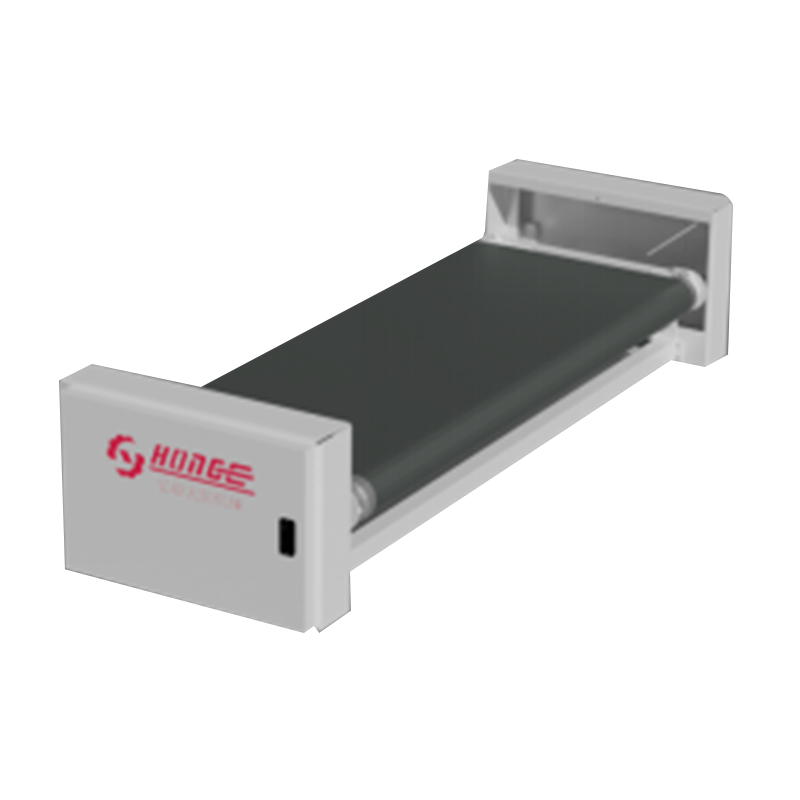
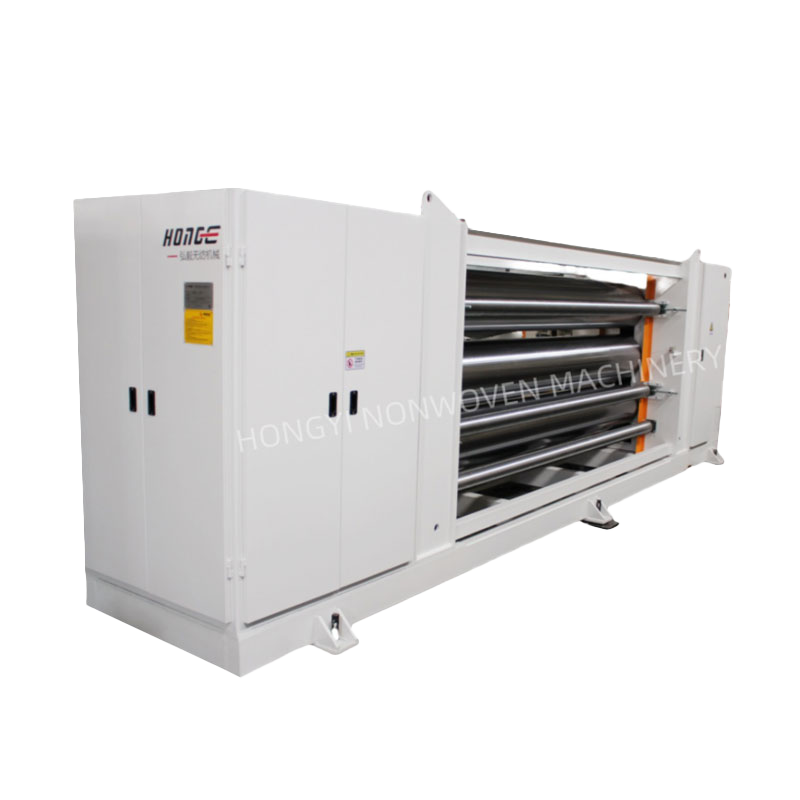
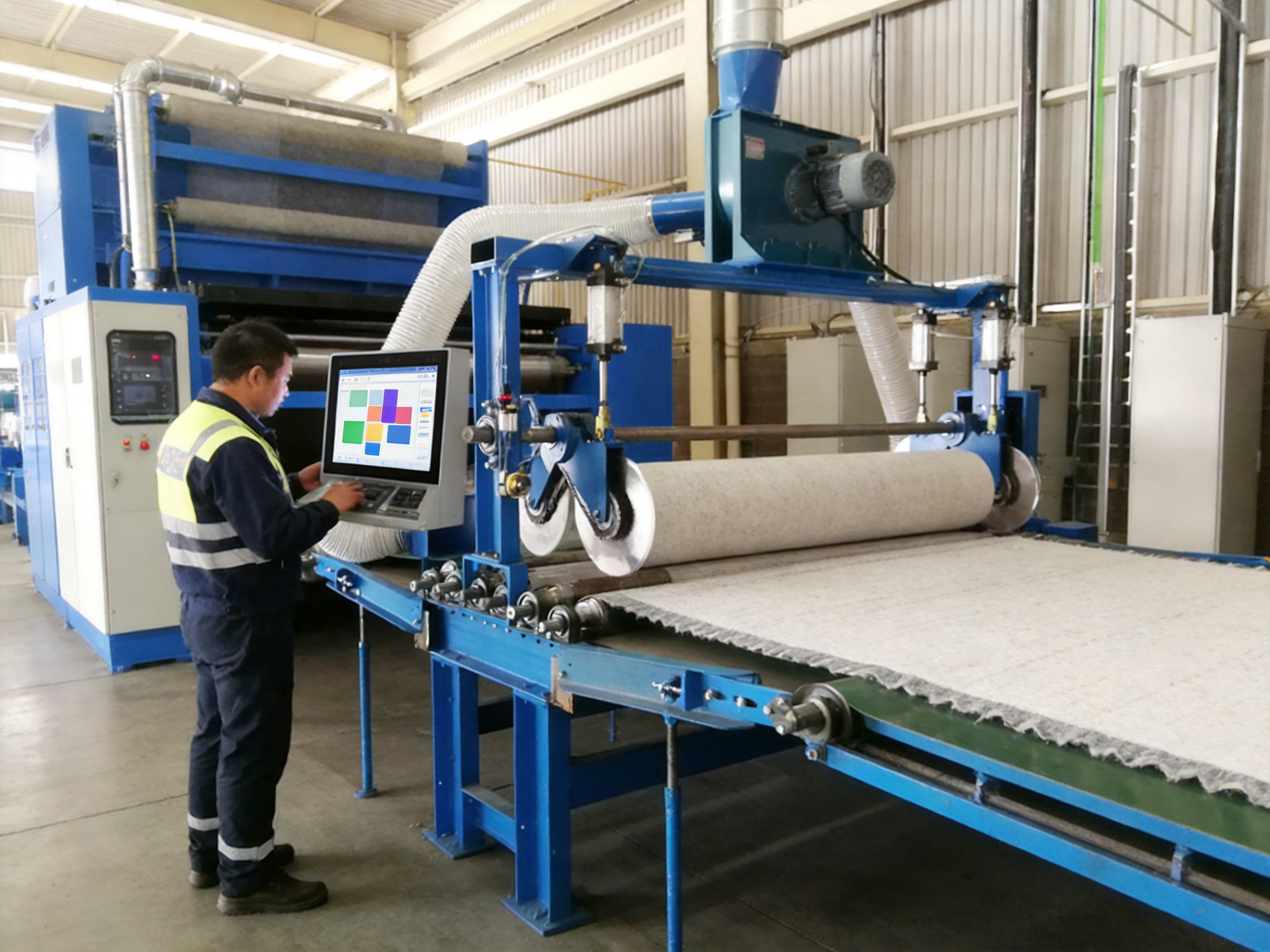
The HYYQ Nonwoven Fabric Machinery Pre-Edge Cutting Device is designed to address this specific production requirement. It performs a controlled pre-cutting operation on both sides of a fiber web before the web enters the next stage of processing. By preparing the web to a defined width and improving edge regularity, the machine supports stable continuous production and helps manufacturers obtain more consistent nonwoven products.
Unlike general-purpose cutting equipment that may be added to a line without being optimized for fiber webs, this device is developed as dedicated auxiliary equipment for nonwoven manufacturing. Its design combines a working width of up to 2,500 mm in the listed configuration, a working speed range of 0.5 to 15 m/min, PLC and touch-screen control, a modular structure, and configurable specifications from approximately 2,000 mm to 7,600 mm. These characteristics allow the equipment to serve different production arrangements and material requirements.
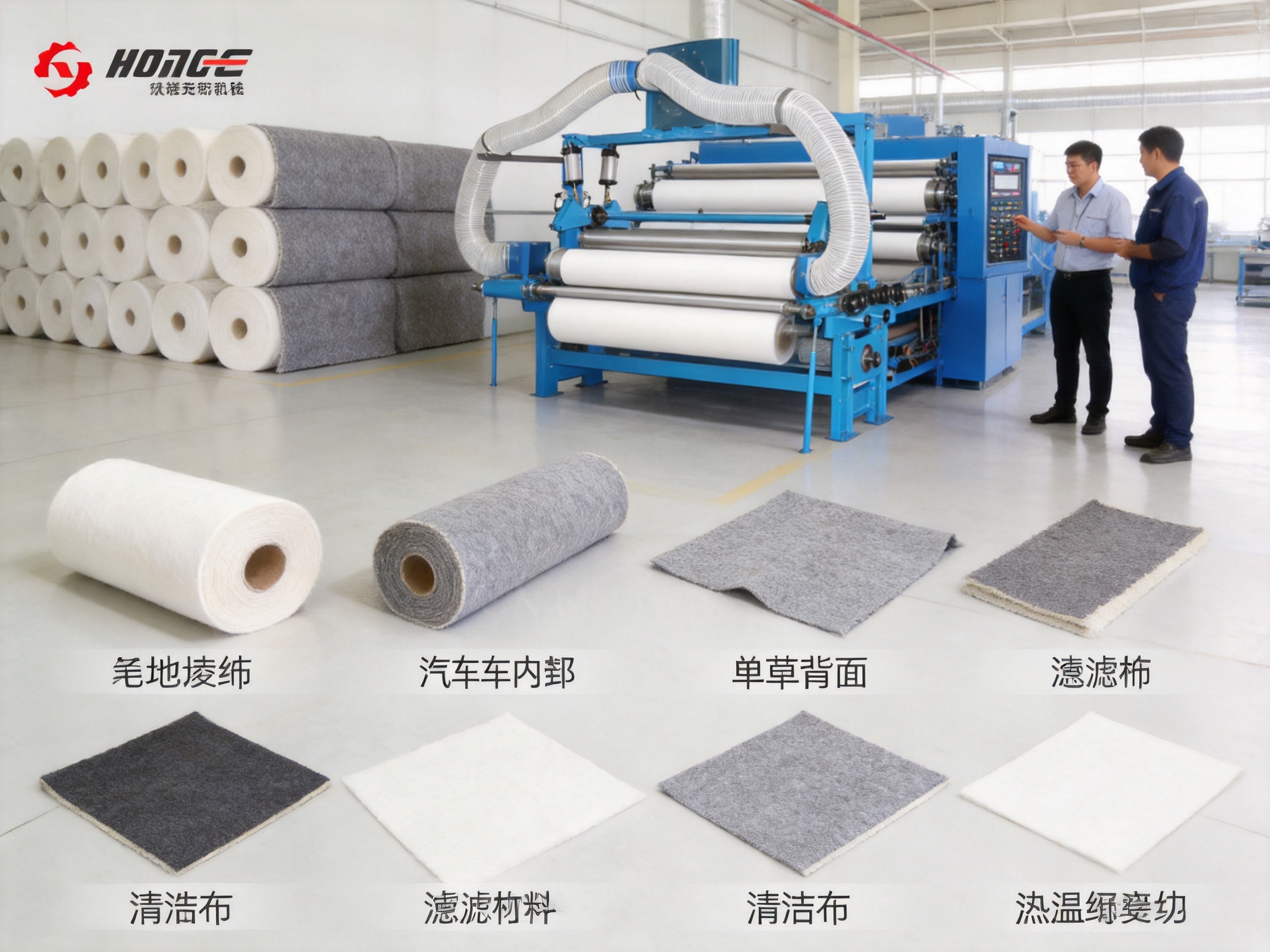
The machine is supplied by Changshu Hongyi Nonwoven Machinery Co., Ltd., a Chinese manufacturer and supplier with more than 20 years of experience in the nonwoven machinery field. The company produces complete production lines as well as individual machines for needle-punched, airlaid, thermal-bonded, automotive, geotextile, carpet, cleaning cloth, wool felt, jute felt, and other nonwoven applications.
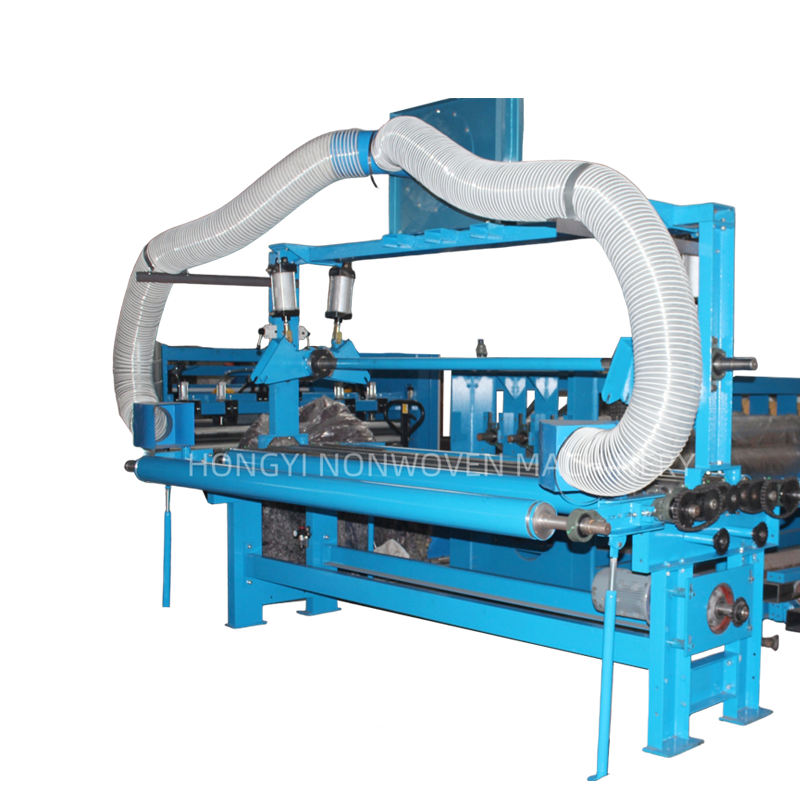
HYYQ Nonwoven Fabric Machinery Pre-Edge Cutting Device
The Role of Pre-Edge Cutting in Nonwoven Manufacturing
A nonwoven web is formed from fibers rather than conventional yarns and woven structures. Depending on the production method, the fibers may be opened, blended, carded, airlaid, cross-lapped, thermally bonded, chemically bonded, or mechanically bonded through needle punching. At different points in this process, the web may have soft, irregular, or unstable edges.
Although the center portion of a web may meet the required basis weight and uniformity, the edges can display different characteristics. Fibers may extend beyond the nominal width, accumulate near the sides, become less aligned, or form an uneven boundary. These conditions are common in many web-forming processes and are not necessarily indications of a problem with the main forming machine. However, they must be managed before the web proceeds to a precision-dependent operation.
Pre-edge cutting provides a controlled method for removing unwanted edge material and establishing a more consistent web width. The operation is performed before later processing, which means the downstream equipment receives a better-prepared material. The result can include improved alignment, reduced edge interference, more reliable web tracking, and a cleaner final appearance.
The pre-cutting process is particularly useful when the final product has a defined width tolerance. Examples include geotextiles, automotive interior materials, filtration media, carpet substrates, cleaning cloth, thermal-bonded wadding, and other technical nonwovens. In these products, variation at the edges can influence not only appearance but also the amount of material that can be used in the finished roll.
Why Edge Accuracy Matters
Edge accuracy affects several practical production factors. First, it influences the effective usable width of the web. If the edge line is irregular, operators may need to maintain a wider trimming allowance or accept greater material loss. Second, uneven edges can interfere with web guides, rollers, lapping units, needle looms, ovens, winders, or cutting systems. Third, inconsistent edges make roll formation more difficult and can create telescoping or loose edge conditions during winding.
A controlled pre-edge cutting process helps establish a repeatable reference for the rest of the line. When the cutting dimensions are set through a control system, operators can reproduce a selected width more consistently than with manual trimming or improvised cutting arrangements. This repeatability is valuable when manufacturing multiple batches of the same specification.
Pre-edge cutting also supports production flexibility. Nonwoven manufacturers often process polyester fiber, polypropylene staple fiber, recycled fiber, natural fiber, and blended materials on related lines. Each material can behave differently during web formation. A dedicated device with adjustable settings provides a practical way to accommodate changing raw materials and product dimensions.
Product Overview
The HYYQ Pre-Edge Cutting Device is an automatic auxiliary machine for the pre-processing of nonwoven fiber webs. Its primary function is to cut or trim the edges of the web according to preset operating parameters. The equipment can be integrated into a nonwoven production line or used as a dedicated preparation unit, depending on the customer’s process design.
The listed standard configuration has a working width of 2,500 mm and a working speed of 0.5 to 15 m/min. The specification range can be customized from approximately 2,000 mm to 7,600 mm, allowing the equipment to be adapted for narrow, medium-width, or wide nonwoven production lines. The machine uses PLC and touch-screen control, providing an operator interface for setting, monitoring, and adjusting production parameters.
The equipment is described as new, automatic, and suitable for customized configurations. Its structure is designed for long-term industrial service, while the modular arrangement simplifies routine maintenance and tool replacement. The product is also available with customized color, configuration, and voltage options. The listed electrical supply is 220 V or customized according to customer requirements.
| Item | Specification | Production Significance |
|---|---|---|
| Model | HYYQ | Dedicated pre-edge cutting equipment for nonwoven web processing |
| Standard working width | 2,500 mm | Suitable for a broad range of medium-width nonwoven lines |
| Available specification range | Approximately 2,000 to 7,600 mm | Allows adaptation to different line widths and product requirements |
| Working speed | 0.5 to 15 m/min | Supports controlled operation for different web conditions |
| Installed power | 5.2 kW | Provides a defined power configuration for the standard machine |
| Control system | PLC and touch screen | Supports parameter setting, monitoring, and repeatable operation |
| Automation | Automatic | Reduces dependence on manual edge handling |
| Raw materials | Polyester fiber, PP staple fiber, and other fibers | Suitable for varied nonwoven production applications |
| Certification | CE and ISO9001:2000 listed | Supports documented manufacturing and quality requirements |
| After-sales support | One-year warranty | Provides a defined initial service period |
Dedicated Design for Fiber Webs
One of the main advantages of the HYYQ device is its dedicated application. A general industrial cutter may be capable of cutting sheet materials, films, paper, or fabric, but a fiber web has different mechanical characteristics. It may be lightweight, compressible, porous, flexible, and sensitive to tension. The cutting arrangement must therefore be considered in relation to web handling, line speed, edge stability, and material behavior.
The HYYQ device is positioned specifically as pre-processing equipment for nonwoven fiber webs. This focused design helps the machine fit more naturally into opening, blending, carding, airlay, web-forming, needle-punching, thermal-bonding, winding, and cutting systems. It is not intended to replace the main web-forming or bonding machine. Instead, it performs a defined supporting function that improves the condition of the material before the next operation.
Dedicated equipment can offer advantages over an improvised solution. A manufacturer does not need to build a separate cutting arrangement from unrelated components, develop a control interface independently, or create an extensive adaptation structure between the cutting device and the production line. The pre-edge cutting device is developed as part of a broader nonwoven machinery portfolio, which can simplify discussions about line compatibility and process integration.
Another benefit of specialization is the ability to focus on edge quality. The cutting mechanism, support structure, web passage, control logic, and maintenance access can all be arranged around the requirements of continuous nonwoven production. This concentration on one process step can provide more predictable results than manual trimming or non-specialized cutting equipment.
Precision and Consistency in Edge Preparation
Precision is important because the edge cut becomes a reference for downstream production. If the cut line moves from side to side, the web width may vary and the material may not track correctly. If the edge is rough or irregular, loose fibers can create problems in rollers, guides, or bonding zones. The HYYQ device is designed to perform an independent and controlled pre-cutting operation according to preset data.
The PLC and touch-screen control system supports repeatable operation. Operators can use the interface to set process parameters and monitor the machine during production. A digital control method is generally more reliable than depending entirely on manual adjustment because the selected values can be recorded, repeated, and modified in a systematic way.
Control accuracy also helps reduce variation between production batches. When the same raw material and finished width are used, the operator can apply a consistent setup rather than relying on visual judgment. When the material changes, the settings can be adjusted to reflect the new web characteristics and production requirements.
The device is not presented as a substitute for proper material preparation, web forming, tension management, or operator supervision. Rather, it provides a precision-oriented stage within the wider production process. Edge quality depends on the interaction between the cutting system, the condition of the incoming web, the selected speed, the material type, and the maintenance condition of the cutting tools.
Improved Edge Flatness
Flat and consistent edges are useful in both intermediate and final products. A cleaner edge can reduce the amount of material that must be removed later and can help the web pass through subsequent machines with less interference. In roll goods, consistent edges also contribute to a more orderly package and may reduce the likelihood of loose or uneven sides.
For technical nonwovens, edge flatness can be particularly important. Automotive interior substrates, filtration materials, construction fabrics, and geotextiles may be cut, laminated, sewn, installed, or combined with other materials. An irregular edge can complicate these operations and reduce the efficiency of material utilization.
By carrying out edge preparation before the next step, the HYYQ device helps separate the edge correction function from the main web-forming process. This allows the manufacturer to optimize the main forming equipment for fiber distribution while using an auxiliary machine to establish the required width and edge condition.
Advantages Compared with Conventional Edge-Handling Methods
Nonwoven producers may use several methods to manage web edges. These include manual trimming, fixed knives without electronic control, cutting attachments added to existing machines, or general-purpose slitting units. Each method can be suitable in certain situations, but they also have limitations when consistent, continuous production is required.
Compared with Manual Trimming
Manual trimming may be acceptable for samples, laboratory work, or very small production runs. However, it is difficult to maintain a consistent width when an operator must continuously follow a moving web. Manual work also introduces labor requirements, fatigue, safety considerations, and greater variation between shifts.
An automatic pre-edge cutting device provides a more controlled and repeatable process. It reduces the need for continuous manual intervention and allows operators to focus on monitoring the line, checking web quality, and managing production parameters. It can also contribute to a cleaner working environment by reducing improvised cutting activities near moving equipment.
Compared with Basic Fixed Cutting Attachments
A basic fixed knife may cut an edge, but it may not provide the same level of adjustment, monitoring, or integration as a PLC-controlled device. If the product width changes, a simple attachment may require manual repositioning and a lengthy setup. It may also offer limited feedback to the operator.
The HYYQ machine is designed around an automatic control system and touch-screen interface. Its configurable width range and modular structure make it more adaptable to changing orders. This is valuable for manufacturers that produce several widths or serve customers with different specifications.
Compared with General-Purpose Slitting Equipment
General-purpose slitting machines may be optimized for materials such as film, paper, laminated sheets, or finished rolls. A fiber web, especially before bonding, may require a different handling approach because its structure can be loose and compressible. A nonwoven-specific pre-edge cutting device is better aligned with the characteristics of incoming fiber webs and the operating conditions of a nonwoven line.
The advantage is not simply the cutting action itself. It is the combination of web-oriented design, integration capability, adjustable production parameters, and support from a supplier familiar with nonwoven machinery. This combination can reduce the need for extensive adaptation by the customer.
Compared with Oversized or Over-Specified Systems
Some production facilities purchase complex cutting systems that provide capabilities beyond the actual edge-preparation requirement. Such systems can increase initial investment, maintenance complexity, and operator training demands. A dedicated pre-edge cutting device offers a more focused solution for manufacturers that need reliable edge preparation rather than a multifunctional converting line.
The HYYQ device can be configured for different widths and customer requirements while retaining a clear and practical purpose. This balance between specialization and customization helps manufacturers select equipment that matches their actual process instead of paying for unnecessary functions.
Integration into Complete Nonwoven Production Lines
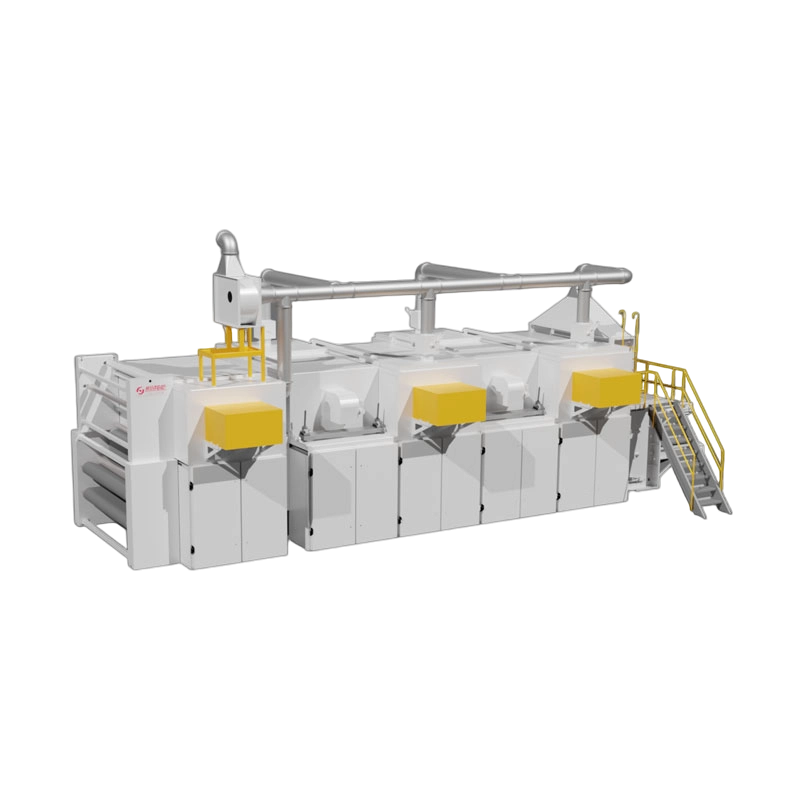
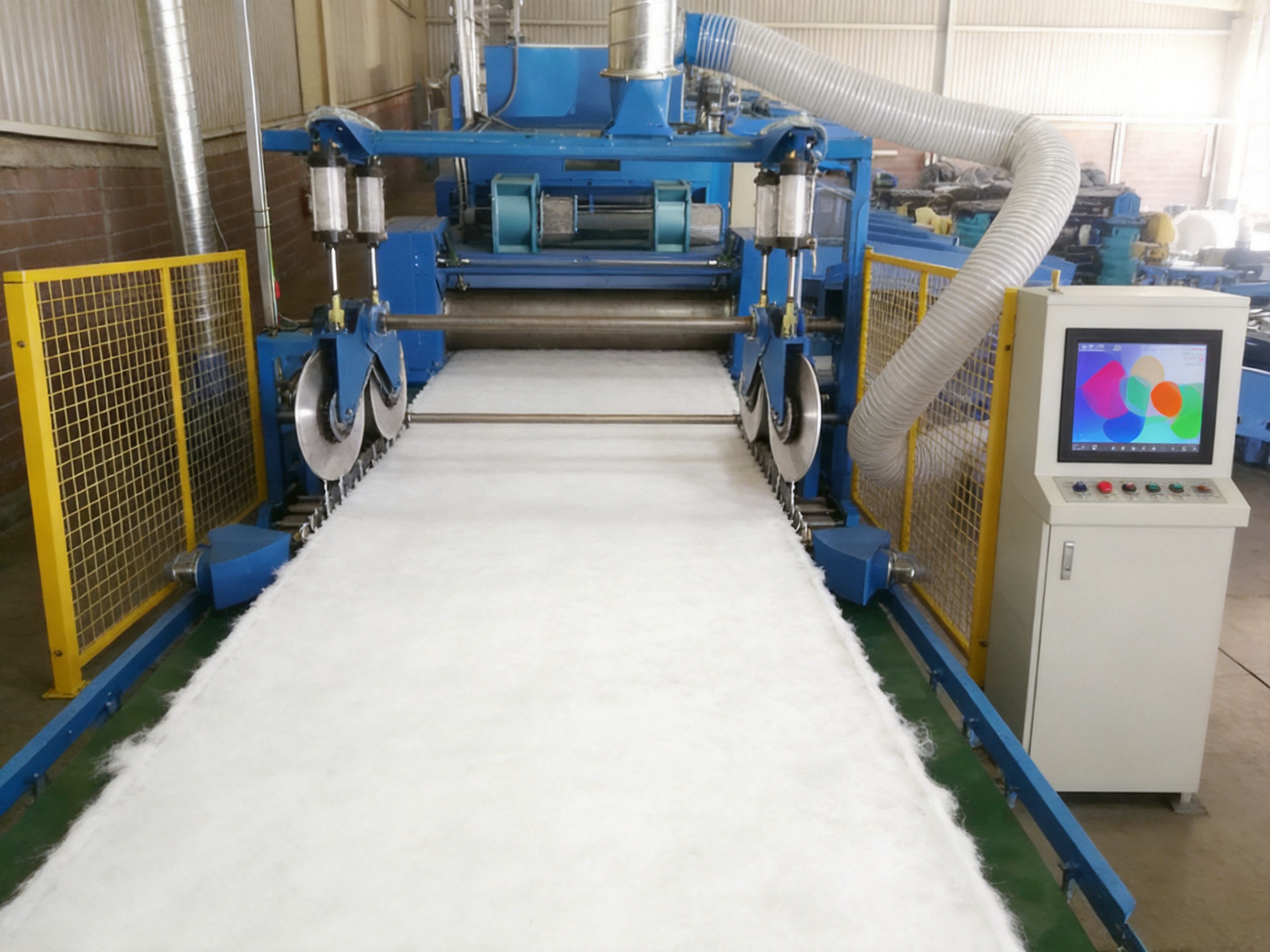
The pre-edge cutting device can be used as auxiliary equipment in a complete nonwoven production system. Depending on the product and line arrangement, it may be installed after web formation, before needle punching, before thermal bonding, before a winding unit, or ahead of a later cutting and converting stage.
In a carded web line, the device may receive the web after carding and cross-lapping or another web-forming arrangement. In an airlaid line, it may be positioned after the airlay forming section and before bonding or consolidation. In a needle-punched line, edge preparation can help create a more suitable web profile before the material enters the needle loom. In thermal-bonded production, a prepared width can support more orderly passage through the heating and bonding section.
The exact position depends on the customer’s product, web density, line speed, tension conditions, and required final width. Because nonwoven lines differ significantly in layout, a technical review is necessary before installation. The supplier can evaluate the customer’s existing equipment, material flow, working height, electrical conditions, and control requirements.
Integration should also consider the relationship between upstream and downstream speeds. The listed working speed range is 0.5 to 15 m/min, but the appropriate operating value depends on the incoming web and the rest of the line. The machine should be synchronized with the production system so that the cutting action remains stable without creating excessive tension, slack, or compression.
Connection with Upstream Equipment
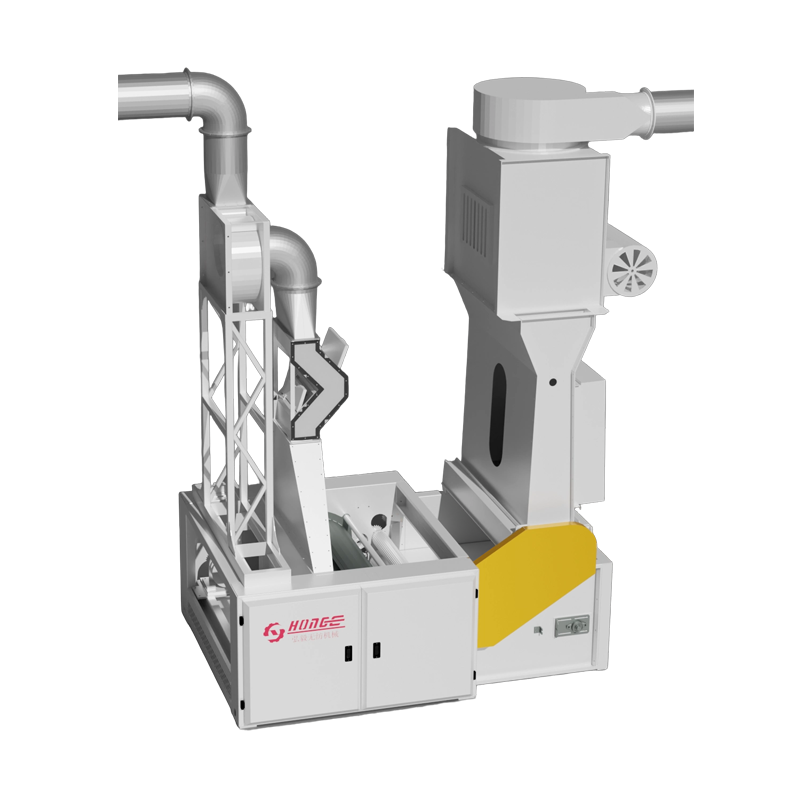
Upstream equipment may include opening machines, blending machines, carding machines, airlay units, cross-lappers, web formers, or pre-needling equipment. These machines determine the condition of the web entering the edge-cutting section. The web should arrive at a suitable height and with manageable lateral movement.
If the incoming web is highly irregular, excessively loose, or under unstable tension, the cutting result may be affected. For this reason, successful integration requires attention to web support, alignment, guiding, and transport. The pre-edge cutting device improves edge preparation, but it works most effectively when the entire web-handling system is properly adjusted.
Connection with Downstream Equipment
Downstream equipment may include needle-punching machines, thermal-bonding ovens, ironing machines, laminators, winders, slitters, or packaging systems. A prepared edge can help these machines receive a more consistent material width and reduce the amount of irregular edge material entering their working zones.
For a winder, consistent edges may support better roll formation. For a needle loom, a defined width can help the web enter the needle zone more predictably. For a thermal-bonding oven, controlled width can support more consistent use of the heating area. For a final slitting machine, pre-edge cutting can reduce the amount of waste or irregular material that must be removed later.
Material Compatibility
The product information identifies polyester fiber and PP staple fiber among the applicable raw materials. These fibers are widely used in nonwoven manufacturing because they can provide different combinations of strength, resilience, softness, chemical resistance, and thermal performance. The device may also be considered for other fiber products after technical evaluation and testing.
Polyester fiber is commonly used in geotextiles, automotive materials, filtration media, carpet substrates, furniture padding, and industrial fabrics. Depending on fiber length, denier, crimp, blend ratio, and web structure, polyester webs may have different edge behaviors. A controlled cutting process can help manage the boundary of the web before bonding or needling.
Polypropylene staple fiber is used in hygiene products, filtration, construction materials, packaging materials, automotive components, and other nonwoven applications. PP webs may require attention to temperature sensitivity, fiber mobility, and web cohesion. Operating settings should therefore be selected according to the specific web condition rather than applied as a universal value.
Blended and recycled fibers may also be used in nonwoven production. Their mechanical behavior can differ from virgin polyester or PP. Recycled fibers may have variations in length, crimp, surface condition, and opening quality. A customized equipment review and production trial can help determine the most appropriate settings, cutting-tool configuration, and line speed.
The machine should not be regarded as automatically suitable for every material without testing. A responsible equipment selection process considers fiber type, web basis weight, thickness, cohesion, temperature, line tension, required width tolerance, and final application. The supplier’s experience with different nonwoven lines can assist customers in evaluating these factors.
PLC and Touch-Screen Control
The control system is one of the important features of the HYYQ device. PLC control provides a structured platform for machine operation, while the touch screen offers an accessible interface for operators. Together, these systems can support parameter setting, operating-status monitoring, alarm management, and production adjustment.
A touch-screen interface can make routine operation easier because key settings are presented in a centralized format. Operators can review the selected working parameters and make authorized changes without manually adjusting multiple independent components. This is especially useful in factories that produce different product widths or change material types during the week.
PLC control also supports integration with the wider production line. Depending on the final configuration, the machine may be coordinated with upstream or downstream equipment through suitable control signals and safety arrangements. The exact interface depends on the customer’s line design and should be confirmed during technical planning.
Digital control does not eliminate the need for skilled operators. Operators still need to inspect the web, confirm the cut condition, monitor the equipment, and respond to alarms. However, it gives them a more consistent operating platform and reduces reliance on informal manual settings.
Repeatability and Production Records
Repeatability is valuable when customers require stable product specifications. Once a suitable setup has been identified for a certain web and width, the main operating parameters can be documented for future production. This can shorten setup time and reduce differences between production shifts.
Production records may include product width, material type, operating speed, cutting configuration, inspection results, and maintenance actions. Keeping these records helps manufacturers build a practical process history. It also supports troubleshooting when a change in raw material or web quality affects the edge condition.
Mechanical Structure and Maintenance Benefits
The HYYQ device is described as having a rugged structure for long-term stable operation. Industrial nonwoven machinery must withstand continuous production, vibration, fiber dust, repeated adjustment, and regular cleaning. A robust frame and properly arranged working components help maintain operating stability over time.
Its modular design is intended to simplify daily maintenance and tool replacement. Modular construction can provide practical benefits because service personnel can identify, access, and replace individual parts without dismantling the entire machine. This may reduce downtime and make planned maintenance easier to organize.
Cutting tools are wear components and should be inspected regularly. The actual service life depends on fiber type, web thickness, contamination, operating speed, cutting pressure, and maintenance practice. Dull or damaged tools can affect edge quality and increase the load on the machine. A scheduled inspection program helps prevent minor wear from becoming a production problem.
Routine maintenance should include cleaning fiber accumulation, checking fasteners, inspecting moving parts, verifying alignment, examining electrical connections, and confirming the condition of guards and safety devices. The touch-screen and PLC system should also be protected from dust, moisture, and unauthorized changes.
Maintenance procedures must always follow the supplier’s technical documentation and the customer’s internal safety rules. Power should be isolated before work is performed in the cutting area. Operators should receive appropriate training, and replacement parts should meet the required specifications.
Manufacturing Strengths of the Supplier
Changshu Hongyi Nonwoven Machinery Co., Ltd. has more than 20 years of experience in the nonwoven machinery field. This experience is significant because nonwoven production is not limited to one machine type. A line may combine fiber preparation, web formation, bonding, needling, heat treatment, winding, and cutting. A supplier that understands the complete process can evaluate auxiliary equipment in relation to the customer’s overall production objective.
The company provides complete nonwoven production lines and individual machines. Its portfolio includes needle-punched geotextile production lines, nonwoven carpet production lines, airlaid waste felt production lines, automotive interior material production lines, needle-punching cleaning cloth lines, wool felt and jute felt lines, needle-punching machines, carding machines, airlay machines, ironing machines, and thermal-bonded wadding oven machines.
This product range demonstrates manufacturing familiarity with several web-forming and bonding technologies. It also allows the company to support customers that need either one auxiliary machine or a broader nonwoven machinery solution. For a customer purchasing a pre-edge cutting device, this wider knowledge can be useful during layout planning, process matching, and future line expansion.
Process-Oriented Engineering
Advanced machinery manufacturing is not limited to fabricating a steel frame. It includes understanding the material path, selecting suitable components, arranging the control system, checking dimensional accuracy, preparing operating documentation, and testing the finished machine. The supplier’s focus on precision engineering and customized equipment supports this process-oriented approach.
For a pre-edge cutting device, engineering considerations may include working width, web entry and exit height, cutting-tool arrangement, adjustment range, guarding, operator access, electrical configuration, control logic, and compatibility with the customer’s line. These details must work together. A machine with a suitable cutter but poor web alignment or difficult maintenance access would not provide the same practical value.
Customization Capability
The product information states that color, configuration, voltage, and other elements can be customized according to customer needs. The available specification range of approximately 2,000 to 7,600 mm also indicates a flexible approach to working width.
Customization can be important because nonwoven factories differ in building dimensions, line layout, finished product widths, electrical standards, production speeds, and control preferences. A standard machine may meet many applications, while a customized machine can better match the customer’s existing equipment and future plans.
Customization should be based on technical requirements rather than appearance alone. Important points include the required web width, acceptable width tolerance, material type, web thickness, line speed, cutting method, machine direction, electrical supply, safety standards, and communication with other equipment.
Quality and Compliance Orientation
The machine information lists CE and ISO9001:2000 certification references. These references indicate attention to documented quality and equipment conformity requirements. Customers should confirm the exact certification scope, applicable standards, and documentation supplied with the final machine during the purchasing process.
Quality management is especially important for machinery that will be exported and installed in different industrial environments. Clear manufacturing procedures, inspection records, electrical documentation, spare-parts information, and operating instructions can make installation and long-term use more efficient.
Applications in Different Nonwoven Industries
Geotextile Production
Needle-punched geotextiles are used for separation, filtration, drainage, reinforcement, and protection in civil engineering projects. These products are often manufactured in wide rolls and must maintain consistent dimensions across long production runs. Pre-edge cutting can help establish cleaner web boundaries before needling and winding.
For geotextile producers, width stability and roll quality are important because the material is installed over large areas. Irregular edges can increase waste during installation or require additional trimming at the construction site. A controlled edge-preparation stage can support more efficient production and a more orderly finished roll.
Automotive Interior Materials
Automotive interior nonwovens may be used beneath carpets, in trunk liners, door panels, headliners, package trays, and sound-absorbing components. These materials are often converted into shaped parts or laminated structures. A regular edge can simplify handling before molding, laminating, or cutting.
Because automotive products are frequently produced to defined dimensions and quality specifications, repeatable web preparation is valuable. The pre-edge cutting device can form part of a controlled process for polyester, PP, recycled, or blended fiber webs used in interior applications.
Carpet Substrates
Nonwoven carpet substrates may serve as backing, reinforcement, or cushioning layers. The edge condition can influence later lamination, coating, and roll handling. A consistent width reduces the need for excessive trimming and helps the substrate match the face material or secondary backing.
Cleaning Cloth and Industrial Felts
Needle-punched cleaning cloth, industrial felt, wool felt, and jute felt can have different fiber structures and thicknesses. Their edges may be soft or loose before consolidation. Pre-edge cutting can help prepare the material before needling, ironing, or winding.
Thermal-Bonded Wadding
Thermal-bonded wadding is commonly processed through heating and bonding equipment. A controlled web width can help the material pass through the oven or thermal-bonding section with fewer irregularities at the sides. It may also support more efficient downstream winding and packaging.
Airlaid and Waste-Felt Products
Airlaid materials and waste-felt products may have nonuniform edge conditions because of the way fibers are distributed during forming. A pre-edge cutting machine can provide a defined boundary before subsequent bonding, needling, or winding operations. The correct setup depends on web cohesion, thickness, and the intended final product.
Production Efficiency and Material Utilization
Manufacturers evaluate auxiliary equipment not only by its direct cutting performance but also by its effect on the whole factory. A stable edge-preparation process may reduce manual work, shorten adjustments, decrease downstream interruptions, and improve roll consistency. These effects can contribute to better production efficiency.
Material utilization is another consideration. If irregular edges must be removed later, the manufacturer may lose usable material or create additional waste. When the edge is prepared at an earlier stage, the production team can better understand the actual usable width and plan the final product accordingly.
The economic benefit depends on the product, material value, line utilization, labor cost, and required width tolerance. The device should therefore be evaluated using the customer’s own production data. Useful measurements include the previous trimming allowance, edge-related waste, frequency of stoppages, labor hours, setup duration, and finished-roll rejection rate.
Automation can also improve consistency between operators. A manual process may vary according to experience, attention, and fatigue. A PLC-controlled system provides a common operating method that can be followed by trained personnel on different shifts. This does not remove the importance of human judgment, but it creates a more stable foundation for that judgment.
Installation and Commissioning Considerations
Before installation, the customer should provide information about the existing production line. This may include the incoming web width, final product width, fiber type, basis weight, thickness, production speed, machine direction, floor conditions, available space, electrical supply, and required communication signals.
The working height and material path should be checked carefully. The pre-edge cutting device must receive the web in a position that allows the cutting system to operate without excessive lateral movement. The outgoing web should also be transferred smoothly to the next machine.
Commissioning normally includes mechanical inspection, electrical connection, control-system testing, safety verification, no-load operation, and material trials. During the material trial, the operator can examine edge straightness, web stability, width accuracy, fiber pull-out, tool performance, and interaction with downstream equipment.
Operating speed should be increased gradually. A lower initial speed allows the technical team to check alignment, tension, cutting action, and control response. Once the web moves correctly and the edge quality is acceptable, the line can be adjusted toward the required production speed.
Training should cover startup, shutdown, parameter adjustment, alarm response, tool inspection, cleaning, emergency procedures, and routine maintenance. Clear training helps the customer obtain the intended performance and reduces the risk of avoidable operating errors.
How to Select the Correct Configuration
The standard 2,500 mm working width may suit many medium-width production lines, but the correct configuration should be selected according to the customer’s actual web width and future production plans. If the factory expects to expand to wider products, it may be appropriate to discuss a larger configuration at the beginning.
Speed selection should consider the incoming web and downstream equipment. A high speed is not automatically better if the web cannot remain stable or if the next machine requires a slower feed. The useful operating range is the range that delivers the required edge quality while maintaining continuous production.
Raw material selection is also important. Polyester, PP, natural fibers, recycled fibers, and blends may respond differently to cutting. The supplier should receive representative material information and, where possible, samples for testing.
Control requirements should be confirmed in advance. Some customers may need a standalone PLC system, while others may require connection with a central line control system. Voltage, frequency, safety circuits, sensors, communication protocols, and operator-interface language may all be discussed during the technical review.
Finally, the customer should consider maintenance support, spare tools, warranty conditions, installation assistance, and delivery schedule. The listed lead time is two to three months, but the final schedule depends on the configuration, customization level, production plan, inspection, and shipping arrangements.
Operational Best Practices
Before starting production, operators should confirm that the cutting tools are clean, correctly positioned, and free from visible damage. The web path should be checked for obstructions, and all protective devices should be in place. The selected width and speed should be verified on the touch screen.
During operation, the operator should observe both edges of the web and monitor the quality of the cut. Signs of concern may include a wandering edge line, excessive fiber pull-out, unusual noise, vibration, material accumulation, or a change in web tension. Early detection allows the machine to be stopped and adjusted before a large quantity of material is affected.
When changing products, the operator should review the required width, fiber type, web thickness, speed, and cutting-tool condition. A product change is also a suitable time to clean the working area and confirm that the previous material has not accumulated around moving components.
At the end of a production run, the machine should be shut down according to the operating procedure. Fibers and dust should be removed, and any maintenance observations should be recorded. A simple production log can help identify recurring issues and support preventive maintenance.
Q&A
What is the primary function of the HYYQ Pre-Edge Cutting Device?
Its primary function is to pre-cut or trim the edges of nonwoven fiber webs according to preset production parameters. It prepares the web for subsequent processes such as needle punching, thermal bonding, winding, laminating, or final cutting.
What is the standard working width?
The listed standard working width is 2,500 mm. The specification can be customized, with a stated range of approximately 2,000 mm to 7,600 mm depending on the customer’s production requirements.
What is the working speed?
The listed working speed is 0.5 to 15 m/min. The appropriate operating speed depends on the incoming web, fiber type, web structure, required edge quality, and the speed of the connected production line.
Which fibers can be processed?
The listed raw materials include polyester fiber and PP staple fiber. Other fiber products and blends may be considered after technical evaluation and material testing.
How is the machine controlled?
The machine uses PLC and touch-screen control. This arrangement supports operating-parameter setting, process monitoring, repeatable adjustment, and communication with the customer’s production system when a suitable interface is included.
Can the equipment be integrated into an existing production line?
Yes. The device is designed as auxiliary equipment for nonwoven production and can be integrated into an existing line after reviewing the web path, working height, line speed, electrical supply, control signals, and downstream process requirements.
What advantages does it have over manual edge trimming?
It provides a more automatic and repeatable process, reduces continuous manual intervention, supports preset dimensions, and can improve edge consistency during long production runs. Manual inspection and supervision are still necessary, but the cutting operation is less dependent on operator hand control.
Is the machine suitable for all nonwoven products?
It is intended for a broad range of nonwoven fiber-web applications, but suitability depends on the material and process conditions. Fiber type, web thickness, basis weight, cohesion, speed, and required tolerance should be reviewed before final configuration.
What maintenance is required?
Routine maintenance may include cleaning fiber accumulation, checking alignment and fasteners, inspecting cutting tools, verifying moving parts, reviewing electrical connections, and confirming the condition of safety devices. Tool replacement should be performed according to wear condition and the supplier’s instructions.
Can the color and voltage be customized?
Yes. The product information states that color and configuration can be customized, and the voltage is listed as 220 V or customized according to customer requirements. Final electrical details should be confirmed before production.
What certifications are listed?
The listed certifications are CE and ISO9001:2000. Customers should confirm the certification documents and applicable scope for the final machine configuration during the purchasing process.
What is the listed warranty and lead time?
The listed after-sales service includes a one-year warranty, and the stated lead time is two to three months. Actual delivery depends on customization, production scheduling, inspection, and transport arrangements.
Can the supplier provide more than one machine?
Yes. The supplier provides both individual machines and complete nonwoven production lines. Its portfolio includes opening, blending, carding, airlay, needle punching, thermal bonding, ironing, winding, and other nonwoven machinery.
Conclusion
The HYYQ Nonwoven Fabric Machinery Pre-Edge Cutting Device provides a focused solution for one of the important supporting operations in nonwoven production. By preparing the edges of fiber webs before the next process, it can help improve width consistency, edge flatness, web handling, roll formation, and downstream production stability.
Its principal advantages include dedicated nonwoven application, automatic PLC and touch-screen control, a standard 2,500 mm working width, a customizable width range, adjustable working speed, modular maintenance access, rugged construction, and compatibility with polyester fiber, PP staple fiber, and other evaluated materials. These features give manufacturers a practical alternative to manual trimming, basic fixed knives, and general-purpose cutting solutions.
The machine is most effective when it is selected and integrated as part of a complete process. Upstream web quality, line tension, downstream speed, cutting-tool condition, and operator training all influence the final result. A technical review before purchase can ensure that the working width, control system, electrical configuration, material path, and safety arrangement match the customer’s factory.
Changshu Hongyi Nonwoven Machinery Co., Ltd. strengthens the product offering through its long-term experience in nonwoven machinery, complete production-line capability, customization service, and knowledge of multiple nonwoven technologies. For manufacturers seeking a dependable auxiliary machine for edge preparation, the HYYQ device offers a specialized, configurable, and production-oriented approach.
References
1. Changshu Hongyi Nonwoven Machinery Co., Ltd. Product information for the HYYQ Nonwoven Fabric Machinery Pre-Edge Cutting Device.
2. Changshu Hongyi Nonwoven Machinery Co., Ltd. Technical data covering working width, working speed, installed power, control method, customization, certification, and warranty.
3. Company information describing nonwoven machinery manufacturing experience, complete production lines, individual machines, international supply, and customized equipment solutions.
4. General manufacturing principles for nonwoven web formation, edge preparation, mechanical bonding, thermal bonding, winding, and material handling.
5. General industrial guidance concerning PLC-based machinery control, preventive maintenance, cutting-tool inspection, production-line integration, and operator safety.