

Content
- 1 Why Web Weight Control Matters in Nonwoven Manufacturing
- 2 Working Principle of the HYYZY Weighing Belt
- 3 Major Technical Advantages
- 4 Comparison with Conventional Feeding Methods
- 5 Benefits for Different Nonwoven Applications
- 6 Manufacturing and Engineering Strengths
- 7 Control System and Production Automation
- 8 Installation, Commissioning, and Maintenance
- 9 Operational Recommendations for Best Results
- 10 Purchasing Considerations
- 11 Packaging, Shipping, and Global Supply
- 12 Advantages of Working with an Experienced Manufacturer
- 13 Return on Investment and Production Value
- 14 Frequently Asked Questions
- 14.1 What is the primary function of the HYYZY weighing belt?
- 14.2 Is the equipment an automatic leveler for a nonwoven carding machine?
- 14.3 What web-weight range can the system control?
- 14.4 What is the working width of the featured model?
- 14.5 What type of fiber can be processed?
- 14.6 What control system is used?
- 14.7 What are the power requirements?
- 14.8 Can the weighing belt be connected to an existing carding machine?
- 14.9 Does the weighing belt eliminate the need for operators?
- 14.10 How does the system improve competitiveness compared with fixed-speed feeding?
- 14.11 What after-sales service is available?
- 14.12 How long is the typical lead time?
- 14.13 Can the machine color and configuration be customized?
- 14.14 Is the equipment suitable for heavy nonwoven products?
- 14.15 What should be done if the measured weight becomes unstable?
- 15 Conclusion
- 16 References
- 17 Product: HYYZY Weighing Belt For Nonwoven Fabric Production
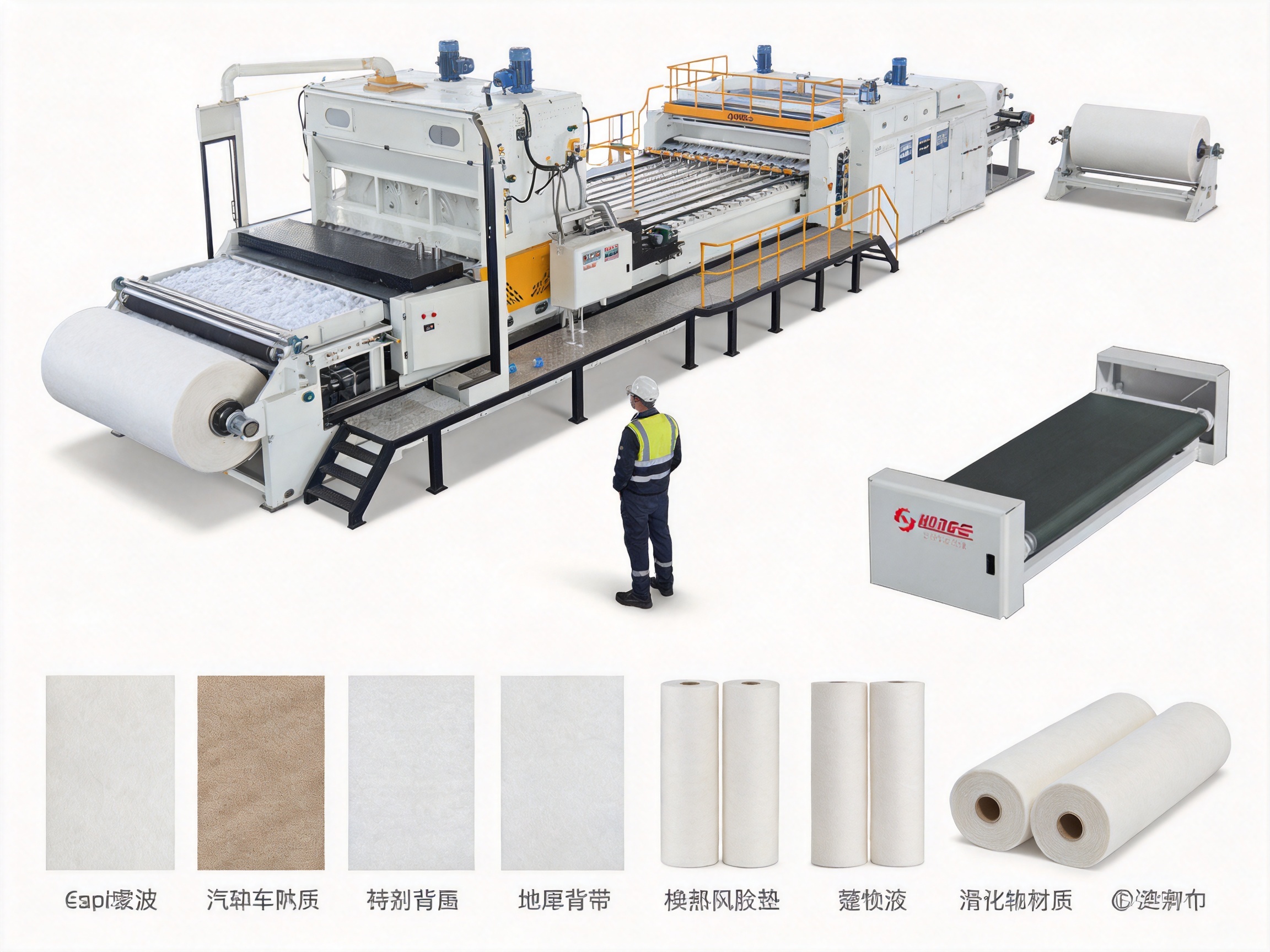
Consistent web weight is one of the most important quality requirements in nonwoven fabric manufacturing. Whether the final product is used for geotextiles, filtration media, automotive interiors, insulation, cleaning cloths, carpets, hygiene products, or other technical applications, the mass per unit area directly influences performance, cost, appearance, strength, and customer acceptance. A small and repeated variation in fiber feed can create uneven batt density, inconsistent thickness, unstable needle punching, and excessive raw material consumption.
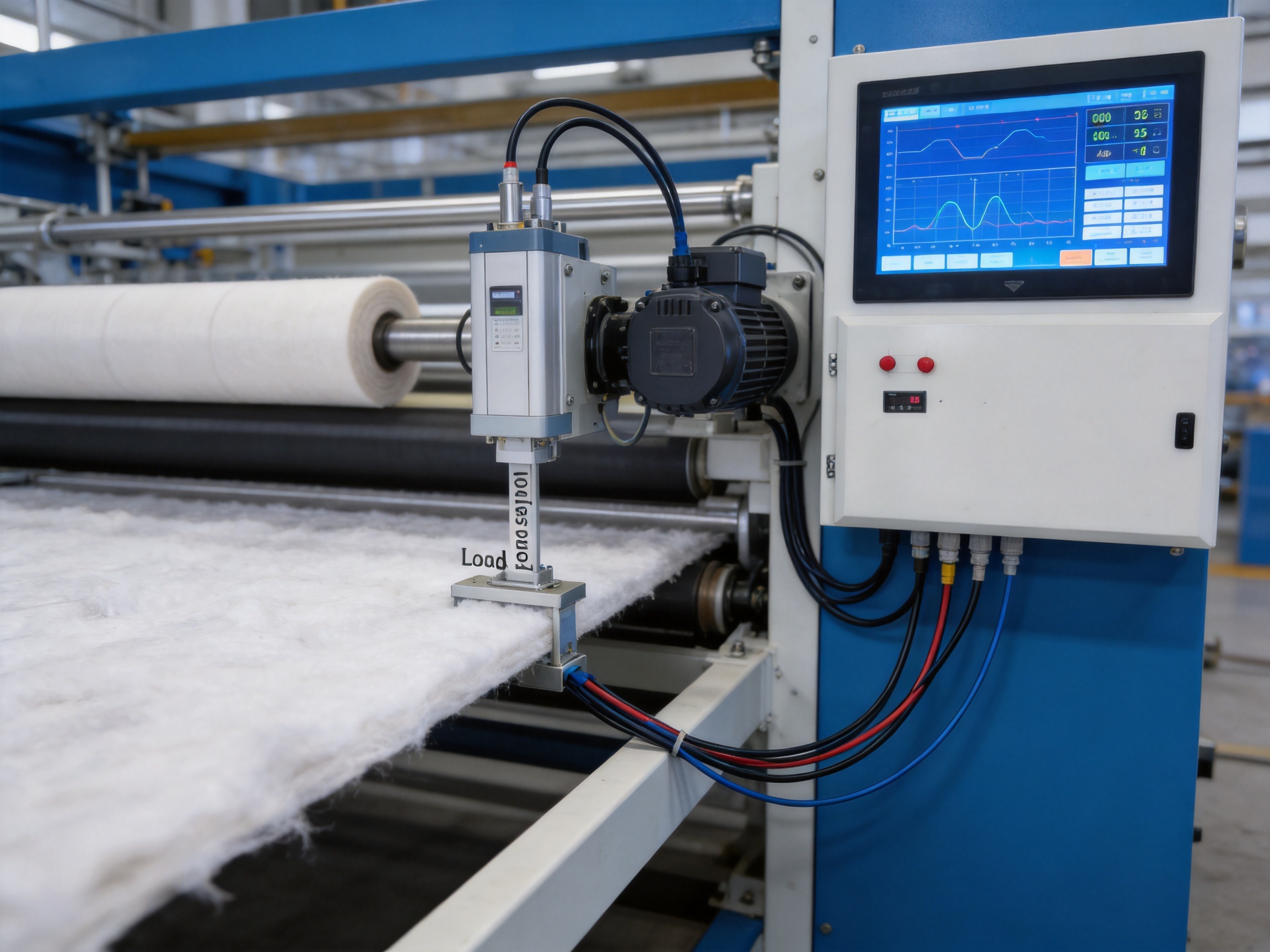
The HYYZY Weighing Belt for Nonwoven Fabric Production is designed to address this challenge through continuous measurement and automatic correction. Installed in the feeding and carding section, the system monitors the actual weight of the fiber batt as it passes over a load-cell-controlled apron. The measured data is processed in real time, and the control system adjusts the feed rolls to compensate for changes in fiber flow. This closed-loop process helps maintain a more stable web weight at the card doffers and improves the consistency of the downstream nonwoven production line.
As an automatic leveler for nonwoven carding machines, the HYYZY system combines mechanical conveying, weighing technology, inverter speed control, digital processing, and programmable control. It is suitable for production lines processing polyester fiber, polypropylene staple fiber, and other commonly used nonwoven raw materials. Its control range for web layer gram weight is 200–5000 grams per square meter when configured with a 2800 millimeter panel width.
Why Web Weight Control Matters in Nonwoven Manufacturing
Nonwoven fabric is manufactured by forming a web of fibers and then bonding or consolidating that web through mechanical, thermal, chemical, or combined processes. In carded nonwoven production, fibers are opened, blended, fed, carded, and formed into a web. The uniformity of this web is affected by fiber characteristics, opening efficiency, feed rate, machine speed, humidity, material preparation, and the condition of the carding components.
Even when the opening and carding machines are correctly adjusted, variations can occur in the amount of fiber entering the card. Changes in bale composition, fiber length, moisture, static electricity, feed density, or material distribution can cause the batt entering the carding machine to become heavier or lighter. If these changes are not detected and corrected, the finished fabric may show longitudinal weight deviations or roll-to-roll differences.
A weighing belt provides a direct method of measuring the actual fiber flow. Instead of relying only on preset machine speed or operator experience, the system evaluates the material passing across the weighing section. It then uses this information to regulate the feed rolls. This creates a more responsive production process in which the machine can compensate for fluctuations before they become significant defects in the final web.
Stable web weight also improves production planning. When the weight per square meter remains within the desired range, manufacturers can calculate raw material consumption more accurately, set bonding conditions more reliably, and reduce the amount of off-specification fabric. Improved control is particularly valuable for wide production lines and high-volume operations where a small gram-weight error can represent a substantial quantity of wasted fiber over a full roll or production shift.
Working Principle of the HYYZY Weighing Belt
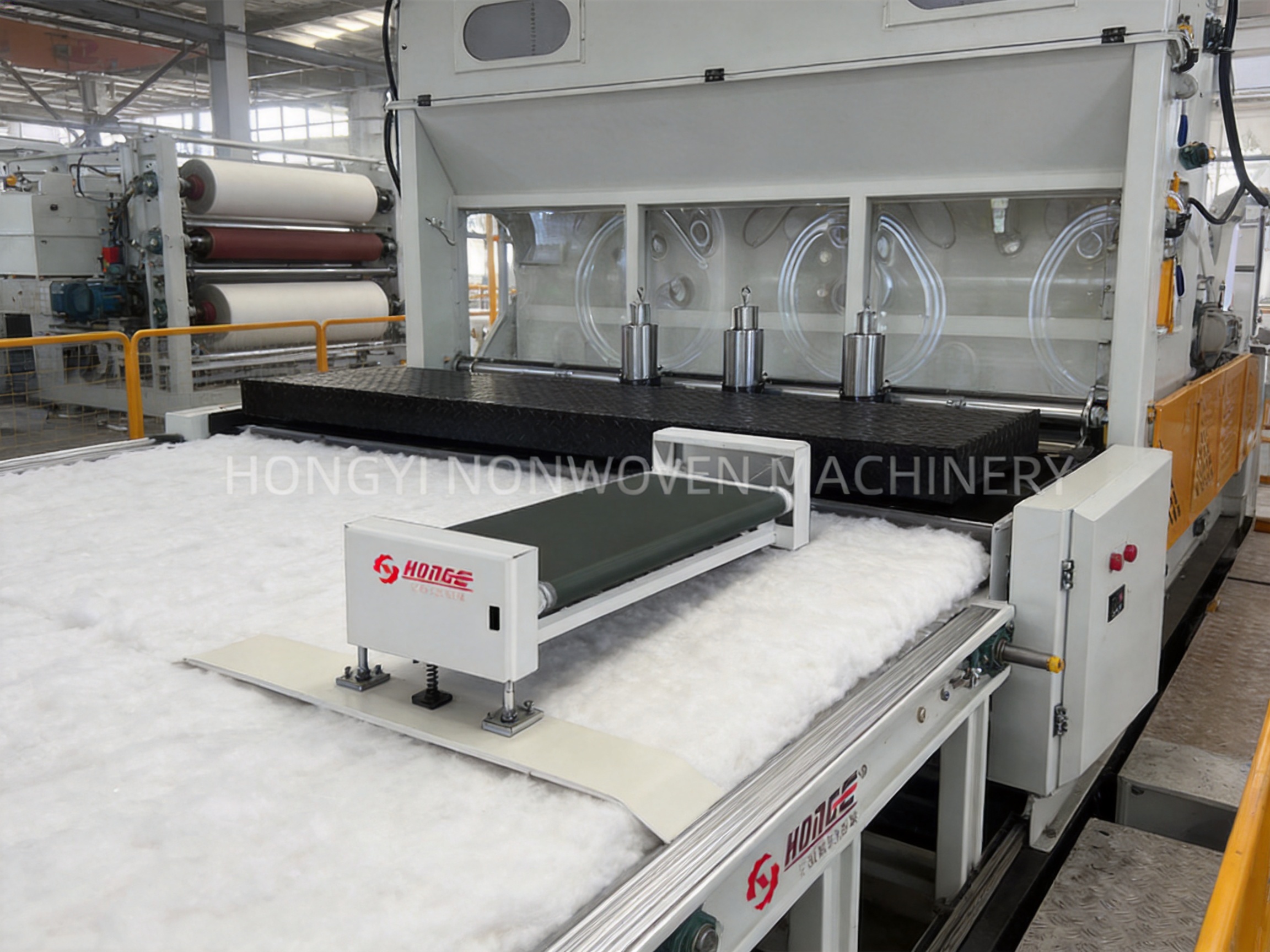
The HYYZY system operates as a continuous measurement and correction unit positioned in the fiber feeding process. Fiber batt travels over an apron that is controlled by a load-cell-based weighing mechanism. As the batt passes through the weighing area, the load cell detects the material load and sends a measurement signal to the digital control system.
The control system compares the actual measured value with the target web weight programmed by the operator. If the measured batt is heavier than the target, the system can reduce the appropriate feed-roll speed. If the batt is lighter than the target, the feed-roll speed can be increased. The correction is performed through inverter speed control, allowing the system to regulate the material flow smoothly rather than relying on abrupt mechanical changes.
This type of closed-loop control is different from a simple conveyor or fixed-speed feeding system. A fixed-speed machine may deliver an approximately stable amount of fiber under ideal conditions, but it cannot respond effectively to changing material density. The weighing belt continuously observes the actual condition of the batt and provides feedback to the card feed rolls. The result is a more adaptable process with improved longitudinal weight control.
The system is intended to help maintain a constant web weight at the doffers. Because the carding machine receives a more consistently regulated fiber supply, the web formed at the output can achieve better uniformity. The exact result depends on the fiber type, line configuration, carding machine condition, target weight, production speed, and operating environment, but the weighing and feedback principle provides an important foundation for automatic quality control.
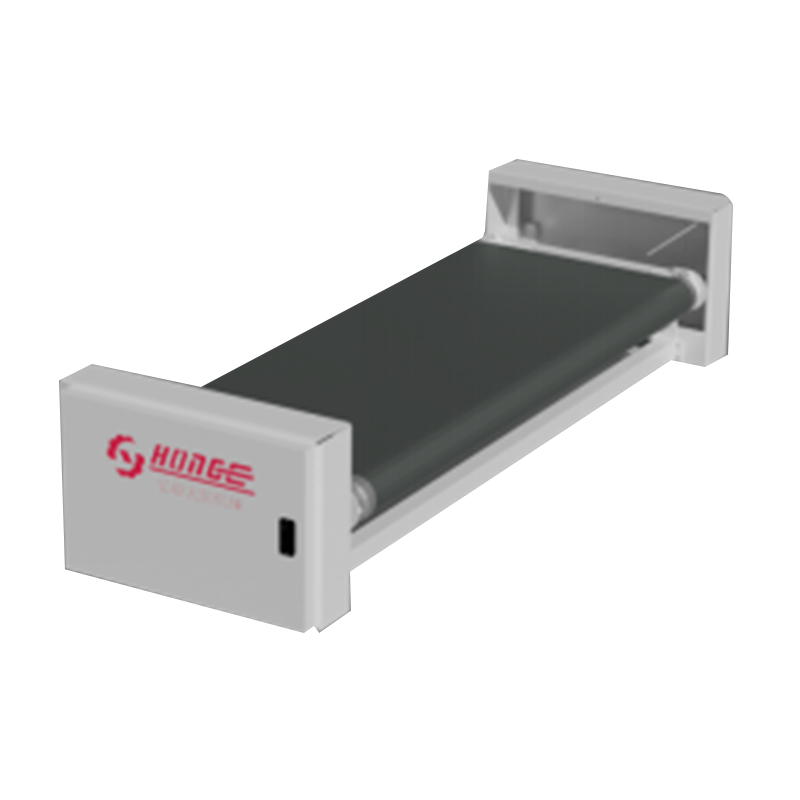
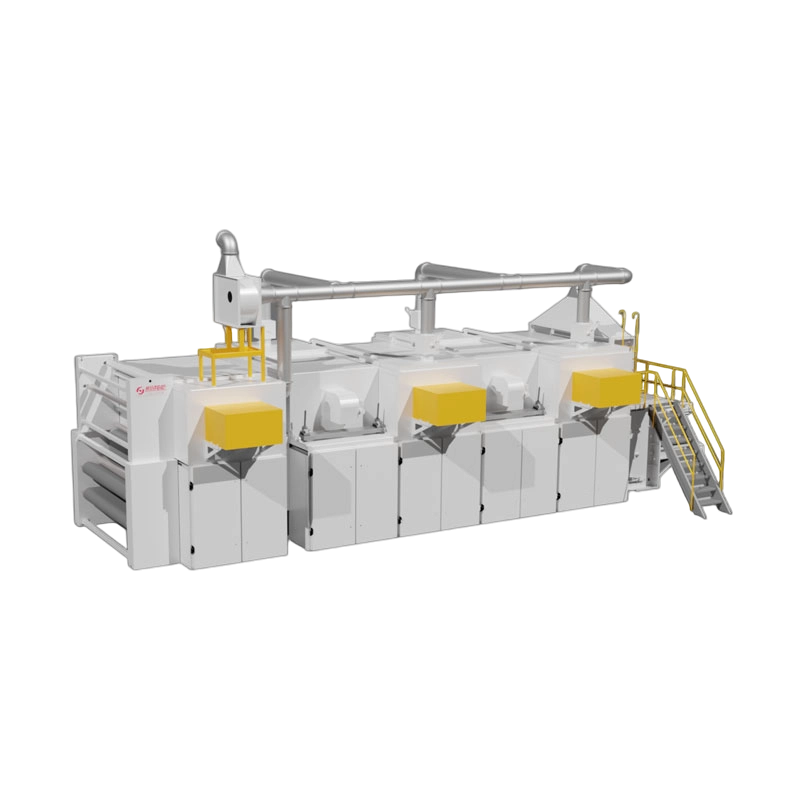
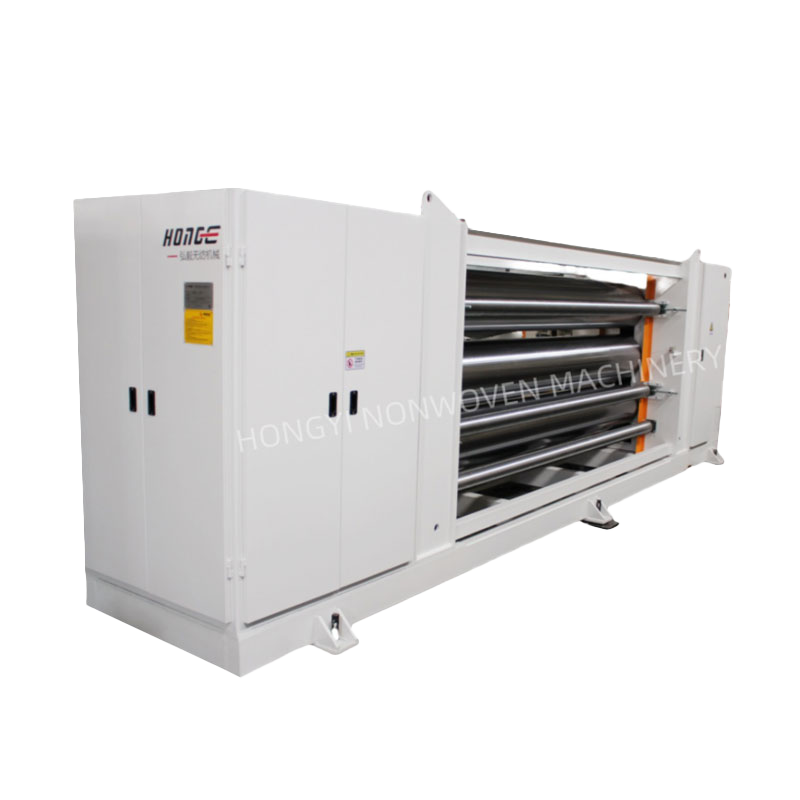
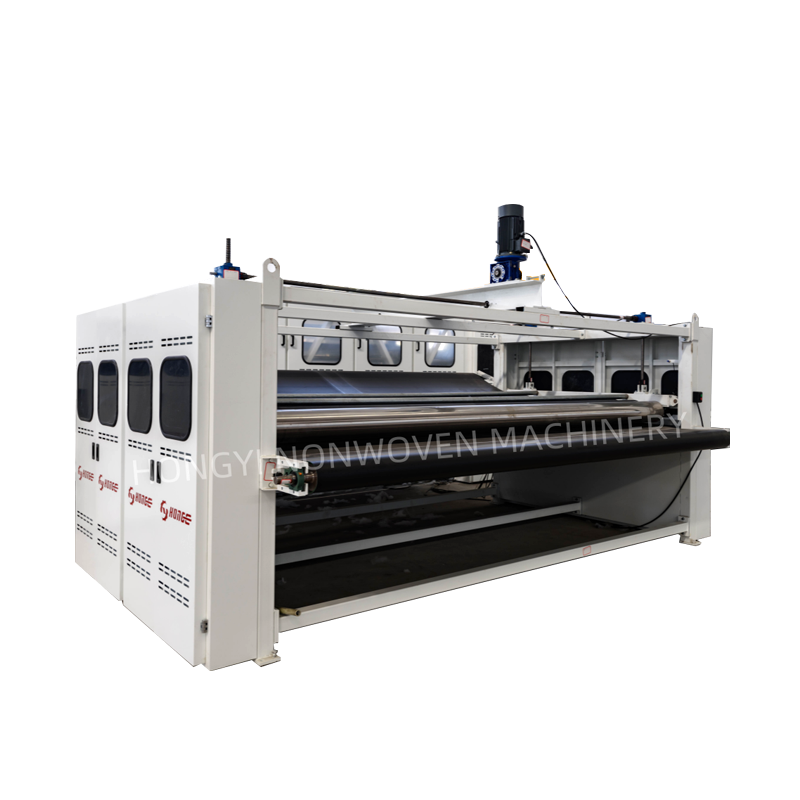
HYYZY Weighing Belt For Nonwoven Fabric Production
Major Technical Advantages
Accurate Continuous Weighing
The main advantage of the HYYZY system is its ability to measure the actual fiber batt weight during production. The load-cell-controlled apron is designed to provide a direct measurement of material loading rather than an indirect estimate based only on machine settings. This helps operators identify variations that may not be visible during normal operation.
Continuous weighing is especially useful when the material has inconsistent bulk density. A batt may appear visually uniform while still containing a different quantity of fiber per unit length. By measuring the load, the weighing belt provides the control system with information that is more closely related to actual material mass. This supports more precise regulation of the card feed rolls.
Automatic Feed-Roll Compensation
The system uses inverter speed control to adjust the feed rolls according to real-time feedback. This automatic compensation reduces the need for frequent manual intervention. Operators can establish the target weight and monitor the process while the control system manages routine corrections.
Automatic compensation also improves repeatability between shifts. Manual adjustment can vary depending on operator experience, response time, and visual judgment. A digital control process applies the programmed logic consistently, helping the production line maintain a more stable operating condition throughout the day.
Improved Longitudinal Gram-Weight Uniformity
Longitudinal gram deviation refers to changes in fabric weight along the production direction. These variations may affect thickness, strength, flexibility, absorbency, insulation, and downstream processing. The HYYZY system is designed for precise control of longitudinal gram deviation, including gram deviation from one roll section to another.
More stable longitudinal weight can make fabric easier to wind, store, slit, laminate, needle punch, thermally bond, or convert. It can also help reduce customer complaints associated with inconsistent product specifications. For manufacturers supplying technical nonwovens, improved uniformity may be an important factor in meeting application-specific quality requirements.
Digital Microcomputer Processing
The system adopts a digital microcomputer processing system with online dynamic control. Digital processing enables the system to collect, compare, and respond to measurement data continuously. It also creates a structured interface for setting target parameters, observing operating status, and managing correction functions.
Compared with a basic analog-only control arrangement, a digital system can provide more flexible parameter management and easier integration with modern production equipment. The digital control concept supports automation, repeatability, and the possibility of tailoring the operating logic to a particular line configuration.
PLC and Touch-Screen Operation
The control configuration includes PLC and touch-screen operation. A programmable logic controller provides a dependable platform for managing signals, machine interlocks, speed commands, alarm conditions, and feedback routines. The touch screen provides a user interface for operators to enter settings and observe system information.
A clear touch-screen interface can simplify daily operation. Operators can review target values, adjust production parameters, confirm machine status, and identify abnormal conditions without relying entirely on manual calculations. The control system can also be configured according to customer requirements, depending on the equipment layout and communication needs of the complete nonwoven line.
Broad Gram-Weight Control Range
The stated control range is 200–5000 grams per square meter for a 2800 millimeter panel width. This broad range allows the equipment to support a variety of applications, from relatively light nonwoven products to heavy technical fabrics and batt structures.
Actual production performance depends on the selected fiber, line speed, batt structure, carding capacity, and bonding method. Nevertheless, a wide control range gives manufacturers greater flexibility when producing different grades. It can also reduce the need to install separate feeding and weighing systems for every product category.
Flexible Configuration
The HYYZY weighing belt can be customized according to customer needs. The available specification information indicates configurations ranging from approximately 2000 millimeters to 7600 millimeters, while the listed technical parameters identify a 2800 millimeter working width for the featured model. This allows the supplier to adapt the equipment to different production line widths and factory layouts.
Customization may involve working width, control arrangement, color, electrical configuration, interface requirements, conveyor dimensions, and integration with upstream or downstream machines. Such flexibility is valuable because nonwoven factories often operate equipment from different generations or combine individual machines into a customized production line.
Comparison with Conventional Feeding Methods
Traditional nonwoven feeding systems may rely on fixed machine speeds, mechanical settings, manual adjustments, or periodic sampling. These methods can be suitable for simple production conditions, but they have limitations when raw material characteristics fluctuate or when customers require narrow weight tolerances.
| Control Aspect | Conventional Fixed Feeding | HYYZY Weighing Belt System |
|---|---|---|
| Material measurement | Often based on speed or periodic sampling | Continuous measurement through a load-cell-controlled apron |
| Correction method | Manual or preset adjustment | Automatic feed-roll correction through inverter control |
| Response to density changes | Limited and dependent on operator action | Real-time feedback supports dynamic compensation |
| Longitudinal weight control | May show greater fluctuation | Designed for improved gram-weight consistency |
| Operation | More manual observation and intervention | PLC and touch-screen control |
| Production flexibility | Usually dependent on mechanical adjustment | Target values and configurations can be adapted |
| Data processing | Limited information available during production | Digital microcomputer processing and online dynamic control |
| Integration potential | May require additional modification | Designed for integration with card feeding systems |
The table illustrates the functional difference between a basic fixed-feed arrangement and an automatic weighing and leveling system. The weighing belt does not eliminate the need for proper material preparation, machine maintenance, or operator supervision. Instead, it provides an additional control layer that helps the line respond more effectively to normal process variation.
Benefits for Different Nonwoven Applications
Geotextiles and Civil Engineering Fabrics
Geotextiles often require stable mass, thickness, tensile performance, and permeability. A variation in web weight can influence the final mechanical properties after needle punching or other bonding processes. By stabilizing the fiber feed before web formation, the weighing belt can support more consistent input conditions for geotextile production lines.
For heavy products, accurate control is especially important because the quantity of fiber processed per hour is high. Even a modest percentage of overfeeding can increase production cost, while underfeeding may result in a product that fails to meet the required specification. A broad gram-weight range makes the system suitable for different grades of civil engineering nonwovens when correctly configured with the complete line.
Nonwoven Carpets
Carpet backing and needle-punched carpet products benefit from uniform batt formation. Irregular feeding can lead to visible variations in appearance, surface density, and resilience. A controlled fiber supply helps the carding machine produce a more consistent web, which can improve the appearance and performance of the bonded carpet structure.
When different colors or fiber blends are processed, stable feeding is also important for maintaining a consistent visual effect. Although color uniformity depends on blending and opening quality as well, a controlled web weight helps prevent areas with noticeably different fiber concentration.
Automotive Interior Materials
Automotive interior materials may be used in trunk liners, door panels, acoustic components, insulation layers, and molded interior parts. These products often require controlled thickness, density, stiffness, sound absorption, and dimensional stability. Weight variation can affect forming behavior and the amount of resin or adhesive required in later processes.
The HYYZY weighing belt can help provide a more stable carded web input for thermal bonding, needle punching, laminating, or molding operations. The equipment does not replace downstream process control, but it contributes to a more uniform starting web.
Thermal-Bonded Wadding and Insulation
Thermal-bonded wadding is commonly produced by forming a fiber web and passing it through a heating or bonding process. Uniform fiber distribution and stable web weight help the oven or heat-setting section operate with more predictable material conditions. If the batt becomes too heavy or too light, the finished product may show changes in thickness, loft, firmness, or thermal insulation performance.
Automatic weighing and feed correction can therefore support more consistent wadding production, particularly when the line operates continuously at high speed. The target can be adjusted according to the product grade, while the control system manages the routine response to changes in fiber loading.
Cleaning Cloths and Felt Products
Cleaning cloths, wool felts, jute felts, and similar products require suitable fiber distribution and mass. The appropriate weight depends on absorbency, strength, handle, durability, and end use. Stable feeding supports more reliable web formation before needle punching or other consolidation methods.
For manufacturers producing several grades on one line, the ability to change target parameters and use customized configurations can improve production flexibility. Operators can select the appropriate process settings for each product while maintaining the same fundamental weighing and feedback principle.
Manufacturing and Engineering Strengths
Experience in Complete Nonwoven Machinery
Changshu Hongyi Nonwoven Machinery Co., Ltd. has more than 20 years of experience in the nonwoven machinery field. Its product scope includes both complete production lines and individual machines. This background is significant because a weighing belt must operate as part of a broader process rather than as an isolated conveyor.
Experience with opening machines, blending equipment, carding machines, airlay systems, needle punching machines, thermal bonding ovens, ironing machines, winding equipment, and cutting machinery helps the manufacturer understand how changes in one section can influence the rest of the line. This system-level knowledge supports more practical equipment configuration and integration.
Complete Line and Unit-Machine Capability
The company supplies complete nonwoven production lines as well as unit machines. Its line applications include needle-punched geotextiles, nonwoven carpets, airlaid waste felt, automotive interior materials, needle-punching cleaning cloths, wool felt, and jute felt.
For customers that only need to upgrade a feeding and carding section, a unit-machine approach can be more economical than replacing the entire production line. The HYYZY weighing belt can be specified as an auxiliary control system for an existing or newly installed nonwoven line, subject to technical assessment of the connected equipment.
Customized Engineering
Nonwoven production lines vary in working width, fiber type, installed power, machine arrangement, output requirement, and control philosophy. A standard machine may not fit every factory. The manufacturer therefore provides customized configurations according to customer requirements.
Customization can help address different plant conditions, including available floor space, conveyor direction, control cabinet location, operator access, electrical standards, communication requirements, and connection to existing carding machines. The listed electrical configuration includes a 220 volt host power supply and a DC24 volt monitor power supply, with voltage options that can be customized when required.
Quality and Certification Orientation
The HYYZY model is identified as new and is listed with CE and ISO9001:2000 certification information. Certification and quality management provide a framework for equipment design, production, inspection, documentation, and customer support. The exact certification scope and applicable standards should be confirmed during technical and commercial discussions.
The manufacturer also provides video outgoing inspection. This can give customers an additional view of equipment condition and operating status before shipment. For international projects, pre-shipment inspection is particularly useful because it supports communication between the factory, purchaser, installation team, and end user.
Production Capacity and Delivery Planning
The stated production capacity is 100 sets per year, and the usual lead time is listed as two to three months. Delivery time may vary according to working width, customization, control-system requirements, material availability, inspection schedule, and the number of machines ordered.
Clear technical confirmation before manufacturing is essential. The customer should provide the required working width, target gram-weight range, fiber materials, carding machine model, production speed, electrical standard, control interface, and installation conditions. These details allow the equipment to be designed and prepared more efficiently.
Control System and Production Automation
The control system is the central element that converts weighing information into a practical production response. The load cell detects the batt load, the processing unit evaluates the signal, and the PLC generates a command for the feed-roll inverter. The touch screen gives the operator access to target values and system status.
Online dynamic control means that the equipment is designed to respond while production is continuing. The operator does not need to stop the line every time a moderate variation appears. Instead, the system can make controlled speed adjustments within the operating limits established during commissioning.
Stable communication between the weighing section and feed rolls is important. The feedback response must be fast enough to address normal fluctuations but sufficiently controlled to prevent unnecessary oscillation. During installation and commissioning, parameters such as response speed, correction range, delay, alarm limits, and target value should be adjusted according to the line characteristics.
A properly configured control system can also improve process visibility. Operators can identify whether the actual batt weight is close to the target and whether the feed rolls are responding normally. This information can support preventive maintenance by drawing attention to unusual trends before they develop into major production problems.
Operator Interface
The touch-screen interface is intended to make routine operation easier. Typical functions may include target setting, status display, speed adjustment, alarm indication, and parameter access. The final interface depends on the customer’s requested configuration and the complete control architecture.
Operators should receive training in the difference between target weight, actual measured weight, correction command, and alarm condition. They should also understand that the weighing belt is a process-control device, not a substitute for cleaning, fiber preparation, card clothing maintenance, or mechanical alignment.
Integration with Existing Lines
When the system is installed on an existing production line, technical compatibility must be reviewed carefully. Important factors include the physical location of the apron, the direction of fiber travel, the available space, the feed-roll drive, motor rating, signal type, control cabinet arrangement, and emergency-stop circuit.
The carding machine and weighing belt must also operate within compatible speed ranges. If the card feed rolls cannot respond to the required correction range, the potential benefit of automatic leveling may be limited. A complete integration review helps ensure that the weighing system, carding machine, and upstream feeding equipment work together as one process.
Installation, Commissioning, and Maintenance
Installation Preparation
Before installation, the customer should prepare a level foundation or suitable support structure, verify the equipment footprint, provide the required electrical supply, and confirm the material flow direction. The installation area should be clean and accessible for inspection and maintenance.
Because weighing accuracy can be affected by vibration, mechanical interference, and unstable support, the weighing section should be installed securely. Nearby equipment should not place unintended loads on the weighing apron or frame. The load-cell area must be protected from impact and excessive contamination.
Calibration
Calibration is essential for reliable measurement. The load-cell signal should be checked during commissioning, and the system should be calibrated according to the supplier’s procedure. Zero stability, known-load response, belt tracking, and material flow should all be examined.
Calibration may need to be verified after relocation, major maintenance, replacement of weighing components, or significant changes in production conditions. Regular verification helps distinguish actual process variation from measurement error.
Mechanical Inspection
Routine inspection should include the apron surface, rollers, bearings, belt alignment, drive components, guards, fasteners, and surrounding frame. Fiber accumulation should be removed according to the maintenance schedule. Loose components or abnormal friction can affect both machine reliability and weighing stability.
The feed rolls should also be checked for wear, alignment, surface condition, and correct response to speed commands. If the feed rolls slip or fail to maintain the commanded speed, the weighing feedback system may not achieve the expected correction.
Electrical and Control Maintenance
The control cabinet, inverter, PLC, touch screen, wiring, connectors, and power supply should be inspected by qualified personnel. Dust, moisture, heat, and unstable voltage can reduce the service life of electrical components. The DC24 volt monitor supply should be maintained within the required operating range.
Alarm records and unusual operating trends should be reviewed. A sudden change in measured weight may indicate a real material problem, a blocked passage, a damaged sensor, an unstable connection, or a mechanical issue. Troubleshooting should consider both the process and the control system rather than assuming that every variation is caused by the load cell.
Operational Recommendations for Best Results
To obtain the best performance from the HYYZY weighing belt, the raw material should be prepared consistently. Fiber bales should be opened and blended appropriately, and the feeding system should avoid sudden surges. Mixed fibers should be distributed as evenly as possible before reaching the weighing section.
The target web weight should be selected according to the actual product specification and verified through laboratory or production sampling. Operators should not set an extreme target without confirming that the carding machine, bonding section, and winding equipment can handle the corresponding material flow.
Production speed should be increased gradually during commissioning. The system should first be tested at a moderate speed so that the operator can confirm weighing stability, correction direction, feed-roll response, and carding performance. After the control parameters are validated, the line can be moved toward the required production speed.
Environmental conditions should also be monitored. Humidity and temperature influence fiber behavior, static electricity, cohesion, and batt density. When the same control parameters are used under substantially different environmental conditions, the response of the fiber may change. Good production records can help operators identify these relationships and adjust the process appropriately.
Regular sampling remains useful even when automatic control is installed. Online measurement provides immediate process feedback, while laboratory or offline testing confirms finished-product properties. Combining automatic leveling with periodic verification provides a stronger quality assurance system than using either method alone.
Purchasing Considerations
Before purchasing a weighing belt for a nonwoven line, the customer should define the intended application and provide accurate process information. The following points are particularly important:
Required working width and available installation space.
Target web-weight range and acceptable gram deviation.
Fiber types, fiber lengths, blend ratios, and typical bulk density.
Carding machine model, feed-roll dimensions, and production speed.
Required host voltage and local electrical standard.
Preferred PLC, touch-screen, communication, and alarm configuration.
Connection requirements for upstream opening and blending machines.
Downstream processes such as needle punching, thermal bonding, winding, or cutting.
Expected level of customization, color, packaging, and spare parts.
Installation, commissioning, training, warranty, and after-sales service requirements.
The HYYZY system is listed with a one-year warranty and after-sales service. Customers should confirm the exact warranty coverage, recommended spare parts, remote support method, commissioning arrangement, and response procedure before placing an order. Clear documentation helps reduce uncertainty during installation and operation.
Packaging, Shipping, and Global Supply
The equipment can be supplied with nude packing or PE film packing, depending on the shipping arrangement and customer requirements. Packaging should protect the weighing components, control cabinet, touch screen, drive equipment, and exposed mechanical surfaces from moisture, impact, and contamination during transport.
For export orders, the shipping plan should consider container dimensions, lifting points, unloading equipment, customs documentation, electrical labeling, and installation sequence. Since the equipment may be integrated into a larger line, the packing list should clearly identify loose parts, cables, sensors, manuals, and accessories.
Changshu Hongyi Nonwoven Machinery Co., Ltd. has supplied equipment to more than 20 countries, including markets in Latin America, Europe, Africa, and Asia. International experience can assist with export coordination and communication, although each project still requires individual confirmation of local standards, site conditions, and technical requirements.
Advantages of Working with an Experienced Manufacturer
A weighing belt is most valuable when its design reflects the needs of the entire nonwoven production process. A supplier that understands only weighing equipment may not fully recognize how fiber opening, carding, web transfer, thermal bonding, needle punching, and winding interact. Experience across these machine categories can support more appropriate recommendations.
Changshu Hongyi Nonwoven Machinery Co., Ltd. focuses on nonwoven machinery and provides both complete production lines and individual machines. Its product range covers opening and blending equipment, feeding and carding equipment, web-forming and needle-punching equipment, thermal-bonded and heat-setting equipment, airlay and winding or cutting machines, auxiliary equipment, and complete nonwoven production lines.
This broad range creates several practical advantages. First, the manufacturer can evaluate the weighing belt within the customer’s process rather than considering it as a standalone device. Second, the supplier can recommend a suitable configuration for a new line or an upgrade project. Third, customers can communicate with one machinery specialist for several sections of the production process.
The company emphasizes efficiency, reliability, quality, advanced technology, precision engineering, automatic control, energy-saving capabilities, and customization. These priorities are relevant to manufacturers seeking to increase output while maintaining product consistency and controlling operating costs.
Return on Investment and Production Value
The economic value of automatic web-weight control comes from several sources. The first is reduced overfeeding. If the target product requires a specific mass per square meter, excessive fiber use directly increases material cost. More accurate control can help the manufacturer operate closer to the intended specification.
The second source is reduced waste. Unstable web weight can create defective sections that must be downgraded, reprocessed, or discarded. Improving the consistency of the web may reduce the amount of off-specification fabric produced during normal operation, start-up, and product changes.
The third source is improved productivity. When operators spend less time making manual feed adjustments, they can focus on quality monitoring, material preparation, maintenance, and order changes. The production line may also become easier to operate across multiple shifts.
The fourth source is product reliability. Stable web weight supports more consistent downstream bonding and finishing. This can improve the manufacturer’s ability to meet customer specifications and maintain long-term supply relationships.
The actual return on investment depends on raw material cost, production volume, product weight, acceptable tolerance, existing labor requirements, waste rate, and machine utilization. A detailed evaluation should compare the current production losses with the expected improvement after installation and commissioning.
Frequently Asked Questions
What is the primary function of the HYYZY weighing belt?
The primary function is to monitor the actual weight of the fiber batt passing over a load-cell-controlled apron and use the measurement to adjust the card feed rolls. This helps maintain a more constant web weight at the card doffers.
Is the equipment an automatic leveler for a nonwoven carding machine?
Yes. The equipment is designed as an automatic leveling and weighing system for the feeding and carding section of a nonwoven production line. It uses measurement feedback and inverter speed control to compensate for changes in fiber flow.
What web-weight range can the system control?
The stated control range is 200–5000 grams per square meter for a 2800 millimeter panel width. The appropriate range for a particular project should be confirmed according to the fiber type, carding machine, production speed, and complete line configuration.
What is the working width of the featured model?
The technical parameters list a working width of 2800 millimeters. Other specifications ranging from approximately 2000 millimeters to 7600 millimeters may be available through customization and engineering confirmation.
What type of fiber can be processed?
The equipment is suitable for nonwoven production using materials such as polyester fiber and polypropylene staple fiber. Other fibers may also be considered, but their characteristics, blend ratio, bulk density, moisture, and static behavior should be reviewed before final configuration.
What control system is used?
The equipment uses a digital microcomputer processing system with online dynamic control. The listed controlling method is PLC and touch screen, with inverter speed control for the feed rolls.
What are the power requirements?
The listed technical parameters specify a 220 volt host power supply and a DC24 volt monitor power supply. Voltage and electrical details can be customized or confirmed according to the customer’s local requirements and production-line design.
Can the weighing belt be connected to an existing carding machine?
It may be possible, subject to technical evaluation. The supplier should review the existing carding machine, feed-roll drive, working width, speed range, electrical signals, available space, and control interface before confirming compatibility.
Does the weighing belt eliminate the need for operators?
No. The system reduces routine manual adjustment, but operators remain responsible for raw material preparation, target setting, monitoring, cleaning, maintenance, sampling, and responding to alarms or abnormal conditions.
How does the system improve competitiveness compared with fixed-speed feeding?
It provides continuous material measurement, automatic feed-roll correction, digital processing, and online dynamic control. These functions can improve web-weight consistency, reduce dependence on manual adjustment, and support more efficient use of fiber compared with a basic fixed-speed feeding arrangement.
What after-sales service is available?
The product information lists a one-year warranty and after-sales service. Customers should confirm the detailed warranty terms, installation support, commissioning, training, spare-parts supply, and remote technical assistance before ordering.
How long is the typical lead time?
The listed lead time is two to three months. The actual schedule may change according to customization, working width, control-system requirements, production planning, inspection, and shipping arrangements.
Can the machine color and configuration be customized?
Yes. The information indicates that color and configuration can be customized according to customer needs. Mechanical dimensions, control features, voltage, and line integration should be confirmed during technical design.
Is the equipment suitable for heavy nonwoven products?
The broad stated range of 200–5000 grams per square meter allows the system to support many light, medium, and heavy nonwoven products. Suitability for a specific heavy product depends on the line capacity, fiber characteristics, working width, and desired production speed.
What should be done if the measured weight becomes unstable?
Operators should check raw material flow, fiber blending, apron condition, belt tracking, mechanical vibration, feed-roll operation, load-cell connections, electrical stability, and calibration. The problem may be related to the material, mechanics, or control system, so all relevant areas should be inspected.
Conclusion
The HYYZY Weighing Belt for Nonwoven Fabric Production is a practical automatic control solution for manufacturers seeking more consistent fiber feeding and web weight. By measuring the actual batt load with a load-cell-controlled apron and adjusting the card feed rolls through inverter speed control, the system supports online compensation for normal production variations.
Its principal advantages include continuous weighing, automatic correction, digital microcomputer processing, PLC and touch-screen operation, control of longitudinal gram deviation, and a stated web-weight range of 200–5000 grams per square meter for a 2800 millimeter panel width. These features can contribute to improved product uniformity, lower material waste, more stable downstream processing, and greater production flexibility.
The equipment is supported by the engineering experience of Changshu Hongyi Nonwoven Machinery Co., Ltd., a manufacturer and supplier with more than 20 years of involvement in nonwoven machinery. The company provides complete lines and individual machines for applications including geotextiles, carpets, airlaid felt, automotive interiors, cleaning cloths, wool felt, jute felt, and thermal-bonded materials.
For customers planning a new nonwoven line or upgrading an existing carding section, the weighing belt offers a way to introduce more intelligent and responsive material control. Proper specification, installation, calibration, maintenance, and operator training remain essential, but the combination of accurate weighing and automatic feed-roll adjustment provides a strong foundation for efficient and consistent nonwoven production.
References
1. Product technical information for the HYYZY Weighing Belt for Nonwoven Fabric Production, including operating principle, control functions, specifications, and application range.
2. Manufacturer information for Changshu Hongyi Nonwoven Machinery Co., Ltd., including company history, product categories, production-line applications, customization capability, and international supply experience.
3. General principles of nonwoven web formation, carding, fiber feeding, web consolidation, and mass-per-unit-area control.
4. General industrial practices for load-cell measurement, inverter speed control, programmable logic controller operation, and online process monitoring.
5. General maintenance practices for nonwoven feeding equipment, carding-machine integration, weighing systems, conveyors, drive units, sensors, and control cabinets.