

Content
- 1 What Is a Nonwoven Fabric Oven?
- 2 Operating Principle of the HYHX Thermal Bonding Oven
- 3 Key Structural Features
- 4 Technical Specifications
- 5 Advantages Compared with Conventional Thermal Bonding Equipment
- 6 Manufacturing Strengths and Engineering Capabilities
- 7 Manufacturing Process of the Oven
- 8 Applications of Thermal-Bonded Nonwoven Products
- 9 How to Select the Correct Oven Configuration
- 10 Installation and Commissioning
- 11 Operation and Maintenance Recommendations
- 12 Quality Control of the Finished Nonwoven Fabric
- 13 Why Work with an Experienced Nonwoven Machinery Manufacturer?
- 14 Frequently Asked Questions
- 14.1 What is the main function of the HYHX Nonwoven Fabric Oven?
- 14.2 What raw materials can be processed?
- 14.3 What is the maximum working width?
- 14.4 What product thickness can the oven handle?
- 14.5 What is the maximum heat-setting temperature?
- 14.6 Does the oven use electric heating?
- 14.7 What is the purpose of the double-belt structure?
- 14.8 How does automatic belt correction help?
- 14.9 Can the machine be customized?
- 14.10 Is the oven suitable for a complete nonwoven production line?
- 14.11 What warranty is provided?
- 14.12 What information should be provided when requesting a quotation?
- 15 Conclusion
- 16 References
- 17 Product: HYHX Nonwoven Fabric Oven
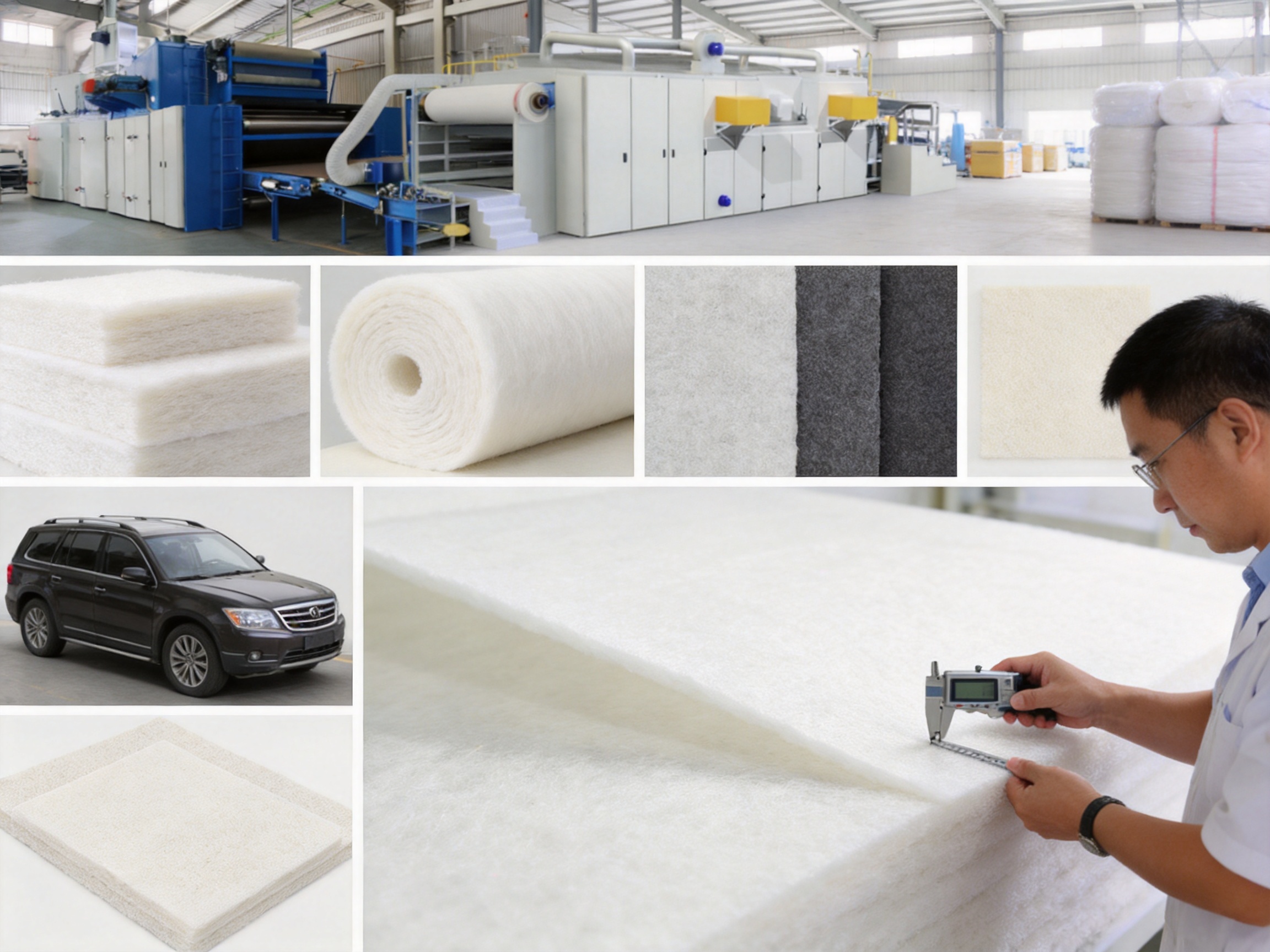
Thermal bonding is one of the most important processes in the manufacture of durable nonwoven fabrics. It determines how individual fibers become a stable web, how the finished material maintains its thickness, and how effectively the product performs in applications such as filtration, insulation, automotive interiors, furniture padding, construction materials, geotextiles, and household products. The HYHX Nonwoven Fabric Oven is designed to provide controlled hot-air penetration for thermal bonding and heat setting of fiber webs produced by a cross lapper.
The oven melts the low-melt fiber component within the web and allows that component to bind surrounding fibers together. After heating, a cooling system helps stabilize the structure and improve reinforcement. The result is a hard, thick, and uniform thermal-bonding wadding with improved mechanical integrity and dimensional stability.
Developed by Changshu Hongyi Nonwoven Machinery Co., Ltd., the HYHX series is suitable for polyester fiber, PP staple fiber, and other compatible fiber blends. It is available with customized configurations, working widths up to 5,000 mm, product thicknesses from 3 to 200 mm, and heat-setting temperatures up to 220°C. Its single-layer, single-belt, or double-belt construction allows the equipment to be adapted to different product requirements and production-line layouts.
What Is a Nonwoven Fabric Oven?
A nonwoven fabric oven is a thermal processing machine used to heat, bond, form, and stabilize a fiber web. Unlike weaving or knitting equipment, a nonwoven production line creates fabric without interlacing yarns. Fibers are arranged into a batt or web and then consolidated by mechanical, chemical, thermal, or combined methods.
In thermal bonding, the web contains a low-melt fiber or bicomponent fiber that softens or melts at a controlled temperature. Hot air passes through the web, transferring heat to the low-melt component. When the material reaches the required bonding temperature, the softened fiber forms bonding points around other fibers. A subsequent cooling stage solidifies those bonding points and helps the product retain its intended thickness and shape.
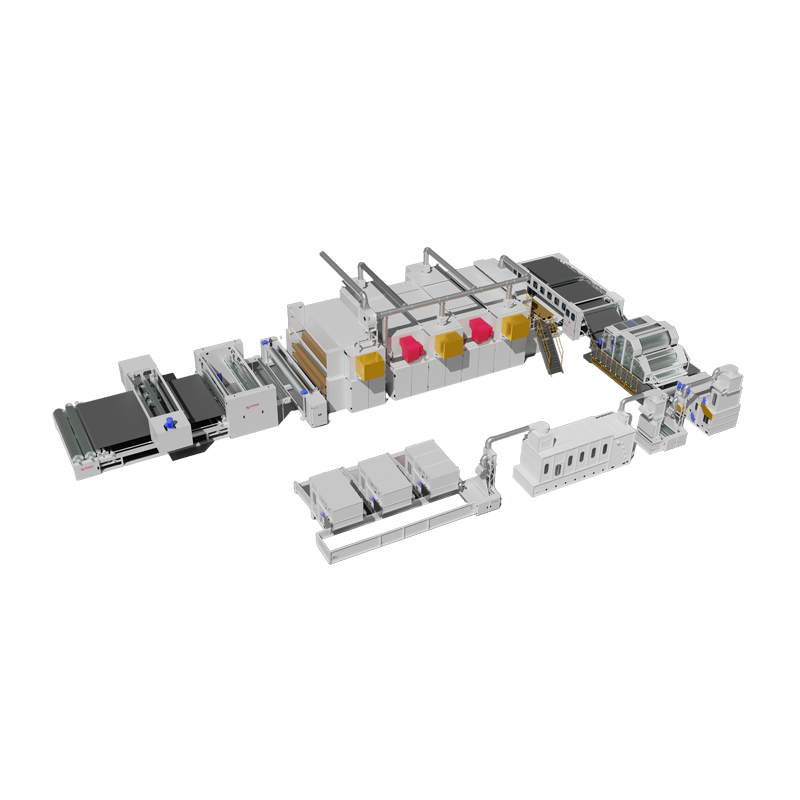
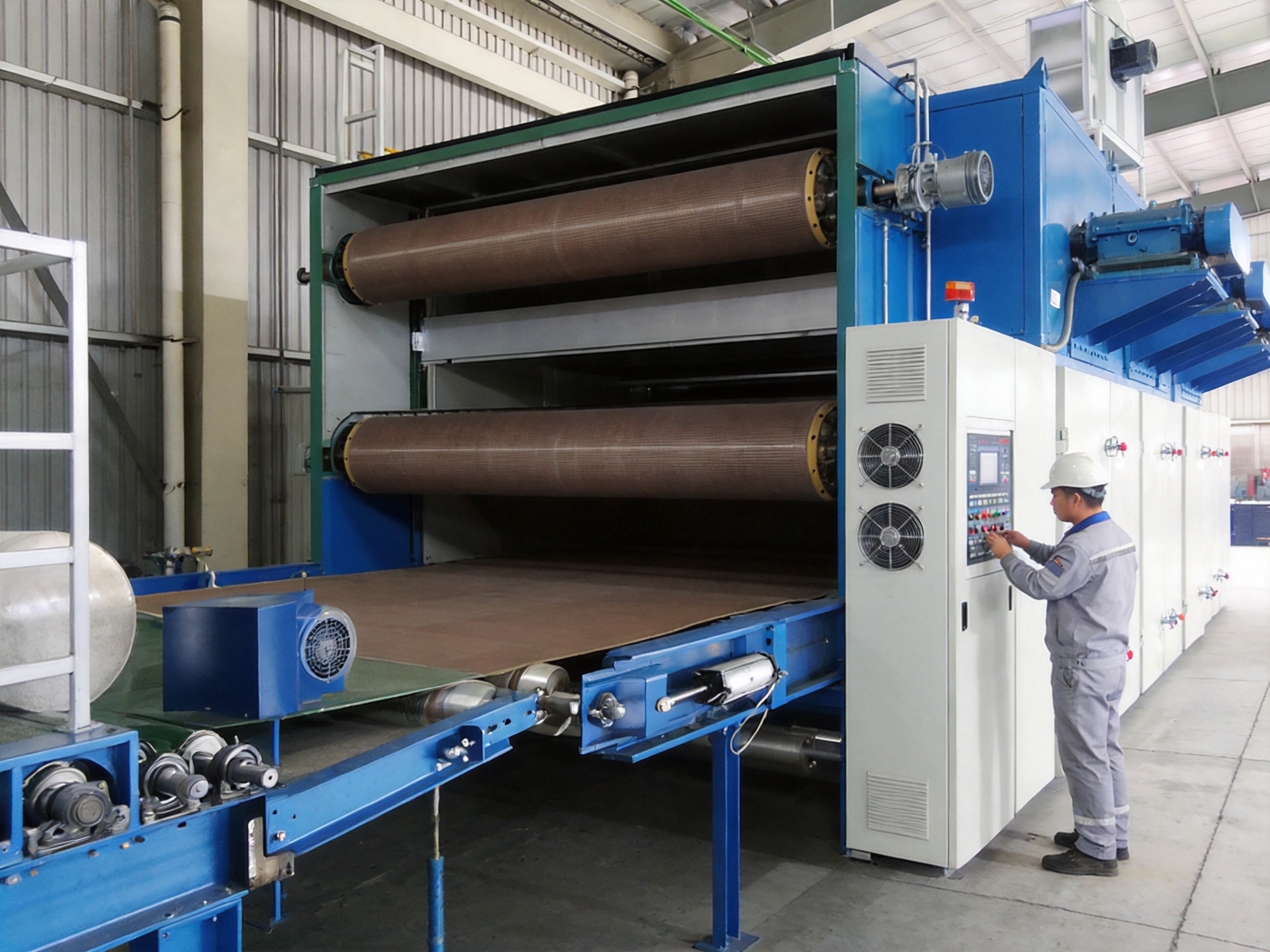
The HYHX Nonwoven Fabric Oven is installed after the web-forming section, commonly following a cross lapper. The cross lapper lays the carded web into multiple layers to achieve the desired basis weight and structure. The oven then performs the thermal bonding and heat-setting operation. Depending on the product design, the web can be compressed or supported between upper and lower belts while it travels through the heated zone.
This processing method is particularly useful when manufacturers need a thick, resilient, and dimensionally stable material. It can produce thermal-bonded wadding for mattress components, insulation, automotive trim, furniture padding, protective layers, and industrial nonwoven products.
Operating Principle of the HYHX Thermal Bonding Oven
The operating principle combines controlled feeding, hot-air circulation, web support, thermal bonding, cooling, and discharge. Each stage contributes to product quality and production stability.
Web Feeding
The fiber batt enters the oven from the cross lapper or from an upstream web-forming unit. The feeding section must receive the batt smoothly without disturbing its layered structure. A stable inlet helps reduce web displacement, edge distortion, and local density variations.
For thick or high-basis-weight products, the feeding arrangement can be configured to suit the web’s bulk and compressibility. This is important because a soft batt may be damaged by excessive mechanical pressure before bonding has taken place.
Hot-Air Penetration
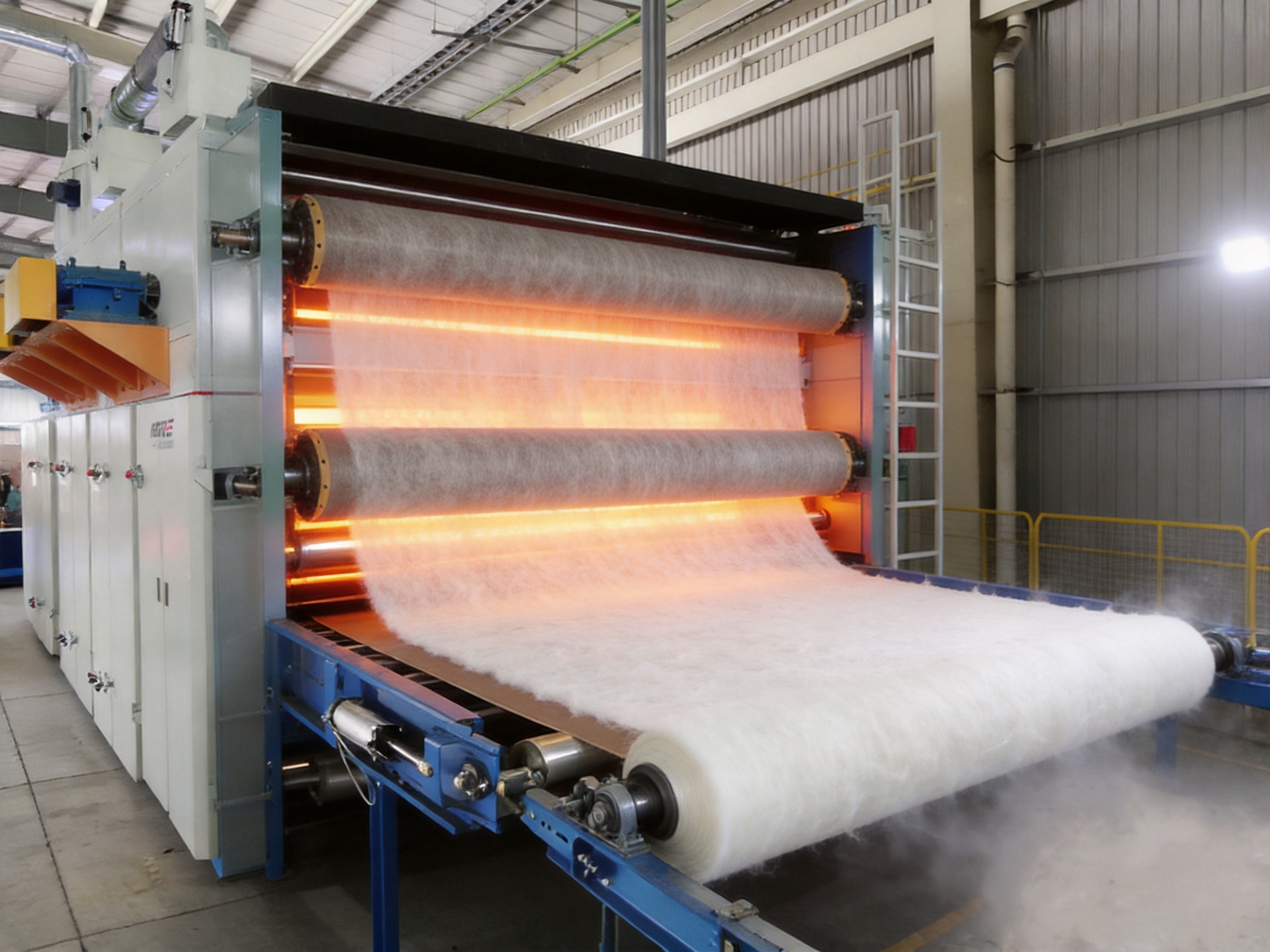
Once inside the heating zone, hot air penetrates through the fiber web. The air circulation system is designed to transfer heat throughout the thickness of the material rather than only heating the surface. Effective penetration is essential for thick wadding because insufficient internal heating can create a soft center, weak bonding, or uneven shrinkage.
The heating method can be based on hot-oil circulation or electric heating, depending on the customer’s energy system, plant conditions, operating preferences, and production requirements. The heat-setting temperature can reach up to 220°C, while the actual operating temperature is selected according to the fiber type, low-melt component, material thickness, and desired bonding performance.
Melting and Fiber Consolidation
When the low-melt fiber reaches its softening or melting range, it combines surrounding fibers at contact points. The process creates a network of bonded areas throughout the web. The purpose is not necessarily to melt all fibers. Instead, the thermal process is controlled so that the bonding component consolidates the structure while the primary fibers retain their intended characteristics.
Correct temperature, air velocity, dwell time, and compression are necessary to achieve a balanced result. Excessive heat can damage the fiber, reduce loft, create hard spots, or cause discoloration. Insufficient heat may produce weak bonding, poor recovery, and low resistance to handling. The HYHX configuration allows the thermal process to be selected according to the customer’s material and final product specifications.
Cooling and Stabilization
After heating, the bonded web passes through a cooling section. Cooling helps the melted or softened bonding fibers solidify and fixes the product structure. It also reduces the risk of deformation during downstream cutting, winding, stacking, or converting.
A well-designed cooling stage contributes to improved thickness uniformity, dimensional stability, and handling strength. For products that must maintain a specific loft or profile, controlled cooling is especially important. It helps prevent excessive shrinkage and ensures that the web exits the oven in a stable condition.
Discharge and Further Processing
After the thermal bonding and cooling stages, the finished material can proceed to winding, cutting, laminating, slitting, packaging, or inspection. The oven can form part of a complete nonwoven production line or operate as a specialized unit within an existing facility.
Its compatibility with downstream airlay, winding, and cutting equipment allows manufacturers to create a continuous production process. The final configuration depends on product width, basis weight, thickness, output requirements, workshop layout, and automation level.
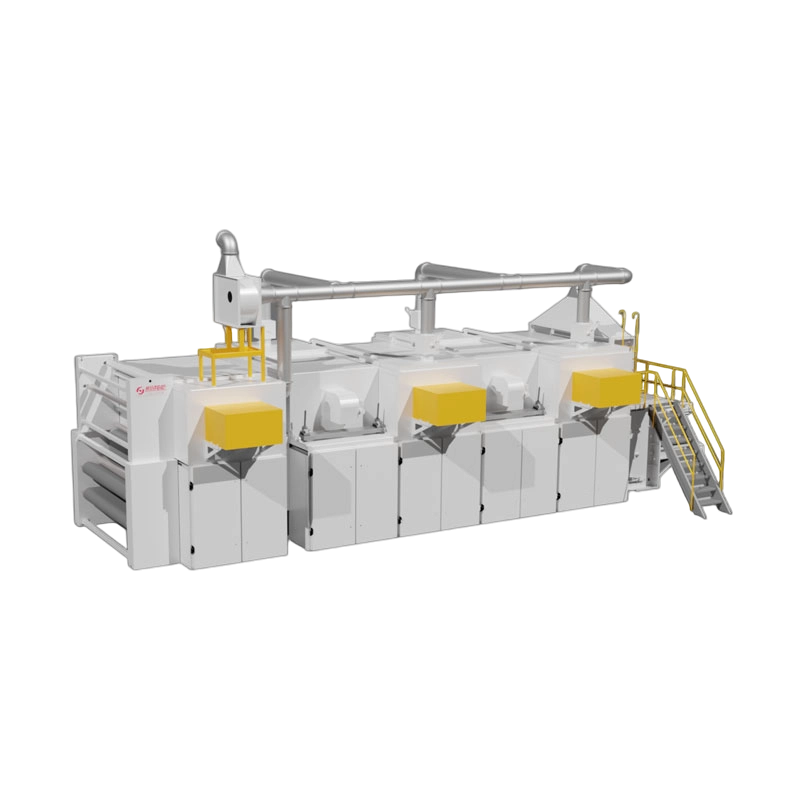
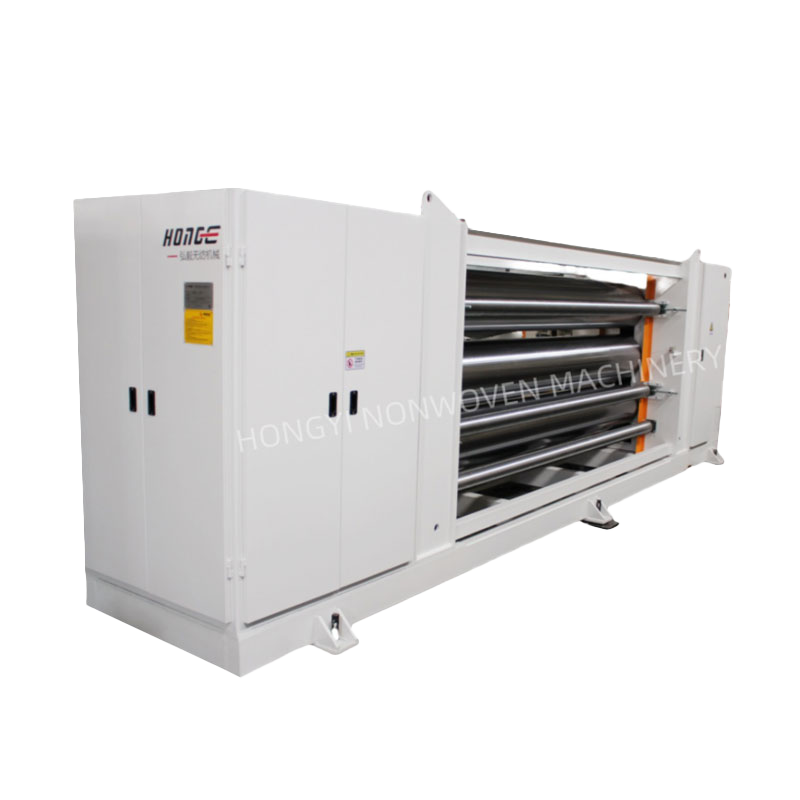
HYHX Nonwoven Fabric Oven
Key Structural Features
Single-Layer, Single-Belt, or Double-Belt Design
The HYHX series can be supplied in different structural arrangements. A single-layer configuration is suitable for certain lighter or less compressible webs. A single-belt design can provide straightforward material transport and a flexible process arrangement. A double-belt structure uses upper and lower belts to guide and hold the web as it travels through the heating and forming zones.
The double-belt arrangement is especially useful for thick thermal-bonded wadding because it helps control the product profile. The belts can support the web, reduce excessive movement, and maintain more consistent contact with the process zone. The appropriate arrangement is selected according to the product’s thickness, density, surface requirements, and degree of compression.
Upper and Lower Web-Support Belts
Upper and lower belts hold the web during heating and forming. This design helps the batt enter the oven in a controlled condition and reduces the risk of web flutter caused by air movement. Stable support is valuable when producing wide materials or high-loft products.
The belts also influence thickness and surface appearance. By selecting suitable belt tension, pressure, speed, and spacing, the manufacturer can adjust the final product to meet specific requirements. The operating parameters must be coordinated with the fiber blend and web structure to avoid unwanted compression.
High-Temperature-Resistant Belt
The conveying belt is exposed to elevated temperature and continuous mechanical movement. The HYHX oven uses a high-temperature-resistant belt selected for the thermal bonding environment. The belt must maintain adequate strength, dimensional stability, and running performance during repeated heating and cooling cycles.
Belt material and construction are important to product quality. A stable belt helps maintain a consistent process gap and reduces the possibility of marks, wrinkles, or uneven web support. It also contributes to reliable long-term operation when the equipment is correctly maintained.
Automatic Belt Correction Device
The oven includes an automatic correction device to help keep the belt aligned during operation. Belt deviation can affect web tracking, product width, edge quality, and machine safety. Automatic correction reduces the need for frequent manual intervention and helps maintain stable production.
Because the correction system works together with belt tension, roller alignment, and drive conditions, regular inspection remains important. Operators should monitor belt tracking and respond to abnormal movement before it develops into a larger maintenance issue.
Inverter Control for Main Drive and Fans
The main drive and fan systems use inverter control. Variable-speed control enables operators to adjust line speed and air circulation according to the material being processed. This is more flexible than a fixed-speed arrangement, particularly when the production line must handle multiple fiber blends or product specifications.
Drive speed influences dwell time, while fan speed affects airflow and heat transfer. Independent and coordinated adjustment can help manufacturers optimize the balance between production capacity and bonding quality. Inverter control can also support smoother starting and stopping, reduce mechanical shock, and contribute to energy management.
Technical Specifications
The following specifications represent the standard information available for the HYHX Nonwoven Fabric Oven. Final specifications may vary according to the production line design, fiber formulation, required output, local energy conditions, and customer-specific configuration.
| Model | HYHX |
| Equipment Type | Nonwoven fabric oven for thermal bonding and heat setting |
| Automatic Grade | Automatic |
| Working Width | Up to 5,000 mm |
| Product Thickness | 3–200 mm |
| Heat-Setting Temperature | Up to 220°C |
| Product Weight | 60–1,500 GSM |
| Specification Lengths | 6 m, 8 m, or 10 m |
| Raw Materials | Polyester fiber or PP staple fiber |
| Heating Methods | Hot-oil circulation or electric heating |
| Configuration | Customized according to customer requirements |
| Certification | CE and ISO9001:2000 |
| Condition | New |
| Warranty | One year |
| Origin | China |
| HS Code | 8449009000 |
The broad operating range allows the oven to serve both medium-weight and heavy nonwoven products. However, the exact production capacity cannot be determined from working width alone. It depends on basis weight, line speed, thermal requirements, fiber composition, product thickness, and the time required for complete bonding and cooling.
Advantages Compared with Conventional Thermal Bonding Equipment
More Uniform Heating Through the Web
Surface heating alone is often inadequate for thick nonwoven material. The outside of the web may reach the required temperature while the center remains underheated. Hot-air penetration addresses this issue by transferring heat through the material. When airflow and temperature are correctly adjusted, the result is more consistent bonding across the full thickness.
This advantage is particularly important for products between 3 and 200 mm thick. Thick wadding requires sufficient energy penetration without excessive surface temperature. The HYHX structure is designed around this requirement.
Better Control of Product Thickness
The upper and lower belt arrangement provides support while the web is heated and formed. Compared with an unsupported thermal chamber, belt-controlled processing offers better control over the product profile. This can reduce thickness variation and help manufacturers achieve more repeatable results from one production batch to another.
Thickness control is important for insulation, furniture padding, automotive materials, and other products sold according to a specified profile or basis weight. It also helps downstream converters maintain stable cutting and laminating conditions.
Flexible Processing for Different Products
Variable-speed main drive and fan control allow the equipment to be adjusted for different fibers and structures. A lightweight web may require a different air velocity and dwell time from a dense, heavy batt. The ability to modify these parameters helps one oven support a wider product range.
Customization of the configuration further improves flexibility. Customers can request a suitable working width, oven length, belt arrangement, heating method, and integration approach based on their factory and product plans.
Reduced Risk of Manual Belt Adjustment
The automatic belt correction device helps maintain alignment during continuous operation. In manually corrected systems, belt deviation may require frequent operator attention. It can also cause uneven edge wear and production interruptions if not addressed quickly.
Automatic correction does not eliminate the need for maintenance, but it helps reduce routine intervention. This can support a more stable operating rhythm and lower the risk of defects related to belt misalignment.
Adaptability to Complete Production Lines
The oven can be integrated with opening and blending equipment, feeding and carding equipment, cross lappers, web-forming systems, winding machines, cutting machines, and auxiliary units. This makes it suitable for both new line construction and selected equipment upgrades.
A complete line approach can simplify engineering coordination. The manufacturer can consider the relationship between web weight, carding capacity, lapper output, oven speed, cooling, and finished-product handling rather than treating each machine as an isolated unit.
Suitable for Customized Industrial Production
Many nonwoven producers do not manufacture only one product. They may need to change between different widths, basis weights, fiber blends, or thicknesses. A standardized machine with limited adjustment capability can create production restrictions. The HYHX series is designed with customization in mind, helping customers select a configuration that matches their product portfolio.
Manufacturing Strengths and Engineering Capabilities
Changshu Hongyi Nonwoven Machinery Co., Ltd. has more than 20 years of experience in the nonwoven machinery field. Its manufacturing and engineering scope includes complete production lines and individual machines for needle-punched geotextiles, nonwoven carpets, airlaid waste felt, automotive interior materials, cleaning cloth, wool felt, jute felt, thermal-bonded wadding, and related products.
Experience Across Multiple Nonwoven Technologies
Experience with different nonwoven processes helps an equipment manufacturer understand the interaction between fiber preparation, web formation, consolidation, and finishing. A thermal bonding oven does not operate independently from the upstream web. Fiber opening, blending, carding, lapper arrangement, and batt uniformity all influence the final oven result.
By working across multiple machine categories, the company can evaluate the complete material flow. This is useful when a customer requires a complete line rather than a standalone oven. It also supports the selection of matching auxiliary equipment and control arrangements.
Project-Based Customization
Industrial nonwoven machinery must fit the customer’s product, workshop, utilities, production targets, and budget. The HYHX oven can be customized according to customer needs. Important design considerations include working width, heating method, oven length, belt configuration, temperature range, product thickness, control system, and connection with upstream and downstream machinery.
Customization should begin with a clear technical brief. Customers should provide information about fiber types, low-melt fiber percentage, target GSM, desired thickness, expected production capacity, product width, energy availability, and required finishing. These details allow the supplier to recommend a suitable machine arrangement instead of relying only on a general catalog model.
Focus on Automatic Control
Automatic control supports repeatability and reduces dependence on manual adjustment. Temperature, line speed, fan operation, and belt movement can be coordinated to create stable operating conditions. Inverter control allows the machine to respond to different product recipes and production stages.
Automation is particularly valuable when the line operates for long periods or when several product specifications are manufactured. A consistent control system can help operators record process settings, identify deviations, and return to known production parameters after a product changeover.
Energy-Conscious Equipment Design
Thermal equipment naturally consumes significant energy because it must heat air and transfer that heat into the web. Energy performance therefore depends on insulation, air circulation, heat recovery possibilities, fan selection, operating temperature, production speed, and correct process adjustment.
The use of hot-oil circulation or electric heating gives customers a choice based on available utilities and operating strategy. Inverter control for fans and the main drive can help avoid running every system at maximum speed when the product requires a lower setting. Proper thermal insulation and regular sealing inspection are also important for reducing heat loss.
Quality and Certification Orientation
The HYHX Nonwoven Fabric Oven is listed with CE and ISO9001:2000 certification information. Certification indicates that the equipment is manufactured within specified quality and safety frameworks. Customers should confirm the exact certification documents, applicable standards, and compliance scope during the technical and commercial evaluation process.
Quality manufacturing also depends on component selection, welding accuracy, frame rigidity, roller alignment, belt installation, electrical cabinet assembly, and functional testing. These details influence the oven’s long-term performance as much as the headline specifications.
Manufacturing Process of the Oven
Technical Design and Configuration
The manufacturing process begins with technical design. Engineers analyze the required product width, thickness, GSM range, heating method, line speed, air circulation, belt type, and integration points. They then determine the machine dimensions, heating-zone arrangement, cooling structure, drive system, and control logic.
For a customized oven, the design must also consider the customer’s factory layout. The available installation space, material flow direction, electrical capacity, heating source, exhaust arrangement, maintenance access, and lifting conditions can affect the final configuration.
Frame and Mechanical Fabrication
The primary mechanical structure is mainly manufactured from steel and iron materials. A rigid frame is required to support the oven body, belts, rollers, fans, heating components, and insulation. Structural stability helps maintain belt alignment and protects the machine from vibration during continuous operation.
Fabrication may include cutting, forming, welding, machining, drilling, surface treatment, and assembly. Dimensional accuracy is important because small errors in roller position or frame alignment can influence belt tracking and product uniformity.
Heating and Air-Circulation Assembly
The heating system and air-circulation components are assembled according to the selected heating method. Hot-oil circulation requires suitable piping, circulation components, heat-transfer surfaces, safety controls, and insulation. Electric heating requires heating elements, electrical protection, temperature sensors, wiring, and control devices.
Air circulation must be arranged to deliver heat effectively across the working width. The design should minimize dead zones and excessive turbulence while maintaining the pressure needed for penetration through the web. Fan inverter control provides adjustment for different production conditions.
Belt and Roller Installation
The high-temperature-resistant belt is installed after the frame, rollers, and drive components have been prepared. Belt tension must be set carefully. Excessive tension can increase wear and load on bearings, while insufficient tension can lead to slippage, wrinkles, or unstable tracking.
The automatic correction device is calibrated during installation. Roller alignment, sensor position, correction response, and belt movement are checked before production testing. These steps are essential for reliable continuous operation.
Electrical and Control Integration
The electrical system connects temperature control, fan inverters, main drive inverters, belt correction devices, sensors, safety switches, alarms, and operator controls. The control interface should allow operators to monitor essential process values and make adjustments according to the production recipe.
Safety functions may include emergency stops, over-temperature protection, drive fault alarms, access protection, and abnormal belt-position warnings. The exact functions depend on the final machine design and applicable customer requirements.
Testing Before Delivery
Before delivery, the machine should undergo mechanical, electrical, and functional inspection. Testing can include no-load belt operation, drive rotation, fan operation, temperature control, sensor response, correction-device operation, emergency-stop testing, and control-panel verification.
When possible, production trials with representative fiber material provide additional information. Testing with the customer’s intended fiber blend can help verify process settings and identify any adjustments required before shipment or installation.
Applications of Thermal-Bonded Nonwoven Products
Automotive Interior Materials
Thermal-bonded nonwovens are used in automotive interior components because they can provide cushioning, insulation, acoustic support, and lightweight structural performance. The material may be used beneath carpets, in trunk compartments, door panels, roof systems, wheel-arch areas, or other interior assemblies.
Automotive applications often require consistent thickness, stable dimensions, low weight, and reliable processing. The oven’s controlled heating and belt-supported forming can help produce material with the uniform profile required for cutting and molding.
Furniture and Mattress Padding
Thermal-bonded wadding is widely used in mattresses, sofas, chairs, cushions, and upholstered products. The material must combine softness or resilience with sufficient structural strength. By selecting the fiber blend, low-melt component, basis weight, and thermal conditions, manufacturers can produce different grades for comfort and support.
The ability to process thick material is a major benefit for furniture and mattress producers. A stable cooling stage helps preserve loft and reduces deformation when the material is wound, stacked, or converted.
Thermal and Acoustic Insulation
Nonwoven fiber products can provide thermal insulation and sound-absorbing performance in buildings, appliances, vehicles, and industrial equipment. The final properties depend on fiber type, density, thickness, pore structure, and finishing treatment.
For insulation products, uniform internal bonding is important. Weakly bonded areas may collapse during handling, while excessive bonding may reduce loft and affect insulation performance. Controlled hot-air penetration helps manufacturers balance these requirements.
Geotextile and Construction Materials
Although many geotextiles are needle punched, thermal bonding can be used in selected construction and civil-engineering products where heat-stabilized fiber structures are appropriate. These products may require specific tensile properties, dimensional stability, thickness, or resistance to handling.
The oven can also be used as one stage in a broader nonwoven production system where thermal treatment complements mechanical consolidation or subsequent lamination.
Household and Industrial Products
Thermal-bonded nonwovens are used in cleaning materials, protective padding, packaging layers, filtration supports, disposable components, agricultural materials, and industrial felts. Different applications may require different combinations of softness, stiffness, resilience, absorbency, and heat resistance.
Product diversification is easier when the oven can handle a wide GSM and thickness range. Manufacturers can use different process recipes while maintaining the same core equipment platform.
How to Select the Correct Oven Configuration
Determine the Product Width
Working width should be selected according to the maximum finished-product width and the required edge-trimming allowance. The HYHX series can be configured for working widths up to 5,000 mm. A wider machine can increase output potential, but it also requires sufficient upstream web-forming capacity and suitable workshop space.
Evaluate Thickness and Basis Weight
Product thickness and GSM affect heat-transfer requirements, dwell time, air pressure, belt spacing, and cooling needs. A thick, high-GSM batt generally requires more time and energy to heat completely than a thin, lightweight web.
Customers should provide both the minimum and maximum intended product specifications. Designing only for one product may limit future production flexibility. The stated range of 60–1,500 GSM and 3–200 mm thickness provides a starting point, but final validation should be based on the actual fiber composition and target output.
Identify the Fiber Blend
Polyester fiber and PP staple fiber have different thermal characteristics. The low-melt component must be compatible with the base fiber and the desired final performance. The percentage of low-melt fiber, its melting range, and its distribution within the batt all influence the required oven settings.
Customers should provide material samples or complete fiber specifications during the engineering stage. This allows the supplier to assess thermal behavior and recommend appropriate temperature, speed, air circulation, and belt conditions.
Choose the Heating Method
Hot-oil circulation may be suitable for factories with an existing thermal-oil system or where centralized heat transfer is preferred. Electric heating may be more convenient where electrical power is readily available and a separate oil system is not desired.
The choice should consider energy cost, utility availability, maintenance capability, local regulations, temperature requirements, and future expansion plans. The machine supplier can help compare the alternatives based on the production target.
Plan for Line Integration
The oven should be matched with the capacity of the carding machine and cross lapper. If the oven is too fast for the web-forming system, the line may not achieve its rated output. If the oven is too slow, it may become a production bottleneck.
Downstream equipment must also be considered. Winding, slitting, cutting, cooling, inspection, and packaging systems should be arranged to receive the material without excessive tension or unnecessary handling.
Installation and Commissioning
Successful installation begins with a prepared foundation and sufficient space around the machine. The foundation must support the equipment weight and maintain the alignment required for belts, rollers, and drive components. Adequate space should be reserved for inspection, cleaning, belt replacement, electrical maintenance, and access to heating components.
Electrical power, heating utilities, compressed air if required, ventilation, exhaust, and fire-safety provisions should be prepared before the equipment arrives. The customer should also confirm the lifting and unloading method for large machine sections.
During commissioning, engineers check the frame level, roller alignment, belt tension, correction-device response, drive direction, fan rotation, temperature sensors, heating system, control logic, and safety functions. Initial production should begin at conservative settings. Temperature and line speed can then be increased gradually while the web is inspected for bonding, thickness, surface condition, and dimensional stability.
A commissioning record should document the tested material, temperature, line speed, fan settings, belt speed, product thickness, product weight, and observed results. These records provide a useful reference for future operation and troubleshooting.
Operation and Maintenance Recommendations
Daily Inspection
Operators should inspect the belt surface, belt tracking, roller condition, temperature readings, fan operation, drive status, and emergency-stop system before production. Any abnormal noise, vibration, smell, temperature fluctuation, or belt movement should be investigated.
Accumulated fiber and dust should be removed from accessible areas according to the plant’s cleaning procedure. Deposits around heating and air-circulation components can reduce efficiency and may create safety risks.
Belt Care
The belt is a critical working component. Operators should avoid sharp objects, excessive tension, contamination, and operation outside the recommended temperature range. Belt tracking should be observed during startup and after product changes.
If the belt repeatedly moves to one side, the cause may involve roller alignment, tension imbalance, material loading, sensor position, or mechanical wear. The automatic correction device should not be used to conceal a persistent mechanical problem.
Temperature and Airflow Monitoring
Temperature sensors should be checked regularly for accuracy and stable response. Fan performance should be monitored because reduced airflow can create uneven heating, especially in thick products. Air channels, filters, dampers, and circulation paths should be cleaned and inspected as required.
Process settings should be recorded for each product type. A documented recipe helps operators reproduce successful conditions and identify the cause of quality changes.
Drive and Electrical Maintenance
Inverters, motors, bearings, switches, cables, and control components should be inspected according to a planned maintenance schedule. Electrical cabinets should be kept clean and dry. Loose connections and excessive dust can lead to faults or overheating.
Preventive maintenance is generally less costly than unplanned downtime. The one-year warranty provides an initial protection period, but long-term performance depends on correct operation, timely servicing, and the use of suitable replacement parts.
Quality Control of the Finished Nonwoven Fabric
Finished-product inspection should be based on the customer’s application and technical specification. Common checks include basis weight, thickness, width, tensile strength, tear resistance, compression recovery, dimensional stability, appearance, and bonding uniformity.
Thickness should be measured at multiple points across the width and along the production direction. A single measurement may not reveal edge variation or local compression. Basis weight testing can help determine whether the upstream web-forming process and oven feeding are stable.
Visual inspection should look for hard spots, weak areas, holes, wrinkles, discoloration, belt marks, loose edges, and inconsistent loft. If defects occur, the operator should review the entire process rather than changing temperature alone. Causes may originate in fiber blending, carding, cross-lapping, feeding, belt tracking, airflow, heating, cooling, or winding tension.
Why Work with an Experienced Nonwoven Machinery Manufacturer?
Buying a thermal bonding oven is not only a matter of selecting a heating chamber. The equipment must match the fiber technology, web structure, production speed, plant utilities, and downstream process. An experienced manufacturer can help connect these technical factors during machine selection and line design.
Changshu Hongyi Nonwoven Machinery Co., Ltd. supplies both complete nonwoven production lines and individual machines. Its experience covers opening and blending, feeding and carding, web forming, needle punching, thermal bonding, airlay production, winding, cutting, and auxiliary equipment. This broad product range allows the company to support customers who need a complete project as well as those who are upgrading one section of an existing line.
The company reports that its equipment has been supplied to more than 20 countries, including markets in Asia, Latin America, Africa, and other regions. International project experience can help with export packaging, installation coordination, documentation, electrical adaptation, and communication during commissioning.
Its stated manufacturing focus includes efficiency, reliability, quality, advanced technology, precision engineering, automatic control, energy-saving capability, and customization. These strengths are particularly relevant to thermal processing equipment, where stable mechanical construction and accurate process control strongly affect product consistency.
Frequently Asked Questions
What is the main function of the HYHX Nonwoven Fabric Oven?
The main function is to thermally bond and heat-set a fiber web from a cross lapper. Hot air penetrates the web and melts the low-melt fiber, allowing it to combine surrounding fibers. A cooling stage then helps stabilize and reinforce the finished wadding.
What raw materials can be processed?
The listed raw materials include polyester fiber and PP staple fiber. The actual fiber blend should be evaluated before production because melting behavior, bonding temperature, shrinkage, and final performance depend on the specific fiber grades and low-melt components.
What is the maximum working width?
The working width can be configured up to 5,000 mm. The correct width depends on the desired finished-product width, edge allowance, upstream web-forming capacity, and workshop layout.
What product thickness can the oven handle?
The stated product thickness range is 3–200 mm. Actual performance depends on fiber type, basis weight, web structure, low-melt fiber content, temperature, airflow, line speed, and belt configuration.
What is the maximum heat-setting temperature?
The listed heat-setting temperature is up to 220°C. The correct operating temperature should be determined according to the melting range of the bonding fiber and the thermal limits of the other fibers in the web.
Does the oven use electric heating?
Yes. The available heating methods include electric heating and hot-oil circulation. The selection should be based on the customer’s utilities, energy strategy, maintenance resources, and required process conditions.
What is the purpose of the double-belt structure?
The upper and lower belts hold and guide the web during heating and forming. This can improve web stability, thickness control, and product uniformity, especially when processing thick or high-loft wadding.
How does automatic belt correction help?
The automatic correction device helps maintain belt alignment during operation. It reduces the need for constant manual adjustment and can lower the risk of uneven edge wear, belt deviation, and related production interruptions.
Can the machine be customized?
Yes. The configuration can be customized according to customer requirements. Possible considerations include working width, oven length, belt structure, heating method, control system, product range, and integration with upstream and downstream equipment.
Is the oven suitable for a complete nonwoven production line?
Yes. It can be integrated with opening and blending machines, carding machines, cross lappers, web-forming equipment, cooling sections, winding machines, cutting machines, and other auxiliary equipment.
What warranty is provided?
The listed after-sales service is a one-year warranty. Customers should confirm the warranty scope, excluded parts, response procedure, installation support, and spare-parts policy in the final contract.
What information should be provided when requesting a quotation?
A quotation request should include fiber type, low-melt fiber specification, target GSM, product thickness, working width, expected production capacity, heating preference, factory power supply, available utilities, product application, and whether the machine will be integrated into a new or existing line.
Conclusion
The HYHX Nonwoven Fabric Oven provides a controlled method for producing hard, thick, and stable thermal-bonded wadding. Its hot-air penetration system melts low-melt fibers throughout the web, while the cooling stage helps reinforce and stabilize the finished material. The single-layer, single-belt, and double-belt options provide flexibility for different product structures and production requirements.
Key advantages include working widths up to 5,000 mm, product thickness capability from 3 to 200 mm, product weights from 60 to 1,500 GSM, heat-setting temperatures up to 220°C, high-temperature-resistant belts, automatic belt correction, and inverter control for the main drive and fans. The equipment can use hot-oil circulation or electric heating and can be customized for different production lines.
Supported by more than 20 years of nonwoven machinery experience, Changshu Hongyi Nonwoven Machinery Co., Ltd. offers both individual machines and complete line solutions. Its experience across carding, web forming, needle punching, airlay processing, thermal bonding, winding, and cutting enables a broader engineering approach to nonwoven production.
For manufacturers seeking consistent thermal bonding, adjustable processing parameters, and equipment adapted to their material and factory conditions, the HYHX series offers a practical industrial solution. Proper product testing, correct configuration, professional installation, and preventive maintenance will help the oven deliver reliable performance over its operating life.
References
1. Product technical information for the HYHX Nonwoven Fabric Oven, including working width, thickness range, temperature range, heating methods, belt structure, and control features.
2. Manufacturer information for Changshu Hongyi Nonwoven Machinery Co., Ltd., including nonwoven machinery categories, engineering experience, customization capabilities, and international supply background.
3. General principles of thermal bonding in nonwoven fabric manufacturing, including low-melt fiber consolidation, hot-air penetration, cooling, and dimensional stabilization.
4. General industrial guidance for nonwoven web formation, cross-lapping, thermal processing, winding, cutting, and quality inspection.
5. General maintenance principles for continuous thermal-processing equipment, including belt tracking, temperature control, airflow monitoring, drive inspection, and preventive servicing.