

Content
- 1 Introduction
- 2 What Is a Bale Opener?
- 3 Core Functions of the HYKB Bale Opener
- 4 Machine Structure and Process Sequence
- 5 Advantages Compared with Basic Bale-Opening Equipment
- 6 Manufacturing Strengths and Engineering Capability
- 7 Applications in Nonwoven Production
- 8 Operational Benefits for Manufacturers
- 9 Control, Safety, and Maintenance Considerations
- 10 Technical Specifications
- 11 How to Select the Correct Configuration
- 12 Installation and After-Sales Support
- 13 Packaging, Delivery, and Commercial Information
- 14 Why Choose an Integrated Supplier?
- 15 Quality Control from Raw Material to Finished Web
- 16 Environmental and Production Efficiency Considerations
- 17 Frequently Asked Questions
- 17.1 What is the main purpose of the HYKB Bale Opener?
- 17.2 Can the machine blend different types of fiber?
- 17.3 What are the main sections of the machine?
- 17.4 How does the automatic weighing system work?
- 17.5 What working widths are available?
- 17.6 What capacity can the machine achieve?
- 17.7 Can the bale opener be used with a carding machine?
- 17.8 Is the machine suitable for recycled fiber?
- 17.9 Can the machine be customized?
- 17.10 What voltage is available?
- 17.11 What certifications are listed?
- 17.12 What is the warranty period?
- 17.13 Does the supplier provide installation support?
- 17.14 How long is the delivery period?
- 17.15 What should be confirmed before ordering?
- 18 Conclusion
- 19 References
- 20 Product: HYKB Bale Opener
Introduction
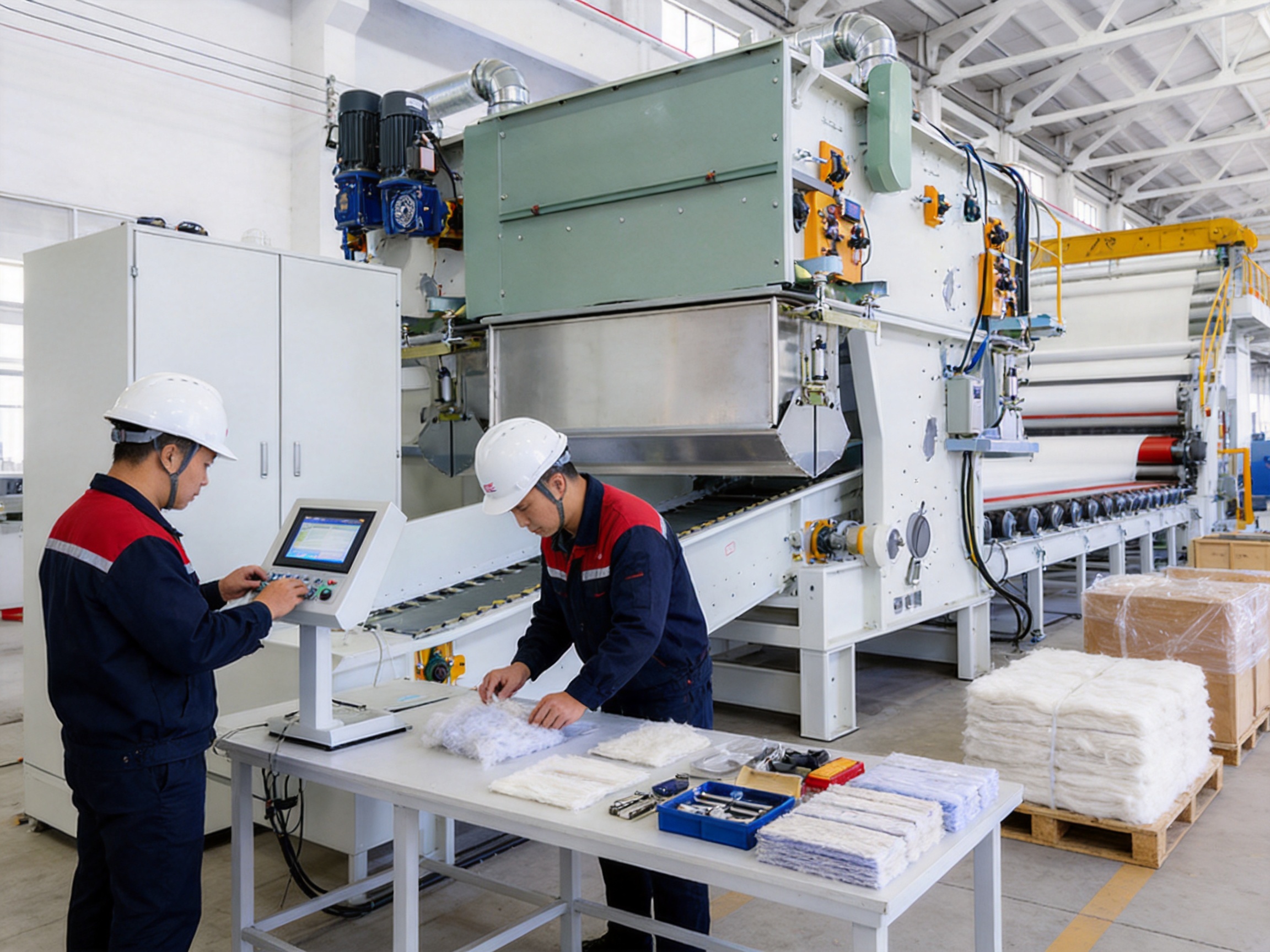
Fiber preparation is one of the most important stages in nonwoven fabric production. Before fibers reach a carding machine, airlay system, thermal bonding oven, or needle punching line, they must be opened, blended, and supplied in a stable and accurately controlled manner. Poor preparation at this stage can lead to uneven web formation, irregular product weight, weak spots, excessive waste, and inconsistent finished-fabric performance.
The HYKB Bale Opener is designed to address these challenges by combining bale opening, fiber pre-opening, automatic weighing, proportion control, and material transfer in one coordinated system. It is intended for manufacturers that process different types of fibers and require a reliable method of preparing a uniform blend before downstream nonwoven production.
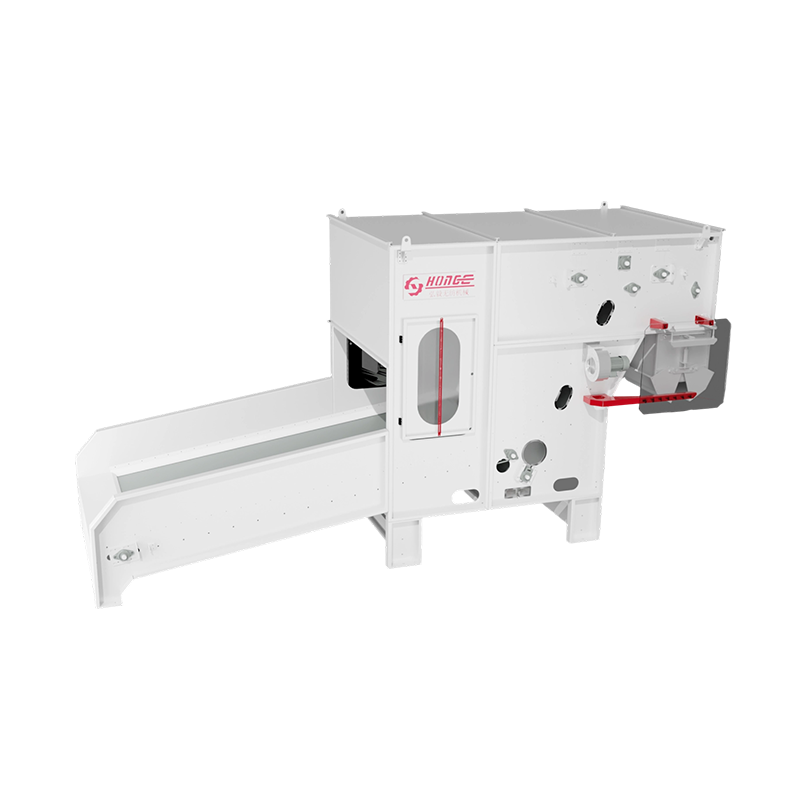
Unlike a basic bale-breaking device that only loosens compressed fiber, this equipment is engineered as part of a wider fiber-opening and blending process. Its front section provides fiber storage, its middle section performs feeding and pre-opening, and its latter section weighs and transfers the material according to a predetermined ratio. Several units can also work together when a production process requires multiple fiber types or more complex blending recipes.
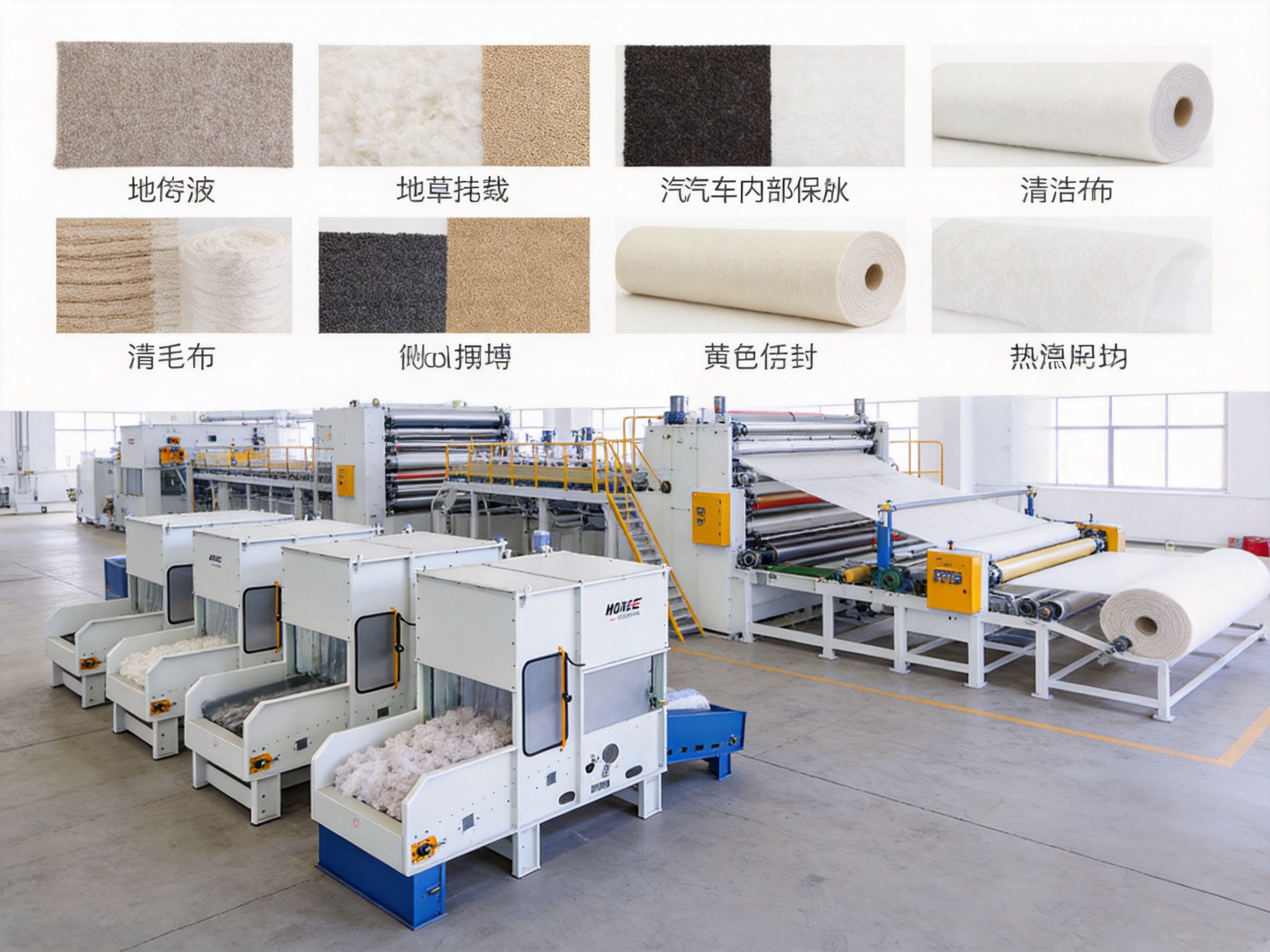
Manufactured and supplied by Changshu Hongyi Nonwoven Machinery Co., Ltd., the machine reflects the company’s more than 20 years of experience in nonwoven machinery. The company develops individual machines and complete nonwoven production lines for applications including geotextiles, carpets, automotive interior materials, cleaning cloths, wool felt, jute felt, airlaid products, and thermal bonded wadding.
This article explains the structure, working principle, benefits, applications, customization options, and purchasing considerations associated with the HYKB Bale Opener.
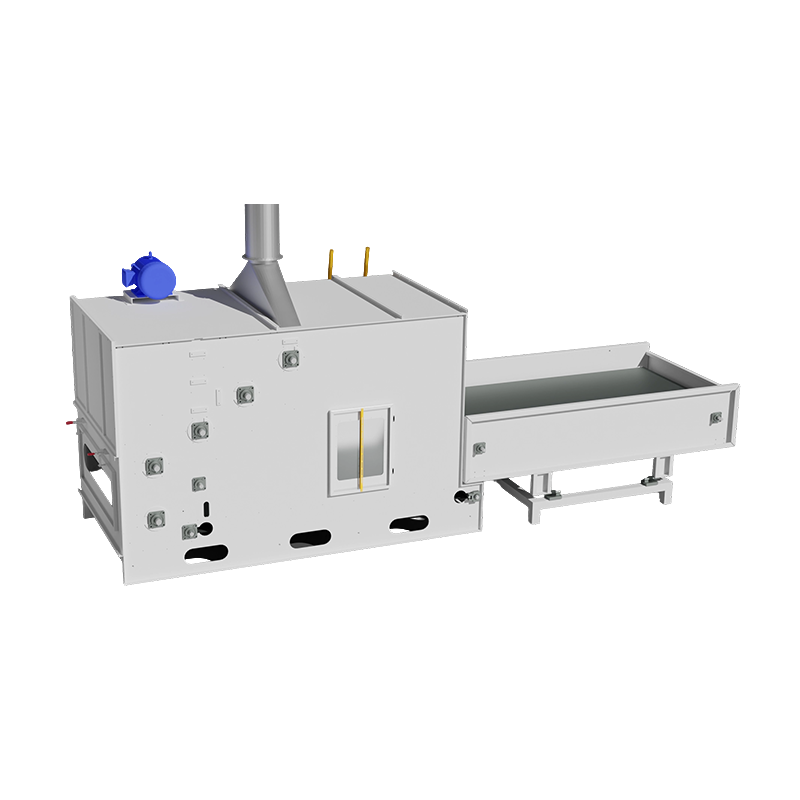
HYKB Bale Opener
What Is a Bale Opener?
A bale opener is a fiber preparation machine used to loosen, separate, and meter fibers supplied in compressed bales. During storage and transportation, textile and nonwoven fibers are compressed into dense packages. These bales cannot normally be fed directly into a carding machine or web-forming system because the fibers are too compact and may contain lumps or unevenly distributed sections.
The bale opener breaks down the compressed material into a more manageable form. It gently separates the fiber tufts, removes excessive compactness, and delivers a controlled flow of material to the next machine. Depending on the design, it may also support blending, weighing, and proportional feeding.
The HYKB model is positioned as a bale opener and fiber blending machine for nonwoven production. It is suitable for various fibers, including polyester fiber and other commonly used nonwoven raw materials. Its automatic weighing function allows operators to establish the required quantity or percentage for each fiber component, helping create a repeatable blend from batch to batch.
The machine is particularly valuable in production environments where the final product depends on a carefully controlled combination of different fibers. Examples include products requiring a specific ratio of virgin and recycled fiber, different deniers, different lengths, or fibers with different thermal, mechanical, or absorbent properties.
Core Functions of the HYKB Bale Opener
Bale Opening
The primary function of the machine is to open compressed fiber bales. The opening action converts dense bale material into loosened fiber tufts that can be transported and processed more effectively. Pre-opening also helps reduce the load placed on downstream equipment and supports a more stable feeding condition.
Fiber Storage
The front section of the equipment is used for fiber storage. Operators can place prepared fiber materials into the relevant storage area before the opening and blending process begins. This arrangement makes it possible to organize several raw materials in a planned sequence and to prepare the machine for continuous operation.
Pre-Opening and Feeding
The middle section is responsible for feeding and pre-opening. It controls the movement of material from the storage section while loosening the fibers before weighing or transfer. A properly managed feeding process helps prevent large slugs of material from entering the weighing area and contributes to a more consistent production flow.
Automatic Weighing
The latter section weighs fibers in accordance with the required proportions. Electronic weighing is a central feature of the machine because accurate metering is essential when the final product depends on a repeatable fiber recipe.
Instead of relying entirely on manual measurement, the operator can establish a target quantity or blending proportion through the control system. The machine then supports the controlled delivery of each material. This can improve production repeatability, reduce manual handling, and make recipe changes more systematic.
Cross-Conveyor Transfer
After the fiber has been opened and weighed, it is transferred by a cross conveyor to the opener or the next stage of the line. The conveyor creates a coordinated connection between the weighing process and downstream equipment. This helps maintain a continuous material flow and reduces the need for frequent manual transfer.
Multi-Fiber Blending
Several bale opener sets can be combined when a production line uses multiple fiber types. The collaboration of several machines allows the user to set different input quantities or percentages for each material. This configuration is useful for manufacturers producing products with varied recipes or changing raw-material requirements.
Machine Structure and Process Sequence
The HYKB Bale Opener is composed of three principal functional areas: the fiber storage section, the feeding and pre-opening section, and the weighing section. Although each section performs a different task, the machine is designed to operate as one integrated preparation system.
Stage One: Fiber Loading and Storage
At the beginning of production, bales are opened sufficiently for loading into the designated storage area. The raw materials may be arranged according to fiber type, color, grade, recycled content, or the blend recipe planned for the production order.
Good material preparation remains important even when an automatic machine is used. Operators should remove packaging materials, inspect the fiber for foreign objects, and confirm that the correct raw material has been assigned to each storage position. These basic controls help protect the equipment and reduce the risk of an incorrect blend.
Stage Two: Controlled Feeding
The feeding section draws material from storage at a controlled rate. The purpose is not simply to move fiber forward, but to regulate the quantity entering the pre-opening area. Stable feeding reduces fluctuations and creates better conditions for automatic weighing.
Irregular feeding can result from excessively compressed bales, inconsistent bale placement, foreign objects, or unsuitable material preparation. For this reason, operators should follow the recommended operating procedures and keep the feed area clean.
Stage Three: Pre-Opening
In the pre-opening section, the compressed fiber is loosened and separated. The objective is to create a more uniform fiber mass without unnecessarily damaging the material. The pre-opened fiber is easier to weigh, transfer, and process in carding or airlay equipment.
The required degree of opening can vary according to the raw material. Polyester, recycled fiber, natural fiber, and blended fiber may behave differently during opening. Production settings should therefore be selected with consideration for fiber length, fineness, moisture, compression density, and the intended end product.
Stage Four: Electronic Weighing
Once the fiber has been pre-opened, the machine weighs the material according to the selected production requirement. Electronic weighing provides a more controlled alternative to manual weighing and helps reduce variation between batches.
For example, a manufacturer may need a blend consisting of two or more fiber types in different proportions. The machine can be arranged to coordinate the input of each component so that the blend is prepared according to the specified recipe. The exact operating method and control configuration should be confirmed during technical discussions because the final setup depends on line layout, fiber characteristics, and customer requirements.
Stage Five: Transfer to the Next Process
After weighing, the material is transferred through the cross conveyor toward the opener or subsequent nonwoven machinery. This may include a fine opener, blending chamber, carding machine, airlay machine, or another component of the production line.
The transfer stage is important because the benefits of accurate weighing can be reduced if material is discharged unevenly or allowed to accumulate in uncontrolled piles. The coordinated conveying arrangement supports a more stable handoff to the downstream process.
Advantages Compared with Basic Bale-Opening Equipment
Integrated Opening and Blending
Many basic bale-opening devices focus primarily on breaking apart compressed material. The HYKB system extends this function by incorporating pre-opening, automatic weighing, and proportional blending. This integrated approach can reduce the need for separate manual measuring operations and improve the connection between raw-material preparation and web formation.
Improved Recipe Repeatability
Fiber blend accuracy affects the characteristics of nonwoven fabric. A change in the percentage of a particular fiber may influence softness, bulk, tensile strength, elongation, absorbency, thermal bonding behavior, color, or resistance to deformation.
By using electronic weighing and preset proportions, the machine helps manufacturers repeat an established recipe more consistently. Repeatability is especially important when supplying customers who require stable product specifications across multiple production runs.
Support for Multiple Fiber Types
The machine is designed to accommodate several fiber types in one production operation. When multiple bale opener units are combined, producers can develop more flexible material recipes without relying entirely on manual preparation.
This capability can support the use of polyester fiber, recycled fiber, natural fiber, and other suitable materials, subject to technical confirmation. The correct machine arrangement depends on the fiber properties and the desired output.
Reduced Manual Material Handling
Manual weighing and transfer can consume labor and create additional opportunities for error. Operators may accidentally use the wrong fiber, misread a measurement, spill material, or fail to maintain the correct sequence. An automated weighing and conveying arrangement helps reduce these risks.
Automation does not eliminate the need for skilled operators, but it allows personnel to focus more on supervision, quality inspection, maintenance, and process control rather than repeated manual weighing.
Better Compatibility with Complete Lines
The HYKB Bale Opener can be used as a unit machine or as part of a wider nonwoven production line. This makes it suitable for companies that are expanding an existing facility as well as for customers installing a complete line from the beginning.
Changshu Hongyi Nonwoven Machinery Co., Ltd. supplies machinery for opening and blending, feeding and carding, web forming and needle punching, thermal bonding and heat setting, airlay processing, winding and cutting, and other auxiliary functions. This broader manufacturing capability can simplify equipment coordination during a line project.
Flexible Working Widths
Available working-width specifications include 1 meter, 1.2 meters, 1.4 meters, 1.6 meters, and 2 meters. This range allows the machine to be considered for different production capacities and line layouts.
Working width should be selected according to the width of the downstream card, web former, needle punching machine, thermal bonding equipment, or other connected machinery. A correct match helps prevent bottlenecks and avoids unnecessary material loss at the edges.
Manufacturing Strengths and Engineering Capability
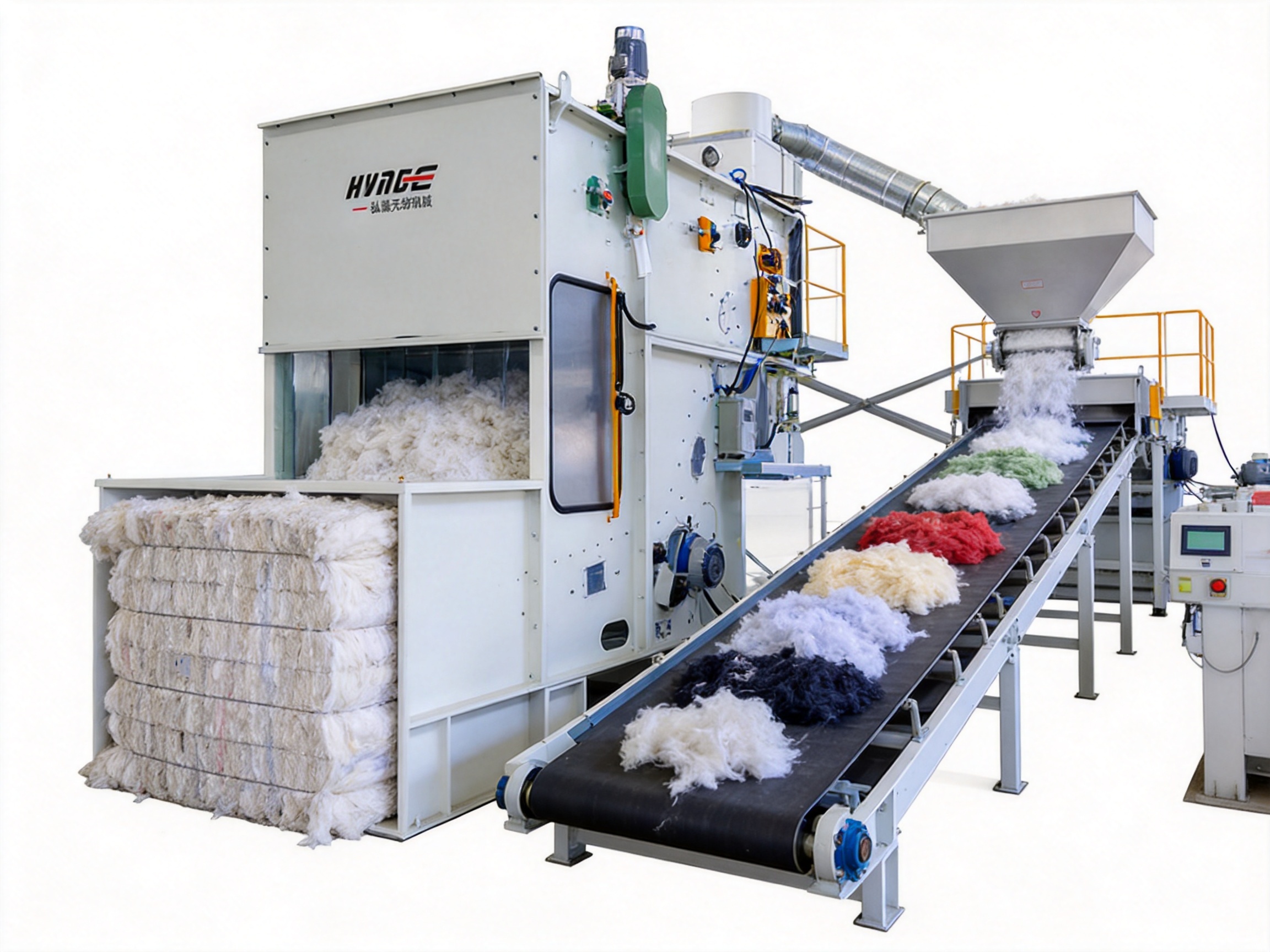
The performance of a bale opener depends not only on its general design but also on manufacturing accuracy, assembly quality, control integration, and after-sales support. Changshu Hongyi Nonwoven Machinery Co., Ltd. has more than two decades of experience in the nonwoven machinery field and provides both complete production lines and individual machines.
Experience in Nonwoven Machinery
Long-term specialization in nonwoven equipment gives the manufacturer a practical understanding of how opening, blending, carding, web forming, bonding, needling, heat setting, winding, and cutting processes interact. This experience is valuable when a bale opener must be matched with other machines in a production line.
A machine can perform well as an isolated unit but still create problems if its output is unsuitable for the next process. Experience in complete nonwoven systems helps the supplier consider material flow, output matching, working width, control coordination, and installation requirements during project planning.
Complete Line and Unit-Machine Production
The company provides individual machines as well as complete nonwoven production lines. Its product range includes needle punched geotextile lines, nonwoven carpet lines, airlaid waste felt lines, automotive interior material lines, needle punching cleaning cloth lines, wool felt lines, and jute felt lines.
This product coverage allows the bale opener to be specified in relation to the customer’s wider production objective. For example, a buyer planning a needle punched geotextile line may require a different opening and blending arrangement from a buyer producing thermal bonded wadding or automotive insulation.
Engineering Customization
The HYKB Bale Opener is identified as a customized product. Possible areas for customization may include working width, voltage, layout, number of coordinated units, conveyor arrangement, control requirements, and compatibility with the customer’s existing machinery.
Customization should be based on measurable production information. Important data includes raw-material type, fiber length and fineness, bale density, required blend ratio, target output, working width, available factory space, electrical standards, and the specifications of connected equipment.
Quality and Certification Orientation
The supplied specifications identify CE and ISO9001:2000 certification information. Certification and quality-management systems are important indicators for international buyers because they support documented production, safety consideration, and more consistent manufacturing procedures.
Customers should request the applicable certificates, technical documents, inspection records, and conformity information for the exact machine configuration being purchased. The details may vary according to the final design and destination market.
International Supply Experience
The company has supplied products to more than 20 countries, including markets in Latin America, Southeast Asia, North Africa, and other regions. International supply experience can help with export packaging, documentation, voltage adaptation, installation coordination, and communication across different operating environments.
For overseas projects, these practical factors can be as important as the machine itself. Clear documentation and planned installation support help reduce commissioning delays and make it easier for the buyer’s technical team to take over daily operation.
Applications in Nonwoven Production
Needle Punched Geotextiles
Geotextile production often requires stable web weight and reliable fiber distribution. The bale opener can prepare and blend fibers before carding and cross-lapping, helping create the foundation for a uniform web. The appropriate machine configuration depends on the target fabric weight, fiber type, working width, and needle punching line capacity.
Nonwoven Carpets
Carpet manufacturers may process different fibers or blend components to achieve the required bulk, resilience, color, and surface properties. Accurate preliminary blending can support more consistent carpet structure and reduce variation between production batches.
Automotive Interior Materials
Automotive interior materials frequently require controlled weight, good dimensional stability, acoustic performance, and consistent mechanical properties. Fiber preparation is one of several factors affecting these characteristics. A bale opener with automatic weighing can help maintain the intended material recipe before the fiber enters carding, needling, thermal bonding, or composite forming processes.
Cleaning Cloths and Industrial Felts
Cleaning cloths and industrial felts may use different blends according to absorbency, abrasion resistance, thickness, and durability requirements. The machine’s multi-fiber blending capability can support product development and help manufacturers change recipes in a more organized way.
Wool Felt and Jute Felt
Natural fibers such as wool and jute require careful handling because their length, moisture, surface characteristics, and compactness can vary. The opening and blending process should be adapted to the material so that the fibers are loosened effectively without unnecessary damage.
Thermal Bonded Wadding
Thermal bonded products depend on a controlled fiber mixture and a suitable balance between low-melting binder fibers and structural fibers. A bale opener can help meter the components before carding and thermal bonding. The final recipe must be developed according to the oven temperature, dwell time, line speed, and required product properties.
Airlaid and Recycled-Fiber Products
Airlaid systems and recycled-fiber production lines often require careful control of fiber preparation. Recycled materials may have greater variation in length, cleanliness, and bulk density. A controlled opening and weighing process can provide a more stable feed to subsequent equipment, although additional cleaning or separation equipment may be required depending on the raw material.
Operational Benefits for Manufacturers
More Efficient Production Planning
When fiber quantities and proportions are established through a controlled system, production planning becomes easier. Operators can organize raw materials around a defined recipe and reduce uncertainty during batch preparation.
This is useful for manufacturers producing several product grades. A machine that supports adjustable proportions can help the factory move from one specification to another without redesigning the entire material-preparation process.
Lower Risk of Blend Variation
Manual blending may produce inconsistent results because different operators use different weighing methods or because the material is not distributed evenly. Automatic weighing does not replace quality inspection, but it can reduce one major source of variation.
Consistent blending may lead to more stable downstream carding behavior and improved uniformity in the web. In turn, this can support more consistent thickness, basis weight, strength, and appearance in the finished product.
Improved Traceability
A defined recipe makes it easier to record which fibers were used and in what proportions. Production records can include raw-material lot numbers, target percentages, machine settings, and output quantities. Such information may support internal quality control and customer documentation.
Scalable Production Configuration
Because several bale opener sets can be combined, the system can be configured for simple or more complex fiber recipes. A factory may begin with a basic arrangement and expand its blending capability as product requirements develop.
Expansion planning should consider available floor space, electrical capacity, material flow, operator access, and the capacity of downstream machinery. Early consultation with the equipment supplier can help prevent layout restrictions later.
Control, Safety, and Maintenance Considerations
Control System Requirements
The automatic weighing function depends on properly configured sensors, controls, and operating parameters. Before commissioning, the buyer and supplier should confirm the required weighing accuracy, recipe-setting method, alarm functions, emergency-stop arrangement, and communication with connected equipment.
Control details may vary according to the customer’s project. Voltage is listed as 220 volts or customized, so electrical requirements should be confirmed before manufacturing begins. International buyers should also specify frequency, phase, control-voltage standards, and local safety requirements.
Operator Training
Operators should be trained in loading, recipe selection, start-up, shutdown, cleaning, fault recognition, and emergency procedures. They should understand that the machine is designed to control material flow, but correct raw-material identification and preparation remain essential.
Routine Cleaning
Fiber dust and loose tufts can accumulate around storage areas, conveyors, weighing components, and moving parts. Regular cleaning helps maintain accurate operation and reduces the risk of contamination between different production recipes.
Cleaning schedules should be adapted to the fiber type, production hours, dust level, and factory ventilation. Compressed air should be used carefully and only according to the supplier’s recommendations, particularly around sensors and electrical cabinets.
Inspection of Moving Components
Belts, bearings, rollers, drive components, guards, and conveyor surfaces should be inspected regularly. Early detection of wear can prevent unexpected downtime and protect the quality of the material flow.
Weighing Calibration
Because the machine relies on electronic weighing, calibration and verification are important. The weighing system should be checked at planned intervals and whenever the machine is relocated, modified, or exposed to unusual operating conditions.
The buyer should keep records of calibration checks and investigate any difference between target and actual blend proportions. Correct calibration supports both product quality and efficient material usage.
Technical Specifications
The principal specifications provided for the HYKB Bale Opener are summarized below. Final values should be confirmed against the approved technical proposal because the machine may be customized for a particular project.
| Model | HYKB |
| Machine type | Bale opener and fiber blending machine |
| Working widths | 1 m, 1.2 m, 1.4 m, 1.6 m, and 2 m |
| Capacity references | Approximately 200 kg/h and 300 kg/h configurations |
| Installed power reference | 3.75 kW |
| Raw-material reference | Polyester fiber and other suitable fibers |
| Automatic operation | Automatic weighing and controlled feeding |
| Customization | Available according to project requirements |
| Voltage | 220 V or customized |
| Certification information | CE and ISO9001:2000 listed in the supplied specifications |
| Application | Nonwoven fabric production |
| Lead time reference | Approximately two to three months, subject to final confirmation |
| Warranty reference | One year or 12 months |
| HS code reference | 84490090 and 8449009000 listed in the supplied information |
The supplied information also includes a separate power value of 24 W. Since this figure differs from the listed installed-power reference of 3.75 kW, buyers should request a detailed electrical list distinguishing control power, auxiliary power, and total installed motor power before placing an order.
How to Select the Correct Configuration
Define the Raw Materials
The first step is to identify every fiber that will be processed. Information should include fiber type, length, denier, moisture content, bale density, recycled content, and any special handling requirements.
Different fibers may require different opening conditions. A blend containing long, resilient fibers may behave differently from a blend containing short recycled fibers or natural materials. Supplying representative samples can help the manufacturer evaluate the proposed configuration.
Calculate Required Capacity
The bale opener must be matched to the required production rate. The listed capacity references include approximately 200 kg/h and 300 kg/h, but actual output can depend on fiber properties, recipe, working width, opening degree, and operating conditions.
The buyer should calculate both average and peak production requirements. Selecting equipment only for average output may create a bottleneck during high-demand production or when the machine is connected to a higher-capacity carding line.
Match the Working Width
The machine’s working width should correspond to the width of the downstream production equipment. Available specifications from 1 meter to 2 meters provide several options, but the final selection should consider usable width, edge trimming, product width, and future expansion.
Plan the Factory Layout
A bale opener requires space for bale loading, operator access, maintenance, material movement, and connection to the following machine. The layout should also provide suitable electrical access, lighting, ventilation, and dust-management provisions.
When several units are combined, the factory should reserve sufficient space for parallel storage and safe access to each machine. A clear layout reduces material-handling problems and improves operator visibility.
Confirm the Blend Recipe
The desired percentage of each fiber should be provided before the technical design is finalized. If several product recipes are planned, the buyer should list the full range of ratios and identify which changes must be made through the control system.
Recipe flexibility is one of the machine’s key advantages, but it must be supported by an appropriate number of units, storage positions, weighing capacity, and control logic.
Installation and After-Sales Support
The supplied trade information states that Changshu Hongyi Nonwoven Machinery Co., Ltd. can send two or three workers for installation and commissioning at the buyer’s request. Under the stated arrangement, the buyer provides round-trip air tickets, accommodation, and an allowance of 180 United States dollars per person per day.
Installation support is particularly valuable when the bale opener is integrated into a complete nonwoven line. Commissioning may involve mechanical positioning, conveyor alignment, electrical connection, weighing calibration, control testing, recipe setup, and coordination with upstream and downstream equipment.
Before installation begins, the buyer should prepare the foundation or floor area, lifting equipment, electrical supply, compressed-air connections if required, ventilation, and safe access routes. The exact requirements should be included in the technical documentation.
The stated warranty period is 12 months or one year. Warranty coverage, excluded items, spare parts, response procedures, and travel costs should be clearly defined in the commercial contract. Buyers should also ask whether recommended spare parts are supplied with the machine and which wearing components should be held in local inventory.
Packaging, Delivery, and Commercial Information
The supplied information identifies nude packing or wooden-case packing, with PE film also listed as a transport option. The appropriate packaging method depends on the shipping route, climate, handling conditions, machine size, and the buyer’s import requirements.
For international delivery, the purchaser should confirm the packing list, gross and net weight, dimensions, lifting points, export documents, electrical documentation, manuals, and spare-parts list. If the machine is shipped in sections, the package identification should correspond clearly with the installation drawings.
The stated payment term is 30 percent deposit by telegraphic transfer, with the remaining 70 percent payable before delivery. The listed delivery reference is approximately 60 working days after receipt of the remaining payment, while another specification indicates a lead time of two to three months. Because lead time can depend on customization, production scheduling, inspection, and shipping arrangements, the final delivery schedule should be written into the purchase agreement.
The company is located at No. 52, Jinxiu Avenue, Zhitang Town, Changshu City, Suzhou City, Jiangsu Province, China. It provides nonwoven machinery for customers in China and overseas markets and supports communication regarding equipment selection, customization, installation, and commissioning.
Why Choose an Integrated Supplier?
Purchasing a bale opener from a supplier that also manufactures carding, web-forming, needle punching, thermal bonding, airlay, winding, cutting, and auxiliary equipment can provide several project advantages.
First, the supplier can consider the complete material path rather than treating the bale opener as an isolated machine. Second, the working width and capacity can be coordinated with the downstream equipment. Third, technical communication may be simplified because fewer parties are involved in the line design.
An integrated supplier can also help identify potential compatibility issues earlier. These may include insufficient transfer capacity, mismatched working width, unsuitable control signals, limited floor space, or an incorrect assumption about fiber behavior.
Changshu Hongyi’s product range covers multiple stages of nonwoven production. Its experience with different line types supports the development of customized solutions for customers requiring either a single bale opener or a complete production system.
Quality Control from Raw Material to Finished Web
A bale opener contributes to quality control, but it should be considered as one part of a complete process-control strategy. The quality of the final fabric also depends on fiber cleanliness, fiber properties, carding settings, web-forming uniformity, bonding conditions, needle density, line speed, and finishing operations.
At the raw-material stage, incoming fibers should be inspected for identity, moisture, contamination, bale density, and packaging damage. During operation, operators should monitor actual blend proportions, material flow, unusual noise, dust accumulation, and changes in downstream web appearance.
Periodic samples can be taken from the blended material or finished web for laboratory testing. Depending on the product, relevant tests may include basis weight, thickness, tensile strength, elongation, tear strength, air permeability, absorbency, thermal resistance, or dimensional stability.
Combining automatic weighing with documented inspection procedures gives the manufacturer a stronger basis for process consistency. It also helps identify whether a problem originates in raw-material preparation, opening, blending, carding, bonding, or finishing.
Environmental and Production Efficiency Considerations
Efficient fiber preparation can reduce the amount of material wasted through incorrect proportions, manual spillage, uneven feeding, and rework. Better control of the blend may also improve downstream stability and reduce off-specification production.
The machine is designed for automatic operation and can be incorporated into a production line with centralized process control. Automation may improve labor efficiency, while an appropriately selected motor and control configuration can support responsible energy management.
Environmental performance depends on the complete installation. The factory should consider fiber-dust collection, ventilation, noise control, electrical efficiency, preventive maintenance, and responsible handling of fiber waste. Recycled fibers may be used where technically appropriate, but their cleanliness and consistency must be evaluated before introduction into the process.
Frequently Asked Questions
What is the main purpose of the HYKB Bale Opener?
The main purpose is to pre-open compressed fiber bales, weigh fiber according to predetermined quantities or percentages, and transfer the prepared material to the next opening or nonwoven production stage.
Can the machine blend different types of fiber?
Yes. The system is designed to support multiple fiber types, and several bale opener sets can be combined to create a controlled blend. The exact materials and ratios should be confirmed during technical design.
What are the main sections of the machine?
The machine includes a front fiber-storage section, a middle feeding and pre-opening section, and a latter weighing and transfer section.
How does the automatic weighing system work?
The electronic weighing system measures the fiber input according to the selected production requirement. The operator can establish predetermined proportions or quantities, subject to the control configuration and the characteristics of the raw materials.
What working widths are available?
The listed working widths are 1 meter, 1.2 meters, 1.4 meters, 1.6 meters, and 2 meters. The correct width should match the downstream line and the customer’s production requirements.
What capacity can the machine achieve?
The supplied information lists capacity references of approximately 200 kg/h and 300 kg/h. Actual capacity depends on fiber type, blend recipe, working width, bale condition, opening requirements, and downstream equipment.
Can the bale opener be used with a carding machine?
Yes. The machine can be used as part of a fiber preparation system feeding carding equipment. The connection and capacity should be engineered according to the carding machine’s width and production rate.
Is the machine suitable for recycled fiber?
It may be suitable for recycled fiber, depending on the fiber’s length, cleanliness, density, and other properties. Samples and technical information should be provided so the final configuration can be evaluated.
Can the machine be customized?
Yes. The supplied information identifies the machine as customizable. Possible customization areas include working width, voltage, layout, number of units, control requirements, conveyor arrangement, and compatibility with an existing production line.
What voltage is available?
The listed voltage is 220 volts or customized. Buyers should provide the local electrical standard, including voltage, frequency, and phase, before the machine is manufactured.
What certifications are listed?
The supplied specifications list CE and ISO9001:2000 certification information. The buyer should request the certificates and technical conformity documents applicable to the final machine configuration.
What is the warranty period?
The stated warranty is one year or 12 months. Commercial documents should define the exact warranty scope, exclusions, spare-parts responsibilities, and service conditions.
Does the supplier provide installation support?
Yes. The stated after-sales arrangement allows two or three workers to provide installation and commissioning at the buyer’s request, with travel, accommodation, and daily allowance responsibilities defined for the buyer.
How long is the delivery period?
The supplied information gives references of approximately 60 working days after receipt of the remaining payment and two to three months. The confirmed lead time should be stated in the final quotation and contract.
What should be confirmed before ordering?
Buyers should confirm raw materials, blend ratios, capacity, working width, electrical requirements, layout, weighing accuracy, control functions, packaging, installation conditions, warranty terms, spare parts, inspection procedures, and delivery schedule.
Conclusion
The HYKB Bale Opener is designed to provide more than basic bale breaking. By combining fiber storage, controlled feeding, pre-opening, electronic weighing, cross-conveyor transfer, and multi-fiber blending, it creates a structured preparation stage for nonwoven production.
Its principal advantages include improved blend repeatability, reduced manual handling, support for multiple fiber types, flexible working widths, automatic operation, and compatibility with complete nonwoven lines. These features can help manufacturers improve raw-material control before carding, airlay forming, thermal bonding, needle punching, or other downstream processes.
The machine is supported by Changshu Hongyi Nonwoven Machinery Co., Ltd., a nonwoven machinery manufacturer with more than 20 years of industry experience. The company supplies individual machines and complete production lines, offers customized configurations, and has supplied equipment to customers in more than 20 countries.
For the best result, the bale opener should be selected as part of a complete process plan. Raw-material characteristics, target output, blend proportions, line width, electrical standards, factory layout, control requirements, installation, and after-sales service should all be reviewed before the technical specification is finalized.
When these factors are properly coordinated, the HYKB Bale Opener can serve as a reliable foundation for consistent fiber preparation and more stable nonwoven fabric production.
References
1. Changshu Hongyi Nonwoven Machinery Co., Ltd., HYKB Bale Opener product information and technical specifications.
2. Changshu Hongyi Nonwoven Machinery Co., Ltd., Nonwoven machinery product range and company profile.
3. Supplied trade information covering payment terms, delivery, packaging, warranty, installation, capacity, working width, and certification details.
4. General principles of fiber opening, blending, weighing, feeding, and web preparation in nonwoven fabric production.
5. General quality-control practices for textile and nonwoven fiber-processing equipment.