

Content
- 1 The Role of a Batt Feeder in Nonwoven Production
- 2 Product Overview
- 3 Main Design Features
- 4 Performance Advantages in Industrial Applications
- 5 Advantages Compared with Basic or Inflexible Feeding Systems
- 6 Manufacturing Strengths of the Supplier
- 7 Production Process and Quality Assurance
- 8 Applications for the HYWR Batt Feeder
- 9 Installation and Commissioning Considerations
- 10 Maintenance and Operating Recommendations
- 11 Why Choose a Customized Solution?
- 12 After-Sales Support and Long-Term Cooperation
- 13 Frequently Asked Questions
- 13.1 What is the main purpose of the HYWR Batt Feeder?
- 13.2 Where is the batt feeder installed?
- 13.3 What materials can the machine handle?
- 13.4 What is the maximum working width?
- 13.5 What is the maximum web weight?
- 13.6 Why are nylon-finger rollers used?
- 13.7 Can the roller gap be adjusted?
- 13.8 What drive systems are available?
- 13.9 How does the machine help minimize draft?
- 13.10 Is the machine suitable for wide production lines?
- 13.11 Why is the movable design useful?
- 13.12 What certifications are associated with the equipment?
- 13.13 Does the supplier provide customized machines?
- 13.14 What should customers provide when requesting a quotation?
- 13.15 What warranty is listed for the machine?
- 14 Conclusion
- 15 References
- 16 Product: HYWR Batt Feeder
In modern nonwoven manufacturing, stable web feeding is essential for maintaining product quality, production efficiency, and reliable needle-punching performance. A batt feeder is positioned between the cross lapper and the pre-needle loom to transfer a bulky, layered web evenly and with the minimum possible draft. When this transfer stage is not properly controlled, the web may stretch, compress, shift, or develop uneven density before entering the needle loom. These problems can influence basis weight, thickness, tensile strength, surface appearance, and the consistency of the finished fabric.
The HYWR Batt Feeder is designed to solve this important production challenge. It provides a controlled feeding process for voluminous nonwoven webs and is suitable for demanding production lines that manufacture geotextiles, carpets, filtration materials, automotive interior products, cleaning fabrics, felts, insulation materials, and other needle-punched nonwovens. Its anti-static wedge-shaped feeding device, nylon-finger feeding rollers, adjustable roller gap, variable-speed drive, and movable construction work together to create a dependable connection between cross-lapping and needle punching.
Manufactured by Changshu Hongyi Nonwoven Machinery Co., Ltd., the HYWR Batt Feeder reflects more than two decades of experience in nonwoven machinery engineering. The company supplies individual machines as well as complete production lines and customized equipment solutions. With working widths of up to 10 meters, a maximum web weight of 2,000 grams per square meter, and configurable drive arrangements, the machine can be adapted to a wide range of industrial applications.
The Role of a Batt Feeder in Nonwoven Production
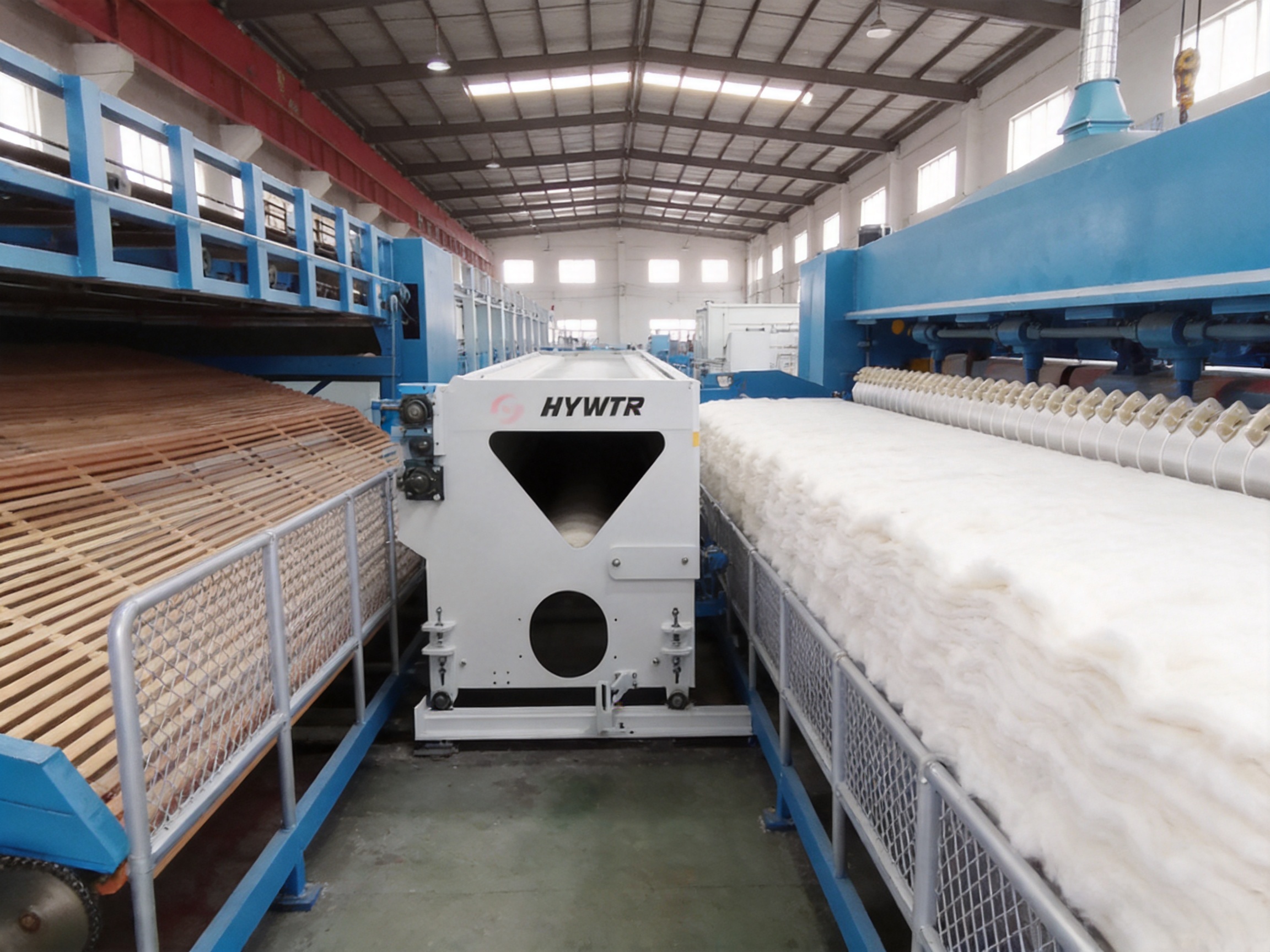
A cross lapper creates a multilayer web by laying the web back and forth across the production width. This process increases web thickness and allows manufacturers to build the desired basis weight and material structure. However, the resulting batt is usually bulky, soft, and difficult to transport without deformation. Directly feeding this batt into a needle loom may cause irregular movement or excessive tension.
The batt feeder provides a controlled transition. It receives the voluminous batt from the cross lapper, supports and guides the material, and delivers it to the needle loom at a suitable speed. The main objective is to maintain the original arrangement of fibers and layers as much as possible while avoiding unnecessary stretching. This is especially important when the material is thick, lightweight, loosely bonded, or sensitive to compression.
In a needle-punched production line, the feeder influences the regularity of the material entering the needle board area. If feeding is uneven, needles may penetrate different quantities of fiber from one section to another. The result can be variation in thickness, density, strength, and appearance across the finished roll. A well-designed batt feeder therefore contributes directly to the stability of the entire line.
The HYWR Batt Feeder is designed for this specific connection between web forming and needle punching. Rather than treating web transfer as a simple conveying operation, its design focuses on controlled grip, low-draft movement, anti-static performance, adjustable handling, and compatibility with different production configurations.
Product Overview
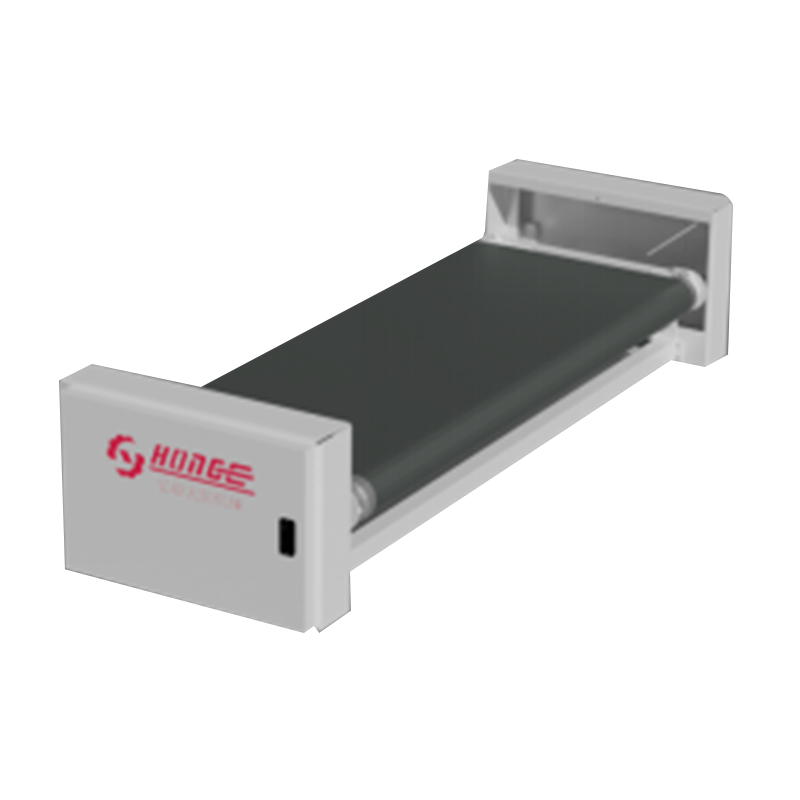
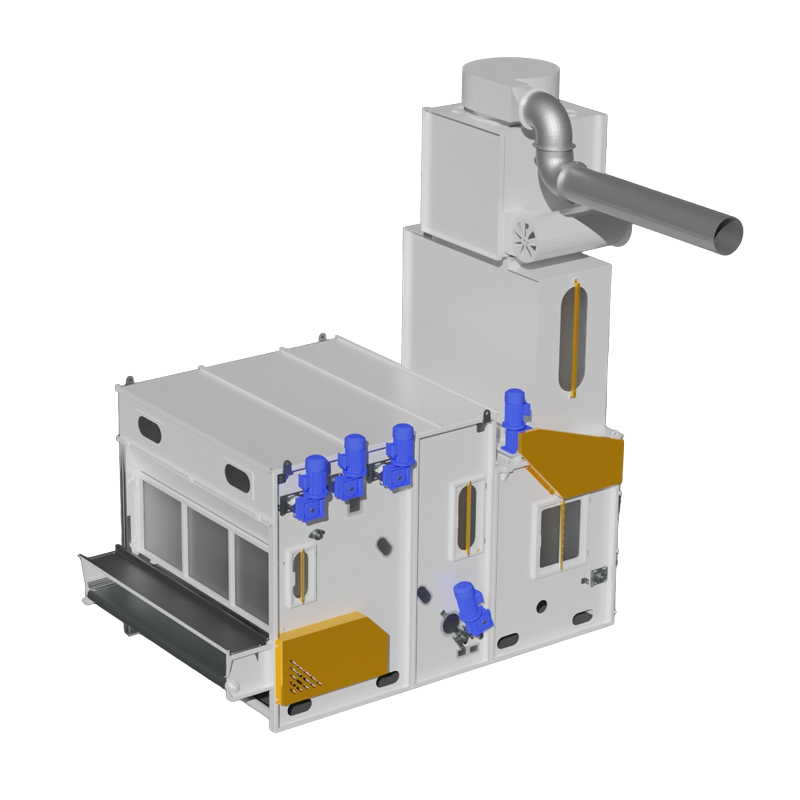
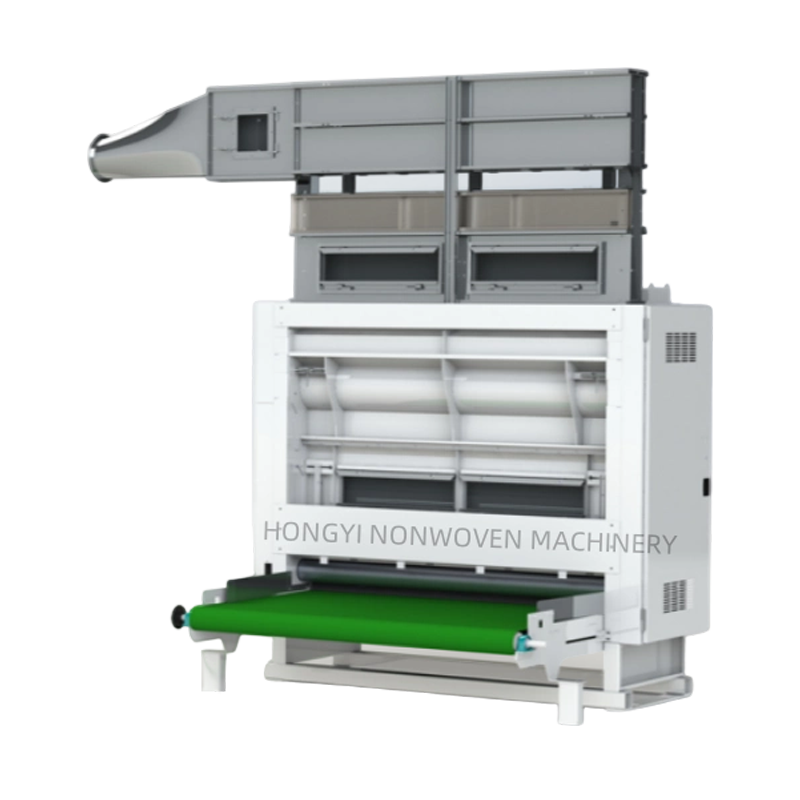
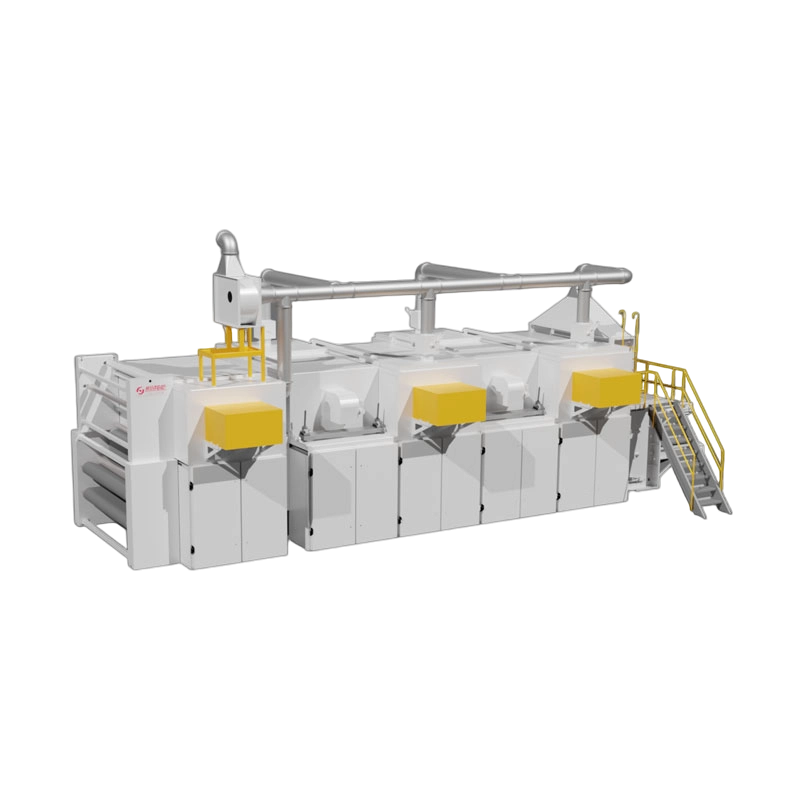
The HYWR Batt Feeder is an automatic auxiliary machine for nonwoven fabric production. It is normally installed after a cross lapper and before a pre-needle punching machine. The equipment is suitable for bulky webs made from materials such as polyester fiber, PET, polypropylene, and 100% polypropylene fiber. Its configuration can be customized according to the working width, web characteristics, line layout, and production requirements.
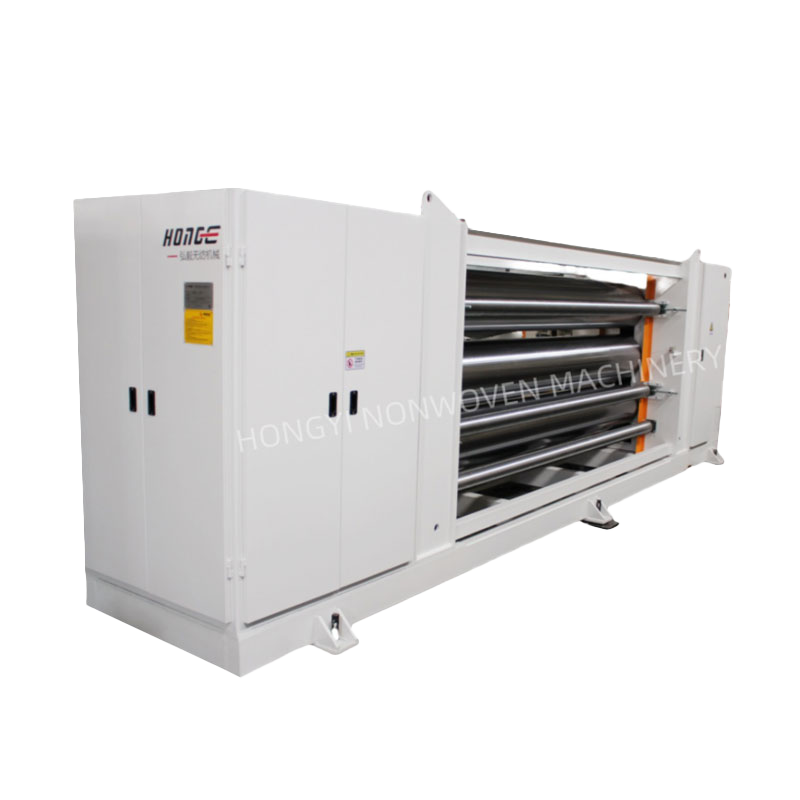
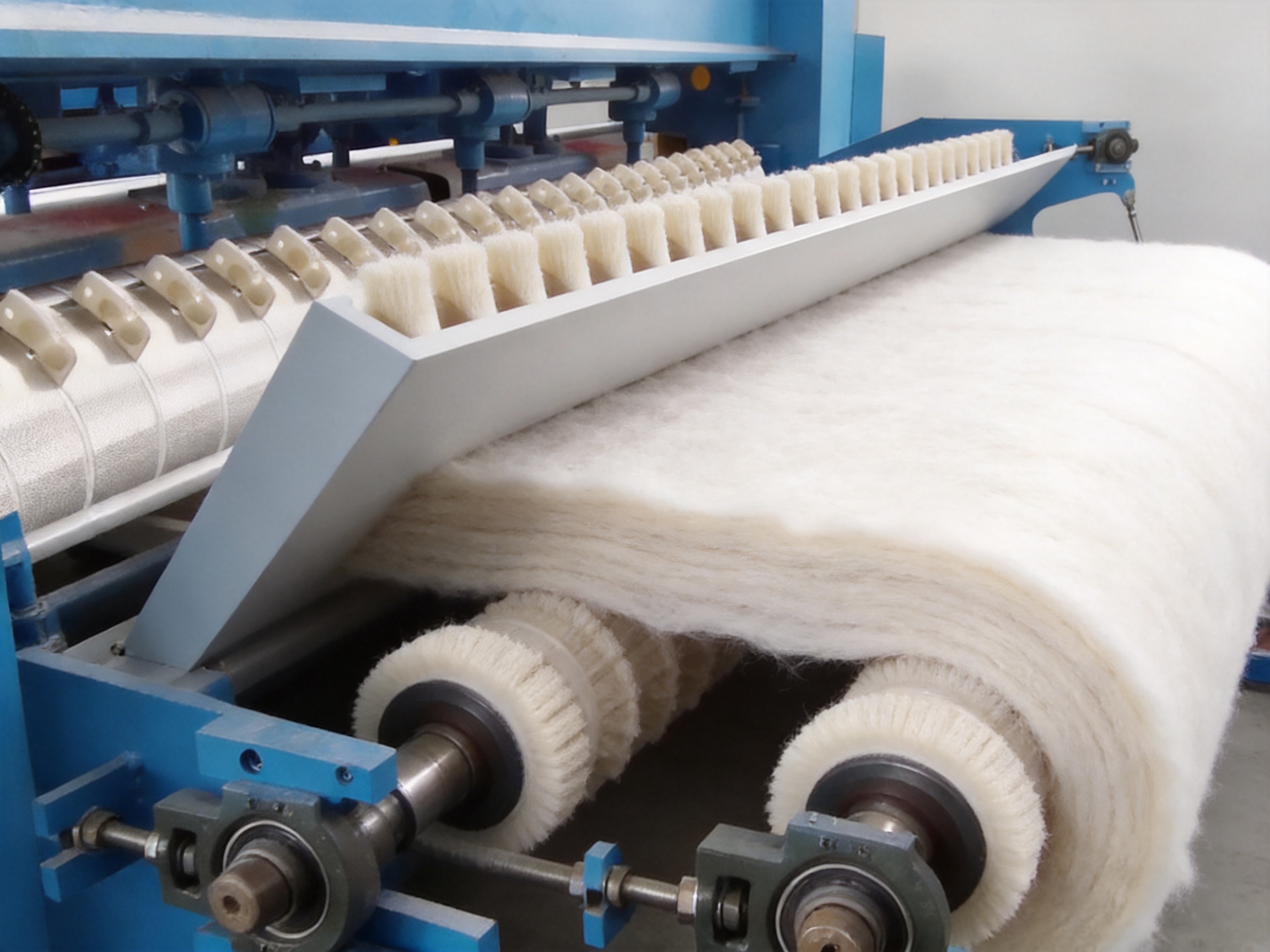
The standard design uses a wedge-shaped feeding device to guide the batt into the feeding section. Nylon-finger feeding rollers engage the material gently and provide a stable transfer action. The distance between the rollers can be adjusted to match the thickness and compression behavior of the web. A variable-speed system driven by an inverter or servo motor allows the feeding speed to be synchronized with upstream and downstream equipment.
The machine can also be moved for operation and maintenance. This practical feature can simplify access to adjacent equipment, improve cleaning efficiency, and support adjustments during commissioning. In wide production lines, accessibility is especially important because inspection and maintenance points may otherwise be difficult to reach.
With a working width of up to 10 meters, the equipment can serve both standard-width and wide-width needle-punched fabric lines. The stated web weight capacity is up to 2,000 grams per square meter, while the driving motor range is approximately 3.75 to 6.75 kilowatts, depending on the configuration. The winding diameter specification is up to 1,200 millimeters where the line arrangement includes the relevant winding function.
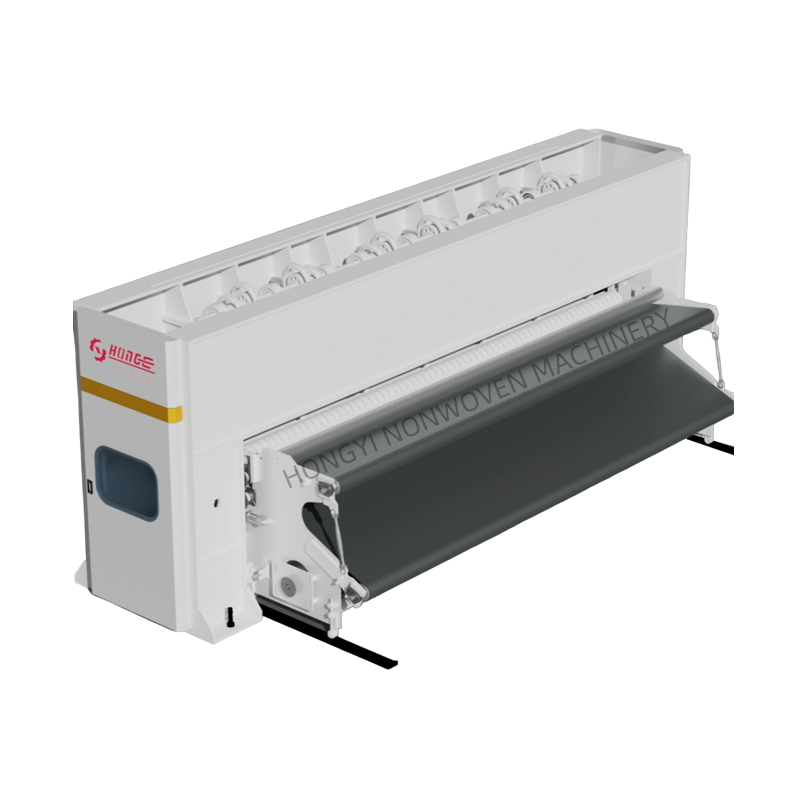
HYWR Batt Feeder
Main Design Features
Wedge-Shaped Feeding Device
The wedge-shaped feeding device provides a gradual and controlled approach for the batt. Bulky webs can be difficult to introduce into a pair of feeding rollers because the material may have a large cross-sectional thickness and low internal cohesion. A wedge-shaped entry helps guide the web into the correct position while reducing sudden compression and uncontrolled folding.
The anti-static design is particularly useful in environments where synthetic fibers are processed. Polyester and polypropylene fibers can accumulate static electricity during conveying, rubbing, and compression. Static charges may cause fibers to cling to machine surfaces, attract dust, or disturb the regular movement of the web. By incorporating anti-static considerations into the feeding structure, the machine can support more stable material handling.
The feeding device also helps maintain alignment across the working width. Proper alignment is necessary when the batt is transferred to a needle loom, because lateral movement or edge distortion can create uneven coverage. The wedge-shaped configuration assists the operator and the automatic line controls in maintaining a consistent feed path.
Nylon-Finger Feeding Rollers
The feeding rollers are equipped with nylon fingers designed to grip and move the bulky batt. Compared with a completely smooth roller surface, finger-type engagement can provide improved traction on a soft, multilayer web. The fingers help hold the material without requiring excessive pressure, supporting the low-draft objective of the machine.
Nylon is suitable for this application because it offers a useful combination of strength, wear resistance, resilience, and relatively gentle contact with textile fibers. The roller design can engage the web while limiting damage to the surface. This is important for applications in which the batt must retain its loft or preserve an even fiber distribution before needle punching.
The gap between the rollers is adjustable. This allows the operator to adapt the feeder to different web weights and thicknesses. A thinner web may require a smaller working gap for reliable traction, while a thick batt may need more clearance to prevent excessive compression. The ability to adjust this setting makes the machine more versatile than a fixed-gap feeder intended for only one material specification.
Inverter or Servo Motor Drive
The feeding system can be driven by an inverter or servo motor. Both options support speed adjustment, although the exact control characteristics depend on the selected configuration and the requirements of the complete line.
An inverter-driven arrangement is a practical solution for many standard production lines. It allows the feeding speed to be adjusted over a suitable range and synchronized with associated machinery. It can also offer a cost-effective balance between performance, reliability, and ease of maintenance.
A servo-driven configuration can provide more precise speed response and improved synchronization when the production process requires highly controlled movement. Servo technology may be especially valuable in lines processing sensitive webs, changing product specifications, or operating with close control of draft and basis weight.
The availability of both drive options enables the feeder to be specified according to the application rather than forcing every customer into one standard design. This flexibility is beneficial for manufacturers that operate several production lines with different levels of automation.
Movable Construction
The HYWR Batt Feeder is designed to be movable for operation and maintenance. Mobility can provide several practical benefits. Operators can reposition the machine during line setup, gain better access to cleaning areas, and inspect the feeding components without dismantling large sections of the production line.
Maintenance access has a direct influence on equipment availability. If cleaning, roller inspection, adjustment, and lubrication are difficult, routine work may be postponed. Over time, accumulated fiber and dust can affect feeding performance. A movable structure helps make these tasks more manageable and can reduce the time required for service operations.
Mobility also supports production flexibility. When a line is changed to accommodate a new product or a different needle loom arrangement, the feeder can be positioned more conveniently. The exact movement and locking method are determined by the machine configuration, but the overall design objective is to combine stable operation with practical accessibility.
Performance Advantages in Industrial Applications
Minimum Draft and Better Web Integrity
One of the most important advantages of the HYWR Batt Feeder is its focus on minimum draft. Draft refers to the change in web length caused by a difference in speed or tension between feeding stages. Excessive draft can stretch the batt, reduce thickness, alter the distribution of fibers, and create directional differences in the finished fabric.
By providing controlled traction and adjustable drive speed, the feeder helps transfer the batt with less unnecessary stretching. Maintaining the original web structure is particularly important in high-basis-weight materials, where the layered batt must remain evenly distributed before needle punching.
Lower draft can also help the needle loom operate under more stable conditions. When the incoming batt has a consistent thickness and speed, needle penetration is more uniform. This may contribute to more consistent fabric density and reduce the risk of local thin areas or irregular surface patterns.
Improved Basis-Weight Consistency
Uniform basis weight is a key quality requirement for many nonwoven products. Geotextiles require predictable mass and strength, automotive materials must meet defined performance standards, and carpets and felts require a stable structure for downstream processing. Uneven feeding can produce variation from side to side or along the length of the roll.
The feeder supports basis-weight consistency by controlling how the batt enters the needle loom. Its adjustable roller gap helps accommodate different material thicknesses, while its variable-speed drive helps maintain the desired relationship between web supply and needle loom speed. When properly set and integrated into the line control system, these features can help reduce fluctuations in the finished product.
Reduced Risk of Web Distortion
Bulky webs can be distorted by abrupt handling, excessive pressure, or inconsistent traction. Distortion may appear as wrinkles, edge displacement, uneven folds, or changes in loft. Such defects can be difficult to correct after needle punching.
The wedge-shaped feeding section provides a guided transition, and the nylon-finger rollers are designed to move the batt with controlled engagement. Together, these features reduce the likelihood of sudden deformation. The result is a smoother handoff between the cross lapper and the needle loom.
Adaptability to Different Materials
Nonwoven manufacturers often process more than one fiber type or product grade. A machine used for polyester may later be required to handle polypropylene, recycled fibers, or blended raw materials. The material properties can differ significantly in terms of friction, static behavior, bulk, compressibility, and fiber length.
The HYWR Batt Feeder supports material flexibility through adjustable roller clearance, selectable drive technology, and customized machine configuration. It is specified for PET, PP, polyester fiber, and 100% polypropylene applications, while the final configuration can be reviewed according to the customer’s actual material and line conditions.
Wide-Width Production Capability
Many nonwoven products are manufactured in wide formats to improve productivity and reduce the need for edge trimming or joining. The feeder is available for working widths up to 10 meters, allowing it to be applied to large-scale production lines.
Wide-width feeding requires careful mechanical design because even small differences in alignment, roller pressure, or speed can become more noticeable across a large span. The equipment must provide sufficient structural stability while maintaining smooth movement over the full width. A wide-width feeder from an experienced machinery manufacturer can therefore provide an important foundation for stable industrial production.
Advantages Compared with Basic or Inflexible Feeding Systems
Different batt-feeding solutions are available in the nonwoven machinery market. Some basic systems may use fixed rollers, limited speed adjustment, or a simple conveyor arrangement. These solutions may be adequate for narrow applications with stable material properties, but they can become restrictive when production conditions change.
The HYWR Batt Feeder offers several advantages over a basic fixed configuration. First, the adjustable roller gap gives operators more control over different web thicknesses. A fixed gap may cause insufficient grip on one product and excessive compression on another. Adjustable clearance allows the machine to be tuned more precisely.
Second, the availability of inverter or servo drive provides more flexibility in speed control. A simple constant-speed feeder may not adequately match the output of a cross lapper or the intake speed of a needle loom. Speed mismatch can create draft, slack, or web accumulation. Variable-speed control provides a better basis for synchronization.
Third, the anti-static wedge-shaped feeding structure addresses material-handling issues that may be overlooked in a basic conveyor. Synthetic fibers can be especially sensitive to electrostatic effects, and these effects may become more pronounced in dry production environments or during high-speed operation.
Fourth, the movable design improves access for maintenance and line adjustment. A permanently fixed machine can make cleaning and inspection more time-consuming. Better accessibility supports more regular preventive maintenance and can help reduce avoidable interruptions.
Finally, the HYWR Batt Feeder can be customized for working width, configuration, material, and integration requirements. This is a significant advantage over standardized equipment that offers limited adaptation. Nonwoven production lines vary widely in product, speed, layout, and automation level, so a configurable feeder is more likely to deliver an appropriate fit.
| Feature | HYWR Batt Feeder Benefit | Production Value |
|---|---|---|
| Wedge-shaped feeding device | Guides bulky webs into the feeding section gradually | Reduces uncontrolled folding and web distortion |
| Anti-static design | Helps manage electrostatic behavior during fiber handling | Supports smoother transfer of synthetic-fiber webs |
| Nylon-finger rollers | Provides controlled traction with relatively gentle contact | Improves feeding stability while protecting web integrity |
| Adjustable roller gap | Allows adaptation to different web thicknesses and weights | Improves versatility and reduces excessive compression |
| Inverter or servo drive | Enables adjustable feeding speed and line synchronization | Helps minimize draft and improve basis-weight consistency |
| Movable structure | Improves access during operation, setup, and maintenance | Supports easier servicing and greater production flexibility |
| Working width up to 10 meters | Suitable for wide nonwoven production lines | Supports large-scale industrial manufacturing |
Manufacturing Strengths of the Supplier
Equipment performance depends not only on the design concept but also on how the machine is engineered, assembled, tested, and supported. Changshu Hongyi Nonwoven Machinery Co., Ltd. has more than 20 years of experience in the nonwoven machinery field. This experience gives the company a practical understanding of fiber processing, web formation, needle punching, thermal bonding, airlay production, winding, and complete line integration.
The company supplies both complete production lines and individual machines. Its product range includes needle-punched geotextile lines, nonwoven carpet lines, airlaid waste felt lines, automotive interior material lines, needle-punched cleaning cloth lines, wool felt lines, jute felt lines, needle punching machines, carding machines, airlaid machines, ironing machines, and thermal bonding wadding oven machines.
This broad product portfolio is valuable when supplying a batt feeder because the company can evaluate the feeder in relation to the complete process. The performance of a feeder is influenced by the cross lapper, needle loom, web weight, line speed, control system, and downstream winding arrangement. A supplier with experience in multiple sections of the line can provide a more integrated solution than a supplier that manufactures only one isolated component.
Application-Based Engineering
Each customer project may require a different working width, fiber type, web weight, production speed, and automation level. The company’s approach allows the feeder to be customized according to customer requirements. Configurable features may include the machine width, drive system, roller arrangement, frame structure, control integration, and operating layout.
Application-based engineering begins with understanding the customer’s product. A light, bulky batt for insulation does not behave in the same way as a dense batt for geotextile production. A recycled fiber mixture may have different feeding characteristics from virgin polyester. The correct roller gap, drive response, and structural arrangement must therefore be considered in relation to the material.
The supplier can also review the surrounding equipment. This helps ensure that the feeder receives the web correctly from the cross lapper and delivers it at a compatible speed to the pre-needle loom. Proper integration reduces the risk that the feeder will operate well in isolation but create problems when connected to the actual production line.
Mechanical Fabrication and Structural Reliability
The equipment uses mechanical materials that are mainly steel and iron. These materials provide the structural strength needed for wide-width industrial machinery. A rigid frame helps maintain alignment between the feeding components and limits vibration during operation.
Mechanical fabrication quality is especially important for a machine up to 10 meters wide. Frame distortion, inaccurate mounting, or insufficient support can affect roller alignment and create uneven contact across the web. Careful fabrication, assembly, and inspection help preserve the intended geometry of the feeding system.
Steel and iron components can also provide a durable foundation for long-term industrial service. Surface treatment, protective finishing, and appropriate guarding contribute to resistance against the demanding production environment, where fibers, dust, vibration, and continuous operation are common.
Electrical and Control Integration
The choice between inverter and servo drive enables the electrical system to be matched with the customer’s control requirements. The feeder may be incorporated into a larger automatic line in which speed signals, start-stop commands, alarms, and safety functions are coordinated across several machines.
Good control integration helps operators manage the relationship between web supply and web demand. If the needle loom speed changes, the feeding speed may need to respond. If the cross lapper pauses, the feeder should operate in a coordinated manner to prevent unnecessary accumulation or stretching. The specific control logic depends on the project, but the machine is designed with this type of integration in mind.
Automatic operation can also reduce dependence on manual intervention. Operators can focus on monitoring material quality, checking process conditions, and carrying out planned maintenance rather than constantly adjusting the feed by hand.
Quality Management and Certification
The HYWR Batt Feeder is listed with CE and ISO9001:2000 certification information. Certification and quality-management practices provide a framework for manufacturing consistency, documentation, inspection, and product responsibility. For international customers, compliance information is an important part of equipment evaluation.
Certification does not replace proper application engineering or operator training, but it supports confidence in the supplier’s manufacturing processes. Customers can also discuss the required documentation, electrical standards, safety configuration, spare parts, and installation requirements before placing an order.
Production Process and Quality Assurance
A reliable industrial feeder is the result of several coordinated manufacturing stages. Although the exact internal production procedures may vary by project, a professional equipment manufacturing process normally begins with technical review, proceeds through material preparation and fabrication, and ends with assembly, testing, and delivery inspection.
Technical Review and Project Confirmation
The first stage is to confirm the production requirements. Important information includes the working width, web weight, fiber type, web thickness, expected line speed, cross lapper output, needle loom intake conditions, available plant space, power supply, and desired level of automation.
Reviewing these details at the beginning helps prevent mismatches between the feeder and the production line. It also allows the supplier to determine whether an inverter or servo drive is more appropriate and whether special anti-static, guarding, or layout requirements should be included.
Material Preparation
Mechanical materials are selected and prepared according to the structural and operating requirements of the machine. Steel and iron components must be cut, formed, machined, or welded with attention to dimensional accuracy. Roller shafts, mounting points, guides, and support members require particular care because their alignment affects feeding performance.
Material preparation also includes checking purchased components such as motors, drive elements, bearings, electrical equipment, and control devices. Using suitable components helps create a balanced machine in which the mechanical and electrical systems support each other.
Frame Fabrication
The frame provides the base for the feeding device, rollers, drive system, guards, and adjustment mechanisms. During fabrication, the structure must be kept sufficiently stable to support the working width and operating loads. Welding and assembly procedures should limit distortion so that the finished frame can be aligned accurately.
After fabrication, the structure may be inspected for dimensions, squareness, mounting position, and surface condition. Proper frame preparation simplifies later assembly and contributes to reliable operation over the service life of the machine.
Roller and Feeding Component Assembly
The nylon-finger rollers and associated shafts are installed with attention to parallelism and gap adjustment. The roller gap must be capable of being changed smoothly and held securely at the selected position. Uneven adjustment from one side to the other can cause irregular pressure and unstable web movement, so the adjustment arrangement should be checked carefully.
The wedge-shaped feeding device is fitted to provide a continuous and properly aligned entry path. The relationship between the wedge, rollers, and machine centerline is important for preventing edge displacement and reducing the likelihood of web snagging.
Drive Installation
The motor and drive system are installed according to the selected configuration. Inverter-driven systems require appropriate speed-control parameters and protection settings. Servo-driven systems require correct commissioning of the motor, drive, encoder or feedback system where applicable, and control interface.
Drive installation also includes checking transmission components, rotation direction, emergency-stop behavior, acceleration and deceleration, and synchronization signals. These checks help ensure that the feeder responds predictably during startup, normal operation, speed changes, and shutdown.
Testing and Inspection
Before shipment, the assembled machine should be checked for mechanical movement, roller alignment, adjustment range, drive response, guarding, and electrical function. Where possible, dry running and material trials can help identify abnormal vibration, noise, slippage, or uneven movement.
Testing is especially important for customized wide-width equipment. The supplier must verify that the machine is suitable for the specified layout and that the selected components operate together as intended. Inspection records and technical documentation can assist with installation and future maintenance at the customer’s site.
Applications for the HYWR Batt Feeder
Needle-Punched Geotextiles
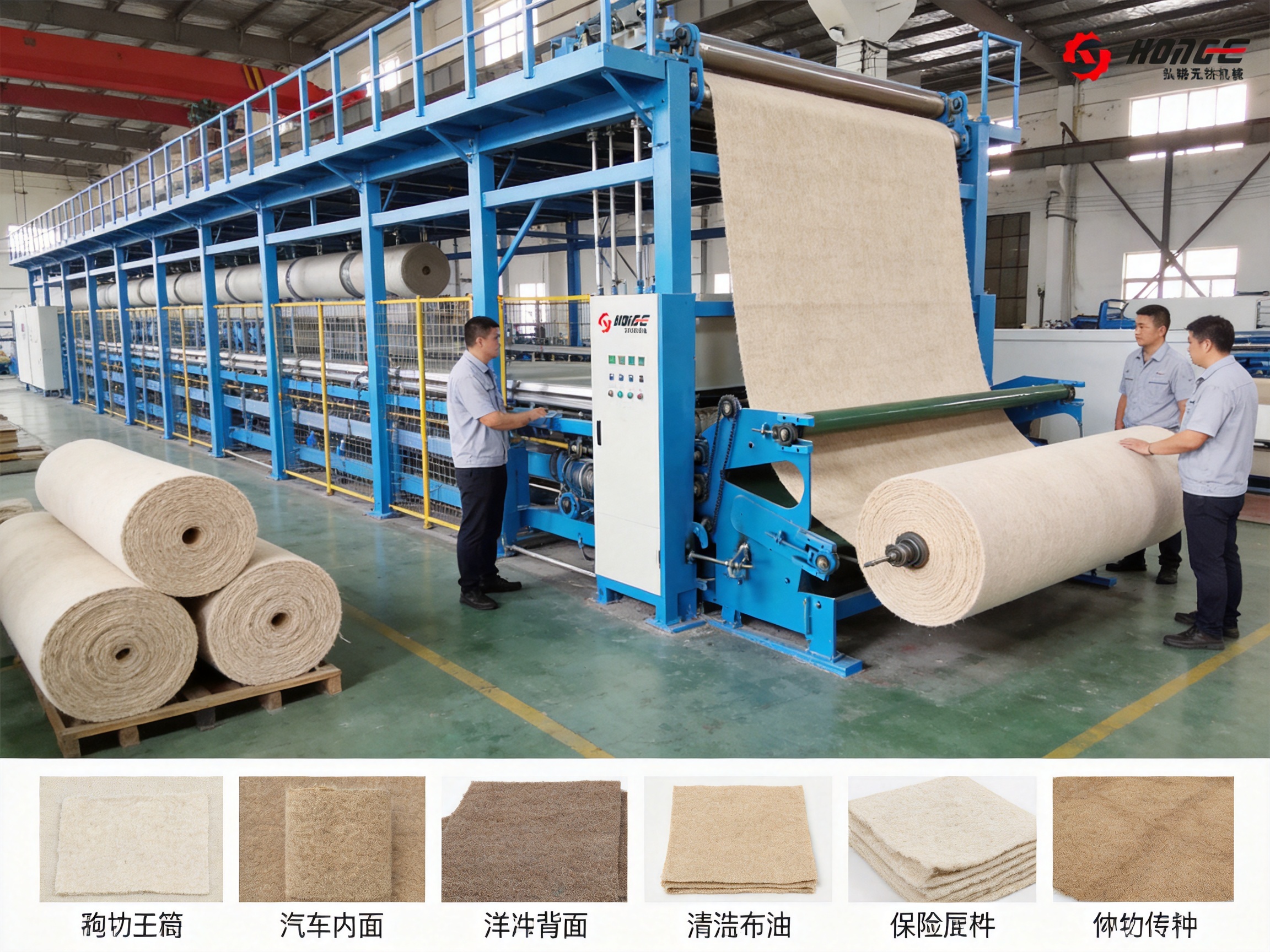
Geotextiles often require stable basis weight, consistent thickness, and dependable mechanical performance. The batt feeder can support the transfer of large, layered webs into the needle loom with minimum draft. This is useful for products used in drainage, filtration, separation, reinforcement, erosion control, and road construction.
Wide-width capability is valuable for geotextile manufacturers because many civil engineering applications use broad fabric rolls. Consistent feeding across the width helps reduce variation and supports efficient downstream winding and cutting.
Nonwoven Carpets
Carpet substrates and felted carpet materials may require substantial web weight and a stable fibrous structure. The feeder’s adjustable roller gap can be adapted to bulky carpet batt, while nylon-finger rollers help maintain traction during transfer.
Stable feeding can also contribute to more uniform surface appearance. If the batt is stretched or distorted before needle punching, the finished carpet may show variations in density or texture. Controlled transfer helps preserve the intended structure.
Automotive Interior Materials
Automotive interior products may include trunk liners, floor coverings, acoustic materials, insulation layers, and molded nonwoven components. These products often require repeatable thickness, weight, and fiber distribution because they must fit accurately into vehicle assemblies and meet performance specifications.
The ability to integrate the feeder with automatic production controls can be valuable in automotive supply chains, where process repeatability and documented quality are important. The machine can be configured according to the material and the line’s production rhythm.
Cleaning Cloths and Industrial Wipes
Needle-punched cleaning materials may use polyester, polypropylene, or blended fibers. Their performance can depend on absorbency, abrasion resistance, strength, and thickness. A stable batt feed helps the needle loom produce a consistent structure across the roll.
For manufacturers that change between product grades, adjustable feeding conditions can make production changeovers more manageable. Operators can adapt the roller clearance and feeding speed to the new web specification rather than relying on one fixed setting.
Wool Felt, Jute Felt, and Other Fibrous Materials
Natural fibers such as wool and jute may differ from synthetic fibers in surface friction, moisture response, bulk, and cohesion. The feeder’s adjustable design provides a basis for accommodating these differences. Final settings should be established through application testing and production commissioning.
The machine can also be considered for other needle-punched products where a bulky batt must be transferred smoothly and where minimizing draft is important to the final product structure.
Installation and Commissioning Considerations
Successful performance depends on correct installation. Before delivery, the customer should confirm the floor condition, machine access route, electrical supply, line centerline, working width, and space required for maintenance. Wide machines may require special handling equipment during installation.
The feeder should be aligned carefully with the cross lapper and needle loom. The entry and exit heights must be compatible, and the machine should be positioned so that the web travels without unnecessary lateral movement. The movable function should be checked to ensure that the machine can be repositioned and locked securely.
During commissioning, operators should begin with conservative speed and suitable roller clearance. The batt should be observed as it enters the wedge-shaped feeding section and passes through the nylon-finger rollers. Signs of excessive compression, slippage, stretching, folding, or edge movement should be corrected before increasing production speed.
Speed synchronization should then be established between the feeder and the connected machines. The correct setting depends on the web structure, line speed, and desired draft. It is good practice to record successful operating parameters for each product so that future changeovers can be carried out more efficiently.
Operator training should cover startup, shutdown, speed adjustment, roller-gap adjustment, emergency procedures, cleaning, inspection, and basic troubleshooting. Training helps ensure that the machine’s flexibility is used effectively rather than being limited to one default setting.
Maintenance and Operating Recommendations
Regular maintenance helps preserve feeding accuracy and reduce unplanned downtime. Fiber accumulation should be removed from rollers, guides, guards, and the surrounding frame. Cleaning frequency depends on the material, production hours, and dust level, but inspection should be part of the normal operating routine.
The nylon fingers should be checked for wear, breakage, contamination, or deformation. Damaged fingers may reduce grip or create irregular contact with the batt. Roller surfaces and shafts should also be inspected for abnormal wear or misalignment.
The adjustable roller-gap mechanism should be kept clean and checked for smooth movement. Operators should confirm that both sides are set consistently and that the adjustment remains secure during operation. Incorrect gap settings can cause either insufficient traction or excessive compression.
Drive components, bearings, electrical connections, and safety devices should be inspected according to the maintenance schedule. Unusual noise, vibration, heat, or speed fluctuation should be investigated promptly. Early attention to these signs can prevent more serious damage.
The feeder should not be operated outside its specified capacity without technical review. Web weights up to 2,000 grams per square meter and working widths up to 10 meters are reference specifications; the exact limits depend on the configuration, material behavior, speed, and line design.
Why Choose a Customized Solution?
A standard machine may appear attractive because it can simplify initial selection, but the most economical solution is not always the machine with the lowest purchase price. The feeder must operate as part of a complete process, and a mismatch can lead to production losses, quality problems, or expensive modifications later.
A customized solution allows the supplier to consider the customer’s actual web, line speed, available space, control architecture, and future product plans. The working width can be matched to the needle loom, the drive can be selected according to the required accuracy, and the feeding components can be adapted to the expected material range.
Customization is also useful for export projects. Electrical standards, safety expectations, plant layouts, and operator preferences can differ between markets. A professional manufacturer can coordinate the machine design and documentation with the customer’s project requirements.
Changshu Hongyi Nonwoven Machinery Co., Ltd. offers customized configurations and has supplied equipment to customers in more than 20 countries, including markets in Asia, Europe, Latin America, Africa, and other regions. International experience can assist with communication, export preparation, installation planning, and after-sales support.
After-Sales Support and Long-Term Cooperation
Industrial machinery is a long-term investment. Customers need more than a machine shipment; they also need technical communication, installation support, commissioning assistance, spare-parts coordination, and advice on operating conditions.
The HYWR Batt Feeder is listed with a one-year warranty. Warranty terms should be confirmed in the commercial and technical agreement, including coverage, exclusions, response procedures, and responsibilities for installation and operation.
Long-term support is particularly valuable when the customer introduces new materials or product specifications. A feeder that was originally commissioned for one web may later need to handle a different basis weight or fiber blend. Technical consultation can help determine whether new settings are sufficient or whether additional components are required.
The supplier’s broader machinery portfolio also supports future expansion. A customer may begin with an individual batt feeder and later require a carding machine, cross-lapping equipment, needle loom, thermal bonding oven, winding machine, or complete nonwoven line. Working with an experienced manufacturer can simplify equipment compatibility and project coordination.
Frequently Asked Questions
What is the main purpose of the HYWR Batt Feeder?
The machine transfers a voluminous web from a cross lapper to a needle loom evenly and with minimum draft. It helps preserve the web structure and supports stable needle-punching conditions.
Where is the batt feeder installed?
It is normally installed between the cross lapper and the pre-needle punching machine or needle loom. The exact position depends on the production-line layout and the interface requirements of the connected equipment.
What materials can the machine handle?
The listed raw-material applications include PET, PP, polyester fiber, and 100% polypropylene. Other fibers or blends may also be considered after reviewing their bulk, friction, static behavior, weight, and processing requirements.
What is the maximum working width?
The reference working width is up to 10 meters. The final width should be selected according to the needle loom, cross lapper, web dimensions, plant layout, and production requirements.
What is the maximum web weight?
The listed web-weight specification is up to 2,000 grams per square meter. Actual performance depends on the material, thickness, speed, feeding conditions, and machine configuration.
Why are nylon-finger rollers used?
Nylon-finger rollers provide controlled traction for bulky webs while maintaining relatively gentle contact. They are intended to improve feeding stability without applying unnecessary pressure to the batt.
Can the roller gap be adjusted?
Yes. The gap between the feeding rollers is adjustable. This allows the machine to accommodate different web thicknesses and compression characteristics.
What drive systems are available?
The feeding system can use an inverter-driven motor or a servo motor. The appropriate choice depends on the required speed control, synchronization accuracy, automation level, and project budget.
How does the machine help minimize draft?
It combines controlled roller engagement, adjustable roller clearance, and variable-speed feeding. These features help match the web transfer speed to the surrounding equipment and reduce unnecessary stretching.
Is the machine suitable for wide production lines?
Yes. The equipment is available for working widths up to 10 meters, subject to confirmation of the complete line design and the customer’s production conditions.
Why is the movable design useful?
Mobility improves access during setup, inspection, cleaning, and maintenance. It can also make line adjustments easier when the feeder is used with different production arrangements.
What certifications are associated with the equipment?
The product information lists CE and ISO9001:2000 certification. Customers should confirm the specific documentation and applicable standards for their project before ordering.
Does the supplier provide customized machines?
Yes. The configuration, working width, drive system, and other details can be customized according to customer needs and the requirements of the connected production line.
What should customers provide when requesting a quotation?
Useful information includes the required working width, material type, web weight, web thickness, target production speed, cross-lapper model, needle-loom model, plant layout, electrical standard, automation requirements, and destination country.
What warranty is listed for the machine?
The product information lists a one-year warranty. The exact warranty coverage and service conditions should be confirmed in the final quotation and sales contract.
Conclusion
The HYWR Batt Feeder is an important process machine for manufacturers that need to transfer bulky nonwoven webs from a cross lapper to a needle loom with greater stability and minimum draft. Its wedge-shaped anti-static feeding device, nylon-finger rollers, adjustable roller gap, inverter or servo drive, and movable structure address the main challenges associated with handling voluminous batts.
With a working width of up to 10 meters and a listed web-weight capability of up to 2,000 grams per square meter, the feeder is suitable for a broad range of industrial nonwoven applications. It can support geotextiles, carpets, automotive materials, cleaning fabrics, felts, insulation products, and other needle-punched materials.
The machine’s value extends beyond its individual components. Stable feeding can improve web integrity, basis-weight consistency, needle-loom performance, and overall production reliability. Adjustable construction and selectable drive technology make it more adaptable than simple fixed feeding systems, while the movable design supports easier maintenance and practical line operation.
Backed by Changshu Hongyi Nonwoven Machinery Co., Ltd.’s more than 20 years of nonwoven machinery experience, the HYWR Batt Feeder can be developed as part of a customized equipment solution. The company’s broad product range, international supply experience, quality-management practices, and ability to provide complete production lines make it a suitable partner for customers seeking reliable nonwoven machinery and long-term technical cooperation.
References
1. Changshu Hongyi Nonwoven Machinery Co., Ltd., HYWR Batt Feeder product specifications and technical information.
2. Changshu Hongyi Nonwoven Machinery Co., Ltd., Nonwoven machinery product portfolio and company information.
3. General principles of cross-lapping, batt handling, and needle-punching technology in nonwoven production.
4. General industrial practices for variable-speed drives, servo control, and web-feeding synchronization.
5. General maintenance and quality-control principles for textile and nonwoven processing machinery.