

Content
- 1 Understanding the Role of an Edge Trim Opener
- 2 Core Product Functionality
- 3 Important Technical Specifications
- 4 How the Machine Supports a Recycling Workflow
- 5 Advantages Compared with Conventional Trim Handling
- 6 Photoelectric Sensing and Electronic Weighing
- 7 Coordinated Control for Production Efficiency
- 8 Application Areas in Nonwoven Manufacturing
- 9 Manufacturing Strengths Behind the Equipment
- 10 Engineering and Production Process
- 11 Operational Benefits for Factory Management
- 12 Maintenance and Long-Term Reliability
- 13 Safety Considerations
- 14 How to Select the Right Configuration
- 15 Comparison with Less Integrated Recovery Methods
- 16 Installation Planning and Line Integration
- 17 Quality Control of Recovered Fiber
- 18 Purchasing and Project Evaluation
- 19 Why a Specialized Manufacturer Matters
- 20 Frequently Asked Questions
- 20.1 What is an edge trim opener?
- 20.2 What materials can the HYBK machine process?
- 20.3 What is the standard production capacity?
- 20.4 Can the machine process trim in both roll and piece form?
- 20.5 Does the machine completely recycle the material into virgin-like fiber?
- 20.6 Can several machines be used for different raw materials?
- 20.7 How does the electronic weighing system help production?
- 20.8 What is the function of the photoelectric sensor?
- 20.9 Is the feeding speed adjustable?
- 20.10 What are the dimensions of the machine?
- 20.11 What is the working width?
- 20.12 Can the color and configuration be customized?
- 20.13 What should be checked before using recovered fiber?
- 20.14 Is the machine suitable for a complete nonwoven production line?
- 20.15 What warranty is listed?
- 20.16 Where is the equipment manufactured?
- 21 Conclusion
- 22 References
- 23 Product: HYBK Edge-Trim Opener
Nonwoven manufacturers are under constant pressure to improve material utilization, stabilize production costs, reduce waste, and meet increasingly demanding sustainability expectations. In this environment, an edge trim opener provides a practical way to recover valuable fiber from production leftovers and return it to the manufacturing process. Instead of treating lateral edge trims, compacted scraps, and selected nonwoven pieces as waste, the material can be loosened, opened, and prepared for controlled reintroduction into a suitable production system.
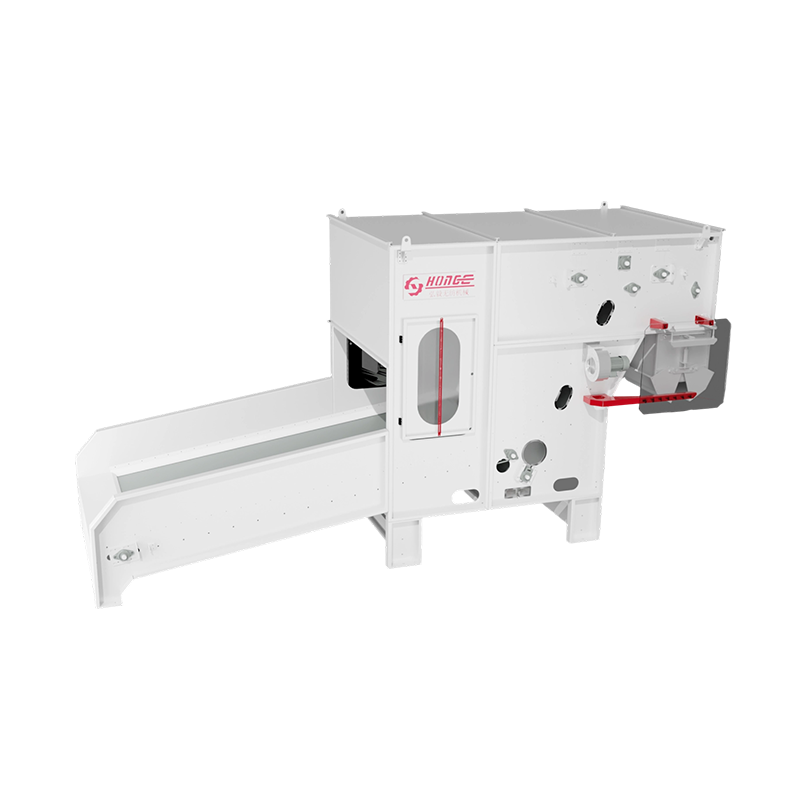
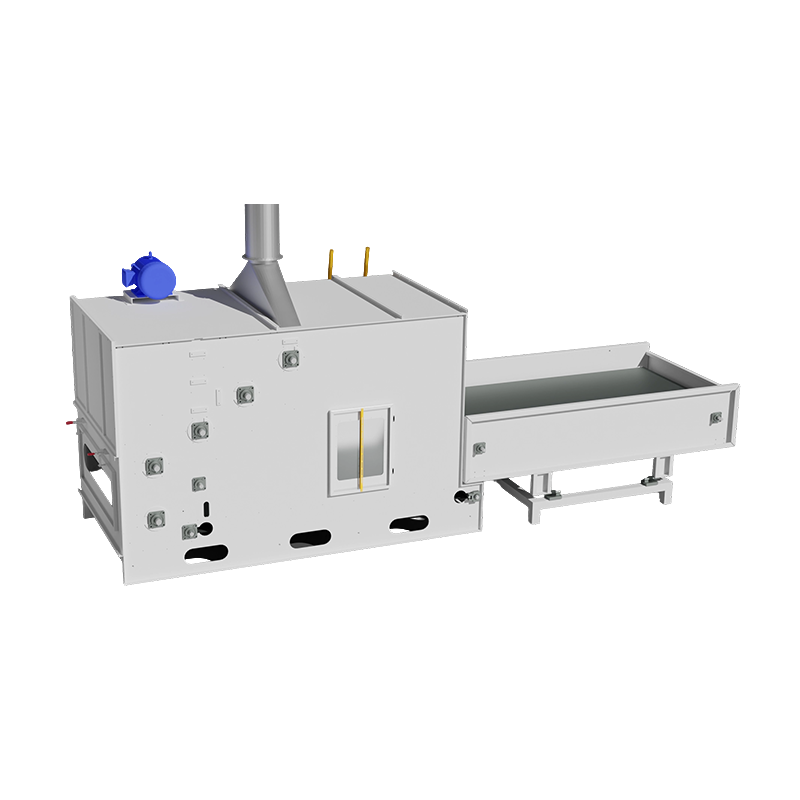
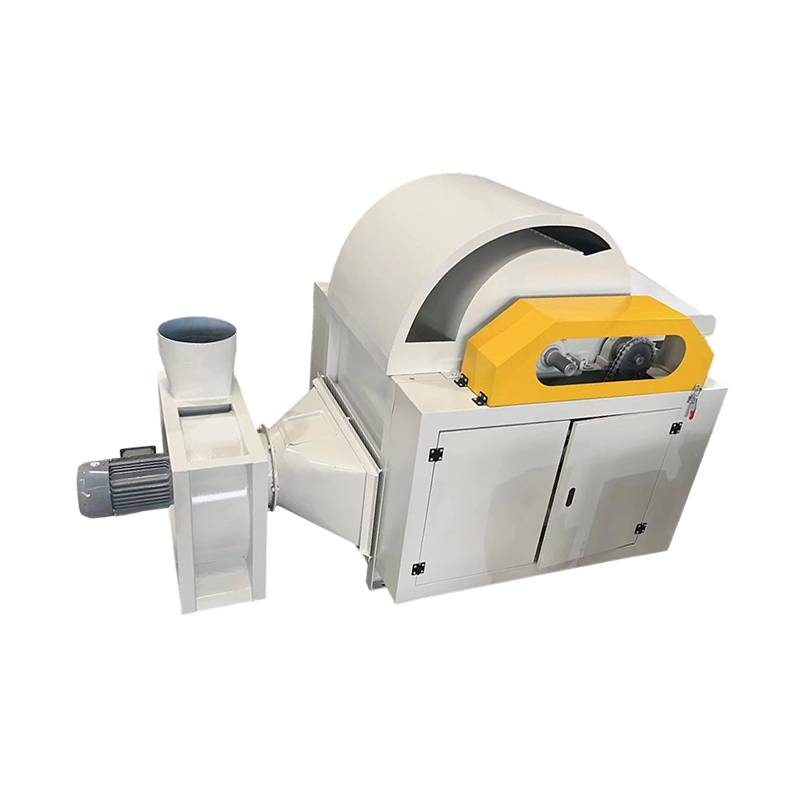
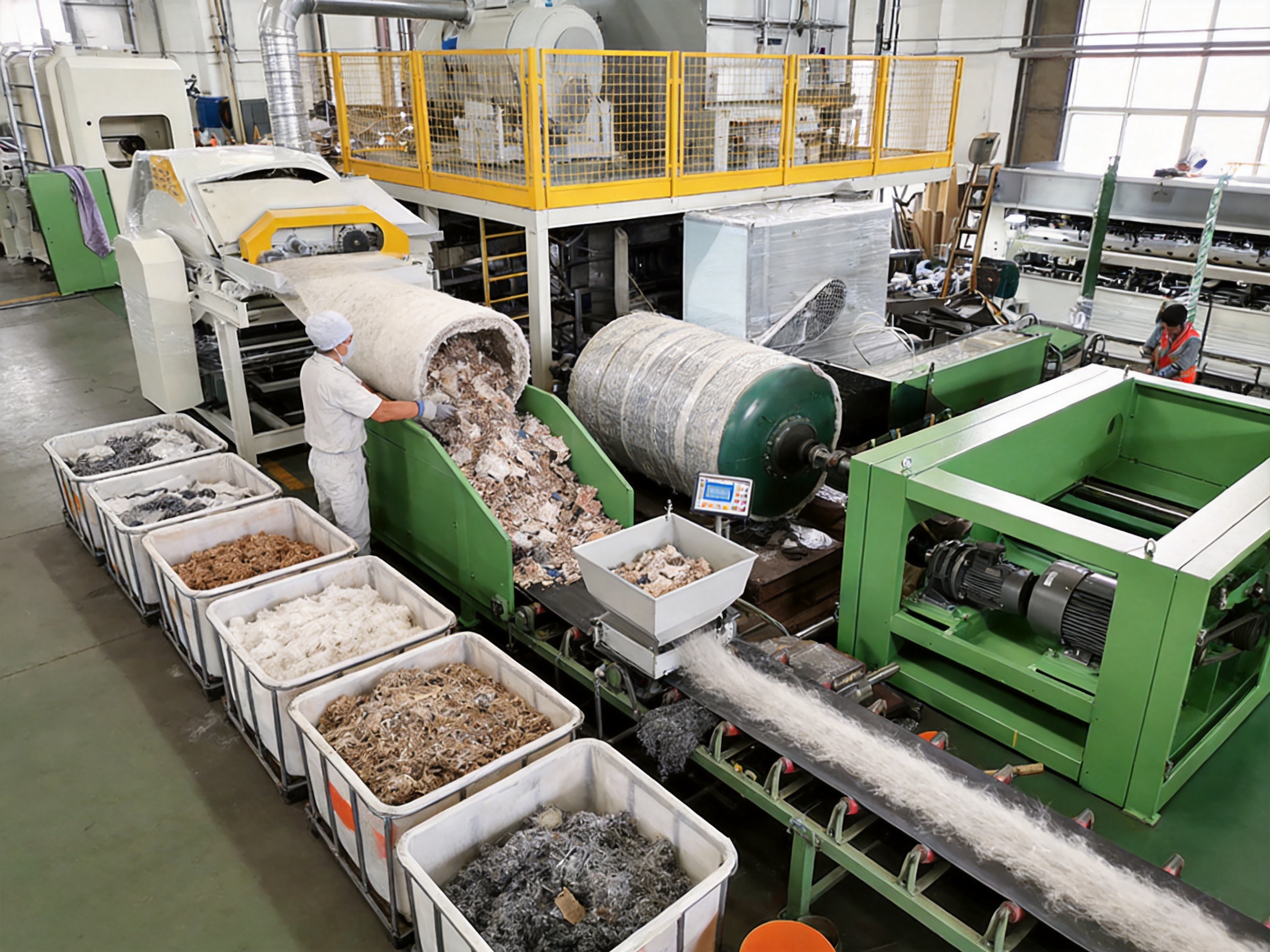
The HYBK Edge-Trim Opener is designed specifically for this purpose. It processes edge trims from nonwoven materials in roll or piece form and converts them into reusable fiber. The machine combines preliminary loosening, fiber opening, weighing, feeding, and control functions in a compact unit. Its design supports the recovery of shoddy fiber, polyester fiber, and other compatible materials while helping users establish a more economical and organized recycling workflow.
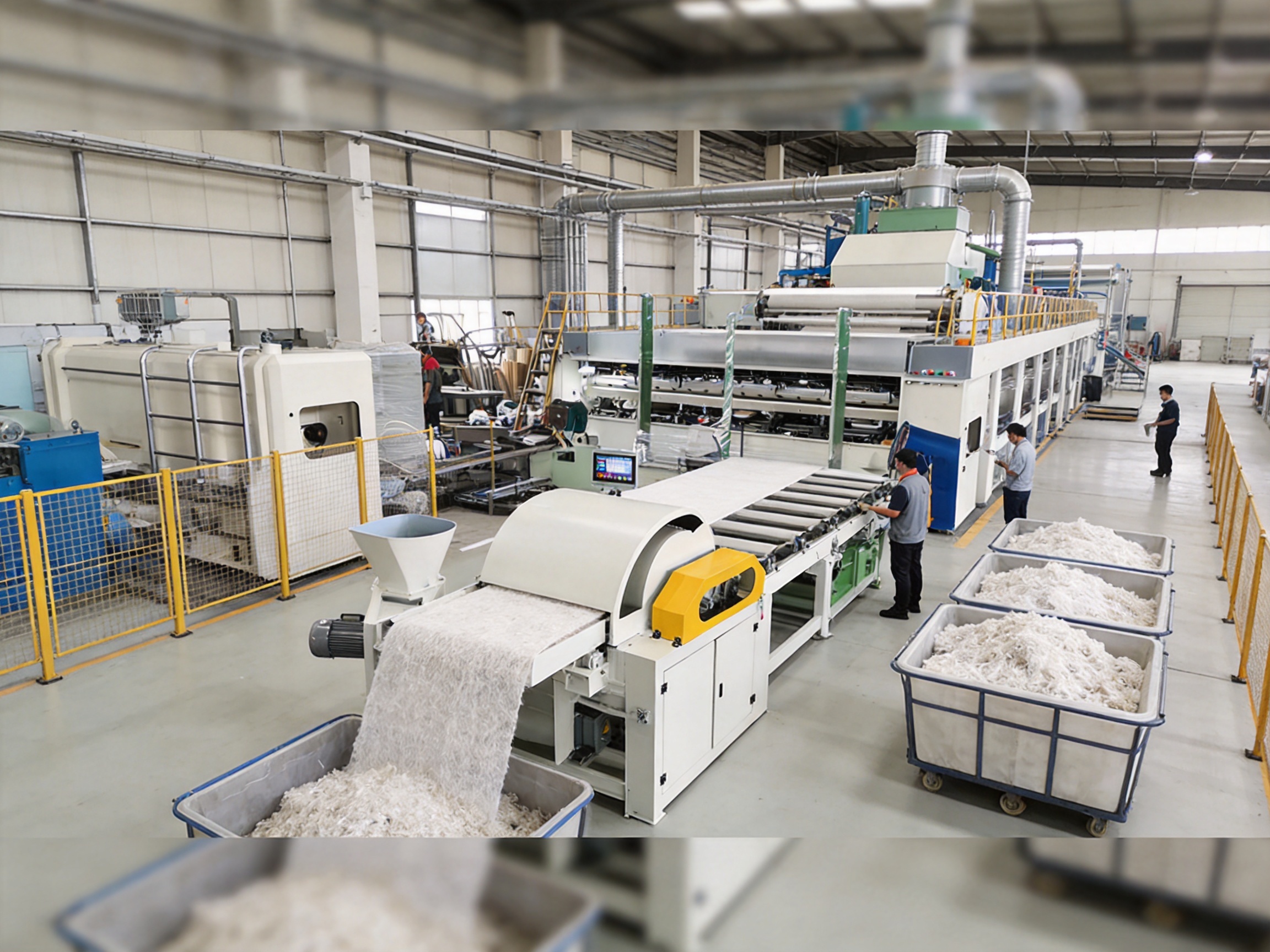
For manufacturers operating needle-punched, thermal-bonded, airlaid, automotive interior, carpet, geotextile, cleaning cloth, wool felt, or other nonwoven production lines, an edge trim opener can become an important auxiliary machine. It does not merely reduce the volume of discarded trim. It also supports raw-material optimization, more consistent feeding, lower disposal requirements, and improved control over the proportion of recycled material used in production.
Understanding the Role of an Edge Trim Opener
During nonwoven production, the edges of a web are often trimmed to maintain a precise working width and improve the appearance or dimensional accuracy of the finished product. These edge trims may be produced continuously in strip form, or they may appear as pieces after cutting, slitting, inspection, or downstream processing. Although the material has already passed through part of the production process, it may still contain a significant amount of usable fiber.
Without an appropriate recovery system, edge trim can be compressed, stored, transported, or discarded. These steps create additional handling costs and may prevent the manufacturer from taking advantage of the material’s remaining value. The HYBK Edge-Trim Opener addresses this problem by loosening compacted packages and opening different kinds of fiber so the recovered material can be transferred back into an appropriate blending, feeding, carding, airlay, or other nonwoven process.
The machine is intended for preliminary opening rather than for every stage of complete fiber preparation. Its main objective is to transform irregular and compacted trim into a more open and manageable fiber form. Depending on the material, the recovered output may be blended with virgin fiber, shoddy fiber, or other recycled components. The exact reuse route depends on fiber type, contamination level, product specification, and the requirements of the downstream production line.
Core Product Functionality
Loosening Compacted Nonwoven Material
Edge trims can become compressed during winding, storage, transportation, or collection. Compacted material is difficult to feed evenly into a production line because it tends to enter in large lumps or irregular packages. The HYBK Edge-Trim Opener preliminarily loosens this material, reducing the size and density of compacted sections before the fiber is returned to production.
This preliminary loosening function is especially useful when the incoming material is collected in rolls or large bundles. A more open material structure allows the next feeding or blending stage to handle the recovered fiber more effectively. It can also reduce manual preparation work and make the recycling process more repeatable.
Opening Various Fibers
The machine is available for opening various compatible fibers used in nonwoven manufacturing. The stated raw-material applications include shoddy fiber and polyester fiber. Depending on the production conditions and the design of the complete line, it may also be considered for selected reclaimed nonwoven materials with suitable fiber characteristics.
Material evaluation remains important before installation. Fiber length, bonding method, density, moisture, contamination, thickness, and the presence of foreign objects can influence machine performance. A professional supplier can review the customer’s material samples and production objectives before confirming the most appropriate configuration.
Supporting Controlled Material Blending
Several units can be used together to establish a specified mixture proportion of different raw-material fibers. This makes the edge trim opener more than a simple scrap-processing device. It can become part of a controlled raw-material preparation system in which recovered fiber is combined with other materials according to a defined production recipe.
When recycled material is introduced without measurement, fluctuations in the blend may affect web formation, thickness, strength, appearance, and product consistency. By contrast, a weighing and feeding system helps manufacturers introduce material in a more controlled manner. The flexibility of the setting range also allows users to adjust the recycled-material ratio as product requirements change.
Important Technical Specifications
The HYBK model is configured as an automatic edge trim opening machine with a working width of 800 millimeters and a cylinder diameter of 300 millimeters. Its listed feeding motor is 1.5 kilowatts and is connected to an inverter, while the cylinder motor is rated at 11 kilowatts. The standard production capacity is approximately 50 kilograms per hour, subject to material properties, feed condition, and operating settings.
| Item | Specification |
|---|---|
| Product | Edge Trim Opener |
| Model | HYBK |
| Automatic grade | Automatic |
| Working width | 800 mm |
| Cylinder diameter | 300 mm |
| Feeding motor | 1.5 kW, inverter connected |
| Cylinder motor | 11 kW |
| Production capacity | Approximately 50 kg per hour |
| Overall dimension | Approximately 1700 × 700 × 1000 mm |
| Net weight | Approximately 500 kg |
| Suitable raw materials | Shoddy fiber, polyester fiber, and compatible nonwoven edge trims |
| Certification information | CE and ISO9001:2000 listed |
The listed dimensions make the equipment suitable for factories that need a useful recovery function without installing a very large independent processing area. Its approximate footprint is 1.7 meters long, 0.7 meters wide, and 1 meter high. The actual layout should still allow adequate space for loading, discharge, inspection, cleaning, electrical access, and safe operator movement.
The stated capacity of 50 kilograms per hour should be understood as a reference value rather than an absolute output for every application. Actual capacity may vary according to the density and form of the trim, the percentage of bonded or heavily compacted material, the desired opening level, the feeding method, and the operating speed. Confirming these factors during technical discussions helps ensure that the machine is correctly matched to the customer’s process.
How the Machine Supports a Recycling Workflow
Stage One: Collection of Edge Trim
The first stage is the organized collection of lateral edge trims from the nonwoven production line. Trim may be collected continuously as a strip or gathered in pieces after cutting. Keeping different raw materials separated at this stage can simplify later blending and improve control over the recovered output.
Manufacturers may choose to classify material by fiber type, color, bonding system, product grade, or intended end use. A clean and well-organized collection method reduces the possibility of cross-contamination and makes it easier to select the correct recipe for reuse.
Stage Two: Feeding and Preliminary Loosening
Collected material is introduced into the opening system. The feeding section helps deliver the material toward the opening cylinder. The inverter-connected feeding motor allows the feed rate to be adjusted according to the condition of the incoming material and the requirements of the downstream process.
As the material enters the opening zone, the cylinder works on the compacted trim and helps separate it into a more open fiber form. The purpose is to make the recovered material easier to transport, blend, weigh, and reintroduce into the production line. Operating settings should be selected carefully to balance opening performance, throughput, fiber preservation, and energy consumption.
Stage Three: Weighing and Controlled Feeding
The photoelectric sensor and electronic weighing system support automatic material detection and quantitative feeding. These functions are valuable when the recycled fiber is to be combined with other raw materials according to a repeatable proportion.
Accurate weighing can help reduce variation between production batches. It also gives operators a clearer understanding of how much recycled material is being consumed. With appropriate monitoring, the system can contribute to production records, material planning, and cost analysis.
Stage Four: Reintroduction into Production
After opening and controlled feeding, the recovered fiber can be transferred to a suitable section of the nonwoven production system. Depending on the product, it may be introduced into a fiber-blending line, a carding preparation system, an airlay process, or another compatible stage.
The recovered material should not automatically be used in every product. High-performance materials, medical products, filtration media, and other applications with strict specifications may require special validation. The final blend ratio should be determined through product testing and process evaluation.
HYBK Edge-Trim Opener
Advantages Compared with Conventional Trim Handling
Improved Raw-Material Utilization
The most direct advantage is the recovery of material that would otherwise have limited value. Nonwoven edge trim may still contain the same basic fibers used in the original web. Opening the trim allows the manufacturer to recover part of that value and reduce dependence on completely new raw material.
Improved utilization does not mean that every kilogram of trim can replace an equal quantity of virgin fiber. Some loss may occur during collection, opening, transfer, blending, and subsequent processing. Nevertheless, even partial recovery can support better resource efficiency, especially in operations that generate large volumes of trim every day.
Lower Waste-Handling Requirements
Unprocessed trim requires space for temporary storage and may need to be packed, moved, or transported away from the factory. A dedicated opener reduces the amount of material that must leave the site as waste. This can simplify internal logistics and help maintain a cleaner production area.
Reducing waste volume may also support a factory’s environmental management objectives. The precise financial benefit depends on local disposal charges, transportation costs, recovered-fiber value, and the percentage of trim that can be successfully reused.
More Stable Feeding than Manual Reuse
Manual cutting, tearing, and feeding of trim can result in irregular material sizes and inconsistent quantities. Operators may also find it difficult to maintain a repeatable blend ratio when the process depends heavily on visual estimation.
The HYBK machine combines automatic operation, electronic weighing, photoelectric sensing, and coordinated control. These features are intended to reduce unnecessary manual intervention and create a more stable route from trim collection to fiber feeding.
Flexible Adjustment of Material Proportion
Different products may require different raw-material recipes. Some may allow a relatively high proportion of recovered fiber, while others may require a lower proportion to maintain specific performance characteristics. The machine’s quantitative feeding function and flexible setting range support adjustments to the material ratio.
This flexibility is useful for factories producing several grades of nonwoven material. Instead of using one fixed recycling recipe for every product, the manufacturer can establish process settings according to the product specification and test results.
Compact Factory Integration
The machine has a neat and compact design compared with larger, multi-stage recycling systems. A compact configuration can be helpful for existing factories where floor space is limited or where the customer wants to install an auxiliary unit near an existing production line.
Before installation, the plant layout should be reviewed carefully. The machine needs safe access for material loading, discharge collection, cleaning, inspection, and maintenance. Electrical requirements, ventilation, dust control, and integration with conveyors or downstream equipment should also be considered.
Photoelectric Sensing and Electronic Weighing
Automation is one of the main features of the HYBK Edge-Trim Opener. The photoelectric sensor helps detect material movement or presence, while the electronic weighing system supports quantitative measurement. Together, these functions help the machine respond to changing feed conditions and maintain a more controlled delivery of recycled fiber.
Photoelectric detection can reduce the need for constant manual observation. When correctly adjusted, it helps coordinate the loading and feeding actions of the machine. It may also help prevent unnecessary operation when material is absent or reduce the likelihood of an uncontrolled accumulation at a transfer point.
The electronic weighing function is important because recycled trim is rarely uniform. A strip may vary in thickness, density, or compactness over its length. Measuring the material rather than relying only on operating time provides a stronger basis for controlling the blend. The weighing system should be checked and calibrated according to the supplier’s recommended procedure and the factory’s quality-management practices.
Automation does not eliminate the need for operators. Skilled personnel are still required to prepare the material, select suitable settings, observe output quality, clean the machine, and respond to unusual conditions. However, automation can allow operators to focus on supervision and quality control rather than repetitive manual feeding.
Coordinated Control for Production Efficiency
The machine is designed for automated operation and coordinated control. This means the feeding, opening, sensing, and weighing functions are intended to work as a connected process instead of as isolated manual actions. Coordinated operation can support a smoother material flow and reduce sudden changes in load.
A coordinated control approach is particularly useful when the opener is combined with several units for blending different raw-material fibers. Each unit can be assigned a specific material or recipe role, and the overall system can be adjusted to provide a planned mixture. This arrangement gives manufacturers more flexibility when they need to handle several grades of recovered material.
Control settings should be established based on trial production. A lower feeding rate may be appropriate for dense or highly compacted trim, while a higher rate may be suitable for lighter and more easily opened material. Cylinder operation must also be matched to the desired opening result. Excessive operating intensity may increase fiber damage or energy consumption, while insufficient opening may leave material in undesirable lumps.
Application Areas in Nonwoven Manufacturing
Needle-Punched Nonwoven Production
Needle-punched lines often process fiber blends that can include polyester, recycled fibers, shoddy fiber, wool, jute, and other materials. Trim generated during web formation, needling, slitting, or finishing may be collected and processed for reuse where the product specification permits.
For geotextiles, felt, carpets, and industrial materials, manufacturers may evaluate recovered fiber for use in selected layers or grades. The appropriate proportion depends on strength, elongation, thickness, appearance, and other technical requirements.
Thermal-Bonded Wadding and Heat-Set Materials
Thermal-bonded products may generate edge trim after the web passes through an oven, bonding section, or cutting stage. Depending on the bonding level, the trim may be more compact or more difficult to open than loose fiber. The edge trim opener can provide preliminary loosening before the material is considered for a suitable downstream blend.
Thermal history is an important factor. Some materials may have partially fused fibers or altered physical characteristics after heating. Testing is recommended to determine whether the recovered trim can be processed effectively and what proportion can be used without affecting the finished product.
Airlaid and Waste-Felt Production
Airlaid systems depend on a controlled distribution of fibers. Recovered trim that has been opened to a suitable condition may be introduced into a preparation system after evaluation. The objective is to achieve a consistent fiber flow without excessive lumps or unwanted foreign matter.
Waste-felt production may also benefit from organized recovery because the process commonly handles recycled or lower-grade fibers. The opener can help transform production remnants into a more manageable feedstock for subsequent processing.
Automotive Interior Materials
Automotive interior materials may use recycled fibers as part of a carefully specified blend. Trim recovery can help improve material efficiency, but automotive applications usually require consistent density, acoustic performance, durability, appearance, and process stability. Recovered material should therefore be tested thoroughly before being approved for a specific component.
Cleaning Cloth, Carpet, Wool Felt, and Jute Felt
Cleaning cloth and felt products may offer practical applications for suitable recovered fiber. The acceptable material ratio depends on the required softness, strength, surface quality, color, and durability. Carpet and felt manufacturers may also evaluate the opened material for use in backing layers, intermediate structures, or products designed for recycled content.
The machine’s ability to process roll-form and piece-form nonwoven trim gives it useful flexibility across these applications. The customer should specify the materials, trim dimensions, production volume, and intended reuse route during the quotation and engineering stage.
Manufacturing Strengths Behind the Equipment
Changshu Hongyi Nonwoven Machinery Co., Ltd. has more than 20 years of experience in the nonwoven machinery field. Its product range includes complete nonwoven production lines and individual machines for needle-punched geotextiles, carpets, airlaid waste felt, automotive interior materials, cleaning cloth, wool felt, jute felt, and other applications.
This breadth of experience is relevant to the edge trim opener because recycling equipment should be considered as part of a complete production process. A supplier familiar with carding, feeding, airlaying, needle punching, thermal bonding, winding, cutting, and auxiliary equipment can better understand how recovered fiber may be integrated into a customer’s existing line.
The company’s machinery portfolio includes needle-punching machines, carding machines, airlaid machines, ironing machines, thermal-bonded wadding oven machines, and complete production lines. This provides a broader technical background for recommending a recovery system, a blending arrangement, or a customized connection to downstream equipment.
Manufacturing quality depends on more than the final assembly of a machine. It also depends on engineering design, material selection, machining accuracy, electrical integration, control logic, testing, documentation, and after-sales support. The HYBK specification identifies mechanical materials as being mostly steel and iron, providing a robust structural foundation for industrial use.
Customization is another manufacturing strength. The configuration and color can be customized according to customer needs. Customization may involve the machine layout, feed arrangement, material transfer method, control requirements, electrical standards, discharge direction, or integration with other equipment. Each modification should be reviewed technically to ensure that it does not compromise safety, capacity, or maintainability.
The listed certification information includes CE and ISO9001:2000. Certification and quality-management information can help customers with procurement evaluation and project documentation. Buyers should request current technical files and certification documents applicable to the exact machine configuration before final purchase.
Engineering and Production Process
Requirement Analysis
A reliable machine project begins with a clear understanding of the customer’s application. The supplier should collect information about the trim type, fiber composition, form of collection, moisture, contamination, average density, maximum package size, required throughput, and intended output quality.
The customer should also explain whether the recovered fiber will be reused in a carding line, airlay line, blending line, thermal-bonded product, needle-punched product, or another application. This information affects the machine configuration and the recommended feeding and discharge arrangement.
Mechanical Design
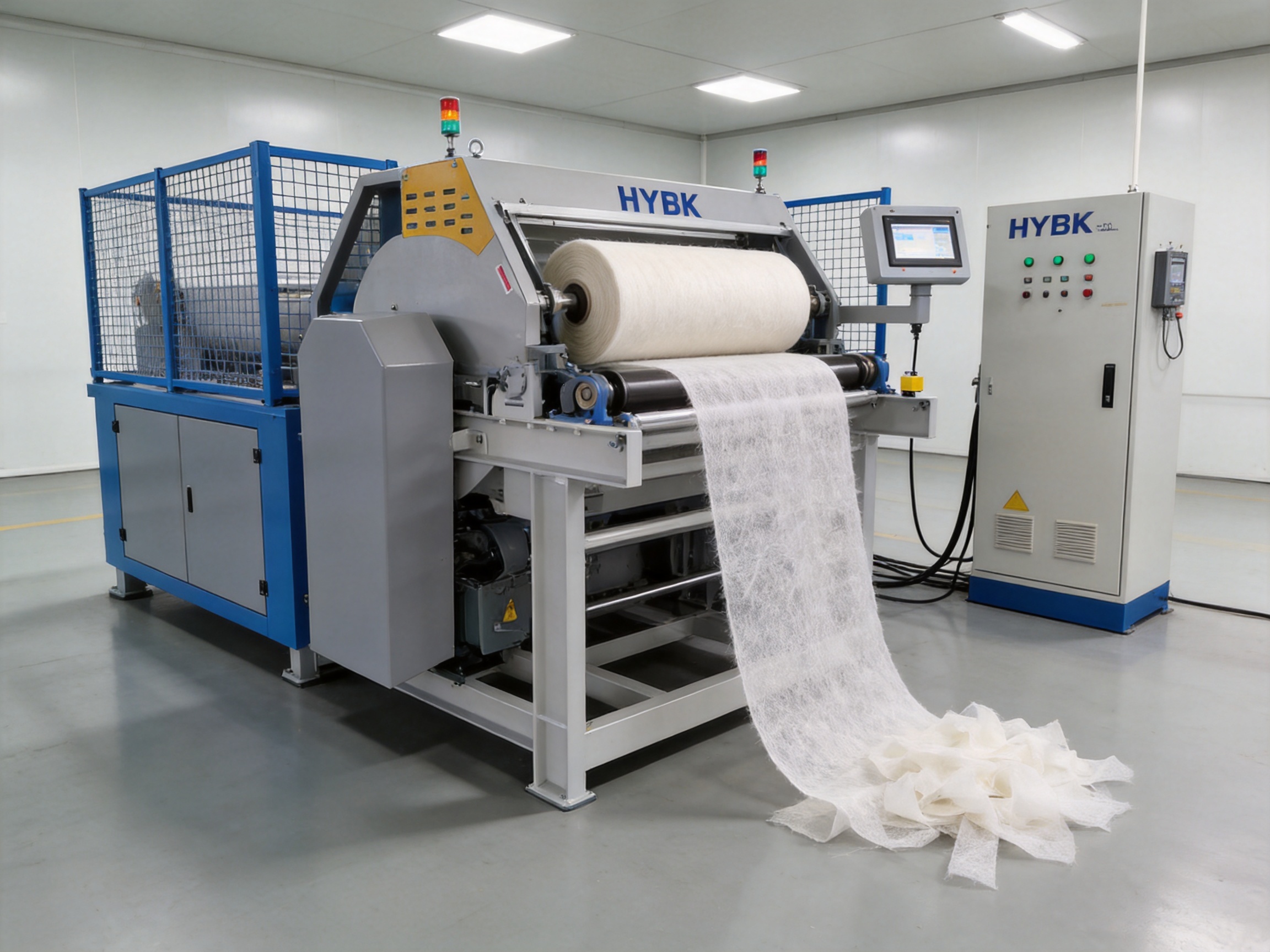
Mechanical design includes the frame, feeding section, opening cylinder, safety guards, material transfer points, adjustment mechanisms, and service access. The 300-millimeter cylinder diameter and 800-millimeter working width provide the basic opening geometry for the listed HYBK model.
Mechanical components must be designed to withstand repeated operation, vibration, material impact, and the abrasive characteristics of some recycled fibers. Structural rigidity is important because movement or misalignment can affect opening quality and increase wear. Service access is equally important because fibers and dust can accumulate around working areas if cleaning is neglected.
Electrical and Control Integration
The feeding motor is connected to an inverter, allowing the feed speed to be adjusted. Electrical control design should coordinate the feeding and opening actions while supporting sensor signals, weighing information, emergency stopping, and operator adjustment.
Control panels should be arranged so that operators can understand the machine status and make changes safely. Depending on the project, the system may also be prepared for connection to upstream collection equipment or downstream blending and feeding equipment. The exact control architecture should be confirmed in the technical proposal.
Assembly and Testing
After components are manufactured or sourced, the machine is assembled and inspected. Testing may include checking the cylinder rotation, feed operation, motor performance, sensor response, weighing function, control actions, emergency stops, and overall mechanical stability.
Trial material testing is especially valuable for an edge trim opener. A machine can operate correctly without producing the desired output if the incoming material differs greatly from the assumed application. Testing with representative customer material can help confirm opening performance, feeding stability, capacity, and the proposed recycling route.
Delivery and Installation Support
The listed transport package is nude packing or polyethylene film, depending on the project. Because the machine has an approximate net weight of 500 kilograms, customers should prepare suitable unloading and positioning equipment. The factory floor should be level, accessible, and capable of supporting the equipment and associated material-handling systems.
Installation guidance should cover mechanical positioning, electrical connection, rotation direction, sensor alignment, weighing calibration, safety inspection, trial operation, and operator training. Clear documentation helps customers bring the machine into production more efficiently.
Operational Benefits for Factory Management
Better Cost Visibility
When edge trim is treated as waste, its actual cost may be hidden across disposal, labor, transport, and lost material value. Once a recovery system is installed, the factory can measure trim generation, recovery volume, reuse rate, and the effect on raw-material purchases. This creates a clearer basis for calculating the return on investment.
Cost savings will depend on local conditions and should not be assumed in advance. Important variables include trim volume, operating hours, electricity consumption, labor cost, recovered-fiber value, maintenance expense, and the percentage of opened fiber that can be reused in saleable products.
Improved Production Organization
A dedicated opener gives edge trim a defined route within the factory. Instead of accumulating in different areas, the material can be collected, classified, processed, and returned to production according to a documented procedure. This can improve housekeeping and reduce confusion between waste material and reusable material.
Support for Sustainability Reporting
Many manufacturers now track recycled content, waste reduction, resource utilization, and environmental performance. An automatic recovery machine can support these efforts by providing a measurable process for reclaiming production trim.
Environmental claims should be based on actual records and verified calculations. The machine itself supports recovery, but the final sustainability result depends on material segregation, energy use, product acceptance, transportation, and the overall production system.
Maintenance and Long-Term Reliability
Regular maintenance is essential for safe operation and consistent opening performance. Operators should inspect the feeding area, opening cylinder, guards, bearings, drive components, electrical connections, sensors, weighing system, and material discharge route according to the supplier’s maintenance instructions.
Fiber accumulation should be removed at appropriate intervals. Dust and loose fiber can affect sensors, obstruct airflow, increase fire risk, or interfere with moving components. Cleaning procedures should always follow the plant’s safety rules, including isolation of electrical power and prevention of accidental machine starting.
The opening cylinder and related working components may experience wear depending on material type and operating intensity. Worn components can affect opening quality and increase energy consumption. A planned inspection schedule helps identify wear before it causes unplanned downtime.
Weighing accuracy should also be checked periodically. If the weighing system drifts, the actual recycled-fiber ratio may differ from the production recipe. Calibration records are useful for quality control, especially when the recovered material is used in products with strict consistency requirements.
The one-year warranty listed for the machine provides a defined after-sales framework. Warranty conditions should be reviewed carefully, including coverage, excluded wear parts, installation responsibilities, operating requirements, response procedures, and spare-parts arrangements.
Safety Considerations
An edge trim opener contains rotating and feeding components that require appropriate guarding and operating procedures. Operators should never reach into the feeding or opening area while the machine is running. Emergency-stop devices should be accessible, tested, and clearly identified.
Material inspection is also important. Metal, stones, tools, hard plastic, and other foreign objects can damage the opening cylinder or create a safety hazard. Customers should establish a screening and inspection procedure before material reaches the machine.
Fiber dust management should be considered during installation and operation. The need for local extraction, filtration, ventilation, or other controls depends on the material and the factory environment. Fire prevention measures should be developed according to local regulations and the properties of the processed fibers.
Only trained personnel should adjust operating settings, perform maintenance, or work on electrical components. Lockout and tagout procedures should be followed during cleaning, inspection, repair, and cylinder access.
How to Select the Right Configuration
Customers should provide representative samples of the edge trim before purchasing. A sample should reflect normal production conditions rather than only the easiest material to process. If several fiber types are generated, separate samples should be supplied for each major category.
The supplier should be informed whether the trim arrives as continuous strips, loose pieces, rolls, compacted bales, or mixed packages. The dimensions and density of the material influence the feeding arrangement and expected capacity.
Required throughput must be calculated from actual trim generation. A factory producing 50 kilograms of trim per hour may require a machine rated above that level to account for downtime, material variation, cleaning, and future expansion. Conversely, a smaller operation may not need to run the machine continuously.
The downstream process must also be evaluated. The output required for a carding machine may differ from the output suitable for an airlaid system or a blending hopper. Customers should define the acceptable opening level, maximum lump size, blend ratio, and final product requirements.
Electrical standards, available voltage, control preferences, factory space, discharge direction, and local installation rules should be confirmed before production. Customized color and configuration can be discussed as part of the project specification.
Comparison with Less Integrated Recovery Methods
Some factories handle edge trim by manually cutting it into smaller pieces and adding it to the production line. This approach may require little initial investment, but it can produce inconsistent sizes, irregular feeding, greater labor dependence, and a less stable recycled-material ratio.
Another method is to store the trim and send it to an external recycler. This may be suitable when the factory generates very little material or when the trim is not appropriate for internal reuse. However, external recycling can involve transportation, storage, uncertain recovery rates, and loss of control over the final material destination.
A large, fully integrated waste-processing line may provide more extensive processing functions, but it can require greater investment, more floor space, and more complex operation. For manufacturers seeking a focused solution for preliminary opening and controlled feeding, the HYBK configuration offers a more compact alternative.
The machine’s main competitive advantages are its combination of automatic operation, photoelectric sensing, electronic weighing, inverter-connected feeding, flexible mixture control, compact design, and compatibility with broader nonwoven machinery solutions. These advantages should be evaluated against the customer’s material volume and product requirements rather than considered in isolation.
Installation Planning and Line Integration
Successful installation depends on more than placing the machine on the factory floor. The material route should be mapped from trim collection to the opener, from the opener to weighing or blending, and from blending to the production line. Every transfer point should be accessible for inspection and cleaning.
The working area should provide enough room for raw-material preparation, safe operation, maintenance, and removal of opened fiber. The customer should also consider whether the machine will operate continuously beside a production line or intermittently as a batch-processing unit.
Where several units are used together, the layout should support clear identification of each material stream. Separate bins, labels, conveyors, or controlled transfer points may be needed to prevent cross-mixing. The control system should be documented so operators understand the relationship between each unit and the final recipe.
Before production begins, the machine should be run without material to verify rotation, controls, sensors, emergency stops, and abnormal noise. A staged material trial can then be completed at a low feed rate before moving toward the target operating condition.
Quality Control of Recovered Fiber
Recovered fiber should be inspected before and after opening. Important checks may include fiber type, color, moisture, contamination, density, degree of opening, visible lumps, and the presence of partially bonded fragments. These checks help determine whether the material is suitable for a particular product.
Sampling procedures should be consistent. A single sample from the beginning of a batch may not represent material collected over a full shift. Periodic sampling can reveal changes in trim composition and help operators adjust the mixture ratio.
Finished nonwoven products made with recovered material should be tested according to their intended application. Relevant tests may include thickness, weight, tensile strength, tear strength, elongation, surface appearance, acoustic performance, thermal behavior, or other customer-specific criteria.
The recovered-material ratio should be increased gradually during process development. Starting with a conservative percentage allows the manufacturer to observe changes in web formation and product performance before adopting a higher recycled content level.
Purchasing and Project Evaluation
When evaluating an edge trim opener, the buyer should consider the complete operating cost rather than only the purchase price. The review should include machine capacity, power demand, labor requirements, spare parts, maintenance, installation, training, integration, and expected material recovery.
Technical communication is important because terms such as “opening,” “recycling,” and “capacity” can describe different results in different factories. The buyer should ask how capacity is measured, what material was used for testing, what output condition is expected, and what limitations apply to heavily bonded or contaminated trim.
Customers should also request a complete technical specification, electrical information, foundation requirements, recommended spare parts, warranty terms, operating manuals, and delivery schedule. If the machine is customized, the approved technical drawing should clearly identify the final configuration.
Changshu Hongyi Nonwoven Machinery Co., Ltd. can be contacted for project discussions, technical evaluation, and customized nonwoven machinery requirements. The company’s experience with complete lines and individual units allows customers to discuss the edge trim opener as part of a wider production improvement program.
Why a Specialized Manufacturer Matters
A general-purpose scrap machine may not understand the specific behavior of nonwoven webs, bonded fibers, carded blends, or production-line trim. A specialized nonwoven machinery manufacturer is more likely to recognize the relationship between opening quality and downstream web formation.
Experience across different nonwoven processes also supports better troubleshooting. If a customer observes inconsistent web weight after adding recovered fiber, the cause may involve opening, weighing, blending, carding, air distribution, or feeding. A supplier with knowledge of the wider process can help investigate the complete material path rather than focusing only on one machine.
More than 20 years of experience in nonwoven machinery provides a foundation for this type of application knowledge. International supply experience across markets in Asia, Latin America, the Middle East, and other regions also indicates familiarity with different production environments, export requirements, and customer expectations.
Frequently Asked Questions
What is an edge trim opener?
An edge trim opener is a machine that loosens and opens nonwoven production scraps, particularly lateral edge trims from rolls or pieces, so the recovered fiber can be reused in an appropriate production process.
What materials can the HYBK machine process?
The listed raw materials include shoddy fiber and polyester fiber. It is also designed for compatible nonwoven edge trims. Material testing is recommended for trims with unusual bonding, high density, moisture, contamination, or mixed fiber composition.
What is the standard production capacity?
The listed production capacity is approximately 50 kilograms per hour. Actual capacity depends on the material form, density, fiber type, opening requirement, feeding rate, and operating conditions.
Can the machine process trim in both roll and piece form?
Yes. The product is described as suitable for recycling lateral edge trims in both roll and pieces form. The exact feed preparation may vary according to the dimensions and compactness of the customer’s material.
Does the machine completely recycle the material into virgin-like fiber?
The machine provides preliminary loosening and opening of the recovered material. It does not necessarily restore every material to the same condition as virgin fiber. The opened output should be evaluated and used according to the requirements of the downstream process.
Can several machines be used for different raw materials?
Yes. Several units can be combined to set the mixture proportion of different raw-material fibers. This arrangement can help manufacturers manage separate recycled materials and create a controlled production recipe.
How does the electronic weighing system help production?
The electronic weighing system supports quantitative measurement and feeding. It helps reduce reliance on manual estimation and can improve repeatability when recovered fiber is blended with other materials.
What is the function of the photoelectric sensor?
The photoelectric sensor supports material detection and coordinated automatic operation. It helps the machine respond to material presence or movement within the feeding process.
Is the feeding speed adjustable?
The feeding motor is listed as 1.5 kilowatts and inverter connected. This configuration allows the feeding speed to be adjusted according to material characteristics and process requirements, subject to the final control design.
What are the dimensions of the machine?
The listed dimensions are approximately 1700 × 700 × 1000 millimeters. Customers should confirm the final dimensions and required service space for customized configurations.
What is the working width?
The listed working width is 800 millimeters, and the cylinder diameter is 300 millimeters.
Can the color and configuration be customized?
Yes. The information states that the color and configuration can be customized according to customer needs. Customization should be agreed in the technical specification before manufacturing.
What should be checked before using recovered fiber?
Fiber type, contamination, moisture, density, color, bonding condition, opening level, and compatibility with the final product should be checked. The recycled ratio should be confirmed through trial production and product testing.
Is the machine suitable for a complete nonwoven production line?
It is an auxiliary machine designed to support nonwoven fiber recovery. It can be integrated into a broader line involving blending, carding, airlaying, needle punching, thermal bonding, or other processes, depending on the material and system design.
What warranty is listed?
The product information lists a one-year warranty and after-sales service. The detailed warranty scope and conditions should be confirmed in the purchase contract.
Where is the equipment manufactured?
The equipment is supplied by Changshu Hongyi Nonwoven Machinery Co., Ltd., located in Jiangsu Province, China. The company provides nonwoven machinery and complete production-line solutions for customers in China and overseas markets.
Conclusion
The HYBK Edge-Trim Opener offers a focused solution for converting nonwoven edge trims and selected production scraps into reusable fiber. Its combination of preliminary loosening, fiber opening, photoelectric sensing, electronic weighing, inverter-connected feeding, automatic operation, and coordinated control addresses several common difficulties in trim recovery.
Its principal value lies in connecting waste reduction with material control. By processing roll-form and piece-form edge trims, manufacturers can reduce unnecessary disposal, improve raw-material utilization, and develop a more organized recycling workflow. The ability to combine several units also supports controlled mixtures of different fibers and provides flexibility for changing product requirements.
The listed 800-millimeter working width, 300-millimeter cylinder diameter, 50-kilogram-per-hour reference capacity, compact dimensions, and customized configuration options make the machine suitable for many nonwoven factories seeking an auxiliary recovery solution. Its performance should nevertheless be evaluated against the customer’s actual material, operating hours, downstream process, and product standards.
Supported by a manufacturer with more than 20 years of nonwoven machinery experience and a broad portfolio of complete lines and individual machines, the edge trim opener can be considered as part of a wider factory improvement plan. Proper material testing, layout planning, installation, operation, maintenance, and quality control will help users obtain the greatest benefit from the equipment.
References
1. Product technical information for the HYBK Edge-Trim Opener, including operating functions, specifications, dimensions, capacity, motors, and control features.
2. Company profile and product portfolio information for Changshu Hongyi Nonwoven Machinery Co., Ltd.
3. General principles of nonwoven fiber preparation, blending, web forming, needle punching, thermal bonding, airlaying, winding, and cutting.
4. General industrial practices for textile waste recovery, recycled-fiber quality control, machine maintenance, and production-line safety.
5. General quality-management and machinery-safety considerations applicable to automated nonwoven production equipment.