

Content
- 1 1. The Role of Slitting and Cutting in Nonwoven Production
- 2 2. Main Design of the HYFQ Slitting Machine
- 3 3. Precision Cross-Cutting and Longitudinal Cutting
- 4 4. Integrated Working Platform and Human-Machine Collaboration
- 5 5. Advantages Compared with Basic or Conventional Cutting Equipment
- 6 6. Technical Specifications
- 7 7. Manufacturing Strengths of the Supplier
- 8 8. Production Process and Quality Assurance
- 9 9. Applications Across Nonwoven Industries
- 10 10. Operating Procedure
- 11 11. Maintenance and Service Considerations
- 12 12. Selection Guidance for Buyers
- 13 13. Why Integrated Equipment Supports Factory Efficiency
- 14 14. Frequently Asked Questions
- 14.1 Q1: What is the HYFQ Slitting Machine used for?
- 14.2 Q2: What materials can the machine process?
- 14.3 Q3: Does the machine cut both horizontally and vertically?
- 14.4 Q4: How is the cutting length controlled?
- 14.5 Q5: What is the standard working width?
- 14.6 Q6: What is the operating speed?
- 14.7 Q7: What is the maximum winding diameter?
- 14.8 Q8: Can the machine be customized?
- 14.9 Q9: Does the integrated platform improve operation?
- 14.10 Q10: What should be prepared before requesting a quotation?
- 14.11 Q11: Is the machine suitable for a complete nonwoven production line?
- 14.12 Q12: What after-sales support is available?
- 15 15. Conclusion
- 16 References
- 17 Product: HYFQ Slitting machine
In modern nonwoven fabric manufacturing, converting is just as important as fiber preparation, web formation, bonding, and heat treatment. A high-quality production line can produce a uniform web, but the finished material still needs to be measured, positioned, cut, and wound accurately before it can be delivered to customers or transferred to the next manufacturing stage. The HYFQ Slitting Machine is designed for this final processing requirement. It combines a stable working platform, cross-cutting capability, longitudinal cutting capability, length-control technology, and winding functions in one practical machine configuration.
Developed for nonwoven fabric producers, converters, and industrial material manufacturers, the HYFQ machine supports the controlled handling of large-width materials. It can divide or cut nonwoven fabrics into required dimensions according to preset parameters. Its integrated platform gives operators a dedicated area for material placement, alignment, measurement, inspection, and auxiliary handling. This is particularly valuable when the material is wide, flexible, bulky, or difficult to position using a conventional cutting table.
The equipment is suitable for applications involving polyester fiber materials, shoddy fiber materials, felt, geotextiles, cleaning cloth, carpet substrates, automotive interior materials, thermal-bonded wadding, and other nonwoven products. Depending on the production configuration, it can be used as a final cutting unit, a winding and cutting machine, or a converting machine connected to a broader nonwoven production line.
Changshu Hongyi Nonwoven Machinery Co., Ltd. manufactures and supplies the HYFQ series as part of a broader portfolio of nonwoven machinery. The company has more than 20 years of experience in the nonwoven machinery field and supplies complete production lines as well as individual machines. Its experience covers opening and blending, feeding and carding, airlay forming, needle punching, thermal bonding, ironing, winding, cutting, and auxiliary equipment. This background allows the manufacturer to understand the complete production process rather than treating the cutting machine as an isolated unit.
1. The Role of Slitting and Cutting in Nonwoven Production
Nonwoven fabrics are produced in many widths, weights, densities, and structures. A material may leave a carding, airlay, needle punching, thermal bonding, or heat-setting process as a wide web. However, customers generally require specific roll widths, sheet lengths, finished dimensions, or cut formats. The converting stage therefore determines whether the material can be delivered in a commercially useful form.
Cutting accuracy affects several important aspects of production. If the length is inconsistent, downstream users may experience difficulty when laying, sewing, laminating, die-cutting, or assembling the material. If the longitudinal cut is not straight, the finished roll may have uneven edges. If the material is not positioned securely before cutting, the operator may need to correct the product manually, increasing waste and reducing output.
A suitable cutting machine should therefore provide more than a blade. It should offer controlled material movement, stable support, clear operating procedures, dependable length measurement, and sufficient structural rigidity. These features are especially important for nonwoven fabrics because the material may stretch, compress, wrinkle, shift, or change shape during handling.
The HYFQ Slitting Machine addresses these requirements by combining cutting and platform-assisted operation. The machine can be configured for cross-cutting and longitudinal cutting. Cross-cutting divides the material across its width to produce the required length. Longitudinal cutting divides the web along its running direction to create narrower rolls or strips. When both functions are required, the operator can process the material according to the dimensional requirements of the finished product.
The machine is normally installed toward the end of a production line or in a separate converting area. It can receive material from an upstream process, from a roll, or from a delivery platform, depending on the selected configuration. Its operating parameters can be adjusted according to material type, product width, cutting length, and required production speed.
2. Main Design of the HYFQ Slitting Machine
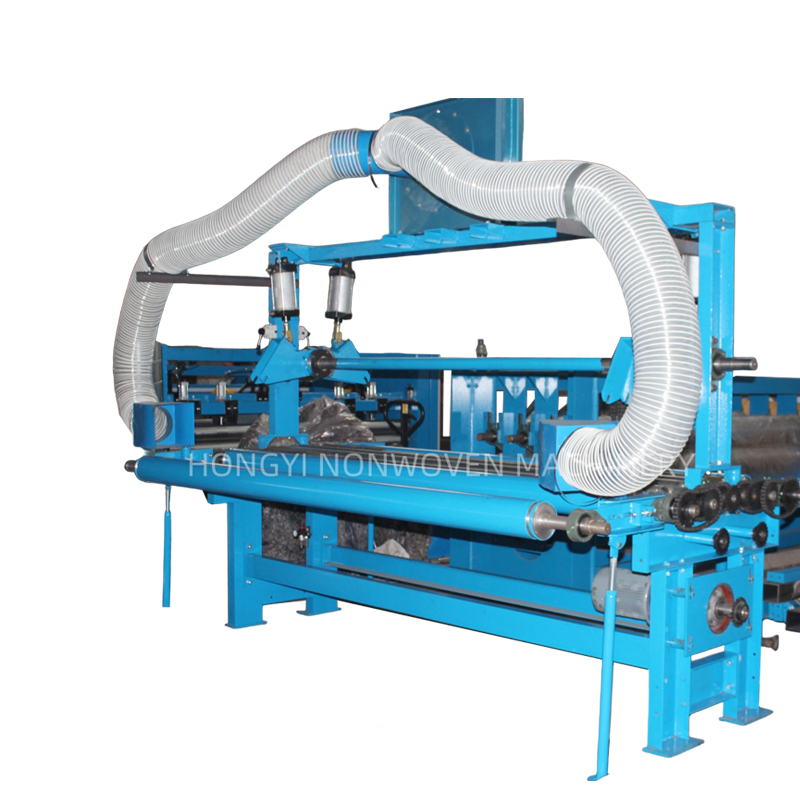
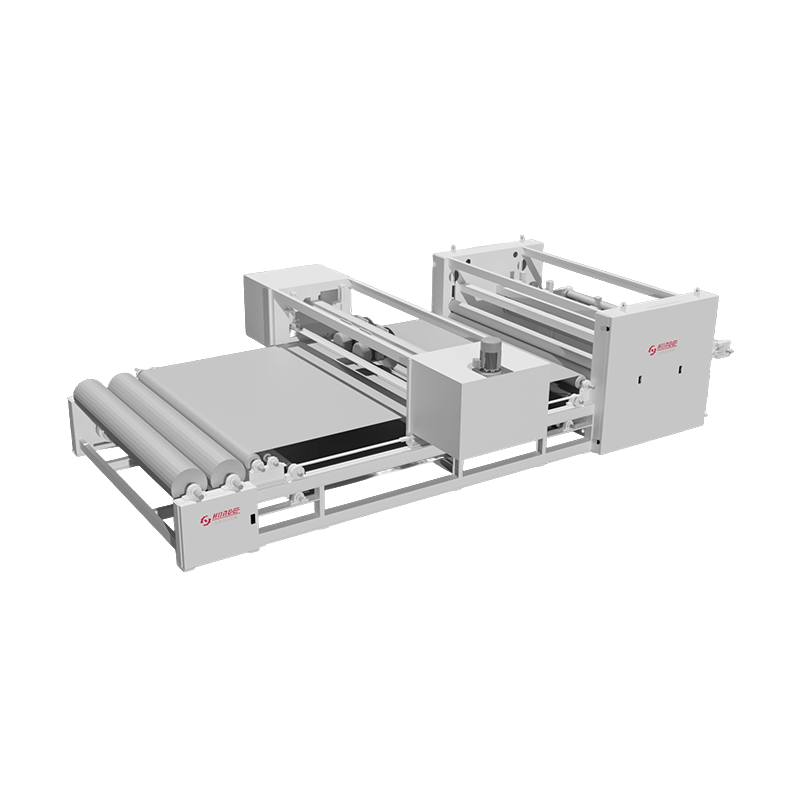
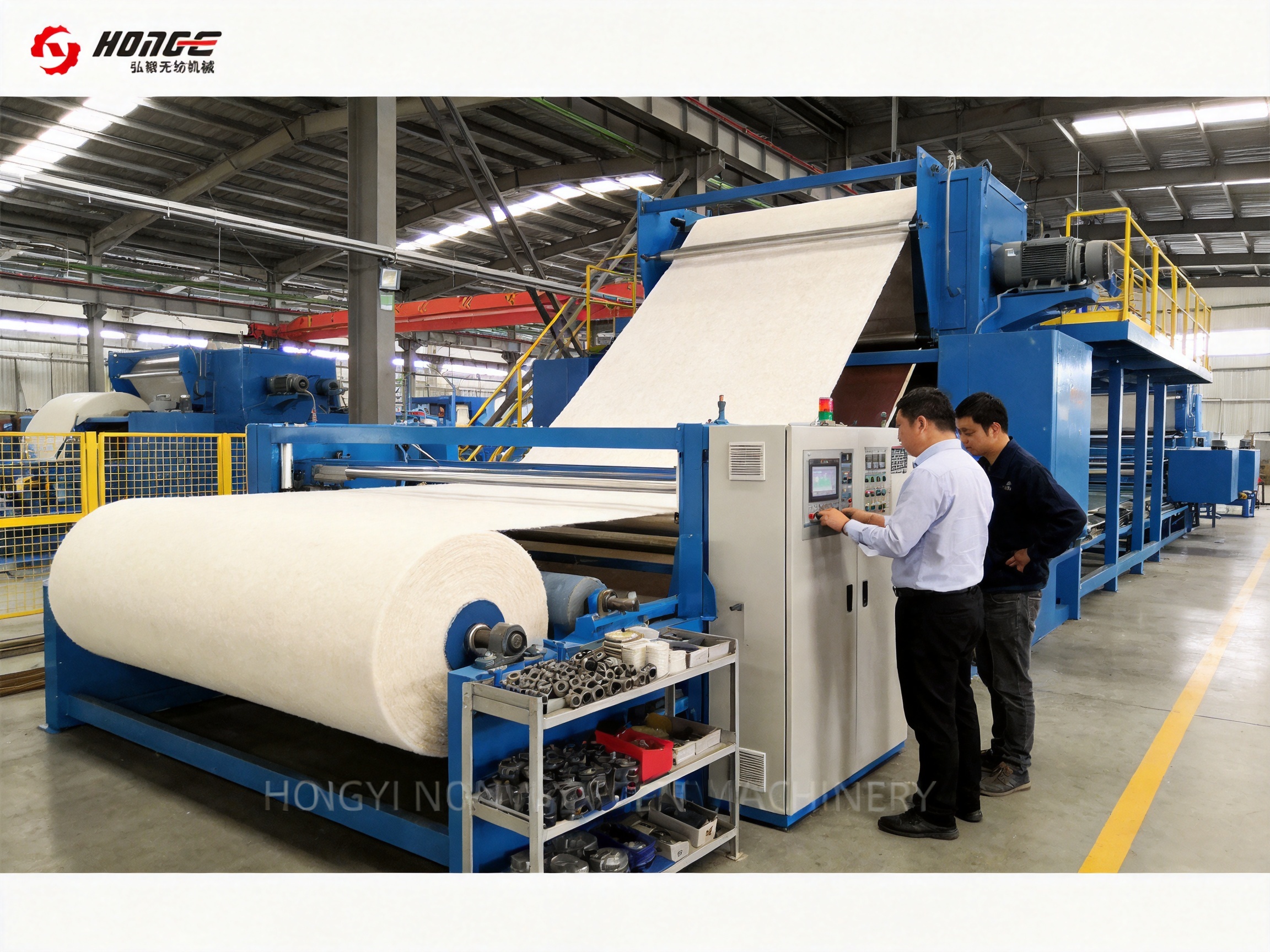
The HYFQ machine is built around an integrated working platform. This platform is not simply an accessory placed beside the cutting mechanism. It forms part of the operating concept and provides a defined surface for material positioning and auxiliary work. The platform helps the operator spread, align, inspect, measure, and prepare the fabric before the cutting action takes place.
For large nonwoven fabrics, a dedicated platform can significantly improve handling. Without adequate support, the material may hang over the edge of a narrow table or fold during positioning. These problems can lead to inaccurate measurements and uneven cuts. A broad and stable platform reduces unsupported areas and gives the operator greater control over the web.
The machine body and platform are constructed from robust mechanical materials, primarily steel and iron. This structure is intended to support long-term operation under working loads. A rigid frame helps limit vibration and movement during cutting. Structural stability is particularly important when processing wide material because even small movements can become visible as dimensional errors across a large width.
The machine can be supplied with an automatic control arrangement. The available information identifies photoencoder length control and automatic length cutting as important functions. A photoencoder-based system measures material movement and communicates the measured length to the control unit. When the preset value is reached, the machine can initiate the cutting operation according to the selected operating mode.
The cutting system includes a cross-cutting blade and a longitudinal-cutting blade. The exact blade arrangement, number of slitting positions, and cutting method may be adapted to the customer’s product requirements. This makes the machine suitable for applications where a producer needs to process different widths or cut the same material into several formats.
Winding functionality is also included in the product information. After longitudinal or cross-cutting operations, the processed material can be collected into rolls. Winding parameters may be selected according to the material’s thickness, softness, weight, and required roll diameter. The listed winding diameter is up to 1,200 millimeters, subject to the final machine configuration and operating conditions.
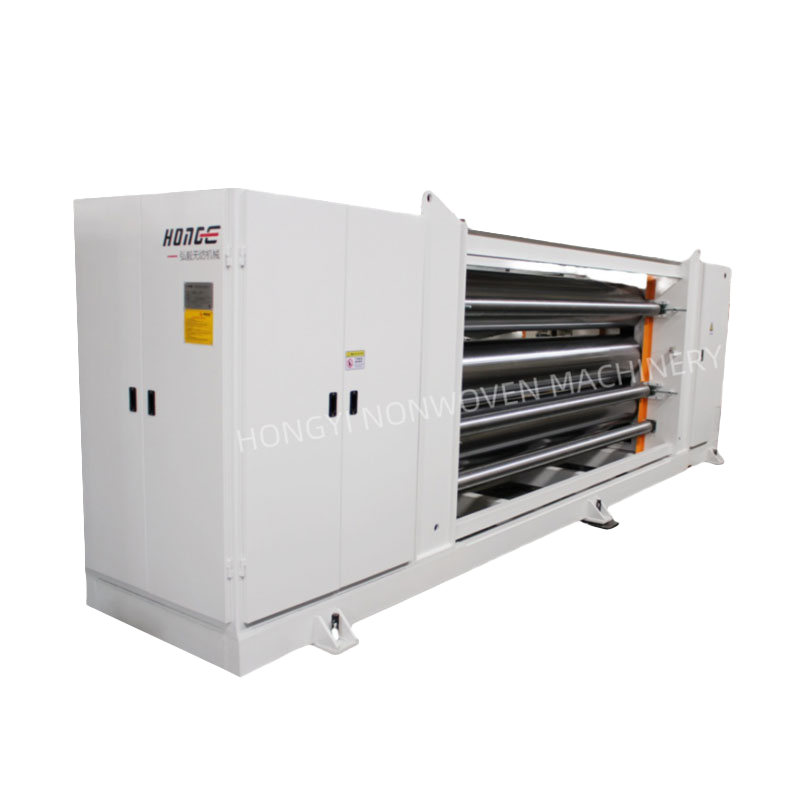
HYFQ Slitting machine
3. Precision Cross-Cutting and Longitudinal Cutting
The central advantage of the HYFQ machine is its ability to perform two important cutting directions in one equipment solution. Cross-cutting is used when a continuous web must be divided into specific lengths. Longitudinal cutting is used when a wide web must be separated into narrower widths. Combining these functions allows manufacturers to reduce repeated handling and simplify their converting workflow.
3.1 Cross-Cutting Function
Cross-cutting is suitable for producing sheets, sections, pads, or rolls with controlled lengths. The operator sets the required length through the control system, and the photoencoder monitors the movement of the material. Once the target measurement is reached, the machine performs the cutting cycle.
Automatic length control reduces reliance on manual measurement. Manual measurement can be affected by operator fatigue, inconsistent tension, material deformation, or differences in the way the measuring tape is positioned. A controlled electronic measurement system supports greater repeatability, especially when many pieces must be produced to the same dimension.
Cross-cutting performance also depends on the condition of the blade, the flatness of the material, the stability of the platform, and the selected working speed. The machine’s operating range is listed in the supplied specifications as up to 15 meters per minute in one configuration, while another product description identifies a working speed range of 0.5 to 10 meters per minute. The actual usable speed should be confirmed according to the final technical configuration, material characteristics, and cutting method.
3.2 Longitudinal Cutting Function
Longitudinal cutting divides the material along its length. This function is useful when a producer manufactures a wide parent roll but customers require narrower rolls. It can also be used to create strips, bands, or multiple parallel sections for later processing.
Accurate longitudinal cutting requires stable material guidance and a properly adjusted blade arrangement. If the material moves laterally during processing, the cut may drift from the desired position. The platform, frame, material-support system, and blade assembly work together to help maintain a consistent cutting path.
Depending on the customer’s needs, the machine can be customized for different cutting widths and product formats. The listed working width can be supplied as 2,800 millimeters in one specification, while the broader configuration information identifies working widths of up to 10 meters. This indicates that the model family may be adapted for different equipment sizes. Buyers should confirm the exact working width, blade arrangement, and machine dimensions before placing an order.
3.3 Combined Cutting Operations
Some production orders require both width division and length separation. For example, a wide nonwoven web may need to be divided into several narrower rolls, each with a specific finished length. A combined cutting and winding arrangement allows the manufacturer to perform these operations in a planned sequence rather than transferring the material between several independent machines.
Fewer transfers can reduce the risk of material contamination, edge damage, wrinkles, and incorrect orientation. It can also reduce the labor required to move large and flexible products. For manufacturers that process multiple specifications during a shift, a combined system can improve changeover organization and reduce unnecessary floor-space requirements.
4. Integrated Working Platform and Human-Machine Collaboration
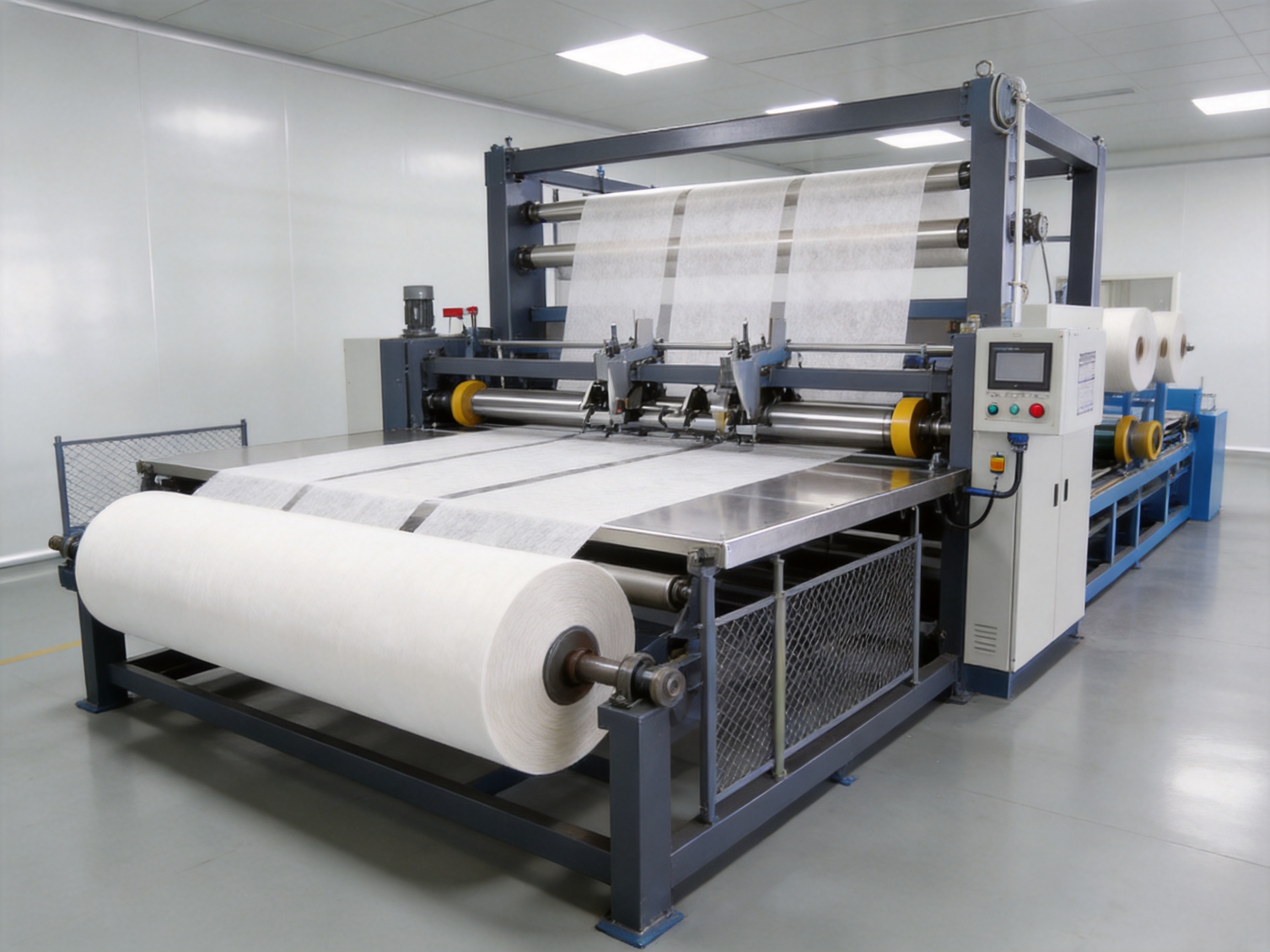
The integrated working platform is one of the most distinctive features of the HYFQ design. Many basic cutting machines provide a blade or cutting frame but leave material positioning to a separate table or manual arrangement. This can create an inconsistent operating environment. The HYFQ approach brings the operator’s working area and the cutting system into one coordinated structure.
The platform gives operators a stable place to place and align the material. It can support activities such as edge alignment, length checking, visual inspection, marking, folding, and preparation for the next cutting cycle. These tasks are common in nonwoven converting, particularly when the product is bulky or when different product specifications are processed on the same machine.
A well-designed platform can also make the operating sequence easier to understand. The operator has a defined material area, a defined cutting area, and a defined control position. This organization helps standardize work practices and reduces the chance that material will be positioned outside the intended cutting zone.
Human-machine collaboration is important because many nonwoven products cannot be handled completely automatically in every application. Material properties vary significantly. A lightweight thermal-bonded web may behave differently from a dense needle-punched geotextile. A soft felt may require careful manual alignment, while a compact roll may require controlled unwinding and tension management. The platform provides flexibility for these practical differences while the automatic control system supports repeatable machine functions.
The design may also accommodate safety protection devices according to the final configuration. Such devices can include guarded cutting areas, emergency-stop controls, safety switches, and clearly defined operating zones. The specific safety system should be confirmed with the manufacturer during technical discussions and installation planning.
5. Advantages Compared with Basic or Conventional Cutting Equipment
5.1 Better Material Positioning
A conventional cutting arrangement may require operators to position material on an improvised surface or on a separate table that is not integrated with the cutting mechanism. This may increase the risk of misalignment. The HYFQ machine provides a dedicated platform, allowing the material to be positioned closer to the cutting system and handled in a more organized way.
5.2 Reduced Material Handling
Every additional handling step creates a possibility of stretching, folding, contamination, or incorrect placement. By combining platform operation, cutting, measurement, and winding functions, the HYFQ machine can reduce the number of times the material must be moved. This can be especially beneficial for large-width products that require several workers to reposition manually.
5.3 More Consistent Cutting Length
Manual cutting depends heavily on operator measurement and judgment. The photoencoder control system provides a more structured method of monitoring material length. When the system is correctly calibrated and operated, it can support consistent cutting cycles and reduce variation between pieces.
5.4 Improved Use of Floor Space
An integrated machine can occupy less functional space than several separate units arranged for the same work. The platform, cutting system, control unit, and winding arrangement are organized as one production solution. The exact footprint depends on working width and customized configuration, but integrated construction can simplify factory layout planning.
5.5 Wider Product Applicability
The machine is not limited to one type of nonwoven fabric. It can be used for various products made from polyester fiber, shoddy fiber, and other nonwoven raw materials. Potential applications include geotextiles, felt, carpet materials, cleaning cloth, filtration-related substrates, automotive interior materials, insulation products, and industrial padding. Product suitability should always be confirmed through technical testing because density, elasticity, thickness, and surface structure influence cutting performance.
5.6 Stable Operation Under Working Loads
The steel and iron construction provides a durable foundation for the cutting and winding process. A strong structure helps support the working platform, blade assembly, drive components, and material loads. This is a practical advantage over lightweight equipment that may be more sensitive to vibration, deflection, or movement when processing wide and heavy materials.
5.7 Easier Daily Maintenance
The equipment is designed with a rational arrangement of key components to facilitate inspection, cleaning, and maintenance. In a nonwoven factory, fibers and dust can accumulate around moving parts, cutting areas, and material-contact surfaces. Convenient access allows operators and maintenance personnel to remove waste material, check fasteners, inspect blades, and identify problems before they affect production.
5.8 Customization Potential
The supplied information identifies the configuration and color as customizable according to customer requirements. In practical terms, a custom machine discussion may involve working width, cutting width, winding diameter, speed range, control functions, blade configuration, material-handling direction, electrical standards, and integration with upstream or downstream equipment. This flexibility can be valuable for factories that have specialized product dimensions or particular layout requirements.
6. Technical Specifications
The following table summarizes the principal specifications provided for the HYFQ model and its configurable equipment range. Because the supplied information includes more than one specification set, the final technical data should be confirmed against the quotation, approved drawing, and machine configuration.
| Item | Specification or Available Range |
|---|---|
| Model | HYFQ |
| Product name | Winder and Cutter |
| Brand | HONGE / Hongyi |
| Working width | 2,800 mm in one listed configuration; configurable range up to 10 m |
| Working speed | 0.5–10 m/min in one listed configuration; configurable range up to 15 m/min |
| Driving motor | Approximately 3.75–6.75 kW, depending on configuration |
| Winding diameter | Up to 1,200 mm |
| Cutting methods | Cross-cutting and longitudinal cutting |
| Length control | Photoencoder control and automatic length cutting |
| Automation | Automatic configuration available |
| Raw material applications | Shoddy fiber, polyester fiber, and other suitable nonwoven materials |
| Construction material | Primarily steel and iron mechanical components |
| Certification | CE and ISO9001-related manufacturing certification information supplied |
| Condition | New |
| After-sales service | One-year warranty listed; service terms to be confirmed in the sales agreement |
| Customization | Configuration and color can be customized according to customer requirements |
| Production capacity | Listed production capacity of approximately 100 sets per year |
The working width is one of the most important selection factors. A 2.8-meter machine may be suitable for many standard nonwoven applications, while wider configurations may be required for large geotextile, carpet, or industrial material lines. The customer should provide the maximum web width, minimum finished width, target roll diameter, material weight, and required cutting length so that the manufacturer can recommend the correct configuration.
Speed should also be evaluated in relation to material properties. A higher speed does not always provide better productivity if the web becomes unstable or the cut quality decreases. The optimum speed depends on thickness, basis weight, tension, surface structure, roll hardness, and the required accuracy. A properly selected speed range provides a balance between output, cut quality, and reliable operation.
7. Manufacturing Strengths of the Supplier
The performance of a cutting machine depends not only on its visible structure but also on the manufacturer’s production methods, engineering experience, quality control, and ability to support the complete project. Changshu Hongyi Nonwoven Machinery Co., Ltd. has a specialized background in nonwoven machinery and supplies both individual machines and complete production lines.
7.1 More Than 20 Years of Industry Experience
Long-term experience in the nonwoven machinery industry gives the manufacturer practical knowledge of different fibers, web structures, production speeds, and material-handling requirements. This experience can help when a customer is selecting a cutting machine for a new production line or upgrading an existing line.
A machinery manufacturer with knowledge across multiple process stages can better understand how an upstream carding, airlay, needle punching, thermal bonding, or heat-setting process affects the final cutting operation. For example, the output from a needle-punching machine may have different density and compression behavior from a thermally bonded wadding web. These differences influence material feeding, measurement, cutting pressure, winding tension, and roll formation.
7.2 Complete Nonwoven Machinery Portfolio
The company’s product range includes opening and blending equipment, feeding and carding equipment, airlay machines, needle punching machines, ironing machines, thermal bonding oven machines, winding and cutting machines, and complete production lines. Its line solutions cover needle-punched geotextiles, nonwoven carpets, airlaid waste felt, automotive interior materials, cleaning cloth, wool felt, and jute felt.
This broad portfolio is an advantage for customers seeking more than a standalone cutter. A supplier that understands the whole process can help coordinate the output width, web handling direction, control requirements, and production capacity between connected machines. It may also simplify communication during commissioning because the customer works with one experienced machinery partner for several process stages.
7.3 Engineering and Customization Capability
Nonwoven factories rarely have identical requirements. Some produce narrow specialty products, while others require very wide working widths. Some customers need simple manual assistance, while others require automatic length control, winding, and integration with an existing line. The ability to customize configuration is therefore an important part of machinery supply.
Customization can be discussed at the mechanical, electrical, control, and layout levels. Mechanical customization may include platform size, working width, blade arrangement, roll diameter, and material-support components. Electrical customization may include voltage, frequency, control-panel language, sensor arrangement, and connection requirements. Layout customization may be necessary when the machine must fit into a specific factory space or connect with an existing conveyor or delivery system.
7.4 Quality and Certification Orientation
The supplied product information lists CE and ISO9001-related certification. CE-related compliance supports the preparation of machinery for applicable safety and conformity requirements in relevant markets. ISO9001 quality management practices indicate a structured approach to production and quality control. Buyers should request the exact certificates and applicable conformity documents for the final machine during the purchasing process.
Quality control should cover frame fabrication, welding, machining, assembly, electrical installation, control programming, blade installation, trial operation, and final inspection. A reliable factory acceptance process should verify dimensions, speed control, cutting action, emergency-stop functions, sensor operation, winding performance, and the machine’s response to representative materials.
7.5 Global Supply Experience
The company has supplied machinery to more than 20 countries, including Mexico, Argentina, Brazil, Turkey, Algeria, Egypt, Bangladesh, Vietnam, Thailand, and other Asian markets. Experience in international supply can help with export packing, documentation, electrical requirements, installation coordination, and communication with overseas customers.
International machinery projects require careful planning. Important documents may include a commercial invoice, packing list, operating manual, electrical drawings, foundation or layout drawings, spare-parts list, and conformity documents. A supplier familiar with overseas projects is better positioned to organize these materials and coordinate delivery requirements.
8. Production Process and Quality Assurance
The manufacturing process for a machine such as the HYFQ begins with technical confirmation. The customer’s product information must be reviewed before the machine is designed or assembled. Key data includes material type, basis weight, thickness, maximum web width, minimum finished width, roll diameter, cutting length, production speed, expected daily operating hours, and factory power supply.
After the requirements are confirmed, the manufacturer can develop the machine configuration and layout. The platform dimensions, drive motor, winding mechanism, blade system, control system, and safety devices should be selected as a coordinated package. This stage is important because changing one component may influence the performance of other components.
8.1 Frame Fabrication
The frame and platform are manufactured from mechanical steel and iron components. Fabrication accuracy affects the final alignment of the working surface, drive system, cutting assembly, and winding structure. Welding quality, dimensional control, and surface treatment all contribute to long-term stability.
A rigid frame helps maintain the geometry of the machine during operation. If the platform or cutting assembly shifts under load, the material may not remain aligned. For this reason, frame inspection and assembly verification should be treated as essential quality-control steps rather than cosmetic checks.
8.2 Component Assembly
Following frame fabrication, the drive components, cutting units, guide elements, control cabinet, sensors, and winding components are installed. Assembly personnel must verify the alignment of rotating parts and the movement of adjustable components. Blade positioning must be checked to ensure that the selected cutting method is compatible with the intended material.
Electrical assembly includes control wiring, sensor connections, motor connections, emergency-stop circuits, and operator controls. Correct labeling and orderly wiring make future maintenance easier. They also help technicians identify and resolve problems more efficiently during installation or service.
8.3 Control System Testing
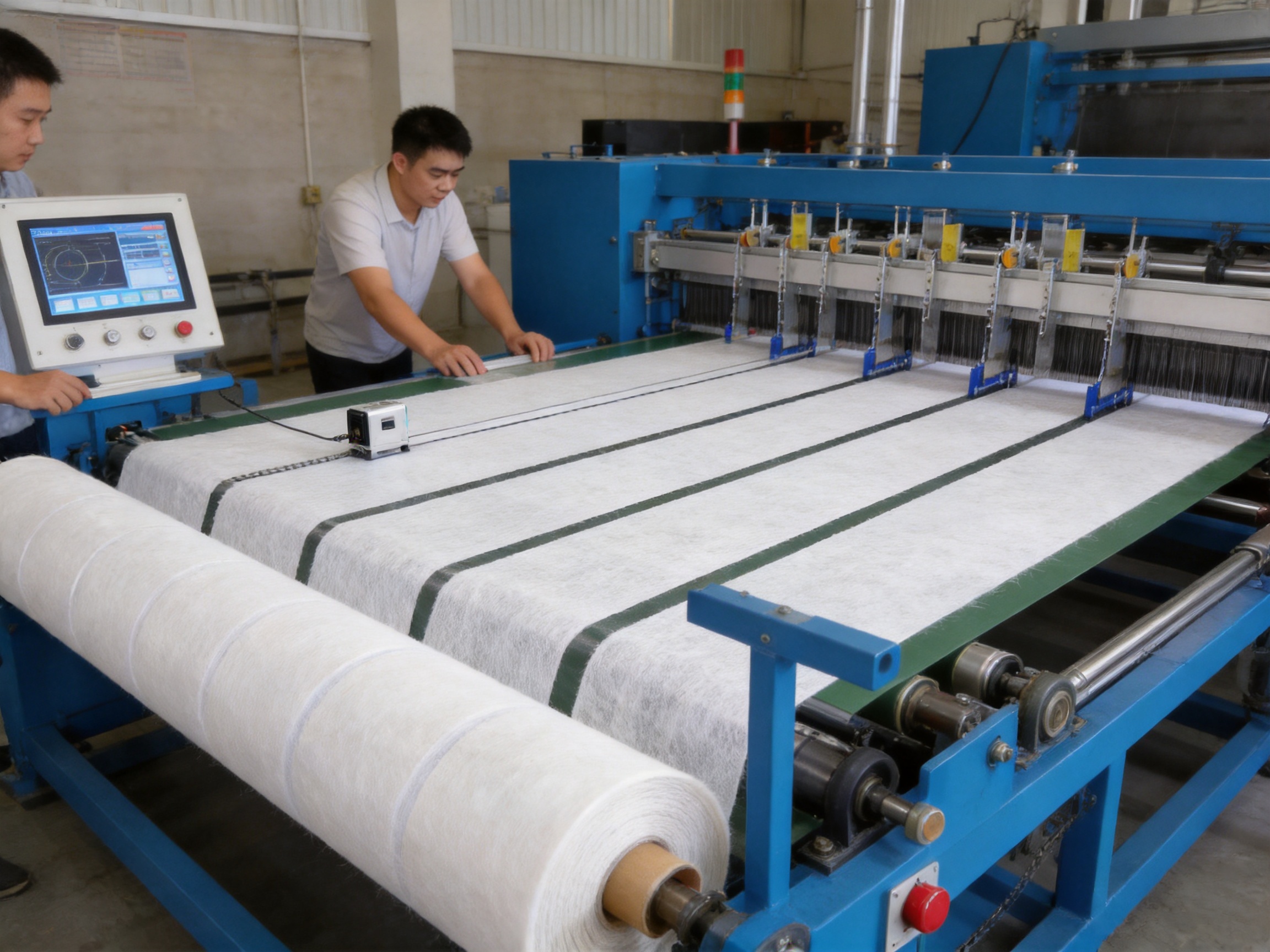
The photoencoder control system should be tested for measurement accuracy and repeatability. The control unit must correctly receive the encoder signal, calculate material movement, and activate the cutting sequence at the selected length. The operator should be able to set and adjust parameters through the control interface in a clear and controlled manner.
Testing should include different lengths and operating speeds. The machine should also be checked for safe behavior when material movement stops, when an emergency stop is pressed, or when the operator needs to interrupt the automatic cycle. These tests help confirm that the machine is ready for practical factory conditions.
8.4 Trial Operation with Material
Dry testing can verify mechanical movement, but material trials are necessary to evaluate real cutting performance. A representative nonwoven material should be used to check edge quality, dimensional accuracy, web stability, winding formation, and operator handling. If the customer processes several product types, trials with more than one material may be appropriate.
The trial results can be used to adjust speed, tension, blade position, winding pressure, and length-control parameters. A properly documented trial provides useful operating guidance for the customer and can reduce commissioning time after delivery.
9. Applications Across Nonwoven Industries
9.1 Geotextile Materials
Needle-punched geotextiles are often produced in wide webs and supplied in rolls with defined widths and lengths. The HYFQ machine can support final width separation, length cutting, and winding for suitable geotextile structures. The required configuration depends on the geotextile’s basis weight, thickness, strength, and roll diameter.
9.2 Nonwoven Carpet and Underlay
Carpet substrates, underlay, and related materials may require accurate width conversion and clean edges. An integrated platform can help operators inspect the surface and align the material before cutting. Winding capability allows the finished material to be prepared in manageable rolls for storage and delivery.
9.3 Automotive Interior Materials
Automotive interior materials may include felt, padding, insulation, and composite nonwoven structures. These products often require repeatable dimensions because they are later assembled into vehicle components. The combination of automatic length measurement and controlled cutting can help prepare material for downstream die-cutting, molding, laminating, or assembly.
9.4 Cleaning Cloth and Industrial Wipes
Cleaning cloth and industrial wiping materials can be manufactured from recycled fibers, polyester fibers, or blended raw materials. These products may be supplied as rolls or cut sheets. The machine’s cross-cutting function can be used to produce consistent lengths, while longitudinal cutting can create narrower roll formats.
9.5 Wool Felt and Jute Felt
Wool felt and jute felt can be relatively thick and flexible. Such materials benefit from a stable support platform that reduces sagging and helps the operator align the fabric before cutting. The selected blade type, cutting speed, and winding method should be matched to the material’s thickness and surface structure.
9.6 Thermal-Bonded Wadding and Insulation
Thermal-bonded wadding and insulation materials may be soft, compressible, and sensitive to excessive tension. A controlled cutting and winding process can help preserve the product’s thickness and appearance. The machine should be configured with suitable material support and winding parameters to avoid excessive compression or telescoping.
10. Operating Procedure
Before starting production, the operator should inspect the platform, cutting system, winding components, control panel, and safety devices. The working area should be clean and free from tools, loose fibers, and foreign objects. Blades should be checked for damage or excessive wear, and all guards should be in their proper positions.
The material is then placed or fed onto the platform. The operator aligns the edge or reference mark according to the required product dimension. If the machine is connected to an upstream process, the feeding direction and web path should be checked to ensure that the material enters the cutting zone smoothly.
The required cutting length, width arrangement, winding diameter, and operating speed are entered or adjusted through the control system. The photoencoder should be correctly positioned and confirmed to be in contact with or properly reading the moving material. A short test cycle can be performed before full production begins.
During operation, the operator should observe the material path, edge alignment, blade action, roll formation, and control signals. If the material wrinkles, shifts, stretches, or accumulates at any point, the machine should be stopped safely and the cause investigated. Operators should not reach into the cutting or winding area while moving components are active.
At the end of the production run, the machine should be stopped according to the operating procedure. Finished rolls or cut sections should be removed using suitable handling methods. Waste material should be cleared from the platform and cutting area, and the equipment should be prepared for the next order.
11. Maintenance and Service Considerations
Regular maintenance supports cutting accuracy, machine safety, and service life. The working platform should be cleaned frequently because loose fibers and dust can affect material positioning. Cutting areas should be inspected for accumulated waste that may interfere with blade movement or sensor operation.
Blades are wear components and should be checked according to operating hours and material type. A dull or damaged blade may produce rough edges, pull the material, increase resistance, or create an unnecessary load on the drive system. Blade replacement should be performed by trained personnel using the correct safety procedure.
Drive components, bearings, guide elements, winding parts, and fasteners should be inspected at planned intervals. Lubrication requirements should follow the manufacturer’s manual. Electrical cabinets should be kept clean and dry, and control connections should be checked by qualified technicians.
The photoencoder and related measurement components should be kept clean and correctly aligned. Any contamination, slippage, or incorrect positioning may affect length measurement. If the measured length differs from the set value, the operator should check the encoder, material contact, calibration, speed setting, and control parameters.
The manufacturer lists a one-year warranty in the supplied information. Warranty coverage, response time, spare-parts availability, remote support, installation service, and training should be clearly defined in the purchase contract. For overseas customers, it is beneficial to request a recommended spare-parts list and maintenance schedule before shipment.
12. Selection Guidance for Buyers
Buyers should begin by describing the material rather than selecting a machine only by model name. Important material data includes fiber composition, basis weight, thickness, moisture condition, elasticity, compressibility, surface friction, and maximum roll weight. These properties influence the cutting method and winding requirements.
The required finished dimensions should also be clearly defined. Customers should specify maximum input width, minimum output width, standard output widths, cutting-length range, number of longitudinal sections, and maximum winding diameter. If several products will be processed, the machine should be assessed against the most demanding combination of width, thickness, and roll weight.
Factory conditions are another important consideration. The customer should confirm available floor space, machine access routes, ceiling height, power supply, compressed-air availability if required, ventilation, lighting, and lifting equipment. A layout drawing can help identify possible conflicts with existing production lines.
Automation requirements should be discussed in detail. Some factories may need automatic length control but manual material positioning. Others may require greater integration with conveyors, upstream web-forming equipment, or downstream packaging systems. The control interface, data settings, alarm functions, and operator language can be included in the technical specification.
A sample trial is recommended when the material is unusual, highly compressible, very thick, or particularly sensitive to tension. The trial can confirm whether the proposed blade arrangement, platform design, speed range, and winding method are suitable. It also gives the buyer an opportunity to evaluate edge quality and finished-roll appearance before final acceptance.
13. Why Integrated Equipment Supports Factory Efficiency
Production efficiency is not determined only by the maximum machine speed. It also depends on changeover time, material handling, operator workload, waste rate, maintenance access, and the consistency of finished products. An integrated cutting and winding machine can contribute to efficiency in each of these areas.
Material handling is often a hidden source of production loss. Large nonwoven webs require space and labor to move. If the material is transferred several times between separate tables and cutting units, operators may spend more time repositioning the product than processing it. The HYFQ platform provides a central operating area that can reduce unnecessary movement.
Repeatable length control helps stabilize production planning. When cut pieces or rolls are produced to consistent dimensions, packaging and inventory calculations become easier. Consistency can also reduce customer complaints associated with incorrect sizes or irregular roll lengths.
Maintenance efficiency is supported by accessible component layout. Operators can identify fiber accumulation, blade wear, loose fasteners, or sensor problems earlier. Early intervention reduces the chance of major downtime and helps maintain stable product quality.
For companies adding a new nonwoven production line, the cutter can be considered as part of a complete process solution. The supplier’s experience with opening, blending, carding, airlay forming, needle punching, thermal bonding, ironing, and winding can assist with process coordination. This is particularly valuable when the customer needs a customized line rather than a standard machine.
14. Frequently Asked Questions
Q1: What is the HYFQ Slitting Machine used for?
The HYFQ machine is used for cutting, slitting, and winding nonwoven fabrics. It can perform cross-cutting for controlled lengths and longitudinal cutting for narrower widths. It is normally used at the end of a nonwoven production process or as a separate converting machine.
Q2: What materials can the machine process?
The machine is intended for suitable nonwoven materials, including products made from polyester fiber and shoddy fiber. Potential applications include geotextiles, felt, carpet substrates, cleaning cloth, automotive interior materials, thermal-bonded wadding, and insulation products. Final suitability depends on thickness, density, elasticity, surface structure, and other material properties.
Q3: Does the machine cut both horizontally and vertically?
Yes. The listed blade configuration includes a cross-cutting blade and a longitudinal-cutting blade. Cross-cutting divides the material across its width, while longitudinal cutting divides the material along its running direction. The exact cutting arrangement should be selected according to the required finished products.
Q4: How is the cutting length controlled?
The machine uses photoencoder control to monitor material movement. The operator can set the required length through the control system, and the machine can perform automatic length cutting when the preset measurement is reached. Calibration and correct sensor positioning are important for accurate results.
Q5: What is the standard working width?
One listed configuration has a working width of 2,800 millimeters. The broader specification information identifies customized working widths of up to 10 meters. Since working width depends on the machine configuration, customers should confirm the required width during technical discussions.
Q6: What is the operating speed?
The supplied specifications identify a speed range of 0.5 to 10 meters per minute in one configuration and up to 15 meters per minute in another configurable range. Actual production speed depends on material type, thickness, width, cutting quality, winding requirements, and the final machine design.
Q7: What is the maximum winding diameter?
The listed maximum winding diameter is up to 1,200 millimeters. The practical roll diameter may depend on the material thickness, roll weight, winding tension, core size, and customer requirements.
Q8: Can the machine be customized?
Yes. The supplied information states that the configuration and color can be customized according to customer needs. Customization may include working width, cutting arrangement, winding diameter, control system, electrical specifications, layout, and connection with other production equipment.
Q9: Does the integrated platform improve operation?
The platform provides a stable area for material placement, alignment, measurement, inspection, and auxiliary handling. It can reduce unnecessary material transfers and support more organized cooperation between the operator and the automatic cutting system.
Q10: What should be prepared before requesting a quotation?
The customer should provide material type, width, thickness, basis weight, roll diameter, required finished widths, cutting lengths, production speed, operating hours, power supply, factory layout, and automation requirements. Samples or product photographs can also help the manufacturer select the appropriate configuration.
Q11: Is the machine suitable for a complete nonwoven production line?
Yes. It can be installed as the final cutting and winding unit in a complete line. The manufacturer also supplies opening, blending, carding, airlay, needle punching, thermal bonding, ironing, and related equipment, allowing customers to discuss complete line integration.
Q12: What after-sales support is available?
The supplied information lists a one-year warranty. Customers should confirm the full after-sales package, including installation guidance, commissioning, operator training, spare parts, technical documents, remote support, and the terms governing warranty service.
15. Conclusion
The HYFQ Slitting Machine is a practical solution for nonwoven fabric manufacturers that require controlled cutting, slitting, and winding in the final stage of production. Its integrated working platform distinguishes it from basic cutting equipment by providing a stable and organized area for material positioning and auxiliary operations. The combination of cross-cutting and longitudinal cutting allows manufacturers to process a wide range of product formats with fewer handling steps.
Photoencoder length control and automatic cutting support repeatable dimensions, while the robust steel and iron construction provides a stable foundation for long-term operation. The machine can be adapted to different working widths, speeds, winding diameters, electrical requirements, and production layouts. This flexibility makes it suitable for small and medium-sized converters as well as larger nonwoven production projects.
The manufacturer’s broader experience in nonwoven machinery adds value beyond the individual cutter. With more than 20 years in the industry, a portfolio covering complete nonwoven production lines, international supply experience, and customization capabilities, Changshu Hongyi Nonwoven Machinery Co., Ltd. can support customers from equipment selection through installation and production operation.
For the best result, customers should confirm the final configuration using their actual material specifications and finished-product requirements. A detailed technical review, sample trial, layout confirmation, and acceptance test can ensure that the HYFQ machine is properly matched to the intended application. When correctly configured and maintained, it can improve cutting consistency, reduce manual handling, support efficient winding, and contribute to a more reliable nonwoven converting process.
References
1. Changshu Hongyi Nonwoven Machinery Co., Ltd., HYFQ Slitting Machine product information and technical specifications.
2. Changshu Hongyi Nonwoven Machinery Co., Ltd., company profile and nonwoven machinery product portfolio.
3. International Organization for Standardization, ISO 9001, Quality Management Systems—Requirements.
4. European machinery safety and conformity principles applicable to industrial cutting equipment.
5. General manufacturing guidance for nonwoven fabric converting, roll handling, slitting, cross-cutting, and winding operations.