

Content
- 1 1. The Role of Drafting in Nonwoven Fabric Production
- 2 2. Product Overview
- 3 3. Main Technical Specifications
- 4 4. Multi-Roller Drafting Structure
- 5 5. Seamless Steel Drafting Rollers with Rough Rubber Surfaces
- 6 6. Independent Input and Output Roller Drives
- 7 7. Adjustable Draft Ratio and Process Control
- 8 8. Advantages Compared with Basic Drafting Equipment
- 9 9. Applications in Different Nonwoven Industries
- 10 10. Manufacturing Strengths and Engineering Capability
- 11 11. Manufacturing Process and Component Quality
- 12 12. Installation and Commissioning Considerations
- 13 13. Operating Guidelines
- 14 14. Maintenance and Service Life
- 15 15. Packaging, Delivery, and Export Support
- 16 16. Selecting the Correct Configuration
- 17 17. Economic and Production Benefits
- 18 18. Safety Considerations
- 19 19. Why Work with an Experienced Nonwoven Machinery Manufacturer?
- 20 20. Frequently Asked Questions
- 20.1 Q1: What is the main purpose of a fiber web drafting machine?
- 20.2 Q2: Which fibers can the HYQS machine process?
- 20.3 Q3: What is the maximum draft ratio?
- 20.4 Q4: What is the maximum working width?
- 20.5 Q5: How are the movable rollers adjusted?
- 20.6 Q6: What type of rollers are used?
- 20.7 Q7: Can the input and output rollers be controlled separately?
- 20.8 Q8: What is the line speed?
- 20.9 Q9: What product GSM range is supported?
- 20.10 Q10: Can the machine be connected to other nonwoven equipment?
- 20.11 Q11: Is the machine suitable for a new production line?
- 20.12 Q12: Can the configuration be customized?
- 20.13 Q13: What certifications are associated with the machine?
- 20.14 Q14: What is the warranty period?
- 20.15 Q15: How can operators obtain the best drafting result?
- 21 21. Conclusion
- 22 References
- 23 Product: HYQS Fiber Web Drafting Machine
Fiber web drafting is a critical operation in the production of high-quality nonwoven fabrics. Before a web is bonded, needle punched, thermally treated, wound, or converted into a finished product, its fibers must be distributed in a controlled and stable structure. A well-designed drafting machine stretches the web in the longitudinal direction, improves fiber orientation, corrects irregularities, and prepares the material for subsequent processing. The result is a more uniform, more breathable, stronger, and more consistent nonwoven fabric.
The HYQS Fiber Web Drafting Machine is designed for manufacturers that require reliable web control, adjustable draft performance, broad working widths, and compatibility with modern nonwoven production lines. It is suitable for polyester fiber, PP staple fiber, and other staple-fiber webs used in technical textiles, filtration materials, automotive interiors, geotextiles, carpets, insulation products, cleaning cloths, furniture padding, and various industrial applications.
Manufactured by Changshu Hongyi Nonwoven Machinery Co., Ltd., the machine combines a multi-roller drafting arrangement, independent motorized drives, adjustable roller positioning, and a robust steel construction. Its maximum draft ratio is 1:1.5, while its working width, control configuration, color, and other parameters can be customized according to the requirements of a specific production line.
For producers seeking a dependable nonwoven drafting machine supplier, this equipment provides a practical balance of mechanical strength, process flexibility, operating stability, and long-term service support.
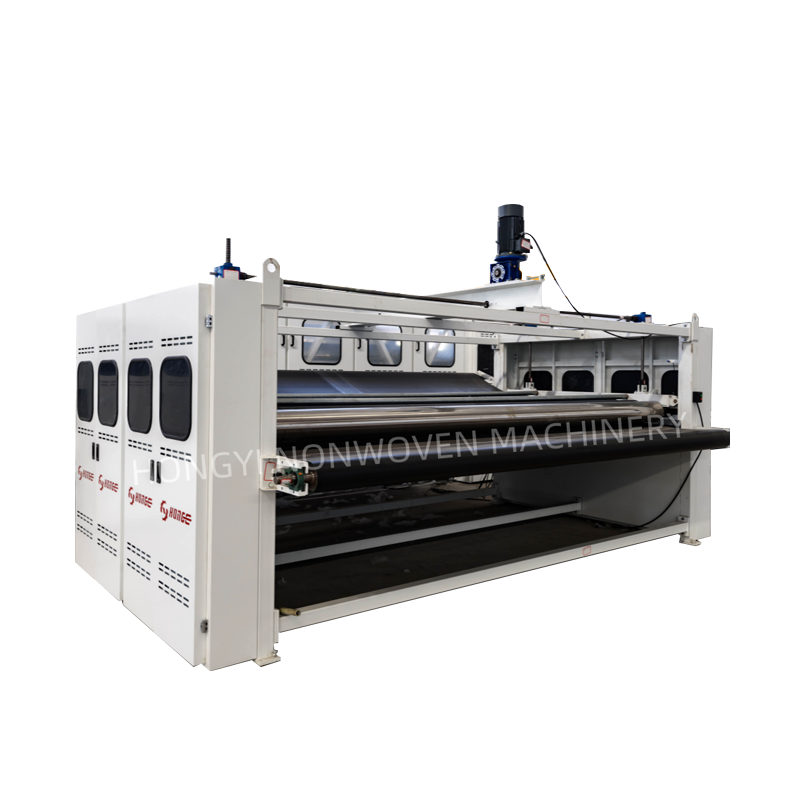
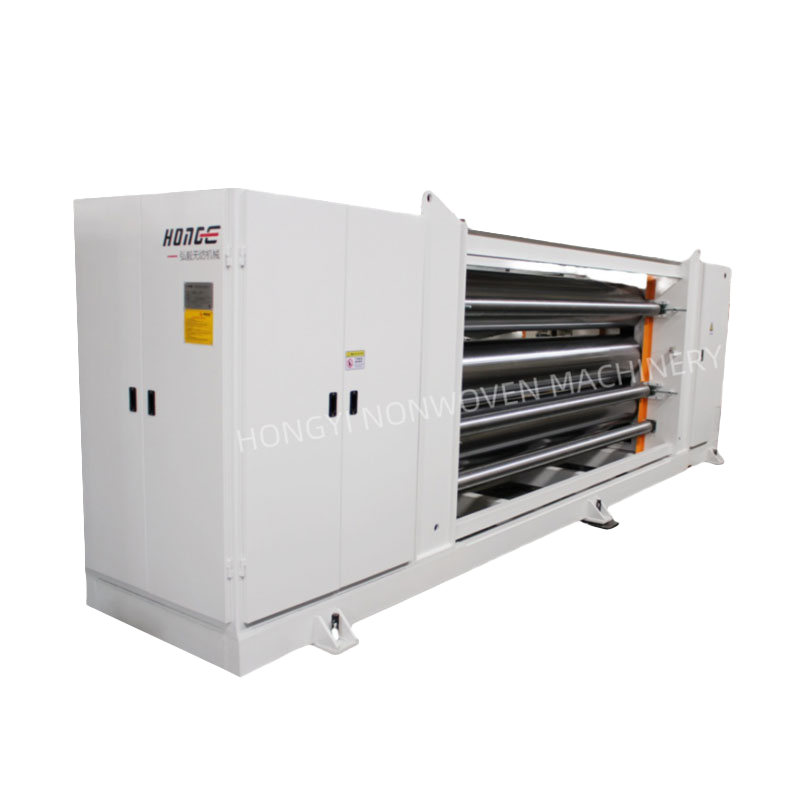
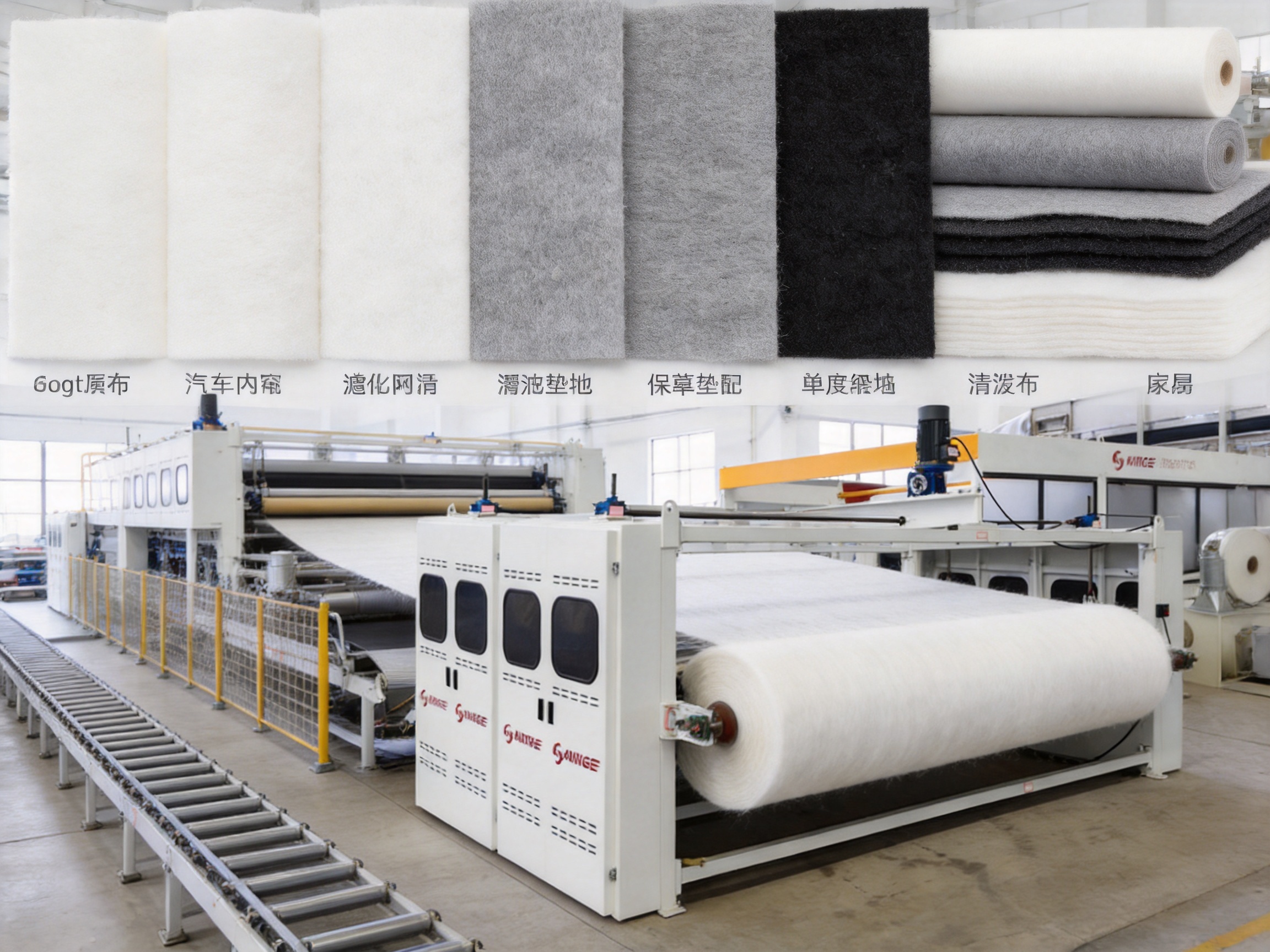
HYQS Fiber Web Drafting Machine
1. The Role of Drafting in Nonwoven Fabric Production
Nonwoven fabric is produced by forming fibers into a web and then bonding or consolidating that web. The initial fiber web may be created by carding, airlaying, crosslapping, or another web-forming process. Although the fibers may appear evenly distributed, the web can contain variations in thickness, density, fiber direction, and local mass. These variations can affect the performance and appearance of the final fabric.
Drafting introduces a controlled difference in surface speed between groups of rollers. As the web travels through the machine, it is stretched in the machine direction. This stretching encourages more fibers to align longitudinally and modifies the original fiber arrangement. The process can also redistribute fiber mass and improve the general consistency of the web before bonding or needle punching.
Depending on the raw material, web structure, input weight, and desired finished product, drafting may be used to achieve several objectives:
• Improve longitudinal fiber orientation.
• Reduce irregularities in web thickness.
• Increase the uniformity of the web structure.
• Improve air permeability and breathability.
• Prepare the web for needle punching or thermal bonding.
• Support more consistent tensile strength.
• Improve bulk and thickness distribution.
• Stabilize the web before downstream processing.
Drafting does not replace carding, crosslapping, airlaying, or bonding. Instead, it acts as a precision preparation step between web formation and subsequent consolidation. Its importance increases when manufacturers need a high-quality surface, stable thickness, consistent GSM, or a controlled balance between machine-direction and cross-direction properties.
2. Product Overview
The HYQS Fiber Web Drafting Machine is an automatic auxiliary machine for nonwoven fabric production. It is designed to receive a horizontally arranged fiber web, apply controlled longitudinal drafting, and deliver the adjusted web to the following section of the production line.
The machine is suitable for applications involving polyester fiber or PP staple fiber. It can process products in a broad GSM range of approximately 100 GSM to 1500 GSM, depending on the material characteristics, production-line configuration, web formation method, and operating conditions. Its product net width can reach up to 8500 mm, allowing it to serve both medium-width and wide-width nonwoven production systems.
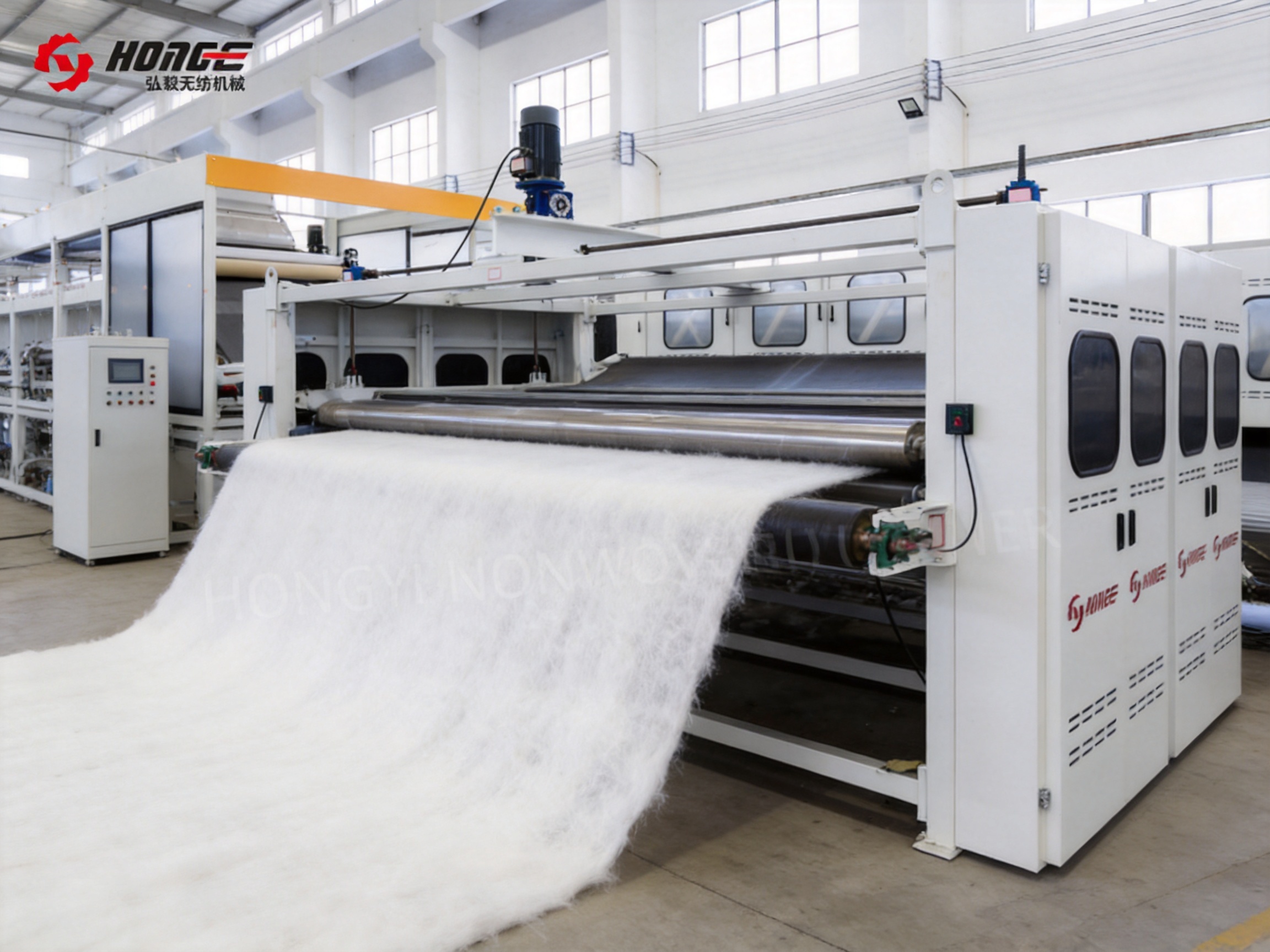
The standard technical configuration includes five upper fixed rollers and two upper movable rollers. The movable rollers can be raised or lowered through an integral electric worm gear mechanism. This arrangement allows operators to adjust the roller position and adapt the drafting conditions to different web thicknesses and product requirements.
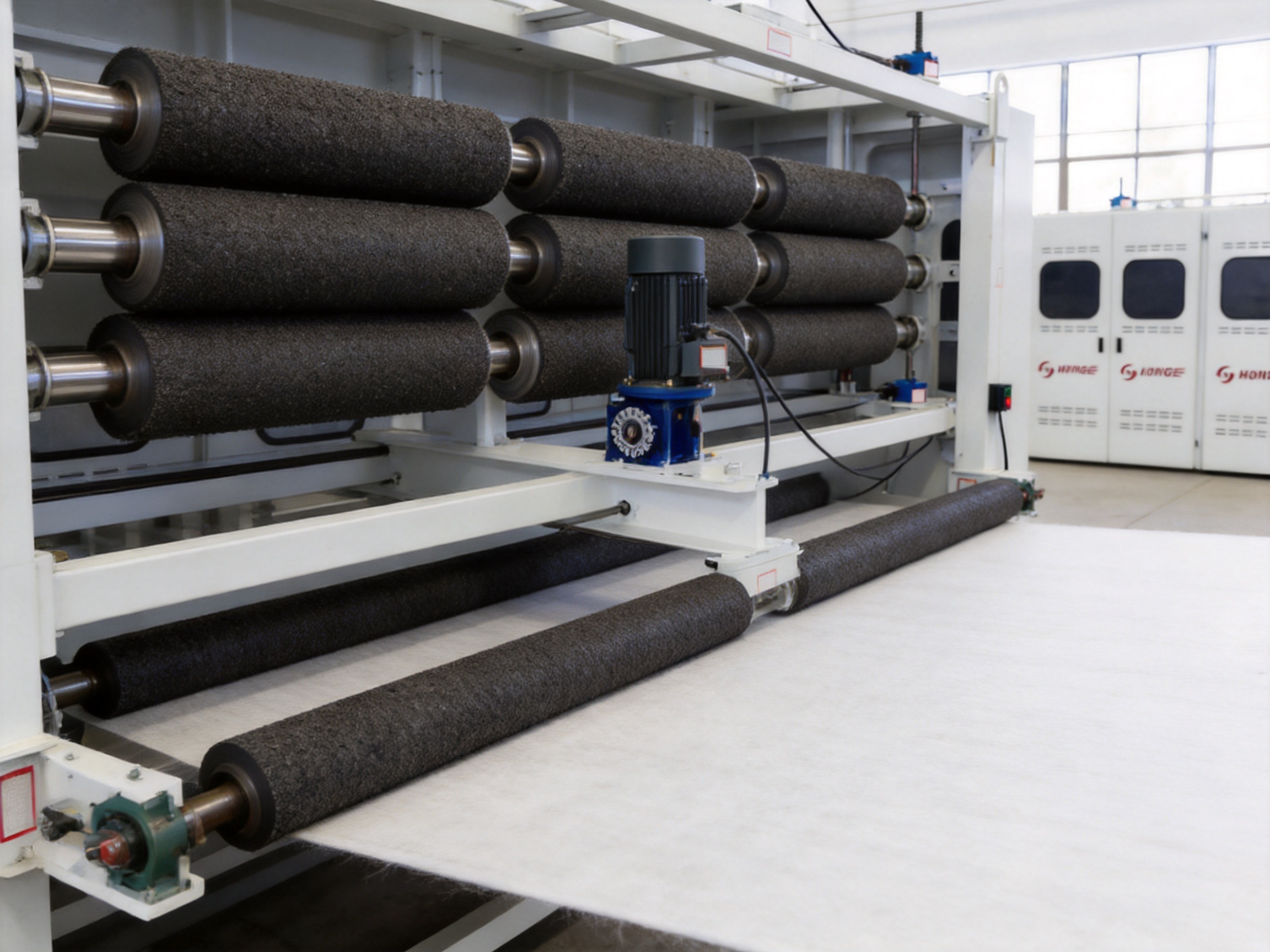
The drafting rollers are manufactured from seamless steel pipe. Their surfaces are finely ground and covered with rough rubber. This surface treatment provides a suitable balance between traction and web protection, helping the rollers grip the fiber web while maintaining stable transport.
The machine includes one input roller and one output roller. Both rollers are driven through direct motor-reducer combinations. They may operate synchronously according to the transmission ratio, work independently, or be linked to the speed regulation system of the complete production line.
The maximum draft ratio is 1:1.5. This provides a controlled drafting range for improving fiber orientation without imposing excessive elongation on the web. The actual operating ratio should be selected according to fiber type, web density, moisture content, fiber length, bonding method, and final-product specifications.
3. Main Technical Specifications
| Item | Specification |
|---|---|
| Model | HYQS |
| Machine type | Fiber web drafting machine |
| Application | Assistant equipment for nonwoven fabric production |
| Suitable raw materials | Polyester fiber or PP staple fiber |
| Product GSM range | 100 GSM to 1500 GSM |
| Maximum product net width | Up to 8500 mm |
| Typical working width | 5600 mm configuration available |
| Maximum draft ratio | 1:1.5 |
| Drafting roller diameter | 200 mm |
| Line speed | 0.5 m/min to 8 m/min |
| Installed power | 18.7 kW |
| Roller arrangement | Five upper fixed rollers and two upper movable rollers |
| Roller adjustment | Electric worm gear lifting and lowering system |
| Drive arrangement | Independent motor and reducer drives |
| Certification | CE and ISO9001-related manufacturing quality systems |
| Automation | Automatic configuration |
| Customization | Configuration, color, and selected dimensions can be customized |
The specifications above describe the available configuration and should be confirmed with the manufacturer before ordering. Nonwoven machinery is often engineered according to the complete line layout, fiber properties, required output, web width, installation conditions, and local electrical standards.
4. Multi-Roller Drafting Structure
One of the most important design features of the HYQS machine is its combination of fixed and movable upper rollers. The five upper fixed rollers provide a stable drafting path, while the two upper movable rollers allow the working arrangement to be adjusted.
A multi-roller configuration offers several advantages over a simple two-roller stretching system. The web is supported over a longer contact path, and the drafting force can be distributed through multiple roller positions. This helps reduce sudden tension changes and supports more gradual fiber rearrangement. A longer controlled path may also improve web stability when processing wide or relatively heavy materials.
The movable rollers are lifted and lowered using an integral electric worm gear. Compared with purely manual adjustment, electric positioning can reduce setup effort and provide more convenient access when changing products or performing maintenance. The worm gear mechanism also supports controlled movement and helps hold the selected roller position during operation.
Roller positioning is particularly important when the machine must process materials with different thicknesses or compressibility. A light polyester web and a dense PP-based web may require different pressure and contact conditions. The ability to adjust roller height allows the operator to adapt the machine more precisely instead of relying on a single fixed configuration.
For production lines that manufacture multiple product grades, this flexibility can reduce changeover time and improve equipment utilization. It also allows process engineers to refine the drafting effect through controlled trials rather than making large mechanical modifications.
Controlled Contact and Web Support
The roller arrangement helps maintain contact between the web and the drafting surfaces. Stable contact is necessary because insufficient engagement may lead to slipping, while excessive compression may damage the web, reduce bulk, or create unwanted marks. The adjustable roller system gives the operator a practical way to find a suitable operating condition.
In addition, the multi-roller path supports the web across the working width. This is important for wide nonwoven materials, where edge behavior and center-area stability can affect final quality. Proper alignment, roller parallelism, and regular cleaning remain essential for maintaining consistent performance.
5. Seamless Steel Drafting Rollers with Rough Rubber Surfaces
The drafting roller is made from seamless steel pipe. This construction provides a strong and stable base for continuous operation. Steel rollers are suitable for industrial nonwoven machinery because they can withstand mechanical loads, maintain dimensional stability, and support precision machining.
The roller surface is finely ground before being covered with rough rubber. Surface preparation is important because an uneven or poorly finished roller can produce irregular contact, vibration, web marking, or inconsistent traction. Fine grinding provides a smoother foundation for the rubber covering and contributes to better rotational balance.
The rough rubber surface is designed to improve grip on the fiber web. Fiber webs are not always dense or mechanically stable, especially before bonding. A smooth metal roller could permit slipping or insufficient transmission of the drafting force. The rubber surface increases friction and helps the roller transfer movement to the web more effectively.
At the same time, the rubber covering provides a less aggressive contact surface than bare metal. When the roller pressure and speed are correctly adjusted, it can help transport the web without unnecessary cutting or abrasion. The correct rubber hardness and surface condition depend on the material being processed and should be confirmed during machine commissioning.
Maintenance of Drafting Roller Surfaces
Roller surfaces should be inspected regularly for fiber accumulation, contamination, local wear, hardening, cracking, or changes in roughness. Deposits can alter friction and cause uneven drafting across the width. Cleaning methods should be selected according to the rubber material and the manufacturer’s recommendations.
Operators should also monitor roller parallelism and bearing condition. Even a high-quality roller cannot deliver uniform results if it is misaligned or if its bearings have excessive play. Preventive inspection helps protect product quality and reduces unplanned downtime.
6. Independent Input and Output Roller Drives
The HYQS machine is equipped with one input roller and one output roller. Both are driven through direct motor-reducer combinations. This design provides a clear and controllable relationship between web entry, drafting action, and web delivery.
The input roller controls the arrival of the web into the drafting section. The output roller determines the delivery speed after the drafting effect has been applied. By adjusting the speed relationship between these rollers, the operator can establish the required draft ratio within the available range.
The input and output rollers may operate synchronously according to the transmission ratio. Synchronous operation is useful when the drafting machine is integrated into a complete production line and must maintain a stable relationship with upstream and downstream equipment.
They may also be controlled independently. Independent control provides additional flexibility during commissioning, product changeover, troubleshooting, and process development. For example, an operator may adjust the output speed slightly to observe changes in web tension, bulk, or fiber orientation.
The rollers can also be connected to the overall speed regulation system. This makes it possible to coordinate the drafting machine with carding machines, crosslappers, needle punching machines, thermal bonding ovens, winders, cutters, or other line equipment. Integrated speed control is important because the drafting machine should not operate as an isolated unit; it must work as part of a continuous material flow.
7. Adjustable Draft Ratio and Process Control
The maximum draft ratio of the machine is 1:1.5. In practical terms, the output speed can be set up to approximately 1.5 times the reference input speed, subject to the operating design and material limitations. The actual ratio used in production may be lower.
A higher draft ratio generally produces a stronger longitudinal orientation effect, but it may also increase web tension and reduce cross-directional flexibility. A lower ratio may provide gentler stabilization while still improving uniformity. The best setting depends on the final product and should be established through controlled testing.
Important variables include:
• Fiber type and fiber length.
• Fiber fineness and crimp.
• Web formation method.
• Input web GSM.
• Web moisture and temperature.
• Required finished-fabric GSM.
• Desired machine-direction strength.
• Required cross-direction strength.
• Downstream bonding or needle punching conditions.
• Permitted web tension and elongation.
Drafting should be introduced progressively during commissioning. Operators can begin with a conservative ratio, observe the web behavior, and gradually increase the difference in roller speed. This approach helps prevent web breaks, edge curling, excessive thinning, and unstable feeding.
Relationship Between Drafting and Fabric Properties
Longitudinal drafting can improve machine-direction tensile performance because more fibers become oriented in the direction of travel. It may also improve thickness consistency when the original web contains localized mass variations. In some applications, the process can contribute to better air permeability by opening or rearranging the fiber structure.
However, drafting is not a universal solution for every web defect. If the upstream carding or crosslapping process produces severe irregularities, the drafting machine may not fully correct them. Successful production depends on the coordinated performance of the entire line. Drafting is most effective when the incoming web is already reasonably stable and the machine is correctly adjusted.
8. Advantages Compared with Basic Drafting Equipment
Many basic drafting systems use a limited number of rollers, manual adjustment, or a single drive arrangement. Such equipment may be suitable for narrow products or simple applications, but it can become restrictive when manufacturers require broad widths, multiple product grades, and coordinated automatic production.
The HYQS Fiber Web Drafting Machine offers several practical advantages over less flexible alternatives.
8.1 More Flexible Roller Adjustment
The five fixed and two movable upper rollers provide more adjustment possibilities than a simple fixed roller path. The electric worm gear mechanism makes it easier to modify roller positions according to web thickness and production requirements. This flexibility can be particularly valuable for manufacturers processing both lightweight and heavy webs.
8.2 Stable Mechanical Construction
The use of steel and iron for the principal mechanical structure gives the machine the strength required for continuous industrial operation. A rigid frame helps reduce vibration and supports stable roller alignment. Stable alignment is essential for even web transport across a wide working width.
8.3 Independent Drive Control
The direct motor-reducer drives for the input and output rollers provide more control than a mechanically fixed transmission alone. Operators can synchronize the rollers, control them independently, or link them with the speed-control system of the complete production line.
8.4 Wide Product Compatibility
The machine can be configured for product widths up to 8500 mm and can process a broad GSM range. This makes it suitable for different nonwoven sectors, from relatively light technical webs to thick wadding, carpet substrates, insulation materials, and other heavy products.
8.5 Integration with Complete Production Lines
Because the machine can link to overall line speed regulation, it is suitable for modern continuous production. Integration helps reduce manual intervention, improve material-flow stability, and coordinate the speed of upstream and downstream machines.
8.6 Customizable Configuration
Nonwoven products differ greatly in width, fiber composition, weight, bonding method, and output requirements. The machine configuration can be customized according to customer needs. This may include working width, control arrangement, color, line integration, and selected mechanical details.
8.7 Improved Product Consistency
The purpose of drafting is not merely to stretch the web. It is to create a more stable and consistent material for subsequent processing. Better web consistency can reduce variations in finished-fabric appearance, thickness, breathability, and strength.
9. Applications in Different Nonwoven Industries
The drafting machine can support many products made from polyester fiber, PP staple fiber, and similar materials. The final application determines the preferred drafting ratio, line speed, web weight, and downstream treatment.
Geotextiles
Needle-punched geotextiles require consistent web formation and stable fiber distribution. Drafting can help prepare the web before needle punching, supporting a more controlled structure and consistent basis weight. Depending on the product design, the machine may contribute to improved longitudinal strength and more stable permeability.
Nonwoven Carpets
Carpet substrates and felt-like materials often require a relatively thick web with good bulk and resistance to deformation. A controlled drafting step can improve the arrangement of fibers before needle punching or thermal bonding. The machine’s wide-width capability is useful for large carpet and floor-covering production lines.
Automotive Interior Materials
Automotive interior components may require nonwoven materials with controlled thickness, good acoustic performance, resilience, and dimensional stability. Polyester-based webs are commonly used in interior products. Drafting helps prepare a consistent web before thermal bonding, hot pressing, needling, or composite lamination.
Filtration Materials
Air and liquid filtration materials depend on controlled fiber distribution, thickness, and permeability. Drafting can be used to adjust the structure of the web before bonding or other finishing operations. The correct process design must consider the required filtration efficiency, pressure drop, fiber diameter, and final density.
Insulation and Wadding
Thermal and acoustic insulation products often require a stable, bulky, and evenly distributed fiber structure. A controlled drafting operation can improve the uniformity of thick webs and prepare them for thermal bonding or other consolidation methods.
Cleaning Cloths and Industrial Felts
Cleaning cloths, polishing materials, oil-absorbent products, and industrial felts may require a balance of bulk, strength, softness, and absorbency. Drafting offers a way to influence fiber orientation and web stability before needle punching, bonding, or cutting.
Furniture and Mattress Materials
Padding products used in furniture, mattresses, and bedding require consistent thickness and comfortable bulk. The machine can help stabilize the web before thermal bonding or other finishing processes, supporting more uniform production across the fabric width.
10. Manufacturing Strengths and Engineering Capability
Equipment performance depends not only on the machine design but also on the manufacturer’s engineering discipline. Changshu Hongyi Nonwoven Machinery Co., Ltd. has more than 20 years of experience in the nonwoven machinery field. Its product range includes complete nonwoven production lines and individual machines for opening, blending, carding, airlaying, needle punching, thermal bonding, ironing, winding, cutting, and related processes.
This broad product experience is valuable when supplying a drafting machine because drafting performance is closely connected with the surrounding equipment. A supplier that understands carding, web forming, needle punching, thermal bonding, and winding can evaluate the machine as part of a complete process rather than as an isolated unit.
The company supplies equipment to customers in more than 20 countries, including markets in Asia, Latin America, Africa, and other regions. International experience can support practical consideration of installation conditions, export packaging, electrical requirements, local operating practices, and after-sales communication.
The machinery is developed with a focus on efficiency, reliability, quality, precision engineering, and customization. Automatic control options and energy-conscious operating concepts can be incorporated into suitable production-line projects. The manufacturer also supports factory-direct and wholesale orders for customers that require individual machines or complete nonwoven solutions.
Engineering and Customization
Customization is important because a drafting machine must match the web width, production speed, roller arrangement, material type, and downstream equipment. Before manufacturing, the supplier can discuss the customer’s product range and line conditions. This information helps determine the appropriate working width, motor capacity, control method, safety arrangement, and interface requirements.
For a project involving a complete line, the drafting machine can be evaluated together with the carding machine, crosslapper, needle loom, thermal bonding oven, winder, cutter, and other units. This coordinated approach helps reduce incompatibility risks and makes commissioning more efficient.
Quality and Documentation
The machine is supplied as new equipment and is associated with CE and ISO9001-related certification requirements. Quality management is important in the machining, assembly, electrical installation, inspection, and commissioning stages. Customers should request the final technical documentation, electrical diagrams, operating instructions, spare-parts recommendations, and acceptance criteria as part of the purchasing process.
11. Manufacturing Process and Component Quality
A reliable drafting machine begins with appropriate material selection and accurate fabrication. The frame and major mechanical components are primarily made from steel and iron. These materials provide the necessary strength for supporting rollers, motors, reducers, guarding, and web-contact assemblies.
Fabrication generally involves structural cutting, welding, stress control, machining, surface treatment, and assembly. Dimensional accuracy is important because the roller supports must remain aligned across the full working width. After fabrication, critical surfaces should be checked for flatness, parallelism, and positional accuracy.
Roller manufacturing requires particular attention. The seamless steel pipe must be selected and processed to achieve suitable roundness and rigidity. The surface is finely ground before the rubber covering is applied. The covered roller should then be inspected for balance, concentricity, surface uniformity, and correct dimensions.
Motor and reducer installation must be completed with correct coupling alignment. Poor alignment can cause vibration, excessive noise, uneven torque transmission, and premature wear. Electrical control components should be installed and tested according to the required voltage, frequency, safety standards, and production-line interface.
The electric worm gear system for the movable rollers should be checked for smooth lifting and lowering, limit protection, mechanical stability, and secure positioning. Safety guards and emergency-stop devices should be installed before the machine is released for operation.
Factory Testing
Before shipment, the machine should undergo mechanical and electrical inspection. Testing may include no-load running, roller rotation checks, drive synchronization, movable-roller adjustment, emergency-stop testing, speed regulation, and inspection of abnormal vibration or noise.
Where practical, the customer’s material and operating parameters can be used during commissioning or acceptance testing. This allows the supplier and customer to confirm the web path, draft ratio, line speed, tension response, and interface with neighboring machines.
12. Installation and Commissioning Considerations
Correct installation is essential for achieving the intended drafting effect. The foundation must be sufficiently strong, level, and capable of supporting the machine’s operating load. The installation area should provide adequate space for web feeding, product discharge, inspection, cleaning, and maintenance.
The machine must be aligned carefully with the upstream and downstream equipment. The web should enter the drafting section centrally and leave without excessive lateral movement. Incorrect alignment can lead to edge folding, uneven tension, roller wear, and nonuniform drafting.
Electrical installation should be completed by qualified personnel. The power supply, grounding, motor protection, control cabinet, emergency stops, and line communication should be verified before starting production. The installed power listed for the available configuration is 18.7 kW, but the final electrical design should be confirmed against the supplied machine configuration.
Commissioning should begin at a low line speed. Operators can first check the web path, roller rotation direction, input and output speed relationship, and movable-roller operation. Once the material travels smoothly, the line speed and draft ratio can be increased gradually.
Trial production should evaluate:
• Web width and edge stability.
• Thickness uniformity.
• Basis-weight distribution.
• Machine-direction and cross-direction tensile properties.
• Air permeability or breathability.
• Web tension and elongation.
• Surface appearance.
• Fiber damage or web breaks.
• Compatibility with the next production stage.
Process data should be recorded for each product grade. A documented setup including roller position, speed ratio, line speed, and material type can shorten future changeovers and improve repeatability.
13. Operating Guidelines
Before starting the machine, inspect the roller surfaces, guards, drive systems, electrical cabinet, and emergency-stop devices. Confirm that no tools, loose materials, or foreign objects remain near the web path.
Check that the web is correctly threaded and that its width is compatible with the machine. The web should be introduced evenly, without excessive folds, loose edges, or sudden changes in thickness. If the incoming web is unstable, the drafting machine may amplify defects rather than correct them.
Set the movable rollers to an appropriate position. The initial setting should provide sufficient contact and control without excessive compression. Start the input and output rollers at a low speed and verify that they operate in the intended direction.
When the web runs smoothly, establish the required speed ratio. It is preferable to increase the draft gradually while observing the web. Sudden changes may cause tension peaks, edge damage, or web breaks.
During operation, monitor motor load, reducer temperature, roller noise, vibration, web tracking, and product appearance. Operators should not reach into the roller area during operation. Any adjustment, cleaning, or maintenance must follow the applicable lockout and safety procedures.
Managing Different Fiber Types
Polyester and PP staple fibers can have different friction, crimp, stiffness, and thermal behavior. Polyester webs may respond differently from PP webs under the same roller pressure and draft ratio. Operators should not assume that one setting is suitable for every material.
Product trials should identify the appropriate combination of line speed, roller position, and speed ratio. For lightweight webs, excessive drafting may cause thinning or web rupture. For heavy webs, insufficient traction or an overly gentle setting may produce inadequate orientation.
14. Maintenance and Service Life
Routine maintenance supports reliable operation and protects the quality of the finished nonwoven fabric. The maintenance schedule should be adapted to production hours, fiber dust levels, operating environment, and manufacturer recommendations.
Daily Checks
Daily inspection should include cleaning fiber dust from accessible areas, checking the roller surfaces, listening for unusual noise, inspecting web tracking, and verifying that emergency-stop devices remain accessible. Any accumulation around rotating parts should be removed safely after the machine is stopped and isolated.
Weekly or Periodic Checks
Periodic maintenance may include checking fasteners, couplings, reducer oil condition, motor temperature, bearing noise, electrical terminals, and the operation of the movable-roller lifting system. The roller covering should be inspected for wear, hard spots, cracks, or loss of surface texture.
Alignment and Roller Condition
Roller alignment should be checked whenever the machine is relocated, after major maintenance, or if the web begins to drift or show uneven drafting. Parallelism across a wide machine is particularly important. Small alignment errors can become more visible when processing broad webs.
Spare Parts
Recommended spare parts may include rubber-covered rollers or roller coverings, bearings, couplings, seals, electric worm gear components, motor-reducer parts, sensors, switches, and electrical control components. Keeping critical spare parts available can reduce downtime in continuous production environments.
15. Packaging, Delivery, and Export Support
The machine can be supplied with nude packing or PE film packaging, depending on the shipment plan and customer requirements. The listed package dimensions for the available reference configuration are approximately 380.00 cm by 120.00 cm by 150.00 cm, with a gross package weight of approximately 7500 kg. Final dimensions and weight should be confirmed after the machine configuration is completed.
Large nonwoven machines require careful export planning. The supplier and buyer should confirm the shipping method, container or break-bulk requirements, lifting points, moisture protection, port procedures, and unloading equipment at the destination.
Packaging should protect the machine against dust, moisture, impact, and corrosion during transportation. Movable components and sensitive electrical parts may require additional securing or protection. Clear packing lists and identification marks can simplify customs clearance and site installation.
The manufacturer’s export experience in multiple international markets can help customers prepare for delivery, installation, and commissioning. Buyers should confirm the availability of installation guidance, remote technical support, training, and warranty service before placing an order.
16. Selecting the Correct Configuration
Customers should provide detailed technical information when requesting a quotation for a fiber web drafting machine. The following information is especially useful:
• Fiber type and fiber blend.
• Fiber length and fineness.
• Input web width.
• Finished product width.
• Input and output GSM.
• Required production capacity.
• Target line speed.
• Desired draft ratio.
• Upstream web-forming equipment.
• Downstream bonding or needling equipment.
• Available electrical supply.
• Factory layout and installation conditions.
• Required automation and communication interfaces.
• Local safety and certification requirements.
The available capacity reference is approximately 300 kg/h to 700 kg/h, but actual output depends on the web width, GSM, line speed, fiber characteristics, and complete production-line design. Capacity should therefore be evaluated together with the material and finished-product specifications rather than considered as an isolated number.
The 5600 mm working-width configuration is one available reference, while widths up to 8500 mm can be considered. Customers should confirm the effective working width, edge allowance, web path, and matching width of surrounding machines.
17. Economic and Production Benefits
A drafting machine can provide economic value in several ways. Improved web uniformity may reduce finished-product rejection, unstable bonding, uneven needle punching, and irregular winding. More consistent material can also simplify downstream cutting, laminating, printing, or converting.
Independent drive control helps manufacturers adapt the machine to different product grades without replacing the complete equipment set. A flexible machine can therefore support a broader product portfolio and improve the return on investment of a nonwoven production line.
Automatic roller adjustment can reduce manual setup effort and improve repeatability between production batches. When settings are recorded and reused, operators can change products more efficiently and reduce trial material consumption.
Integration with overall line speed regulation also supports continuous production. Better synchronization can reduce web accumulation, tension fluctuations, and interruptions between machines. These benefits are especially important in high-throughput production where small instability can create substantial material losses over time.
The machine’s robust mechanical structure and maintainable components are also relevant to total operating cost. Durable equipment can reduce the frequency of major repairs, while accessible wear parts and straightforward mechanical design can simplify maintenance.
18. Safety Considerations
Drafting machines contain rotating rollers, motorized drives, reducers, lifting mechanisms, and moving webs. Appropriate guarding and safety procedures are essential. Operators should receive training before using the machine and should understand the location and function of emergency-stop devices.
Guards should remain in place during operation. No person should attempt to remove fiber accumulation, correct web misalignment, or adjust roller pressure while the rollers are moving. The machine must be stopped, isolated, and secured before maintenance begins.
Loose clothing, jewelry, and unsecured long hair should be kept away from rotating equipment. The working area should be adequately illuminated and free from obstacles. Electrical cabinets must remain closed except when qualified technicians are performing authorized work.
Safety requirements may vary according to the installation country and the complete production-line design. The final machine should be reviewed against applicable local regulations, customer safety standards, and CE-related requirements.
19. Why Work with an Experienced Nonwoven Machinery Manufacturer?
Purchasing auxiliary equipment from a specialized nonwoven machinery manufacturer can provide advantages beyond the individual machine. An experienced supplier understands how web formation, drafting, bonding, needling, winding, and cutting influence each other.
Changshu Hongyi Nonwoven Machinery Co., Ltd. offers both unit machines and complete production-line solutions. Its product portfolio covers opening and blending equipment, feeding and carding equipment, web-forming and needle-punching equipment, thermal bonding and heat-setting equipment, airlay and winding or cutting machines, and auxiliary equipment for nonwoven production.
This product coverage enables the supplier to discuss a project from the perspective of the complete production process. Customers can obtain a drafting machine for an existing line or explore a customized solution for a new factory. The company’s experience with needle-punched geotextiles, carpets, airlaid waste felt, automotive interior materials, cleaning cloths, wool felt, jute felt, and other products can support application-specific engineering discussions.
Factory-direct communication may also simplify technical clarification, quotation, customization, delivery coordination, installation assistance, and after-sales service. The available after-sales reference includes a one-year warranty, subject to the final sales contract and agreed warranty terms.
20. Frequently Asked Questions
Q1: What is the main purpose of a fiber web drafting machine?
The main purpose is to stretch a horizontally arranged fiber web in the longitudinal direction. This encourages fibers to align with the machine direction and can improve web uniformity, bulk, breathability, thickness consistency, and overall strength.
Q2: Which fibers can the HYQS machine process?
The reference specification lists polyester fiber and PP staple fiber as suitable raw materials. The final suitability depends on fiber length, fineness, crimp, blend ratio, web weight, and the configuration of the complete line.
Q3: What is the maximum draft ratio?
The maximum draft ratio is 1:1.5. The actual production setting may be lower and should be selected according to the required product properties and the behavior of the incoming web.
Q4: What is the maximum working width?
The product net width can reach up to 8500 mm. A 5600 mm working-width configuration is also available as a reference. The exact width should be confirmed according to the customer’s line layout and product specifications.
Q5: How are the movable rollers adjusted?
The two upper movable rollers can be raised and lowered through an integral electric worm gear. This provides convenient adjustment for different web thicknesses, densities, and process requirements.
Q6: What type of rollers are used?
The drafting rollers are made from seamless steel pipe. Their surfaces are finely ground and covered with rough rubber to provide stable traction and controlled contact with the fiber web.
Q7: Can the input and output rollers be controlled separately?
Yes. The input and output rollers are driven by direct motor-reducer combinations. They can operate synchronously according to the transmission ratio, be controlled independently, or be connected to the speed regulation system of the complete production line.
Q8: What is the line speed?
The reference line-speed range is 0.5 m/min to 8 m/min. Actual operating speed depends on the web material, GSM, width, draft ratio, downstream process, and required production capacity.
Q9: What product GSM range is supported?
The listed product GSM range is 100 GSM to 1500 GSM. Customers should confirm the actual working range for their material and configuration during the technical evaluation.
Q10: Can the machine be connected to other nonwoven equipment?
Yes. The input and output drives can be linked to the overall speed regulation of a production line. This allows coordination with carding, web-forming, needle-punching, thermal-bonding, winding, and cutting equipment.
Q11: Is the machine suitable for a new production line?
Yes. It can be supplied as auxiliary equipment in a new nonwoven production line or installed as an additional unit in an existing line. The interface, width, speed, and control requirements should be reviewed before ordering.
Q12: Can the configuration be customized?
Yes. Configuration, color, and selected technical details can be customized according to customer needs. Customization should be discussed with the supplier using complete information about the product and production line.
Q13: What certifications are associated with the machine?
The reference information lists CE and ISO9001:2000-related certification details. Buyers should request the current certificates and final compliance documents applicable to the supplied configuration.
Q14: What is the warranty period?
The reference information lists a one-year warranty and after-sales service. The exact coverage, exclusions, response procedure, and spare-parts terms should be stated in the final contract.
Q15: How can operators obtain the best drafting result?
Operators should begin with a stable incoming web, use a conservative draft ratio, check roller alignment, adjust the movable rollers carefully, and increase speed or drafting gradually. Product quality should be evaluated through GSM, thickness, tensile strength, breathability, appearance, and web stability.
21. Conclusion
The HYQS Fiber Web Drafting Machine is a practical solution for improving the structure and consistency of staple-fiber webs used in nonwoven production. Its five upper fixed rollers and two upper movable rollers provide a stable and adjustable drafting path. The electric worm gear lifting system supports convenient setup, while seamless steel rollers with rough rubber surfaces provide controlled traction.
Independent input and output roller drives allow synchronous, independent, or integrated speed control. With a maximum draft ratio of 1:1.5, a reference line speed of 0.5 m/min to 8 m/min, a working-width capability up to 8500 mm, and a product range of approximately 100 GSM to 1500 GSM, the machine can serve a wide variety of nonwoven applications.
Its advantages become particularly valuable when manufacturers require consistent web quality, flexible product changeover, broad-width processing, and reliable integration with complete production lines. The machine can support geotextiles, carpets, automotive materials, filtration products, insulation, wadding, cleaning cloths, industrial felts, and other nonwoven products.
Supported by more than two decades of nonwoven machinery experience, Changshu Hongyi Nonwoven Machinery Co., Ltd. provides both individual machines and complete customized production-line solutions. Customers can contact the manufacturer to confirm technical parameters, working width, material suitability, control integration, delivery arrangements, installation support, and warranty conditions.
For manufacturers aiming to improve longitudinal fiber orientation, thickness uniformity, breathability, bulk, and overall fabric strength, a well-configured fiber web drafting machine can be an important investment in stable and efficient nonwoven production.
References
1. Changshu Hongyi Nonwoven Machinery Co., Ltd., HYQS Fiber Web Drafting Machine Technical Product Information.
2. Changshu Hongyi Nonwoven Machinery Co., Ltd., Nonwoven Machinery Product and Company Information.
3. ISO 9001, Quality Management Systems: Requirements.
4. CE Marking and Machinery Safety Compliance Principles for Industrial Equipment.
5. Standard Industrial Practices for Fiber Web Formation, Drafting, Bonding, and Needle-Punching Processes.