

Content
- 1 What a Cross Lapper Does in a Nonwoven Production Line
- 2 Core Technical Configuration
- 3 Reinforced Mechanical Structure for Long-Term Production
- 4 Anti-Static Curtains for Reliable Web Handling
- 5 High-Speed Servo and Frequency-Conversion Control
- 6 Segmented Control of Web Laying and Reciprocating Motion
- 7 Uniform Batt Formation and Stable Product Quality
- 8 Automatic Correction and Data-Based Compensation
- 9 Synchronized Input and Output Movement
- 10 Operator Interface and Automatic Fault Alarms
- 11 Applications Across Nonwoven Industries
- 12 Advantages Compared with Conventional Cross-Lapping Equipment
- 13 Manufacturing Strengths and Engineering Approach
- 14 Customization for Different Production Requirements
- 15 Installation, Commissioning, and Production Support
- 16 Energy and Operating Efficiency
- 17 Quality Control in the Finished Nonwoven Batt
- 18 Why Choose a Complete Machinery Partner
- 19 Recommended Selection Process
- 20 Frequently Asked Questions
- 20.1 What is the primary function of the HYPW Cross Lapper?
- 20.2 What materials can the machine process?
- 20.3 What is the maximum output width?
- 20.4 What is the maximum machine speed?
- 20.5 How does the machine improve batt uniformity?
- 20.6 Why are anti-static curtains important?
- 20.7 What type of drive system is used?
- 20.8 Can the machine be integrated with an existing carding machine?
- 20.9 Can the output width and configuration be customized?
- 20.10 What control functions are included?
- 20.11 How does automatic fault alarming help production?
- 20.12 Is the machine suitable for complete nonwoven production lines?
- 20.13 What inspection and warranty support are available?
- 20.14 What should be checked during regular maintenance?
- 21 Conclusion
- 22 References
- 23 Product: HYPW Cross Lapper
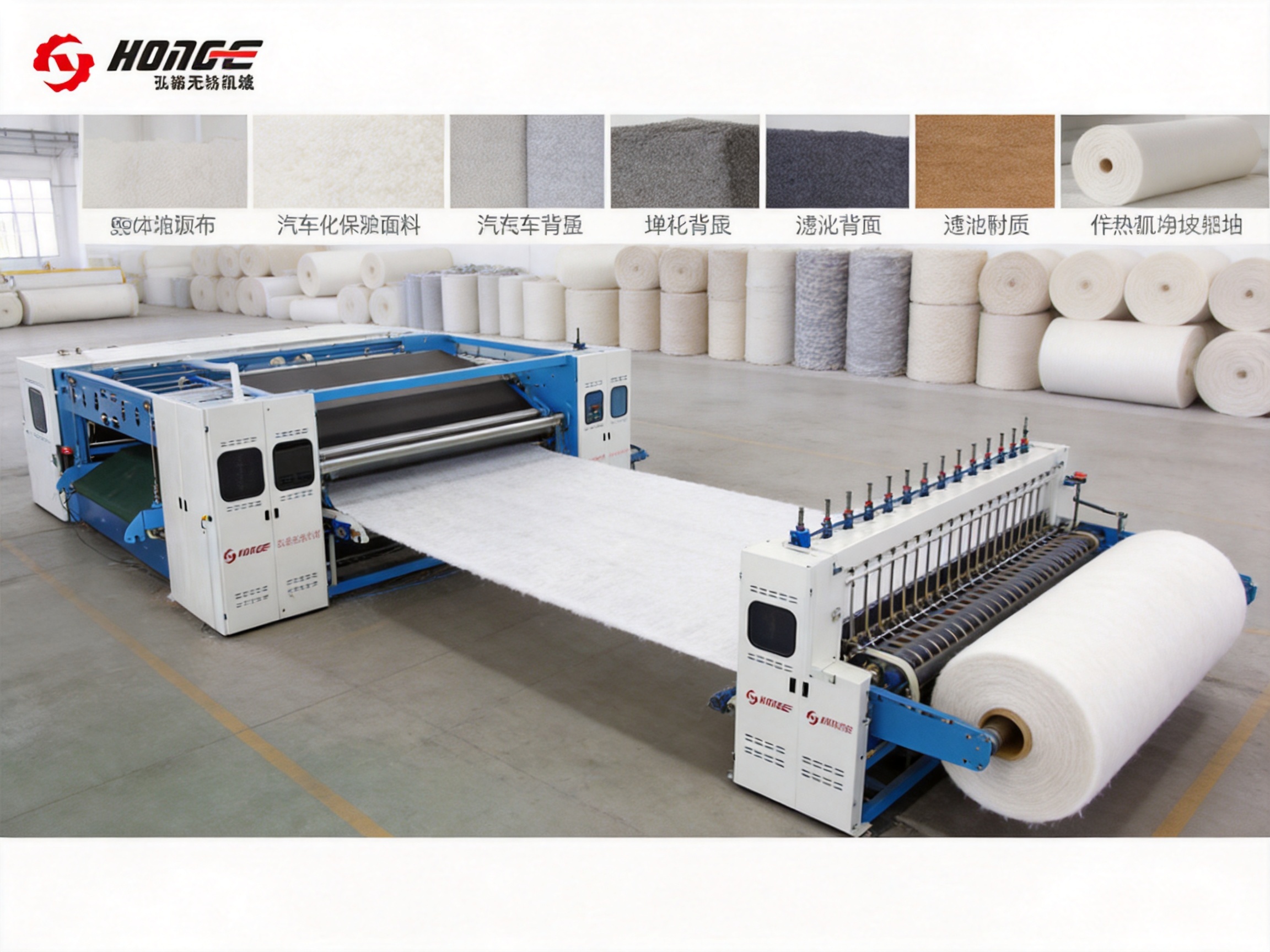
Cross lapping is one of the most important processes in the production of high-quality nonwoven fabrics. After fibers are opened, blended, and carded, the resulting web must be arranged into a controlled batt with the required width, weight, thickness, and orientation. The accuracy of this operation directly affects the strength, appearance, dimensional stability, and consistency of the final nonwoven product. A modern cross lapper must therefore provide more than simple reciprocating movement. It must coordinate web delivery, folding, compensation, laying, width control, and transfer with precision.
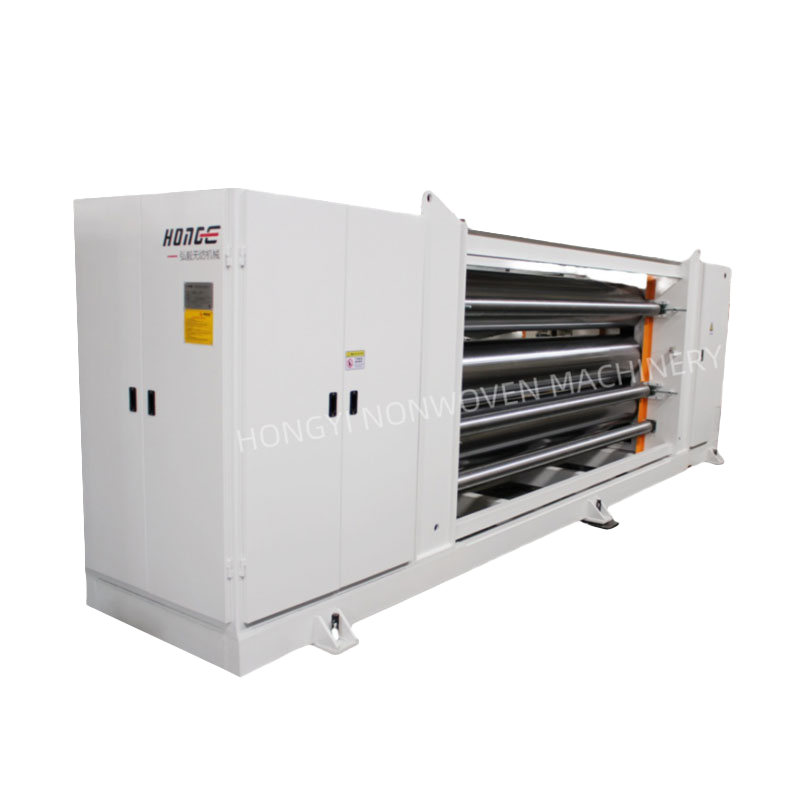
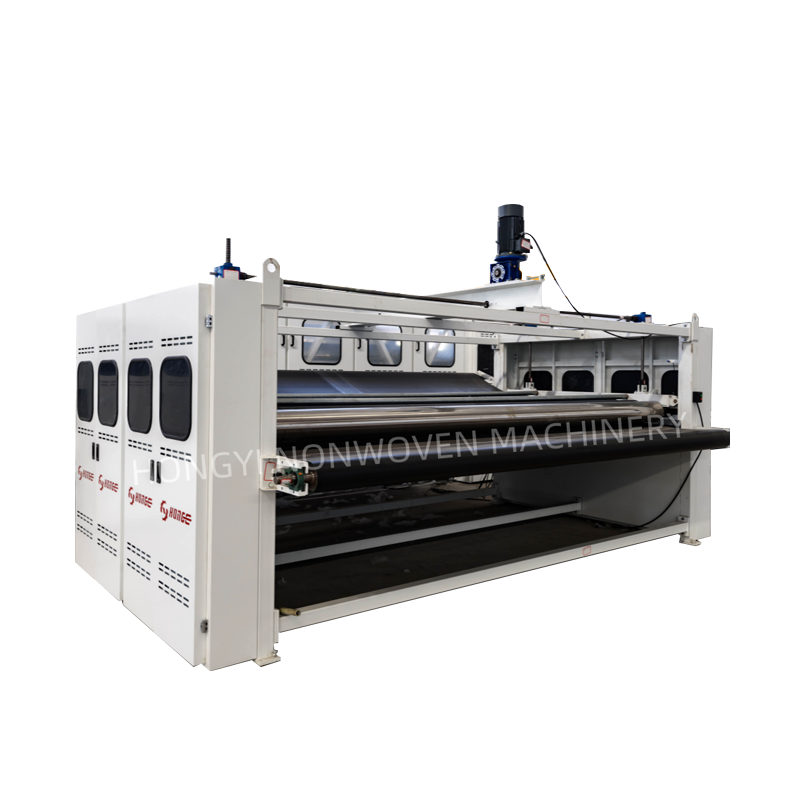
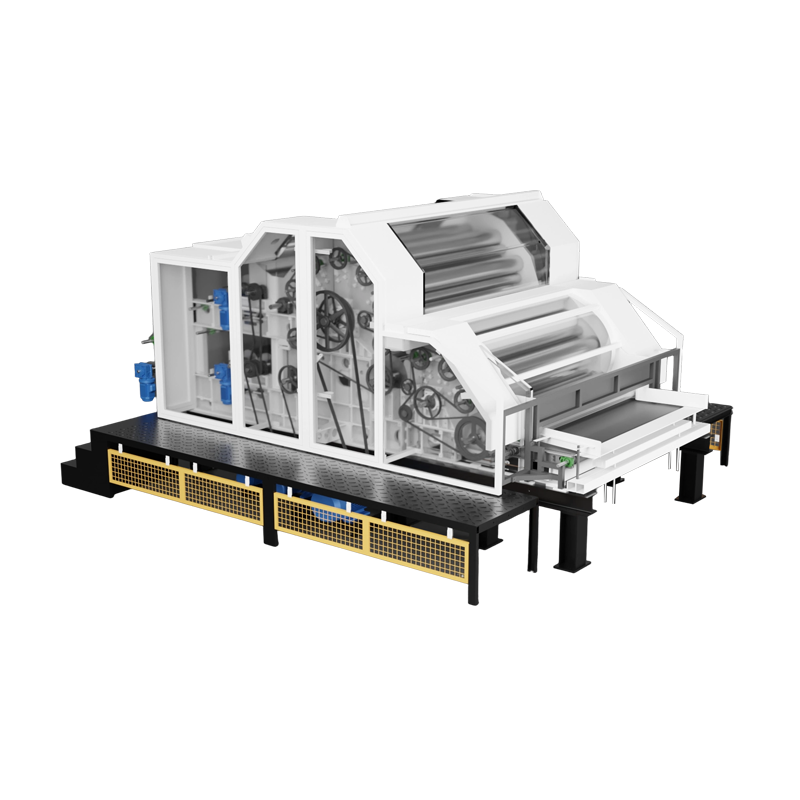
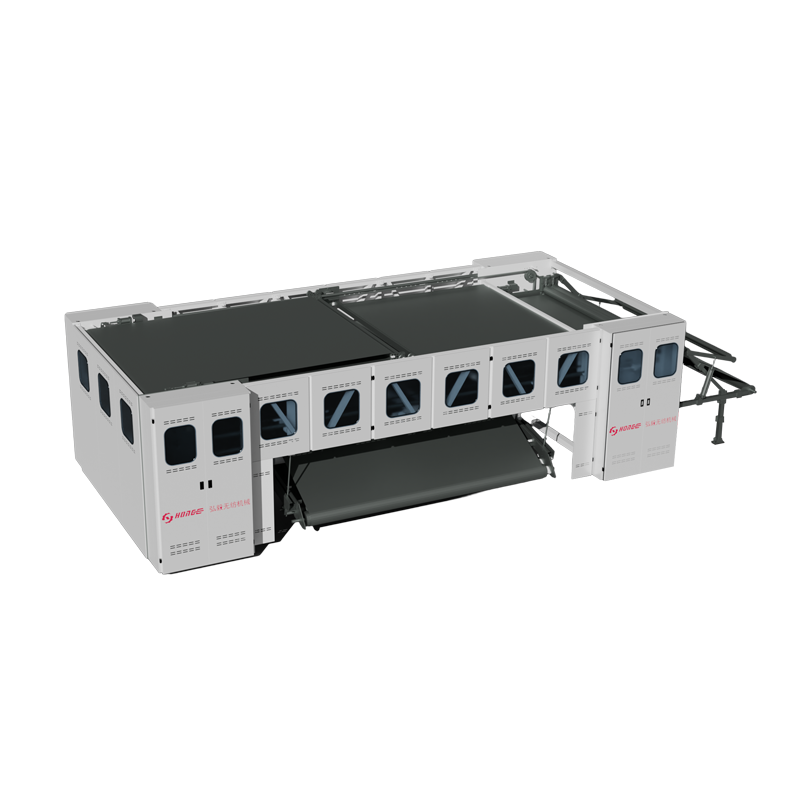
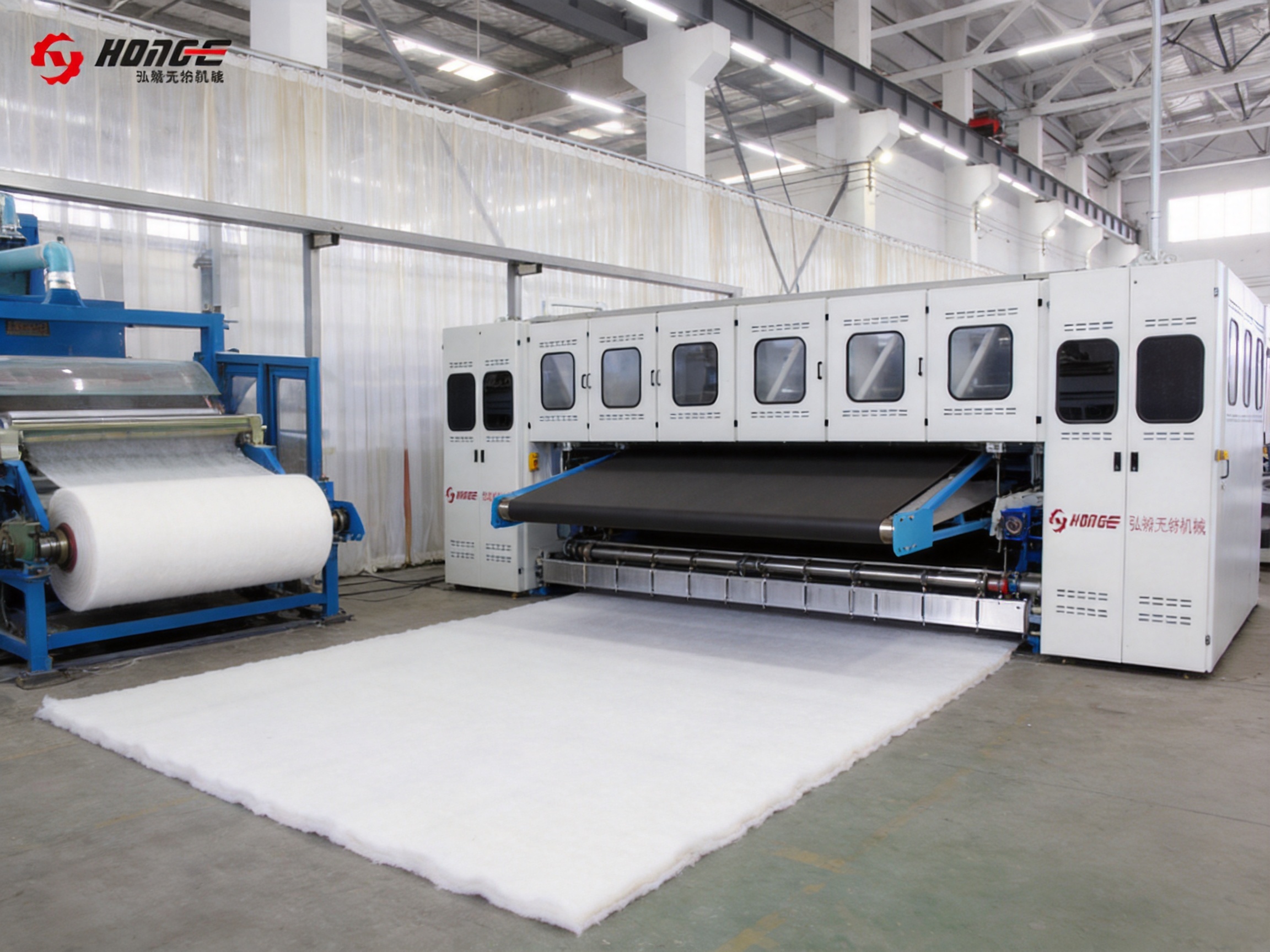
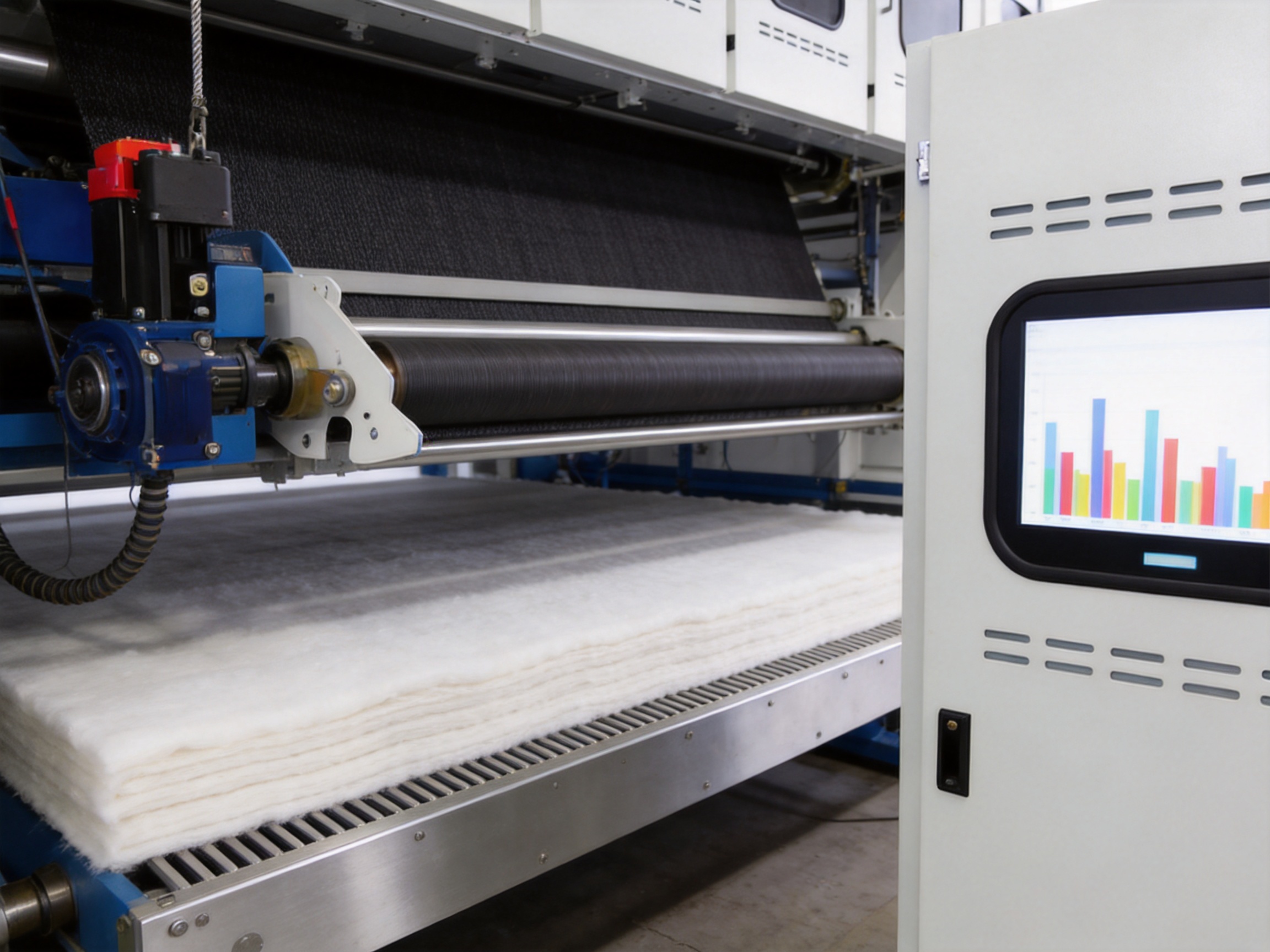
The HYPW Cross Lapper is a high-speed web-forming machine designed to fold and lay carded fiber webs evenly before the material enters a subsequent process. Depending on the production line, the output batt can be transferred to needle punching, thermal bonding, heat setting, or other nonwoven finishing equipment. Its design combines a reinforced mechanical structure, anti-static conveying curtains, synchronized transmission, automatic correction, servo or frequency-conversion control, and an operator-oriented data management system.
With a maximum input width of approximately 2,900 mm, an output apron width ranging from 3,000 mm to 7,000 mm, and a maximum working speed of up to 100 m/min, the machine is suitable for a broad range of industrial nonwoven applications. Its configuration can be adapted to customer requirements, making it appropriate for manufacturers producing geotextiles, filtration media, automotive materials, carpets, insulation, furniture padding, cleaning cloths, and other technical fabrics.
What a Cross Lapper Does in a Nonwoven Production Line
A carding machine converts opened and blended fibers into a continuous web. Although carding creates an organized web, the web is generally narrow compared with the width required for the finished nonwoven fabric. It also has limited thickness and may not yet have the mass distribution needed for the next production stage. The cross lapper receives this web and lays successive layers across one another to form a wider and heavier batt.
During operation, the carded web enters the cross lapper through the input apron. The machine then guides the web through a controlled folding and reciprocating path. As the laying unit moves from side to side, the web is deposited in overlapping layers onto the output apron. The combination of web speed, laying speed, reciprocating distance, and compensation movement determines the final batt weight and thickness.
The process must be carefully controlled. If the layers overlap unevenly, the finished fabric may contain light and heavy zones. If the web is stretched during transfer, the batt may lose its intended density or become distorted. If the edges are not accurately positioned, trimming losses increase and the final roll may have poor edge quality. The HYPW Cross Lapper addresses these challenges through synchronized input and output control, segmented movement management, automatic correction, and data-based compensation.
The machine is not limited to one type of fiber. It can process polyester fiber, polypropylene staple fiber, and other suitable fibers used in nonwoven manufacturing. The exact operating settings depend on fiber length, fineness, crimp, blend ratio, web weight, required batt width, downstream process, and the desired properties of the final product.
Core Technical Configuration
| Item | Technical Information |
|---|---|
| Machine model | HYPW |
| Machine type | Automatic cross lapper with servo or frequency-conversion drive |
| Input width | Maximum approximately 2,900 mm, or matched to the carding machine |
| Output apron width | Approximately 3,000 mm to 7,000 mm |
| Maximum speed | Up to 100 m/min, depending on material and configuration |
| Suitable raw materials | Polyester fiber, PP staple fiber, and other compatible staple fibers |
| Control system | PLC-based data control with man-machine interface |
| Drive system | High-performance frequency conversion or servo drive |
| Transmission | Synchronous belt transmission for reciprocating movement |
| Output control | Automatic output apron width detection and synchronized transfer |
| Certification information | CE and ISO9001:2000 certification information supplied for the machine range |
| Customization | Configuration, color, voltage, and related specifications can be customized |
| Warranty information | One-year warranty and video outgoing inspection available |
Reinforced Mechanical Structure for Long-Term Production
The frame is constructed with reinforced steel plates approximately 8 mm thick. This structural approach is important because a cross lapper is exposed to continuous reciprocating forces, changing web loads, belt tension, and vibration. A frame that lacks rigidity may develop alignment problems or transmit vibration to the laying system. Over time, this can reduce batt uniformity and increase maintenance requirements.
The reinforced frame provides a stable foundation for the rollers, curtains, drive units, and control components. Mechanical stability also supports more accurate movement at higher speeds. When the structure remains rigid, the position of the web-laying unit is easier to control, and the machine can maintain repeatable operating parameters during extended production runs.
Each curtain drive roller uses a seamless steel pipe. The bearing ends receive special reinforcement to improve load support in areas that experience concentrated mechanical stress. This design helps reduce deformation and contributes to smoother rotation. It also provides a durable base for the anti-static curtains used in the conveying, folding, and compensation sections.
The bottom belt is made from aluminum alloy. Compared with a heavier conventional construction, an aluminum alloy bottom belt can help reduce moving mass while maintaining structural performance. Lower moving mass is beneficial for acceleration and deceleration, particularly in a reciprocating system. It can help the drive respond more quickly and reduce unnecessary mechanical loading during direction changes.
Anti-Static Curtains for Reliable Web Handling
Fiber webs are sensitive to static electricity, especially when synthetic fibers such as polyester or polypropylene are processed in a dry environment. Static charges may cause fibers to cling to machine surfaces, attract dust, disturb edge formation, or interfere with the smooth transfer of the web. For this reason, the HYPW Cross Lapper uses anti-static PVC or high-strength carbon curtains in the conveying, folding, and compensation sections.
The curtains provide a controlled contact surface for the web while helping to limit static-related handling problems. Their use can improve the stability of the web path and reduce the possibility of the cotton or fiber layer becoming attached to the conveying components. The high-strength curtain material is also intended to resist stress deformation during repeated operation.
Maintaining curtain tension and alignment is essential. The machine design incorporates reinforced rollers and controlled transmission so that the curtains can operate consistently. Proper tension supports accurate folding and reduces unwanted changes in the path of the fiber web. In practical production, this contributes to more stable batt edges and more repeatable layer placement.
Anti-static construction is particularly valuable when producing lightweight webs, high-loft materials, or products made from synthetic fibers. These materials can be more easily disturbed by electrostatic forces than heavier or naturally cohesive fiber webs. By addressing static control as part of the machine design, the cross lapper helps create a more predictable working environment for the downstream needle punching or thermal bonding process.
HYPW Cross Lapper
High-Speed Servo and Frequency-Conversion Control
The movement of a cross lapper must be fast enough to support industrial production, but speed alone does not determine productivity. The laying unit must accelerate, decelerate, reverse direction, and synchronize with the incoming web without creating tension variations. The HYPW Cross Lapper uses high-performance frequency-conversion or servo drive technology to balance speed and control.
A servo drive can provide precise motion control, rapid response, and accurate positioning. It is useful when the production recipe requires detailed control of reciprocating distance, acceleration, or compensation. Frequency-conversion control provides flexible adjustment of motor speed and can support stable operation across different material types and production conditions. The selected drive arrangement can be adapted to the customer’s requirements and line configuration.
The maximum stated speed is up to 100 m/min. Actual operating speed depends on the input web, fiber properties, required batt weight, machine width, downstream equipment, and the quality level required by the customer. A manufacturer should always establish the final working speed through material trials and production validation rather than relying only on a theoretical maximum.
Fast response is important when production parameters change. For example, a change in batt width may require a corresponding adjustment in reciprocating travel. A change in web weight may require revised compensation settings. The drive system must respond to these commands without causing abrupt web tension or uneven deposition. The HYPW control architecture is intended to make these adjustments practical through programmed parameters and coordinated motion.
Segmented Control of Web Laying and Reciprocating Motion
Uniform web formation depends on the relationship between the incoming web and the lateral movement of the laying unit. The HYPW Cross Lapper precisely controls web laying and reciprocating motion in segments. This means the movement profile can be managed across different portions of the operating cycle instead of treating the entire reciprocating stroke as one simple motion.
Segmented control supports more accurate management of acceleration, constant-speed travel, deceleration, and reversal. It can reduce sudden changes in web tension and help maintain a smooth deposition pattern at the edges of the batt. It also gives the control system more flexibility when compensating for process variations.
The reciprocating transmission uses synchronous belt drive. Synchronous belts transfer movement through positive engagement and help reduce slip between the motor and driven components. In a cross lapper, this is valuable because the position of the laying unit must correspond closely with the programmed movement. Consistent transmission supports repeatable overlap and accurate width formation.
Compared with a less controlled mechanical arrangement, a synchronous belt system can provide cleaner motion and lower transmission backlash when correctly installed and maintained. It also avoids the need for lubrication associated with some chain or gear arrangements in the moving path. The choice of transmission is therefore connected not only with speed but also with maintenance and operating cleanliness.
Uniform Batt Formation and Stable Product Quality
The main performance objective of the cross lapper is to create an output layer with high uniformity. The fiber batt should have a consistent distribution of mass across its width and along its length. This is especially important for needle-punched geotextiles, insulation, automotive materials, and filtration products, where variations in local density can affect performance.
The HYPW Cross Lapper is designed to produce a smooth surface and neatly formed edges. Clean edges simplify subsequent trimming and can improve the usable width of the final product. Better edge control also helps prevent excessive fiber loss and reduces the amount of material that must be removed before winding or cutting.
Uniformity in the batt supports more consistent needle penetration during needle punching. If the batt has irregular thickness, the needle punching machine may create areas with different consolidation levels. Some sections may become too dense while others remain weak or open. A well-formed batt gives the needle punching process a more stable foundation and can improve the consistency of tensile strength, thickness, and appearance.
For thermal bonding applications, consistent batt distribution is equally important. The heat must pass through a material with relatively predictable mass and thickness. Areas with excessive fiber accumulation may require more energy or longer exposure, while thin areas may become over-bonded or lose loft. By improving the uniformity of the input batt, the cross lapper supports better thermal process control.
Uniformity is also valuable when the final material is slit, cut, laminated, or wound. Stable edges and consistent thickness reduce the risk of roll deformation and improve the accuracy of downstream cutting operations. The cross lapper therefore contributes to the entire production line, not only to the immediate web-forming stage.
Automatic Correction and Data-Based Compensation
Fiber webs are natural process materials, and their behavior can vary with humidity, fiber blend, carding settings, production speed, and upstream feeding conditions. Even when the carding machine is operating correctly, small changes in web density or width may occur. A cross lapper must be able to respond to these changes rather than simply repeating a fixed movement pattern.
The HYPW Cross Lapper adopts a unique corrective control principle to improve the accuracy of the output batt. Its data control system allows the output uniformity to be compensated according to actual process requirements. This gives operators the ability to set process data and adjust the laying behavior to match the production target.
Compensation can be used to address differences between the intended batt profile and the actual material result. The precise strategy depends on the complete production line, available sensors, and customer settings. In general, data-based control allows the machine to use operating information more effectively than a purely mechanical system with fixed movement.
The automatic detection of output bottom curtain width is another useful feature. Width information helps the system and operator confirm that the output apron is positioned according to the required production specification. Automatic detection can reduce manual measurement and help identify deviations before they create substantial material waste.
These functions are particularly useful for manufacturers producing several product specifications on the same line. A production facility may need to change from a narrow, lightweight batt to a wider, heavier batt within the same working week. Recipe-based control and process data adjustment can make such changes more systematic and reduce setup uncertainty.
Synchronized Input and Output Movement
Web breakage and web stretching can occur when the input and output sections do not move in coordination. If the receiving apron accelerates or slows down independently from the incoming web, the batt may be pulled, compressed, or folded irregularly. Such disturbances are often visible as wrinkles, thin zones, thick zones, or broken web sections.
The HYPW Cross Lapper uses synchronized input and output control to reduce the risk of stretching and breaking the fiber layer. The purpose is to maintain a controlled relationship between web delivery, folding, compensation, and transfer. A stable relationship allows the fiber web to remain intact as it moves through the machine.
This synchronization is beneficial for delicate webs, low-basis-weight materials, and blends with limited cohesion. It is also important when the line operates at higher speed. As speed increases, small timing errors can produce larger material disturbances. Coordinated control helps the machine maintain a smoother process and can reduce the frequency of operator intervention.
Stable transfer benefits downstream equipment as well. Needle punching lines, thermal bonding ovens, and winding units all perform better when the incoming batt is continuous and evenly formed. A cross lapper that delivers an irregular or broken batt can reduce the productivity of the entire line, even if the downstream machines are technically capable of higher output.
Operator Interface and Automatic Fault Alarms
The machine is equipped with a man-machine interface for parameter setting and process data input. This interface gives operators a practical method for entering production requirements, monitoring operating status, and adjusting working parameters. A clear interface is important because cross-lapping recipes often involve several related settings, including width, speed, reciprocating movement, compensation, and synchronization.
Automatic abnormal fault alarms are included to help identify operating problems. An alarm can draw attention to conditions that require inspection, such as a drive issue, sensor signal problem, abnormal movement, or other machine fault. Early notification can reduce the time between the occurrence of a problem and the operator’s response.
Fault alarms also support safer and more organized production management. Instead of relying only on visual observation, the operator can use the control system to locate abnormal conditions. Maintenance personnel can then inspect the relevant assembly, such as the belt drive, roller, sensor, curtain, or electrical cabinet.
A digital control system does not replace routine inspection. Operators should still check curtain condition, roller alignment, belt tension, bearing temperature, electrical connections, emergency stop functions, and cleanliness. However, the interface and alarm system make it easier to combine routine maintenance with real-time process monitoring.
Applications Across Nonwoven Industries
Needle-Punched Geotextiles
Geotextiles require consistent thickness, tensile performance, permeability, and dimensional stability. The cross lapper forms the batt that will later be consolidated by needle punching. Its wide output configuration, reaching approximately 7,000 mm, is suitable for broad industrial fabrics. Accurate layering helps create a stable base for punching and supports uniform product performance across the roll width.
Nonwoven Carpets and Floor Coverings
Carpet substrates and floor covering materials often require a combination of thickness, resilience, dimensional stability, and clean edges. A consistent batt helps prevent visible density variation and supports stable needling or thermal bonding. The machine can be configured for different fiber blends, including polyester-based materials used in carpet and backing products.
Automotive Interior Materials
Automotive interior materials may be used beneath carpets, inside door panels, in trunk liners, and in other areas requiring sound absorption, cushioning, insulation, or surface support. These applications demand consistent basis weight and thickness because variation can affect fitting, acoustic performance, and appearance. The cross lapper’s controlled layering and data compensation functions are suitable for these quality-sensitive products.
Thermal-Bonded Wadding and Insulation
Thermal bonding lines use heat to activate bonding fibers or binders within the batt. The quality of heat transfer depends partly on the uniformity of the material entering the oven or heat-setting unit. A stable cross-lapped batt can help the thermal bonding process achieve more consistent loft, firmness, and thickness.
Filtration and Technical Nonwovens
Filtration materials often require a controlled fiber distribution and predictable thickness. Depending on the filtration design, the cross lapper may be used to build a multilayer batt before needling, thermal bonding, or laminating. Its adjustable output width and programmable movement make it suitable for manufacturers developing different technical specifications.
Cleaning Cloths, Felt, and Fiber-Based Industrial Products
Cleaning cloths, wool felt, jute felt, and other industrial materials can also benefit from cross-lapped web formation. The correct configuration depends on the fiber type and required consolidation method. For products where softness, absorbency, or thickness is important, careful handling of the web is necessary to avoid excessive stretching and uneven layering.
Advantages Compared with Conventional Cross-Lapping Equipment
The most important advantage of the HYPW Cross Lapper is the combination of mechanical reinforcement and intelligent control. A conventional machine may perform the basic folding function, but a modern production line requires higher speed, better compensation, improved synchronization, and more reliable monitoring.
First, the reinforced frame and strengthened roller construction provide a stable mechanical platform. This is advantageous in continuous industrial production, where repeated movement can expose weak structures to fatigue and vibration. Structural stability supports more accurate operation and can reduce the frequency of alignment-related problems.
Second, the servo or frequency-conversion drive offers a wider range of process control than a basic fixed-speed motor arrangement. Operators can adapt the movement profile to different fibers and output specifications. Rapid response is especially useful during startup, recipe changes, and production adjustments.
Third, the anti-static curtain system addresses a common source of web-handling instability. Reducing static-related adhesion and disturbance helps maintain a cleaner and more reliable material path, particularly when synthetic fibers are processed.
Fourth, segmented reciprocating control and synchronous belt transmission improve movement repeatability. Accurate lateral travel is essential for even overlap and good edge formation. The system is designed to reduce slip and support stable positioning during high-speed operation.
Fifth, automatic correction and process-data compensation give the operator more control over output uniformity. Instead of depending entirely on manual adjustment, the system can use programmed process information to support the required batt profile.
Sixth, synchronized input and output control reduces the risk of web stretching and breakage. This can improve line continuity, reduce waste, and protect downstream equipment from irregular material feeding.
Finally, automatic alarms and output width detection improve production visibility. Operators can identify abnormal conditions earlier and confirm that the machine is working within the required width range. These features are valuable for factories seeking improved repeatability, lower waste, and more systematic quality control.
Manufacturing Strengths and Engineering Approach
Changshu Hongyi Nonwoven Machinery Co., Ltd. has more than 20 years of experience in the nonwoven machinery field. The company develops and supplies both individual machines and complete production lines. Its product scope includes opening and blending equipment, feeding and carding machines, cross lappers, needle punching machines, airlaid systems, thermal bonding ovens, ironing machines, winding and cutting equipment, and complete nonwoven lines.
This broad product range is an important manufacturing strength. A company that understands opening, carding, web forming, bonding, winding, and cutting can evaluate the cross lapper as part of the complete process rather than as an isolated machine. This helps with width matching, speed coordination, control integration, and downstream compatibility.
The company supplies lines for needle-punched geotextiles, nonwoven carpets, airlaid waste felt, automotive interior materials, needle-punched cleaning cloths, wool felt, jute felt, and related applications. Experience across these product categories supports a practical understanding of different fiber behaviors and production objectives.
The HYPW Cross Lapper includes PLC control, bearings, gearbox, motors, gears, and other industrial components selected for continuous production. The use of recognized control and drive technologies allows the machine to be integrated into a customer’s automation strategy. Electrical supply, machine color, configuration, and output width can be adjusted according to project requirements.
The company’s manufacturing approach emphasizes high efficiency, reliability, precision engineering, automatic control, energy-saving potential, and customization. A production line is usually designed around the customer’s raw materials, target product, required capacity, factory layout, and available utilities. This project-based approach is more suitable than supplying a standard machine without considering the rest of the line.
Quality management is supported by certification information including CE and ISO9001:2000. Video outgoing inspection is available, allowing customers to review the machine’s operating condition before shipment. A one-year warranty is also specified for the machine. These measures provide additional confidence for customers purchasing equipment for international installation.
Customization for Different Production Requirements
Nonwoven manufacturers rarely have identical production requirements. One customer may need a very wide geotextile batt, while another may require a narrower web for automotive or insulation products. Some factories prioritize maximum speed, whereas others need higher thickness, special fiber blends, or precise control at low basis weights.
The HYPW Cross Lapper can be customized in output width, configuration, color, voltage, and related technical details. The output apron width can be selected within the approximate range of 3,000 mm to 7,000 mm. The input apron is designed to match the width of the carding machine, allowing the cross lapper to be integrated into different upstream layouts.
Electrical requirements can be adapted from the stated 380 V, 50 Hz supply or other customer specifications. Voltage selection should be confirmed during the engineering stage because it affects the electrical cabinet, motors, protection devices, and site installation requirements.
Customization should also include process parameters. The manufacturer needs information about fiber type, fiber length, blend ratio, target batt width, target basis weight, final product thickness, downstream technology, and required line speed. These details help determine the suitable machine configuration and control strategy.
For customers purchasing a complete line, the cross lapper can be coordinated with the carding machine, needle punching machine, thermal bonding oven, winding system, and cutting equipment. Such coordination helps avoid bottlenecks. For example, the cross lapper should not be specified at a speed far above the capacity of the downstream needle punching machine unless a suitable buffer or accumulation system is included.
Installation, Commissioning, and Production Support
Successful cross-lapper operation depends on correct installation. The foundation must be sufficiently level and strong to support the reinforced frame and maintain alignment. The machine should be positioned according to the production layout, with enough access space for inspection, curtain replacement, belt maintenance, electrical service, and cleaning.
During commissioning, the input and output widths should be checked against the carding machine and downstream equipment. The curtain path, roller alignment, belt tension, sensors, and emergency stop functions should be inspected before material is introduced. The control system should be tested at low speed before the machine is gradually moved toward the intended production speed.
Material trials are necessary because each fiber blend behaves differently. Operators can begin with conservative settings and monitor the batt surface, edge quality, thickness, and mass distribution. The recipe can then be adjusted through the man-machine interface. Important observations include whether the web is stretching, whether folds are overlapping evenly, whether the edges remain stable, and whether the batt is transferring smoothly.
After commissioning, operators should maintain a regular inspection schedule. Anti-static curtains should be examined for wear, cuts, contamination, or loss of tension. Rollers should be checked for surface damage and alignment. Bearings and gearboxes should be monitored according to the manufacturer’s maintenance recommendations. The synchronous belt should be inspected for tension and wear, and all sensors should be kept clean and correctly positioned.
Preventive maintenance is especially important in a high-speed reciprocating machine. Small mechanical deviations can gradually affect the laying pattern. Early correction is generally less costly than continuing operation until the batt becomes visibly uneven or a component fails.
Energy and Operating Efficiency
Energy efficiency in a nonwoven line is influenced by the entire production system, including fiber opening, carding, cross lapping, needling, thermal bonding, winding, and auxiliary equipment. The cross lapper contributes to operating efficiency through controlled movement, reduced material waste, and the use of servo or frequency-conversion drives.
The aluminum alloy bottom belt can help limit moving mass. A lower moving mass may reduce the energy needed for acceleration and reversal, particularly during frequent reciprocating operation. Synchronous belt transmission also provides an efficient method of transferring motion when properly tensioned and aligned.
Material efficiency is equally important. A batt with clean edges and consistent width can reduce trimming losses. Stable synchronization can reduce web breakage and startup waste. Automatic width detection and process compensation help operators identify deviations earlier, which may prevent large quantities of off-specification material.
Energy-saving performance depends on operating conditions and must be evaluated in the context of the complete line. Correct machine sizing, suitable speed selection, regular maintenance, and optimized production recipes are all necessary to achieve the best result.
Quality Control in the Finished Nonwoven Batt
Several quality indicators can be used to evaluate the output of a cross lapper. Basis-weight uniformity is one of the most important. Samples can be taken across the width and along the production direction to identify heavy or light zones. Thickness measurements can reveal whether the batt is being compacted or stretched unevenly.
Visual inspection should examine the surface for wrinkles, open areas, excessive overlaps, holes, and fiber accumulation. The edges should be checked for neatness and consistent position. If the batt will enter a needle punching process, the operator should also observe whether the material feeds smoothly without lateral movement or tension fluctuations.
For technical products, laboratory tests may include tensile strength, tear resistance, puncture resistance, compression recovery, air permeability, thermal resistance, acoustic absorption, or water permeability. The appropriate tests depend on the final application. Although the cross lapper is only one stage in the process, its output quality can influence many of these final properties.
Digital process records can help connect machine settings with product test results. Operators can record the fiber blend, carding settings, cross-lapper speed, output width, compensation values, and downstream conditions for each production batch. Over time, this information can assist in establishing reliable recipes and reducing trial-and-error adjustments.
Why Choose a Complete Machinery Partner
Purchasing a cross lapper from a supplier with broader nonwoven machinery capabilities can simplify project management. The customer can discuss the carding width, web weight, needle punching requirements, thermal bonding conditions, winding format, and final fabric specifications with a single engineering team.
Changshu Hongyi Nonwoven Machinery Co., Ltd. has supplied products to more than 20 countries, including markets in Latin America, Europe, Africa, and Asia. International project experience can be valuable when equipment must be adapted to different factory conditions, electrical standards, raw materials, operator practices, and shipping requirements.
The company offers complete production lines as well as individual unit machines. This allows a customer to purchase a cross lapper for an existing carding line or develop a new integrated nonwoven production system. The machine can be supplied with customized configuration and factory-direct technical communication.
For overseas customers, transport packaging can be arranged using nude packing or PE film according to the project’s logistics plan. The stated lead time is approximately two to three months, subject to final configuration, order confirmation, production scheduling, inspection, and shipping arrangements.
Recommended Selection Process
Before ordering a cross lapper, the customer should provide complete technical information. The first requirement is the input width and the available carding-machine output. The second is the desired output width. The third is the target batt basis weight and thickness. The fourth is the raw material, including fiber type, length, fineness, crimp, and blend ratio.
The customer should also specify the downstream process. Needle punching, thermal bonding, heat setting, laminating, and other processes may require different batt characteristics. The required line speed, factory voltage, available floor space, and final roll or sheet dimensions should also be included in the project brief.
Material samples are highly useful. When possible, the customer should provide representative fibers and explain the intended final product. The manufacturer can then evaluate web behavior, confirm the suitable machine configuration, and recommend trial parameters.
During technical review, the customer should confirm the exact maximum speed, effective working speed, output width, control functions, sensors, drive type, warranty terms, spare parts, installation assistance, and acceptance criteria. Clear technical documentation reduces misunderstandings and provides a reliable basis for commissioning.
Frequently Asked Questions
What is the primary function of the HYPW Cross Lapper?
Its primary function is to fold and lay a carded fiber web into a wider, thicker, and more uniform batt. The batt is then transferred to a subsequent process such as needle punching, thermal bonding, or heat setting.
What materials can the machine process?
The stated suitable materials include polyester fiber, polypropylene staple fiber, and other compatible staple fibers. The final suitability depends on fiber characteristics, web weight, blend ratio, and the selected machine configuration.
What is the maximum output width?
The output apron width can reach approximately 7,000 mm. Configurations are available within an approximate range of 3,000 mm to 7,000 mm, subject to project requirements and final engineering confirmation.
What is the maximum machine speed?
The maximum stated speed is up to 100 m/min. The practical operating speed depends on the fiber web, batt weight, output width, downstream equipment, and required product quality.
How does the machine improve batt uniformity?
Uniformity is supported through synchronized input and output movement, segmented reciprocating control, data-based compensation, automatic correction, stable curtain conveying, and precise control of the laying path.
Why are anti-static curtains important?
Anti-static curtains help reduce problems caused by electrostatic charge. They can limit fiber adhesion, improve web movement, and support more stable conveying and folding, especially when processing synthetic fibers.
What type of drive system is used?
The machine can use a high-performance frequency-conversion drive or servo drive. The selected system provides adjustable speed, stable operation, and rapid response. The reciprocating transmission uses synchronous belt drive.
Can the machine be integrated with an existing carding machine?
Yes. The input apron width is designed to match the width of the carding machine. The exact interface, height, speed relationship, and control connection should be confirmed during the technical design stage.
Can the output width and configuration be customized?
Yes. Output width, machine configuration, color, voltage, and other project details can be customized according to customer requirements. The production target and downstream process should be provided before final design.
What control functions are included?
The machine includes a PLC-based data control system, a man-machine interface for parameter setting and process-data input, automatic abnormal fault alarms, automatic output bottom-curtain width detection, and synchronized input and output control.
How does automatic fault alarming help production?
Automatic alarms notify operators when an abnormal condition is detected. This can shorten response time, support troubleshooting, and help prevent a minor machine issue from causing extended production interruption or excessive material waste.
Is the machine suitable for complete nonwoven production lines?
Yes. It can be used in lines for geotextiles, carpets, automotive materials, insulation, thermal-bonded wadding, cleaning cloths, felt, and other nonwoven products. It can also be supplied as an individual machine for integration into an existing line.
What inspection and warranty support are available?
Video outgoing inspection is available, and the machine information includes a one-year warranty. Exact inspection procedures, spare parts, installation support, and warranty conditions should be confirmed in the commercial and technical contract.
What should be checked during regular maintenance?
Operators should inspect the curtains, rollers, synchronous belt, bearings, gearbox, sensors, electrical connections, emergency stop devices, and frame alignment. Cleaning and preventive maintenance should follow the manufacturer’s operating instructions.
Conclusion
The HYPW Cross Lapper is designed to address the central requirements of modern nonwoven web formation: high productivity, stable movement, uniform batt formation, clean edges, flexible process control, and reliable integration with downstream equipment. Its reinforced steel frame, strengthened seamless rollers, aluminum alloy bottom belt, anti-static curtains, synchronous belt transmission, and servo or frequency-conversion drive create a strong mechanical and control platform.
Its advantages are further supported by segmented reciprocating control, synchronized input and output movement, automatic correction, data-based compensation, output-width detection, and abnormal fault alarms. Together, these functions help reduce web stretching, improve layer uniformity, support stable product quality, and limit unnecessary material waste.
As a China-based nonwoven machinery manufacturer with more than two decades of industry experience, Changshu Hongyi Nonwoven Machinery Co., Ltd. offers both individual machines and complete production-line solutions. Its experience in carding, cross lapping, needle punching, thermal bonding, airlaid production, winding, cutting, and related technologies allows the machine to be designed with the complete process in mind.
For manufacturers seeking a customized cross lapper for polyester, PP staple fiber, or similar materials, the HYPW model provides a practical combination of high-speed operation, intelligent control, robust construction, and flexible configuration. Correct sizing, material trials, installation, and preventive maintenance will allow the equipment to deliver its best performance over a long production life.
References
1. Changshu Hongyi Nonwoven Machinery Co., Ltd., HYPW Cross Lapper product technical information and specification data.
2. Changshu Hongyi Nonwoven Machinery Co., Ltd., Nonwoven machinery product range and company profile.
3. International Organization for Standardization, ISO 9001 quality management system principles and requirements.
4. European conformity assessment principles for industrial machinery and electrical equipment.
5. General technical principles for carded web formation, cross lapping, needle punching, and thermal bonding in nonwoven production.
6. Industrial maintenance practices for reciprocating machinery, synchronous belt drives, rollers, bearings, and automated production equipment.
7. Technical considerations for basis-weight uniformity, thickness control, edge formation, and web handling in engineered nonwoven fabrics.