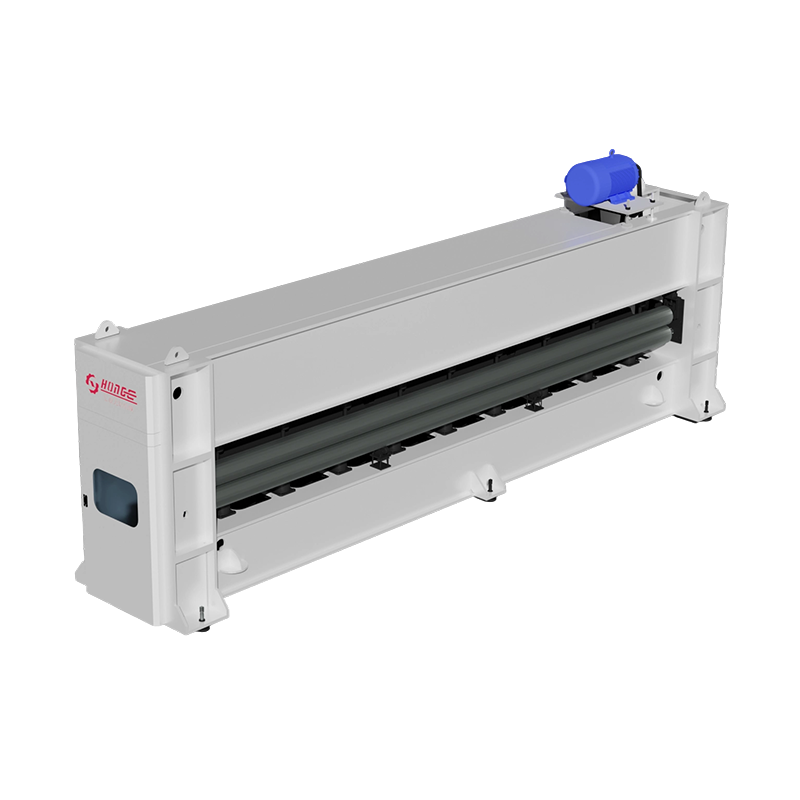


Content
- 1 1. The Role of Fiber Blending in Nonwoven Production
- 2 2. Working Principle of the HYHM Fiber Mixing Machine
- 3 3. Main Structural Features
- 4 4. Material Compatibility
- 5 5. Advantages Compared with Manual or Basic Mixing Methods
- 6 6. Technical Specifications
- 7 7. Manufacturing Strengths and Engineering Capabilities
- 8 8. Application Areas
- 9 9. Installation and Line Integration
- 10 10. Operation Recommendations
- 11 11. Maintenance and Service
- 12 12. How the Machine Supports Product Quality
- 13 13. Comparison with Alternative Equipment Approaches
- 14 14. Customization Options
- 15 15. Safety Considerations
- 16 16. Purchasing and Project Planning
- 17 17. Company Service and Global Support
- 18 18. Frequently Asked Questions
- 18.1 What is the main purpose of the fiber mixing machine?
- 18.2 Which fibers can be processed?
- 18.3 How does the machine control the blend ratio?
- 18.4 What is the reference production capacity?
- 18.5 What working widths are available?
- 18.6 Can the machine be connected to an existing carding line?
- 18.7 Does the machine include a storage function?
- 18.8 Is the machine automatic?
- 18.9 What is the warranty period?
- 18.10 Can the voltage be customized?
- 18.11 How long is the delivery time?
- 18.12 How should the weighing system be maintained?
- 18.13 Is video inspection available before shipment?
- 18.14 Can the supplier provide a complete nonwoven production line?
- 19 19. Conclusion
- 20 References
- 21 Product: HYHM Fiber Mixing Machine
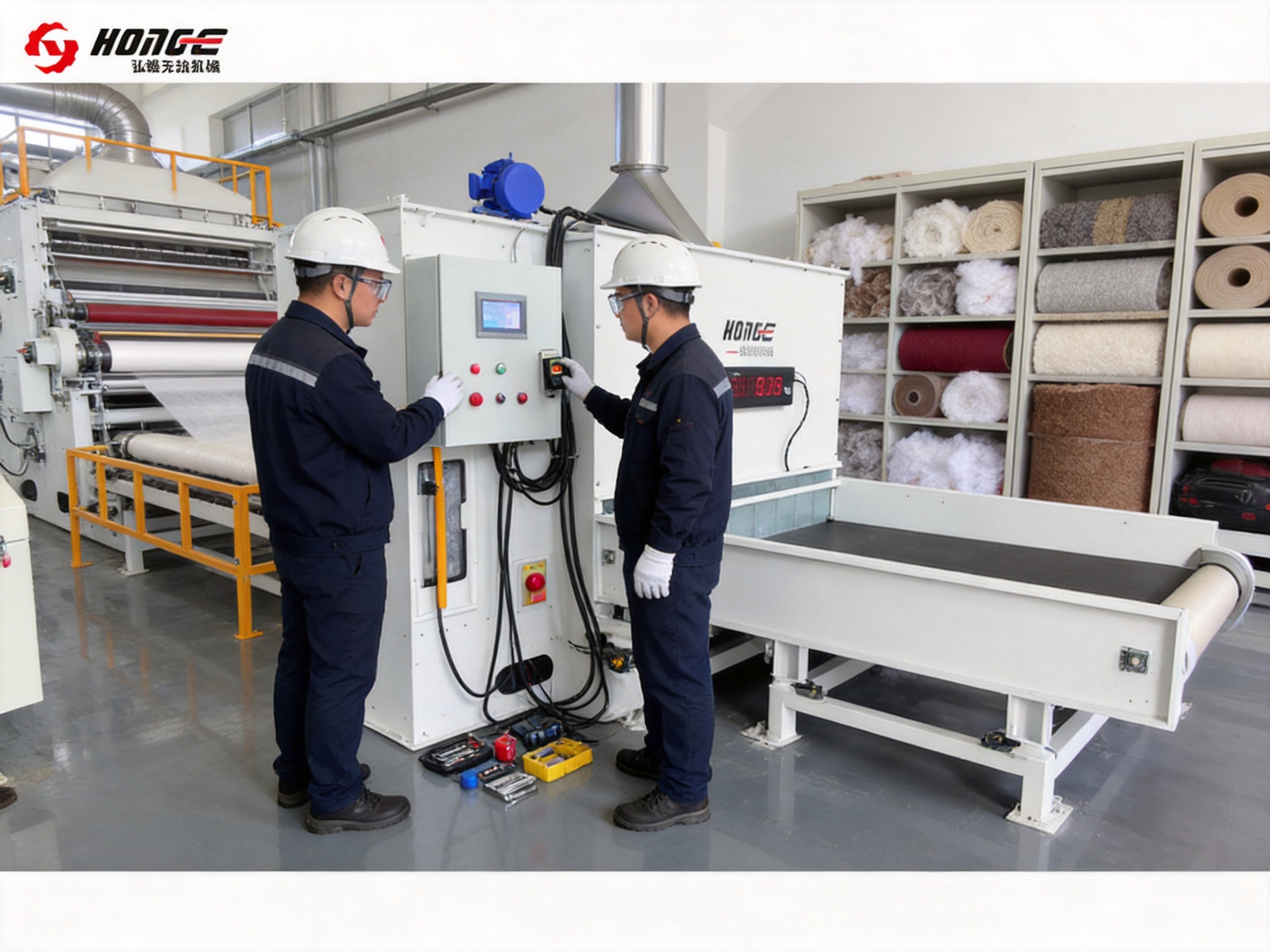
In modern nonwoven manufacturing, the quality of the final fabric depends heavily on the consistency of the fiber blend entering the opening, carding, airlay, or other downstream processes. Even when high-quality fibers are used, uneven feeding, inaccurate proportions, insufficient pre-opening, or poor storage can lead to variations in web weight, strength, appearance, absorbency, and bonding performance. A reliable fiber mixing machine therefore serves as a critical foundation for stable and efficient nonwoven production.
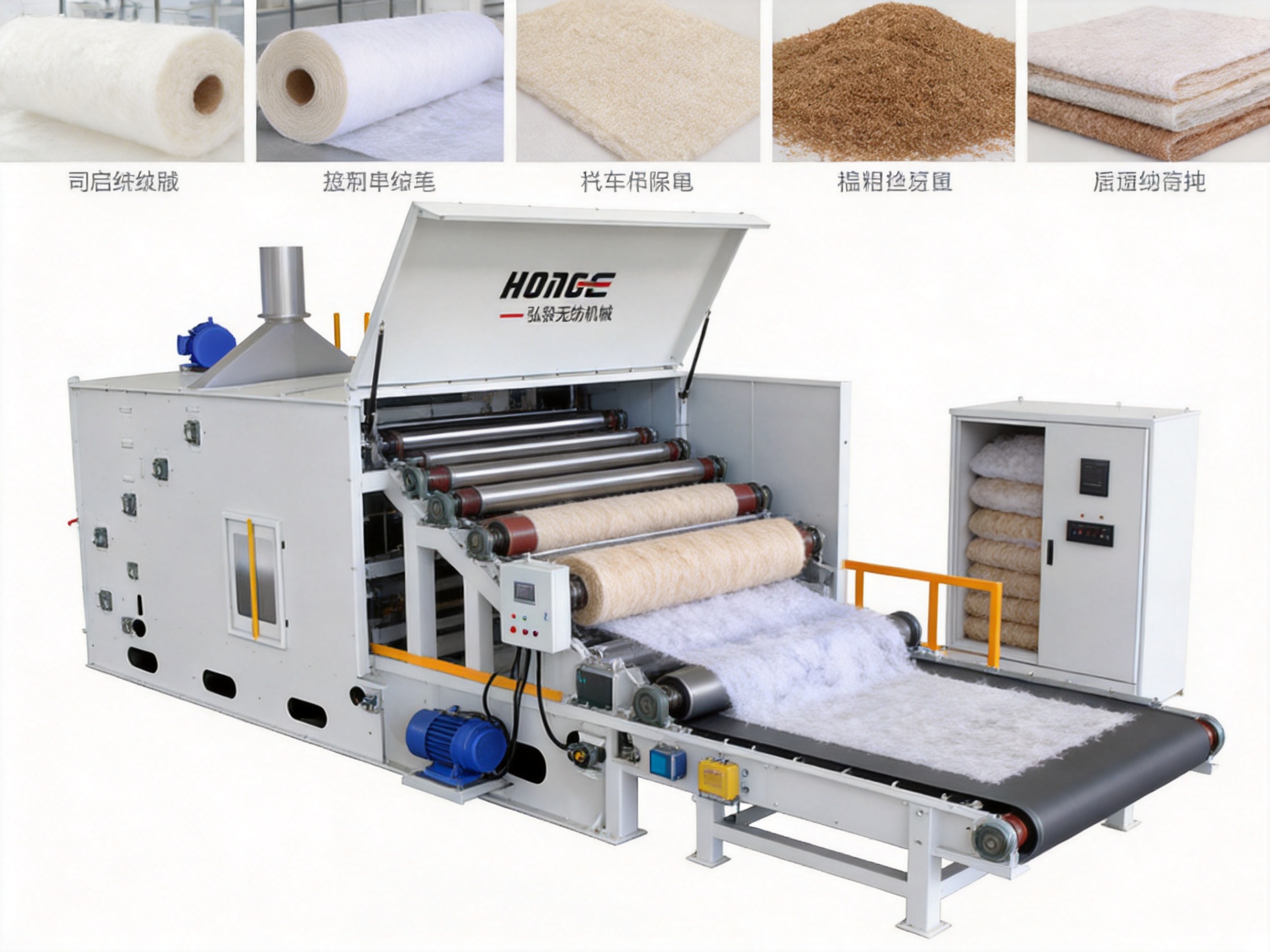
The HYHM Fiber Mixing Machine is designed to pre-open fibers from bales, weigh different materials according to predetermined percentages, mix the fibers, and transfer the prepared blend to the next production stage. Its operating concept combines mechanical fiber preparation, electronic proportional weighing, cross-conveyor transfer, and controlled storage. This makes the machine suitable for manufacturers that require repeatable blending of polyester, polypropylene, wool, cotton, coir, jute, ES fiber, and other staple fiber materials.
Rather than functioning only as a simple blending conveyor, the machine integrates weighing, feeding, leveling, mixing, and temporary storage within one coordinated system. This integrated arrangement can help reduce manual handling, improve production consistency, and make the material preparation process easier to manage.
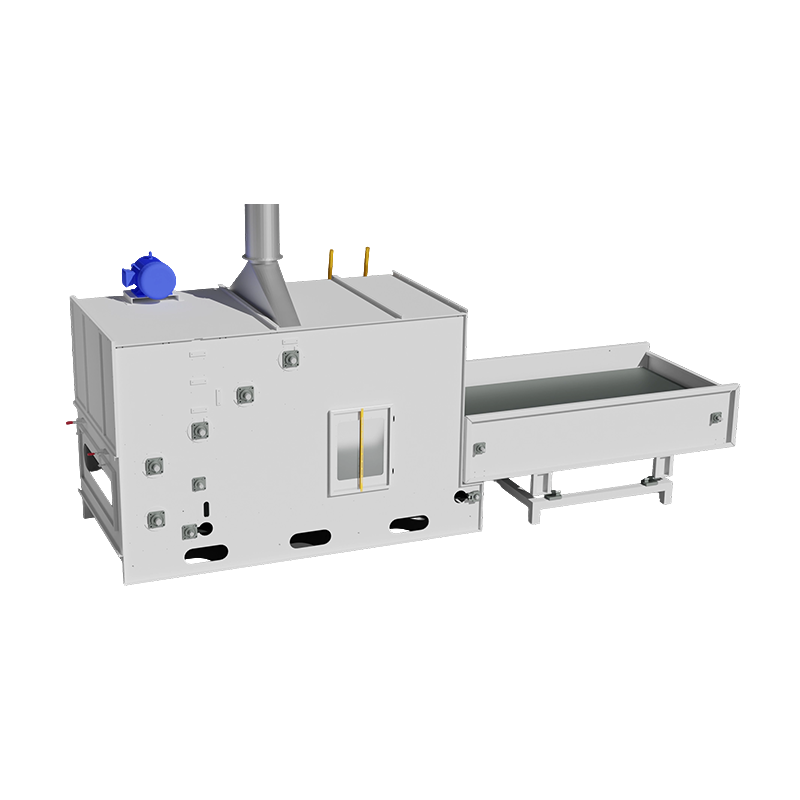
HYHM Fiber Mixing Machine
1. The Role of Fiber Blending in Nonwoven Production
Nonwoven fabrics are manufactured from fibers that are arranged into a web and then bonded through mechanical, thermal, chemical, or combined processes. Before a web can be formed, raw fibers must be opened and distributed as evenly as possible. In many products, a single fiber type is not sufficient to achieve the required strength, softness, resilience, thermal performance, moisture behavior, or cost target. Manufacturers therefore combine two or more fibers in carefully controlled ratios.
For example, polyester may be blended with polypropylene to balance strength and processing characteristics. Wool can be combined with synthetic fibers to create a product with a different hand feel and thermal performance. Cotton, jute, coir, and other natural fibers may be mixed with man-made fibers for automotive materials, insulation, filtration media, floor coverings, felt, and industrial nonwovens. ES fiber may be incorporated when thermal bonding is required.
The blending ratio must remain stable during continuous production. If one component is overfed, the final fabric may become too stiff, too weak, too dense, or unsuitable for the intended bonding temperature. If the proportion of a specialty fiber changes from one batch to another, product properties may vary significantly. The HYHM Fiber Mixing Machine addresses this challenge through proportional weighing based on an electronic belt scale.
A controlled fiber preparation process also improves the work of downstream equipment. Carding machines operate more consistently when the incoming material has a stable composition and opening condition. Airlay systems benefit from a uniform blend because the fibers are distributed more predictably across the forming width. Thermal bonding lines require a controlled mixture when fibers with different melting points or shrinkage behavior are used. Needle punching lines also benefit from a stable feed because web formation and needle penetration are affected by fiber distribution.
2. Working Principle of the HYHM Fiber Mixing Machine
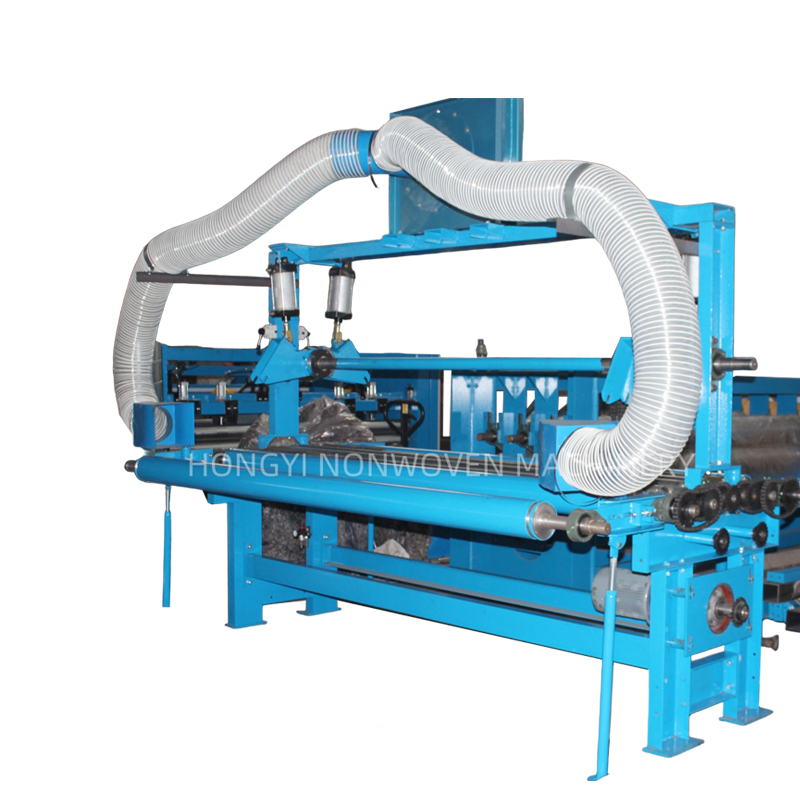
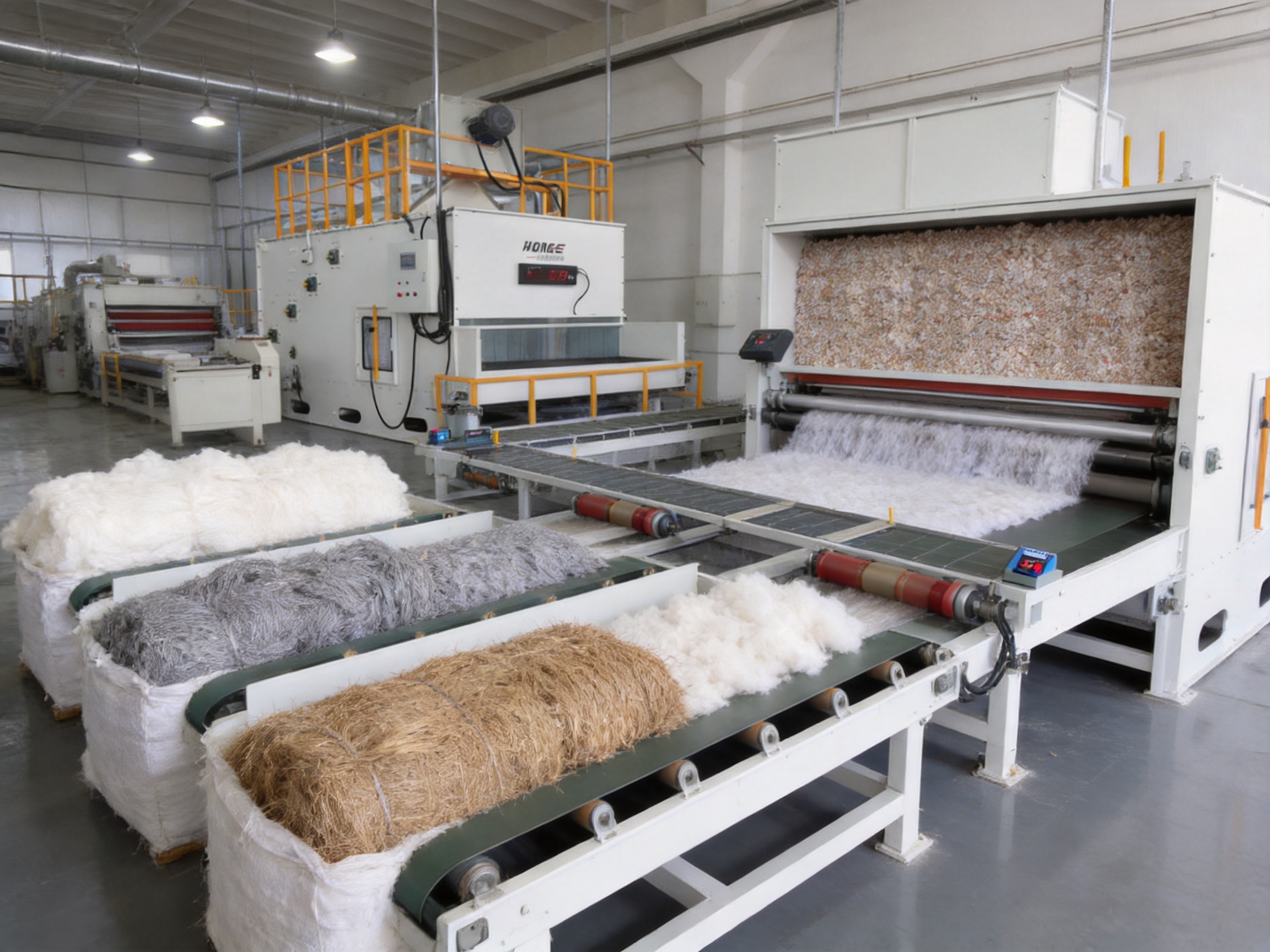
The machine is designed around a continuous sequence of operations. Fiber is first supplied from bales or prepared raw-material positions. The opening and feeding components loosen the fiber and move it toward the weighing area. The weighing system then measures the material according to the required production recipe. After weighing, the material is transferred by a cross conveyor into the mixing and storage section. The prepared blend can then be supplied to the next process in a controlled manner.
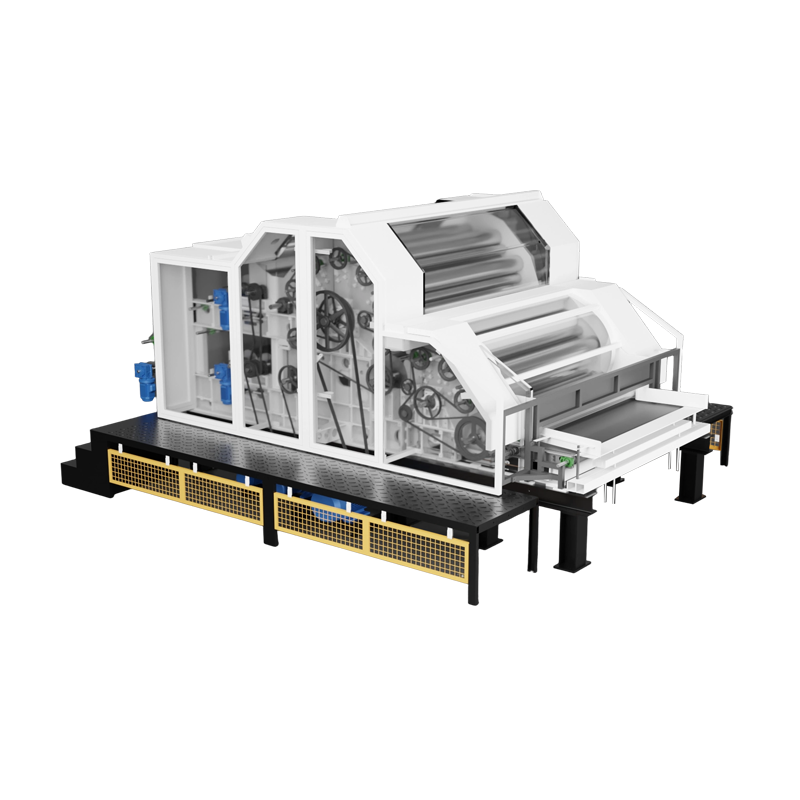
The front part of the equipment is primarily responsible for fiber weighing and mixing. This section is where the different raw materials are introduced in predetermined proportions. The rear part is dedicated to fiber storage and feeding. Separating these functions allows the machine to maintain a working buffer of blended material while the front section continues preparing the next quantity.
The weighing method is a belt electronic scale. As the fiber moves along the conveyor, the system measures the material flow and controls the feeding process. Electronic measurement provides a more practical and repeatable method than relying entirely on manual weighing. The exact accuracy and control range depend on the final machine configuration, fiber characteristics, recipe, and control settings.
After the material is weighed, the cross conveyor transfers the fibers toward the following section. This arrangement helps combine fibers from different feeding positions and provides a smooth route toward storage. The storage cabinet can hold the blended fiber for the next procedure, reducing the need for operators to repeatedly move fiber manually between equipment.
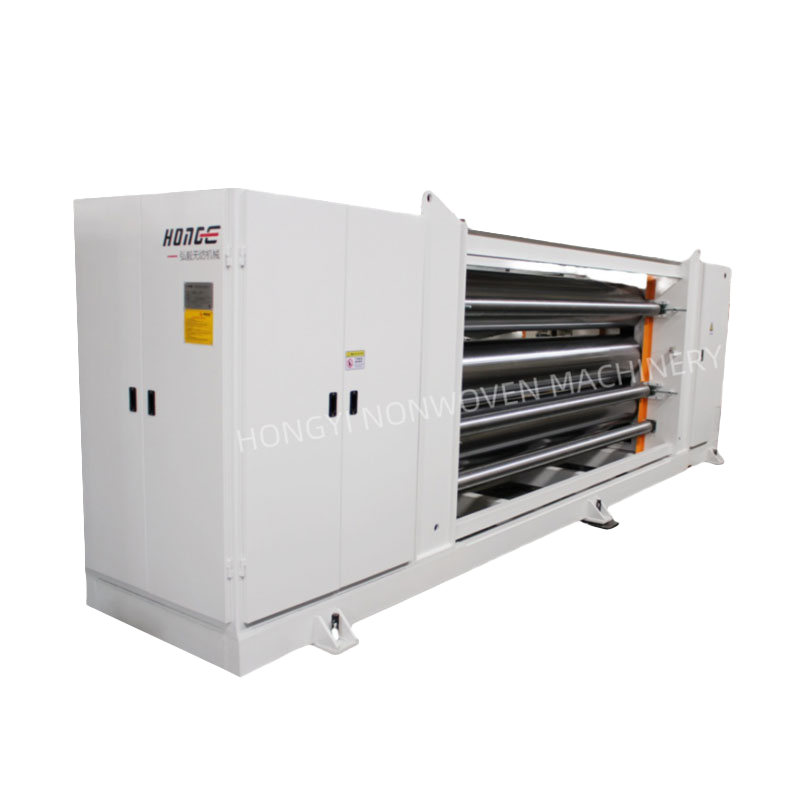
Leveling and fiber-removing rollers are included in the feeding and beating arrangement. These steel rollers help manage the fiber layer and support more consistent material delivery. The rollers are designed for continuous industrial operation and form part of the mechanical structure that guides the fibers through the machine.
Typical Operating Sequence
1. Operators prepare the required fiber bales and confirm the blend recipe.
2. Different fibers are placed at their designated feeding positions.
3. The feeding conveyor moves the fibers toward the opening and weighing section.
4. The opening and beating elements loosen compacted fiber and support a more even layer.
5. The electronic weighing system measures the material according to the selected proportion.
6. The cross conveyor transfers the weighed material into the mixing and storage section.
7. The mixed fiber is temporarily stored in the cabinet.
8. The rear feeding section sends the prepared blend to the carding, airlay, or other downstream machine.
3. Main Structural Features
Steel Plate Welded Main Body
The main body adopts a steel plate welding structure. A welded steel frame provides a solid foundation for the conveyor, rollers, weighing components, storage cabinet, and drive system. In continuous nonwoven production, the machine must withstand vibration, repeated loading, and the mechanical forces generated by moving fiber and rotating components. A stable structure helps maintain alignment and supports long-term operation.
The welded construction also offers flexibility during customization. Depending on the project, the manufacturer can adjust working width, feeding arrangement, storage capacity, conveyor configuration, and other structural details. This is useful for customers integrating the machine into an existing nonwoven factory where available floor space and upstream or downstream equipment may vary.
Independent Electronic Weighing System
The machine is equipped with an independent weighing system and a dedicated motor. The independent arrangement allows the weighing function to operate as a defined part of the production sequence rather than depending only on operator estimation. The use of a dedicated motor supports controlled movement of the weighing and feeding components.
Proportional weighing is especially important when several fibers are combined. A recipe may require different percentages of each component, and the machine is intended to feed those materials according to the selected blend requirement. The electronic scale measures the material flow, while the control system coordinates feeding and transfer.
Manufacturers should confirm the intended accuracy, recipe control method, sensor configuration, and communication interface before ordering. These details may vary according to the final technical design and the customer's automation requirements.
PVC Conveyor Belt and Supporting Frame
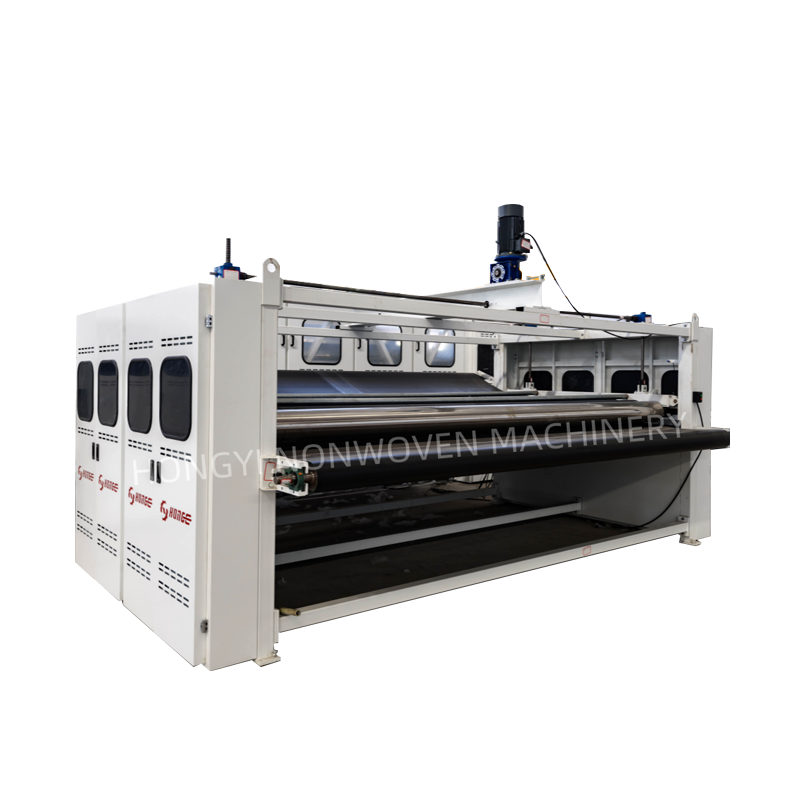
The feeding section consists of a PVC conveyor belt, frame, and associated supporting components. The conveyor moves fiber continuously and provides a controlled route between the raw-material area, weighing position, and transfer section. A conveyor-based system is suitable for continuous production because it reduces repeated manual lifting and allows the material flow to be coordinated with the next operation.
The conveyor design also supports modular installation. Depending on the line layout, the equipment can be connected to opening machines, carding machines, airlay systems, storage equipment, or other nonwoven production units. The conveyor speed and feeding arrangement should be selected according to fiber type, target capacity, and downstream demand.
Steel Leveling and Fiber-Removing Rollers
The beating devices for cotton leveling and fiber removal are constructed with steel rollers. These rollers help distribute the fiber layer and remove material from the feeding area in a controlled way. By managing the fiber thickness before weighing and transfer, the rollers can contribute to stable feeding.
Different fibers behave differently during opening. Polyester may be relatively springy, cotton may form compact tufts, wool may be flexible and cohesive, and coir or jute may contain longer and more irregular particles. The roller arrangement must therefore be operated at suitable speeds and settings for the material being processed.
Photoelectric Control Technology
The machine uses photoelectric control technology as part of its quantitative weighing and feeding operation. Photoelectric sensors can detect material position, monitor the presence of fiber, and assist with automatic control of feeding and transfer functions. This reduces dependence on constant manual observation and helps the machine respond to changing material conditions.
Photoelectric control is valuable in a dusty production environment because it supports automatic sequencing. However, sensors should be kept clean and checked regularly. Fiber dust can accumulate around sensing areas and may influence detection if maintenance is neglected.
4. Material Compatibility
The HYHM Fiber Mixing Machine can be used with many types of raw materials. The listed applications include polyester fiber, polypropylene staple fiber, wool, cotton, coir fiber, jute fiber, ES fiber, and similar staple fibers. This range makes the equipment relevant to both synthetic-fiber and natural-fiber nonwoven plants.
Polyester Fiber
Polyester is widely used in needle-punched fabrics, thermal-bonded products, automotive interiors, geotextiles, furniture padding, filtration media, and household materials. Polyester can be blended with other fibers to adjust strength, resilience, bulk, and cost. Consistent weighing is useful when recycled polyester and virgin polyester are combined or when polyester is mixed with a lower-melting fiber.
Polypropylene Staple Fiber
Polypropylene is valued for its low density, moisture resistance, and chemical resistance. It may be used in hygiene materials, filtration products, industrial fabrics, and other nonwoven applications. Blending polypropylene with other fibers requires attention to fiber length, crimp, static behavior, and bonding conditions. Controlled feeding helps maintain the intended material balance.
Wool and Cotton
Wool and cotton are natural fibers with distinctive textures and moisture-related properties. They can be used in felt, insulation, interior materials, clothing-related products, and specialty nonwovens. Natural fibers may vary in length, fineness, moisture content, and degree of compactness. Pre-opening and controlled weighing are therefore important when consistent web formation is required.
Coir and Jute Fiber
Coir and jute are plant-based fibers that can be used in mats, felt, insulation, agricultural products, interior components, and other industrial materials. Their relatively coarse structure and natural variation can make manual blending difficult. A mechanical blending system helps organize the feed and allows the operator to define a repeatable proportion of each material.
ES Fiber
ES fiber is commonly used in thermal-bonded nonwoven products because of its sheath-core structure and bonding characteristics. When ES fiber is combined with polyester or another structural fiber, the ratio must be controlled to support the required bonding performance. The fiber mixing machine can prepare a more consistent blend before the material enters a carding or web-forming process.
5. Advantages Compared with Manual or Basic Mixing Methods
More Consistent Blend Ratios
The most important advantage is the use of proportional electronic weighing. Manual mixing often depends on operator experience, visual estimation, or separate weighing of batches. These methods may be acceptable for small trials, but they become less reliable as production volume increases. An electronic belt scale provides a more systematic approach to controlling the amount of each material.
A stable blend ratio can reduce variation in fabric weight, color, softness, strength, thermal behavior, and bonding performance. It also makes production records and recipe management easier to organize.
Reduced Manual Labor
Manual fiber preparation requires operators to open, carry, weigh, mix, and transfer material repeatedly. These activities can be physically demanding and may expose workers to fiber dust. The conveyor-based system performs much of the movement automatically, allowing operators to focus on loading materials, checking settings, supervising operation, and performing maintenance.
Improved Production Continuity
The rear storage cabinet acts as a buffer between the blending section and the next process. This can help maintain a steady supply of material when there are short interruptions or differences in operating speed between machines. A storage section is particularly useful in a complete production line where the output of one machine must be coordinated with the demand of another.
Better Integration with Nonwoven Lines
The machine is not limited to standalone operation. It can serve as a preparation unit before carding, airlay web forming, needle punching, thermal bonding, or other nonwoven processes. Its working width options of 1.6 meters and 2 meters, together with the stated 2,000 mm working-width parameter for one configuration, allow project-specific integration.
Adaptability to Different Fiber Recipes
Nonwoven producers often manufacture multiple product grades on the same line. One order may require a polyester-dominant mixture, while another may require cotton, wool, ES fiber, or recycled material. A proportional weighing system makes it easier to change recipes than a fixed-ratio mechanical feeder. The final control interface and recipe storage functions should be confirmed according to the customer's specification.
Suitable for Factory Customization
Customized machines are often necessary because nonwoven factories differ in layout, material type, working width, capacity, and downstream process. The equipment is identified as customizable, and the manufacturer provides complete production lines as well as individual machines. This allows the fiber mixer to be developed as part of a broader engineering solution rather than treated as an isolated standard unit.
6. Technical Specifications
The following specifications represent the available product information. Final values may depend on the selected working width, fiber type, control configuration, and production requirements. Buyers should request a confirmed technical drawing and final data sheet before placing an order.
| Model | HYHM |
| Machine type | Fiber mixing and proportional weighing machine |
| Automatic grade | Automatic |
| Working width options | 1.6 m / 2 m |
| Stated working width parameter | 2,000 mm |
| Weighing method | Belt electronic scale |
| Capacity | Approximately 350 kg/h |
| Installed power | Approximately 16.25 kW |
| Specification | Five roller configuration |
| Raw materials | Polyester, polypropylene, wool, cotton, coir, jute, ES fiber, and similar fibers |
| Control features | Electronic weighing and photoelectric control |
| Certification | CE and ISO9001:2000 listed in supplied information |
| Condition | New |
| Voltage | 220 V or customized |
| Warranty | One year after-sales warranty |
| Inspection | Video outgoing inspection provided |
| Lead time | Approximately 2–3 months |
| Production capacity | Approximately 100 sets per year |
| Transport packaging | Nude packing or PE film |
| Reference HS code | 8449009000 |
The stated capacity of 350 kg/h should be understood as a reference value rather than a universal output for every fiber. Fiber length, fineness, moisture, bulk density, bale condition, blend ratio, feeding speed, and downstream requirements can all affect actual throughput. Coarse natural fibers and highly compressed bales may require a different operating arrangement from clean, uniform synthetic staple fiber.
The installed power is listed as approximately 16.25 kW in the product parameters. Another general information field lists 24 W, which may represent a component or data-entry inconsistency rather than the complete installed power. Customers should confirm the final electrical load, motor ratings, voltage, frequency, and control cabinet requirements during technical approval.
7. Manufacturing Strengths and Engineering Capabilities
The supplier is a professional nonwoven machinery manufacturer and trader with more than 20 years of experience in the nonwoven machinery field. Its product scope includes complete production lines and individual machines for different nonwoven technologies. This combination of manufacturing experience and system-level knowledge is important because the performance of a fiber mixer is closely connected to the machines that follow it.
A company that supplies only a single mechanical unit may have limited visibility into the requirements of carding, web forming, needle punching, thermal bonding, airlay production, or winding. By contrast, experience with complete lines can help the manufacturer understand how raw-material preparation affects the full production process.
Engineering for Complete Production Lines
The company provides needle-punched geotextile production lines, nonwoven carpet production lines, airlaid waste felt production lines, automotive interior material lines, needle-punching cleaning cloth lines, wool felt lines, and jute felt lines. It also provides carding machines, airlay machines, ironing machines, thermal-bonding wadding oven machines, and needle-punching machines.
This broad range supports a more coordinated design approach. The fiber mixer can be specified according to the type of web-forming equipment, the target fabric width, the expected capacity, and the physical behavior of the selected fibers. A customer ordering a complete line may therefore benefit from a single technical contact for machine matching, layout planning, installation coordination, and after-sales support.
Welded Fabrication and Mechanical Assembly
The steel plate welded structure of the fiber mixer reflects a fabrication approach suited to industrial equipment. The quality of the frame depends on material selection, cutting, forming, welding, alignment, surface treatment, and final assembly. Proper dimensional control is important because conveyor alignment, roller positioning, belt tracking, and sensor placement all influence operation.
During manufacturing, the main frame and supporting elements must be assembled so that the feeding path remains stable under load. Rollers should rotate smoothly, conveyors should track correctly, and access points should be available for cleaning and maintenance. These mechanical details are essential to achieving reliable production beyond the basic specification sheet.
Electrical and Control Integration
The machine combines dedicated motors, electronic weighing, photoelectric detection, and automatic feeding control. Integrating these elements requires coordination between mechanical and electrical design. The control system must receive signals from sensors, regulate motor operation, and maintain the required sequence of weighing, transfer, storage, and feeding.
The use of video outgoing inspection provides an additional communication tool before shipment. A recorded inspection can show the machine's physical condition, control functions, conveyor movement, sensor response, and other agreed test items. For international buyers, this can be particularly useful when the factory cannot visit the supplier before delivery.
Quality Management and Certification
The product information lists CE and ISO9001:2000 certification. Certification should be reviewed against the final machine configuration and the regulations applicable in the destination country. Buyers should request copies of relevant certificates, declarations, electrical documentation, and inspection records as part of the order approval process.
A documented quality system can support consistency in purchasing, fabrication, assembly, inspection, and delivery. For a machine containing multiple mechanical and electrical components, quality management is important because small variations in assembly can influence weighing stability, belt tracking, sensor performance, and service life.
Export Experience
The company's products have been supplied to more than 20 countries, including Mexico, Argentina, Brazil, Turkey, Algeria, Egypt, Bangladesh, Vietnam, Thailand, and other Asian markets. Export experience can help a machinery supplier understand the practical requirements of international projects, including packing, voltage customization, documentation, communication across time zones, and installation support.
International deliveries also require attention to shipping dimensions and weight. The listed package size is approximately 380 cm by 120 cm by 150 cm, with a gross weight of approximately 8,000 kg. These figures should be verified against the final configuration because accessories, control cabinets, platforms, spare parts, and packaging methods may change the shipping arrangement.
8. Application Areas
Needle-Punched Geotextiles
Geotextile production often uses polyester or polypropylene fibers and may require a consistent blend for stable strength, filtration, separation, drainage, or reinforcement performance. The fiber mixer can prepare the material before carding and crosslapping or other web-forming operations. When recycled and virgin fibers are combined, controlled proportioning is especially valuable.
Nonwoven Carpets and Floor Coverings
Carpet and floor-covering materials may use polyester, polypropylene, jute, wool, or blended fibers. Different recipes can influence pile appearance, bulk, resilience, color, and bonding response. The mixer supports recipe changes and helps distribute the selected components before the web enters the needle-punching or thermal-bonding section.
Automotive Interior Materials
Automotive interior products require repeatable thickness, acoustic performance, resilience, weight, and surface quality. Fiber blends may include synthetic fibers, recycled materials, and low-melting bonding fibers. A controlled blend can support more stable web formation and bonding, which are important for headliners, trunk liners, insulation, wheel-arch materials, and interior padding.
Wool Felt and Jute Felt
Wool and jute felt lines often process natural materials with variable characteristics. The machine can help mix different natural fibers or combine them with synthetic support fibers. Pre-opening and controlled feeding are useful for reducing large differences in material concentration across the production batch.
Airlaid and Waste Felt Products
Airlaid systems require a suitable and relatively uniform fiber supply. Waste felt and recycled-fiber products may contain materials with different lengths, densities, and opening conditions. The fiber mixing machine can be used as an upstream preparation unit, although the specific suitability of a waste stream should be verified through testing.
Thermal-Bonded Wadding
Thermal-bonded wadding commonly uses a structural fiber together with a lower-melting binder fiber such as ES fiber. The ratio and distribution of the binder fiber influence bonding, loft, stiffness, and recovery. Proportional weighing helps prepare the recipe before the material reaches the carding and oven stages.
9. Installation and Line Integration
Before installation, the customer should prepare a suitable foundation, electrical supply, ventilation arrangement, material loading space, and downstream connection. The machine's dimensions and weight require adequate access for unloading and positioning. The floor should be strong and level enough to support the equipment without excessive vibration.
The layout should allow operators to load bales safely and access the conveyors, rollers, weighing system, storage cabinet, and control panel. Space should also be reserved for cleaning, inspection, belt adjustment, sensor maintenance, and replacement of wear parts. A compact layout may save floor space, but insufficient maintenance clearance can increase downtime.
The electrical supply must match the final motor and control configuration. The supplied information lists 220 V or customized voltage, but international customers should confirm voltage, frequency, phase, power rating, grounding, and control-panel standards. If the machine is being integrated into a complete line, the emergency-stop circuit and interlock signals should be coordinated with the other equipment.
Material transfer points should be aligned with the downstream machine. A carding machine may require a specific feed height and width, while an airlay machine may require a different delivery arrangement. The storage cabinet and rear feeding section should be positioned so that the blended fiber moves continuously without excessive compression or accumulation.
Commissioning Procedure
Commissioning normally begins with a mechanical inspection. The installation team checks frame stability, belt alignment, roller rotation, guards, fasteners, and access covers. The electrical inspection then verifies wiring, motor direction, sensor connections, grounding, emergency stops, and control functions.
The machine should first be operated without material to confirm that conveyors, rollers, and transfer devices move correctly. After this, a small quantity of fiber can be introduced to check feeding, weighing, leveling, photoelectric detection, and storage. Trial production should use the intended raw materials and blend proportions wherever possible.
Actual capacity and blend consistency should be evaluated during commissioning. The customer and supplier can record the recipe, feeding speed, measured output, power consumption, and downstream response. These records provide a useful reference for future operation and troubleshooting.
10. Operation Recommendations
Operators should begin each production shift by checking the condition of the conveyors, rollers, guards, sensors, and storage cabinet. Any accumulated fiber should be removed from areas that could interfere with movement or detection. The weighing system should be checked according to the supplier's recommended procedure.
Raw materials should be identified clearly before loading. Similar-looking fibers can have different melting points, densities, colors, or processing characteristics. Mixing the wrong material into a recipe may affect the entire production batch. Each bale or material position should be labeled with fiber type, lot number, and any relevant moisture or quality information.
Fiber bales should be prepared consistently. Extremely compact material may require additional opening before entering the mixer. If fiber is wet, contaminated, excessively dusty, or mixed with foreign objects, it may cause unstable feeding and increased wear. Material preparation is therefore as important as machine adjustment.
Recipe changes should be recorded. The operator should document the selected percentages, machine settings, production date, raw-material lots, and any observations about the blend. This information supports traceability and helps identify the cause if a downstream product does not meet specification.
Capacity should be increased gradually. Running at the highest possible speed is not always the best approach because excessive feed can reduce opening quality, overload the conveyor, increase material accumulation, or make the weighing signal less stable. The optimum speed is determined by the fiber type and the required blend quality.
11. Maintenance and Service
Daily Maintenance
Daily maintenance should include removal of loose fiber from the conveyor, roller surfaces, sensor areas, storage cabinet, and motor surroundings. Operators should listen for unusual noise and observe whether the belt tracks centrally. Any sudden change in vibration, material flow, or weighing behavior should be reported before it develops into a larger failure.
Regular Mechanical Inspection
Fasteners, roller bearings, belt tension, drive components, guards, and support structures should be inspected at regular intervals. The inspection frequency should reflect operating hours, fiber type, dust level, and production conditions. Coarse natural fibers may create different wear patterns from clean synthetic fibers.
Electronic Scale Verification
The weighing system is central to the machine's purpose. It should be checked periodically using the supplier's recommended calibration or verification method. If the displayed quantity does not correspond to the actual material flow, operators should stop and investigate belt loading, sensor condition, mechanical friction, electrical signals, and calibration settings.
Photoelectric Sensor Cleaning
Photoelectric sensors should be kept free from fiber dust and obstruction. Cleaning should be performed safely with the power isolated where required. Sensor alignment should also be verified after maintenance or accidental impact. A small detection error can influence the feeding sequence and create a larger variation in the blend.
Spare Parts Planning
Customers operating in remote locations should maintain a basic inventory of recommended wear and electrical parts. Possible items may include conveyor belts, bearings, sensor components, switches, fuses, fasteners, and other parts identified by the supplier. The exact spare-parts list should be prepared from the final machine configuration and operating environment.
12. How the Machine Supports Product Quality
Fiber blending influences nearly every stage of nonwoven production. When the blend is consistent, the carding machine can form a more stable web, the crosslapper can build a more predictable batt, and the needle-punching process can produce more uniform consolidation. In thermal bonding, a consistent distribution of binder fibers can support more even bonding through the width and length of the fabric.
Uniform blending can also help reduce waste caused by off-specification production. If a recipe is prepared manually and varies from batch to batch, operators may need to adjust later processes repeatedly. These adjustments can increase setup time and create additional rejected material. A controlled upstream blend provides a stronger starting point for process optimization.
The machine does not replace the need for downstream quality control. Fabric manufacturers should still test basis weight, thickness, tensile strength, tear strength, elongation, air permeability, moisture behavior, thermal properties, and other relevant specifications. However, controlled fiber preparation makes it easier to identify and manage the variables that affect those results.
13. Comparison with Alternative Equipment Approaches
Manual Batch Mixing
Manual batch mixing may have a low initial equipment cost, but it requires more labor and can produce greater variation. It is also less suitable for continuous high-volume production. The HYHM machine offers automatic conveying and electronic proportioning, which can improve repeatability and reduce operator workload.
Simple Conveyor Feeding
A basic conveyor can transport fiber, but it may not provide integrated weighing, proportional control, leveling, and storage. The fiber mixer combines these functions in one system. This reduces the number of separate handling steps and can simplify the layout of a nonwoven preparation area.
Fixed-Ratio Mechanical Feeders
Fixed-ratio feeders are useful for stable, single-recipe production, but they can be less flexible when the manufacturer serves multiple markets. A proportional electronic weighing system is better suited to plants that change fiber recipes or process different raw materials. The ability to customize the machine further increases its usefulness for varied production requirements.
Imported High-Cost Systems
Some international systems offer advanced automation but may involve higher purchase prices, longer delivery arrangements, or expensive replacement parts. A China-manufactured solution can provide a balance between automation, customization, production capability, and investment cost. The final comparison should consider not only the equipment price but also energy use, service response, spare parts, installation, and expected operating life.
The strongest competitive advantage is not necessarily a single component. It is the combination of proportional weighing, automatic feeding, multi-fiber compatibility, storage, customization, complete-line experience, and international supply capability. These features allow the machine to be evaluated as part of a production solution rather than only as an individual conveyor.
14. Customization Options
The equipment is identified as customizable, and customization should be based on the customer's actual process requirements. Important design questions include the number of fiber components, the required working width, target capacity, storage volume, raw-material density, bale dimensions, downstream machine height, plant voltage, and automation level.
Customers may also need special arrangements for recycled fiber, long fibers, coarse natural fibers, colored materials, or blends with a high percentage of binder fiber. These applications may require different opening intensity, roller settings, belt speeds, sensor positions, or feeding sequences.
For a complete line, the supplier can coordinate the fiber mixer with opening and cleaning equipment, carding machines, crosslappers, needle-punching machines, thermal bonding ovens, airlay systems, winding machines, and cutting equipment. Coordinated engineering can reduce the risk of mismatched capacities and inconvenient transfer points.
Information Required for a Technical Proposal
To prepare an accurate proposal, customers should provide the raw-material types, fiber lengths, fiber fineness, moisture condition, expected blend ratios, target capacity, working width, finished-product application, available floor space, electrical standard, and desired degree of automation.
Samples of the intended fibers are recommended when the material is unusual, recycled, very coarse, or highly variable. Testing can help determine whether the opening and feeding arrangement is suitable and whether the desired capacity is realistic for the proposed configuration.
15. Safety Considerations
Fiber-processing machinery contains moving conveyors, rollers, motors, and transfer points. Guards should remain in position during operation, and operators should never reach into a moving machine to remove fiber. Lockout and power-isolation procedures should be followed before cleaning, adjustment, inspection, or repair.
Nonwoven plants should also consider fiber dust, static electricity, noise, and fire safety. The appropriate ventilation, dust-control, housekeeping, and fire-prevention measures depend on the raw materials and local regulations. Synthetic fibers and natural fibers may behave differently under heat or ignition conditions, so the factory's safety plan should address the actual materials in use.
Emergency-stop devices should be tested at suitable intervals. Operators should understand the location and function of the emergency controls, normal stop procedures, restart requirements, and communication procedures for reporting faults.
16. Purchasing and Project Planning
The listed lead time is approximately two to three months. The actual schedule may depend on machine customization, drawing approval, component availability, production workload, testing, packing, and shipping. Customers should confirm the delivery schedule in the commercial contract and allow additional time for installation and commissioning.
Before purchase, the buyer should request a final technical specification, general arrangement drawing, foundation requirements, electrical diagram, utility requirements, spare-parts list, warranty terms, installation scope, and training plan. The final documents should clearly state working width, capacity, installed power, voltage, control functions, material compatibility, and acceptance criteria.
Factory acceptance testing can be arranged before shipment. It may include no-load running, conveyor operation, roller movement, sensor response, emergency-stop testing, weighing-system checks, and material trials. When possible, the customer should provide the actual fiber recipe or representative samples for testing.
After installation, site acceptance should confirm that the machine reaches the agreed operating condition. The acceptance process should consider not only whether the machine runs, but also whether the blend ratio, capacity, material transfer, storage function, and connection to downstream equipment meet the project requirements.
17. Company Service and Global Support
Changshu Hongyi Nonwoven Machinery Co., Ltd. is based in Changshu, Jiangsu Province, China, and focuses on the design, manufacture, supply, and export of nonwoven machinery. The company provides both unit machines and complete production lines, allowing customers to select a single fiber preparation machine or develop a broader project with coordinated equipment.
The company emphasizes efficiency, reliability, quality, advanced technology, precision engineering, automatic control systems, energy-saving capabilities, and customized options. These priorities are relevant to the fiber mixing machine because stable operation depends on accurate mechanical assembly, practical control design, and appropriate adaptation to the customer's production conditions.
Its international customer base includes markets in Latin America, Europe, Africa, Southeast Asia, and other regions. Export experience can support communication during inquiry, technical confirmation, manufacturing, shipment, installation, and after-sales service. The company also lists one year of warranty service and video outgoing inspection.
Customers can contact the supplier through the following channels:
Company: Changshu Hongyi Nonwoven Machinery Co., Ltd.
Address: No. 52, Jinxiu Avenue, Zhitang Town, Changshu City, Suzhou City, Jiangsu Province, China
Telephone: +86-0512-52860355
Mobile: +86 139 0157 3644
Mobile: +86-152 6251 3303
Mobile: +86-189 6235 9051
Email: admin@hongyiwf.cn
18. Frequently Asked Questions
What is the main purpose of the fiber mixing machine?
The machine pre-opens fibers, weighs different materials according to predetermined percentages, mixes the materials, stores the prepared blend, and feeds it to the next nonwoven production process.
Which fibers can be processed?
The listed materials include polyester fiber, polypropylene staple fiber, wool, cotton, coir fiber, jute fiber, ES fiber, and similar staple fibers. Customers should provide detailed information about unusual, recycled, very long, or highly compacted fibers so the final configuration can be confirmed.
How does the machine control the blend ratio?
It uses a belt electronic scale and an independent weighing system to measure material flow. The feeding and transfer functions are coordinated through automatic control and photoelectric detection.
What is the reference production capacity?
The stated capacity is approximately 350 kg/h. Actual output depends on fiber type, density, length, moisture, blend recipe, feeding condition, machine settings, and downstream requirements.
What working widths are available?
The listed working-width options are 1.6 meters and 2 meters. The product parameters also state a 2,000 mm working width for one configuration. The final width should be confirmed in the approved technical specification.
Can the machine be connected to an existing carding line?
Yes, it is intended to transfer blended fiber to the next process and can be designed for connection with carding, airlay, thermal-bonding, needle-punching, or other nonwoven equipment. The transfer height, width, capacity, and control interface should be checked before integration.
Does the machine include a storage function?
Yes. The rear part is dedicated to fiber storage and feeding. The storage cabinet provides a buffer of blended material for the next procedure.
Is the machine automatic?
The product is listed as automatic. It includes electronic weighing, dedicated motor control, photoelectric control technology, conveyors, and automatic material feeding functions. The exact level of recipe management and line communication depends on the selected control configuration.
What is the warranty period?
The supplied information lists a one-year warranty and after-sales service. Buyers should confirm the warranty coverage, excluded items, installation responsibilities, and service response terms in the contract.
Can the voltage be customized?
The listed voltage is 220 V or customized. Customers should provide the destination country's electrical standard, including voltage, frequency, and phase, before production begins.
How long is the delivery time?
The listed lead time is approximately two to three months. Customization, drawing approval, production scheduling, testing, and shipping arrangements may affect the final schedule.
How should the weighing system be maintained?
The weighing system should be kept clean, checked regularly, and verified according to the supplier's instructions. Operators should inspect belt loading, sensor condition, mechanical friction, and calibration whenever the measured quantity appears inconsistent.
Is video inspection available before shipment?
Yes. Video outgoing inspection is listed as provided. Customers should agree on the inspection items and test conditions in advance.
Can the supplier provide a complete nonwoven production line?
Yes. The company supplies complete production lines as well as individual machines. Its product range includes needle-punched geotextile, nonwoven carpet, airlaid waste felt, automotive interior material, cleaning cloth, wool felt, jute felt, thermal-bonded, and related nonwoven equipment.
19. Conclusion
The HYHM Fiber Mixing Machine provides an organized solution for one of the most important preparation stages in nonwoven manufacturing. By combining pre-opening, proportional electronic weighing, conveyor transfer, fiber leveling, photoelectric control, mixing, storage, and automatic feeding, it helps manufacturers create a more stable material supply for downstream equipment.
Its ability to process polyester, polypropylene, wool, cotton, coir, jute, ES fiber, and other staple materials makes it suitable for a broad range of products. The steel plate welded structure, independent weighing system, steel rollers, PVC conveyor belt, and storage cabinet support continuous industrial operation, while customization allows the equipment to be adapted to different line layouts and production recipes.
Compared with manual blending or basic conveyor systems, the machine offers improved proportional control, reduced labor requirements, better process continuity, and greater recipe flexibility. Its competitive value is strengthened by the supplier's experience in complete nonwoven production lines, international export capability, quality-management approach, video inspection, and after-sales support.
For the best result, customers should evaluate the machine together with their actual fibers, target capacity, finished product, downstream equipment, and factory conditions. A properly engineered and commissioned fiber blending system can improve raw-material consistency, reduce avoidable production variation, and provide a dependable foundation for efficient nonwoven fabric manufacturing.
References
1. Product specification and technical information for the HYHM Fiber Mixing Machine, supplied by the manufacturer.
2. Manufacturer company profile and nonwoven machinery product range information.
3. General principles of staple-fiber opening, blending, weighing, and feeding in nonwoven production.
4. General engineering practices for carding, airlay, needle-punching, and thermal-bonded nonwoven production lines.
5. General industrial guidance concerning machinery safety, electrical installation, sensor maintenance, and preventive maintenance.