

Content
- 1 Why Bale Opening and Blending Are Critical
- 2 Working Principle of the HYKB Bale Opener
- 3 Main Advantages of the Equipment
- 4 Comparison with Conventional Bale-Opening Methods
- 5 Applications in Nonwoven Manufacturing
- 6 Engineering and Manufacturing Strengths
- 7 Advanced Manufacturing Process
- 8 Capacity, Width, and Configuration Considerations
- 9 Installation and Commissioning
- 10 Operation and Maintenance Recommendations
- 11 Quality and Production Benefits
- 12 Why Choose a Specialized Nonwoven Machinery Supplier
- 13 Purchasing Checklist for the HYKB Bale Opener
- 14 Q&A About the HYKB Bale Opener
- 14.1 What is the primary function of the HYKB Bale Opener?
- 14.2 Can the machine blend more than two fiber types?
- 14.3 What materials can be processed?
- 14.4 Does the equipment perform fine opening?
- 14.5 What working widths are available?
- 14.6 What is the rated capacity?
- 14.7 Is the machine automatic?
- 14.8 Can the voltage be customized?
- 14.9 How does the bale opener improve production consistency?
- 14.10 Can the machine be integrated into an existing line?
- 14.11 What support is available after purchase?
- 14.12 What is the warranty period?
- 14.13 How should buyers resolve the different power figures in the specifications?
- 15 Conclusion
- 16 References
- 17 Product: HYKB Bale Opener
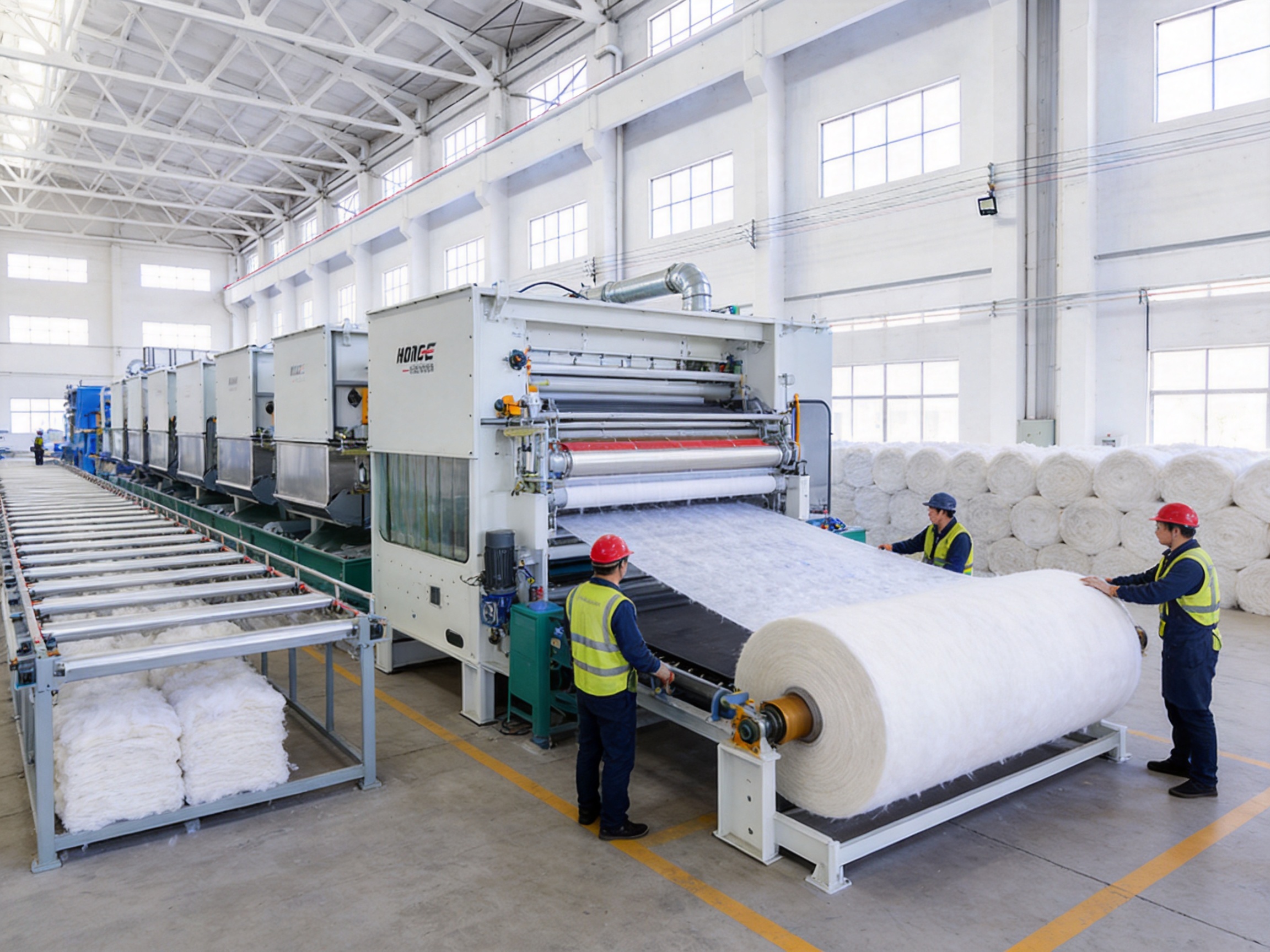
Modern nonwoven fabric production depends on stable, accurate, and repeatable fiber preparation. Before fibers reach a carding machine, airlay system, thermal bonding line, or needle punching machine, they must be opened from compressed bales, distributed evenly, and blended according to the required recipe. If this preparation stage is inconsistent, downstream equipment may experience uneven feeding, web-weight variation, poor bonding, excessive waste, and unstable product quality.
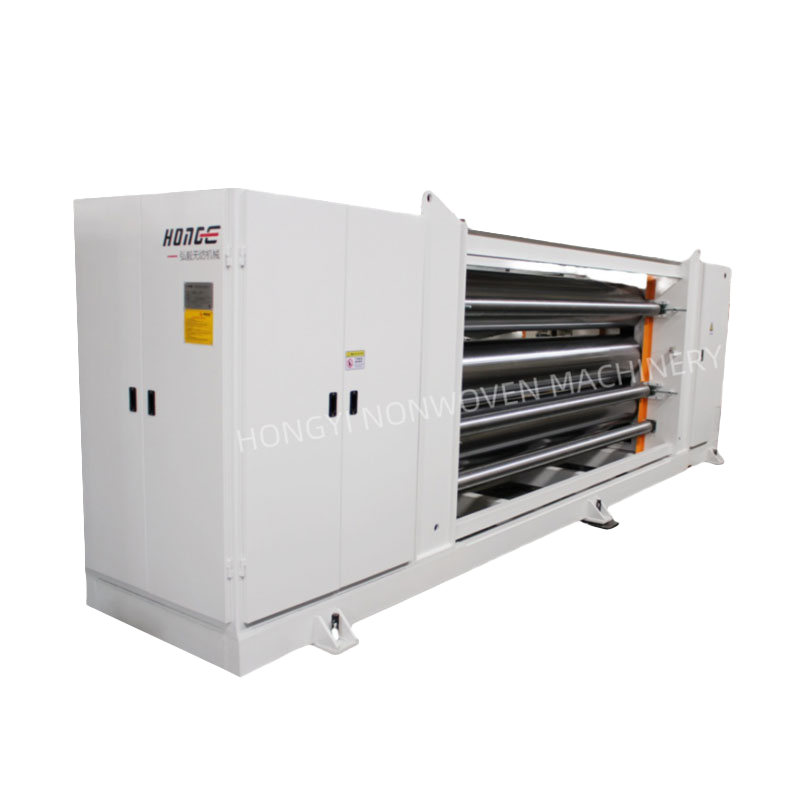
The HYKB Bale Opener is designed to address these challenges at the beginning of the production process. It is an automatic bale opening and fiber blending machine developed for nonwoven manufacturers that need reliable pre-opening, controlled weighing, and flexible multi-fiber blending. The system is suitable for processing different fiber types, including polyester fiber and other materials used in nonwoven fabric manufacturing.
Manufactured by Changshu Hongyi Nonwoven Machinery Co., Ltd., the HYKB Bale Opener combines mechanical pre-opening with electronic weighing and cross-conveyor transfer. Its modular structure allows several bale opener units to work together, making it possible to process different fibers in a single operation while maintaining a predetermined blending ratio.
For factories seeking to improve raw-material preparation, reduce manual handling, and establish a more stable feeding process, this equipment offers an important combination of automation, adaptability, and production efficiency.
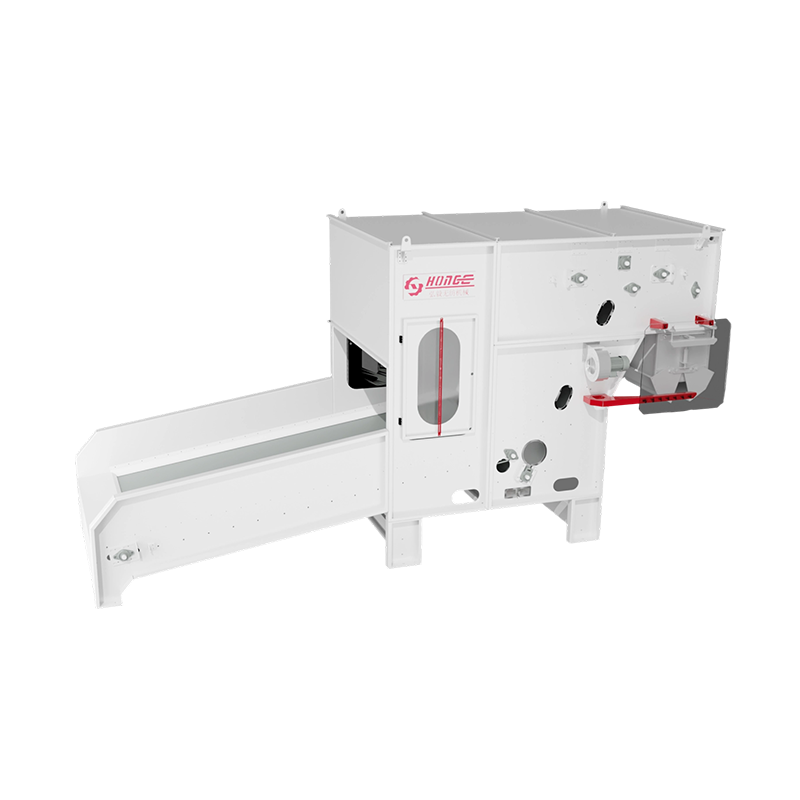
HYKB Bale Opener
Why Bale Opening and Blending Are Critical
Most synthetic and natural fibers used in nonwoven production are delivered in compressed bales. Compression makes transportation and storage more efficient, but it also creates dense fiber blocks that cannot be fed directly into carding or airlay equipment. The fibers must first be loosened and separated so that the following machines can process them evenly.
Manual bale opening may appear simple, but it creates several production risks. Operators may remove too much or too little material from a particular bale, causing an irregular blend. Different workers may follow slightly different procedures, resulting in changes from one production batch to another. Manual handling also increases labor requirements and exposes operators to repetitive physical work and airborne fiber.
A dedicated bale opener provides a controlled mechanical method for preparing fibers. It removes fiber from the bale in a more uniform manner, reduces the size of fiber clumps, and creates a steady material flow. When electronic weighing is added, the system can also regulate the quantity of each fiber according to the production recipe.
This is particularly important when a final product contains two or more fiber types. A nonwoven material may require a blend of different deniers, colors, lengths, or functional fibers. The proportions may be selected to achieve a specific basis weight, softness, strength, resilience, thermal performance, absorbency, or cost target. Accurate proportioning at the opening stage gives the production line a more stable foundation.
The quality of the blend affects every downstream operation. A carding machine requires a consistent fiber supply to form a uniform web. An airlay machine needs evenly distributed fibers to create a stable web structure. Needle punching depends on consistent fiber placement before mechanical entanglement. Thermal bonding lines require a relatively uniform web so that heat and pressure can produce consistent bonding across the full width.
By stabilizing the first stage of production, the HYKB Bale Opener supports better operation throughout the complete nonwoven manufacturing line.
Working Principle of the HYKB Bale Opener
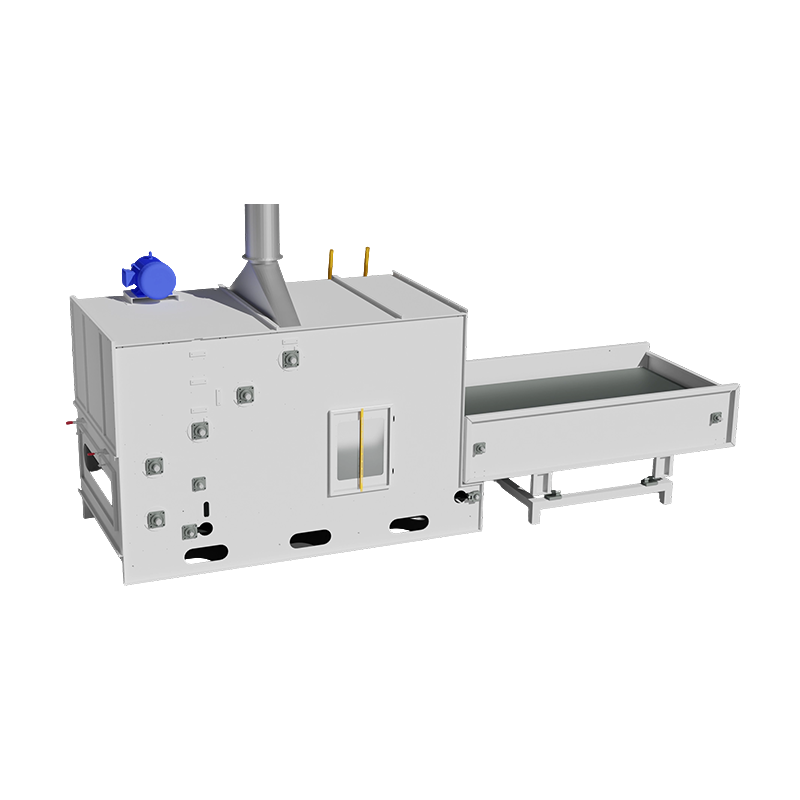
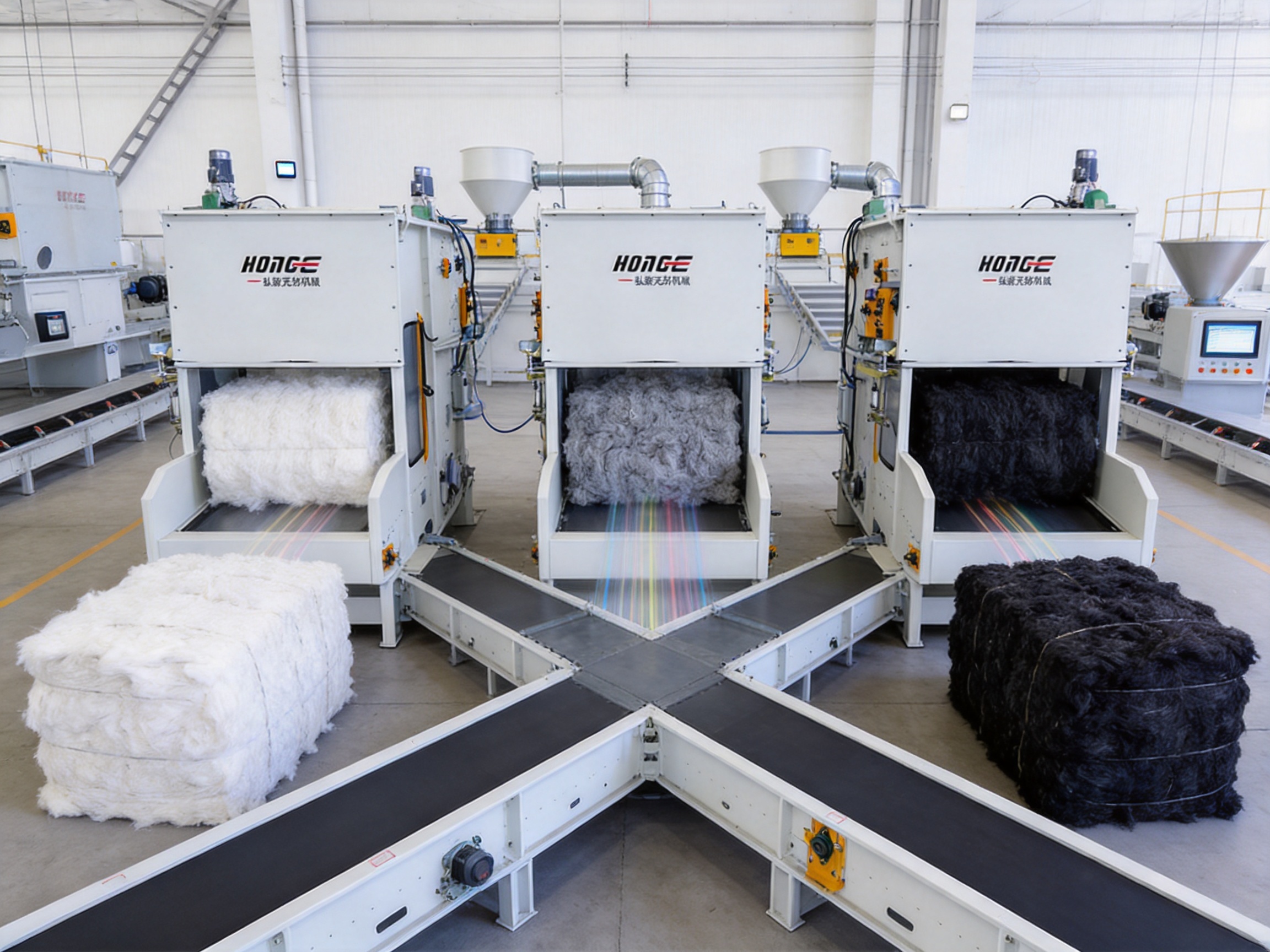
The HYKB Bale Opener is organized into three principal working areas. Each area performs a specific function in the movement and preparation of fiber.
Front Fiber Storage Section
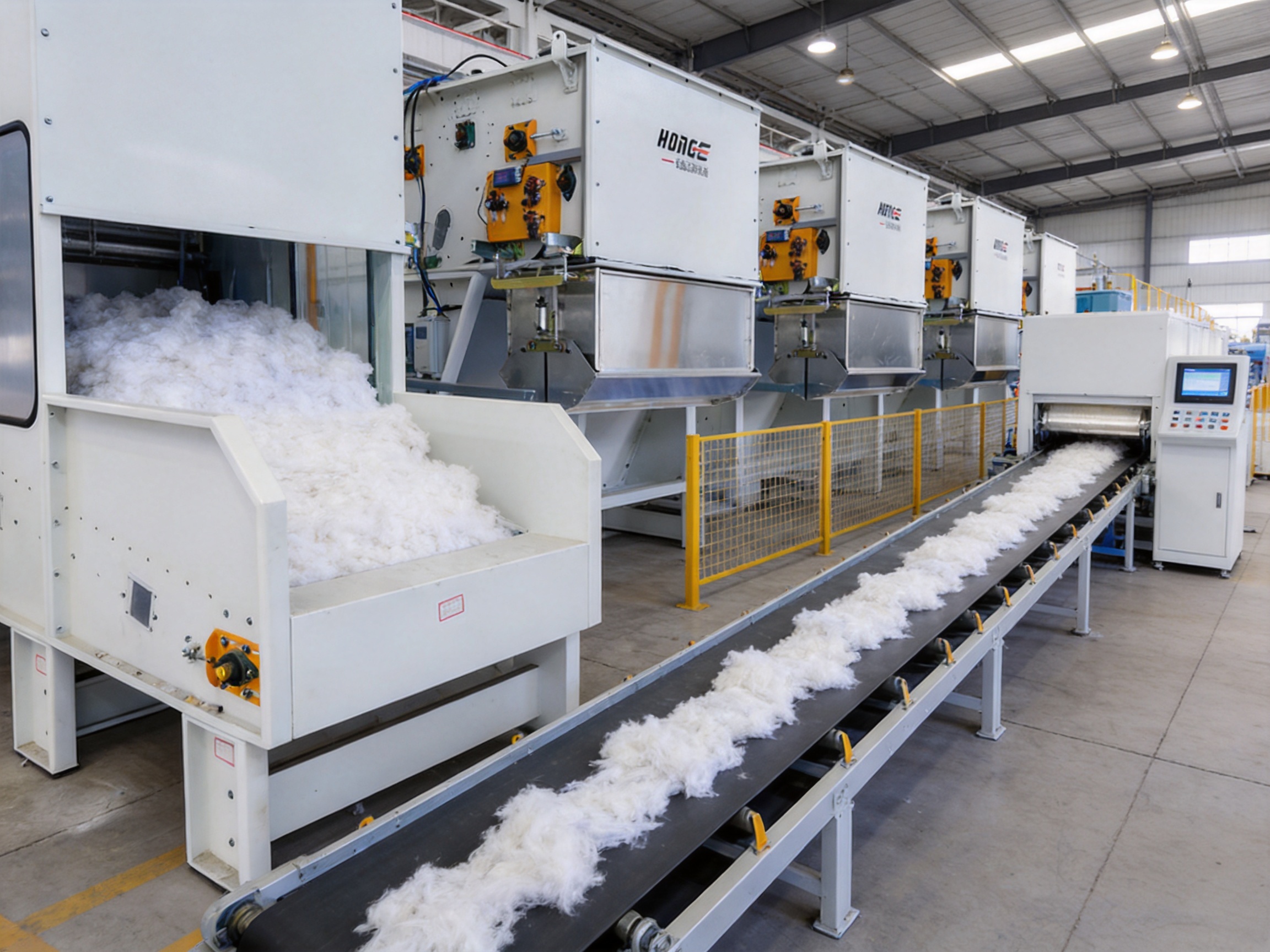
The front section is used for fiber storage. Bales or pre-opened fiber are placed into this area so that the machine can receive a continuous supply of raw material. The storage section helps create a buffer between manual bale loading and automatic feeding, allowing operators to load material without interrupting the entire production process.
Maintaining a suitable amount of fiber in the storage area is important for stable operation. A continuous material reserve allows the feeding section to work more smoothly and helps reduce sudden fluctuations caused by irregular manual loading. The storage arrangement can also make it easier for operators to organize different raw materials before the blending process begins.
Middle Feeding and Pre-Opening Section
The middle section feeds the fiber forward and performs the initial opening process. Its purpose is to break apart compacted fiber masses and prepare the material for accurate weighing. Pre-opening does not replace the fine opening performed by later machinery; instead, it creates a more manageable and evenly distributed material flow for the subsequent stages.
Effective pre-opening helps reduce large clumps and improves the consistency of fiber delivery. This is important because weighing accuracy depends partly on the material arriving in a relatively controlled and continuous form. If large, irregular fiber masses enter the weighing area, the system may experience unstable loading and uneven discharge.
Rear Weighing Section
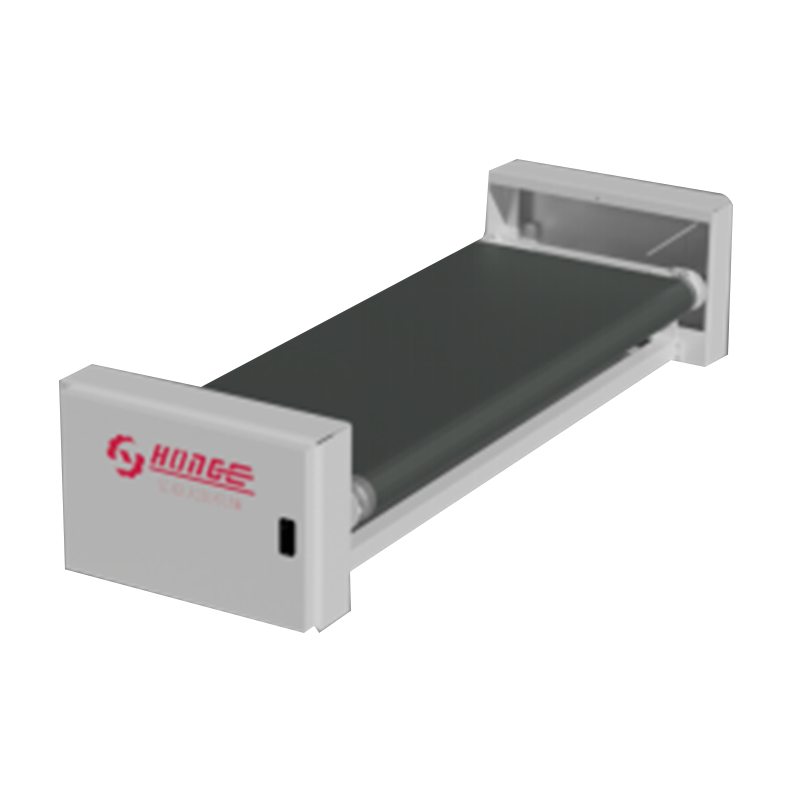
The latter section weighs the fiber according to the required proportions. The machine uses an electronic scale to measure the material. The target ratio can be established according to the production formula, and the measured fiber is then transferred by a cross conveyor to the next opening or blending stage.
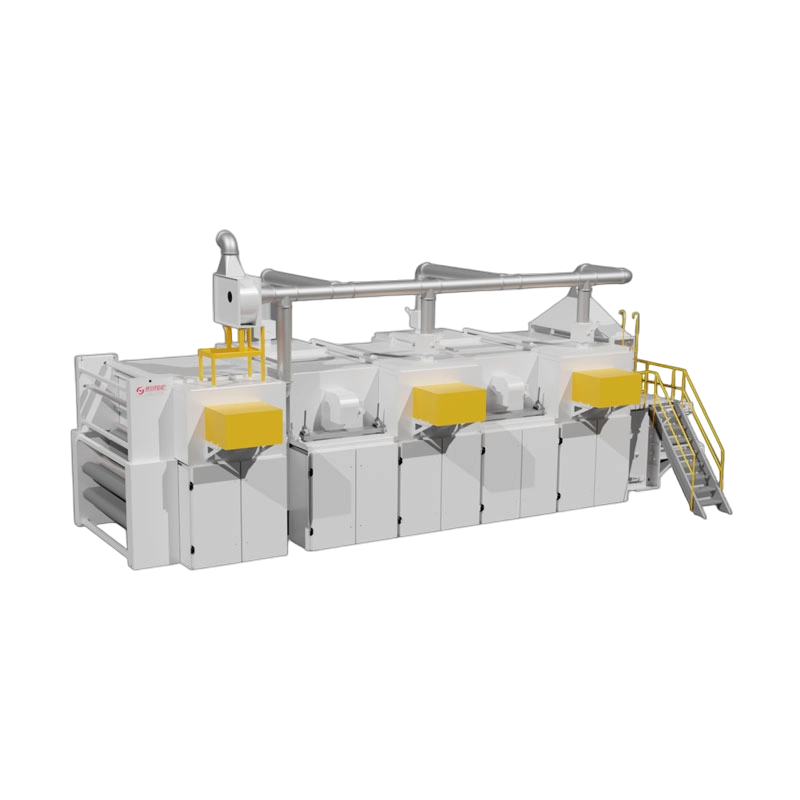
Several HYKB Bale Opener units can be combined when a production line requires multiple fiber types. Each unit can be assigned to a specific raw material, allowing the complete system to build a blend from several controlled streams. This modular approach is more flexible than a single-purpose feeding arrangement because it can support recipes that contain different fiber combinations.
After weighing and transfer, the fiber can continue to additional opening, blending, carding, airlay, or other nonwoven preparation equipment, depending on the factory’s complete line configuration.
Main Advantages of the Equipment
Automatic Proportioning
One of the most important advantages of the HYKB Bale Opener is its automatic weighing function. Instead of relying entirely on manual estimation, the machine uses an electronic scale to control the quantity of material supplied from each unit. This supports a more repeatable blending process and helps operators follow a predetermined recipe.
Automatic proportioning is especially valuable when the production formula contains multiple fibers. Even a small variation in the ratio of different components can influence the appearance, strength, softness, weight, or bonding behavior of the finished fabric. By controlling the material quantity at the beginning of the line, the machine reduces the possibility of uncontrolled variation.
Compatibility with Multiple Fibers
The equipment is designed for different kinds of fibers used in nonwoven manufacturing. The supplied product information identifies polyester fiber and similar materials as examples of applicable raw materials. The actual suitability of a fiber depends on its length, fineness, crimp, moisture level, density, bale compression, and other characteristics, so production trials and technical confirmation are recommended for unusual materials.
Multi-fiber compatibility gives manufacturers more freedom when developing products. A factory may use one fiber blend for filtration materials, another for automotive interiors, and another for carpet underlay or geotextile products. A modular bale-opening system can be adapted to these changing recipes more easily than equipment designed for only one raw material.
Modular Expansion
Several sets can be combined to process multiple fiber types in one operation. This modular concept allows the system to grow with production requirements. A manufacturer may begin with a smaller configuration and add units when new products, additional fibers, or increased capacity are introduced.
Modularity can also simplify process organization. Each bale opener may be allocated to a particular fiber, reducing the possibility of material confusion. The combined arrangement provides a clear path from individual bale opening to proportioned blending and onward transfer.
Reduced Manual Handling
Manual handling is still required for bale loading and material supervision, but the machine reduces the need for operators to repeatedly measure, carry, and combine fiber by hand. This can improve working efficiency and make production less dependent on individual operator judgment.
Reducing manual intervention may also support better workplace organization. Fiber preparation areas can become congested when workers must move material between weighing points, storage positions, and feeding equipment. A planned automatic transfer route helps create a more orderly production environment.
Improved Downstream Stability
A stable fiber supply is essential for carding, airlaying, needle punching, and thermal bonding. The HYKB Bale Opener contributes to downstream stability by preparing a more consistent material flow. Although the final performance of a line depends on all machines and operating conditions, accurate opening and blending provide a strong starting point.
More stable feeding can help reduce web-weight changes, local thin areas, overfeeding, and fiber accumulation. It may also make it easier for operators to adjust later machines because the incoming material is less variable.
Flexible Working Widths
The listed working widths include 1 meter, 1.2 meters, 1.4 meters, 1.6 meters, and 2 meters. This range enables the machine to be matched with different production-line widths and product requirements. The correct width should be selected according to the downstream card, airlay machine, crosslapper, needle loom, oven, or cutting system.
Working-width flexibility is important for both new installations and replacement projects. It allows a manufacturer to select equipment that fits the existing line rather than redesigning the entire production layout around a single standard size.
Automatic Operation and Customized Voltage
The product information identifies the machine as automatic and customizable. Voltage can be supplied at 220 V or according to the customer’s requirements. Electrical configuration should be confirmed before manufacturing because power supply standards, control-panel requirements, safety regulations, and frequency may differ between countries.
Customization can also involve working width, line arrangement, number of bale opener sets, conveyor direction, control integration, and the type of fiber being processed. These points should be discussed during technical evaluation so that the delivered equipment matches the complete production system.
Comparison with Conventional Bale-Opening Methods
| Evaluation Point | Manual or Basic Feeding | HYKB Bale Opener System |
|---|---|---|
| Fiber removal | Dependent on operator technique | Mechanical feeding and pre-opening |
| Blending ratio | Often estimated or measured separately | Controlled through electronic weighing |
| Multiple fiber types | Requires additional manual organization | Several units can be combined |
| Material transfer | Manual carrying or basic conveyors | Cross-conveyor transfer after weighing |
| Production repeatability | Can vary between batches and operators | Recipe-based and more consistent |
| Labor demand | Higher repetitive handling requirement | Reduced manual measuring and transfer |
| Line integration | Limited by basic layout | Working widths and configurations can be customized |
| Expansion | Usually requires a new arrangement | Additional units can support more fiber types |
The principal difference is not simply the presence of a conveyor or opening mechanism. The greater advantage is the integration of opening, feeding, weighing, and blending into one organized process. This integration helps manufacturers move from an operator-dependent preparation method toward a more measurable production system.
Compared with equipment that only opens fiber, the HYKB design adds the important function of quota-based input control. Compared with basic weighing equipment, it provides mechanical pre-opening and material movement. Compared with a fixed single-fiber feeder, its multi-unit configuration offers greater flexibility for blended products.
Applications in Nonwoven Manufacturing
Needle-Punched Geotextiles
Geotextile production often requires large volumes of polyester or other fibers to be prepared consistently before carding and crosslapping. The bale opener can support the initial fiber preparation stage by opening compressed bales and supplying the next machine with a more controlled material flow.
For products with different fiber grades or blended raw materials, the weighing function can help maintain the intended formulation. The final geotextile performance still depends on web formation, crosslapping, needle penetration, line speed, and finishing, but accurate fiber preparation remains an essential part of the process.
Nonwoven Carpets and Underlay
Carpet underlay and related nonwoven products may use blends of fibers selected for resilience, thickness, thermal insulation, or cost efficiency. The ability to combine several bale opener units can support different fiber recipes and allow the manufacturer to adjust the composition for various product grades.
Consistent opening also helps downstream web-forming equipment handle the raw material more evenly. This can contribute to a more uniform product structure when combined with correct carding and needle punching parameters.
Automotive Interior Materials
Automotive interior materials require stable thickness, controlled weight, and dependable mechanical properties. Fibers may be selected according to acoustic absorption, cushioning, thermal insulation, or surface requirements. A controlled blending process helps manufacturers prepare different formulations for vehicle components and interior applications.
Because automotive materials are often produced to strict specifications, traceability of raw-material ratios and batch consistency is valuable. Automatic weighing can provide a more systematic foundation for production records and quality-control procedures.
Cleaning Cloths and Industrial Felts
Needle-punched cleaning cloths, industrial felts, wool felt, and jute felt may use different fiber combinations depending on the desired absorbency, strength, texture, and durability. A flexible bale opening system enables manufacturers to work with multiple raw materials while retaining a common preparation concept.
Natural fibers can have different moisture levels and handling characteristics from synthetic fibers. Technical testing is therefore important, but the machine’s adjustable and modular design can provide a useful platform for processing a broad range of materials.
Airlaid and Waste-Felt Products
Airlaid products and waste-felt materials also depend on organized raw-material preparation. A bale opener can be used to pre-open suitable fiber or reclaimed material before it enters further opening, blending, or airlay equipment. The material must be evaluated carefully for contamination, fiber length, density, and clumping behavior.
When reclaimed or mixed material is used, accurate blending becomes even more important because the incoming composition may vary. A controlled feeding and weighing system can help the manufacturer maintain a target formulation, although incoming material inspection remains necessary.
Engineering and Manufacturing Strengths
Changshu Hongyi Nonwoven Machinery Co., Ltd. is identified as a professional nonwoven machinery manufacturer and trader with more than 20 years of experience in the nonwoven machinery field. Its product scope includes complete production lines and individual machines for needle-punched geotextiles, nonwoven carpets, airlaid waste felt, automotive interior materials, cleaning cloths, wool felt, jute felt, and other applications.
This broad product range is important because a bale opener is rarely purchased as an isolated item. It must work with carding machines, airlay equipment, crosslappers, needle punching machines, thermal bonding ovens, winding systems, cutting units, and auxiliary equipment. A manufacturer that understands these connected processes can provide more practical guidance when integrating the bale opener into a complete line.
Experience Across Complete Production Lines
Experience with complete production lines helps the supplier evaluate the relationship between raw-material preparation and final product performance. For example, the required blending method may be influenced by the capacity of the carding machine, the width of the web-forming system, the target basis weight, and the speed of the needle punching process.
Hongyi’s stated product portfolio covers both unit machines and complete nonwoven solutions. This enables customers to request a bale opener as part of a new line, as a replacement for an existing machine, or as an upgrade to improve the preparation stage of a current factory.
Customized Design Approach
Nonwoven factories differ in building dimensions, electricity standards, raw materials, product specifications, and production targets. A standardized machine may not always provide the best solution. The availability of customized working widths, voltage, machine combinations, and line layouts helps the supplier adapt equipment to different operating environments.
Customization should be based on clear technical data. Customers should provide fiber types, bale dimensions, fiber length, target blend ratios, desired capacity, final product width, operating voltage, and details of existing equipment. This information allows the engineering team to recommend a suitable configuration rather than relying on assumptions.
Quality Management and Certification
The listed certification information includes CE and ISO9001:2000. CE marking indicates conformity with applicable European product requirements when the equipment is supplied under the relevant directives and assessed appropriately. ISO-based quality management supports consistent procedures for design, purchasing, production, inspection, and delivery.
Certification alone does not replace technical inspection, but it provides a useful framework for evaluating the supplier’s manufacturing practices. Buyers should request the applicable certificates, electrical documentation, safety information, inspection records, and operating manuals as part of the procurement process.
Factory Production and Global Supply
The company is located in Changshu, Jiangsu Province, China, and reports a production capacity of approximately 100 sets per year for the relevant equipment range. Its products have been supplied to more than 20 countries, including markets in Latin America, the Middle East, Africa, and Asia.
International supply experience can be beneficial when a project requires export packaging, documentation, voltage adaptation, remote technical communication, and installation coordination. The supplier’s stated after-sales service includes sending two or three workers for installation and commissioning at the buyer’s request, subject to the buyer providing round-trip air tickets, accommodation, and a daily allowance of 180 USD per person.
These commercial conditions should be confirmed in the final quotation and contract, including the number of technicians, service duration, travel responsibilities, commissioning scope, and acceptance criteria.
Advanced Manufacturing Process
The performance of a bale opener depends on more than its general design. Manufacturing accuracy, assembly quality, electrical integration, and final testing all influence reliability in daily operation. A professional production process should cover the entire path from technical design to shipment.
Technical Requirement Review
The first step is a technical review of the customer’s production requirements. Engineers should examine the raw materials, target capacity, working width, blending recipe, downstream machine type, factory layout, and local electrical conditions. This stage is essential because the bale opener must be matched to the complete line rather than selected only by nominal width.
The supplier can use the review to determine the number of units required, the conveyor arrangement, storage dimensions, weighing configuration, and control-system interface. Any special fiber characteristics should also be considered before fabrication begins.
Mechanical Fabrication
The frame, storage section, feeding components, pre-opening structure, weighing area, and conveyors must be manufactured with suitable dimensional accuracy. Strong structural fabrication helps the machine remain stable during continuous operation. Correct alignment is also important for smooth material transfer and reduced mechanical stress.
Components exposed to fiber should be designed to minimize unnecessary accumulation points. Access doors, inspection areas, and cleaning spaces should be considered during fabrication because fiber-processing machinery requires regular removal of dust and loose material.
Electrical and Control Integration
The weighing system, motors, sensors, control panel, and safety devices must be integrated so that the machine can operate in a coordinated manner. Automatic control should allow the operator to set or manage the required material input and observe the condition of the equipment during production.
Electrical components must be selected according to the customer’s voltage and frequency. The control system should also be checked for compatibility with the rest of the nonwoven line. Where required, signals for start, stop, fault, material shortage, or conveyor coordination can be discussed during project engineering.
Calibration and Inspection
Electronic weighing equipment should be inspected and calibrated before shipment. Mechanical movement, sensor response, conveyor operation, emergency stopping, control functions, and protective devices should be checked during factory testing.
Video outgoing inspection is listed as a provided service. A recorded or live inspection can help the buyer review the machine before dispatch. The inspection should ideally cover the machine’s appearance, main dimensions, operating functions, electrical cabinet, weighing performance, and packaging condition.
Packaging and Export Preparation
The listed transport options include nude packing or PE film, while wooden-case packing is also referenced in the trade information. The correct packaging method depends on the machine size, shipping route, destination requirements, and buyer preference. Export packing should protect vulnerable components from moisture, impact, dust, and movement during transport.
Before shipment, the supplier and buyer should confirm the packing list, machine identification, spare parts, manuals, electrical diagrams, foundation information, and customs documents. Proper documentation makes installation and future maintenance more efficient.
Capacity, Width, and Configuration Considerations
| Item | Listed Information | Procurement Consideration |
|---|---|---|
| Model | HYKB | Confirm the exact configuration and number of units |
| Working width | 1 m, 1.2 m, 1.4 m, 1.6 m, or 2 m | Match the width to the downstream production line |
| Capacity | Approximately 200 kg/h or 300 kg/h | Confirm capacity for the specific fiber and blend |
| Automation | Automatic | Review recipe control, sensors, and line communication |
| Power information | 3.75 kW listed in trade data; another specification lists 24 W | Request a final electrical load sheet for the selected model |
| Voltage | 220 V or customized | Confirm local voltage, frequency, and phase |
| Raw materials | Polyester fiber and other suitable fibers | Conduct material trials for special or reclaimed fibers |
| Certification | CE and ISO9001:2000 listed | Request current documentation applicable to the supplied machine |
| Warranty | One year or 12 months | Confirm coverage, exclusions, and spare-parts terms |
| Lead time | Approximately 60 working days or 2–3 months | Confirm the schedule after technical approval and payment |
The available data contains more than one power reference: 3.75 kW in the trade information and 24 W in another specification field. These values may refer to different electrical components, a data-entry issue, or different configurations. Buyers should not use either value for factory planning without receiving a confirmed electrical load sheet for the exact machine and working width.
Similarly, capacity can vary according to fiber type, bale density, material moisture, opening requirements, blend ratio, and operating speed. The listed values of 200 kg/h and 300 kg/h should therefore be treated as reference capacities pending confirmation through technical discussion or testing.
Installation and Commissioning
Successful installation begins before the machine arrives. The buyer should prepare the foundation, access route, electrical supply, lighting, ventilation, compressed air if required, and space for maintenance. The line layout should provide sufficient room for bale loading, material inspection, cleaning, and movement of operators.
When several bale opener units are combined, the positioning of each unit should be planned carefully. The arrangement must allow operators to identify each fiber, load the correct bale, access the weighing section, and clean individual areas without disrupting the rest of the line.
During commissioning, technicians should verify mechanical alignment, conveyor direction, sensor operation, weighing response, control-panel functions, emergency stops, and communication with downstream equipment. Trial material should be run through the system so that operators can observe the feeding behavior under realistic conditions.
The buyer’s operators should receive training in startup, shutdown, recipe adjustment, cleaning, inspection, troubleshooting, and safe access. They should also learn how to identify abnormal noise, material accumulation, unstable weighing, belt deviation, or sensor faults.
Commissioning should conclude with an agreed acceptance procedure. This may include confirmation of working width, material flow, automatic functions, safety systems, and performance under a specified operating condition. Acceptance parameters should be established in the contract before installation begins.
Operation and Maintenance Recommendations
Daily Inspection
Operators should inspect the storage section, feeding area, pre-opening components, weighing section, and cross conveyor before starting production. Loose fiber, foreign objects, and accumulated dust should be removed from areas where they could interfere with sensors or moving components.
Safety guards and emergency-stop devices should be checked regularly. The machine should never be operated with protective covers removed unless a qualified technician is performing an authorized maintenance procedure under safe conditions.
Weighing Accuracy
Electronic weighing is central to the machine’s performance. The scale should be kept clean and protected from unnecessary impact. Calibration checks should be performed according to the supplier’s instructions and the factory’s quality-control plan.
If the blend ratio begins to change, operators should check for material accumulation, sensor obstruction, unstable mounting, conveyor irregularity, or changes in the physical properties of the fiber. A weighing problem should be addressed promptly because it can affect the entire production batch.
Fiber Cleanliness
Foreign materials can damage opening components and contaminate the final nonwoven product. Bales should be inspected before loading. If recycled or reclaimed material is used, additional sorting and contamination control may be necessary.
Different fiber types should be clearly identified to prevent accidental mixing. When changing from one recipe to another, the machine and transfer route should be cleaned according to the required quality standard.
Planned Maintenance
Routine maintenance should include inspection of fasteners, bearings, belts, chains, motors, electrical connections, sensors, and conveyor surfaces. Lubrication should be performed only at the points and intervals specified by the manufacturer.
Worn opening components should be replaced before they cause irregular material treatment or mechanical damage. Spare parts planning is particularly important for factories operating continuously or located far from the equipment supplier.
Quality and Production Benefits
The main quality benefit of the HYKB Bale Opener is improved control over the fiber preparation stage. A more uniform material flow supports a more stable blend, which can contribute to consistent web formation and final-product properties.
Production benefits may include lower dependence on manual weighing, more efficient transfer of raw materials, easier recipe changes, and improved line organization. A manufacturer may also gain better visibility into the material process because each fiber stream can be assigned to a specific bale opener unit.
Energy and labor savings depend on the complete production layout, operating schedule, and local labor costs. The machine should not be evaluated only by its purchase price. Buyers should also consider the cost of manual preparation, material waste, production interruptions, quality deviations, and the time required to change recipes.
For factories producing several grades of nonwoven fabric, flexibility can be as important as nominal capacity. A system that can accommodate different fibers and production recipes may provide greater long-term value than a machine optimized for only one product.
Why Choose a Specialized Nonwoven Machinery Supplier
A bale opener is part of a connected manufacturing process. A supplier specializing in nonwoven machinery can understand how opening and blending affect carding, web formation, thermal bonding, needle punching, winding, and cutting. This process knowledge can improve equipment selection and reduce integration risks.
Changshu Hongyi Nonwoven Machinery Co., Ltd. provides both individual machines and complete line solutions. Its stated experience covers a wide range of nonwoven applications and international markets. This background can support customers that require a single HYKB Bale Opener, a multi-unit blending arrangement, or a complete customized production line.
The company emphasizes efficiency, reliability, quality, advanced technology, precision engineering, automatic controls, energy-saving features, and customized options. These strengths should be evaluated through technical documents, references, inspection procedures, sample production, and contract terms rather than through general claims alone.
A strong supplier relationship also matters after delivery. Installation support, commissioning, operator training, spare-parts availability, troubleshooting, and remote communication all influence the practical value of the machine over its service life.
Purchasing Checklist for the HYKB Bale Opener
Before placing an order, the buyer should provide a detailed description of the intended application. Important information includes fiber type, fiber length, denier, bale size, bale density, moisture condition, target blend ratios, required capacity, working width, and downstream equipment.
The buyer should request confirmation of the following points:
• Exact working width and machine dimensions.
• Confirmed capacity for the selected raw material.
• Number of bale opener units required for the planned blend.
• Electronic weighing range and accuracy.
• Cross-conveyor direction and discharge height.
• Total installed power and electrical configuration.
• Voltage, frequency, phase, and control-panel requirements.
• Safety devices and applicable certification.
• Foundation, layout, and installation requirements.
• Spare parts supplied with the machine.
• Warranty coverage and response procedure.
• Installation and commissioning scope.
• Payment terms, delivery schedule, packing method, and shipping responsibilities.
The supplied commercial information states payment terms of 30 percent by telegraphic transfer as a deposit and 70 percent before delivery. It lists an approximate delivery time of 60 working days after receiving the remaining payment, while another field indicates a lead time of two to three months. These terms should be clarified in the final contract, especially regarding the starting date for production and the effect of technical approval, holidays, customization, and shipping arrangements.
The stated warranty period is 12 months or one year. Buyers should confirm whether the warranty begins on shipment, installation, commissioning, or acceptance. They should also clarify which parts are covered, how remote diagnosis is handled, and whether travel and labor costs are included in any on-site service.
Q&A About the HYKB Bale Opener
What is the primary function of the HYKB Bale Opener?
Its primary function is to pre-open fibers from bales, weigh the fibers according to predetermined proportions, and transfer the material for further opening, blending, carding, or web formation. It is designed for the initial raw-material preparation stage of nonwoven production.
Can the machine blend more than two fiber types?
Yes. Several bale opener units can be combined so that different fiber types are processed in separate streams and then proportioned through the weighing and transfer system. The number of units should be selected according to the recipe, line capacity, layout, and control requirements.
What materials can be processed?
The listed application includes polyester fiber and other suitable fibers. Material suitability depends on physical characteristics such as fiber length, fineness, crimp, moisture, bale density, and contamination level. Special, natural, or recycled fibers should be confirmed through technical review and, where necessary, testing.
Does the equipment perform fine opening?
The HYKB Bale Opener performs bale opening and pre-opening. It prepares compressed fiber for later processing. Fine opening may be completed by subsequent opening, blending, carding, or other equipment in the complete line.
What working widths are available?
The listed working widths are 1 meter, 1.2 meters, 1.4 meters, 1.6 meters, and 2 meters. The correct selection depends on the width of the downstream line and the required production capacity.
What is the rated capacity?
The provided information lists approximately 200 kg/h and 300 kg/h. Actual capacity may vary according to material properties, blend composition, bale condition, machine configuration, and operating settings. A project-specific capacity should be confirmed before ordering.
Is the machine automatic?
Yes. The equipment is identified as automatic and uses an electronic weighing system for controlled material input. Operators are still required for bale loading, supervision, cleaning, recipe management, and routine maintenance.
Can the voltage be customized?
Yes. The listed voltage is 220 V or customized. The buyer should provide the local electrical standard, frequency, phase, and any special control-panel requirements before production.
How does the bale opener improve production consistency?
It combines mechanical pre-opening with automatic weighing and controlled transfer. This reduces dependence on manual estimation and helps maintain a more stable fiber blend before the material enters downstream equipment.
Can the machine be integrated into an existing line?
It may be integrated into an existing nonwoven line if the working width, capacity, discharge height, control signals, electrical supply, and layout are compatible. The supplier should review drawings and operating data before confirming integration.
What support is available after purchase?
The supplied information states that installation and commissioning workers can be sent at the buyer’s request. The buyer is expected to provide round-trip air tickets, accommodation, and an allowance of 180 USD per person per day. The exact arrangement should be written into the sales contract.
What is the warranty period?
The stated warranty period is one year or 12 months. Buyers should confirm the starting point, covered components, exclusions, spare-parts policy, and service response conditions.
How should buyers resolve the different power figures in the specifications?
The trade data lists 3.75 kW, while another specification field lists 24 W. These figures should be verified with the supplier because they may refer to different components or configurations, or one may be a data-entry error. The final quotation should include the confirmed total installed power.
Conclusion
The HYKB Bale Opener is a practical solution for the controlled preparation of baled fibers used in nonwoven production. Its three-stage structure provides storage, feeding and pre-opening, followed by electronic weighing and cross-conveyor transfer. The system can support predetermined blend ratios and can be expanded through the combination of several units for multi-fiber production.
Its advantages include automatic proportioning, reduced manual handling, flexible working widths, multi-fiber compatibility, modular expansion, and improved material-flow stability. These features make it suitable for nonwoven applications such as geotextiles, carpets, automotive interiors, cleaning cloths, industrial felts, airlaid materials, and other fiber-based products.
The equipment is supported by the broader capabilities of Changshu Hongyi Nonwoven Machinery Co., Ltd., a supplier with more than two decades of nonwoven machinery experience and a product range covering both individual machines and complete production lines. Its manufacturing strengths include customized engineering, automatic control integration, international supply experience, installation support, and a focus on reliable nonwoven production technology.
For the best result, buyers should evaluate the machine as part of the complete production process. Fiber trials, capacity confirmation, electrical verification, layout review, weighing calibration, safety documentation, and clear after-sales terms are all important. When properly configured and integrated, the HYKB Bale Opener can provide a more accurate, organized, and repeatable foundation for modern nonwoven fabric manufacturing.
References
1. Product specifications and technical information supplied for the HYKB Bale Opener.
2. Trade information supplied for the HYKB Bale Opener, including capacity, working width, warranty, delivery, and installation terms.
3. Company profile information for Changshu Hongyi Nonwoven Machinery Co., Ltd.
4. General principles of fiber opening, blending, web formation, needle punching, and thermal bonding in nonwoven manufacturing.
5. General industrial practices for machinery commissioning, weighing-system calibration, preventive maintenance, and production-line integration.