

Content
- 1 1. Why Pneumatic Feeding Matters in Nonwoven Production
- 2 2. Product Overview
- 3 3. Core Working Principle
- 4 4. Key Product Advantages
- 4.1 4.1 High Accuracy in Cross-Direction Fiber Distribution
- 4.2 4.2 Stable Longitudinal Weight Control
- 4.3 4.3 Compatibility with Multiple Fiber Types
- 4.4 4.4 Adjustable Output Web Thickness
- 4.5 4.5 Inverter-Controlled Feeding Rollers
- 4.6 4.6 Sealed Chamber and Pressurized System
- 4.7 4.7 Customizable Configuration
- 5 5. Technical Characteristics at a Glance
- 6 6. Advantages Over Conventional Feeding Equipment
- 7 7. Manufacturing Strength Behind the Machine
- 8 8. Advanced Manufacturing Processes and Quality Control
- 9 9. Application Areas
- 10 10. Integration with Complete Nonwoven Production Lines
- 11 11. Operational Benefits for Factory Users
- 12 12. Customization and Project Support
- 13 13. Maintenance and Reliability Considerations
- 14 14. How the Feeder Improves Final Fabric Quality
- 15 15. Buyer Considerations Before Ordering
- 16 16. Q&A Section
- 16.1 Q1: What is the main function of the HYQY Pneumatic Feeder?
- 16.2 Q2: Why is pneumatic feeding better than simple mechanical feeding?
- 16.3 Q3: What fiber types can the machine process?
- 16.4 Q4: Can the output web thickness be adjusted?
- 16.5 Q5: What working widths are available?
- 16.6 Q6: What is the typical production capacity?
- 16.7 Q7: Is a belt weighing system available?
- 16.8 Q8: What certifications are available?
- 16.9 Q9: Can the voltage be customized?
- 16.10 Q10: What after-sales support is provided?
- 17 17. Conclusion
- 18 References
- 19 Product: HYQY Pneumatic Feeder
In modern nonwoven production, stable feeding is one of the most important factors affecting web quality, production efficiency, and downstream process reliability. A pneumatic feeder is not simply a transfer device; it is a key preparation unit that receives opened and blended fibers, stores them under controlled conditions, and delivers a uniform fiber batt or web layer to the next process. The HYQY Pneumatic Feeder is designed for nonwoven fabric production lines that require accurate cross-direction distribution, reliable longitudinal weight stability, and flexible adaptation to different fiber types.
This machine is used after opening and blending equipment and before carding machines, web forming units, ovens, or other bonding systems. By using air-pressure feeding, an enclosed chamber structure, variable-speed control, and adjustable pneumatic regulation, the feeder helps create a more homogeneous fiber layer. The result is improved web regularity, reduced fiber fluctuation, better downstream carding performance, and more consistent final fabric properties.
For producers of needle-punched fabrics, thermal bonded waddings, automotive interior materials, filtration media, geotextiles, recycled fiber felts, carpet substrates, cleaning cloths, and other nonwoven products, the quality of fiber feeding directly influences the finished material. Uneven feeding can cause thin and thick areas, poor bonding uniformity, weight deviation, machine downtime, and higher waste rates. A high-accuracy pneumatic feeder reduces these risks by stabilizing the fiber supply before the critical web-forming stage.
Manufactured by Changshu Hongyi Nonwoven Machinery Co., Ltd., a professional nonwoven machinery manufacturer and trader with more than 20 years of industry experience, this pneumatic feeder reflects a practical understanding of complete line operation. The company supplies both unit machines and complete nonwoven production lines to customers in many global markets, including countries in Asia, the Middle East, Africa, and Latin America. Its machinery is developed with emphasis on efficiency, reliability, quality, advanced technology, precision engineering, and customization.
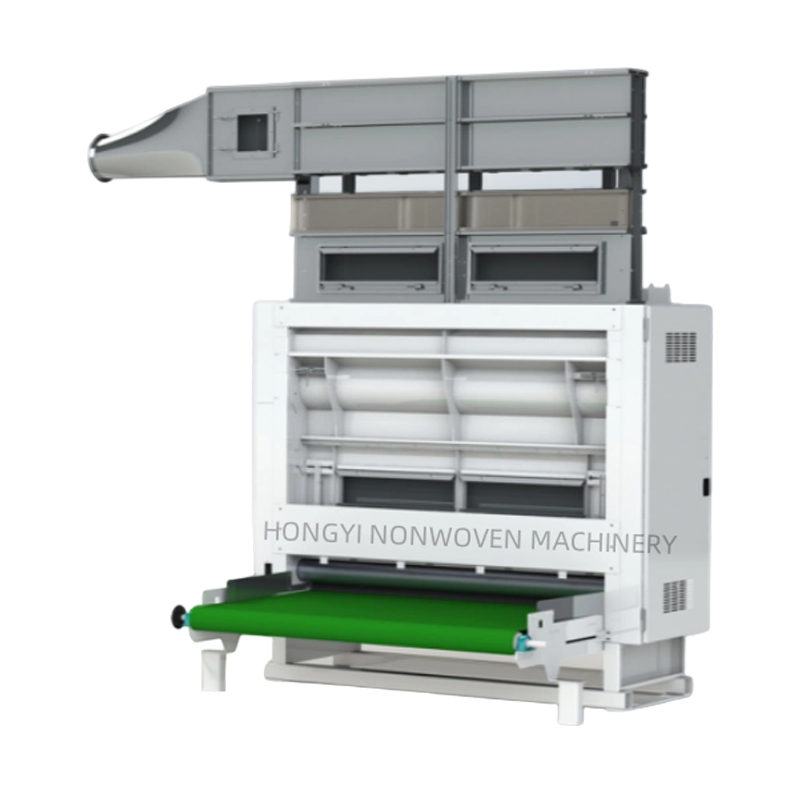
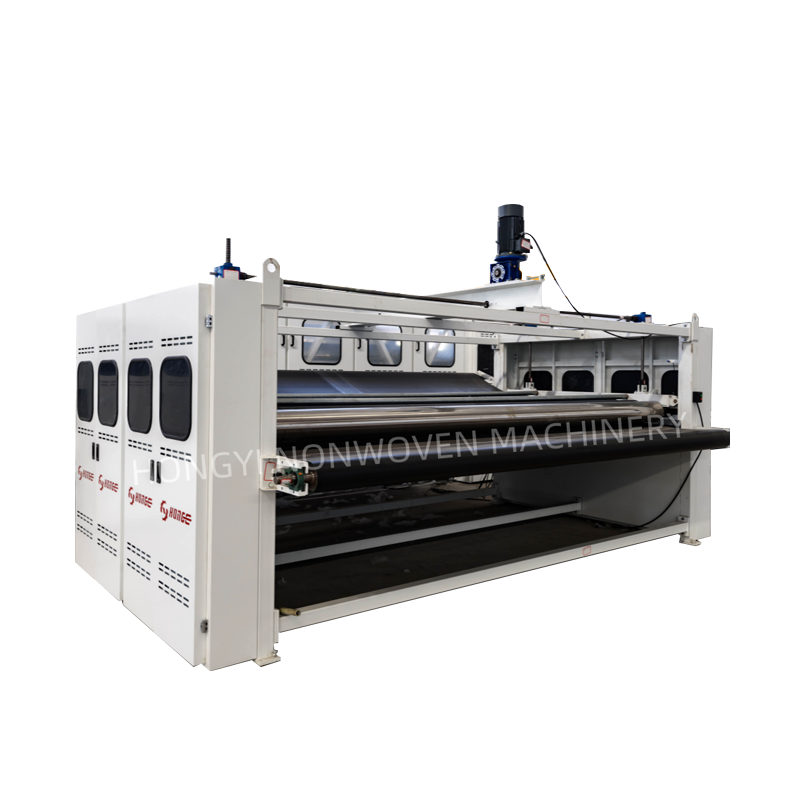
HYQY Pneumatic Feeder
1. Why Pneumatic Feeding Matters in Nonwoven Production
Nonwoven production begins with fiber opening, blending, and preparation. After fibers are loosened and mixed, they must be transported and distributed evenly to form a consistent batt. This stage may look simple, but it has a major influence on the entire line. If the feeding layer is unstable, the carding machine will receive uneven material. Even a high-performance card cannot fully correct serious upstream feeding errors. Therefore, a reliable pneumatic feeder is essential for maintaining stable productivity and uniform fabric quality.
The HYQY Pneumatic Feeder is designed to mix, store, regulate, and discharge opened fibers in a controlled way. It uses airflow guidance and pressure control to form an even layer, helping the next machine operate under stable feeding conditions. The machine can feed a carding machine, or in certain line layouts, it can support direct web formation before ovens or bonding systems. This flexibility makes it suitable for different nonwoven processes and production concepts.
Compared with conventional mechanical feeding methods, pneumatic feeding offers a smoother and more adjustable approach to fiber handling. Airflow helps guide the fibers into the chamber, while pressure regulation assists in creating a stable fiber column and consistent discharge. This method is especially useful for nonwoven producers that process diverse materials such as PET fiber, virgin fiber, recycled fiber, short fiber, long fiber, and blended fiber compositions.
In high-output nonwoven lines, small feeding deviations can become large quality problems. For example, if the cross-direction fiber distribution is uneven, the finished fabric may show weight variation from one side to the other. If the longitudinal feeding is unstable, roll-to-roll quality may fluctuate. The HYQY Pneumatic Feeder addresses these challenges through sealed chamber design, built-in fan control, adjustable feeding time, adjustable output thickness, and inverter-controlled feeding rollers.
2. Product Overview
The HYQY Pneumatic Feeder is part of the feeding and carding equipment category for nonwoven fabric production. It is mainly applied in nonwoven fabric lines that require stable fiber batt feeding before carding, web forming, thermal bonding, needle punching, or other downstream processes. The product is available with working widths such as 2200 mm and 2800 mm, and it can be customized according to production line requirements.
The machine receives fibers from opening and blending equipment. These fibers enter the feeder through airflow transportation and are stored in a controlled chamber. The pneumatic system then helps produce an even layer or batt. The output fiber web thickness can be adjusted according to the requirements of the downstream machine. The output feeding rollers are controlled by inverter, allowing stable and adjustable discharge.
A major advantage of this equipment is its ability to improve web cross regularity. In nonwoven manufacturing, cross-direction regularity means that the weight and fiber distribution remain even across the machine width. This is especially important for top-performance carding machines that require strict tolerances in terms of weight, productivity, and web uniformity. The pneumatic forming structure supports these needs by providing controlled and consistent feeding conditions.
The machine can also be equipped with a belt weighing system. This optional system provides better control over weight in both the cross direction and longitudinal direction. By monitoring and regulating the fiber feed, the belt weigher can help improve production consistency, reduce material waste, and maintain target fabric specifications over long production runs.
For manufacturers that produce high-volume nonwoven fabrics, the feeder’s production capacity of approximately 500 kg/h to 1000 kg/h supports efficient industrial operation. Installed power can be configured in the range of 55 kW to 75 kW, depending on machine configuration and production requirements. Voltage can be customized, including common industrial voltage options such as 220 V, 380 V, and 415 V.
3. Core Working Principle
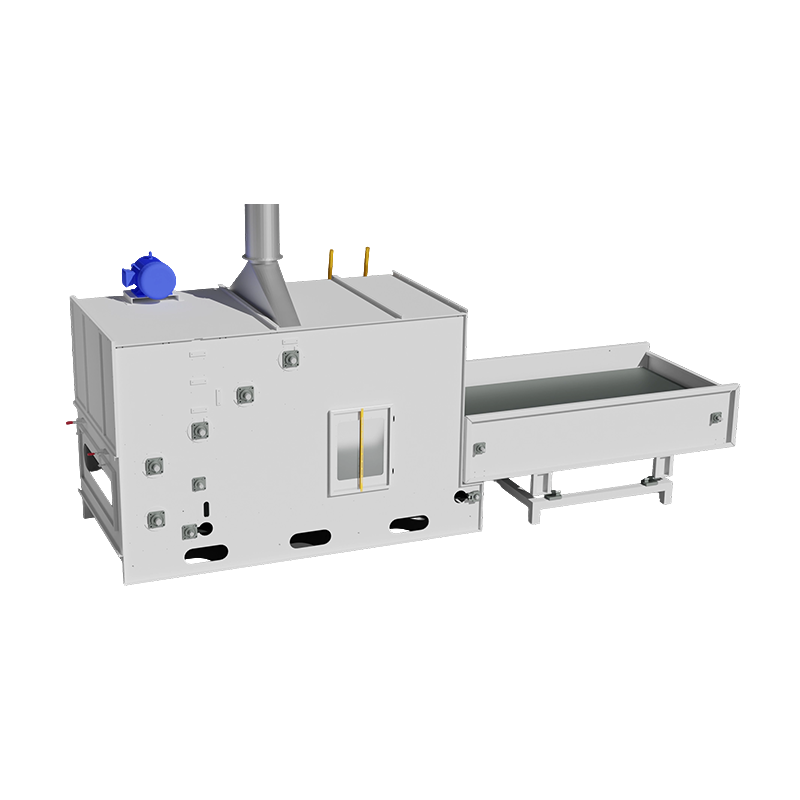
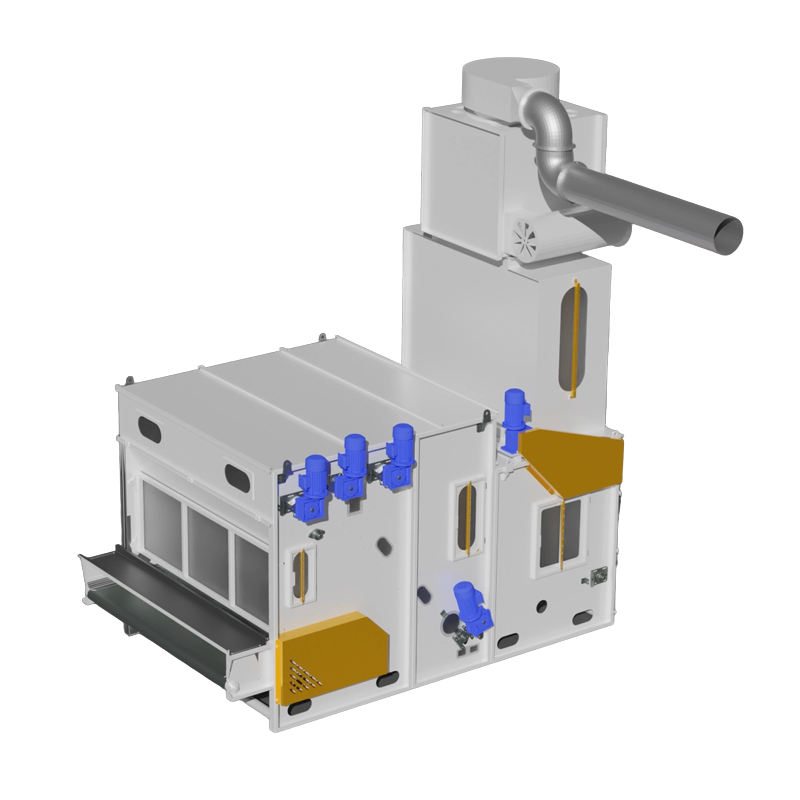
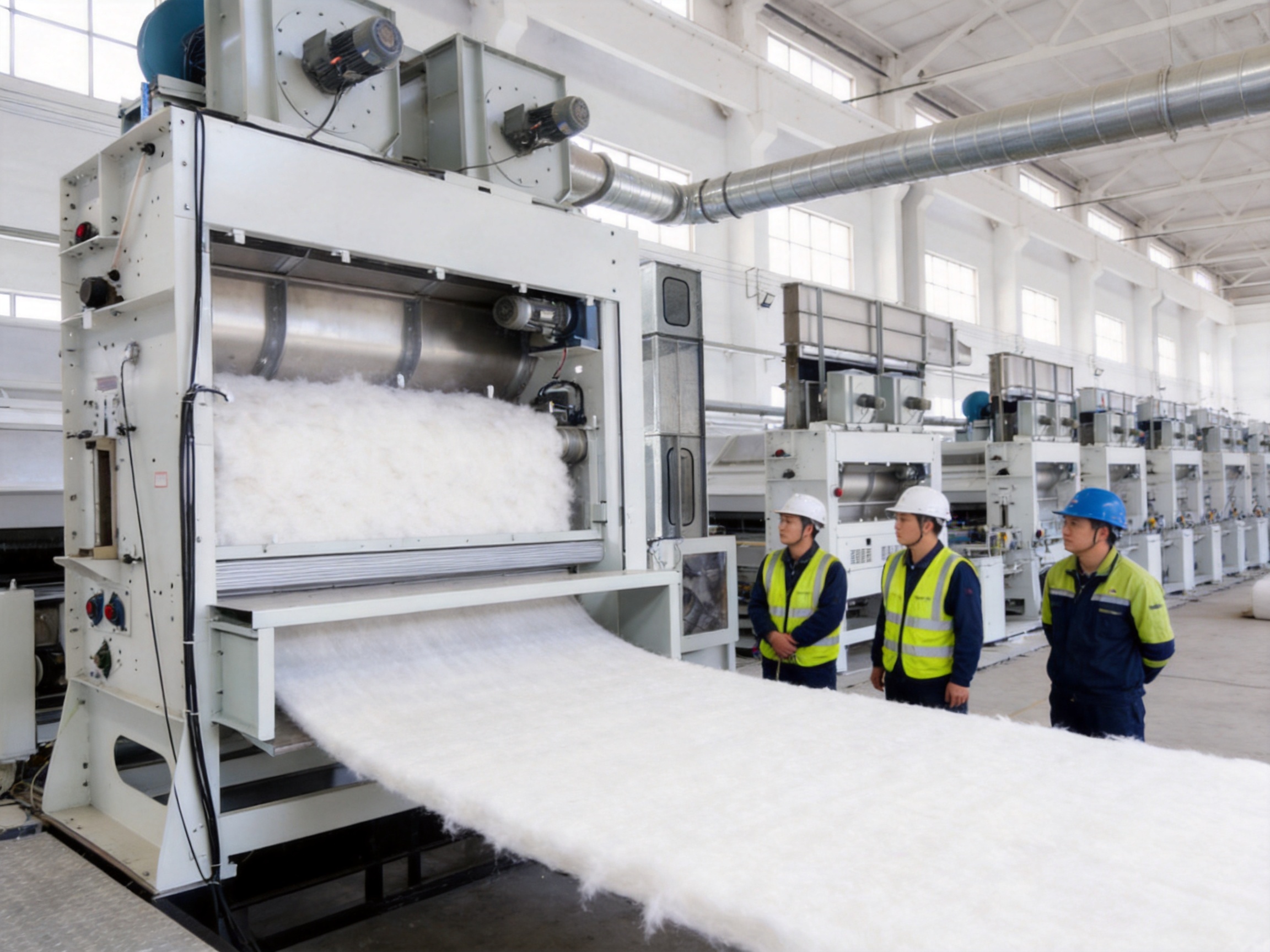
The working principle of the HYQY Pneumatic Feeder is based on controlled airflow, pressure regulation, chamber storage, and adjustable roller discharge. After the fibers are opened and blended, they are transported into the feeder. The airflow guides the fibers into the upper and lower chamber system. The chamber is sealed and pressurized, creating a controlled environment for fiber accumulation and distribution.
The built-in fan is controlled by a variable-speed inverter. This allows the airflow intensity to be adjusted according to fiber type, feeding quantity, production speed, and line requirements. Soft fibers, recycled fibers, long fibers, and short fibers may behave differently during air transportation. Variable-speed control gives operators the ability to optimize airflow for stable feeding and reduced fiber disturbance.
The pressure feeding system improves accuracy in the cross section. Instead of allowing fibers to fall randomly or accumulate unevenly, the pneumatic pressure assists in stabilizing the fiber column and discharge layer. This helps generate a homogeneous fiber web before the material enters the next process.
Feeding time is adjustable. This feature supports process flexibility when line speed, fiber density, raw material type, or product specification changes. Operators can adjust the feeding rhythm to match the requirements of the carding machine or bonding system. The ability to fine-tune feeding conditions is one of the main reasons pneumatic feeders are preferred in advanced nonwoven lines.
The output thickness of the fiber web is also adjustable. This is useful when producing different fabric weights or when switching between product types. By controlling output thickness and roller speed, the feeder helps maintain target material flow. The inverter-controlled output rollers further contribute to stable discharge, reducing sudden surges or shortages of fiber supply.
4. Key Product Advantages
4.1 High Accuracy in Cross-Direction Fiber Distribution
One of the strongest advantages of the HYQY Pneumatic Feeder is its ability to support high cross-direction regularity. In many nonwoven applications, fabric quality is judged not only by average weight but also by how evenly the weight is distributed across the full width. Uneven cross distribution may cause weak zones, visual defects, performance inconsistency, and customer complaints.
The machine’s sealed and pressurized pneumatic system helps regulate the fiber flow across the working width. Airflow guidance, chamber design, pressure adjustment, and controlled discharge work together to form a more even fiber layer. Compared with simpler feeding devices, this provides a stronger foundation for high-quality carding and web forming.
4.2 Stable Longitudinal Weight Control
Longitudinal stability refers to consistency along the production direction. If fiber feeding fluctuates over time, the fabric roll may contain alternating heavy and light sections. This is undesirable in applications such as filtration, automotive interiors, geotextiles, insulation materials, and technical textiles.
The optional belt weighing system offers an additional guarantee for longitudinal weight stability. By helping monitor the quantity of material being delivered, it supports more stable production. For factories that produce to strict customer specifications, this feature can improve process control and reduce off-spec production.
4.3 Compatibility with Multiple Fiber Types
The HYQY Pneumatic Feeder can manage long, short, virgin, and recycled fibers. This is important because modern nonwoven producers often need to process different raw materials for different products. PET fiber is a common raw material, but production may also include blended fibers, regenerated fibers, low-melt fibers, industrial waste fibers, and other materials depending on the final application.
Because the machine uses adjustable airflow and pressure control, it can be adapted to various fiber characteristics. This flexibility helps manufacturers respond to market demand without needing a completely different feeding system for each fiber type.
4.4 Adjustable Output Web Thickness
Different products require different feeding thicknesses. A lightweight cleaning cloth line may require a different fiber layer than a heavy felt or geotextile line. The adjustable output web thickness allows the machine to serve multiple production needs. This improves equipment utilization and supports product diversification.
4.5 Inverter-Controlled Feeding Rollers
The output feeding rollers are controlled by inverter. Inverter control provides smooth speed regulation, better synchronization with downstream equipment, and reduced mechanical shock during speed changes. This feature is valuable in automatic production lines where stable coordination between machines is essential.
4.6 Sealed Chamber and Pressurized System
The upper and bottom chambers are designed with a built-in fan and variable-speed inverter control. The system is sealed and pressurized, helping maintain stable fiber movement and reduce uncontrolled airflow disturbance. A well-controlled chamber system improves consistency and supports cleaner, more efficient operation.
4.7 Customizable Configuration
The machine can be customized according to working width, voltage, dimensions, color, and line integration requirements. Common working widths include 2200 mm and 2800 mm, while wider or special configurations may be discussed according to project needs. This customization capability is important for customers building new production lines or upgrading existing lines with specific layout limitations.
5. Technical Characteristics at a Glance
| Item | Typical Specification or Feature | Production Benefit |
|---|---|---|
| Machine Type | High-accuracy pneumatic feeder | Stable fiber delivery before carding or web forming |
| Main Application | Nonwoven fabric production | Suitable for complete nonwoven lines and unit machine integration |
| Working Width | 2200 mm / 2800 mm, customizable | Supports different production line widths |
| Production Capacity | Approximately 500 kg/h to 1000 kg/h | Meets industrial output requirements |
| Installed Power | Approximately 55 kW to 75 kW | Supports strong airflow and stable operation |
| Voltage | 220 V / 380 V / 415 V or customized | Adaptable to different factory electrical standards |
| Control Method | Variable-speed inverter and adjustable pneumatic control | Improves process flexibility and feeding stability |
| Raw Material | PET fiber, virgin fiber, recycled fiber, long and short fibers | Supports diversified nonwoven production |
| Optional System | Belt weighing system | Improves longitudinal and cross-direction weight control |
| Certification | CE and ISO9001 | Supports quality assurance and international supply requirements |
| Warranty | 12 months | Provides after-sales confidence |
6. Advantages Over Conventional Feeding Equipment
Compared with ordinary fiber hoppers or simple mechanical feeders, the HYQY Pneumatic Feeder offers better control of fiber distribution, pressure, feeding time, and output thickness. Conventional feeders may rely heavily on gravity and mechanical movement. While such equipment can be suitable for basic production, it may struggle to meet the demands of high-speed, high-uniformity nonwoven lines.
The pneumatic system gives the HYQY model a competitive advantage because it uses air pressure to assist in distributing fibers evenly. This is especially useful when feeding wide carding machines, where cross-direction uniformity becomes more difficult to maintain. The more consistent the feed layer, the easier it is for the carding machine to produce a uniform web.
Another competitive strength is the use of inverter control. In older systems, motor speeds may be fixed or adjusted with less precision. Inverter control allows smoother speed changes and better line synchronization. This reduces sudden material surges and helps operators fine-tune the production process.
The sealed and pressurized chamber design is also an advantage. Open or poorly sealed systems may be more affected by external airflow, dust escape, and unstable fiber movement. A sealed chamber improves control and supports a more predictable feeding environment. This contributes to cleaner operation and better process repeatability.
In addition, the optional belt weighing system provides enhanced weight control. Many competitors may offer basic feeding functions but lack integrated weighing support. For manufacturers that need tight product tolerances, weighing feedback is a significant advantage. It helps stabilize both cross and longitudinal weight variation, making the line more suitable for technical fabrics and export-quality products.
The machine’s ability to handle both virgin and recycled fibers is another practical advantage. Recycled fibers can be less consistent in length, density, and opening condition. A robust pneumatic feeding system helps manage these variations more effectively. This is valuable for producers focusing on cost-efficient or environmentally conscious nonwoven products.
7. Manufacturing Strength Behind the Machine
Changshu Hongyi Nonwoven Machinery Co., Ltd. is located in Changshu City, Suzhou, Jiangsu Province, China, an area with strong industrial manufacturing resources and supply chain advantages. With more than 20 years of experience in the nonwoven machinery field, the company has developed deep knowledge of fiber preparation, web forming, needle punching, thermal bonding, winding, cutting, and complete line engineering.
The company manufactures and supplies a wide range of nonwoven machinery, including opening and blending equipment, feeding and carding equipment, web forming and needle punching equipment, thermal bonded and heat setting equipment, airlay systems, winding and cutting machines, assistant equipment, and complete nonwoven fabric production lines. This broad product range gives the company an important advantage: it understands how each unit machine affects the performance of the entire production line.
For a pneumatic feeder, this system-level understanding is essential. A feeder cannot be designed in isolation. It must match the opener, blender, carding machine, web former, oven, needle loom, and winding system. By designing equipment from a complete-line perspective, the manufacturer can provide practical machine configurations that fit real production conditions.
The company emphasizes precision engineering and advanced manufacturing. Key components are selected and configured to support stable performance, while machine structures are built for durability and ease of maintenance. The company also offers customization based on customer requirements, including working width, production capacity, voltage, dimensions, control system, and line layout.
Quality control is supported by CE and ISO9001 certification. Video outgoing inspection can be provided, giving customers additional confidence before shipment. Machines are typically packed in nude packing or PE film depending on project needs, and international trade terms such as EXW, FOB, CFR, and CIF are available.
8. Advanced Manufacturing Processes and Quality Control
8.1 Engineering Design Based on Production Requirements
The manufacturing process begins with understanding the customer’s production goal. Different nonwoven products require different feeding conditions. A geotextile line may demand high output and strong fiber distribution. An automotive interior material line may require strict weight regularity. A thermal bonded wadding line may need stable feeding for soft bulky fibers. The engineering design must reflect these requirements.
Before production, the equipment parameters are selected according to working width, capacity, raw material, downstream machine type, factory layout, and electrical standard. This ensures that the feeder is not only mechanically suitable but also process-compatible with the customer’s line.
8.2 Structural Fabrication and Assembly
The feeder’s chamber and frame must be stable enough to support long-term industrial operation. Precision fabrication helps maintain alignment, sealing quality, and mechanical reliability. A strong frame reduces vibration and supports steady operation. Proper chamber fabrication improves pressure control and airflow stability.
During assembly, attention is given to fan installation, roller alignment, sealing surfaces, transmission components, sensors, and control wiring. Accurate assembly is necessary because even small mechanical deviations can affect fiber discharge and web uniformity.
8.3 Pneumatic System Configuration
The pneumatic system is the heart of the feeder. It must provide controlled airflow without excessive turbulence. The built-in fan, air passages, pressure regulation, and chamber design all work together. Variable-speed inverter control allows airflow adjustment according to fiber behavior and production speed.
A highly accurate pneumatic control system with adjustable pressure allows operators to fine-tune the process. This is especially useful when switching between fiber types or fabric specifications. Good pneumatic control improves both stability and flexibility.
8.4 Electrical and Automation Control
Modern nonwoven lines require coordinated control. The HYQY Pneumatic Feeder uses inverter-controlled output feeding rollers, allowing speed adjustment and line synchronization. The system can be integrated into automatic production lines and adjusted to match the carding machine or other downstream units.
Electrical configuration can be customized according to customer voltage requirements. Common options include 220 V, 380 V, and 415 V. Custom electrical standards help simplify installation and operation in different countries.
8.5 Inspection Before Delivery
Before delivery, the machine can undergo outgoing inspection, including video inspection when required. Inspection may include checking the machine structure, electrical cabinet, control response, roller movement, fan operation, sealing condition, and overall appearance. This process helps confirm that the equipment meets the agreed specifications before shipment.
9. Application Areas
The HYQY Pneumatic Feeder can be used in many nonwoven production applications. Its main function is to create an even fiber batt for the next process, but its value extends across many product categories. Any line that depends on stable fiber feeding can benefit from improved pneumatic control.
In needle-punched geotextile production, uniform feeding helps create consistent fabric weight and tensile performance. Geotextiles are often used in civil engineering, road construction, drainage, filtration, and reinforcement. Weight deviation can affect product performance and compliance, so stable feeding is critical.
In nonwoven carpet production, an even fiber layer helps improve surface consistency, density, and appearance. Feeding stability also supports more predictable needle punching and finishing results.
In automotive interior material production, uniform web formation is important for acoustic performance, thickness control, weight consistency, and appearance. Automotive customers often require stable quality and repeatability, making accurate feeding especially important.
In airlaid waste felt or recycled fiber felt lines, raw material may vary significantly. The pneumatic feeder’s ability to handle recycled fibers supports stable processing even when fiber properties are less uniform than virgin fiber.
In thermal bonded wadding and heat setting lines, stable feeding helps maintain even loft, thickness, and bonding consistency. If the fiber layer entering the oven is uneven, thermal bonding may produce inconsistent density or weak areas.
In cleaning cloth and industrial wiping material production, uniform fiber distribution contributes to absorption performance, strength, and appearance. For products sold in rolls, longitudinal consistency is also essential.
In wool felt, jute felt, and blended natural fiber applications, adjustable feeding can help manage fibers with different bulk and flow characteristics. The machine’s process flexibility makes it useful for manufacturers that handle both synthetic and natural fiber blends.
10. Integration with Complete Nonwoven Production Lines
A pneumatic feeder is most effective when properly integrated into a complete production line. In a typical nonwoven line, fibers pass through opening and blending machines before entering the feeder. The feeder then delivers a controlled batt to the carding machine. After carding, the web may be cross-lapped, needle punched, thermally bonded, heat set, wound, and cut depending on the final product.
The HYQY Pneumatic Feeder can be used as a card feeding system. When matched with a high-performance carding machine, it provides the steady fiber supply needed for accurate carding. A carding machine requires consistent input to produce a consistent output web. If the feeder performs well, the carding machine can operate closer to its optimal efficiency.
In some production layouts, the feeder may support direct fiber web formation to feed ovens or other bonding systems. This makes the machine useful in thermal bonding or wadding applications where the process design differs from standard carding-based lines.
Because the manufacturer also supplies complete nonwoven production lines, customers can receive advice on equipment matching and process layout. This reduces the risk of buying a unit machine that does not properly fit the line. It also helps optimize production speed, machine width, power configuration, and control coordination.
11. Operational Benefits for Factory Users
For factory operators, the benefits of a high-quality pneumatic feeder are practical and measurable. First, stable feeding helps reduce production defects. When the fiber layer is even, downstream processes are more stable. This can reduce waste, rework, and customer complaints.
Second, the machine supports higher productivity. If feeding is unstable, operators may need to slow the line to prevent quality problems. With a more stable feeder, the production line can run more confidently at target speeds. The capacity range of approximately 500 kg/h to 1000 kg/h supports industrial-scale production.
Third, adjustable controls make product changeovers easier. When switching from one fabric weight to another, operators can adjust output thickness, feeding roller speed, airflow, and pressure. This flexibility helps factories produce different products with the same equipment.
Fourth, the machine supports better raw material utilization. Uneven feeding can create off-spec fabric that wastes fiber. Since fiber cost is a major part of nonwoven production cost, improved feeding accuracy can contribute to better material economy.
Fifth, the sealed chamber system may help improve the working environment by reducing uncontrolled fiber movement. Although dust collection and factory ventilation remain important, a controlled feeding system supports cleaner operation compared with more open feeding methods.
12. Customization and Project Support
Every nonwoven factory has different requirements. Some customers need a standard 2200 mm working width, while others need 2800 mm or customized dimensions. Some process PET fiber, while others process recycled fiber, natural fiber blends, or specialty fibers. Some factories require 380 V electrical configuration, while others need 415 V or other voltage standards. The HYQY Pneumatic Feeder can be customized to meet these project requirements.
Customization may include working width, voltage, machine dimensions, color, production capacity, control configuration, feeding interface, and optional weighing system. The manufacturer can also provide complete production line solutions, allowing customers to purchase a coordinated set of equipment rather than separate machines from unrelated suppliers.
Lead time is typically around two to three months, with trade terms available such as EXW, FOB, CFR, and CIF. Payment terms commonly include a deposit before production and balance payment before loading. Warranty is generally 12 months, supporting customer confidence after installation.
The company’s export experience is also important. Its machines have been supplied to more than 20 countries, including Mexico, Argentina, Brazil, Turkey, Algeria, Egypt, Bangladesh, Vietnam, Thailand, and other Asian countries. This international background helps the company understand packaging, shipment, voltage standards, documentation, and after-sales communication for overseas customers.
13. Maintenance and Reliability Considerations
Reliable operation depends not only on machine design but also on proper maintenance. The HYQY Pneumatic Feeder is designed with easy maintenance in mind. Operators should regularly inspect the feeding rollers, fan, chamber sealing, sensors, belts, bearings, electrical connections, and pneumatic control components. Keeping the machine clean and properly adjusted helps maintain stable feeding performance.
Because fibers can accumulate in machine areas over time, routine cleaning is important. Operators should follow safety procedures before cleaning or maintenance, including stopping the machine and disconnecting power where necessary. The chamber, air passages, and feeding zones should be checked according to the operating schedule.
Inverter-controlled components should be monitored for correct operation. Stable roller speed and fan speed are essential for consistent feeding. If sudden feeding fluctuation occurs, operators should check raw material condition, airflow setting, pressure setting, roller condition, and downstream synchronization.
Preventive maintenance helps extend machine service life and reduce unexpected downtime. For high-volume production lines, even a short shutdown can cause significant production loss. A well-maintained pneumatic feeder contributes to overall line reliability.
14. How the Feeder Improves Final Fabric Quality
The final nonwoven fabric is the result of many process steps, but feeding is one of the earliest and most influential. A stable fiber batt supports uniform carding. Uniform carding supports even web formation. Even web formation supports consistent needle punching, thermal bonding, heat setting, winding, and cutting. Therefore, investment in a high-accuracy feeder can improve the entire production chain.
For needle-punched products, uniform feeding helps maintain consistent punching density and mechanical properties. For thermal bonded products, it supports even heat penetration and bonding. For automotive materials, it helps control thickness and acoustic behavior. For filtration materials, it supports stable pore structure and performance. For geotextiles, it contributes to weight consistency and strength distribution.
The HYQY Pneumatic Feeder improves these outcomes by reducing feeding variation before it becomes a larger downstream issue. Instead of relying on downstream machines to compensate for poor feeding, it creates a more stable starting point. This is a more efficient and reliable approach to quality control.
15. Buyer Considerations Before Ordering
Before ordering a pneumatic feeder, buyers should define several important requirements. First, they should confirm the target working width. The HYQY Pneumatic Feeder is commonly available in 2200 mm and 2800 mm configurations, with customization possible. The working width should match the carding machine or downstream process.
Second, buyers should confirm production capacity. The machine can support approximately 500 kg/h to 1000 kg/h, but the final capacity depends on fiber type, line speed, product weight, and configuration. Accurate capacity planning helps avoid bottlenecks.
Third, buyers should identify raw materials. PET fiber, virgin fiber, recycled fiber, long fiber, and short fiber may require different airflow and pressure settings. Sharing raw material details helps the manufacturer recommend the right configuration.
Fourth, buyers should decide whether a belt weighing system is required. For products with strict weight tolerance, the belt weigher can be a valuable option. It improves control and supports consistent product quality.
Fifth, buyers should confirm factory voltage and electrical standards. Custom voltage options are available, and correct electrical configuration makes installation easier.
Finally, buyers should consider whether they need only a feeder or a complete line solution. Since the manufacturer supplies complete nonwoven machinery systems, customers can request integrated line planning for better coordination.
16. Q&A Section
Q1: What is the main function of the HYQY Pneumatic Feeder?
The main function is to receive opened and blended fibers, store them in a controlled chamber, and deliver an even fiber batt or web layer to the next process, such as a carding machine, web forming unit, oven, or bonding system.
Q2: Why is pneumatic feeding better than simple mechanical feeding?
Pneumatic feeding uses airflow and pressure control to guide and distribute fibers more evenly. This helps improve cross-direction regularity, reduce feeding fluctuation, and create a more homogeneous fiber layer before carding or bonding.
Q3: What fiber types can the machine process?
The machine can manage long fibers, short fibers, virgin fibers, recycled fibers, PET fibers, and various blended fibers. Settings can be adjusted according to fiber characteristics and production requirements.
Q4: Can the output web thickness be adjusted?
Yes. The output fiber web thickness can be adjusted as needed. This allows the machine to support different product weights and production specifications.
Q5: What working widths are available?
Common working widths include 2200 mm and 2800 mm. Other customized configurations may be available according to project requirements.
Q6: What is the typical production capacity?
The typical production capacity is approximately 500 kg/h to 1000 kg/h, depending on raw material, machine configuration, line speed, and product requirements.
Q7: Is a belt weighing system available?
Yes. The machine can be equipped with a belt weighing system to improve weight control in the cross direction and longitudinal direction. This is especially useful for products requiring strict weight tolerance.
Q8: What certifications are available?
The product is associated with CE and ISO9001 certification, supporting quality assurance and international supply requirements.
Q9: Can the voltage be customized?
Yes. Voltage can be customized according to customer requirements, including common industrial options such as 220 V, 380 V, and 415 V.
Q10: What after-sales support is provided?
The machine is generally supplied with a 12-month warranty. Video outgoing inspection can be provided, and customers can communicate with the supplier for installation, operation, and maintenance support according to the project agreement.
17. Conclusion
The HYQY Pneumatic Feeder is a key machine for nonwoven manufacturers that require stable fiber feeding, accurate web formation, and reliable production performance. By using a sealed and pressurized chamber, built-in fan with inverter control, adjustable airflow guidance, precise pneumatic pressure regulation, adjustable output thickness, and inverter-controlled feeding rollers, it helps create a homogeneous fiber layer before carding, web forming, or bonding.
Its advantages over conventional feeding equipment include better cross-direction regularity, improved longitudinal stability, compatibility with multiple fiber types, optional belt weighing control, flexible customization, and stronger integration with complete nonwoven production lines. For factories producing technical fabrics, recycled fiber felts, automotive materials, thermal bonded waddings, geotextiles, carpets, and cleaning cloths, these advantages can translate into higher quality, lower waste, and more stable operation.
Behind the machine is the manufacturing strength of Changshu Hongyi Nonwoven Machinery Co., Ltd., a company with more than 20 years of nonwoven machinery experience and a broad portfolio covering unit machines and complete production lines. Its focus on precision engineering, advanced technology, automatic control, customization, quality assurance, and global export service makes the HYQY Pneumatic Feeder a practical choice for modern nonwoven producers seeking dependable feeding performance.
References
1. Russell, S. J. Handbook of Nonwovens. Woodhead Publishing.
2. Albrecht, W., Fuchs, H., and Kittelmann, W. Nonwoven Fabrics: Raw Materials, Manufacture, Applications, Characteristics, Testing Processes. Wiley-VCH.
3. EDANA. Nonwovens Standard Procedures and Industry Guidance Documents.
4. INDA. Nonwoven Technology Fundamentals and Process Training Materials.
5. ISO 9001 Quality Management Systems: Requirements and Practical Implementation Guidance.
6. Technical product materials and machinery specifications supplied for the HYQY Pneumatic Feeder.