

Content
- 1 1. The Role of Carding in Nonwoven Fabric Production
- 2 2. Product Overview
- 3 3. Main Technical Configuration
- 4 4. Feeding System for Stable Fiber Supply
- 5 5. Carding Action and Fiber Web Formation
- 6 6. Single-Cylinder and Double-Cylinder Options
- 7 7. Variable-Speed Drive and Line Synchronization
- 8 8. Protection of Carding Wire and Machine Components
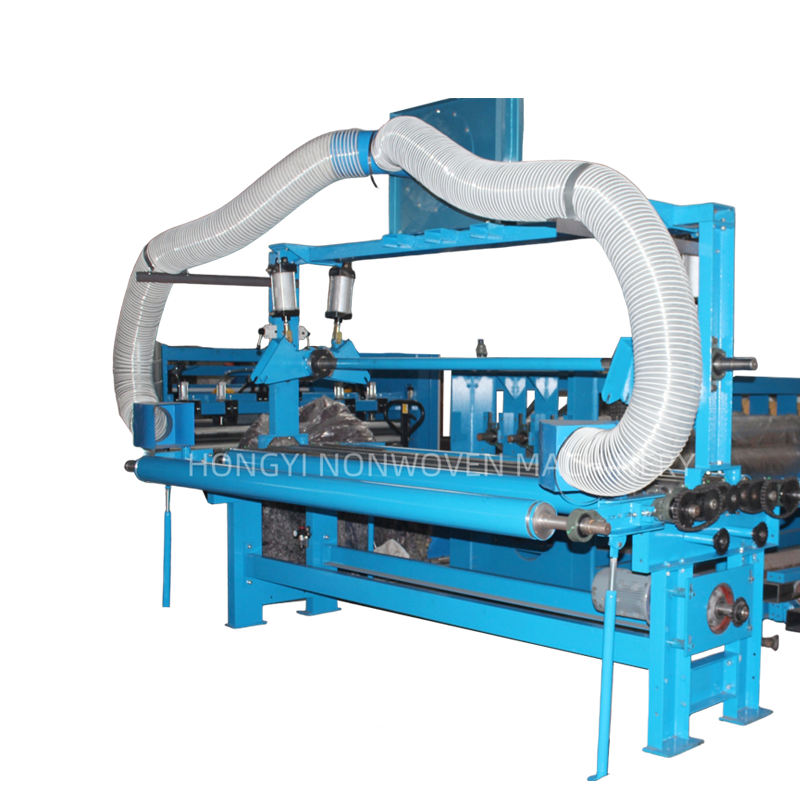
- 9 9. Dust Removal and Edge-Suction System
- 10 10. Safety Design and Operator Protection
- 11 11. Suitable Raw Materials
- 12 12. Applications in Nonwoven Production
- 13 13. Advantages Compared with Basic Carding Machines
- 14 14. Manufacturing Strengths of Changshu Hongyi Nonwoven Machinery
- 15 15. Manufacturing and Quality-Control Considerations
- 16 16. Installation, Commissioning, and Training
- 17 17. Maintenance Recommendations
- 18 18. Selecting the Correct Configuration
- 19 19. Delivery, Packaging, and Service
- 20 20. Why Web Uniformity Matters
- 21 21. Energy and Production Efficiency
- 22 22. Practical Benefits for International Buyers
- 23 23. Frequently Asked Questions
- 23.1 Q1: What is the main purpose of the HYSL Carding Machine?
- 23.2 Q2: Which fibers can be processed?
- 23.3 Q3: What working widths are available?
- 23.4 Q4: Is the machine available with a randomizer?
- 23.5 Q5: What is the difference between a single-cylinder and double-cylinder machine?
- 23.6 Q6: Does the machine include metal protection?
- 23.7 Q7: What is the function of the dust-removal system?
- 23.8 Q8: Can the speed be adjusted for different fibers?
- 23.9 Q9: What downstream machines can be connected to the carding machine?
- 23.10 Q10: What is the maximum output?
- 23.11 Q11: How long is the delivery time?
- 23.12 Q12: Is the machine customized?
- 23.13 Q13: What certifications are associated with the machine?
- 23.14 Q14: What warranty is provided?
- 23.15 Q15: How should a buyer choose the correct machine?
- 24 24. Conclusion
- 25 References
- 26 Product: HYSL Carding Machine
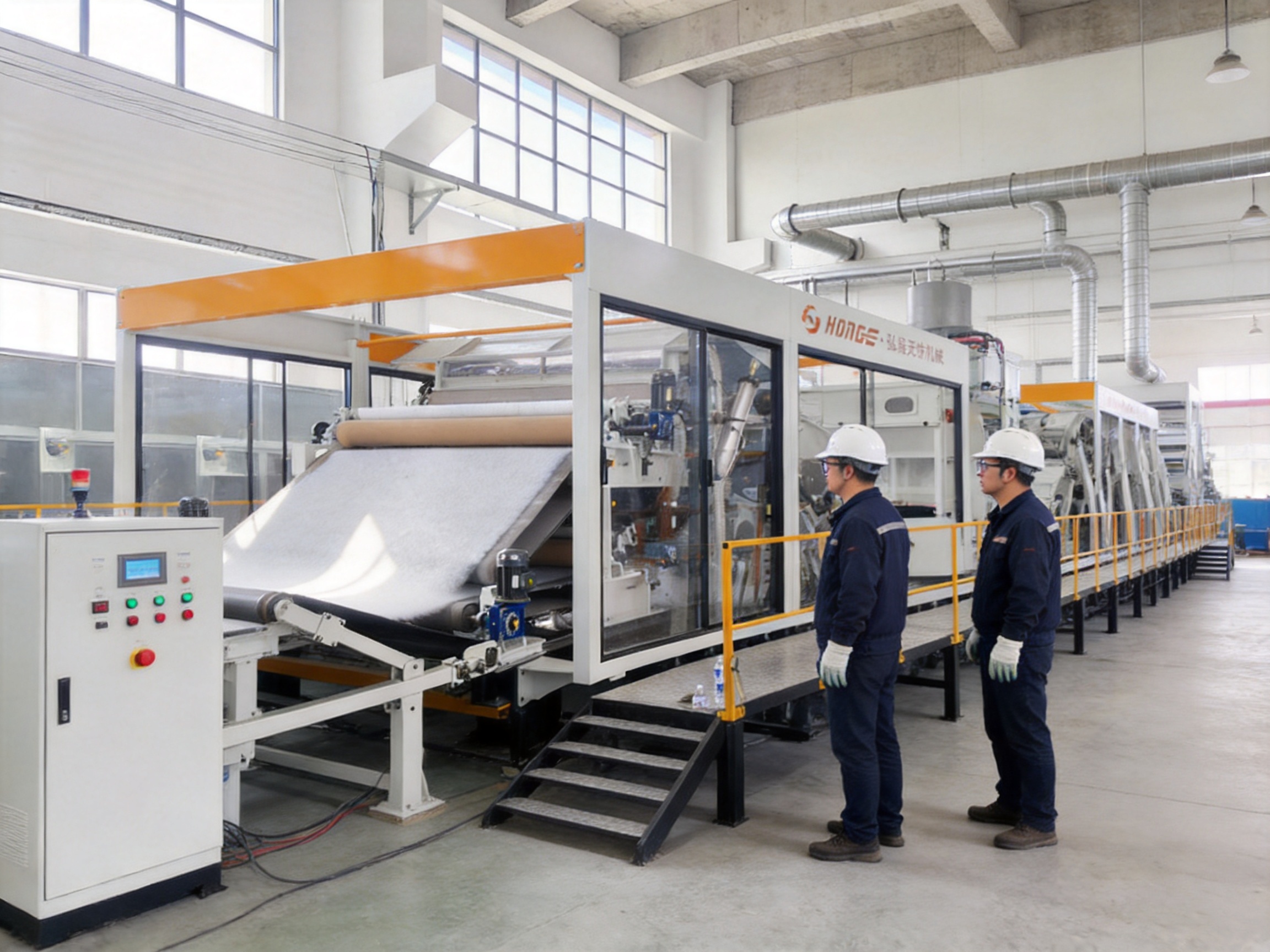
In modern nonwoven manufacturing, carding is one of the most important processes between fiber preparation and web formation. The performance of the carding machine directly influences fiber opening, fiber orientation, web uniformity, production stability, fabric strength, and the efficiency of downstream equipment. A well-designed carding machine must do more than separate fibers. It must produce a controlled, consistent, and suitable web for needle punching, thermal bonding, quilting, airlaying, or other nonwoven processes.
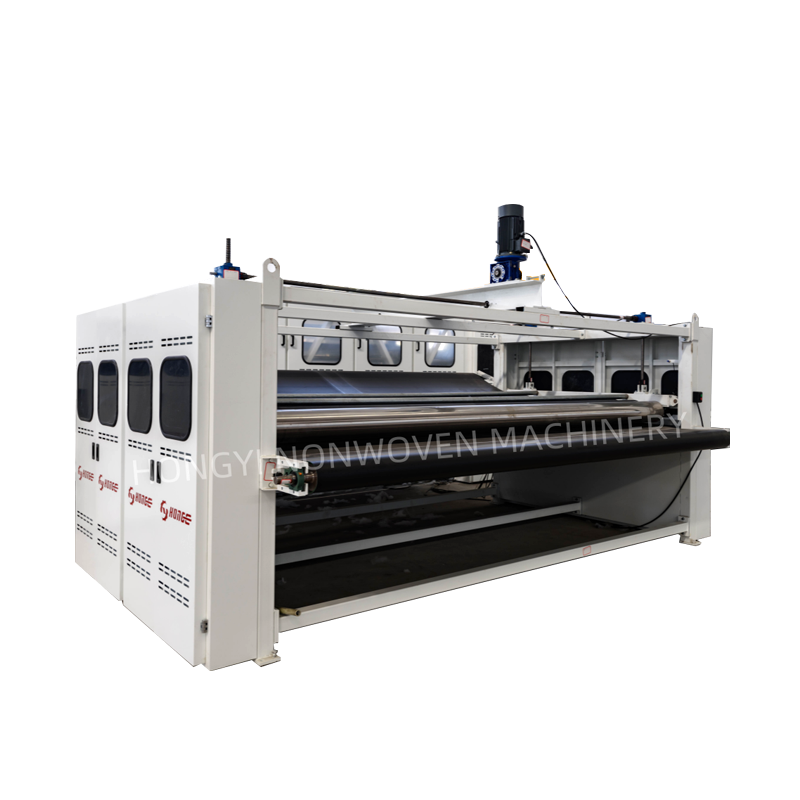
The HYSL Carding Machine is designed for the complete carding of fiber batts after opening and blending. It can form parallel or random fiber webs through a doffer and, when required, a randomizer system. The machine is available in single-cylinder and double-cylinder configurations, with different doffer arrangements and working widths to meet the requirements of various nonwoven production lines.
Manufactured by Changshu Hongyi Nonwoven Machinery Co., Ltd., the machine combines a robust mechanical structure, variable-speed drive control, automatic metal protection, dust removal, high-quality carding wire, electronic safety systems, and flexible configuration options. It is suitable for a wide range of fiber materials and can be integrated into needle-punched geotextile lines, thermal-bonded wadding lines, carpet production lines, automotive interior material lines, cleaning cloth lines, wool felt lines, and other nonwoven applications.
With working widths available from approximately 1.55 meters to 2.8 meters, the HYSL series can be selected for small, medium, and high-capacity production requirements. The equipment is also available with customized control systems, working widths, carding arrangements, and downstream connection configurations.
1. The Role of Carding in Nonwoven Fabric Production
Carding is the process of opening, separating, aligning, and distributing fibers into a continuous web. Fibers arriving from an opening and blending machine are usually contained in a loose batt. Although opening equipment separates compressed bales and blending systems help mix different fibers, the material may still contain fiber clusters, uneven sections, and irregular fiber orientation.
The carding machine performs several essential operations:
First, it separates fiber tufts into smaller individual fibers. Second, it removes or redistributes fiber clusters. Third, it aligns a proportion of the fibers in the machine direction. Fourth, it regulates the mass distribution of the web across the working width. Finally, it delivers the web to the next process at a controlled speed and consistency.
The quality of carding affects the entire production line. If the web is uneven, downstream needle punching may produce fabric with variable thickness and strength. In a thermal bonding line, an irregular batt can lead to inconsistent bonding, density differences, and poor appearance. In a quilting or filling application, insufficient carding can create lumps, while excessive carding may damage fibers or reduce production efficiency.
For this reason, a carding machine must provide a balance between opening intensity, fiber protection, production speed, web uniformity, and operational stability. The HYSL Carding Machine is engineered around this balance.
2. Product Overview
The HYSL Carding Machine is a fully automatic nonwoven carding system for processing fibers after opening and blending. It is designed to generate either a parallel web or a random web, depending on the selected configuration. The basic machine can be supplied with a single-cylinder or double-cylinder structure, while single-doffer and double-doffer arrangements are available according to the production target and web-forming requirements.
The machine can be used as an independent carding unit or installed as part of a complete nonwoven production line. It may be connected with opening and blending equipment at the inlet and with a crosslapper, needle punching machine, thermal bonding oven, winding machine, or cutting system at the outlet.
Key features include:
• Automatic feeding through a horizontal PVC lattice.
• Pressing rollers to help maintain an even fiber supply.
• Four feeding rollers for controlled material transfer.
• Anti-metal protection and automatic stop warning at the feeding section.
• Five sets of working rollers and stripping rollers on the main cylinder.
• Variable-speed drives for the main cylinder, doffers, working rollers, and feeding rollers.
• Optional randomizer rollers for random fiber web formation.
• Edge-suction equipment for removing dust and loose particles.
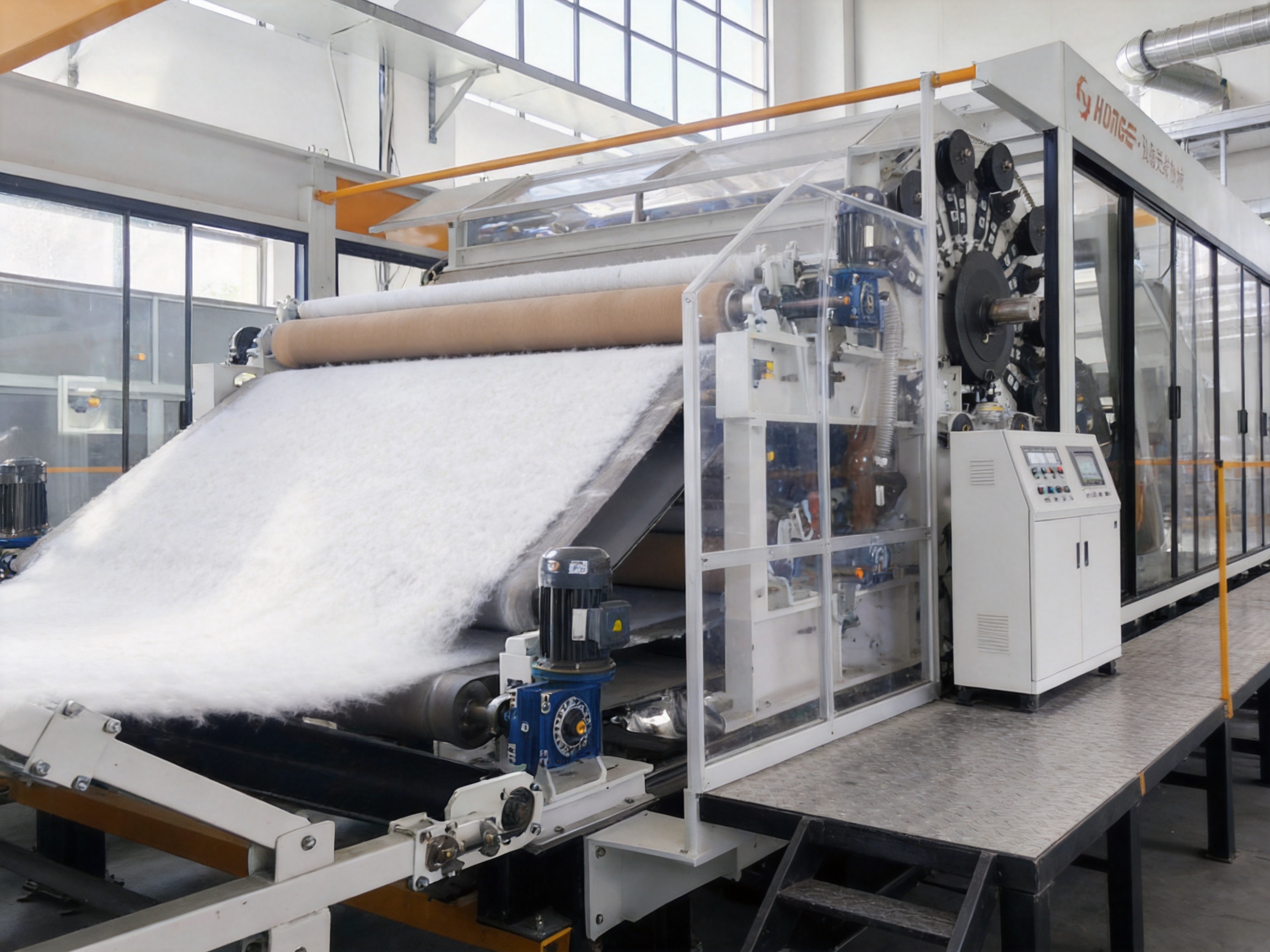
• Transparent organic-glass safety covers for visual inspection.
• Maintenance platforms on both sides of the machine.
• High-quality carding wire supplied by GERON according to the specified configuration.
• Electronic safety functions designed to meet applicable international requirements.
• Servo-motor or inverter-based control systems depending on customer requirements.
These features allow the machine to be configured for different fibers, production speeds, web structures, and final products.
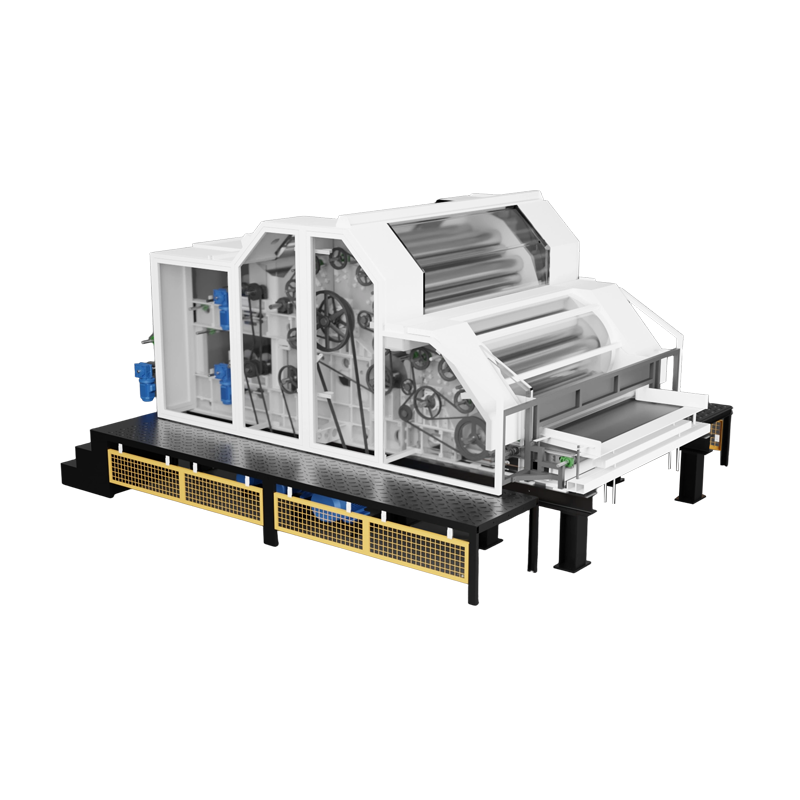
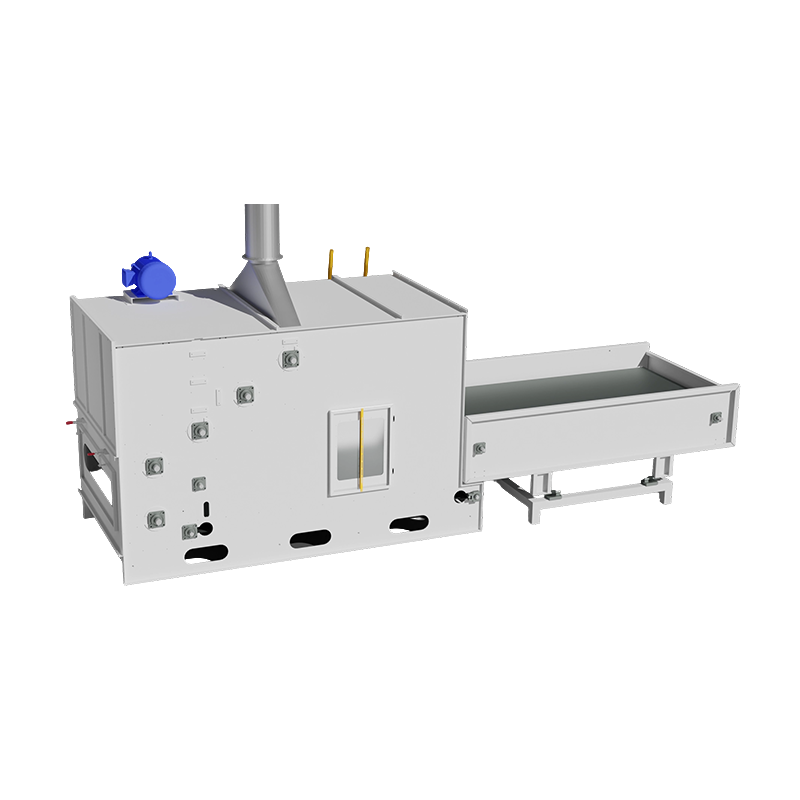
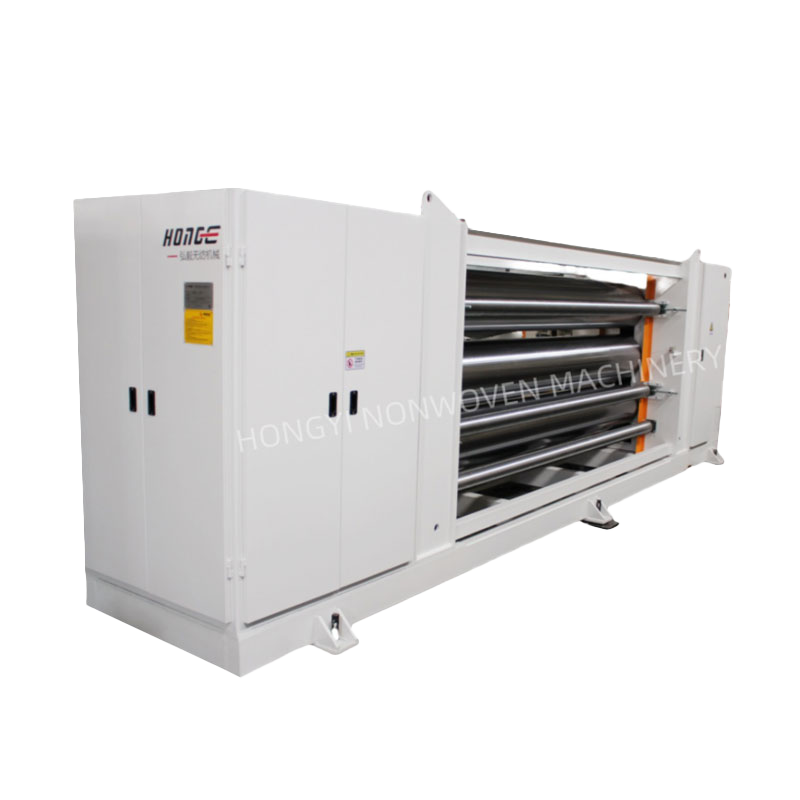
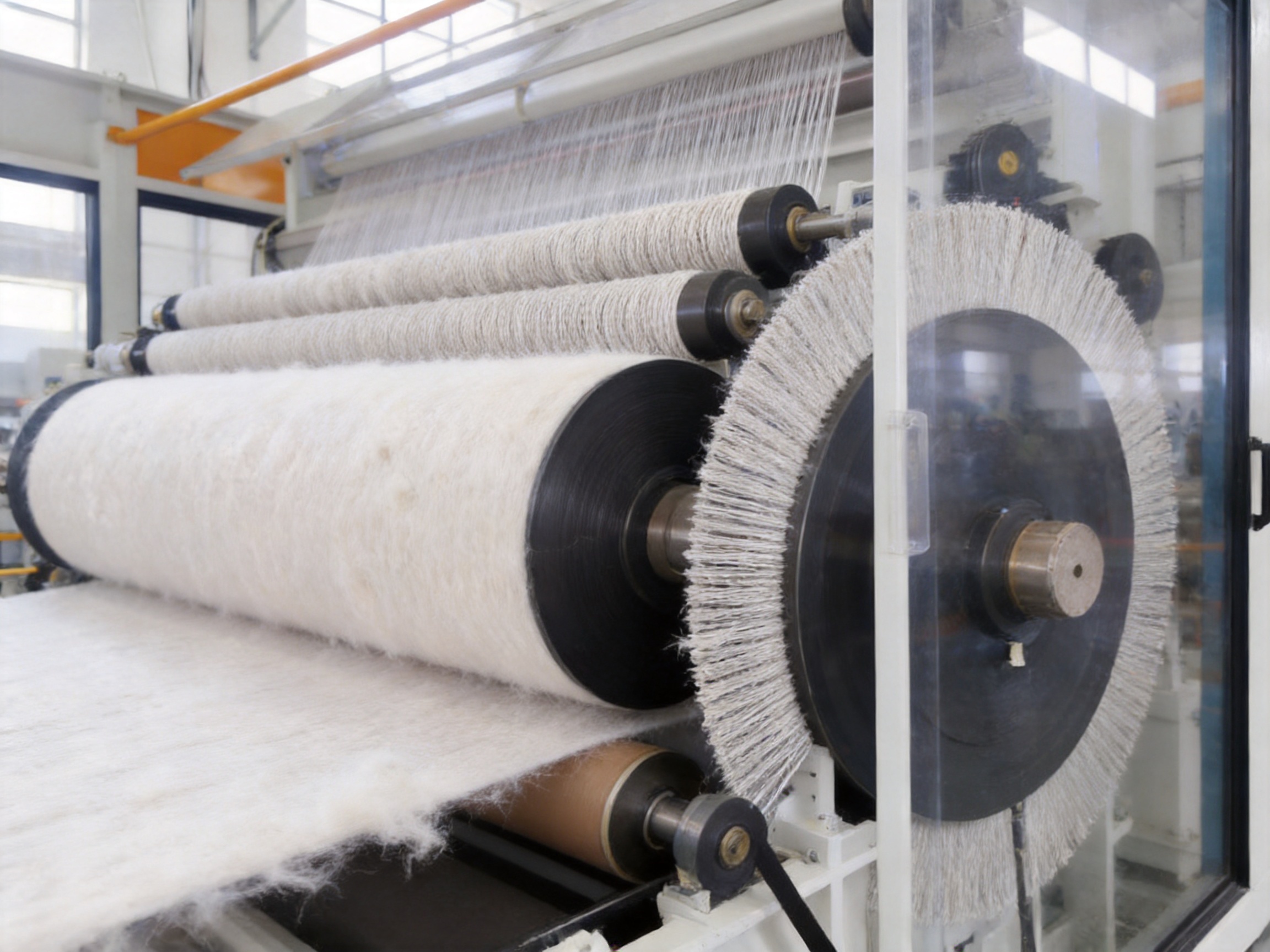
HYSL Carding Machine
3. Main Technical Configuration
The standard HYSL configuration described for the HYSL-230 model uses an effective working width of approximately 2,300 millimeters. Its main cylinder has a diameter of approximately 1,230 millimeters, and the carding unit includes working rollers with a diameter of approximately 165 millimeters and stripping rollers with a diameter of approximately 78 millimeters.
The machine uses five carding groups. These groups provide repeated fiber transfer and carding action, helping to separate fiber tufts and distribute the material evenly. The exact roller arrangement, cylinder combination, and doffer configuration can vary according to the selected machine type.
| Item | Typical Specification |
|---|---|
| Machine model | HYSL series, including HYSL-230 configuration |
| Machine type | Single-cylinder and double-doffer or customized configuration |
| Available working widths | Approximately 1.55 m, 1.85 m, 2.0 m, 2.5 m, and 2.8 m |
| Reference effective width | 2,300 mm for the HYSL-230 model |
| Main cylinder diameter | Approximately 1,230 mm |
| Breast cylinder diameter | Approximately 850 mm in the listed configuration |
| Working roller diameter | Approximately 165 mm |
| Stripping roller diameter | Approximately 78 mm |
| Number of carding groups | Five units |
| Suitable fibers | Polyester, wool, hemp, PP staple fiber, waste fiber, low-melt fiber, and related materials |
| Typical fiber range | Approximately 1.5D–15D or 3D–15D, with fiber lengths commonly from 38 mm to 70 mm depending on configuration |
| Maximum output reference | Approximately 750–800 kg/h under specified conditions |
| Maximum speed reference | Up to approximately 70–100 m/min depending on configuration and material |
| Control system | Servo-motor or inverter drive control |
| Certification references | CE and ISO 9001 |
Technical values may differ according to fiber type, web weight, working width, cylinder arrangement, doffer design, and the requirements of the complete production line. The values in the table should therefore be treated as reference specifications rather than a substitute for a final technical proposal.
4. Feeding System for Stable Fiber Supply
A stable feeding system is essential for producing an even web. If the fiber batt enters the carding area in irregular quantities, the carding machine cannot fully correct the variation. The HYSL machine uses a horizontal feeding lattice made from PVC material. The lattice conveys the fiber batt toward the feeding rollers at a controlled rate.
A pressing roller is installed above the feeding lattice. Its purpose is to compress and regulate the fiber batt before it reaches the main feeding section. This helps reduce sudden fluctuations in the incoming material and supports a more consistent fiber thickness across the working width.
The feeding section includes four rollers with a reference diameter of approximately 90 millimeters. These rollers work together to transfer the fiber into the carding zone. The multi-roller arrangement helps control the fiber batt and improves the stability of the feeding process.
Variable-speed control is applied to the feeding rollers. This allows the operator or control system to adjust the input rate according to the desired web weight, output speed, fiber type, and downstream requirements. The feeding speed can be coordinated with the main cylinder and doffer speeds to reduce tension variation and improve line synchronization.
For production lines manufacturing light webs, thick waddings, dense geotextiles, or specialty felt, precise feeding adjustment is particularly important. Different products require different fiber flow rates and carding intensities. The HYSL machine can be configured to support these changes without replacing the entire system.
5. Carding Action and Fiber Web Formation
The main cylinder is the central working component of the machine. As the fiber passes through the carding area, the cylinder and working rollers repeatedly act on the fiber tufts. The carding wire on these components catches, transfers, separates, and aligns the fibers.
The five working and stripping roller groups provide multiple carding points. Repeated carding helps break down fiber clusters and creates a more homogeneous fiber layer. Working rollers remove and manipulate fibers from the main cylinder, while stripping rollers return or transfer fibers in a controlled manner. The precise interaction between these rollers is established according to the required material and final product.
The machine can form a parallel web when the fibers are primarily oriented in the machine direction. This type of web is often used where directional strength or high production speed is required. With a randomizer roller system, the fiber orientation can be made more random, helping to improve multidirectional properties in the finished nonwoven fabric.
Random fiber distribution can be important in needle-punched materials, insulation products, filtration media, and other applications where uniformity in several directions is desirable. The randomizer system is not necessarily required for every product, so it can be included or omitted according to the customer’s process design.
The doffer receives the fiber web from the main cylinder and transfers it to the next process. Single-doffer and double-doffer arrangements are available. A double-doffer design can support a higher transfer capacity and may be suitable for particular production rates and web-forming requirements.
6. Single-Cylinder and Double-Cylinder Options
Different nonwoven products require different levels of carding intensity and fiber alignment. For this reason, the HYSL series is not limited to one fixed structure. Single-cylinder and double-cylinder designs are available.
A single-cylinder machine is often selected when the production line requires a compact structure, controlled investment, and efficient carding for common staple fibers. It can be suitable for wadding, needle-punched felt, cleaning cloth, and other materials where one primary carding cylinder provides the required fiber preparation.
A double-cylinder structure provides additional carding action. The second cylinder can improve fiber separation and web uniformity when processing difficult materials, producing higher-quality webs, or meeting more demanding production requirements. It can also provide greater flexibility in controlling fiber orientation and the amount of carding applied to the material.
The correct choice depends on several factors:
• Fiber denier and length.
• Fiber type and blend ratio.
• Target web weight.
• Required production rate.
• Desired degree of fiber orientation.
• Whether the final product requires a parallel or random web.
• The structure of the downstream crosslapping, needle punching, thermal bonding, or winding equipment.
Changshu Hongyi’s technical team can discuss these variables with the customer before production. This approach helps prevent the selection of a machine that is either insufficient for the application or unnecessarily complex for the intended product.
7. Variable-Speed Drive and Line Synchronization
One of the important advantages of the HYSL Carding Machine is its variable-speed control system. The main drive, doffers, working rollers, stripping rollers, and feeding rollers can be controlled at adjustable speeds.
Variable-speed operation provides several benefits. It allows operators to adapt the machine to different raw materials and product specifications. It also makes it possible to coordinate the carding machine with equipment before and after it in the production line.
For example, if the opening and blending system delivers material at a different rate, the feeding speed can be adjusted. If the needle punching machine requires a particular web speed, the doffer and output speed can be synchronized. During startup, the drives can accelerate in a controlled sequence. During shutdown, the system can reduce speed smoothly to minimize fiber accumulation and web disruption.
The control system may use servo motors or inverter drives. Servo control can provide precise speed regulation and synchronization in demanding applications. Inverter drives offer flexible speed adjustment and reliable control for many standard production configurations. The selection depends on the customer’s automation requirements, budget, and complete line design.
Constant synchronization is particularly valuable in a complete nonwoven line. A speed mismatch between the carding machine and the downstream equipment can cause stretching, web folding, accumulation, or tearing. Coordinated control reduces these problems and supports stable production.
8. Protection of Carding Wire and Machine Components
Carding wire is a precision working surface. Its condition has a direct effect on fiber separation, web quality, and machine performance. Damage to the wire can result in uneven carding, fiber defects, increased maintenance costs, and unplanned downtime.
The HYSL machine includes a system designed to reduce the risk of fiber accumulation around the rollers. By minimizing the amount of fiber wrapping and uncontrolled buildup, the machine helps protect the carding wire and other roller surfaces.
Metal detection and anti-metal protection are installed at the input part of the machine. If metal enters the carding zone, it may seriously damage the wire or roller surfaces. The protection device is designed to detect metal and activate an automatic stop and warning function. This gives the operator an opportunity to remove the foreign object before major damage occurs.
The metal detection system is an important advantage over basic carding machines that rely only on manual inspection. It improves operational safety and helps protect one of the most expensive and sensitive parts of the carding system.
All main cylinders and large rollers are precisely balanced before assembly. Dynamic balance is important because high-speed rotating components can generate vibration if their mass distribution is not accurate. Excessive vibration can affect web uniformity, shorten bearing life, increase noise, and reduce the service life of machine components.
Precision balancing therefore contributes to smoother operation, more stable carding, and lower mechanical stress. It is also an important part of the manufacturing quality process for high-speed machinery.
9. Dust Removal and Edge-Suction System
Fiber processing naturally produces dust, short fibers, and loose particles. If these materials remain around the carding rollers, they may affect the web surface, restrict visibility, increase cleaning requirements, and reduce the stability of the machine.
The HYSL Carding Machine is equipped with an edge-suction system. Dust particles and loose material from the edges of the working area are transferred to a special dust cage. This arrangement helps maintain a cleaner carding environment and reduces the accumulation of waste near the machine.
Effective dust removal can provide several operational benefits:
• Improved cleanliness around the carding section.
• Reduced fiber buildup on machine frames and protective covers.
• Better visibility for inspection and maintenance.
• Reduced risk of dust interfering with roller movement.
• Improved working conditions for operators.
• More stable performance when processing dusty or recycled fibers.
Dust control should be considered as part of the complete factory ventilation and waste collection plan. The specific suction capacity, ducting arrangement, and connection to a central dust collection system should be confirmed during technical design.
10. Safety Design and Operator Protection
Safety is a basic requirement for high-speed fiber-processing equipment. The HYSL machine incorporates a complete electronic safety system designed to meet applicable international standards. The control system can be configured with emergency stop functions, automatic stop alarms, interlocking protection, and other safety features appropriate to the production line.
Transparent organic-glass safety covers are installed around the machine. These covers separate operators from rotating components while allowing visual inspection of the carding area. Operators can observe material flow and check for irregular conditions without immediately opening the protection covers.
Walking platforms are positioned on both sides of the machine to support inspection and maintenance. These platforms make it easier for authorized personnel to access relevant areas while reducing the need to work in unsafe positions.
The automatic stop function linked to metal detection is another important safety and equipment-protection feature. In addition, the machine can be integrated into a line-wide safety system so that upstream and downstream machines respond appropriately during an emergency or abnormal operating condition.
Operators should receive training before using the equipment. Routine inspection, cleaning, lubrication, carding-wire checks, and safety-device testing should be performed according to the manufacturer’s instructions and the factory’s maintenance procedures.
11. Suitable Raw Materials
The HYSL Carding Machine is suitable for many staple fiber materials. The listed applications include polyester fiber, wool, hemp fiber, polypropylene staple fiber, waste fiber, low-melt fiber, and other comparable materials.
Polyester is widely used in thermal-bonded wadding, needle-punched felt, automotive interior products, mattress materials, insulation, and filtration products. The carding machine can help distribute polyester fibers into a stable web before the material enters the bonding or needling process.
Wool and hemp may require careful control of carding intensity and speed because natural fibers can differ significantly in length, crimp, moisture content, and surface characteristics. The adjustable feeding and roller speeds allow the machine to be adapted to these materials.
PP staple fiber can be used in lightweight nonwoven products and specialty industrial applications. Low-melt fibers may be blended with regular polyester or other fibers to create thermally bonded products. In these applications, uniform fiber distribution is essential because the binder fiber must be spread consistently throughout the web.
Waste and recycled fibers may contain more dust, irregular fiber lengths, and residual contaminants than virgin materials. The feeding, dust-removal, and metal-protection systems are especially valuable when processing such materials. However, raw material preparation remains important, and excessive contamination should be removed before the material enters the carding machine.
Typical fiber ranges listed for the machine include approximately 1.5D to 15D or 3D to 15D, with fiber lengths commonly ranging from 38 millimeters to 70 millimeters depending on the configuration. The final suitability should always be confirmed through a technical evaluation or material trial.
12. Applications in Nonwoven Production
12.1 Needle-Punched Geotextiles
Needle-punched geotextiles require a stable fiber web before needling. The carding machine helps form the initial web, while a crosslapper may then arrange multiple layers to achieve the required thickness and mass. Consistent carding contributes to uniform tensile strength, puncture resistance, and thickness in the finished geotextile.
The machine can be integrated into production lines for road construction fabrics, drainage materials, filtration layers, erosion-control products, and other civil-engineering applications.
12.2 Nonwoven Carpets and Floor Coverings
Carpet production often requires a controlled fiber batt with an even appearance. The carding machine can process synthetic fibers, recycled fibers, or blended materials before needle punching. A randomizer may be selected when multidirectional fiber distribution is required.
Stable carding helps reduce thin areas, visible streaks, and density variation. These improvements can support a more uniform carpet surface and more consistent final weight.
12.3 Thermal-Bonded Wadding
Thermal-bonded wadding lines use heat to activate low-melt or binder fibers within the web. The carding machine must distribute the fibers evenly so that the final product bonds consistently throughout its width and thickness.
The HYSL machine can be used in wadding production for bedding, furniture, insulation, apparel filling, and automotive applications. The line can be adjusted according to fiber blend, web weight, oven temperature, and output speed.
12.4 Automotive Interior Materials
Automotive interior products often require controlled thickness, stable weight, good resilience, and consistent acoustic or thermal performance. Carded fiber webs may be used in trunk liners, door panels, roof materials, carpet underlay, insulation layers, and other interior components.
The machine’s adjustable control system and available working widths make it suitable for production lines serving different automotive material specifications.
12.5 Cleaning Cloth and Industrial Felt
Cleaning cloth, polishing materials, oil-absorbent products, and industrial felts can be manufactured from polyester, viscose, recycled fibers, or blended materials. The carding process determines how evenly these fibers are distributed before needle punching or other consolidation processes.
For these applications, the ability to process different raw materials and adjust production parameters is a significant advantage.
12.6 Wool and Jute Felt
Natural fibers such as wool and jute may require different carding conditions from synthetic fibers. A configurable carding machine allows the manufacturer to select appropriate roller speeds, feeding rates, and web-forming arrangements.
The HYSL series can be considered for wool felt, jute felt, and related natural-fiber nonwoven products, subject to material testing and final technical confirmation.
13. Advantages Compared with Basic Carding Machines
Many basic carding machines provide only the fundamental function of passing fiber through a cylinder and transferring it to a doffer. The HYSL Carding Machine offers a broader combination of process control, protection, flexibility, and line integration.
The first advantage is configuration flexibility. Customers can select single-cylinder or double-cylinder construction, different working widths, single or double doffers, and optional randomizer rollers. This allows the equipment to be matched to the product instead of forcing every customer to use the same configuration.
The second advantage is variable-speed control. Basic equipment may operate with limited speed adjustment or mechanical control only. The HYSL design allows the main cylinder, doffers, feeding rollers, working rollers, and other drives to be coordinated. This supports more accurate processing of different fibers and more reliable synchronization with downstream machinery.
The third advantage is metal protection. A foreign metal object can damage carding wire and cause extended downtime. The standard anti-metal device and automatic warning system provide a level of protection that is not available on every conventional machine.
The fourth advantage is precision balancing of major rotating components. Correct balancing improves operating smoothness and reduces vibration, especially at higher speeds.
The fifth advantage is improved operator access and safety. Transparent protective covers, maintenance platforms, electronic safety systems, and automatic stop functions help create a safer working environment.
The sixth advantage is dust management. The edge-suction system and dust cage help reduce the impact of loose particles and short fibers on machine cleanliness and production stability.
The seventh advantage is scalability. With working widths ranging from approximately 1.55 meters to 2.8 meters, the series can serve different production capacities. Customers can choose the width that fits their output requirement and factory layout.
14. Manufacturing Strengths of Changshu Hongyi Nonwoven Machinery
Changshu Hongyi Nonwoven Machinery Co., Ltd. is a professional Chinese manufacturer and supplier of nonwoven machinery. The company has more than 20 years of experience in the nonwoven machinery field and provides both complete production lines and individual machines.
Its product range includes needle-punched geotextile lines, nonwoven carpet lines, airlaid waste felt lines, automotive interior material lines, cleaning cloth lines, wool felt lines, jute felt lines, needle punching machines, carding machines, airlaid machines, ironing machines, and thermal-bonding oven machines.
This broad product range is an advantage when supplying a carding machine because the company understands how the carding unit interacts with upstream and downstream equipment. A carding machine should not be evaluated as an isolated device. Its feeding speed, delivery height, web width, control signals, and output speed must be compatible with the complete line.
The company’s manufacturing strengths include mechanical design, nonwoven process knowledge, electrical control integration, production-line coordination, customization, and after-sales support. Its products have been supplied to customers in more than 20 countries, including countries in Asia, Latin America, Africa, and other international markets.
Factory-direct supply also allows customers to discuss technical details directly with the manufacturer. Working width, fiber type, output target, carding structure, randomizer requirements, electrical standards, control preferences, packaging, and installation conditions can be reviewed before the machine is built.
The company emphasizes efficiency, reliability, quality, advanced technology, precision engineering, automatic control, energy-saving operation, and customized solutions. These priorities are reflected in the design of the HYSL Carding Machine.
15. Manufacturing and Quality-Control Considerations
Reliable carding equipment depends on the quality of both the design and the manufacturing process. Large rotating cylinders must be produced with accurate dimensions and balanced mass distribution. Roller alignment must be controlled carefully because incorrect alignment may affect the working gap, fiber transfer, and web uniformity.
The assembly process should include inspection of bearings, drive components, roller surfaces, carding wire, safety covers, electrical connections, and control functions. A machine may perform well in a factory test only when these elements are installed and adjusted correctly.
High-quality carding wire is also essential. The wire specification should be selected according to fiber type, fiber length, desired carding intensity, and production speed. Surface-wound and interlocking carding wire options can be supplied as required.
Before shipment, the machine should be checked for mechanical movement, electrical operation, emergency stop response, metal detection, automatic alarms, drive synchronization, and operator-access safety. Video outgoing inspection can be provided, allowing the customer to review the operating condition before delivery.
The manufacturer’s certification references include CE and ISO 9001. These certifications support the company’s quality-management and equipment-safety commitments, although the final compliance requirements may also depend on the installation country and complete production-line configuration.
16. Installation, Commissioning, and Training
Correct installation is necessary to obtain the intended performance from a carding machine. The foundation must be level and strong enough to support the equipment. The machine should be positioned with sufficient clearance for maintenance, roller inspection, electrical access, and material flow.
Electrical installation must comply with local regulations and the voltage selected for the project. The listed information includes 220-volt or customized voltage options, while complete industrial lines may use 380/220-volt systems according to the customer’s power network. The final electrical specification should be confirmed before manufacturing.
Upstream and downstream machines must be aligned with the carding machine. The incoming fiber batt should reach the feeding lattice evenly, and the output web should transfer smoothly to the next unit without excessive tension or sagging.
During commissioning, the operator should check:
• Feeding-lattice movement.
• Pressing-roller pressure and adjustment.
• Feeding-roller speed.
• Main-cylinder rotation.
• Working and stripping roller operation.
• Doffer speed and web transfer.
• Randomizer operation if installed.
• Metal detection and automatic stop response.
• Dust-suction performance.
• Emergency stop and safety interlock operation.
• Communication between the carding machine and other line equipment.
Operator training should cover startup, normal operation, speed adjustment, web inspection, cleaning, lubrication, troubleshooting, carding-wire protection, and emergency procedures. Proper training helps reduce operating errors and protects the machine from avoidable damage.
17. Maintenance Recommendations
Regular maintenance supports stable output and extends machine service life. Operators should inspect the feeding lattice, pressing roller, feeding rollers, carding rollers, doffers, safety covers, dust cage, drive belts, bearings, and electrical cabinets according to a planned schedule.
Fiber buildup should be removed before it becomes excessive. Accumulated fiber can change the roller gap, increase friction, affect web transfer, and create a potential safety risk. Cleaning procedures must be performed only after the machine has stopped and the relevant power supplies have been isolated.
The carding wire should be inspected for wear, damage, contamination, and uneven loading. If the wire becomes blunt or damaged, the carding effect may decrease. Replacement intervals depend on the type of material, production hours, working speed, and operating conditions.
The metal detection system should be tested regularly. A protection device is useful only when it remains correctly calibrated and connected to the automatic stop circuit. Safety covers, emergency stops, and interlocks should also be tested at defined intervals.
Bearings and drive components require appropriate lubrication and inspection. Vibration, unusual noise, temperature increases, or changes in web quality may indicate a mechanical problem. Early detection can prevent more serious damage.
The dust-removal system should be checked for blocked ducts, reduced suction, and dust-cage capacity. A clean suction path improves the efficiency of fiber and dust removal.
18. Selecting the Correct Configuration
Customers should provide detailed process information when requesting a quotation for the HYSL Carding Machine. The most important information includes the raw material, fiber length, denier, blend ratio, target web weight, required width, production capacity, desired web orientation, downstream process, and available factory space.
For example, a manufacturer producing lightweight polyester wadding may require a different feeding rate and carding-wire arrangement from a manufacturer producing dense needle-punched geotextile. A wool-felt producer may need different settings from a recycled-fiber carpet producer.
| Customer Requirement | Configuration Consideration |
|---|---|
| Lightweight wadding | Controlled feeding, suitable carding intensity, stable doffer transfer, and thermal-bonding compatibility |
| Heavy needle-punched fabric | Higher feeding capacity, robust structure, suitable web weight control, and downstream crosslapping compatibility |
| Parallel fiber web | Appropriate cylinder and doffer arrangement without randomizer rollers |
| Random fiber web | Randomizer rollers and suitable speed ratios |
| Recycled or waste fiber | Dust removal, metal protection, appropriate wire selection, and careful feeding control |
| Natural fiber processing | Customized speed, carding intensity, and material-handling settings |
| High-capacity production | Suitable working width, cylinder structure, drive power, output speed, and line synchronization |
| Limited factory space | Compact layout planning and coordination of machine access platforms |
The final output should be confirmed through engineering calculations and, where necessary, material trials. Published output figures are influenced by many variables and should not be interpreted as guaranteed production under every operating condition.
19. Delivery, Packaging, and Service
The listed delivery period is commonly around two to three months, with a reference delivery time of approximately 70 days after receipt of the balance. The exact schedule depends on the selected configuration, production workload, electrical requirements, inspection arrangements, and shipping conditions.
The machine can be delivered with nude packing or PE-film protection, according to the transport plan. Packaging requirements may need to be adapted for container loading, long-distance sea transport, inland transportation, and local customs procedures.
The minimum order quantity is listed as one set. Payment terms may include T/T or L/C, with the final commercial terms confirmed in the quotation and contract.
After-sales service includes a one-year warranty according to the supplied information. Technical communication can cover installation, commissioning, operation, maintenance, spare parts, troubleshooting, and future configuration requirements.
Changshu Hongyi’s experience in supplying complete nonwoven lines is useful for customers who need more than a stand-alone machine. The company can discuss the integration of carding with opening and blending, crosslapping, needle punching, thermal bonding, winding, cutting, and auxiliary equipment.
20. Why Web Uniformity Matters
Web uniformity is one of the clearest indicators of carding performance. Uniformity includes consistency in basis weight, thickness, fiber distribution, and orientation across the working width and along the machine direction.
Poor web uniformity can create weak areas in needle-punched fabrics. It can also cause uneven thermal bonding, variation in insulation value, visible streaks in carpets, and inconsistent surface appearance in cleaning cloth or felt.
The HYSL machine supports web uniformity through the combined effect of its feeding lattice, pressing roller, four-roller feeding section, multiple carding groups, adjustable drives, balanced cylinders, and controlled doffer transfer.
No carding machine can compensate completely for badly prepared raw material or unstable upstream feeding. For this reason, the complete line should be designed as a coordinated process. Opening, blending, feeding, carding, web forming, bonding, needling, winding, and cutting must all be matched to one another.
21. Energy and Production Efficiency
Production efficiency depends not only on maximum speed but also on stable operation, reduced downtime, effective maintenance, and consistent product quality. A machine operating at a very high nominal speed may be less productive if it frequently stops because of web breaks, fiber buildup, metal damage, or poor synchronization.
The variable-speed drive system allows the HYSL machine to operate at a suitable speed for each material. This can prevent over-processing and reduce unnecessary mechanical stress. Smooth acceleration and deceleration also help minimize material loss during startup and shutdown.
Production capacity references for the listed configurations range from approximately 600 to 800 kilograms per hour, while speed references range from approximately 70 to 100 meters per minute. Actual performance depends on fiber type, web weight, working width, cylinder configuration, and the rest of the production line.
Efficiency can be improved by maintaining clean rollers, selecting the correct carding wire, minimizing fiber wrapping, using accurate feeding control, keeping the dust-removal system operational, and maintaining proper synchronization with downstream machinery.
22. Practical Benefits for International Buyers
International buyers often require more than a machine specification. They need a supplier capable of understanding local electrical standards, export packaging, factory layout, installation conditions, spare parts, documentation, and technical communication.
Changshu Hongyi Nonwoven Machinery Co., Ltd. provides factory-direct communication from its facility in Changshu, Jiangsu, China. The company’s international supply experience includes customers in Mexico, Argentina, Brazil, Turkey, Algeria, Egypt, Bangladesh, Vietnam, Thailand, and other markets.
This experience can help with project coordination across different countries and production environments. Customers can request customized voltage, working width, control system, packaging, process configuration, and line integration.
The company’s ability to supply both individual machines and complete production lines can also simplify procurement. Instead of coordinating different suppliers for the carding machine, needle punching equipment, thermal bonding equipment, winding equipment, and auxiliary units, a customer may discuss a coordinated solution with one experienced nonwoven machinery supplier.
23. Frequently Asked Questions
Q1: What is the main purpose of the HYSL Carding Machine?
The machine fully cards fiber batts after opening and blending. It separates and distributes fibers, forms a parallel or random web, and transfers the web to the next process in a nonwoven production line.
Q2: Which fibers can be processed?
The machine can process polyester, wool, hemp, PP staple fiber, waste fiber, low-melt fiber, and other comparable staple fibers. Final suitability depends on fiber length, denier, blend ratio, moisture, cleanliness, and the selected machine configuration.
Q3: What working widths are available?
Reference working widths include approximately 1.55 meters, 1.85 meters, 2.0 meters, 2.5 meters, and 2.8 meters. The HYSL-230 configuration has a reference effective width of approximately 2,300 millimeters.
Q4: Is the machine available with a randomizer?
Yes. Randomizer rollers can be fitted when a more random fiber orientation is required. They can also be omitted when the customer needs a predominantly parallel web.
Q5: What is the difference between a single-cylinder and double-cylinder machine?
A single-cylinder machine provides the required carding action in a more compact structure. A double-cylinder design provides additional carding capacity and may be selected for difficult fibers, higher-quality webs, or more demanding production requirements.
Q6: Does the machine include metal protection?
Yes. An anti-metal protection device is installed at the feeding section. It can detect metal, activate an automatic stop, and provide a warning to help protect the carding wire and rollers.
Q7: What is the function of the dust-removal system?
The edge-suction system removes dust particles and loose fibers from the working area and transfers them to a special dust cage. It helps keep the carding section cleaner and supports more stable operation.
Q8: Can the speed be adjusted for different fibers?
Yes. The main drive, doffers, working rollers, stripping rollers, and feeding rollers can be equipped with variable-speed control. Servo-motor or inverter-based systems may be selected according to the application.
Q9: What downstream machines can be connected to the carding machine?
The machine can supply web to crosslappers, needle punching machines, thermal bonding lines, quilting systems, winding machines, cutting machines, and other nonwoven production equipment.
Q10: What is the maximum output?
Listed reference capacities range from approximately 750 to 800 kilograms per hour for certain configurations. Actual output depends on fiber type, working width, web weight, machine structure, operating speed, and downstream equipment.
Q11: How long is the delivery time?
The listed lead time is approximately two to three months, with a reference delivery period of about 70 days after receipt of the balance. The final schedule should be confirmed in the commercial contract.
Q12: Is the machine customized?
Yes. Working width, cylinder structure, doffer arrangement, randomizer, drive system, voltage, control system, packaging, and line connection details can be discussed according to the customer’s requirements.
Q13: What certifications are associated with the machine?
The supplied information references CE and ISO 9001 certification. Customers should confirm the exact documentation and any additional local compliance requirements before shipment.
Q14: What warranty is provided?
The listed after-sales service includes a one-year warranty. Warranty coverage and conditions should be confirmed in the final quotation and purchase contract.
Q15: How should a buyer choose the correct machine?
The buyer should provide the raw material, fiber specifications, target output, web weight, working width, desired web orientation, downstream process, electrical standard, and factory layout. These details allow the manufacturer to recommend a suitable configuration rather than a generic machine.
24. Conclusion
The HYSL Carding Machine is a flexible and technically complete solution for fiber web preparation in nonwoven production. Its combination of controlled feeding, multiple carding groups, adjustable roller speeds, single-cylinder and double-cylinder options, single or double doffers, optional randomizer rollers, metal detection, dust removal, precision-balanced rollers, safety protection, and customizable automation makes it suitable for a wide range of applications.
The machine can support production of needle-punched geotextiles, nonwoven carpets, thermal-bonded wadding, automotive interior materials, cleaning cloth, wool felt, jute felt, insulation products, and other nonwoven fabrics.
Its main advantage over basic carding equipment is not one isolated feature. The value comes from the complete combination of mechanical precision, process flexibility, operational protection, line synchronization, and manufacturer support. The ability to select different widths, cylinder structures, doffer arrangements, randomizer systems, and control methods allows the machine to be designed around the customer’s actual product.
Changshu Hongyi Nonwoven Machinery Co., Ltd. adds value through more than 20 years of experience in nonwoven machinery, international project supply, complete production-line knowledge, customized engineering, and factory-direct technical communication. For buyers seeking a reliable carding unit or a coordinated nonwoven production solution, the HYSL series provides a strong foundation for efficient and consistent fiber web formation.
References
1. Changshu Hongyi Nonwoven Machinery Co., Ltd., HYSL Carding Machine Product Information.
2. Changshu Hongyi Nonwoven Machinery Co., Ltd., Nonwoven Machinery Product and Company Profile Materials.
3. Technical specifications for HYSL-230 single-cylinder and double-doffer carding machine configurations.
4. General principles of staple-fiber carding and nonwoven web formation.
5. General engineering practices for nonwoven machinery safety, variable-speed drives, dust removal, and preventive maintenance.